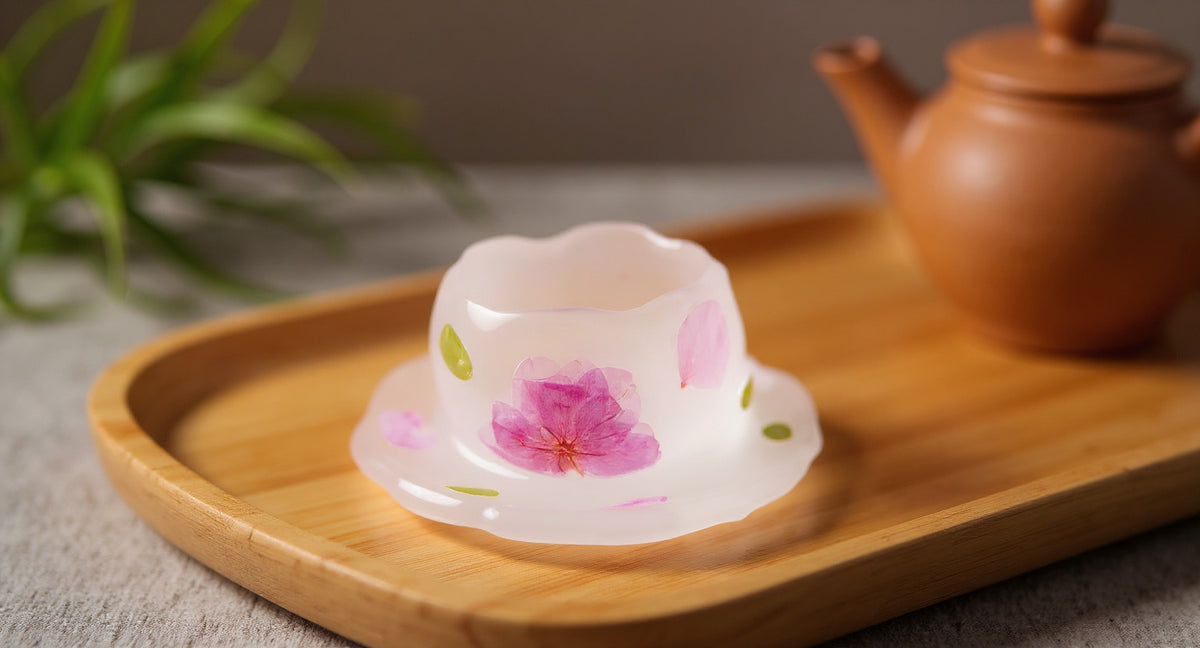
An eco friendly resin drinkware gift makes sense when its size suits the recipient, its permitted use is documented, and its environmental claim has a defined meaning. This peach blossom cup offers a clear glass body, a 60ml capacity, and real preserved flowers beneath an exterior resin layer. Those details explain its appeal. They don’t establish a temperature rating or prove an environmental advantage.
Small servings. Real petals. Some unanswered material questions.
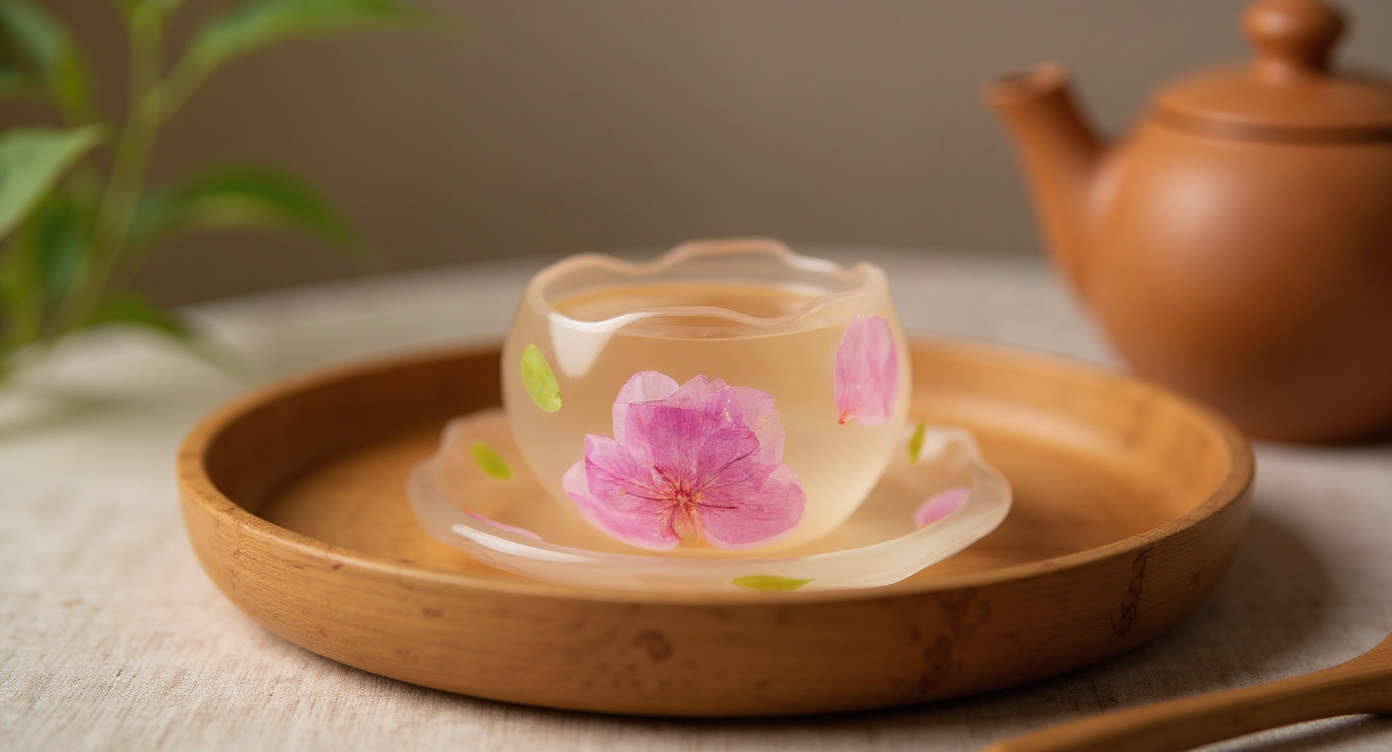
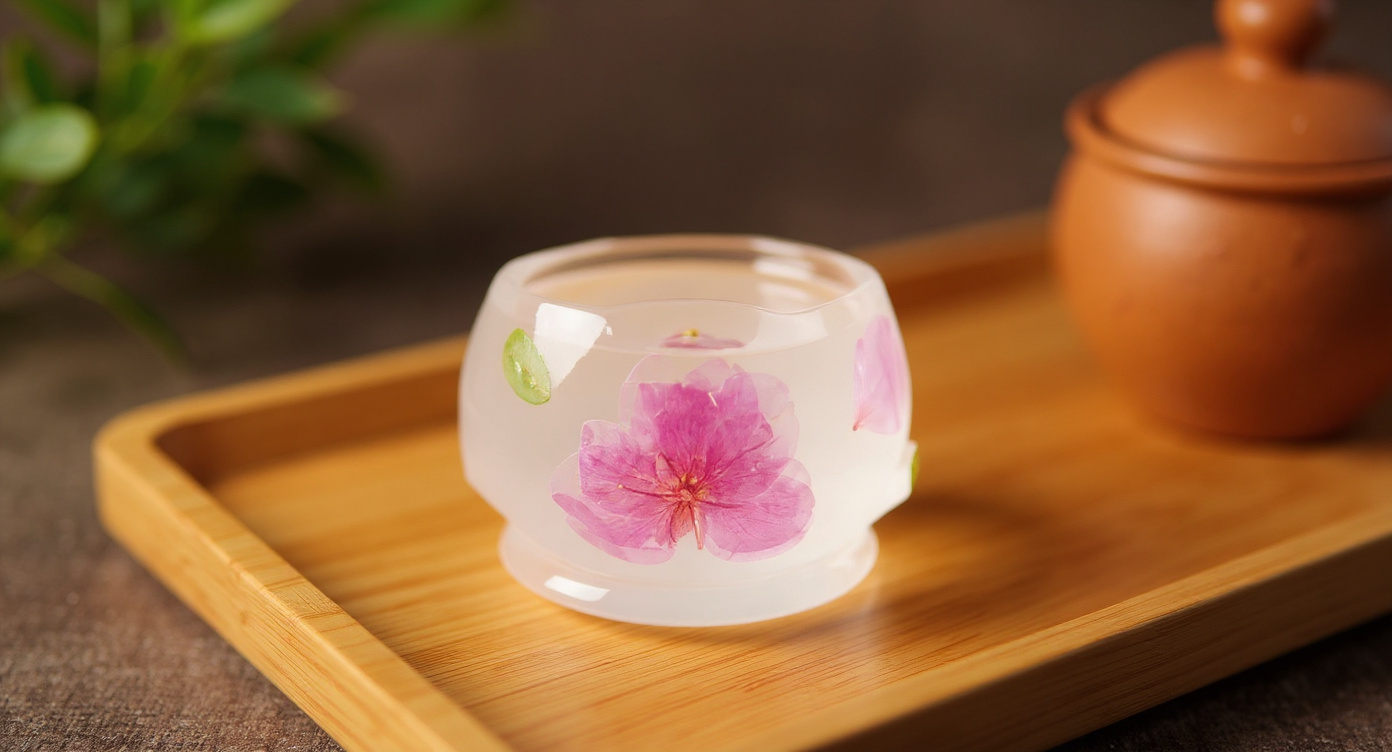
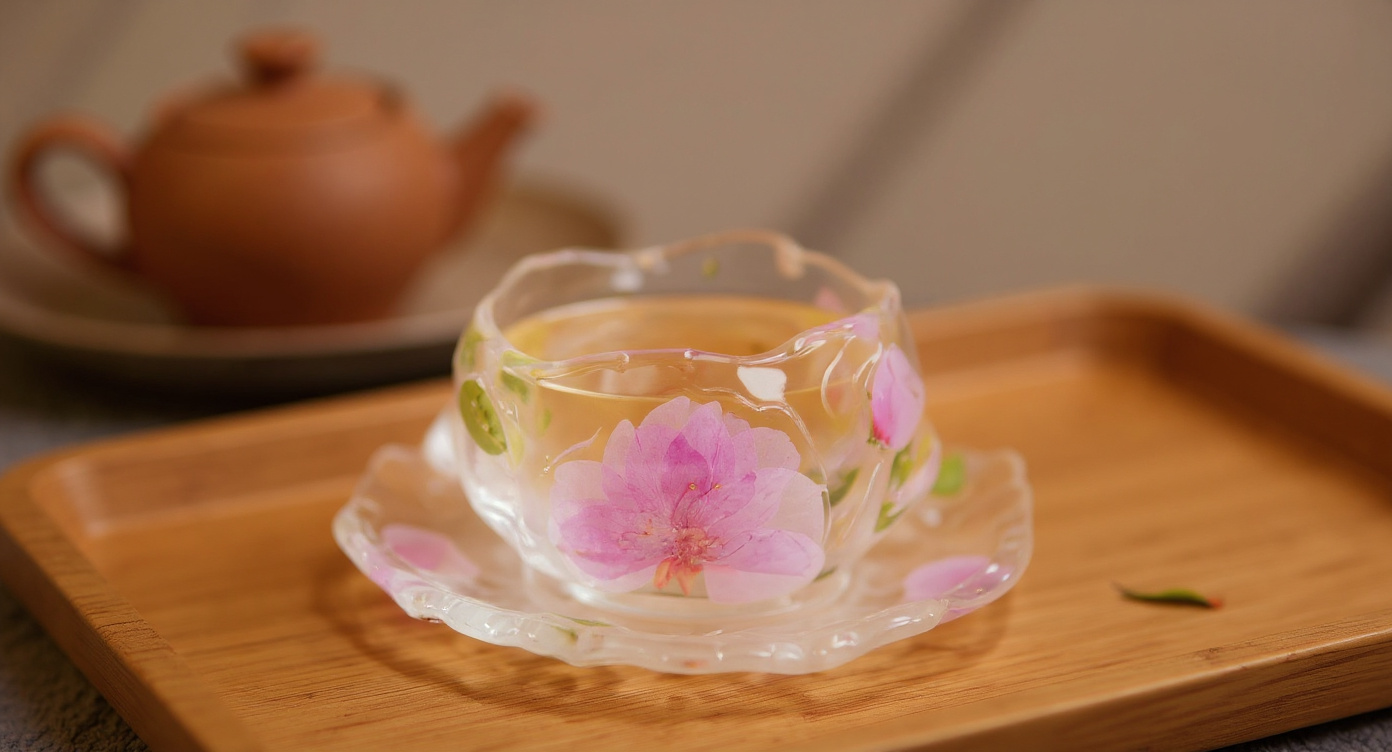
The product is a small, clear glass cup with soft pink peach blossom petals and tiny green leaves embedded beneath a glossy exterior layer described as eco-resin. Its translucent walls reveal the liquid inside, while the floral surface has a delicate 3D texture. In warm natural light, on a wooden tea tray with a clay teapot behind it, the botanical details suit the scale of a tea session rather than a large mug of tea.
That distinction matters before price, packaging, or the word “eco.”
What this peach blossom cup offers
The Handmade Peach Blossom Tea Cup | Real Flower Resin 60ml Master Cup | Gongfu Gift is described as a hand-blown glass master cup with preserved peach blossom petals embedded in an exterior resin layer. The supplied product information also describes a multi-day artisan curing process.
The clearest specifications are these:
| Product detail | Supplied description | What it helps establish |
|---|---|---|
| Capacity | 60ml | Small servings rather than a full-size mug |
| Cup body | Clear, hand-blown glass | A glass vessel beneath the decorative exterior |
| Botanical material | Preserved peach blossom petals and tiny green leaves | Real botanical decoration rather than a printed floral pattern |
| Exterior | Glossy eco-resin layer with delicate 3D floral texture | A mixed-material surface requiring its own care guidance |
| Production process | Multi-day artisan curing | A manufacturing step, not a finished-product safety certificate |
Pampasroom’s cup is a plausible gift for someone who enjoys small tea servings and values preserved botanical material. Its 60ml capacity is the strongest practical reason to connect it with Gongfu tea, where repeated infusions and small drinking vessels fit the ritual.
Not a desk mug.
Here’s the less flattering recommendation: if the recipient wants one large drink and dishwasher convenience, this 60ml resin-coated glass cup is a poor match unless its care instructions establish that convenience. A preserved-flower finish doesn’t compensate for the wrong capacity.
Glass inside does not settle every safety question
A glass cup with resin outside is different from a vessel made from resin throughout. The distinction is useful, but incomplete. The supplied information doesn’t establish whether the resin reaches the drinking rim, where lips touch, or where spills may contact the coating.
Check the finished cup’s construction. Not just its ingredients.
Heat also passes through glass. A heat-resistant glass body does not, by itself, establish the permitted temperature for a decorative layer attached to it. The complete vessel needs a use specification that accounts for its materials and construction.
I can speak to the moment when I sealed my first batch of preserved blooms into a heat-resistant glass cup, not to independent testing of this finished product. That distinction keeps the advice honest: making a flower-filled vessel and documenting its performance are different tasks.
The available information does not provide the exact resin formulation, a maximum beverage temperature, finished-product food-contact documentation, dishwasher or microwave approval, or a tested flower-colour retention period. None should be guessed from the appearance of the cup.
For regulatory context, the FDA’s food-contact substance guidance explains how substances used in contact with food are assessed and regulated. It does not certify this cup. Any documentation offered by a seller needs to match the relevant material and intended conditions of use.
Buying checklist: questions worth asking before payment
Ask for written answers that can travel with the gift. A product description is useful; a clear specification is better.
1. Map the contact surfaces. Confirm what touches the drink and lips, including whether the exterior coating reaches the rim. Request a close-up photograph if the written description leaves that unclear. 2. Confirm the intended beverage use. Ask for the maximum permitted liquid temperature and any restrictions on repeated hot pours, soaking, or preheating. A curing temperature is not a service-temperature rating. 3. Request relevant material documentation. Ask for the resin identity and any food-contact evidence applicable to the finished construction. A statement about an uncured ingredient does not answer every question about a completed cup. 4. Define “eco-resin.” Find out which environmental characteristic the phrase describes and what evidence supports it. Renewable content, waste reduction, and biodegradability are different claims. 5. Read the care and damage policy. Confirm cleaning methods, storage advice, and what happens if the coating separates or the glass arrives chipped. Keep those instructions with the order record. 6. Check the buying terms. Use the current product listing for price, delivery, returns, and damage-in-transit procedures. Those details can change.
This won’t work if the seller cannot resolve the intended-use questions and the recipient plans to use the cup for hot tea. In that situation, choose a vessel with documented hot-beverage guidance rather than treating unanswered questions as permission.
What “eco” can and cannot mean here
“Eco-resin” is a supplied product description, not a demonstrated whole-product environmental benefit. The available information doesn’t identify a measured reduction in environmental impact, a verified renewable-content figure, or a disposal pathway for the finished glass-and-resin item.
The FTC Green Guides caution against broad, unqualified environmental-benefit claims and explain why specific claims need substantiation. That guidance is a better basis for evaluating the word “eco” than a general chemistry reference or an unrelated certification programme.
No biodegradability promise. No recycling shortcut.
A resin-coated drinking glass should not be assumed acceptable in a local glass-recycling stream. Ask the local service about the complete object, including its coating. Acceptance of some glass containers does not establish acceptance of this cup.
Useful life matters, too. If the cup’s size and confirmed care requirements fit the recipient’s routine, it has a better chance of remaining in use. That is a practical buying consideration, not a quantified footprint claim.
Compare gift fit, not unsupported price ranges
There are no dated, linked competitor examples in the supplied information. Category price ranges cannot establish a fair comparison between named products, so the table below does not present them as verified market prices.
| Option | Capacity | Decorative construction | Price | Care limits |
|---|---|---|---|---|
| Peach Blossom Glass Tea Cup | 60ml | Clear glass with preserved peach blossom petals and green leaves beneath an exterior resin layer | varies by seller | varies by seller |
| Floral-print ceramic master cup | varies by seller | Floral-print ceramic | varies by seller | varies by seller |
| Artisan resin cup | varies by seller | varies by seller | varies by seller | varies by seller |
| Luxury handcrafted botanical teaware | varies by seller | varies by seller | varies by seller | varies by seller |
The useful comparison is specific: capacity, contact surfaces, permitted beverage temperature, cleaning instructions, and the botanical finish. Without matching specifications, a higher price cannot demonstrate better safety or longer service life.
A printed ceramic flower and a preserved petal offer different visual experiences. Neither construction wins every use case. For someone who dislikes handwashing, documented cleaning compatibility matters more than the presence of real blossoms.
Before-use inspection and care
Inspection cannot verify an undocumented temperature limit. It can help identify visible damage before a drink is poured.
1. Start with the empty cup. Look through the clear glass for cracks and inspect the rim for chips. Stop beverage use if damage is visible. 2. Check the exterior layer. Look for lifted edges, separation, or cracks in the coating. Ask the seller about repair or replacement rather than applying household resin. 3. Read the confirmed use instructions. Match the planned drink and cleaning method to those instructions. If hot use remains unresolved, don’t test it by pouring hot tea. 4. Keep the instructions with the gift. Include the order details so the recipient can raise a material or transit-damage concern without guessing where the cup came from.
Once suitability for the intended drink is confirmed, a soft cloth or sponge and handwashing are a conservative cleaning approach for this mixed-material vessel. Avoid abrasive pads. Don’t use a dishwasher or microwave without approval for the complete cup.
Avoid abrupt temperature changes, too. No thermal-shock rating is supplied, so there is no defensible temperature difference to recommend.
For storage, limiting prolonged direct sunlight is a cautious choice for preserved botanical material. It is not a guarantee against fading. No tested colour-retention period is available here.
FAQ
Is this cup made entirely from resin?
No. The supplied description identifies a clear, hand-blown glass cup with preserved petals and leaves beneath an exterior resin layer. The exact resin boundary at the drinking rim still needs confirmation.
Is the Peach Blossom Tea Cup suitable for hot tea?
Hot-tea suitability is not established by the information available here. The cup has a glass body, but no maximum beverage temperature or applicable finished-product documentation is supplied. Confirm both before hot-beverage use.
What does the 60ml capacity mean for gifting?
It means a small serving, suited to repeated pours rather than a full-size mug. Someone who uses a tea tray and enjoys Gongfu sessions is a better capacity match than someone who wants a large drink at a desk.
Are the flowers printed on the glass?
No. The product identity specifies preserved peach blossom petals and tiny green leaves embedded beneath the glossy exterior layer. The surface has a delicate 3D floral texture rather than a flat printed pattern.
Does eco-resin mean biodegradable or recyclable?
No such conclusion follows from that phrase. The supplied information does not establish biodegradability, compostability, or local recycling acceptance. Ask for the specific environmental claim and its supporting evidence.
Will the pink petals keep their colour?
No tested colour-retention period is supplied. Limiting prolonged sunlight is a cautious storage measure, but preserved flowers should not be presented as having permanent colour without evidence.
Does multi-day curing prove the cup will not crack?
No. It describes a production process, not a crack-resistance rating. Glass condition, coating adhesion, handling, and temperature exposure still matter. Follow documented limits and stop beverage use if damage appears.
Can the cup go in a dishwasher or microwave?
Neither use is confirmed in the available information. The exterior resin layer means glass compatibility alone is insufficient. Request instructions covering the complete vessel.
Choose the right ritual, then confirm the limits
The strongest reason to choose this cup is specific: a 60ml clear glass vessel with real pink peach blossom petals, tiny green leaves, and a textured botanical exterior. A small tea-session gift, not an all-purpose mug.
For a recipient who wants that combination, the 60ml Handmade Peach Blossom Tea Cup from Pampasroom is worth considering after its intended-use and care questions are resolved. If those answers remain unavailable, a better-documented drinking vessel is the more practical gift.