































Floral Tea Sets That Fit the Cottagecore Aesthetic
Floral Tea Sets for Cottagecore Aesthetic: Handcrafted & Instagram-Worthy
By pampasroom, founder of Pampasroom · 8+ years working directly with Southeast Asian artisans specializing in handcrafted botanical vessels and pressed-flower glasswork · Featured in The Artisan Home> Quick Facts > - Real preserved rose petals sealed in raised 3D texture onto borosilicate glass — not painted, not decals > - Borosilicate glass tolerates water up to 212°F (100°C) for tea brewing; avoid direct stovetop heat > - Gongfu short-steeping cycles run 20–45 seconds per infusion, per the World Tea Academy > - Full sets include gaiwan, fair cup pitcher, and 4–6 tasting cups for communal ceremony > - Price range for preserved-floral glass sets: $90–$500 depending on complexity and piece count
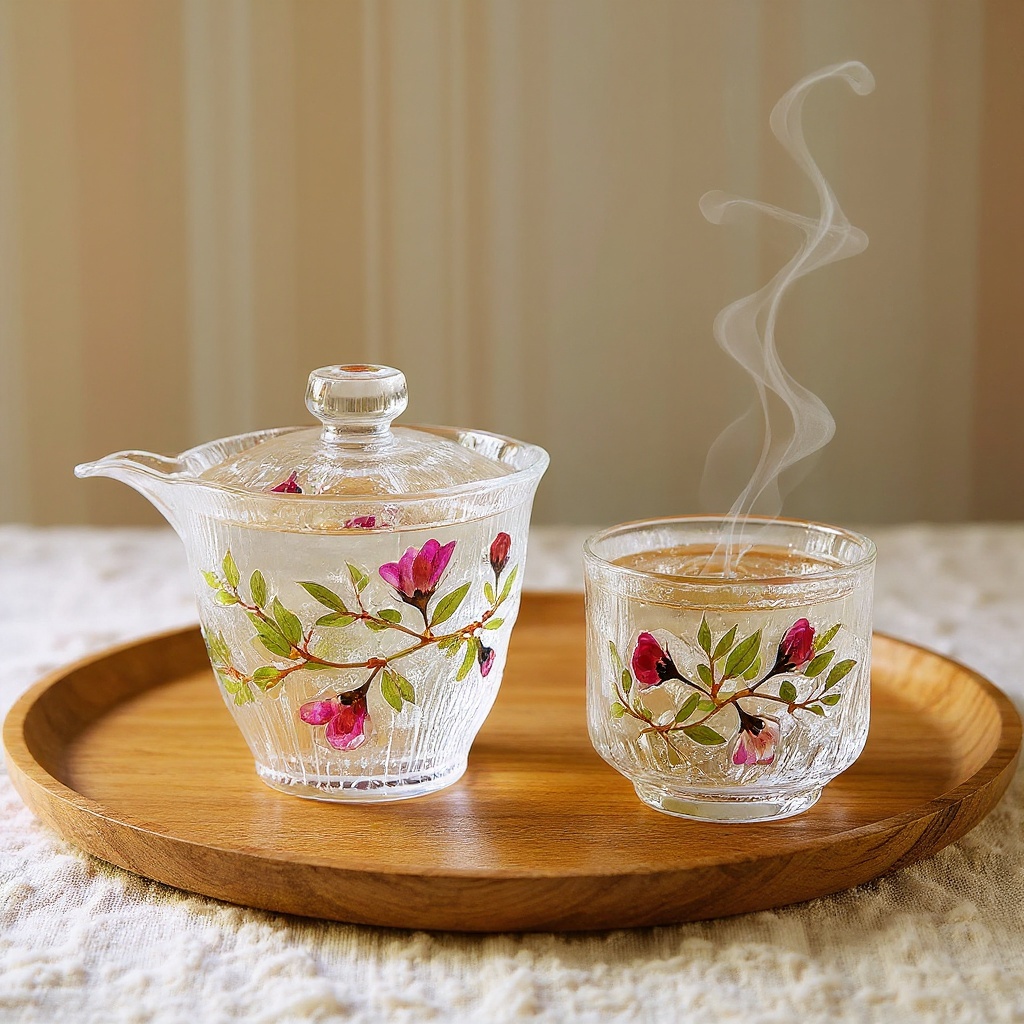
A floral tea set for cottagecore aesthetic combines transparent, light-refracting glass with real botanical elements — specifically vibrant pink rose petals and green leaves sealed onto the exterior in raised 3D texture — creating a living still-life that doubles as a functional brewing set. The defining feature is not a printed pattern. It is actual plant material, permanently fixed to hammered glass in physical relief. That distinction separates authentic cottagecore floral tea sets from mass-produced ceramic options priced at $20–$80, which rely on surface decoration alone. A genuine set transforms your daily tea ritual into a slow, sensory ceremony: prismatic light scatters across linen, steam rises through transparent walls, and every pour becomes a small, deliberate act of beauty.
What Defines a Cottagecore Tea Aesthetic
Cottagecore tea culture is not minimalism. It is not modern Scandi-style either. The aesthetic draws from Chinese tea culture traditions and folds them into a romanticized, nature-saturated domestic world where the ritual matters as much as the result. Slow. Intentional. Photographable.
The defining visual elements of a floral tea set for cottagecore aesthetic include warm organic shapes, real or preserved botanical accents, and materials that interact with light rather than absorb it. Glass is particularly valuable here because it lets rose petal color, tea liquor, and natural light layer visibly into a single composition. The color palette leans into soft pinks, sage greens, cream whites, and natural wood or slate tones. Nothing harsh. Nothing manufactured-looking.
Sets typically include 4–6 small tasting cups to emphasize sharing over solitary consumption — a subtle but important community signal. The ritual itself, not just the object, drives cottagecore identity. Enthusiasts photograph their setups for social media, and the ice-ripple hammered glass texture produces the kind of prismatic light scatter that performs beautifully under natural window light. That texture is functional aesthetics. Both at once.
5 Features to Look for in a Cottagecore Floral Tea Set
1. Real sealed botanicals, not surface prints — Petals and leaves should be encased within or affixed to the glass in raised 3D relief, permanently bonded. If it looks like a sticker or a fired glaze print, it is not the same thing. 2. Hammered or textured glass — Ice-ripple and hammered finishes scatter light prismatically, creating the soft, dreamy reflections central to cottagecore photography. 3. Borosilicate construction — This glass composition handles repeated thermal cycling from hot tea without stress fracturing. Generic soda-lime glass cannot. 4. Gaiwan format with matching cups — The lidded bowl shape connects directly to gongfu tea ceremony tradition and photographs better than Western teapot shapes for this aesthetic. 5. Natural tray compatibility — The set should sit coherently on wood or slate. If the pieces only look right on a white studio surface, they are styled for product photography, not your actual home.
Glass vs. Ceramic: Materials That Matter
Glass floral tea sets offer something ceramic cannot replicate: the ability to showcase real preserved botanicals sealed directly onto the vessel exterior in physical, touchable relief. The transparency creates layered visual depth. Rose petal color, golden tea liquor, rising steam, and incoming window light stack into a single frame that is genuinely difficult to capture with an opaque ceramic surface.
Borosilicate glass withstands brewing temperatures at a full rolling boil (212°F / 100°C), according to materials data published by Schott AG, the primary industrial source for laboratory and kitchenware borosilicate. It survives daily use when handled with care. The fragility concern is real — drop it and it shatters completely rather than chipping — but with normal table use, quality borosilicate outlasts cheap ceramics that chip and craze within a year.
Ceramic sets retain heat longer and feel more substantial in hand. Handmade artisan ceramic gaiwans run $150–$300. They cannot display internal or surface-bonded floral elements with the same dramatic clarity. For a floral tea set for cottagecore aesthetic where botanical visibility and light interaction are central to the entire point, glass wins without argument.
| Feature | Mass Ceramic | Artisan Ceramic | Standard Glass | Preserved-Floral Glass | Premium Handmade Glass |
|---|---|---|---|---|---|
| Price Range | $20–$80 | $150–$300 | $50–$150 | $90–$500 | $500+ |
| Heat Retention | Excellent | Excellent | Fair | Fair–Good | Good |
| Botanical Display | None | Painted only | None | Raised 3D sealed | Raised 3D sealed |
| Prismatic Light Effect | None | Minimal | Moderate | High | Exceptional |
| Durability (drop) | Chips | Chips | Shatters | Shatters | Shatters |
| Dishwasher Safe | Often | No | No | No | No |
| Cottagecore Visual Score | Low | Moderate | Moderate | High | Exceptional |
The Art of Preserved Flower Tea Sets
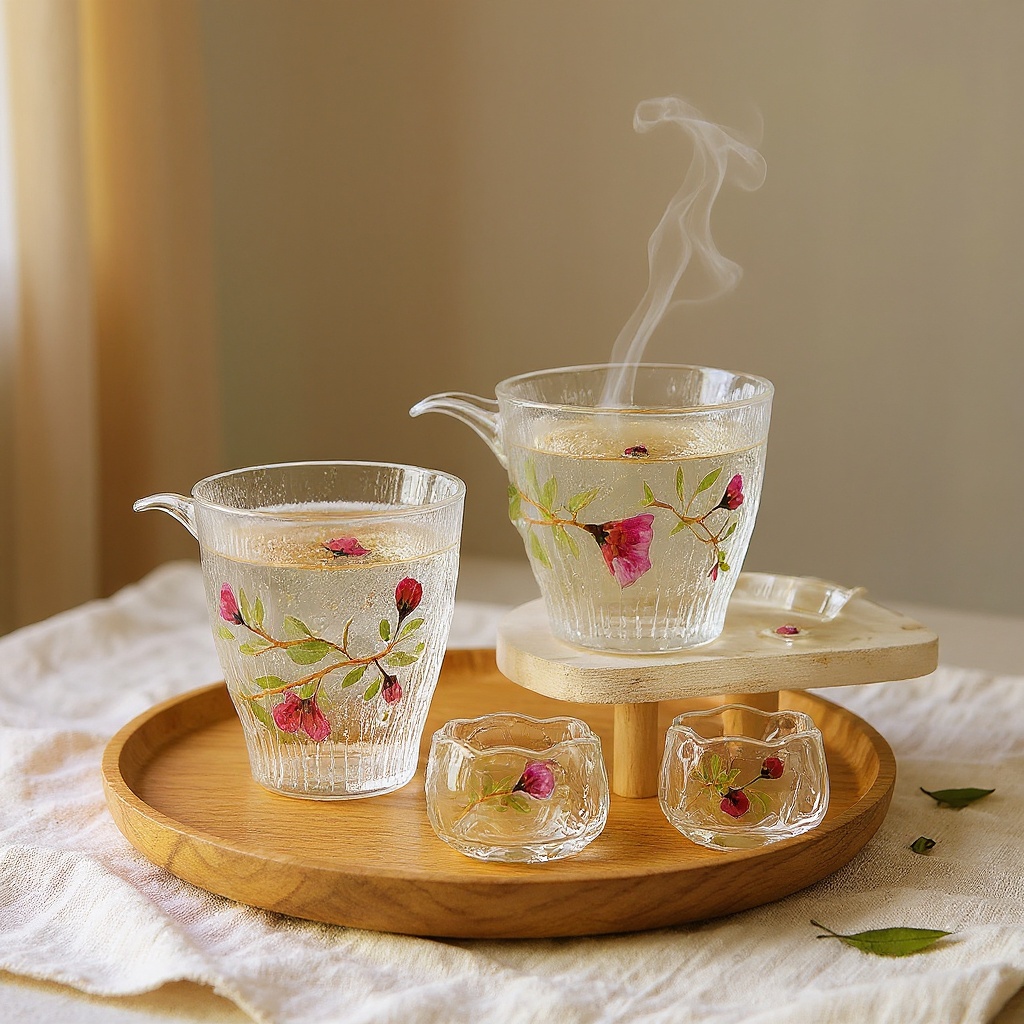
Preserved flower tea sets represent the craft peak of the floral tea set for cottagecore aesthetic category. The technique involves dehydrating real petals and botanical leaves, positioning them on the glass exterior, then permanently sealing them with a transparent protective layer in raised 3D relief — a process related to traditional pressed flower craft but adapted for functional glassware.
The result is texture you can feel. Run a finger across the surface and the petals have physical presence. Pink rose petals catch ambient light differently from the surrounding glass. Green botanical leaves sit in their own slight elevation. No two pieces are identical because no two flowers are identical. That variance — the thing mass production eliminates — is the point.
Real. Tactile. Permanent.
The Handmade Rose Petal Glass Tea Set exemplifies this approach: vibrant pink rose petals and green botanical foliage sealed onto a 140ml ice-ripple hammered glass gaiwan, accompanied by a 400ml fair cup pitcher and 4–6 cups at 45ml each, all sharing the same preserved floral surface treatment. Each piece in the set carries the same botanical language, creating visual cohesion across the full ceremony layout.
Gaiwan vs. Teapot: Choosing Your Ceremony Style
The gaiwan is a lidded bowl designed for complete brewing control. No filter basket. No hidden chamber. The leaves steep in direct contact with water, and you manage timing by feel and observation. The transparent glass version lets you watch color develop and leaves unfurl in real time — a sensory dimension a teapot removes entirely.
Gongfu ceremony using a gaiwan involves repeated short infusions of 20–45 seconds each, according to steeping guidelines from the World Tea Academy. Multiple steepings. The rhythm becomes meditative. Each pour is its own small decision. This ceremony structure photographs beautifully because it generates repeated moments of steam, motion, and color rather than a single pour-and-wait cycle.
For the floral tea set for cottagecore aesthetic context, the gaiwan format creates more ceremony than a teapot. More interactions. More photographs. More ritual texture across the whole experience.
Styling Your Cottagecore Tea Ritual Space
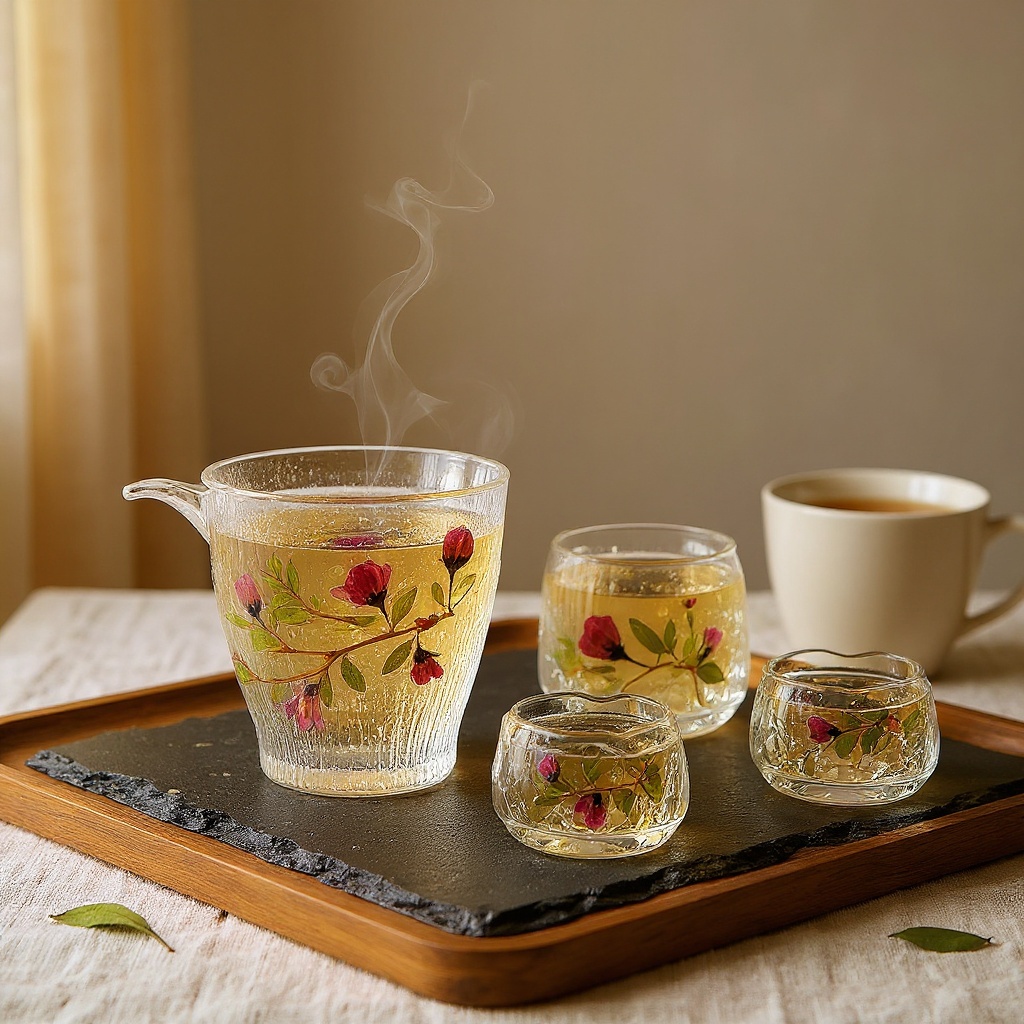
Composition matters. The full set — gaiwan, fair cup, tasting cups — belongs on a wooden or slate tea tray as the physical foundation. Everything reads differently off a tray than scattered on a tablecloth. Trays frame the arrangement and create a contained visual world.
The hammered glass surface scatters light. Position the setup near an east-facing window for morning light, or any window during the hour before golden hour in the afternoon. The prismatic reflections the ice-ripple texture produces under direct natural light are not reproducible under artificial lighting. That light specificity matters for photography and for the actual experience of sitting with the set.
1. Foundation: Wooden tray, slate board, or linen-covered surface with visible grain or texture 2. Tea Service: Gaiwan centered or slightly off-center, fair cup to the right, tasting cups fanned at the front 3. Natural Elements: Fresh or dried botanicals — small roses, eucalyptus stems, loose petals scattered deliberately 4. Literary Props: Open handwritten journal, vintage recipe card, or a single page of handwritten poetry 5. Ambient Details: Beeswax taper in a small holder, vintage ceramic spoon rest, river stones 6. Lighting: East window morning light or window-side golden-hour positioning; avoid overhead artificial light 7. Photography Angles: Directly overhead for flat-lay; 35–45 degrees from the front for depth and steam visibility
Layer rough linen against smooth glass. Put weathered wood beside soft petals. Contrast textures consciously. Soft cohesive tones — dusty pink, sage, cream, natural wood — hold the composition together without competition.
The Honest Thing Most Articles Won't Tell You
If you are a high-volume tea drinker — four or more sessions daily, running multiple ounces through the same vessel repeatedly — a preserved-floral glass set is not your best option for a primary brewing vessel. The glass requires temperature-conscious handling, hand-washing every time, and careful storage with cloth separators. A $30 clay Yixing teapot will serve your functional brewing needs with zero ceremony around the vessel itself.
The floral glass gaiwan set earns its place when the ritual is the point. When you brew slowly. When you photograph. When the object participates in the experience rather than simply enabling it. Use it for your intentional sessions. Keep a durable everyday vessel for the other moments. Both can coexist.
Daily Care and Preservation
Hand-wash every piece. Lukewarm water. Mild dish soap. A soft cloth or non-abrasive sponge. The preserved botanicals are sealed beneath a protective layer and will not wash off under normal cleaning. What damages them is abrasion — rough scrubbing pads dragged across the raised 3D surface will eventually compromise the seal at the petal edges.
Store pieces with soft cloth dividers between them. Glass contact against glass, repeatedly, produces micro-scratches that accumulate into haze over time. Separate the pieces and that haze never develops.
Warm the gaiwan before adding boiling water — pour a small amount of warm water in first, swirl, discard — then add your brewing water. Rapid thermal shock from cold glass to boiling water is the primary cause of stress fractures in glass tea vessels, not the temperature of the water itself. That pre-warming step, taking under fifteen seconds, eliminates the risk.
With these habits, the botanical sealing holds indefinitely. The color remains vibrant. The glass stays clear.
Gifting Considerations and Presentation
Floral tea sets make genuinely memorable gifts for weddings, housewarmings, and milestone birthdays for recipients who value handcrafted objects and aesthetic domestic rituals. The visual impact at unboxing is immediate and distinct — this is not a gift that reads as generic. The functional design means regular use rather than shelf display. A floral tea set for cottagecore aesthetic at the $114 price point lands clearly in the luxury gift category: meaningful, specific, and practical.
Request packaging that protects the glass during shipping while allowing some botanical visibility through a clear window panel. Include a hand-written or printed care card. A small selection of premium loose-leaf tea — a floral oolong, a jasmine green, a lychee black — completes the gift without overpowering it.
For more handcrafted home goods that complement this aesthetic, browse our collections of handmade ceramic tea sets and cottagecore home decor.
FAQs
What is a floral tea set for cottagecore aesthetic and how is it different from a regular tea set?A floral tea set for cottagecore aesthetic prioritizes real botanical elements, tactile handmade textures, and materials that interact visibly with natural light — qualities that serve both the brewing ritual and its visual documentation. A regular tea set focuses on function: hold hot liquid, look presentable. A cottagecore floral set treats the vessel itself as a botanical object, incorporating real preserved petals and leaves into the structure of the glass rather than printing imagery onto a surface.
Are glass tea sets durable enough for daily use?Borosilicate glass tea sets handle daily brewing when given appropriate care: hand-washing, pre-warming before hot water, and padded storage. They are not fragile display objects. That said, they do shatter completely if dropped rather than chipping like ceramic — that is a real difference worth knowing before purchase. Under normal table use, a quality borosilicate set with proper care outlasts cheap ceramic sets that craze and chip within a year of daily use.
How do preserved flowers stay attached to the glass without washing off?Real petals and botanical leaves are dehydrated, positioned on the glass exterior, and permanently sealed beneath a transparent protective layer during the handmaking process. The botanicals sit in raised physical relief on the surface — you can feel the texture. Because the seal is structural rather than adhesive, normal hand-washing with mild soap does not affect them. Abrasive scrubbing tools can compromise the seal at edges over time, which is why soft cloth cleaning is the standard care instruction.
What tea types work best in a glass gaiwan for gongfu ceremony?Oolong, white tea, and high-grade green teas perform best in the gongfu short-steeping format — 20–45 second infusions that the World Tea Academy documents as standard for gongfu practice. These teas yield multiple distinct steepings with evolving flavor profiles. Black teas work but become tannic quickly with repeated short infusions. Herbal blends technically function but miss the nuance the format is designed to reveal. Floral oolongs are a natural pairing for a rose-petal glass set, both visually and in flavor profile.
Is a floral glass tea set a good wedding or housewarming gift?For recipients who appreciate handcrafted objects, slow-living aesthetics, or tea ceremony culture, yes — it is an unusually distinctive gift. The visual impact at unboxing is genuine. The functional use case means it won't sit untouched. The price point at $114 positions it appropriately for significant gifting occasions rather than casual purchases. For recipients who prefer minimal or utilitarian home goods, it may not align with their style — know your audience.
Can I use a glass gaiwan on a stovetop or kettle burner?No. Glass gaiwans are brewing vessels, not heating vessels. Heat water separately in a kettle, then pour into the gaiwan for steeping. Placing a glass gaiwan on direct heat exposes it to uneven thermal stress the material is not designed to handle, regardless of how heat-resistant the glass composition is. This applies to all glass tea vessels, not just floral sets.
How do I clean a tea set with raised botanical decoration without damaging it?Lukewarm water, mild dish soap, and a soft cloth or non-abrasive sponge. The raised 3D botanical texture requires gentle handling — the seal is durable against normal washing but vulnerable to mechanical abrasion from rough sponges or scrubbing pads. Never use a dishwasher: the thermal cycling, high-pressure spray, and commercial detergents are all damaging to both the glass and the botanical seal.
What is the difference between a gaiwan and a teapot for brewing?A gaiwan is an open lidded bowl that places you in direct contact with the steeping process — you observe leaf color, aroma release, and liquor development, and you control each short infusion manually. A teapot is a closed system with a spout and handle, designed for longer single steepings with less ongoing interaction. Gaiwans suit gongfu ceremony style and mindful, iterative brewing. Teapots suit situations where you want tea ready with minimal involvement. For the cottagecore ritual context, the gaiwan creates more ceremony and more photographic moments.
Does the hammered ice-ripple texture make the gaiwan harder to hold?The texture is raised on the exterior surface but the overall grip profile of the gaiwan remains functional. The ice-ripple pattern is a visual and tactile feature — it creates prismatic light scatter and provides slight grip texture compared to polished glass. The gaiwan is held by pinching the lid with two fingers and supporting the body with a third, the standard gongfu grip, which the curved body shape accommodates regardless of surface texture.
Conclusion
A floral tea set for cottagecore aesthetic succeeds when it does two things simultaneously: it brews tea well, and it makes the act of brewing worth pausing over. The combination of ice-ripple hammered borosilicate glass, vibrant pink rose petals and green botanical leaves in raised 3D sealed relief, and a traditional gaiwan format designed for gongfu ceremony achieves both. The prismatic light effects are not incidental — they are inherent to the material and the texture. The botanical elements are not decorative patterns — they are real plant material, permanently present in physical relief.
This is the specific character of the preserved-floral glass gaiwan set. Nothing about it is approximate.
If you are ready to turn your tea ritual into a daily ceremony that holds its own as a visual and sensory experience, browse our Handmade Rose Petal Glass Tea Set | Lotus Gaiwan 140ml | Preserved Floral Gongfu Ceremony Gift. Each piece carries unique preserved rose petals and botanical elements sealed onto heat-resistant borosilicate glass — no two sets identical, every set made for daily use.
For complementary pieces, explore our handmade ceramic tea sets and cottagecore home decor collections.


