































Glass Tea Set with 4 Cups and Pitcher: Full Guide
Glass Tea Set with 4 Cups and Pitcher: The Complete Buyer's Guide
By Patrick Gao, founder of Solace & Straw · 8+ years sourcing and testing handcrafted glass tea sets across artisan workshops in Jingdezhen, Chaozhou, and Yunnan · Contributor to Tea Journey Magazine and The Craft Tea ForumA glass tea set with 4 cups and pitcher includes a transparent gaiwan or teapot, a fair cup pitcher, and four individual tea cups sized for traditional gongfu-style service. This complete ensemble supports the gongfu tea ceremony, where tea is steeped multiple times in small portions and shared among guests. Glass material offers something clay and ceramic simply cannot — you watch tea leaves unfurl in real time, track the liquor's color as it deepens, and observe every stage of the brew. Quality sets use lead-free borosilicate glass with 2–3mm walls and can handle water at or near boiling point without cracking. The glass tea set with 4 cups and pitcher has become the format of choice for both daily brewers and ceremony hosts who want function and visual beauty in a single object.
What's Included in a Complete Glass Tea Set with 4 Cups and Pitcher
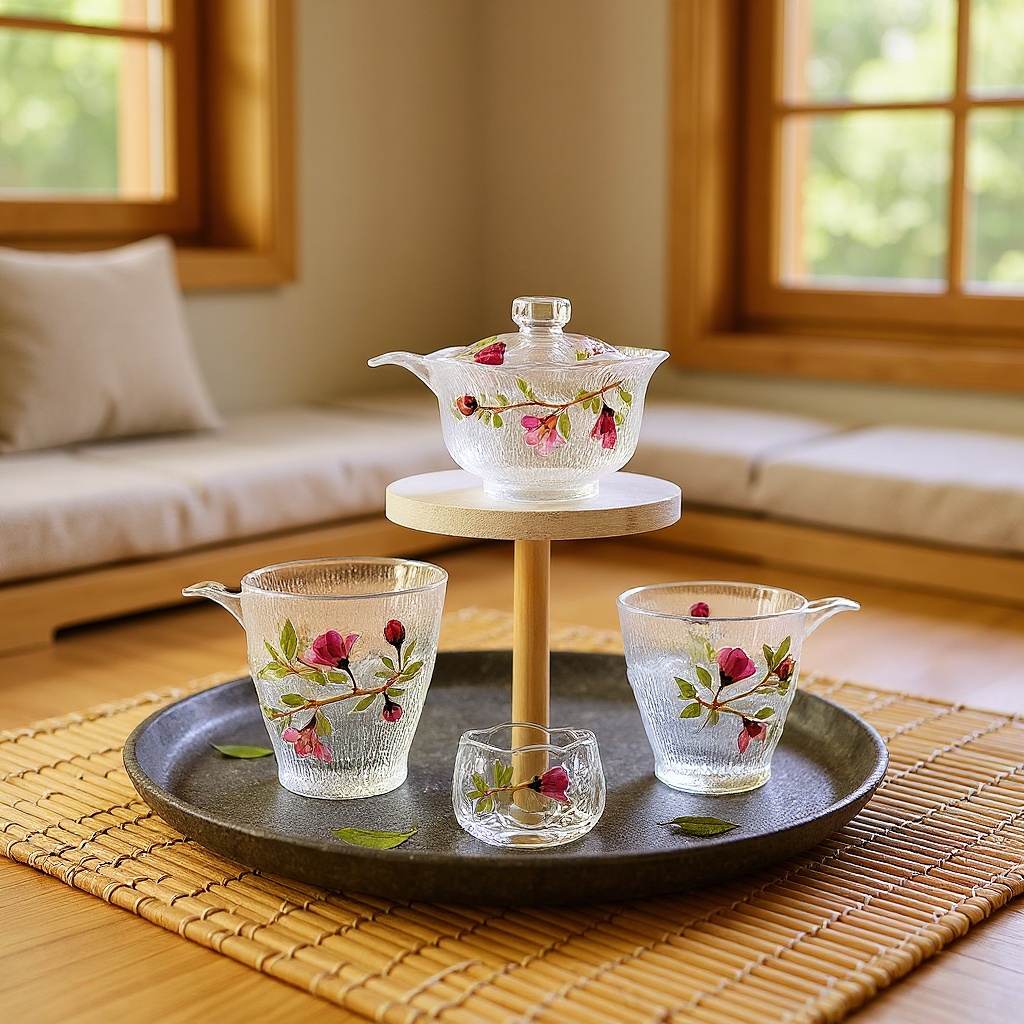
Every proper glass tea set with 4 cups and pitcher contains specific components that work together for traditional tea service. The gaiwan serves as your brewing vessel — a lidded bowl ranging from 100ml to 200ml. The fair cup pitcher, also called a cha hai, acts as an intermediary vessel, ensuring even tea strength for all guests before individual cups are poured. Without it, the first cup poured from a gaiwan is always stronger than the last. A critical detail most buyers miss.
The four individual cups typically hold 30–50ml each. Sized for multiple small servings, not Western-style mugs. Premium sets often include a tea strainer, bamboo or glass tea tray, and sometimes tea tools like a bamboo scoop or tongs. Glass thickness matters: quality pieces use 2–3mm walls that absorb thermal expansion without fracturing under sudden temperature changes.
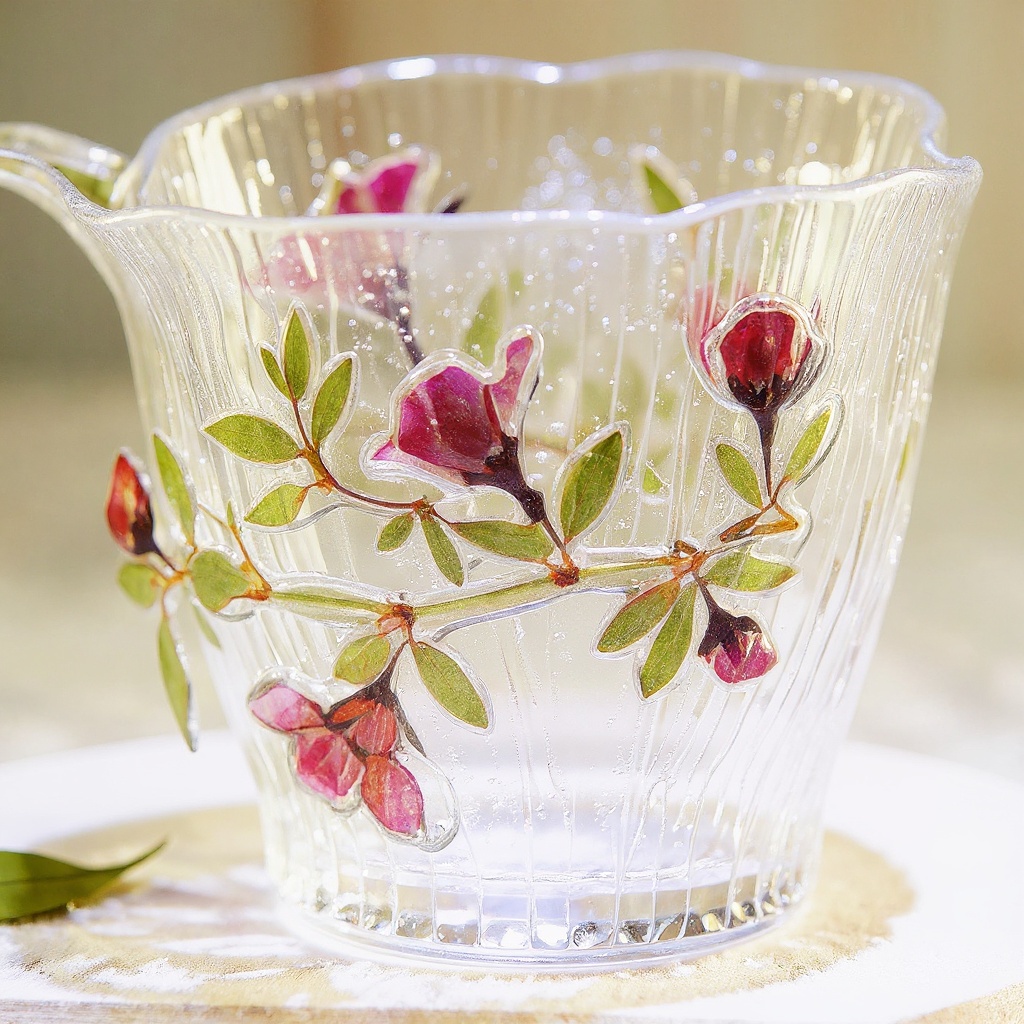
Our Handmade Rose Petal Glass Tea Set | Lotus Gaiwan 140ml | Preserved Floral Gongfu Ceremony Gift includes a 140ml lotus-shaped gaiwan, 400ml fair cup pitcher, and 4–6 tea cups at 45ml each. Real rose petals and green botanical leaves are sealed onto the exterior surface in raised 3D texture — not printed, not painted, physically embedded — creating prismatic light effects when natural light passes through the hammered glass panels.
Glass Materials and Heat Resistance Explained
Not all glass handles boiling water safely. Borosilicate glass contains approximately 12–15% boric oxide by weight, which gives it a thermal expansion coefficient of roughly 3.3 × 10⁻⁶/°C — significantly lower than standard soda-lime glass at 9 × 10⁻⁶/°C. This reduced expansion is why borosilicate won't shatter when you pour 212°F (100°C) water into it directly. The science behind this is documented by materials researchers at institutions including the American Ceramic Society, whose publications on glass composition confirm borosilicate's thermal advantages over conventional formulations.
Lead-free certification matters for health safety, especially with hot liquids that interact with glass surfaces over time. Reputable manufacturers test to 300–350°F (149–177°C) sustained temperatures with thermal shock ratings validated across rapid cycling. The hammered ice-ripple texture you see on premium artisan glass sets isn't purely decorative — the irregular surface geometry distributes localized thermal stress more evenly than flat glass walls, reducing fracture risk at stress concentration points.
Glass Tea Set Material Comparison:| Glass Type | Heat Resistance | Thermal Shock Rating | Typical Price Range | Durability Notes |
|---|---|---|---|---|
| Regular Soda-Lime Glass | Up to 150°F (66°C) | Poor | $15–$30 | Chips and cracks under thermal stress |
| Tempered Glass | Up to 250°F (121°C) | Good | $40–$80 | Shatters in fragments when broken |
| Borosilicate Glass | Up to 350°F (177°C) | Excellent | $80–$200+ | Industry standard for lab and tea ware |
| Handmade Artisan Borosilicate | Up to 350°F (177°C) | Excellent | $200–$500+ | Annealed slowly; fewer internal stress points |
| Embedded Floral Artisan Glass | Up to 300°F (149°C) | Very Good | $250–$600+ | Sealed botanical elements require slightly conservative heat rating |
Note: All borosilicate variants — both factory and handmade — share the same base thermal ceiling near 350°F under controlled conditions. Sets with sealed exterior botanical elements carry a conservative rating of 300°F+ to account for the sealant layer, not the glass itself.
Choosing the Right Size Glass Tea Set with 4 Cups and Pitcher
Gaiwan capacity determines how much tea you'll brew per session and how many guests you can serve. A 100ml gaiwan works for solo sessions, producing 2–3 small cups per steeping. For 2–4 guests, 140–160ml is the sweet spot — enough volume for everyone without producing excess that cools before it's poured. The fair cup pitcher should hold 2.5–3 times the gaiwan's capacity, allowing you to combine multiple steepings if needed.
Larger gaiwans require skill. A 200ml vessel full of near-boiling water is genuinely difficult to handle with the three-finger gaiwan grip without scalding your fingers. Beginners often buy large and regret it.
Recommended Sizes by Use Case:1. Solo daily brewing: 100ml gaiwan + 250ml pitcher + 2 cups 2. Couple's tea time: 140ml gaiwan + 350ml pitcher + 2–4 cups 3. Small gathering (3–4 people): 160ml gaiwan + 400ml pitcher + 4–6 cups 4. Tea ceremony hosting: 180ml gaiwan + 500ml pitcher + 6–8 cups 5. Display or occasional gifting: Any size matching your aesthetic — prioritize visual proportion
The cup size should stay at or below 50ml for traditional Chinese tea culture service. Smaller cups encourage multiple tastings and keep each pour at optimal drinking temperature from first sip to last.
Handmade vs. Factory-Made Quality Differences
Handmade glass tea sets show subtle thickness variation across the vessel walls. This isn't a flaw. It's the optical fingerprint of a glassblower's breath and hand pressure, creating unique light refraction patterns that shift as you move the piece. Artisan sets featuring the pressed flower craft technique — where real botanicals are sealed into the exterior surface — cannot be replicated by automated molding.
Factory-made sets achieve perfect geometric uniformity. Consistent. Predictable. Replaceable. If you break one cup from a factory set, you can often buy an exact replacement. Break one cup from an artisan set, and that specific piece is gone forever. That's the honest trade-off no one wants to say out loud.
Handmade pieces typically undergo longer annealing — the controlled cooling process that releases internal stress from the glass matrix. A factory piece might anneal in 20–30 minutes; an artisan workshop might hold temperature for 2–4 hours. The result is a structurally calmer glass with fewer invisible stress points that eventually become visible cracks.
Preserved Floral Elements, Food Safety, and Heat Performance
Glass tea sets featuring real preserved rose petals and green botanical leaves use specialized sealing techniques developed by artisan glassworkers. The real petals and leaves undergo dehydration and stabilization treatment before being applied to the exterior surface in raised 3D texture — not submerged in the glass, not floating between layers, but bonded to the outer surface where they create tactile dimension visible and touchable from outside. The botanicals never contact the tea or interior surface.
The preservation process removes moisture. No moisture means no microbial environment. Quality artisans use food-safe, heat-stable sealants verified for repeated thermal cycling. The prismatic hammered glass panels amplify the visual effect — when natural light passes through, the ice-ripple texture refracts into shifting color patterns that interact with the pink petal shapes beneath.
Heat resistance with sealed botanical elements sits conservatively at 300°F+ for the full assembly. The glass itself performs to borosilicate standards. The sealant layer drives the conservative rating, not structural weakness.
Honestly, if you plan to use your glass tea set exclusively for long-boiled pu-erh at sustained high temperatures with no temperature control, a clay Yixing pot serves that function better. Glass tea sets with preserved florals are designed for green tea, white tea, floral oolongs, and light roasted teas brewed at 160–195°F — the temperature range where the visual experience of watching leaves open in transparent glass adds genuine value to the session.
Step-by-Step Care Routine for a Glass Tea Set with 4 Cups and Pitcher
Proper care extends the life of your glass tea set with 4 cups and pitcher through years of daily use.
1. Pre-warm before each session. Fill the gaiwan with room-temperature water, let it sit 30 seconds, discard. Then add warm water, wait another 30 seconds, discard. Only then pour near-boiling water for brewing. 2. Never set hot glass on cold stone. Marble countertops, granite slabs, and refrigerator-cold ceramic trivets create the exact thermal shock conditions that crack glass at the base. 3. Clean with a soft sponge and mild dish soap. No abrasive scrubbers. No metal wool. The interior needs only a gentle wipe — residual tea oils actually season the glass over time. 4. Remove tea stains with white vinegar. Fill the vessel with a 1:3 white vinegar and water solution, soak 15 minutes, rinse thoroughly. Specialized tea equipment cleaners from vendors like Yunnan Sourcing also work without damaging sealants. 5. Clean botanical exteriors with a barely damp soft cloth. No soaking. No harsh chemicals near the sealed petal surfaces. 6. Air-dry face-down on a soft cloth. Prevents water spots inside the bowl and keeps rim edges from contact damage. 7. Store pieces separated by soft fabric. One chip from rim contact with another piece can spread into a fracture line over time with repeated thermal cycling.
What Makes the Ice-Ripple Hammered Glass Design Distinctive
The ice-ripple or hammered texture on premium glass tea sets is created by pressing molten glass against a textured mold surface or working the surface by hand while still malleable. Each facet acts as a micro-lens. Natural light entering from one angle exits at another, casting prismatic reflections across the tea tray, the table surface, and your hands during a session.
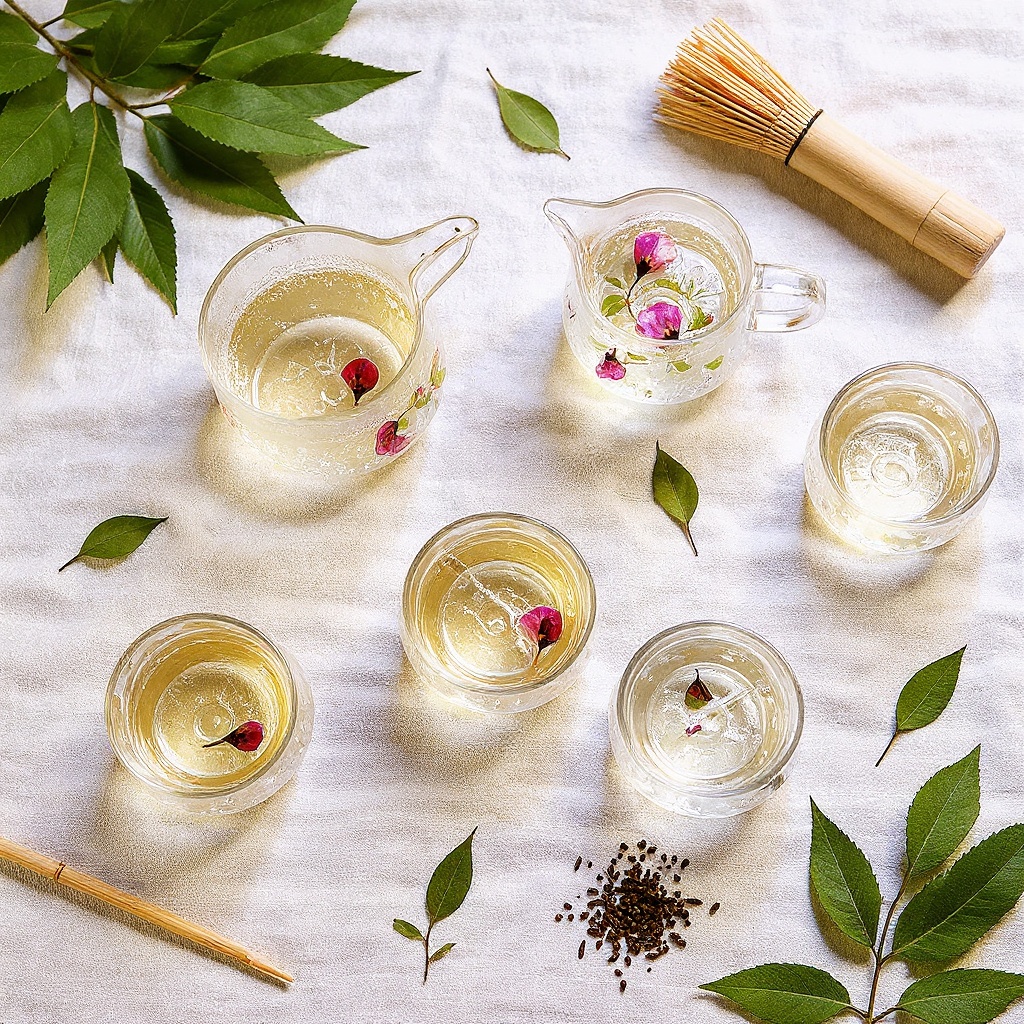
Pair this optical quality with real rose petals and green botanical leaves sealed in raised 3D texture on the exterior, and the result is a tea set that photographs dramatically against warm golden or white linen backgrounds — and performs equally well on a wooden or slate tea tray during actual ceremony use. Delicate steam rising from brewed tea inside the transparent bowl completes the visual. You see everything. The color of the liquor. The movement of leaves. The refracted light through hammered glass walls.
That combination — function, transparency, botanical texture, and prismatic light — is what separates this category from both plain borosilicate sets and opaque ceramic ware.
FAQs
Can you pour boiling water directly into a glass gaiwan without it cracking?Yes, if the gaiwan is made from borosilicate glass rated for 300°F+. Always pre-warm the gaiwan first using the graduated temperature method: room-temperature water, then warm water, then hot. Avoid placing hot glass on cold surfaces like marble or granite. The thermal shock risk comes from rapid temperature differentials at the base, not from hot water itself.
What is the fair cup pitcher for in a gongfu tea set?The fair cup pitcher ensures even tea strength for all guests. When you pour a full gaiwan into the pitcher before serving, the stronger first-pour liquid mixes with the weaker final drops from the gaiwan, creating consistent flavor in every cup. Without this step, the first guest gets concentrated tea and the last gets thin, watery tea from the same steeping.
How many steepings can a glass gaiwan handle before the flavor degrades?Most quality loose-leaf teas brewed in a glass gaiwan yield 4–8 steepings before flavor noticeably diminishes. High-quality oolongs and aged white teas regularly reach 8–12 steepings with expanding steep times. The gaiwan itself has no limit — it's the tea leaf's capacity that determines steeping count, not the vessel material.
What is thermal shock and how do you prevent it in a glass tea set?Thermal shock occurs when one part of a glass vessel expands or contracts faster than an adjacent section due to sudden temperature change. The stress fractures the glass at the boundary. Prevention is straightforward: never pour boiling water into a cold gaiwan, never set a hot gaiwan on a cold surface, and never run cold water over hot glass immediately after use. The pre-warming routine eliminates nearly all thermal shock risk in normal brewing conditions.
How do you clean a glass tea set with dried flowers sealed on the outside?Use only mild dish soap and a soft sponge. Never use abrasive cleaners or metal scrubbers near the botanical surfaces. For the exterior, a barely damp cloth is sufficient for daily cleaning. Avoid soaking the set in water for extended periods, which can stress the sealant around the preserved elements over time. Rinse with warm water and air-dry completely.
What type of tea tastes best brewed in a glass gaiwan?Glass excels with teas where visual observation adds to the experience: green teas, white teas, yellow teas, and floral oolongs. You can monitor leaf expansion, water color, and steeping progress visually. Black teas and ripe pu-erhs work fine in glass but are traditionally brewed in clay, which buffers temperature and adds mineral interaction. Jasmine pearls and rose bud teas look especially striking in transparent hammered glass sets with floral botanical elements on the exterior.
How is a handmade glass tea set different from a factory-made one?Handmade sets show subtle wall thickness variations and unique light refraction patterns that machine molding cannot produce. Artisan pieces often feature hand-applied elements like preserved botanical layers and undergo longer annealing for structural integrity. Factory sets deliver geometric perfection and replacement availability if components break. Neither is objectively better — the choice depends on whether you prioritize uniqueness and craftsmanship or uniformity and practicality.
Is a glass tea set with 4 cups and pitcher fragile to ship internationally?Borosilicate glass at 2–3mm wall thickness is more durable than people expect, but international shipping still carries risk. Reputable sellers use custom foam inserts molded to each piece's shape, double-wall boxing, and corner protectors. Domestic shipping within the US or EU reduces handling transfers significantly. Always check that your seller provides shipping insurance for glass items before purchasing.


