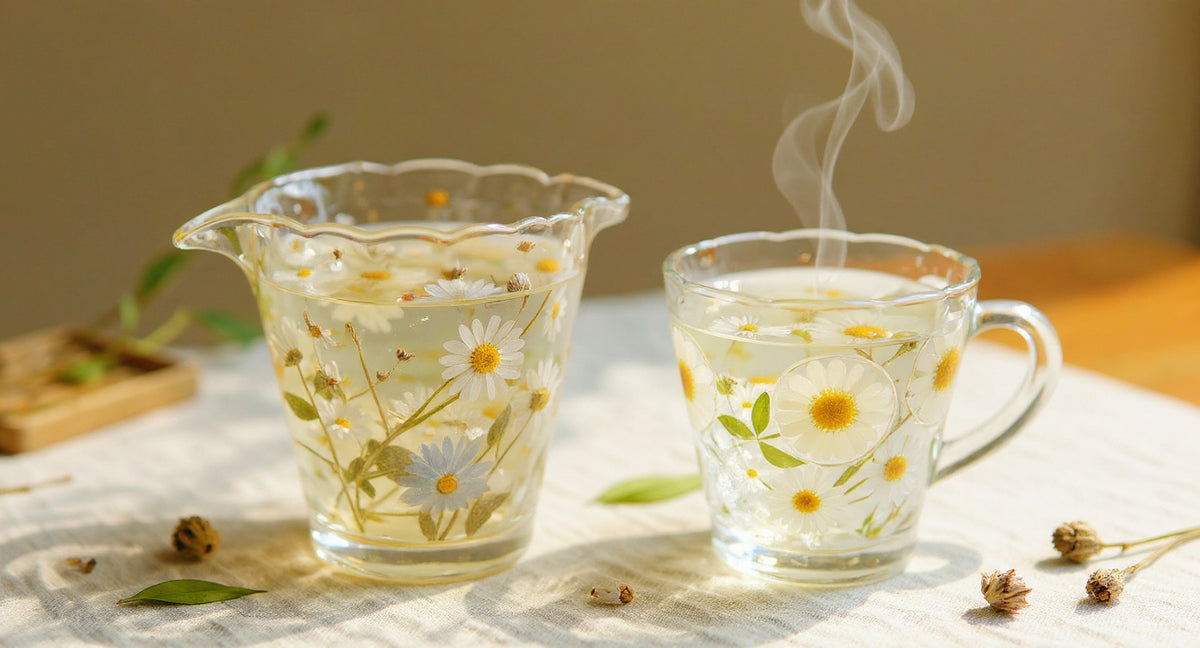
A handcrafted botanical tea ceremony set is worth considering if you want both usable brewing vessels and real floral decoration. This set pairs a delicate glass gaiwan with a matching fair cup, with real dried daisy flowers visibly embedded and raised on the outside beneath a clear eco-resin layer. The flowers are decoration, not tea ingredients.
The trade-off is extra care. If botanical handwork adds little value for you, the supplied specifications don't establish a brewing advantage over undecorated glass teaware. Choose it for the daisies and the tea ritual, not a promise of better extraction.
By the founder of PampasroomThe relevant craft experience behind this guidance is when I sealed my first batch of preserved blooms into a heat-resistant glass cup. That experience doesn't establish this set's temperature limits, resin formulation, or cleaning approval. Those require product-specific documentation.
Product facts, without the guesswork
The Handcrafted Gaiwan Fair Cup Set with real preserved daisies combines heat-resistant glass with an exterior botanical finish.
| Product detail | Supplied information |
|---|---|
| Vessels | Glass gaiwan and matching fair cup |
| Floral material | Real dried, preserved daisy flowers |
| Decorative placement | Visibly embedded and raised on the outer surface beneath clear eco-resin |
| Glass description | Heat-resistant glass |
| Listed price | $57.14; check the current checkout price |
| Capacity description | Approximately 400ml; allocation between vessels is not established |
| Stated handcraft process | 3–5 days; this is not a delivery estimate |
A clear distinction. The glass forms the vessels; the flowers and resin form the exterior decoration. The supplied information doesn't establish whether coating reaches the rim or pouring path, so those boundaries need confirmation before hot-tea use.
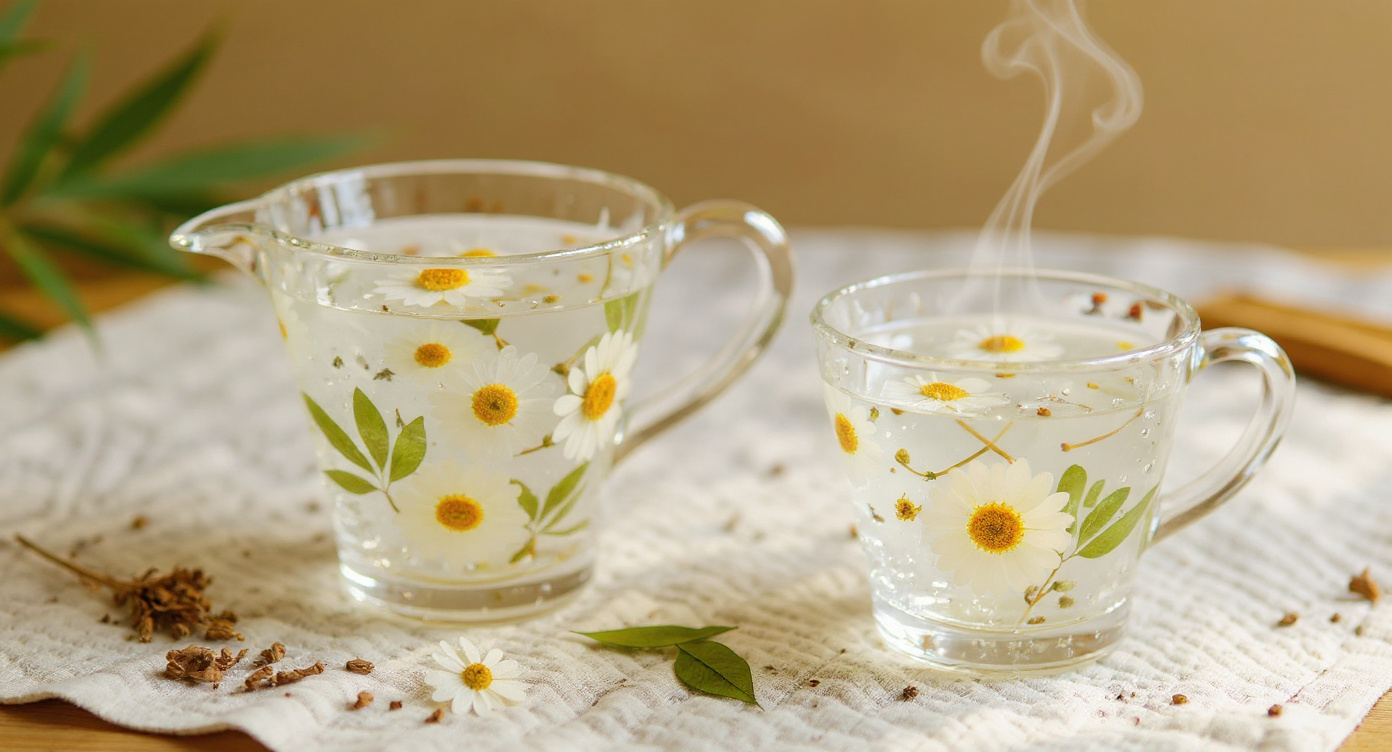
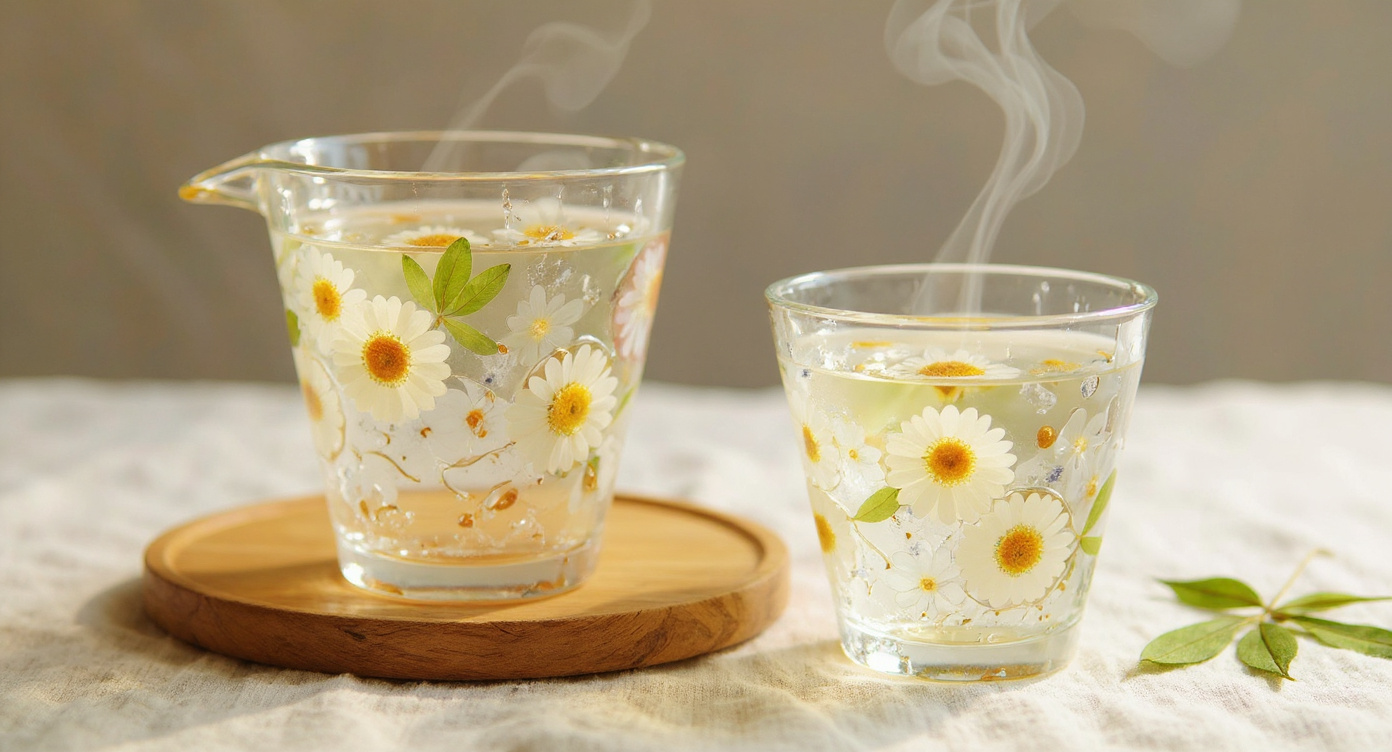
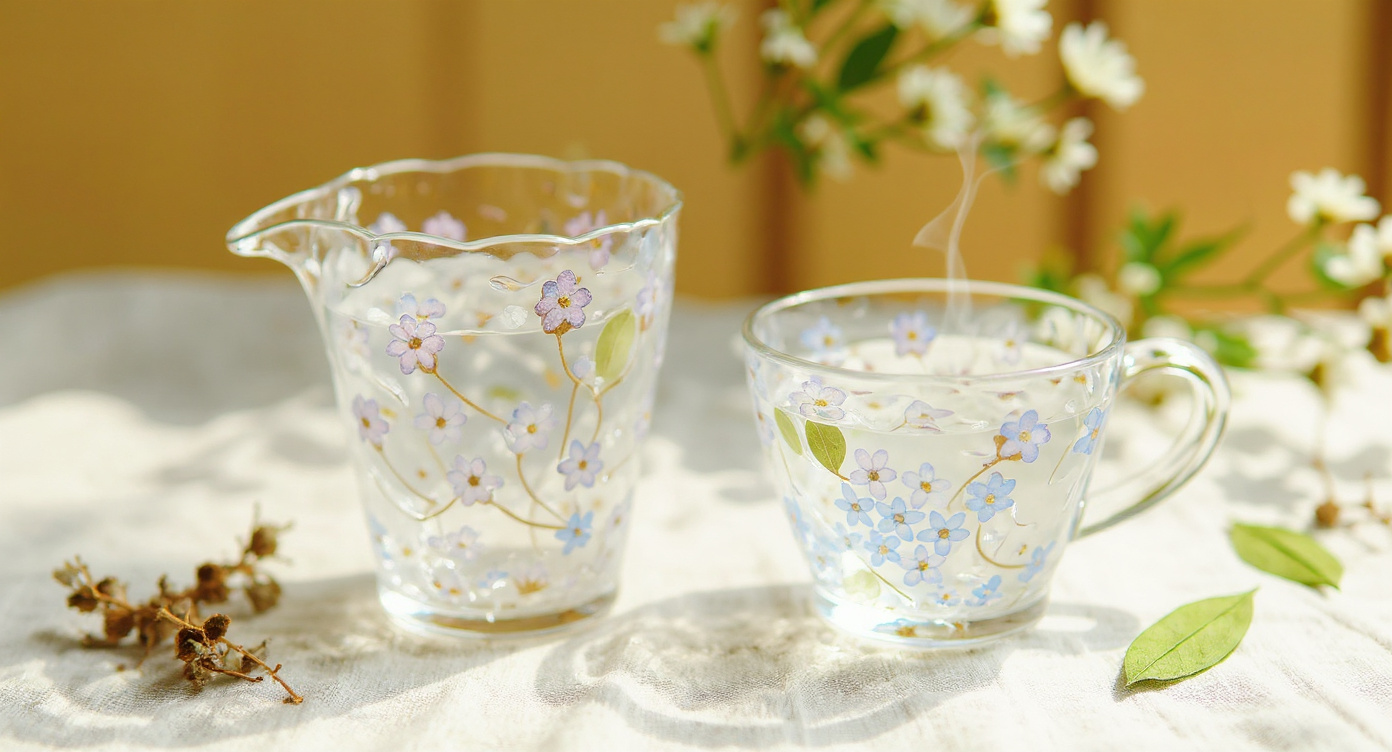
The visual character matters too: soft natural light, warm pastel pink, blue, or yellow flower tones, and a wooden or linen surface with loose dried botanicals nearby. Gentle steam completes the tea-table setting. These are styling details, not proof of temperature approval or a guarantee that every photographed accessory comes with an order.
For broader studio navigation, visit the Pampasroom website. Use the product page for this set's purchasing details rather than treating general floral-glassware information as its operating instructions.
What the gaiwan and fair cup do
A gaiwan brews the tea. Its lid retains heat during steeping and helps hold back leaves while the infusion passes through a controlled gap. Without a handle, grip and lid control deserve attention before decorative features.
The fair cup receives that infusion before serving. Transferring the brew into a shared vessel helps distribute its strength between servings and gives you somewhere to empty the gaiwan without leaving the leaves submerged while individual cups are filled.
Matching vessels, different jobs.
The approximately 400ml description isn't enough to plan a tea session. It doesn't establish each vessel's capacity, its comfortable working fill, or whether the fair cup can receive the gaiwan's normal pour with room to spare. Those details matter more than a headline volume.
Nor does “set” establish a complete tea service. Confirm whether the package includes a saucer, drinking cups, a strainer, or a tray. Loose botanicals and linen in a styled photograph should be treated as props unless the contents list says otherwise.
Real daisies add texture, not a performance guarantee
Printed flowers sit as an image on a surface. Here, real dried daisies remain visible beneath clear resin, with a raised exterior finish that gives the decoration physical presence. That distinction is the reason to consider this product rather than an ordinary floral print.
Handwork has its trade-offs. Flower placement and botanical forms can vary between finished pieces, while the raised finish introduces a surface that needs care during handling and cleaning. A gift recipient who prefers dishwasher convenience may not appreciate that compromise.
The stated 3–5-day process describes making time. It doesn't establish hands-on labor hours, resistance to impacts, or superior pouring. Craft value and brewing performance are separate questions.
Material safety: what the description does and doesn't establish
“Heat-resistant glass” describes the base material, but it doesn't supply an approved water temperature or thermal-shock limit for the assembled glass-and-resin piece. “Eco resin” doesn't establish food-contact suitability, biodegradability, or a disposal method.
Different materials. Different evidence.
The FDA's food-contact substances guidance explains the regulatory context for materials that contact food. It is not approval of this product or its coating. The practical question remains whether the interior, rim, and pouring path are approved for hot beverages, and where the resin ends.
For environmental wording, the FTC's Green Guides summary explains why broad environmental claims need qualification and support. Without documentation for this resin, “eco” should be treated as product wording rather than a measurable environmental benefit.
The unresolved specifications are straightforward: individual capacities, approved temperatures, coating boundaries, cleaning instructions, and appliance compatibility. No pouring measurements or product-specific material test results are supplied here. General references can't fill those gaps.
Buying checklist for a botanical tea set
1. Confirm the package contents. Establish whether the gaiwan and fair cup come with any saucer, drinking cups, strainer, or tray. 2. Request capacities for each vessel. Ask for maximum capacity and recommended working fill, including whether the fair cup accommodates a normal gaiwan pour. 3. Obtain the assembled product's care instructions. These should address hot water, temperature changes, cleaning, and appliance restrictions, not just ordinary glass. 4. Check the decorative boundaries. Confirm where the resin sits relative to the tea-contact interior, rim, and pouring path. 5. Ask for a pouring demonstration. Look for lid control, grip clearance, and whether the fair cup's spout leaves drips. Decoration doesn't answer these questions. 6. Separate making time from arrival time. The 3–5-day process isn't a shipping promise. Gift buyers also need dispatch, transit, packaging, and damage-policy details.
This won't work if the recipient wants maintenance-free teaware and no product-specific care instructions are available. A beautiful object can still be the wrong everyday tool.
How it compares with other choices
The useful comparison is botanical craft versus simpler decoration, not handmade versus factory-made. An undecorated vessel may meet a buyer's brewing needs without introducing an exterior floral coating.
| Buying option | Main distinction | Product-specific performance and care | Price |
|---|---|---|---|
| Preserved-daisy glass gaiwan and fair cup | Real dried daisies raised beneath exterior clear eco-resin; heat-resistant glass base | Temperature limits, coating boundaries, and cleaning approval not supplied | $57.14 listed |
| Printed floral glass set | Printed floral decoration rather than embedded real daisies | varies by seller | varies by seller |
| Ceramic gaiwan and fair cup | Ceramic vessels rather than glass with preserved-flower decoration | varies by seller | varies by seller |
| Plain glass gaiwan and fair cup | Glass vessels without botanical decoration | varies by seller | varies by seller |
Don't assume ceramic is easier to handle or plain glass is dishwasher-safe. Those properties depend on the individual product. The botanical set earns its place when the recipient values the visible daisies enough to accept the care requirements.
A cautious first-use and care sequence
This is a general handling sequence, not a maker-approved cleaning procedure. Product-specific instructions take priority.
1. Inspect before filling. Check for cracked glass, chipped edges, a damaged lid, or lifted coating. Keep a damaged piece out of service while arranging a resolution. 2. Practice with cool water. Learn the lid gap, finger placement, and transfer into the fair cup. This checks handling, not thermal safety. 3. Use hot water after approval is established. Follow the stated temperature and prewarming instructions for the complete piece. Don't infer them from the glass description. 4. Clean by the confirmed method. Until instructions are available, don't assume dishwasher use, microwave use, prolonged soaking, or abrasive cleaning is approved. 5. Protect the botanical finish. Don't pick at the resin or attempt a home repair. If it becomes tacky, separates, or develops a lifted edge, stop using the affected vessel and seek guidance.
Let the pieces dry as directed before storage, and keep the lid protected from knocks. For brewing, tea type and preferred strength determine leaf quantity and steeping time; the daisies don't change the recipe.
FAQ
Are the flowers real or printed?
They are real dried, preserved daisy flowers, visibly embedded and raised on the exterior under clear eco-resin. They are not described as printed decals. The decorative flowers aren't ingredients for the infusion.
Does the approximately 400ml capacity apply to the gaiwan or fair cup?
The supplied description doesn't establish that. Each vessel's capacity and recommended working fill remain unverified. The fair cup needs room to receive the gaiwan's normal pour without an awkwardly full transfer.
Can this set take boiling water?
No boiling-water approval is supplied. The base is described as heat-resistant glass, but the complete decorated piece needs its own temperature and thermal-shock instructions before use.
Is the resin food-safe or biodegradable?
Neither property is established by the term “eco resin.” The resin formulation, supporting documentation, and any tea-contact placement remain unverified. Exterior decoration should not be assumed suitable for beverage contact.
Can the set go in a dishwasher or microwave?
Neither appliance is confirmed as suitable. Treat both as unapproved until product-specific instructions establish otherwise. Guidance for undecorated glass doesn't establish compatibility for this assembled piece.
Is it suitable for someone learning to use a gaiwan?
It may be, if they want to learn lid-controlled pouring and accept the care requirements. A cool-water practice pour helps assess grip and coordination, but doesn't establish hot-water suitability. Confirm whether drinking cups are included.
Do the flowers improve the tea's flavor?
No supplied specification supports that claim. The daisies decorate the exterior rather than being brewed with the leaves. Their value is visual and craft-based, not a promised change in extraction or taste.
How long does making the set take?
The stated handcraft process takes 3–5 days. That isn't the same as dispatch or delivery time, so a gift deadline requires a separate arrival estimate.
The buying decision
Choose this set if real daisies, clear glass, and a raised botanical finish are part of what you want from a tea ritual. Choose simpler teaware if decoration adds little value or the required care doesn't fit your routine.
Before ordering the preserved-daisy glass gaiwan and fair cup set, resolve the capacity, temperature, coating, and cleaning questions. That's the difference between admiring a photograph and choosing teaware you can use with confidence.