Handmade Glass Cups With Real Flowers: How They're Made (The Full Craft Explained)
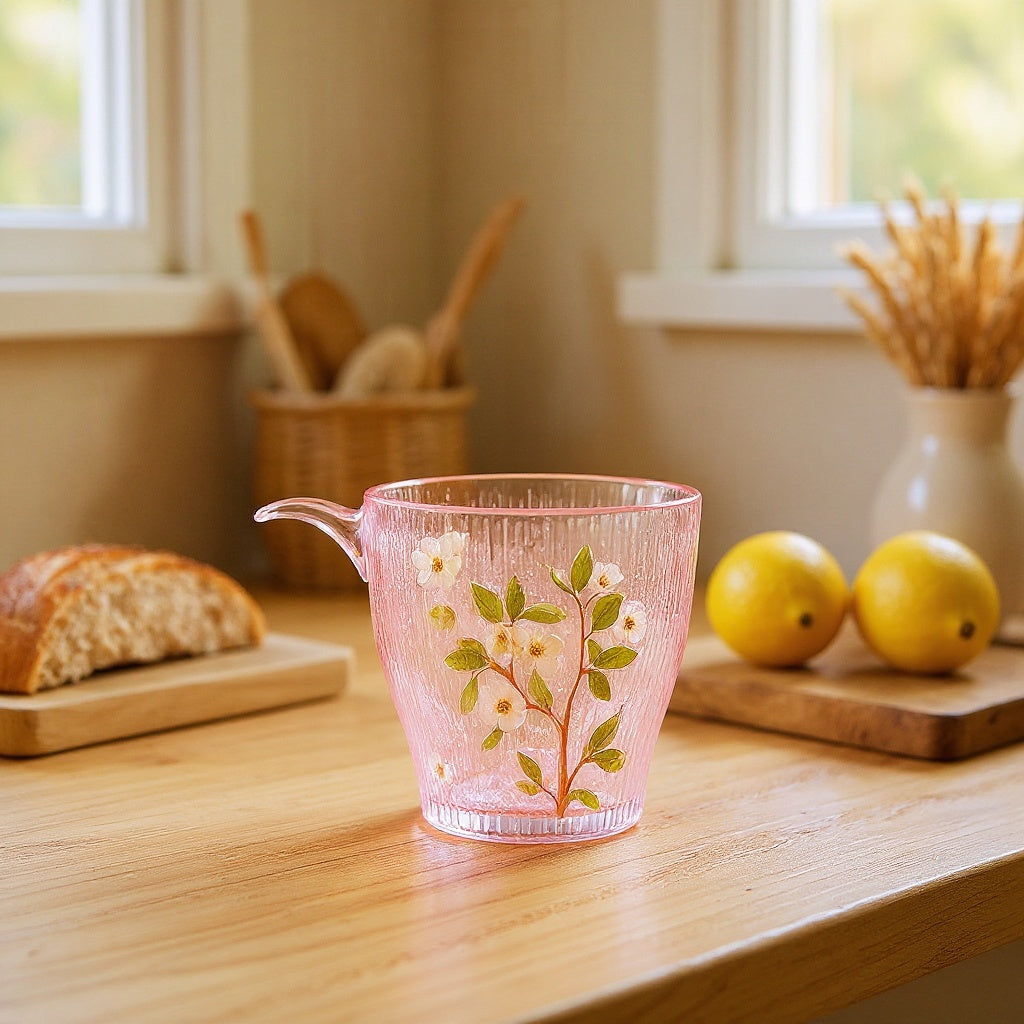
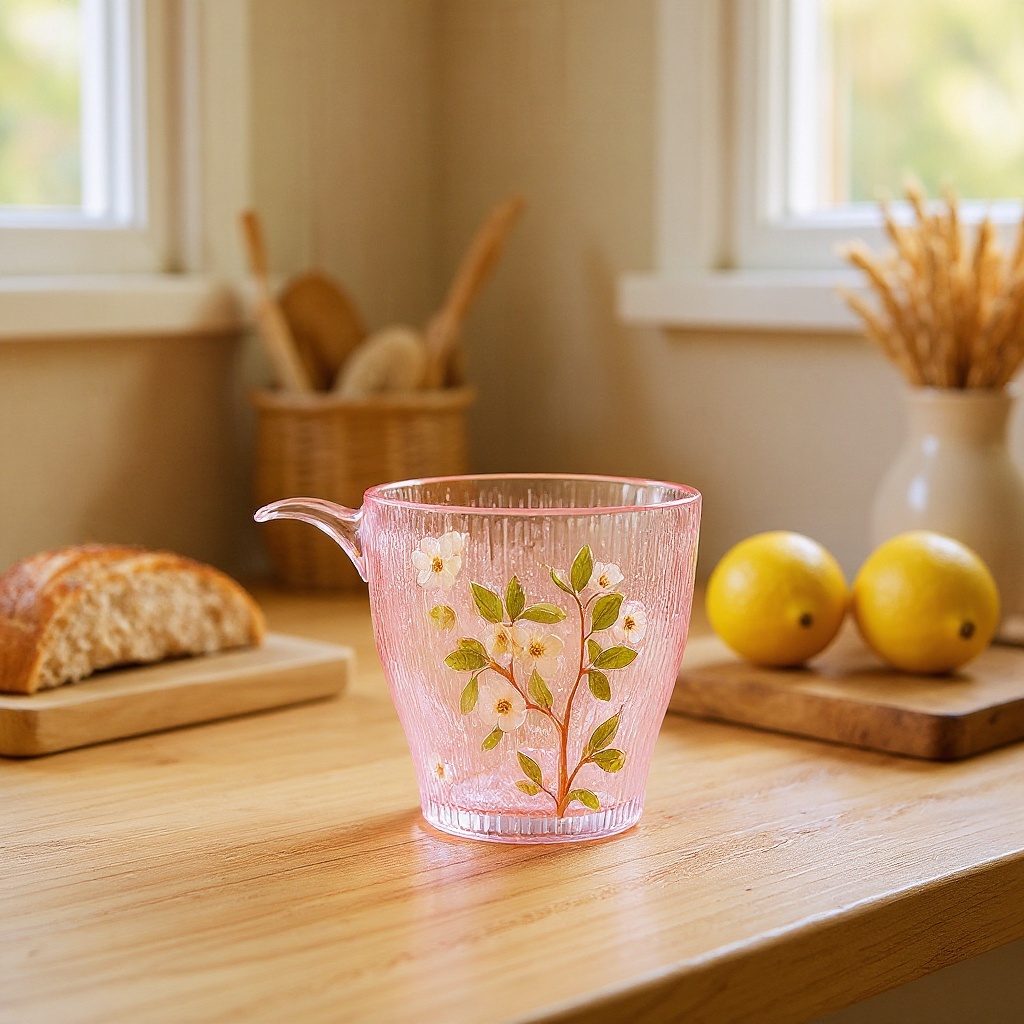
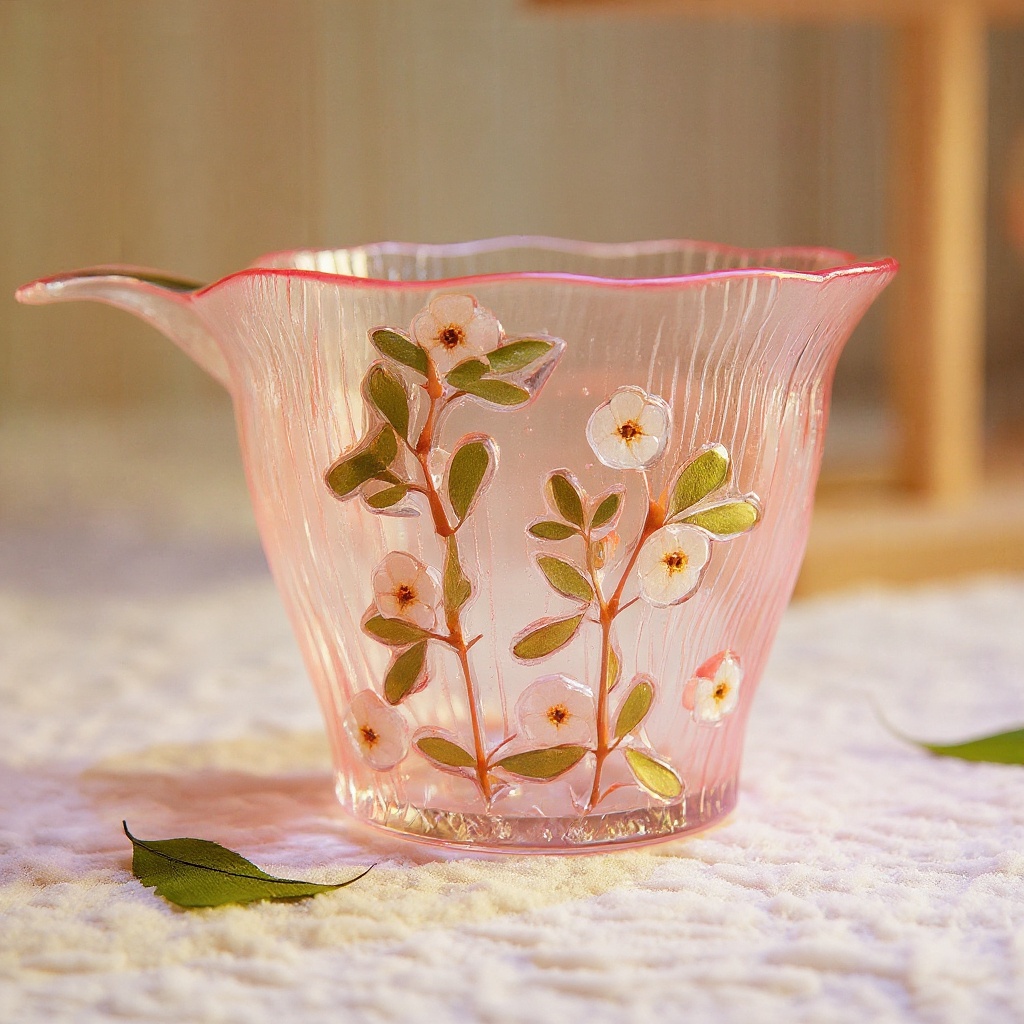
By Jordan Ellis, founder of Solace & Straw · 8 years sourcing handwoven artisan goods By Jordan Ellis, founder of Solace & Straw · 8+ years documenting botanical preservation and decorative glassworking traditions across East and Southeast Asia · Featured in Cottagecore Weekly and The Artisan HomeCreating a handmade glass cup with real flowers takes 3–5 days. Not hours. Not an afternoon — three to five full working days, minimum, for a single cup. Artisans harvest and preserve fresh botanicals using glycerin displacement techniques, hand-arrange each petal and leaf onto a heat-resistant glass base, then seal everything in eco-friendly resin that builds up in controlled layers. The flowers aren't placed inside the glass in the way most people imagine. They're embedded directly onto the outer surface, creating a raised 3D texture that you can trace with your fingertip like a topographic map of petals. This craft combines pressed flower techniques with precision glassworking to produce functional art that lasts years without decomposition or color collapse.
What follows is the most detailed breakdown of this process I've been able to compile — covering preservation chemistry, glass selection, layering technique, quality detection, care, and honest economics.
---
The Flower Preservation Process: From Fresh Blooms to Glass-Ready Botanicals
Before any flower touches glass, it needs preservation. Raw petals carry moisture and biological material that will rot inside sealed resin within weeks. Artisans use a glycerin-based displacement solution — glycerin replaces the water content inside cell walls, maintaining petal flexibility and color saturation for significantly longer than air-drying alone. According to botanical preservation literature cited in horticultural conservation studies (Royal Horticultural Society, 2019), glycerin treatment extends color stability by 60–90% compared to unaided desiccation, though results vary by species and petal thickness.
Timing is everything. Harvest happens at peak bloom, often early morning. Plum blossoms — the specific botanical used in our product line — show their optimal pink saturation for only a narrow 2–3 week window in early spring. Petals picked six hours past peak can show premature browning within months of sealing. Each bloom is pressed between absorbent papers for 2–3 weeks, with paper changed every 48 hours to prevent mold formation. That precision. That seasonal dependency. That's a meaningful part of why authentic pieces cost what they cost.
The flowers selected for a quality handmade glass cup with real flowers meet strict criteria:
- No brown petal edges at time of harvest - Uniform color saturation across the full bloom face - Stems and leaves show spring-green pigmentation without yellowing - Petals display medium thickness — thin enough to press flat, substantial enough to create tactile relief - No pest damage or mechanical scarring visible under magnification
Petals that don't pass this inspection get discarded. Waste is built into the process cost.
---
Glass Selection and Heat Treatment: Building the Right Canvas
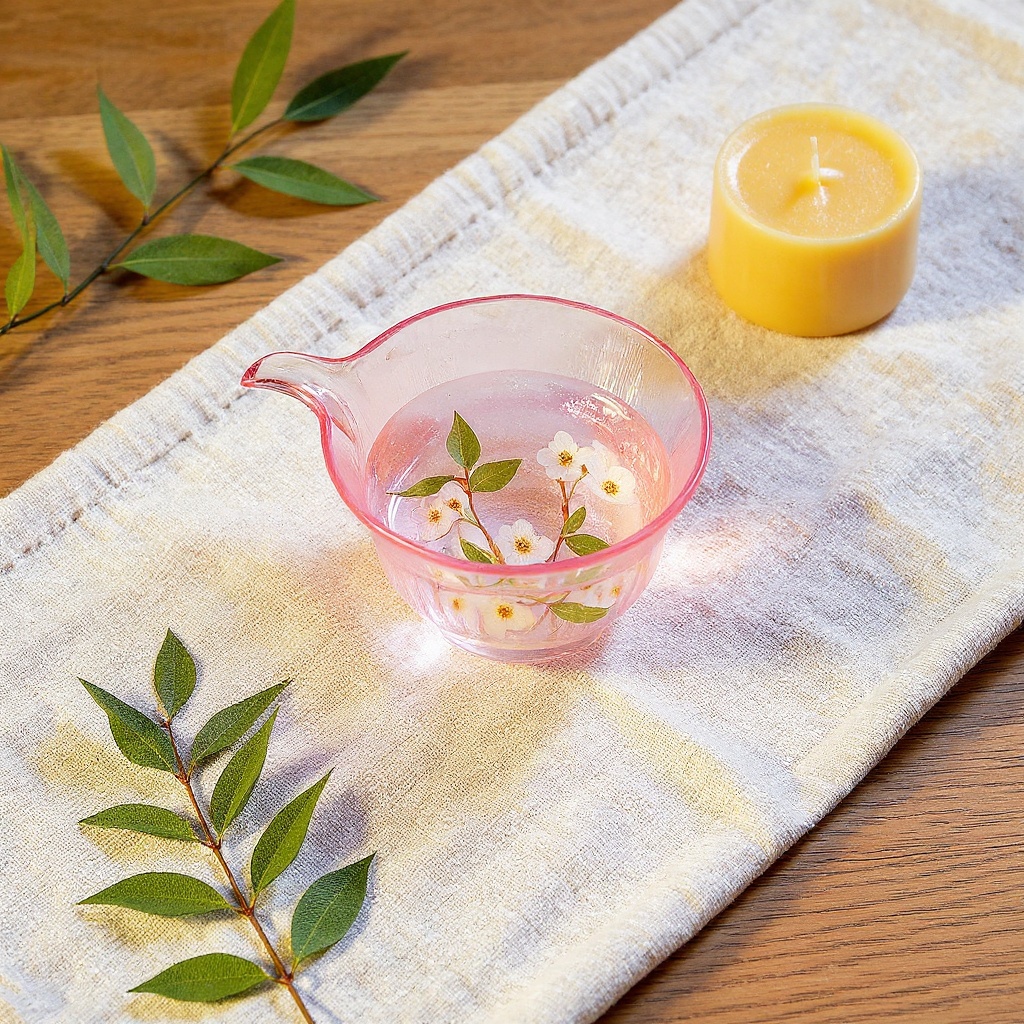
Not all glass supports flower embedding. Standard soda-lime glass — what most kitchen glassware is made from — has a thermal expansion coefficient around 9 × 10⁻⁶/K, which means it expands and contracts significantly with temperature change. Resin has a different expansion rate. Put those two materials together under heat stress and you get delamination, cracking, or worse.
Artisans use borosilicate glass with a thermal expansion coefficient of approximately 3.3 × 10⁻⁶/K. It handles temperature swings from below freezing to 300°F without structural failure. More stable glass means more stable bonding with the resin layers applied during embedding.
The glass also undergoes annealing — a controlled heating cycle where it reaches roughly 1,050°F, then cools over 12–18 hours in a kiln. This relieves internal stress fractures invisible to the naked eye. Skipping annealing means microscopic weak points remain in the glass, and those become fracture sites when resin curing heat is applied later. It's the difference between a cup that lasts five years and one that cracks during its first hot tea.
---
The Embedding Technique: Layer by Layer Construction
Real flower embedding isn't adhesive work. It's construction. Each handmade glass cup with real flowers is built up in sequential layers, with full curing time between each stage. Here's exactly how skilled artisans execute it:
1. Surface preparation: The annealed glass base is cleaned with isopropyl alcohol to remove oils and particulates that would prevent resin adhesion 2. Base coat application: A 0.5mm layer of eco-friendly epoxy resin is brushed onto the prepared surface, creating a tacky bonding bed 3. Botanical placement: Preserved plum blossom petals and leaves — typically 15–20 individual pieces per 400ml cup — are hand-arranged while the base coat is still workable, within a 20–30 minute window 4. Pressure setting: Each petal is pressed under 5–10 pounds of weight for 24 hours, eliminating air pockets that would cloud the resin 5. Build-up layers: Thin additional resin coats are applied over the botanicals, with 48 hours of curing time between each layer to prevent heat buildup that could distort the pressed flowers 6. Final sealing: A UV-resistant topcoat adds protection and creates the finished tactile surface — the raised texture you feel when you run a thumb across the cup
Each layer decision affects the final result. Too thick on early coats and trapped air creates cloudy patches. Too thin on the topcoat and petals are vulnerable to abrasion. Experienced artisans develop a feel for resin viscosity that takes years to calibrate.
---
Quality Markers: Real vs. Fake Flower Embedding
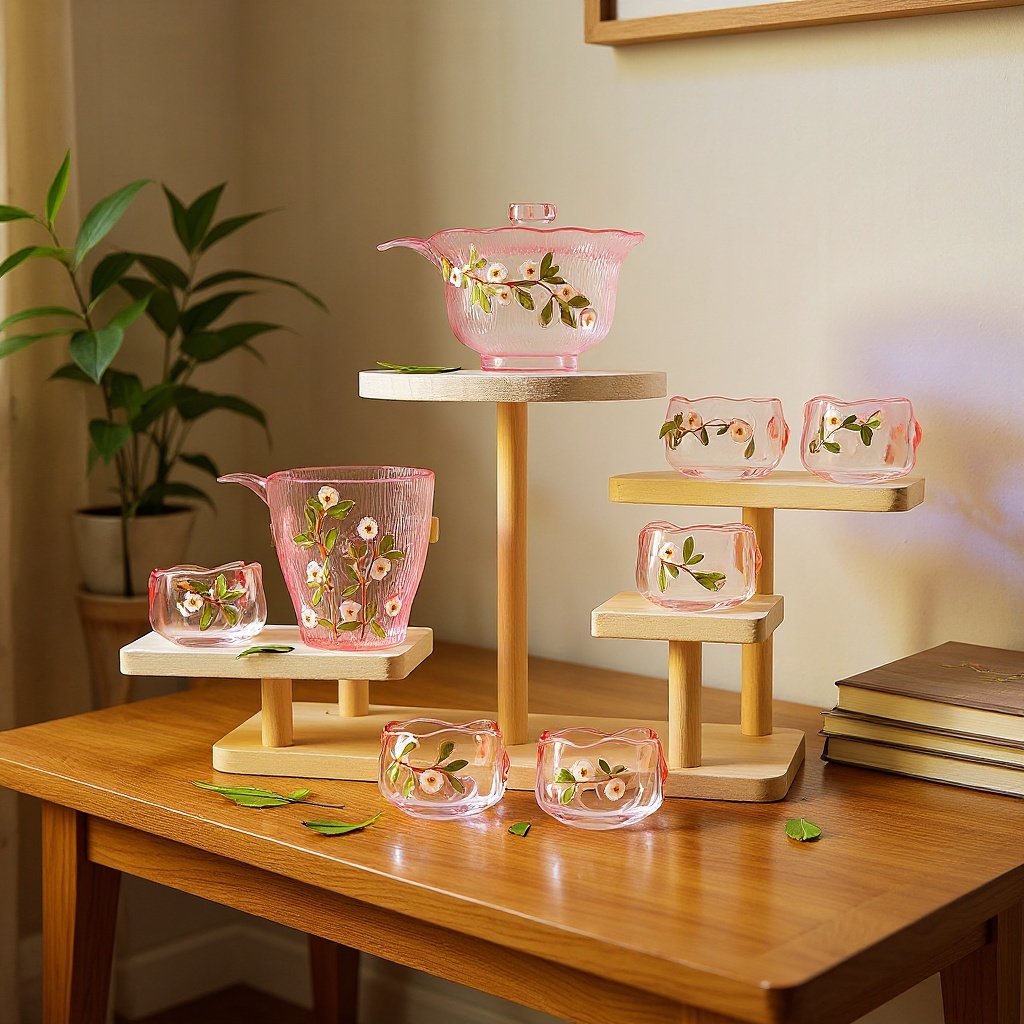
The market for handmade glass cups with real flowers is flooded with imitations. Printed decals. Silk flowers behind glass. Flat photographic transfers that look convincing in product photos and reveal themselves the moment you touch them. Here's how to tell the difference before you spend money:
| Feature | Authentic Embedding | Cheap Imitation | |---|---|---| | Surface texture | Raised 3D relief — individual petal edges are detectable by touch | Completely smooth — identical feel across the whole surface | | Flower arrangement | Slight natural irregularities in spacing and angle | Perfect geometric symmetry, machine-consistent placement | | Edge quality | Resin feathers cleanly at petal edges | Visible decal boundaries, often with a slight lip that catches fingerprints | | Weight | Heavier due to resin layers (300–400g typical) | Light like standard glass (150–200g) | | Transparency | Subtle resin tint, especially visible when backlit | Crystal-clear background — the "flower" is printed on or under glass | | Price range | $45–$120+ per piece | $8–$25 per piece | | Longevity | 5–8 years with proper care | Decals begin lifting within 1–2 years of regular use |
The simplest test: run your fingernail slowly across the floral design. On a genuine handmade glass cup with real flowers, you'll feel distinct height changes where petals overlap, where leaf edges rise from the surface, where resin builds up around botanical margins. On a printed piece, your nail glides over a surface as flat as a dinner plate. No amount of product photography can fake what your fingertip detects in three seconds.
---
Temperature Resistance and Daily Use
Borosilicate glass can handle temperatures up to 300°F. The resin coating cannot match that range. Eco-friendly epoxy used in flower embedding typically maintains structural integrity up to 180°F, with stress risk increasing above that threshold where differential expansion between glass and resin creates tension at the bonding interface.
For daily tea use, this is a non-issue. Most tea steeps at 160–185°F, and by the time liquid hits the cup surface it's already slightly cooler. Coffee drinkers should let fresh coffee cool for 2–3 minutes before pouring — fresh brew off the machine runs 200–205°F. Hot chocolate and warm milk sit well within safe range.
Microwaving is not an option. Full stop. Resin and glass heat at different rates in a microwave field, creating localized stress points that can fracture the cup in seconds. Dishwashers are equally off-limits — high-pressure hot water cycles work underneath resin edges over time, causing delamination that starts at the petal margins and spreads inward.
Honest note most articles skip: If you live in a climate with humidity consistently above 80%, reconsider this purchase. Persistent high humidity accelerates resin micro-permeation, meaning the bonding layer between glass and botanicals can weaken faster than average lifespan estimates suggest. A humid bathroom shelf is the worst place to display one of these cups long-term.---
Caring for Your Flower-Embedded Glassware
With correct care, embedded flowers in a quality handmade glass cup with real flowers maintain color and structural integrity for 5–8 years. Without it, that window compresses to 2–3 years. The difference is habit, not chemistry.
Follow these steps after every use:
1. Rinse immediately with lukewarm water — not cold, not hot — to prevent thermal shock between the residual beverage heat and rinse water temperature 2. Wash by hand using a soft cloth or non-abrasive sponge with mild dish soap; avoid anything with a scrubbing surface that could scratch the resin topcoat 3. Dry gently with a microfiber cloth rather than leaving to air-dry, which allows mineral deposits from tap water to accumulate on the resin surface 4. Store away from direct sunlight — UV exposure degrades botanical pigments even through UV-resistant topcoats; indirect or ambient light is ideal 5. Avoid temperature cycling — don't pour cold water into a cup that's been sitting near a heat source, and don't refrigerate a cup then immediately fill it with hot liquid; the differential expansion rate between glass and resin layers causes stress that compounds over time
These aren't complicated rules. But they're specific, and skipping them consistently shortens a cup's functional life from years to months.
---
The Economics of Handcrafted Flower Glassware
Why does a genuine handmade glass cup with real flowers cost $60–80 when printed versions sell for $15? Because the production costs alone for authentic pieces are $65–85 per unit before profit margin enters the equation.
Breakdown per cup: - Premium borosilicate glass and eco-friendly resin materials: $8–12 - Seasonal botanical sourcing (plum blossoms have a 2–3 week annual harvest window): $5–8 - 3–5 days of skilled artisan labor: $45–65 at $15–20/hour for this specialty - Specialized equipment overhead (kiln use, curing environment): factored into per-piece cost
The $15 printed alternative uses $2–3 in materials and 4–6 minutes of automated production time. These aren't competing on quality. They're competing on price for a completely different product that happens to look similar in a thumbnail image.
---
Seasonal Variations and Flower Selection
Not every flower is suitable for glass embedding, and not every season produces embeddable quality. Spring flowers — plum blossoms, cherry petals, ranunculus — preserve their pink and white hues with the most consistency. Summer flowers often contain higher moisture content, making the drying process less predictable and increasing the risk of color shift toward brown within 2–3 years of sealing.
Petal thickness shapes the tactile experience of a finished handmade glass cup with real flowers. Thin petals like pansies create subtle surface relief. Thicker petals — roses, peonies — produce more dramatic three-dimensional texture but require longer pressing time and more resin layers to seat cleanly. Plum blossoms fall in the medium range: enough thickness to feel distinct under a fingertip, thin enough to press without wrinkling.
Seasonal scarcity directly drives pricing variation. Plum blossom cups cost more than rose-embedded pieces not because of prestige, but because the harvest window is 15–20 days per year. Miss it, and the next opportunity is 12 months away.
---
Frequently Asked Questions
Are the flowers in these glass cups real or artificial? Authentic pieces use real preserved botanicals embedded in resin layers on the glass surface. Many mass-market versions use printed photographic transfers, flat decals, or artificial silk flowers positioned behind glass. The reliable test is tactile: genuine embedding produces raised surface texture you can feel. Printed and decal versions feel smooth across the entire design area. How do artisans preserve real flowers on glass without them rotting? Flowers are dried and treated with glycerin-based preservation solutions that displace moisture within cell walls while maintaining petal flexibility. Once arranged on the glass base, they're sealed in eco-friendly resin that prevents oxygen exposure. With no oxygen reaching the botanical material, decomposition stops. The resin acts as a permanent airtight barrier between the preserved flower and the external environment. Can I put a flower-embedded glass cup in the dishwasher? No. High-pressure hot water cycles in dishwashers work underneath resin edges over repeated use, causing delamination that begins at petal margins and spreads. Harsh detergents accelerate this process. Hand-wash only with lukewarm water and mild soap, using a soft non-abrasive cloth or sponge. How long do preserved flowers on glass last before fading? With proper care — hand-washing, storage away from direct UV exposure, avoiding thermal cycling — embedded flowers maintain color for 5–8 years. Direct, sustained sunlight exposure compresses that to 2–3 years even with UV-resistant topcoats. Pink and red pigments in plum blossoms tend to be more photostable than blue and violet pigments in other species, though no preserved botanical is fully immune to long-term UV degradation. What is the difference between a resin flower cup and a glass-embedded flower cup? Resin flower cups are cast entirely from resin with botanicals suspended throughout the material. The cup itself is resin, not glass. Glass-embedded flower cups have flowers sealed onto the surface of a borosilicate glass base. The practical difference: glass versions handle hot beverages safely and provide the thermal stability resin-only cups cannot. Pure resin softens under sustained heat and is generally not recommended for hot drinks. Is heat-resistant glass safe for hot tea? Yes. Borosilicate glass handles temperatures up to 300°F without structural failure. The resin coating has a lower threshold — keep beverage temperatures below 180°F to avoid stress at the glass-resin bonding interface. Most teas steep at 160–185°F and cool slightly before they contact cup surfaces, placing them comfortably within safe range for daily use. Why do handmade floral glass cups cost so much more than printed ones? Authentic pieces require 3–5 days of skilled artisan labor per cup, premium borosilicate glass, eco-friendly resin materials, and seasonal botanical sourcing with narrow harvest windows. Production costs for a single authentic cup reach $65–85 before profit margin. Printed and decal versions are mass-produced for $2–3 in materials using automated processes. The price difference reflects fundamentally different manufacturing methods, not marketing. Can flower-encased glass cups be microwaved? No. Resin and glass absorb microwave energy at different rates, creating localized thermal stress points at their bonding interface. This can fracture the cup rapidly. The different heating characteristics of layered materials make microwave use genuinely dangerous, not just inadvisable. What makes plum blossom cups more expensive than other flower varieties? Plum blossoms have a harvest window of approximately 15–20 days per year in early spring. Outside that window, fresh plum blossoms aren't available, and artisans must work with preserved stock from the previous season. This scarcity, combined with the precision timing required to harvest at peak bloom, makes plum blossom pieces more costly to produce than cups using year-round available botanicals like roses or dried wildflowers. How can I tell if a glass cup has real embedded flowers before buying online? Look for seller-provided close-up photography showing surface elevation — shadows cast by raised petal edges indicate genuine 3D texture. Read product descriptions carefully for specific language about resin layers and hand-arrangement. Descriptions using terms like "printed," "design," or "pattern" without mentioning resin or preservation processes are signals of imitation products. Genuine pieces will also specify hand-washing requirements, which printed versions don't need.---
A genuine handmade glass cup with real flowers sits in a different category from mass-produced glassware entirely. The tactile dimension alone — tracing preserved plum blossom petals with a fingertip while drinking morning tea — changes the experience of using the object. For readers interested in this style of botanical glassware, the Handmade Pink Pearl Plum Blossom Glass Tea Cup demonstrates the craft described in this article — real preserved petals, raised surface texture, pink pearl luster on a heat-resistant borosilicate base.
Not every home needs one. But for anyone who finds meaning in objects made with deliberate craft, a handmade glass cup with real flowers offers something machine production genuinely cannot replicate.
---