A handmade pressed flower resin glass cup can be suitable for drinking if the finished vessel is made for that use and its glass interior and drinking rim remain appropriate contact surfaces. Borosilicate glass alone doesn't establish the safety or heat tolerance of an attached resin coating. Those details need product-specific guidance.
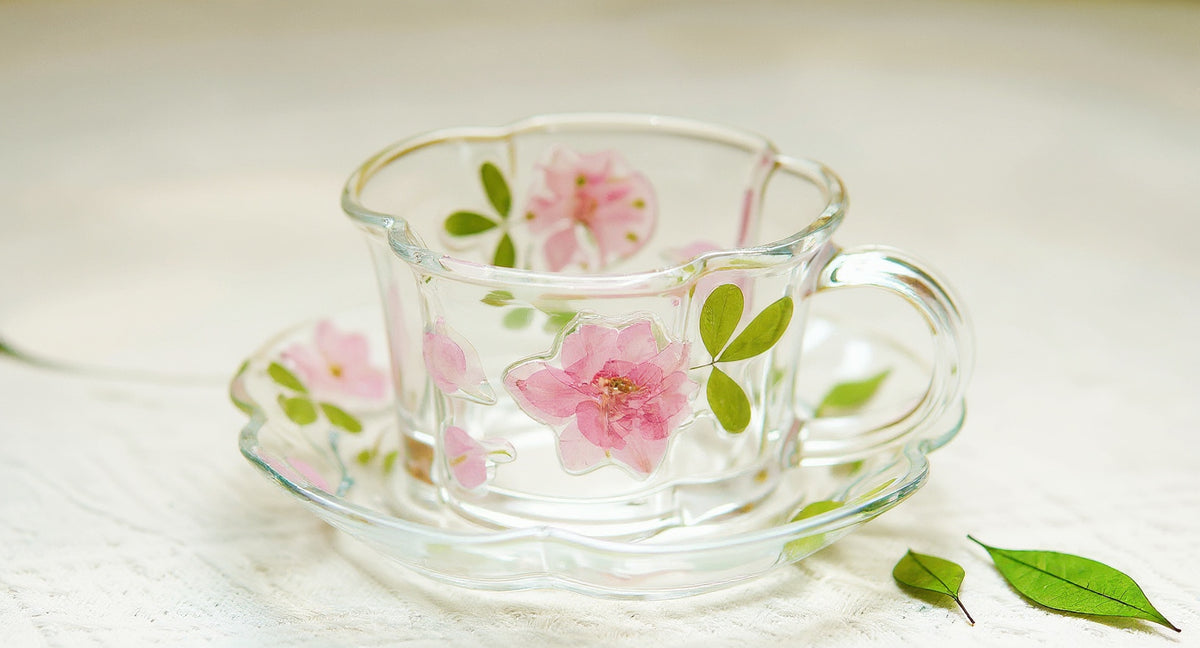
The product here is a clear high-borosilicate glass cup and saucer with a delicate, refined silhouette. Its exterior has a three-dimensional raised botanical relief: real dried pink and blush flower petals and green leaves are visible beneath a smooth resin layer. Soft natural light casts gentle shadows across that textured surface; a cream or marble background keeps the glass and botanicals in focus.
Real flowers. Raised detail. Not a printed pattern.
That distinction matters when searching for “pressed flower resin glass cup handmade.” The phrase can describe several constructions, but this guide concerns a glass drinking vessel with botanical decoration on its exterior, not a cup made from resin.
What the product information establishes
The handcrafted pressed flower glass cup and saucer is listed as the Handcrafted Pressed Flower Relief Glass Coffee Cup & Saucer | Borosilicate | Artisan Gift.
| Product detail | Seller-reported specification |
|---|---|
| Price | $88 |
| Capacity | Approximately 200–250ml |
| Included pieces | Glass cup and matching saucer |
| Glass material | High-borosilicate glass |
| Botanical decoration | Real preserved pink and blush petals and green leaves in raised exterior relief |
| Surface finish | Smooth resin layer over the embedded botanicals |
| Production process | 3 days |
These are Pampasroom's product descriptions, not independent laboratory findings. The coating is described as food-safe, but the available information doesn't identify its resin formulation, food-contact compliance documentation, measured rim clearance, or maximum service temperature. Dishwasher and microwave approval are also not supplied.
A useful distinction: missing documentation doesn't prove a product is unsafe. It does prevent a confident claim that every temperature, cleaning method, or contact condition is suitable.
The 3-day production process isn't a delivery promise. Gift deadlines still depend on dispatch and transit.
Real botanical relief versus floral printing
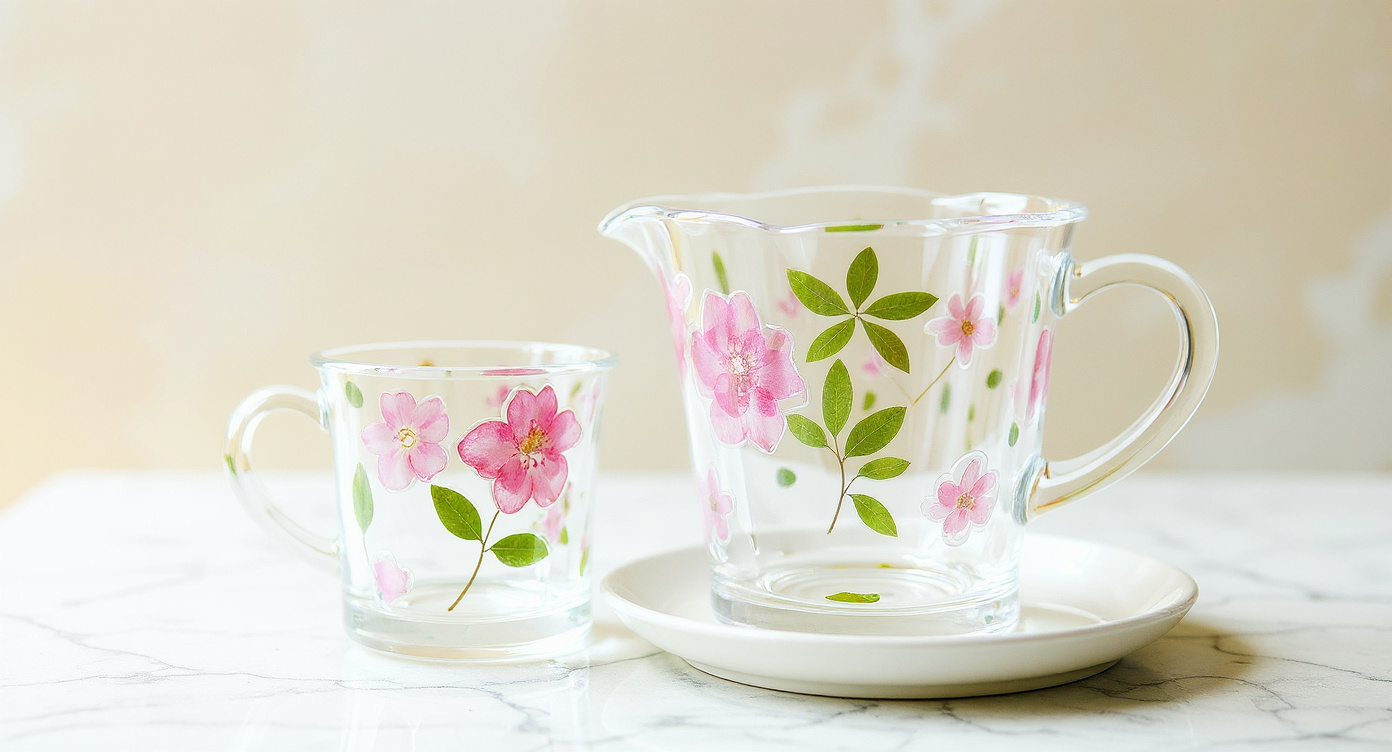
The visual appeal comes from preserved plant material beneath a smooth coating, with the finished decoration standing proud of the glass exterior. “Pressed flower” shouldn't be read as meaning the completed surface is flat. This design has three-dimensional relief.
Look beyond the search term. Close-up images should show the pink and blush petals, green leaves, and raised contours, rather than a flat floral graphic that could be printed on the glass.
Natural variation belongs here. Loose material doesn't.
Petal shapes and leaf placement can vary between handmade pieces. That variation doesn't excuse lifting coating edges, exposed botanical material, or a drinking rim whose finish hasn't been explained.
When I sealed my first batch of preserved blooms into a heat-resistant glass cup, the result combined glass and preserved botanicals in one object. That doesn't make those materials interchangeable: a glass body, plant material, and resin coating still need separate consideration.
What “food-safe resin” does and doesn't answer
For this construction, the intended beverage-contact surface is glass. The resin and flowers belong on the exterior. Ask whether the decoration stops short of the lip-contact area; exterior placement doesn't establish rim clearance by itself.
The FDA's food-contact substances guidance explains the regulatory context for substances used in food-contact applications. It isn't an approval of this cup, and a general reference can't replace documentation for the resin and its intended conditions of use.
No blanket reassurance.
A coating described as food-safe isn't, on that wording alone, confirmed for boiling-water exposure, microwave heating, dishwasher cycles, or repeated contact with lips. The finished application matters, not just the name of the material.
Before buying, ask these questions:
1. What resin is used? Request the formulation or product name and the manufacturer's relevant use documentation. 2. Where does the coating stop? Ask for confirmation that the interior is glass and for a close-up showing the drinking rim and coating boundary. 3. What hot-fill conditions are permitted? Request the finished cup's beverage-temperature guidance, rather than a rating for undecorated glass. 4. Which appliances are approved? Get separate answers for dishwasher washing and microwave reheating. 5. What happens if the coating changes? Ask about lifting, cracking, tackiness, and the seller's replacement or inspection process.
A photograph can help establish placement. It can't establish resin chemistry, curing quality, or food-contact compliance. If documented compliance is a purchase requirement, don't substitute an attractive close-up for the missing paperwork.
Heat-resistant glass doesn't rate the entire cup
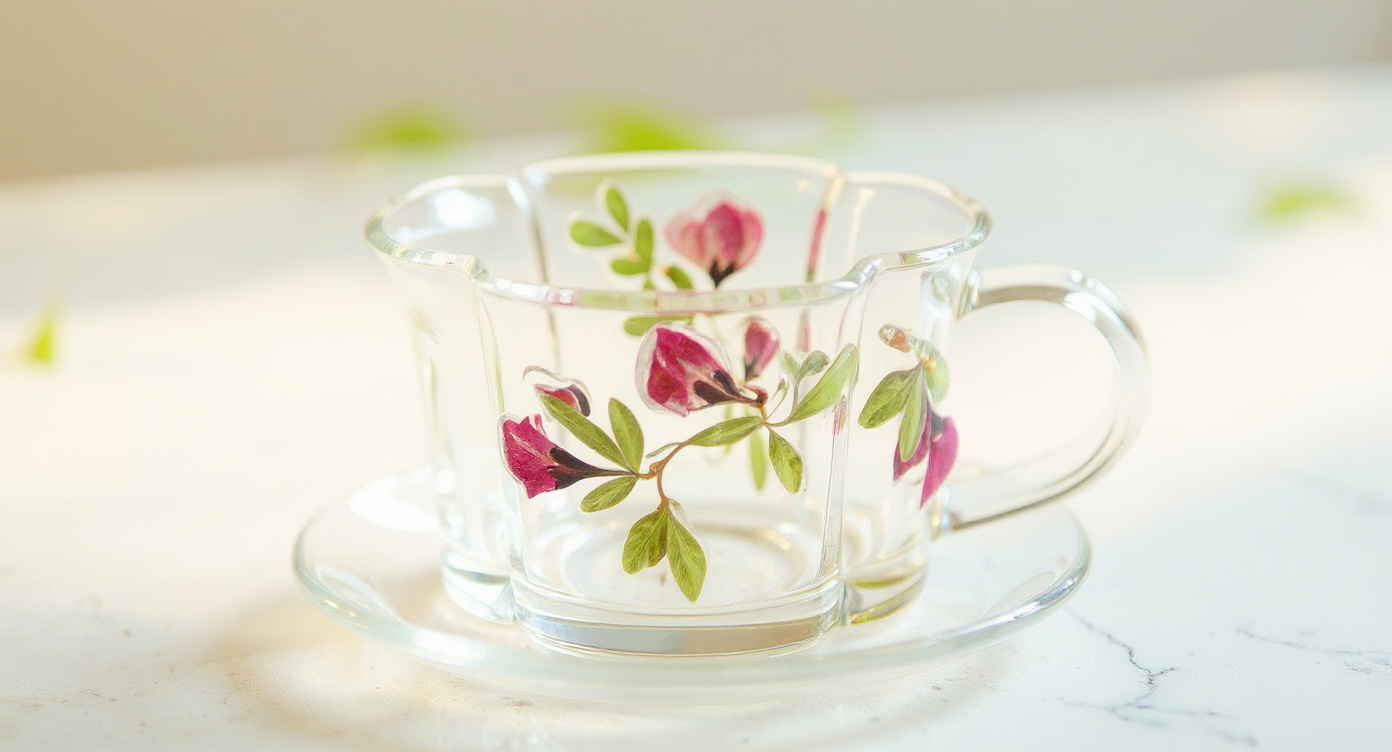
Borosilicate glass is valued for its low thermal expansion and resistance to thermal shock. SCHOTT's BOROFLOAT material information provides manufacturer background on those properties in borosilicate glass. It does not identify the glass manufacturer for this cup or certify the decorated product.
The coating has separate limits. Heat travels through the glass, so the exterior resin and its bond can be exposed even when the beverage never touches them.
This set is presented for coffee and tea, but its supplied specifications don't establish a maximum beverage temperature or direct kettle-to-cup pouring approval. Confirm those points before making very hot drinks part of its routine. Don't invent a temperature limit from the word “borosilicate.”
Microwave approval is a separate question. Without confirmation for the complete decorated cup, reheat the drink in another vessel that is approved for that appliance.
Avoid abrupt hot-to-cold changes as a conservative care measure. Heat-resistant doesn't mean indestructible, and the performance of plain glass doesn't transfer to a bonded botanical coating.
How to clean the raised floral surface
The maker's finished-product instructions should come first. Where appliance approval is absent, hand washing avoids the heat, detergent exposure, and water jets of a dishwasher cycle; it isn't a substitute for obtaining clear care guidance.
Use this conservative routine:
1. Let the cup cool. Don't move it straight from a hot drink into cold washing water. 2. Remove drink residue before it dries. This reduces the need for forceful scrubbing inside the glass. 3. Wash with lukewarm water and mild dish soap. Use a soft cloth or non-abrasive sponge rather than a scouring pad. 4. Use light pressure on the relief. Clean around the raised contours without picking at coating edges or scraping with a sharp tool. 5. Rinse without prolonged soaking. Submersion adds unnecessary exposure at coating boundaries. 6. Dry without rubbing hard against the decoration. Keep other cups from pressing against the raised surface during storage.
Treat the saucer with the same caution until its care instructions say otherwise. Its inclusion doesn't establish machine-washing suitability.
If the coating lifts, cracks, becomes tacky, releases botanical material, or develops an unusual odor, pause use and contact the seller. Don't sand it or attempt a household resin repair on drinkware. A smooth repair isn't evidence of suitable contact or heat performance.
Store the set away from prolonged direct sunlight and concentrated heat. No supported lifespan or color-retention guarantee is supplied for the flowers or coating.
Is the $88 handmade premium worth it?
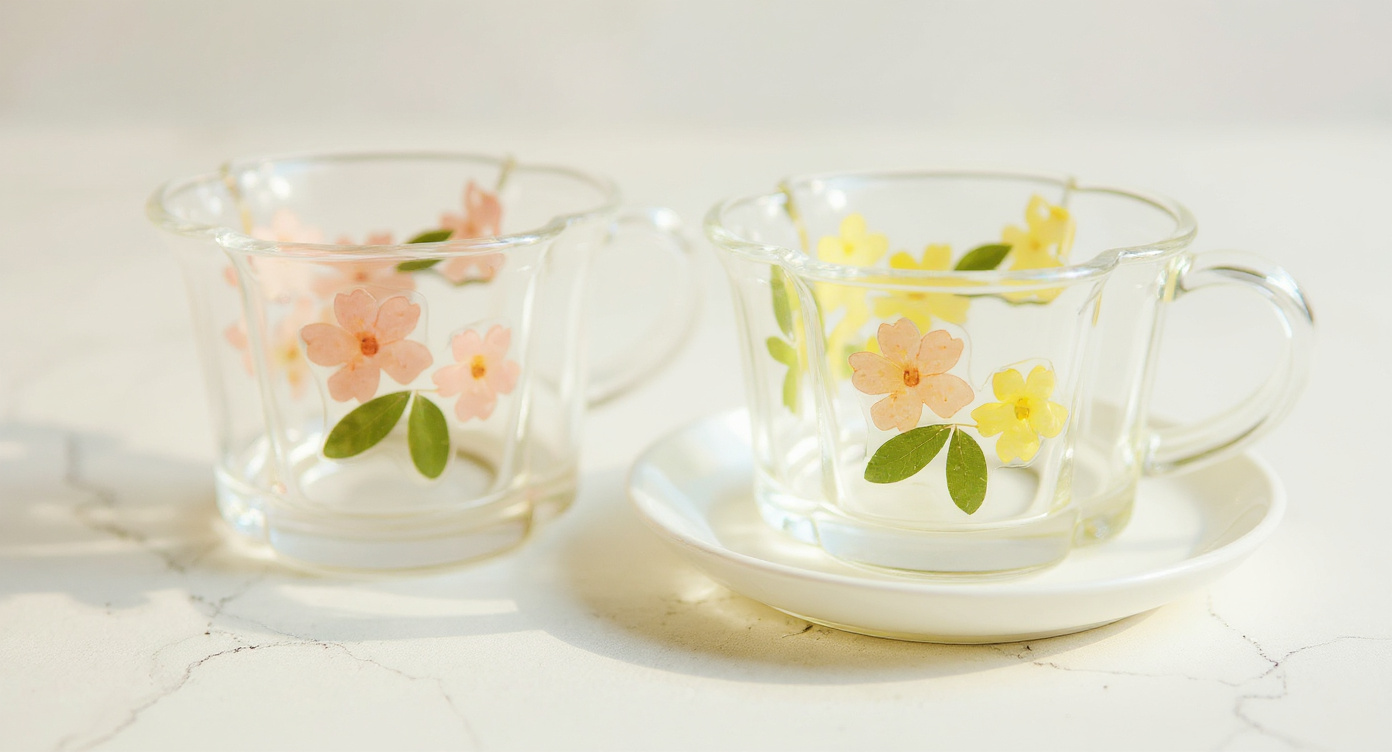
The premium buys botanical handwork and a matching cup-and-saucer set. It doesn't establish stronger appliance performance or a more complete safety specification.
Here's the less romantic answer: if dishwasher convenience is the priority, this $88 set isn't a sensible choice unless finished-product dishwasher approval is provided. Real flowers don't compensate for a care routine the owner won't follow.
At approximately 200–250ml, it suits smaller coffee or tea servings. It won't work if the buyer needs a large mug and doesn't want frequent refills.
| Drinkware type | Defining construction | Capacity | Price | Appliance approval |
|---|---|---|---|---|
| This pressed flower relief cup and saucer | High-borosilicate glass with real petals and leaves beneath exterior resin | Approximately 200–250ml | $88 | Not supplied |
| Floral-print glass cup | Printed floral decoration | varies by seller | varies by seller | varies by seller |
| Artisan floral ceramic set | Ceramic vessel with floral decoration | varies by seller | varies by seller | varies by seller |
| Plain borosilicate drinkware | Glass without this botanical resin layer | varies by seller | varies by seller | varies by seller |
For someone who values real preserved flowers and welcomes hand washing, the trade-off may be worthwhile. For someone who wants unrestricted reheating and machine cleaning, drinkware with explicit approval for those uses is the better fit.
For a gift, include the care guidance. Browse Pampasroom for the wider studio offering, but compare each piece's own materials and instructions rather than assuming every floral object has the same construction.
FAQ
Is this pressed flower resin glass cup safe to drink from?
The set is presented as drinkware with exterior botanical decoration and a coating described as food-safe. Its supplied information doesn't include the resin formulation, compliance documentation, or measured rim clearance. Confirm the glass interior, lip-contact boundary, and intended-use guidance before treating that description as a complete safety specification.
Does it contain real flowers or a floral print?
Its specified construction contains real dried pink and blush flower petals and green leaves beneath a smooth resin layer. The finished exterior has three-dimensional raised botanical relief, rather than a flat printed floral pattern.
Can it hold hot coffee or tea?
It is presented for coffee and tea and has a high-borosilicate glass body. A maximum temperature for the finished decorated cup isn't supplied. Ask for hot-fill guidance; the glass material doesn't establish the resin coating's heat limit.
Can it go in the dishwasher?
Dishwasher approval isn't supplied. Use hand washing as the conservative default while obtaining the maker's care instructions. Don't transfer a dishwasher-safe claim for undecorated glass to this resin-decorated set.
Can it go in the microwave?
Microwave approval isn't supplied for the complete cup. Reheat in a separate microwave-approved vessel unless the maker provides confirmation covering the finished glass, coating, and decoration.
Will the flowers fade or the resin yellow?
Changes are possible, but no product-specific lifespan or yellowing rate is supplied. Botanical materials, coating formulation, and exposure conditions affect appearance. Avoid prolonged direct sunlight without treating that precaution as a guarantee of permanent color.
What does the set cost, and how much does it hold?
The listed price is $88 for the cup and matching saucer, with an approximate capacity of 200–250ml. The described production process takes 3 days; dispatch and delivery timing need separate confirmation.
Choose the flowers, understand the care
This is a delicate glass cup-and-saucer set with real preserved botanicals, raised exterior relief, and a smooth resin finish. Its appeal is specific. So are its limitations.
The Handcrafted Pressed Flower Relief Glass Coffee Cup & Saucer | Borosilicate | Artisan Gift is worth considering when the buyer wants genuine floral handwork rather than a print. Before purchase, resolve the remaining practical questions: rim clearance, resin documentation, hot-fill limits, and appliance approval. Clear answers are part of the product's value, not an optional extra.