
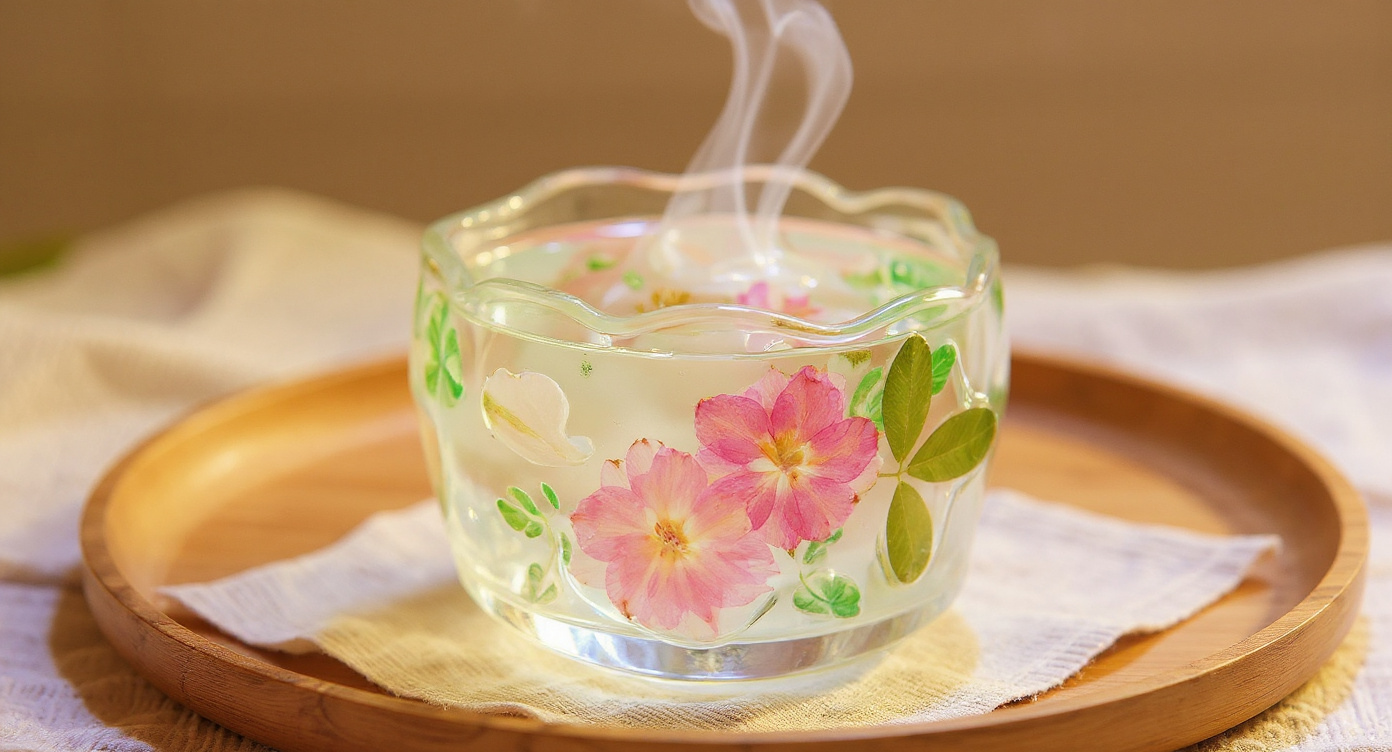
A 400ml glass cup with lotus flower decoration is made by combining heat-resistant glass with hand-applied preserved botanical material on the outside of the vessel. The difficult part is not making a cup that holds liquid, but keeping the floral relief clear of the drinking area while preserving a lightweight form that can still be used for tea or coffee.
This type of cup sits between drinkware and small-scale botanical craft. Its value comes from the material decisions: a 400ml capacity, an approximate 8–9cm diameter, exterior-mounted preserved petals and leaves, and a production period of roughly 3–5 days per piece. It isn't the same thing as a printed floral mug, and it shouldn't be treated like one.
The flower work belongs on the exterior
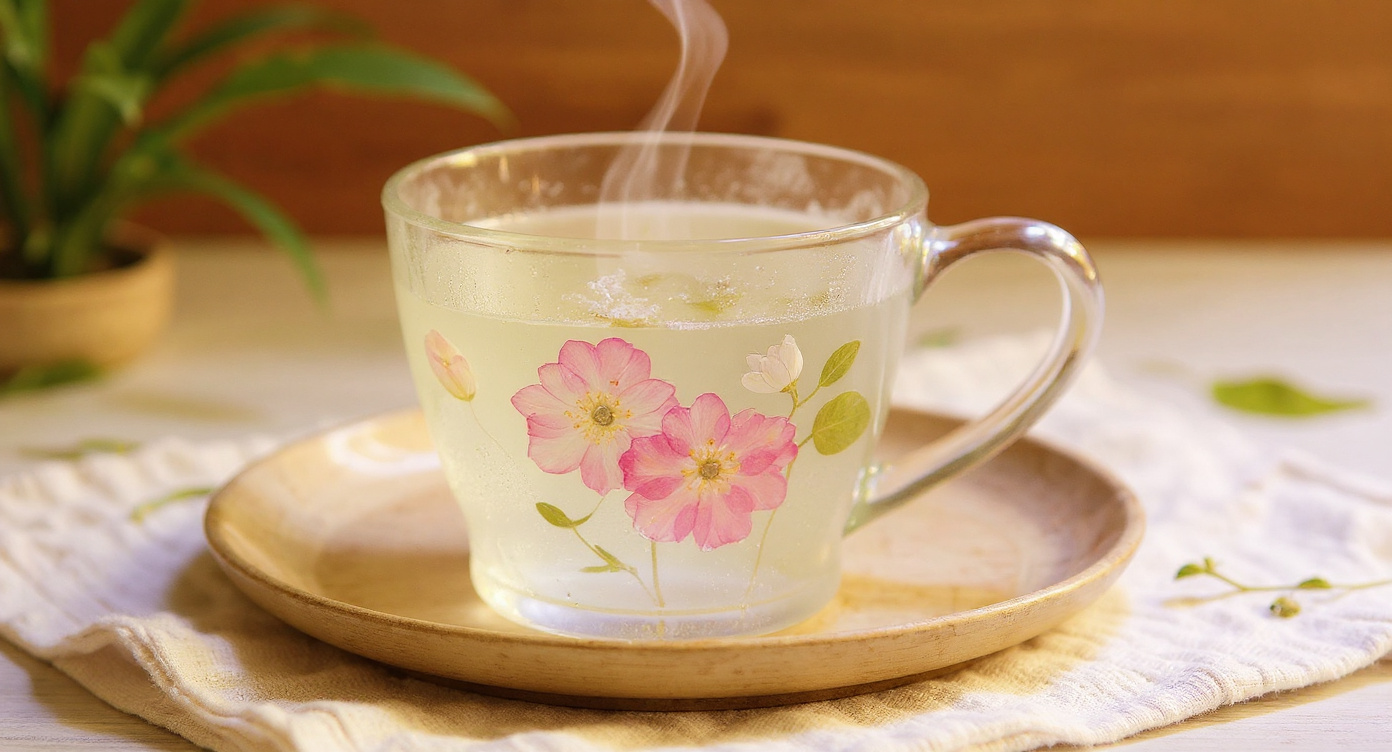
A functional botanical glass cup needs a clear division between the part that touches a drink and the part that carries decoration. The interior should remain smooth and accessible for normal washing. Preserved petals, leaves, and raised lotus relief belong on the outer glass surface, where they can be seen without creating a difficult-to-clean drinking rim.
That distinction matters more than the flower motif itself. A flat printed image can survive factory production because it is applied as a surface graphic. Hand-embedded botanicals are physical materials. They have thickness, irregular edges, and natural variation. The making process has to accommodate those qualities rather than flatten them into a uniform pattern.
Lotus imagery also has a long botanical and cultural history. The lotus plant reference) identifies lotus as part of the genus Nelumbo, a plant commonly associated with broad leaves, prominent flowers, and aquatic growth. A lotus-inspired cup does not need to imitate the plant literally. The useful design idea is the layering: petals, leaves, and gentle relief rather than a printed flower silhouette.
For a handmade vessel, the construction logic is straightforward:
1. A heat-resistant glass body is formed to the intended drinking capacity, in this case 400ml. 2. Preserved petals and leaves are selected for placement on the exterior rather than inside the cup. 3. The botanical elements are arranged by hand to create raised lotus relief and dimensional texture. 4. The decorated exterior is finished so the floral material remains attached while the cup's interior stays open for ordinary beverage use. 5. Each piece is checked for variation in botanical placement, surface continuity, and the condition of the raised details. 6. Hand-wash care instructions are provided because abrasion, prolonged soaking, and machine washing put more stress on textured exterior work than on plain glass.
The exact kiln schedule, adhesive system, and finishing chemistry are not specified for this cup, so they shouldn't be invented. What is documented is enough to establish the important point: the flowers are real preserved plant material, embedded by hand on the exterior, and each piece takes approximately 3–5 days to complete.
Heat resistance is useful, but thermal shock still matters
Heat-resistant glass is not automatically safe for every temperature change. A cup can tolerate hot tea while still being vulnerable to thermal shock, which happens when one part of the glass changes temperature much faster than another.
For example, pouring boiling water into a room-temperature heat-resistant cup is a different event from filling a cold cup that has just come from a refrigerator. The latter creates a sharper temperature differential. Similarly, setting a hot cup directly onto a cold stone surface can create avoidable stress.
This is why material language needs care. Borosilicate glass is known for relatively low thermal expansion and is commonly discussed in relation to thermal resistance, but the Handmade Green Crystal Lotus Glass Tea Cup | Real Preserved Flowers | 400ml Eco Gift is described as heat-resistant glass, not specifically as borosilicate glass. Those are not interchangeable claims.
The practical approach is conservative:
- Warm the cup gradually if it has been stored somewhere cold. - Avoid moving it directly from refrigerator temperature to boiling liquid. - Don't place hot glass under cold running water. - Use a coaster or folded cloth under the cup if the table surface is very cold. - Keep metal spoons from striking the interior wall with force.
The cup's 400ml capacity is generous for tea, coffee, herbal infusions, or a larger milk-based drink. It is less suited to people who want a tiny 120–180ml gongfu-style tasting vessel. Capacity changes the ritual. A 400ml cup encourages one longer pour rather than several fast, concentrated servings.
The Tea culture reference covers how tea preparation and consumption vary widely by region and tradition. For everyday use, the relevant point is simpler: the best cup size depends on brewing style, beverage temperature, and how long the drink is likely to sit before finishing.
By the end of this stage, the role of the cup is clear. The Handmade Green Crystal Lotus Glass Tea Cup with preserved floral detailing is intended for someone who wants a usable 400ml vessel but is prepared to hand-wash a more delicate exterior surface.
Why hand-embedded botanicals cost more than printed florals
The difference between a printed floral mug and an artisan botanical cup isn't subtle. One is designed for repetition. The other is designed around variation.
Factory-made floral mugs commonly use printed, transferred, or painted designs. The decoration is usually flat, repeatable, and fast to apply at scale. A hand-embedded botanical cup has a slower material sequence because petals and leaves do not arrive with identical shape, size, or placement. The maker has to work with the actual plant material.
Preserved flowers are not a new decorative idea. Pressed-flower craft refers to the use of dried botanical material in decorative work, often preserving the natural shape and color variation of flowers and leaves. On drinkware, that approach creates a trade-off: more dimensional detail, but more care required in daily handling.
| Type of drinkware | Decoration method | Typical price information supplied | Main trade-off |
|---|---|---|---|
| Mass-produced floral mug | Printed floral design | $15–$40 on Amazon | Easy replacement, but little material depth or individual variation |
| Resin flower cup | Flowers suspended in resin | $30–$80 on Etsy | Decorative and accessible, but resin is not the same as glass craft |
| High-end studio glass art piece | Artisan glasswork | $500–$1,200 | Higher craft value, often less practical for careless daily use |
| Handmade botanical glass tea cup | Real preserved petals and leaves on the exterior | Current listing price should be checked on the product page | Hand-wash care and natural variation are part of ownership |
The 3–5 day handcraft period is the figure that matters most here. It doesn't mean every hour of those days is active hand labor, and it shouldn't be presented that way. It does mean the piece is not moving through the same rapid, standardized workflow as a printed mug.
A luxury-tier botanical cup is more likely to make sense when the buyer values real plant material, visible surface variation, and a slower tea routine. It makes less sense for a household that treats drinkware as dishwasher-safe, easily replaceable equipment. There is no shame in choosing the printed mug for that job. It is the more practical tool.
Care that protects the floral relief
The fragile area is not necessarily the glass wall itself. It is the raised exterior detail. Repeated rubbing against other cups, abrasive sponges, dishwasher spray, and long soaking periods can all put stress on decorative surfaces.
Hand washing is the sensible default. Use lukewarm water, a mild dish soap, and a soft cloth or non-abrasive sponge. Wash the inside normally, then clean the decorated exterior with minimal rubbing. Dry it by dabbing around the raised areas rather than dragging a rough towel across them.
A few habits are worth avoiding:
1. Don't put the cup in a dishwasher unless the maker explicitly confirms dishwasher compatibility. 2. Don't soak it overnight, especially if water can sit around the raised botanical work. 3. Avoid scouring pads, powdered cleaners, and stiff bottle brushes on the exterior. 4. Don't store it loosely against heavy ceramic mugs or metal utensils. 5. Skip very hot-to-cold temperature swings, even when the glass is described as heat-resistant. 6. If the cup is used as display décor between drinks, keep it away from persistent direct moisture and dusty shelves that require aggressive cleaning.
Coffee residue and tea tannins can still build up inside a clear cup. A gentle wash soon after use is easier than leaving dark residue to dry. If a mild baking-soda paste is used for the interior, it should stay away from the raised exterior decoration and be rinsed thoroughly.
This is also why a 400ml glass cup with lotus flower decoration works best as intentional daily drinkware rather than communal kitchen inventory. It can serve a morning tea, a slow coffee, or an afternoon herbal infusion. It is not the cup to leave in a crowded sink.
FAQ
Can you put boiling water in a glass cup?
Only if the manufacturer states that the glass is suitable for hot beverages, and even then, sudden temperature changes should be avoided. This cup is described as heat-resistant, but it should not be moved straight from a cold environment to boiling water. Let the glass reach room temperature first and avoid rinsing a hot cup under cold water.
Are glass tea cups good for hot tea?
They can be excellent for hot tea because glass does not retain odors from prior drinks as readily as many porous materials. Clear glass also makes it easier to judge tea strength. The limitation is heat handling: a large 400ml serving may stay hot for longer, and the exterior can become warm depending on the drink temperature.
How do you clean a glass cup with flowers on it?
Clean the interior with warm water, mild soap, and a soft sponge. For flowers and raised relief on the outside, use a soft damp cloth with light pressure. Avoid scrubbing, soaking, and abrasive cleaners. Dry the exterior by patting it rather than rubbing hard across the textured areas.
Can flower glass cups go in the dishwasher?
A flower glass cup should be hand-washed unless dishwasher safety is specifically confirmed by its maker. Dishwashers use heat, detergent, spray pressure, and contact with other items, all of which can be hard on raised exterior botanical details.
Are preserved flowers safe on drinkware?
Preserved flowers should remain on the exterior, away from the drinking rim and interior liquid-contact surface. This cup is described with real preserved petals and leaves embedded on the outer glass surface. No food-contact certification for the botanical elements is stated, so they should not be treated as ingredients or placed in a drink.
What is the best size glass cup for tea?
For a full everyday serving, 300–400ml is practical. A 400ml cup suits herbal tea, breakfast tea, larger loose-leaf infusions, and tea with milk. Smaller 120–200ml cups suit concentrated tea styles, short pours, and tastings where the drink is consumed quickly.
Do handmade glass cups all look the same?
No. Handmade pieces that use real preserved petals and leaves will vary in flower placement, shape, and surface character. Variation is expected because natural botanical materials are not uniform and hand placement is not factory printing.
The case for choosing a cup that needs gentler handling
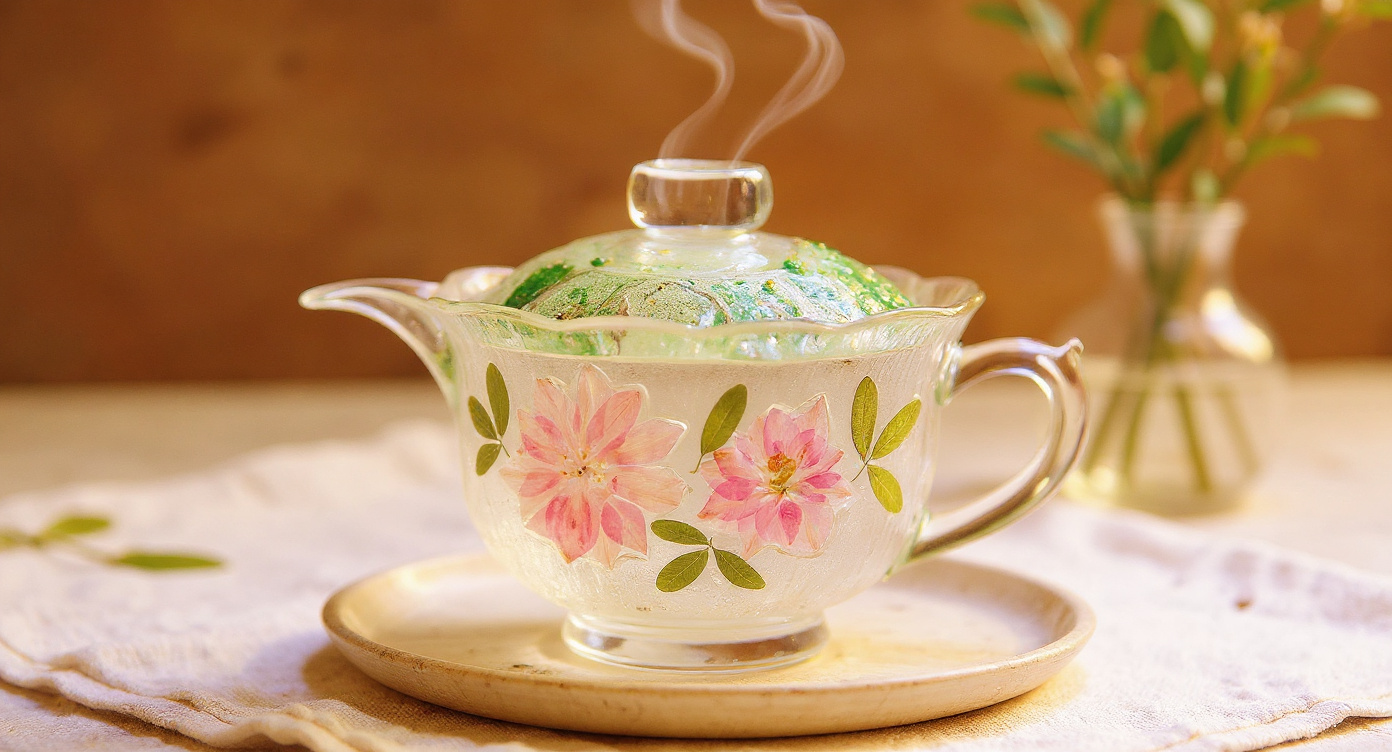
A decorative cup can be functional without pretending to be indestructible. The compromise is clear: hand-embedded flowers, raised lotus relief, and 3–5 days of artisan production create a more individual object, while dishwasher convenience and rough daily treatment have to be left behind.
For someone frustrated by generic printed mugs but wary of buying something too delicate to use, the sensible middle ground is a heat-resistant glass cup with decoration kept outside the drinking area and care instructions that acknowledge its limits. The Handmade Green Crystal Lotus Glass Tea Cup | Real Preserved Flowers | 400ml Eco Gift fits that role for tea or coffee rituals where the cup is handled deliberately, washed by hand, and appreciated as more than disposable kitchenware.