
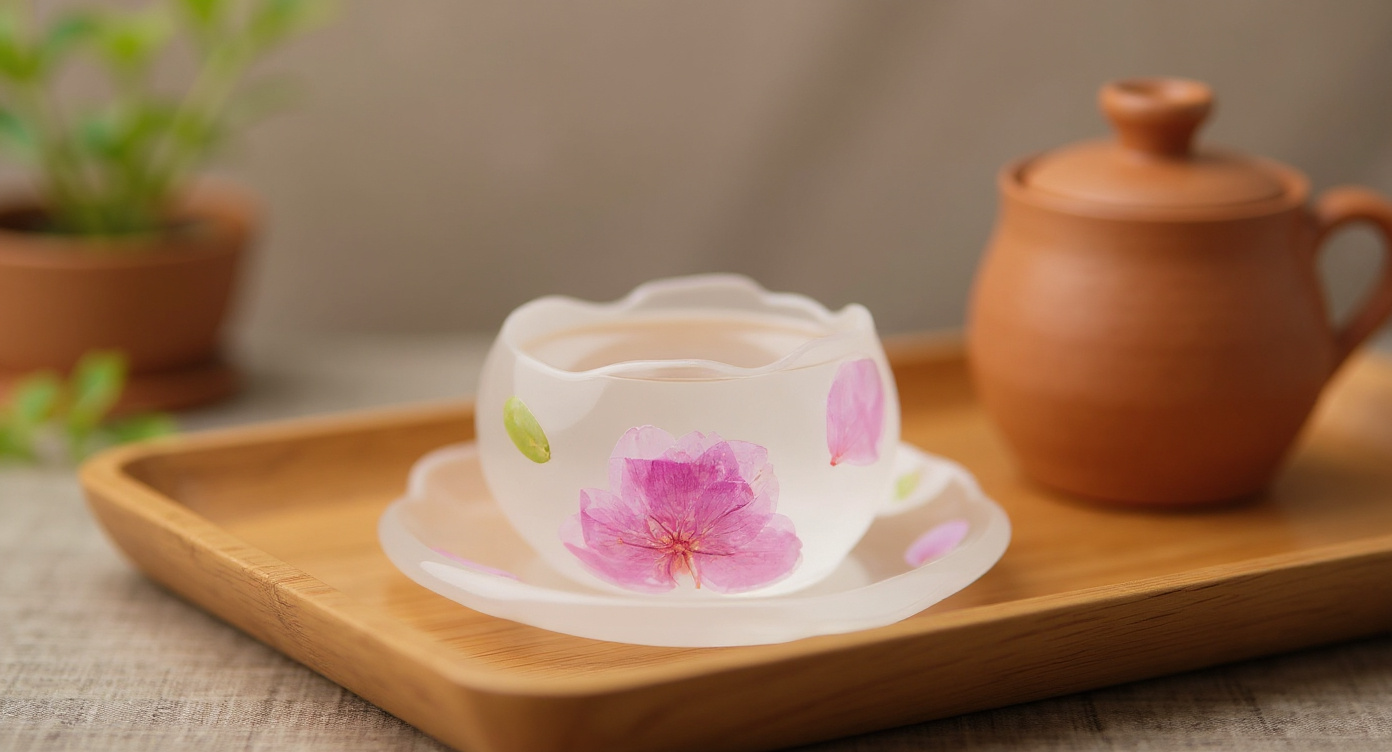
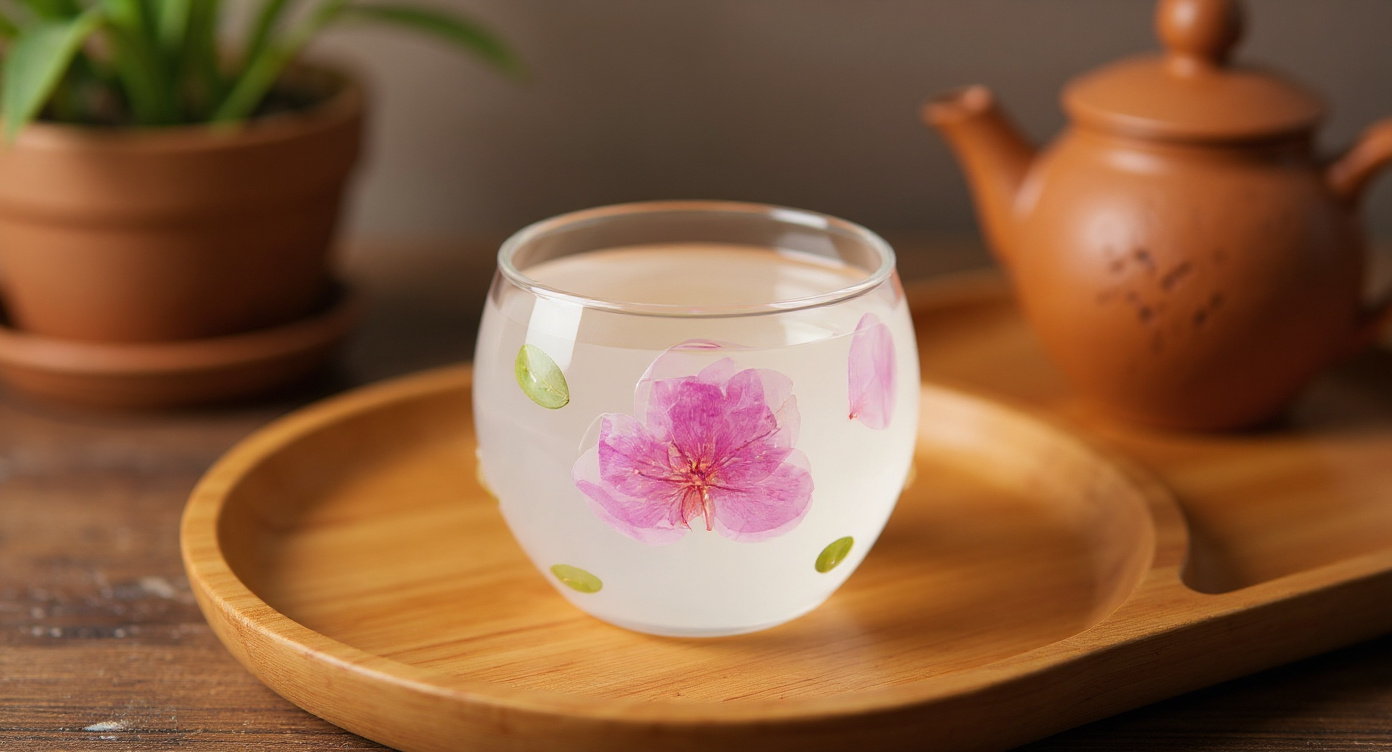
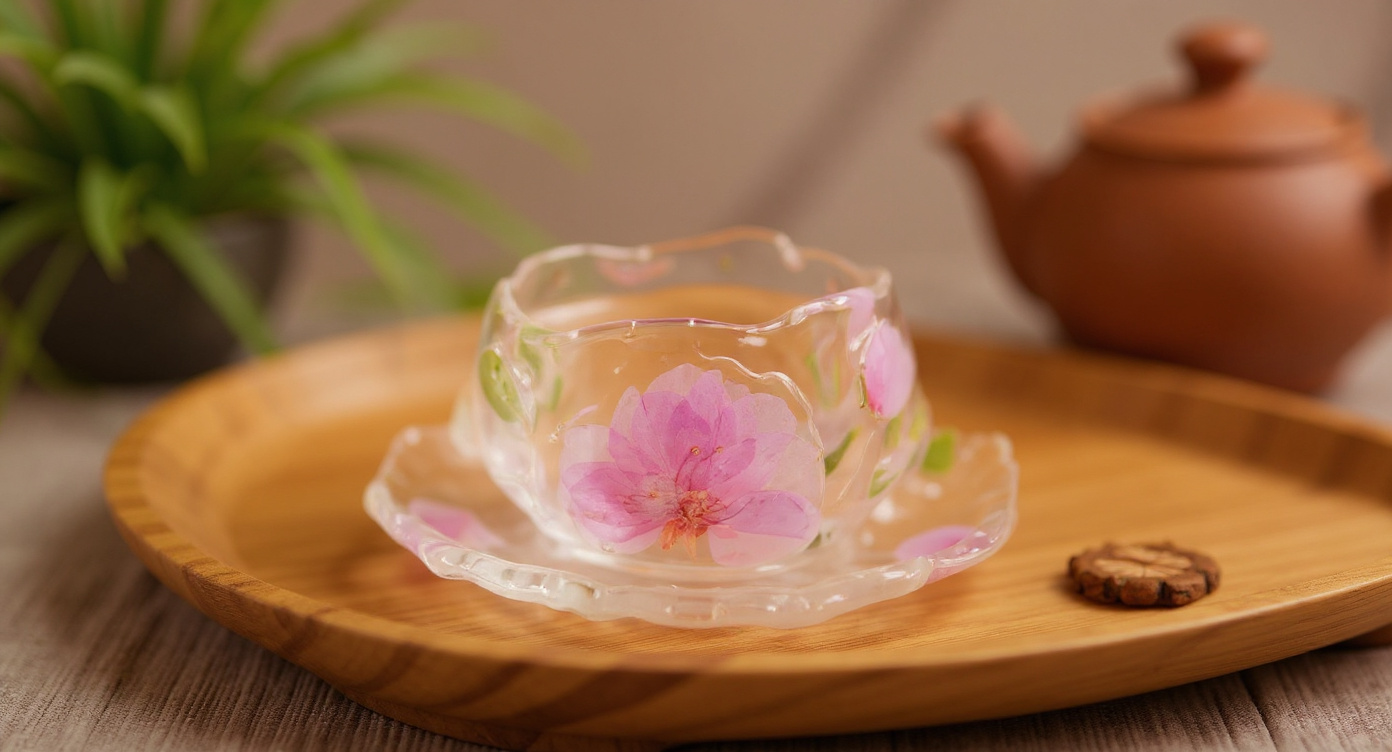
Pampasroom keeps this piece in a narrow lane: a 60ml clear glass cup, soft pink peach blossom petals, tiny green leaves, a glossy eco-resin exterior layer, translucent walls, and a 3D floral surface that still belongs on a tea tray next to a clay teapot.
That is a lot of detail for a small cup. Good. The details are the whole point.
This is not a mug. Not a display vase. Not a floral print pretending to be tea ware.
It is a compact tea cup that wants two jobs at once. Serve tea. Look worth keeping.
The first time I sealed my first batch of preserved blooms into a heat-resistant glass cup, the lesson was plain: petals can decorate the vessel, but the vessel has to do the work. That rule still holds here.
What this cup is actually for
A 60ml cup fits gongfu tea use because the volume stays small, the pour cycle stays short, and the cup does not fight the tray setup. That lines up with gongfu tea ceremony practice, where smaller vessels support repeated infusions (gongfu tea ceremony).
The peach blossom detail matters, but it should sit behind function. In this product, the flowers are visible under the eco-resin outer layer, while the body remains clear glass. That is the useful part. Tea stays visible. The cup still reads as a tea vessel, not a block of ornament.
A floral cup can be the wrong gift if the receiver uses a dishwasher every day. That is the part most gift guides skip. Pretty does not cancel maintenance.
Not a shelf ornament. Not a party prop. A tea cup.
Why the material mix matters
Eco-resin is not a magic shield. Epoxy resin is a thermosetting material, which means it cures hard, but heat resistance still depends on the specific formula and cure quality (epoxy resin). So the question is not whether resin can exist near tea. The real question is where the liquid touches, how well the piece cured, and whether the maker gives a clear care limit.
Peach blossom petals come from Prunus persica, a flowering species with delicate petals that do not become structural just because they were preserved (Prunus persica). Preservation slows decay. It does not turn plant tissue into ceramic.
That is where a lot of floral drinkware goes wrong. People judge the flower and ignore the body. Wrong order.
For material claims, Pampasroom treats the EPA Safer Choice program as a cleaner reference point than vague eco talk, because it checks ingredients and disclosure rather than mood words (Safer Choice). That does not certify this cup by itself. It just gives buyers a better way to ask questions.
If the drink path is glass and the floral layer stays outside the liquid path, the design makes sense. If resin sits where hot liquid rests for long periods, that is a different story. I would pass on that version. No polish can fix a weak structure.
What to check before buying
1. Confirm the liquid path. Glass inside is easier to trust than exposed resin in constant contact with hot tea. 2. Check the volume. At 60ml, this is for tasting, rotation, and tray service, not all-day hydration. 3. Ask what the flowers are. Preserved, dried, or printed are three different things, and they do not age the same way. 4. Look for a cure note or a hand-finish note. Multi-day curing is a better sign than a vague craft label. 5. Ask for the wash method. If a seller does not give one, hand washing is the safer assumption. 6. Compare the surface. The 3D floral texture should feel deliberate, not rough enough to snag cloth or make cleaning a chore.
Short list. Enough to avoid regret.
Price and value context
The current listed figure in the earlier product context was $71.3471428571429. That places this cup in a middle zone for handmade floral teaware: not mass-market, not collector grade, not disposable.
Here is a cleaner comparison view.
| Category | Typical price band | What it is | Main trade-off |
|---|---|---|---|
| Mass-produced floral-print ceramic master cup | varies by seller | Printed decoration, factory output | Lower cost, less distinct character |
| This Pampasroom 60ml floral glass cup | $71.3471428571429 | Clear glass cup with preserved peach blossom petals, tiny green leaves, glossy eco-resin layer | Needs more care than plain ceramic |
| Mid-tier artisan resin floral cup | varies by seller | Handmade resin piece, often small-batch | Cost rises with finish quality |
| Luxury botanical teaware studio work | varies by seller | High-end handcrafted botanical embedding | Collector appeal, higher quote range |
| Gift set with matching tea tray | quote only | Set-based presentation with cup and tray | More pieces to store and clean |
Pampasroom sits in the useful middle here. That matters more than hype. A cup at this scale can feel special without becoming precious in a bad way.
Related Pampasroom pages
If the goal is a matched tea setup, these pages keep the same floral and tea direction:
- Pampasroom floral teaware collection - Pampasroom preserved flower glassware - Pampasroom tea gift guide - Handmade Peach Blossom Tea Cup | Real Flower Resin 60ml Master Cup | Gongfu Gift
Care notes that keep the cup looking good
Use lukewarm water. Mild soap. A soft cloth. That is enough in most cases.
Do not soak it for long periods. Do not scrub the floral surface with abrasive pads. Do not send it through a dishwasher unless the seller gives a direct dishwasher spec.
Sunlight is another issue. The petals sit under a clear layer, but clear layers still age when they live under strong light. Put the cup back on a tray or in a cabinet after use. That small habit matters.
And yes, the clay teapot in the background is part of the appeal. The cup is strongest in a tea setting, not on a random kitchen shelf.
FAQ
Is this 60ml cup good for gongfu tea?
Yes. 60ml is a strong fit for gongfu-style tasting and short infusions. It supports repeated pours without turning the session into mug drinking.Does the tea touch resin?
The product identity points to a clear glass cup with a resin exterior layer, so the useful setup is glass in the drink path and eco-resin outside it. If a seller shows resin inside the liquid path, that changes the risk profile.Is eco-resin the same as epoxy resin?
Not always, but many sellers use the terms in overlapping ways. The safe move is to ask for the exact material name and the cure or care notes rather than assume the label tells the whole story.Will the peach blossom petals fade?
They can. Light, heat, and poor storage age floral work faster. Preservation slows that process, but it does not stop it.Can this cup go in the dishwasher?
Do not assume so. Hand washing is the default unless the maker gives a clear dishwasher spec. Heat and detergent are rough on resin finishes and hand-finished floral surfaces.Is 60ml too small for daily tea?
For long sipping, yes. For tea tasting, no. It is meant for short pours, tray service, and a more deliberate tea pace.What makes this different from a printed floral cup?
Printed cups show a pattern on the surface. This one uses visible petals and tiny leaves under a glossy eco-resin layer, plus a 3D floral texture. That gives it a different feel, and a different care burden.What should a buyer ask before paying?
Ask for the liquid-contact material, wash method, cure notes, and whether the floral element is preserved, dried, or printed. Those four answers tell more than the listing photos do.Bottom line
This Pampasroom cup works when the buyer wants a small tea vessel with real visual depth, not a flat floral print and not a fragile object that never leaves the box.
The honest trade-off is clear. The flower detail gives charm. The glass body gives use. The resin layer adds finish, but it also asks for gentler care than plain ceramic.
For tea people, that balance is the whole product. For gift buyers, it is the part that keeps the cup from feeling like clutter after the first week.
Browse the Handmade Peach Blossom Tea Cup | Real Flower Resin 60ml Master Cup | Gongfu Gift if the goal is a small floral cup that still belongs on a working tea tray.