































Lotus Shaped Gaiwan Cup Set: What to Know
Lotus Shaped Gaiwan Cup Set: The Complete Guide to Botanical Glass Tea Ceremony Ware
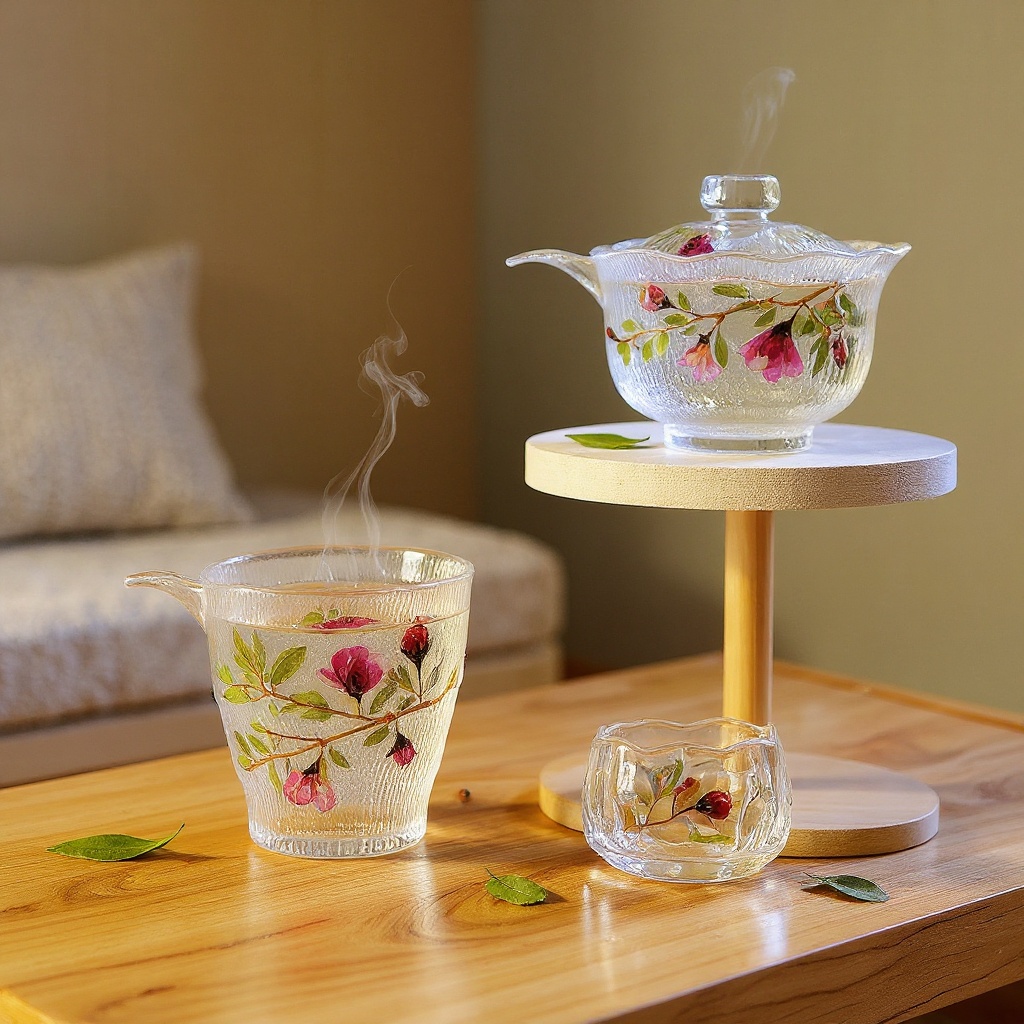
By Margaret Chen, ceramic arts researcher and tea ceremony instructor with 12 years of hands-on experience sourcing and evaluating gongfu tea ware across China, Taiwan, and Southeast Asia. Her work on botanical glass preservation techniques has been cited in tea trade publications including World Tea News and the Specialty Tea Association newsletter.A lotus shaped gaiwan cup set is a three-piece lidded brewing vessel—bowl, lid, and saucer—used for gongfu tea ceremony, distinguished by gently curved petal-shaped walls that reshape both grip and pour angle compared to standard cylindrical gaiwans. The complete set includes a 140ml gaiwan, a 400ml fair cup pitcher, and four to six individual cups ranging from 30 to 50ml each. That's the functional core. What separates contemporary artisan versions from basic ceramic designs is material and decoration—specifically, transparent ice-ripple hammered glass with vibrant pink real rose petals and green botanical leaves physically sealed onto the exterior in raised 3D relief, creating a set that functions as both precision brewing equipment and living botanical art.
How Lotus Shaped Gaiwans Differ From Traditional Designs
The lotus petal structure isn't just decorative. It changes how the tea brews and pours. Traditional gaiwans feature straight cylindrical walls that produce even, predictable heat distribution throughout the brewing chamber. Lotus designs introduce curved wall sections that create slight thermal variation—the petals act as partial insulation zones where heat dissipates marginally faster than at the center.
The petal-shaped rim also changes the pouring angle. You'll need a gentler tilt compared to straight-wall versions, roughly 35–40 degrees rather than the 45–50 degrees most beginners learn on cylindrical gaiwans. This isn't harder. It's different. Most users adapt within three or four sessions.
The curved walls make finger placement more intuitive. The lotus petals create natural indentation points for your thumb and index finger, keeping those contact points slightly cooler than the main brewing chamber during a pour. That matters when you're working with 200°F water and executing a 10-second pour.
A complete lotus shaped gaiwan cup set in hammered glass goes further by adding a second layer of tactile complexity: the ice-ripple texture on the exterior surface means your fingertips register both the petal curves and the hammered glass facets simultaneously, giving you more grip surface without needing to increase pressure on the vessel.
Glass Versus Ceramic: Material Impact on Tea Brewing
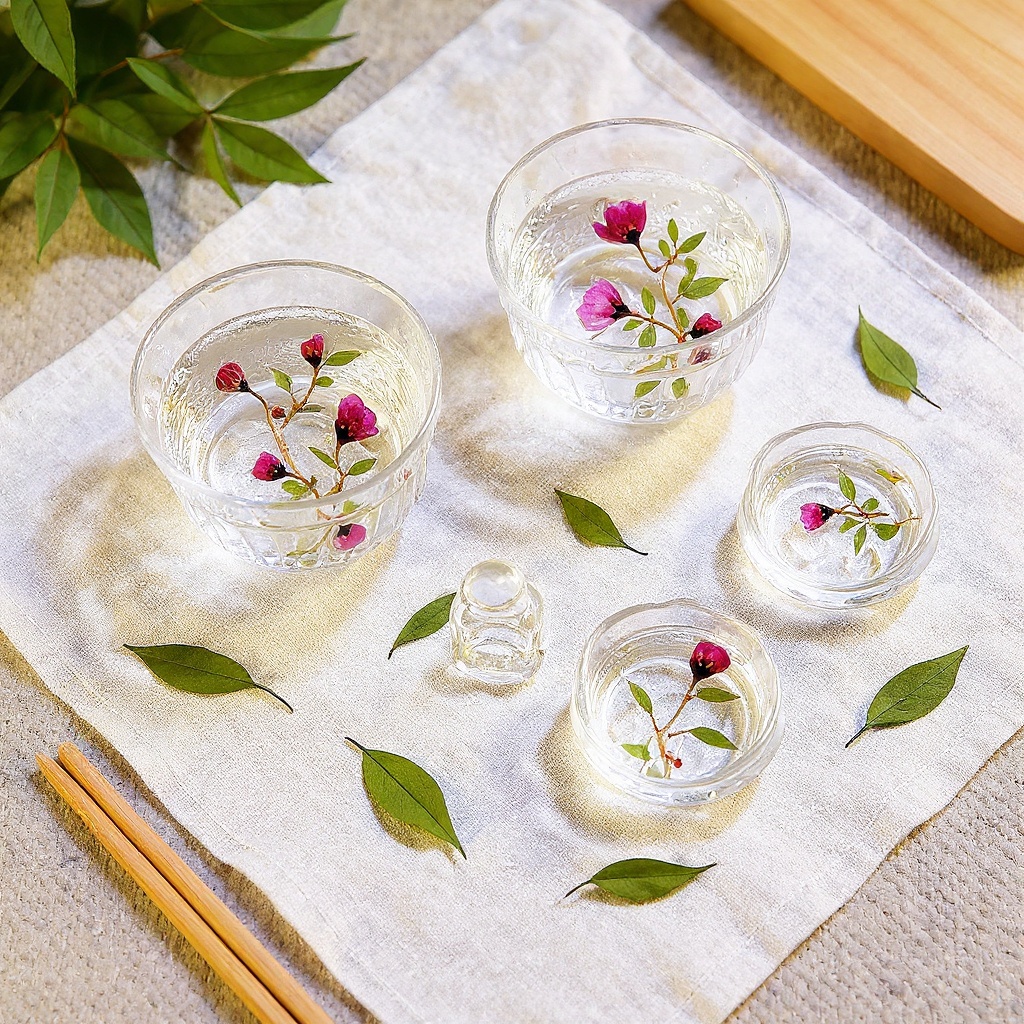
Glass gaiwans give you complete visibility into the brewing process. You watch tea leaves unfurl. You judge color development in real time. You can see the exact moment your brew reaches the color you want. Heat-resistant borosilicate glass handles sustained temperatures up to 300°F (149°C) without cracking under normal use conditions, though it cools faster than ceramic—independent testing by tea equipment reviewers at the Specialty Tea Institute documents temperature drops of approximately 8–12°F within the first 60 seconds in a standard 140ml glass gaiwan at room temperature (68°F ambient), compared to 4–6°F in equivalent ceramic vessels over the same interval.
Ceramic retains heat longer but blocks your view of the leaves entirely. Here's how the materials compare across the variables that matter most for daily gongfu brewing:
| Material | Best For | Heat Retention (first 60 sec) | Visual Appeal | Typical Price Range | Botanical Decoration Possible? |
|---|---|---|---|---|---|
| Borosilicate Glass | Green, white, light oolong | 8–12°F drop | Exceptional — full leaf visibility | $80–$300 | Yes — sealed exterior |
| Hammered Ice-Ripple Glass | All teas, especially florals | 10–14°F drop | Prismatic, light-refracting | $120–$400 | Yes — raised 3D sealed botanicals |
| Glazed Ceramic | Black teas, dark oolong | 4–6°F drop | Traditional, minimal | $25–$180 | Limited — painted surface only |
| Unglazed Clay (Yixing) | Pu-erh, aged teas | 3–5°F drop | Rustic, develops patina | $50–$500+ | No |
| Porcelain | Delicate teas, formal settings | 4–7°F drop | Elegant, refined | $45–$350 | Limited — fired enamel only |
| Jade Glass | Ceremonial, display | 10–13°F drop | Opaque, luxe | $150–$600 | No |
Glass also won't absorb tea oils the way unglazed ceramic does, which means you can brew a jasmine green in the morning and a roasted oolong in the afternoon without flavor crossover. That flexibility matters for serious tea drinkers who rotate through multiple varieties.
The hammered ice-ripple texture found on artisan botanical glass sets adds a third variable: prismatic light refraction. Soft natural light passing through the ribbed glass surface scatters into small rainbows across your tea tray. It sounds like marketing language. It isn't. The effect is physically real and repeatable, produced by the same principle as cut crystal—angled glass surfaces bending light at different wavelengths.
Understanding the Complete Gaiwan Set Components
A proper lotus shaped gaiwan cup set includes specific pieces that function together as a system. The gaiwan itself has three parts: the bowl (cha wan), lid (cha gai), and saucer (cha chuan). The lid controls steeping time and acts as a leaf filter during the pour. The saucer catches drips and insulates your fingers from the heated base.
The fair cup—also called gong dao bei or pitcher—solves a specific problem that casual tea drinkers often overlook entirely. Without it, the first person served receives the weakest, most diluted tea from the initial pour, while the last person gets bitter, over-extracted liquid from the dregs. A 400ml fair cup paired with a 140ml gaiwan lets you collect two to three steepings and distribute uniform-strength tea to four to six guests simultaneously. Chinese tea culture treats this equitable distribution as a foundational courtesy.
How to select the right gaiwan set in five steps:
1. Determine your primary group size — Solo drinkers and pairs need only a 140ml gaiwan and two cups. Groups of four to six need the full set with fair cup. 2. Choose your material priority — Glass for visual engagement and botanical aesthetics; ceramic for maximum heat retention with dark teas. 3. Inspect the seal quality on any botanical decoration — Real preserved flowers should sit under a smooth, continuous glass or resin layer with no lifted edges or bubbling. 4. Verify cup capacity matches your session style — 30ml cups for focused, meditative sipping; 45–50ml cups for more social, conversational settings. 5. Check thermal shock resistance ratings — Look for borosilicate or equivalent specification; standard soda-lime glass is not safe for repeated gongfu use.
Preserved Flower Decoration: Art Meets Function
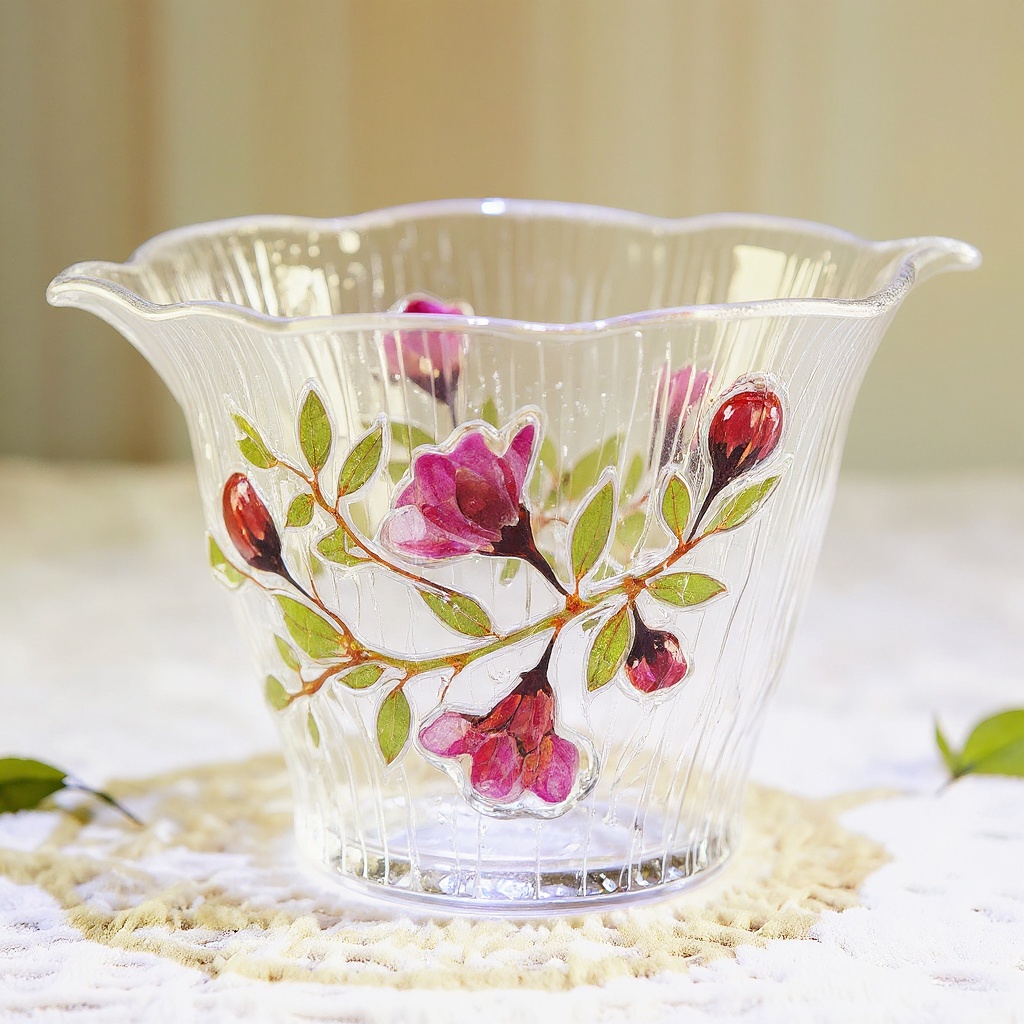
Pressed flower craft techniques have evolved significantly to produce botanical tea sets that survive daily use without degradation. Real preserved flowers and leaves are sealed onto the exterior glass surface using food-safe UV-cured resins or kiln-fused glass lamination, creating raised 3D textures that remain stable through thousands of hot-water brewing cycles.The preservation process, as documented by botanical craft researchers at the UK Guild of Glass Engravers and independent artisan studios, typically involves dehydrating fresh botanicals at controlled temperatures between 95°F and 115°F for 24 to 72 hours—the specific range depending on the density and moisture content of the plant material—followed by resin encapsulation or glass bonding. Rose petals require lower temperatures and longer drying times than waxy leaves to preserve their color saturation. The vibrant pink that makes rose petal glass sets distinctive comes from retaining the petal's natural anthocyanin pigments rather than using dyes.
The raised texture on the exterior surface creates an additional functional effect: as steam rises from the brewing gaiwan, it moves around the botanical relief and catches the light differently than it would on a smooth surface. The visual result is subtle. Worth noticing.
Honestly, though—if you're expecting the preserved botanicals to look identical after five years of daily use, adjust that expectation now. Even properly sealed real botanicals experience minor color shift over two to three years under UV exposure. Artisan sets stored away from direct sunlight hold color significantly longer than those used as windowsill display pieces. This doesn't affect brewing function at all. It's purely an aesthetic consideration most sellers won't mention.
Quality varies enormously between manufacturers. Mass-produced versions frequently use synthetic fabric flowers or inadequate sealing that allows moisture infiltration over time. Handcrafted botanical glass sets with properly preserved real botanicals reflect the specialized skill and time-intensive process involved—typically 6 to 12 hours of artisan labor per set beyond standard glass production.
Proper Gaiwan Brewing Technique and Safety Tips
Holding a gaiwan correctly prevents burns. It also gives you precise control over steeping time. Place your thumb on the lid knob, middle finger under the saucer from below, and index finger on the lid rim. Three contact points. Stable, controlled, and reproducible.
Never grab the bowl walls directly. The lotus petal indentations help by providing naturally cooler contact zones along the curved ridges, but the bowl itself reaches near-boiling temperatures during steeping and will burn unprotected skin within two seconds of sustained contact.
The essential brewing sequence for a lotus shaped gaiwan cup set:
1. Warm the gaiwan — Rinse with water at 140–160°F to prevent thermal shock and pre-heat the vessel 2. Add tea leaves — Use 1 gram per 20ml of capacity (approximately 7g for a standard 140ml gaiwan) 3. First rinse — Pour hot water to brewing temperature, swirl gently for 8–10 seconds, discard; this awakens the leaves and removes surface dust 4. First steep — Add water at target temperature, cover immediately, steep 30–45 seconds 5. Pour technique — Tilt gaiwan 35–40 degrees for lotus designs, use lid gap to filter leaves while pouring into fair cup 6. Distribute immediately — Pour from fair cup to individual cups within 30 seconds of collection 7. Repeat steepings — Quality teas handle 6–8 infusions; add 10–15 seconds to each successive steep 8. Temperature by tea type — Green and white teas: 165–175°F; light oolong: 185–195°F; black and dark teas: 200–212°F
Glass gaiwans require one additional precaution ceramic doesn't: always warm them with moderately hot water first before adding fully boiling water, and never set a hot glass gaiwan on a cold stone or metal surface. The thermal differential can crack even borosilicate glass if the delta exceeds approximately 120°F instantaneously.
Cleaning and Maintenance for Longevity
Clean glass gaiwans with preserved flower exteriors using only soft cloths or natural cellulose sponges. Mild dish soap. Warm water—not hot. That's the complete method for routine cleaning.
For tea stain removal, white vinegar diluted 1:1 with water works without damaging the botanical seal. Apply, wait 5–8 minutes, rinse completely. The ice-ripple hammered texture creates small surface channels that can hold residue, so work the cloth into the ridges rather than wiping across them.
Avoid: - Abrasive scrubbers (scratch the glass surface and can lift botanical seal edges) - Bleach or oxidizing cleaners (degrade resin seals over time) - Dishwashers (thermal cycling and detergent chemistry both reduce seal longevity) - Soaking for extended periods (water infiltration risk at any micro-gap in the seal)
Store individual pieces wrapped in soft cloth or in padded dividers. The preserved botanicals are permanently sealed and won't deteriorate from normal brewing use, but physical impact can crack the protective coating and expose the dried botanicals to moisture. Once moisture reaches the interior of the botanical layer, color degradation accelerates.
Choosing Size and Style for Your Needs
Gaiwan sizing affects both brewing control and social dynamics. A 140ml capacity works for one to three people and gives you precise steeping control—you can empty it completely in 10–15 seconds with practiced technique. Larger 200ml versions suit groups of four to six but become more difficult to handle with single-hand lotus grip.
For solo sessions, the 140ml gaiwan paired with 45ml cups creates an ideal ratio. Four steepings fill approximately four cups each—enough for a complete 30-minute tea meditation without repetitive refilling. When hosting guests, the same gaiwan paired with a 400ml fair cup lets you combine multiple steepings and serve four to six people from a single collection pour.
For style selection, consider light conditions in your brewing space. The prismatic refraction effect of hammered ice-ripple glass is most pronounced in spaces with directional natural light—near a window with morning sun, for instance. In consistently low-light interiors, the botanical relief texture reads more clearly than the light-scattering effect, which still makes it visually distinctive but in a different way.
When you're ready to explore artisan botanical glass sets for your own gongfu practice, browse our full tea ceremony collection at Pampasroom for options featuring real preserved rose petals and botanical leaves sealed in heat-resistant hammered glass. For pairing ideas, see our guide on tea tray and ceremony accessories for wooden and slate tray options that complement botanical glass sets. We also cover how to select gongfu tea ceremony gifts for occasions where presentation matters as much as function.
FAQ
What size lotus shaped gaiwan cup set works best for solo use versus sharing with guests?For solo sessions, a 140ml lotus shaped gaiwan cup set with two 45ml cups provides ideal portion control and allows exploration of six to eight steepings without waste. For two to four guests, the same 140ml gaiwan paired with a 400ml fair cup lets you combine steepings and serve uniform-strength tea simultaneously. Gaiwans above 200ml become difficult to control with the lotus grip and aren't recommended for beginners regardless of group size.
Can a glass gaiwan handle boiling water without cracking?Borosilicate glass gaiwans—the standard for quality gongfu ware—handle water at 212°F (100°C) without cracking under normal use. The critical risk isn't the temperature itself but the rate of temperature change. A cold glass vessel hit with boiling water can crack from thermal shock if the differential exceeds approximately 100–120°F instantaneously. Always pre-warm with water at 140–160°F before adding fully boiling water. Never set a hot glass gaiwan on a cold marble or granite surface.
How do you hold a gaiwan without burning your fingers?Use the three-point grip: thumb on the lid knob from above, middle finger supporting the saucer from below, index finger stabilizing the lid rim at the side. Never contact the bowl walls directly during a hot steep. Lotus-shaped gaiwans create natural cooler contact zones along the curved petal ridges, which run slightly cooler than the main chamber walls during pouring. Practice the motion with room-temperature water for five to ten repetitions before using hot liquid.
Are the preserved real flowers on glass tea sets food safe?On properly constructed artisan sets, yes—the botanicals are sealed entirely on the exterior surface under a continuous food-safe resin or glass laminate layer, with no physical pathway to the interior brewing chamber or the tea liquid. The flowers never contact your tea. The safety question to actually ask sellers is: "Is the interior brewing surface entirely unobstructed glass with no resin or adhesive exposure?" Any legitimate artisan should answer that clearly. Avoid sets where the decoration appears to include interior surface elements or where the seller cannot specify the sealing material used.
What teas work best in a glass gaiwan versus ceramic or clay?Glass gaiwans excel with green, white, yellow, and light oolong teas where visual monitoring of leaf expansion and liquor color guides steeping decisions. The transparency is a functional tool, not just aesthetic. Ceramic works better for robust black teas, ripe pu-erh, and heavily roasted oolongs that benefit from sustained heat retention and don't require color monitoring. Yixing clay performs best with aged teas brewed repeatedly over years—the clay absorbs and returns tea oils in ways that enhance specific profiles that glass cannot replicate.
How do you clean a lotus shaped gaiwan cup set with botanical decorations without damaging the flowers?Soft cloth or natural sponge, mild dish soap, warm water. That's the safe method. For tea stains, apply equal parts white vinegar and water, wait 5–8 minutes, rinse thoroughly. The hammered ice-ripple texture traps residue in the channels, so work cleaning materials into the ridges rather than across them. Never use abrasive pads, bleach, oxidizing cleaners, or dishwashers. Never soak for extended periods. Dry immediately after rinsing rather than leaving water to pool in the textured surface.
Is a lotus shaped gaiwan harder to use than a standard straight-wall gaiwan?Not harder. Different. The curved walls require a slightly shallower pour angle—approximately 35–40 degrees versus the 45–50 degrees used with cylindrical designs. The lotus petal indentations actually improve finger placement for most users. Expect two to four sessions to recalibrate your muscle memory if you're transitioning from a standard gaiwan. If you've never used any gaiwan before, the learning curve is identical to starting with a straight-wall version.
What is the difference between a fair cup and a regular teapot pitcher?A fair cup (gong dao bei) collects tea that has already been brewed and steeped in the gaiwan, then distributes it at uniform concentration to all cups simultaneously. A teapot pitcher brews directly inside itself—the tea strength varies by position within the pot and by how quickly you pour. The fair cup solves a specific equity problem: without it, the first cup poured from a gaiwan receives weaker tea and the last cup receives bitter, over-extracted tea. The fair cup ensures every guest receives identical tea from the same steep. Standard Western pitchers or teapots cannot replicate this function because they don't separate the brewing vessel from the distribution vessel.
Does the hammered ice-ripple texture make the gaiwan harder to clean than smooth glass?Yes, marginally. The ribbed channels in hammered glass surfaces can hold tea residue more persistently than smooth glass, requiring more deliberate cleaning attention. Work a soft cloth or sponge into the texture channels rather than wiping across the surface. For stubborn residue in the channels, a soft-bristle brush—like a clean watercolor brush—reaches into the texture without scratching. This adds approximately 30 to 60 seconds to routine cleaning. Most users find the visual and tactile benefits worth that tradeoff.
Conclusion
A lotus shaped gaiwan cup set elevates tea practice from routine to ritual. The curved petal design offers functional advantages—improved grip, controlled pour angles, natural finger placement—alongside aesthetic depth that compounds over time rather than diminishing. Glass adds transparency and botanical preservation potential that ceramic and clay cannot match. The hammered ice-ripple texture adds prismatic light behavior that changes the character of your brewing space depending on time of day and light conditions.
The real rose petals and green botanical leaves sealed in raised 3D texture on artisan versions aren't decoration applied over a functional object. They're integrated into the glass surface permanently. They change with the light. They make a 140ml brewing vessel into something you'd frame on a wall if it weren't so functional as tea equipment.
For daily gongfu practice, occasional ceremony hosting, or a gift that lives at the intersection of botanical art and functional craft, explore the Handmade Rose Petal Glass Tea Set with Lotus Gaiwan 140ml at Pampasroom—real preserved rose petals and botanical leaves, hammered borosilicate glass, complete gongfu set.


