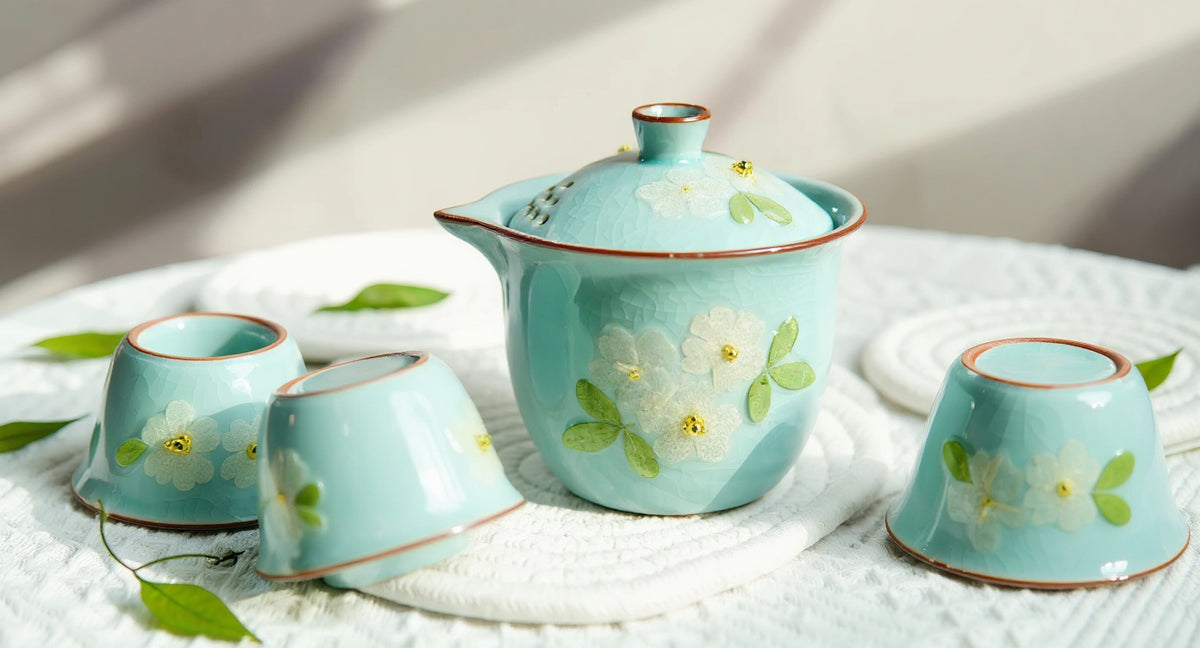
The appeal is clear enough. A pale blue-green ceramic body, visible ice crack glaze, and dried petals and leaves embedded beneath a clear surface glaze give the set a quiet botanical character without requiring bright decoration or elaborate shapes.
Small cups. A tactile floral surface. Room for a slower tea ritual.
Those details can make a meaningful gift, but they don't establish pouring performance or heat tolerance. Choose the appearance because it suits the recipient; choose it for brewing only after the practical specifications are confirmed.
What this botanical Ruyao set actually offers
The Handmade Ruyao Ice Crack Teapot Set | Real Pressed Flowers | Celadon Art combines a delicate celadon ceramic teapot with matching small cups. Its defining features are:
- Approximately 400ml teapot capacity and 80–90ml cup capacity. - Visible ice crack glaze texture across a pale blue-green surface. - Real dried flower petals and leaves embedded under a clear surface glaze. - Raised floral relief with a soft matte-to-satin finish.
The aesthetic draws on Japanese and Chinese tea ceremony styling: restrained forms, small vessels, and botanical detail that rewards a closer look. For photographs, natural light and linen or stone surfaces suit that character without turning the flowers into an oversized decorative statement.
The surface deserves attention. Raised relief offers texture, but it also makes gentle cleaning more relevant than it would be for a smooth, undecorated pot. A matching appearance doesn't mean every cup has an identical botanical arrangement.
The product description also states a 3–5 day handcraft process. That describes elapsed production time, not verified continuous working hours, and shouldn't be converted into a labor-cost calculation.
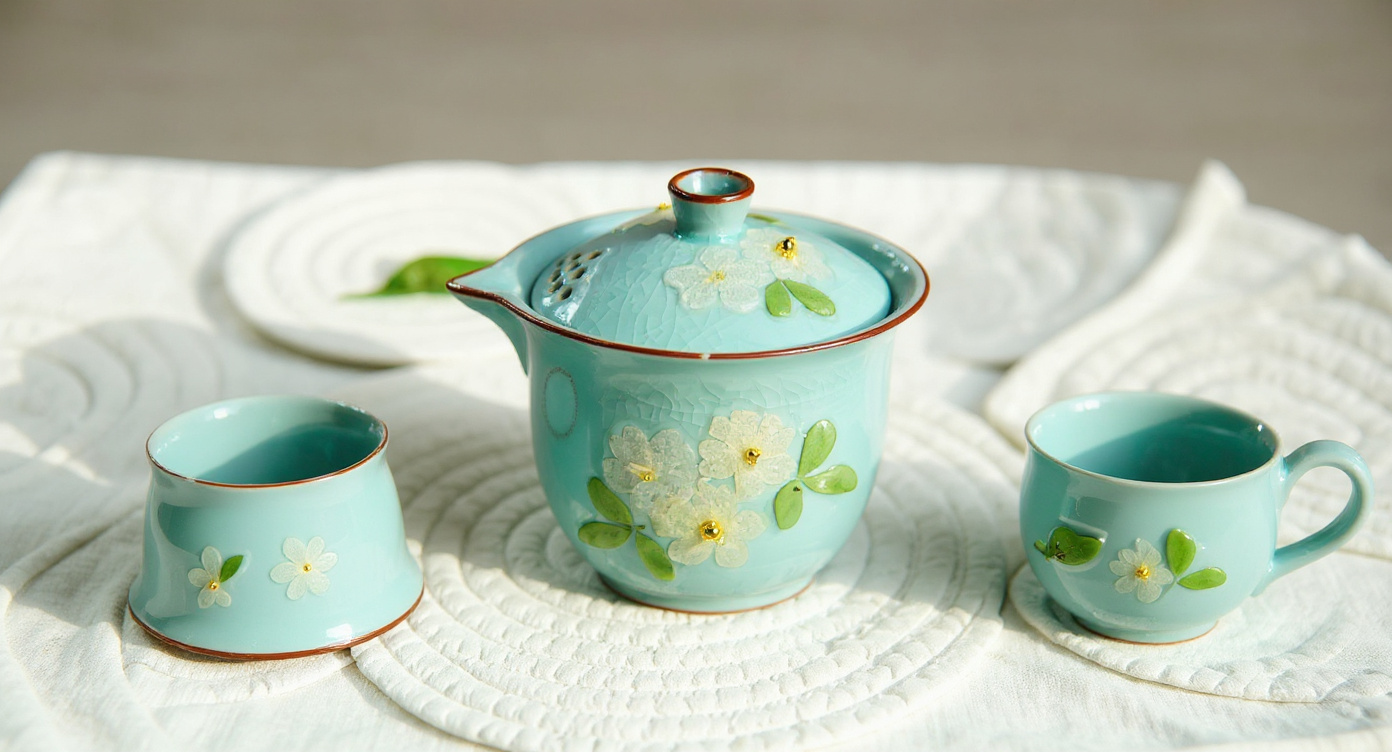
Modern Ruyao is not a claim of historic provenance
“Ruyao” in a contemporary product name should not be read as proof that a vessel is historic Ru ware. The Metropolitan Museum of Art’s collection search for Ru ware provides museum context for the historical category; it does not authenticate this contemporary set.
For this purchase, the useful description is a modern botanical celadon ceramic tea service with an ice crack glaze. Not an antique claim.
The supplied description uses celadon and porcelain terminology, but it doesn't include a technical ceramic-body specification. Likewise, the name of a glaze style doesn't establish food-contact suitability, a temperature rating, or dishwasher compatibility.
Ask for evidence, not prestige.
Real flowers beneath a clear glaze: what still needs explaining
The stated product identity includes real dried petals and leaves beneath a clear surface glaze. That botanical material is central to the design, not a printed floral pattern.
The construction sequence remains unspecified. Ordinary ceramic glaze firing would destroy intact dried plant material, so the description needs to distinguish the fired ceramic glaze from the transparent layer that encloses the flowers. It should identify when the botanicals are added and what seals them.
That distinction matters at the rim. A decorative exterior surface, a drinking edge, and the inside of a teapot face different combinations of heat, moisture, and contact with tea or lips.
The FDA’s questions and answers about lead-glazed traditional pottery explain why pottery appearance alone cannot establish food-contact safety. This is general guidance, not evidence that this set contains lead or has passed testing. It also doesn't identify or assess the botanical sealing layer.
Pampasroom’s preserved-flower craft perspective can explain the importance of protecting delicate botanicals. It cannot substitute for documentation about the finished ceramic vessel, its food-contact surfaces, or its permitted temperatures.
What to confirm before choosing it for brewing
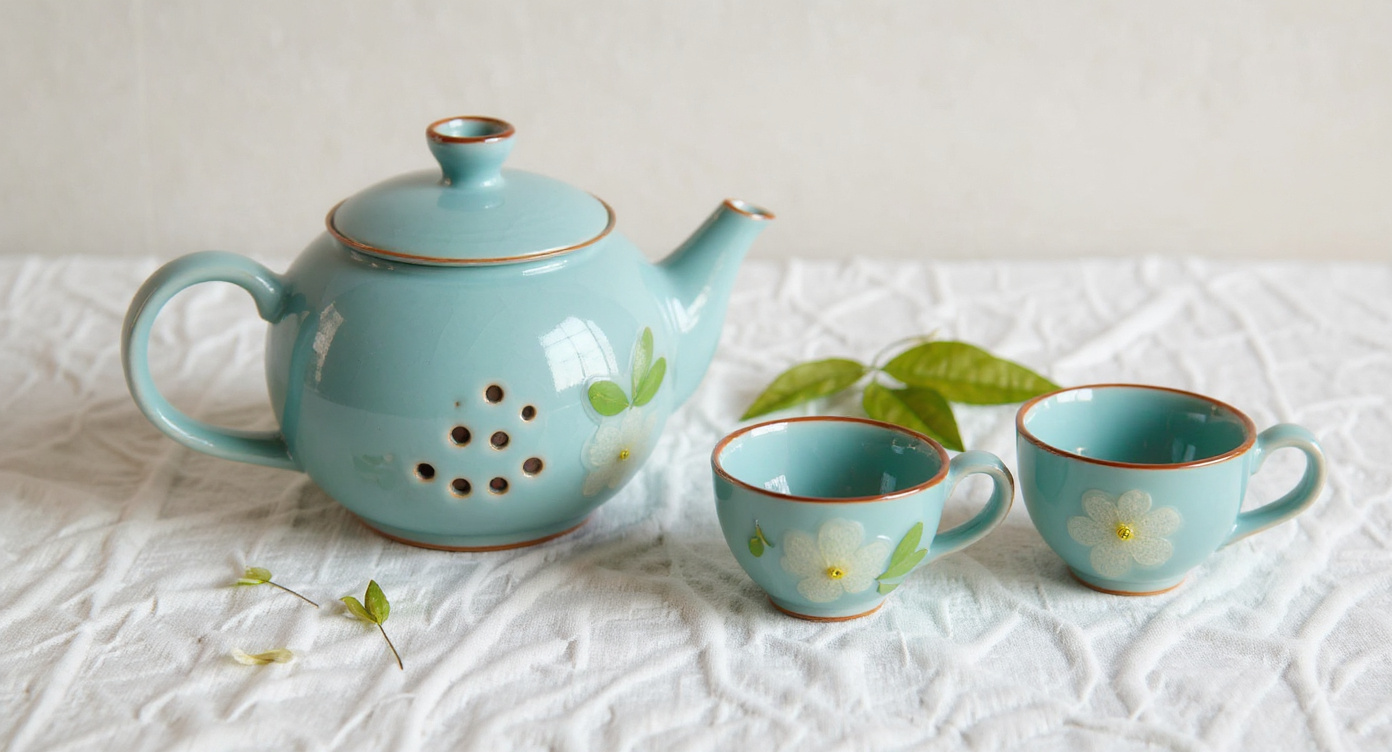
The available specifications establish the design and stated capacities. They do not establish usable brewing volume, filtration, pouring behavior, drainage, cup count, or cleaning compatibility.
Use this purchase checklist:
1. Request finished-product food-contact documentation. It should cover the teapot interior, cup interiors, rims, and any botanical covering that could contact tea or lips. 2. Ask for the permitted water temperature and warming method. A ceramic body does not establish boiling-water or stovetop suitability. 3. Confirm what approximately 400ml means. A brim-filled measurement and a practical brewing fill are different specifications. 4. Check the outlet and filtration. Ask whether the pot has a built-in strainer or requires a separate filter, particularly for broken leaves and fine herbal ingredients. 5. Request a pouring demonstration. Look for drips, lid movement, comfortable handling, and water left with the leaves after pouring. 6. Verify the selected set contents. Cup capacity is supplied; the number of included cups and accessories is not. 7. Obtain care and purchase terms. Confirm washing instructions, the response to leaks or structural damage, and the final price, currency, and configuration at checkout.
No brewing test results are available here. The capacity figures should therefore remain stated specifications, not measured performance claims.
An honest limitation: if the buyer wants a low-maintenance everyday brewing tool and the botanical coating or hot-water instructions remain undocumented, an undecorated vessel with clear use guidance is the better choice. The flowers don't outweigh that gap.
Compare specifications, not unsupported price bands
Broad price ranges hide differences in set contents, materials, and documentation. No current price with a confirmed currency, configuration, and verification date is available here, so a numerical price comparison would create false precision.
The table separates supplied specifications from seller-dependent alternatives.
| Comparison point | This botanical Ruyao set | Other teaware |
|---|---|---|
| Teapot capacity | Approximately 400ml, stated | varies by seller |
| Cup capacity | 80–90ml, stated | varies by seller |
| Surface and decoration | Celadon ice crack glaze; real dried petals and leaves under a clear glaze; raised floral relief | varies by seller |
| Purchase price | quote only | varies by seller |
The small cups suit serving tea in modest portions. The approximately 400ml pot won't suit every brewing style, especially when the buyer prefers very small infusions and wants to empty the pot between each pour.
A gift buyer may place more value on botanical variation. A frequent brewer may care more about drainage and cleaning access. Neither preference is wrong, but both require a vessel suited to its intended use.
Inspection and care before the first brew
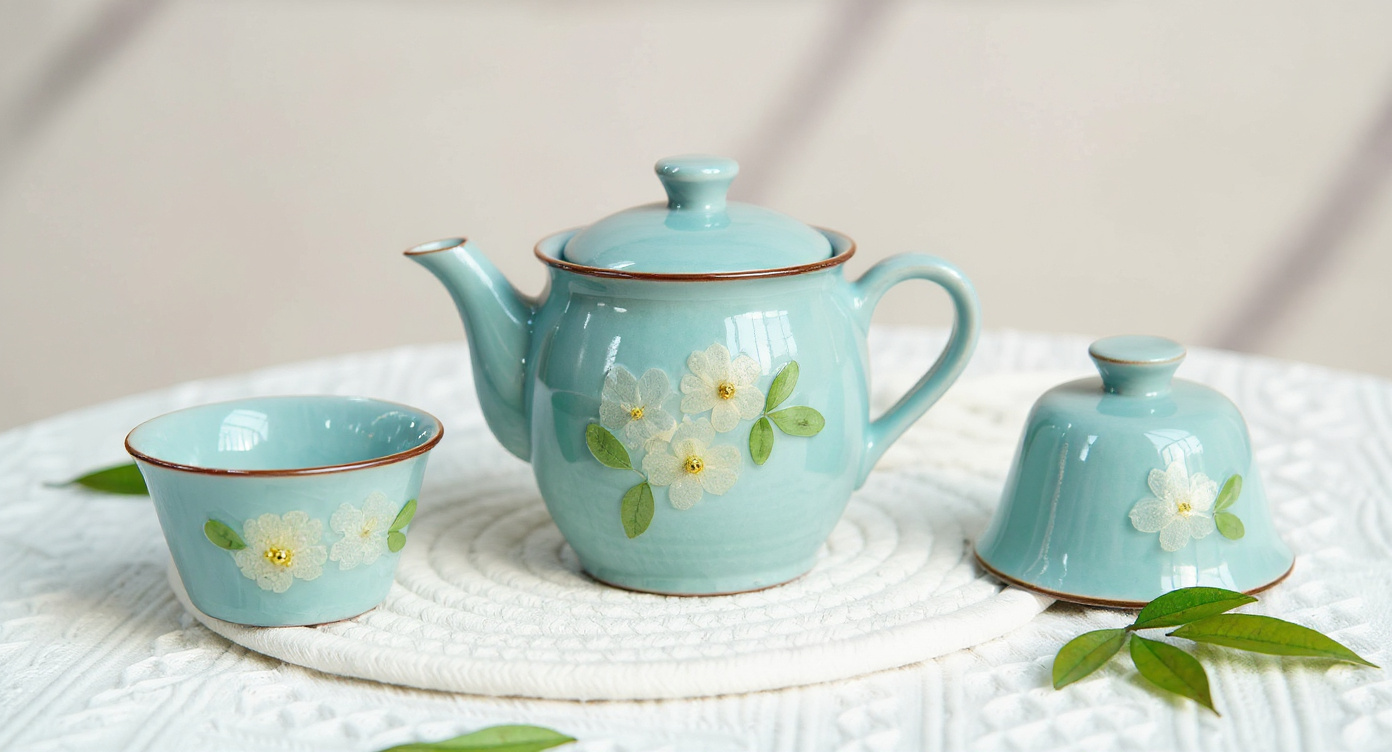
Intentional ice crack glaze and a crack through the ceramic body are different things. A photograph may not resolve the distinction, and the absence of a leak does not prove food-contact suitability.
Once the maker has confirmed hot-beverage use, follow this inspection sequence:
1. Read the supplied instructions before adding water. Identify temperature limits, warming guidance, and approved cleaning methods. 2. Examine the body, handle, spout, rims, and botanical surface. Stop if there is loose decoration, a sharp damaged edge, or a suspected structural fracture. 3. Use the permitted preparation method. Don't place the pot over a burner or subject it to abrupt temperature changes unless those uses are approved. 4. Check the vessel during the first permitted use. Leakage or movement at a joint warrants stopping and contacting the seller. 5. Let it cool before cleaning. Use the approved method, then allow the interior to dry before storage.
Gentle handwashing is a cautious approach only if washing is permitted for the finished surface. A soft cloth or sponge avoids unnecessary abrasion; detergent, soaking, dishwasher use, bleach, and descaling treatments each need compatibility guidance.
This won't work if the care method is guessed from the ceramic body alone. The clear botanical covering needs its own instructions.
Tea may make glaze lines more visible over time. That change is not a safety test, nor is it a reason to scrub the surface with harsher products.
FAQ
What is this Ruyao teapot made to look like?
It is a delicate celadon, pale blue-green ceramic teapot with matching small cups, visible ice crack glaze, real dried petals and leaves beneath a clear surface glaze, and tactile raised floral relief. The finish is soft matte-to-satin rather than a highly polished appearance.
What are the teapot and cup capacities?
The stated teapot capacity is approximately 400ml. Each cup is stated as 80–90ml. These are product-description figures; usable brewing capacity has not been measured here.
How many cups come with the set?
The supplied information does not confirm the cup count. Check the selected product configuration before ordering rather than inferring the contents from styling photographs.
Are the flowers real or printed?
The product identity specifies real dried flower petals and leaves embedded beneath a clear surface glaze. The material and application sequence of that clear covering still need a manufacturer explanation.
Can it be used with boiling water?
A boiling-water rating is not supplied. Before brewing, obtain confirmation that the finished pot and cups are suitable for hot beverages, along with the permitted temperature and any warming instructions.
Does it have a built-in tea strainer?
The filtration arrangement is not specified. Ask for an interior or spout photograph and confirmation of whether a separate strainer is needed for the tea being brewed.
Is the ice crack glaze the same as a broken teapot?
No. Ice crack describes the visible glaze texture; a structural crack affects the ceramic body. Stop using the vessel if it leaks, has an unstable joint, or shows suspected structural damage, and ask the seller to assess it.
Can it go in the dishwasher?
Dishwasher compatibility is not confirmed. Obtain care instructions for both the ceramic glaze and the botanical covering before choosing a cleaning method.
A botanical gift, with practical questions worth asking
This set has a specific appeal: pale celadon, real dried botanicals, raised texture, and small matching cups. It can suit a tea lover who wants the vessel itself to contribute to a calm, restrained ritual.
For everyday hot tea, documentation comes first. Clear answers about temperature, food contact, filtration, and cleaning would turn an attractive design into a better-informed purchase.
Visit Pampasroom for the studio’s wider work, or review the Handmade Ruyao Ice Crack Teapot Set | Real Pressed Flowers | Celadon Art to confirm the available configuration and request the missing use specifications.