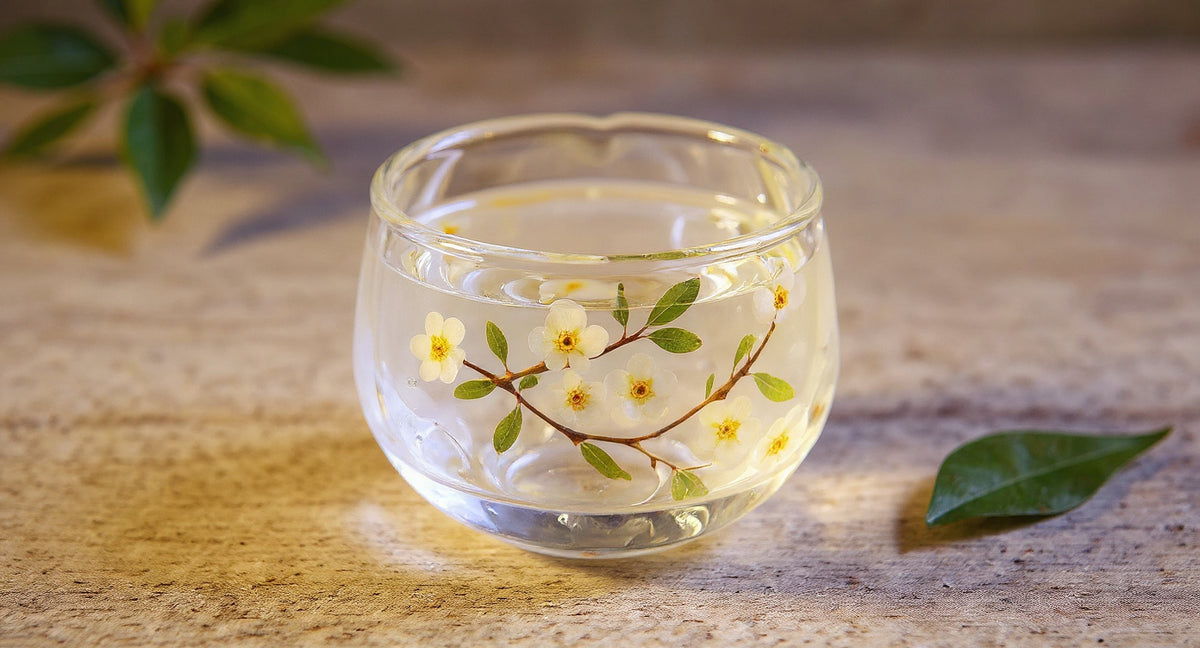
A small clear cylindrical glass cup can make sense as an eco friendly resin tea cup, but only when the construction is honest. The tea should touch glass, not resin. The floral part should stay on the outside, where the smooth transparent coating can protect it without pretending to be the drinking surface.
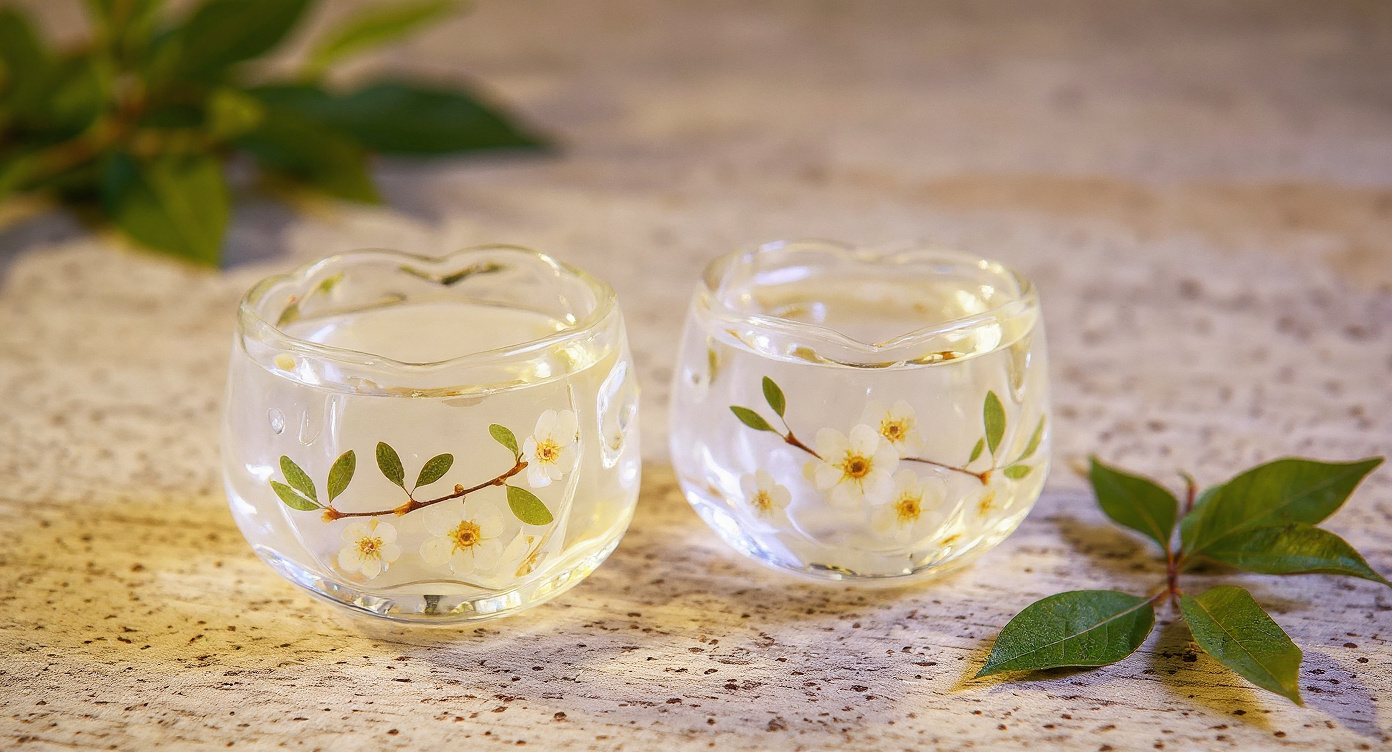
That is the appeal of the Handmade Glass Tea Cup Real Pearl Plum Flowers | Eco Resin 60ml Gongfu Master Cup | Botanical Gift. It is a 60ml cup, clear and cylindrical, with real white plum blossoms and tiny green leaves visible under a resin finish that creates a tactile 3D relief on the exterior. Quiet object. Small footprint. No drama.
The styling matters too. Natural wood or stone, soft diffused light, warm neutral background. That is the right setting for this kind of cup because the piece is about texture, not glare. The floral relief reads as preserved, not printed. Delicate. Serene. Specific.
Why this cup costs more than a plain floral cup
Price is the first thing people notice. This one sits at $71.18, which is far above a printed souvenir cup and above most mass-made floral glassware. That gap is not just markup. It reflects a 60ml heat-resistant glass body, preserved botanical detail, and a sealed exterior finish that has to stay smooth around raised material.
The comparison should not be a breakfast mug. It should be a small tea vessel with display value. In that frame, the cup is paying for material choices and hand assembly, not bulk. The value is in the small things, which is annoying if you want a cheap cup and useful if you want a piece that feels considered.
A contrarian truth: if the goal is dishwasher convenience, this is a poor buy. The floral relief is the point, and that same detail is the reason hand washing belongs here. Some objects are built for ease. This one is built for attention.
When I sealed my first batch of preserved blooms into a heat-resistant glass cup, the part that made the design work was the gap between the glass interior and the decorative exterior. That separation is still the main logic here.
Why 60ml works for gongfu tea
A 60ml cup is not for casual gulping. It suits gongfu tea service, where small pours, repeated infusions, and short drinking moments matter. The size keeps the session focused. Not a mug. Not a tumbler. A tasting cup.
That lines up with gongfu tea ceremony, where control matters more than volume. A small vessel keeps the tea hot, concentrates aroma, and makes each pour feel deliberate. If that sounds fussy, fair. It is fussy. That is the point.
The plum blossom choice also fits the mood. Prunus mume has long seasonal meaning as a winter-to-spring marker, so the cup does not read as random decoration. It reads as a small seasonal object with a clear visual language.
Small. Delicate. Intentional.
What the resin finish does, and what it does not do
The resin is there to seal and protect the exterior floral composition. It gives the surface a raised feel, helps the blossoms stay visible, and keeps the tiny leaves from shedding at the first rinse. It is a cover, not a miracle.
A careful reading of the word eco matters here. It does not mean biodegradable. It does not mean zero-impact. It can mean a more considered handmade object, less visual waste than a printed pattern, or a longer-lived decorative surface. That is a narrower claim, and it is the honest one.
The tea itself should stay in the glass chamber. That is the cleanest part of the design. If a cup relies on resin for the drinking surface, that is a different product and a different conversation.
The preserved blossoms should also be treated like preserved material, not immortal material. Direct sun, heat, and rough cleaning can change them over time. Slower change is the realistic expectation. Not perfection.
What to check before buying
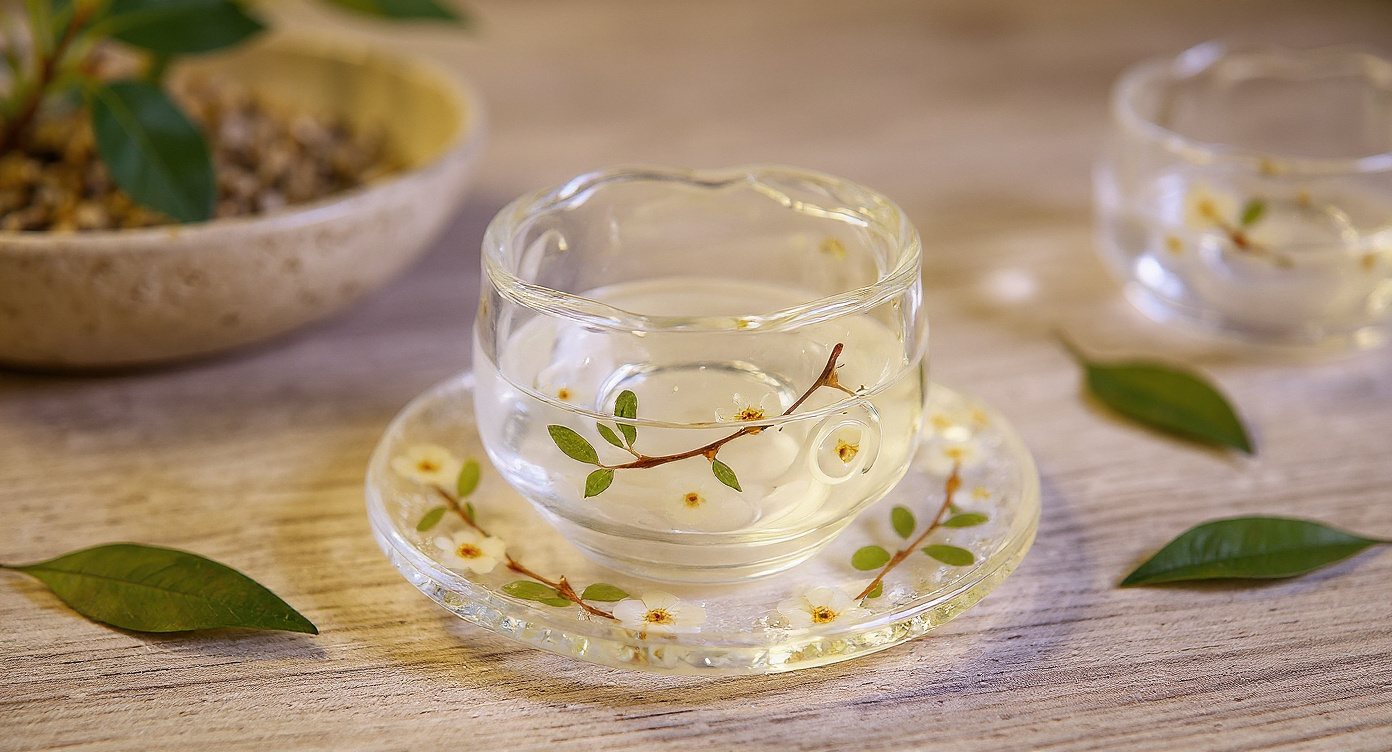
1. Confirm that the tea-contact area is glass, not resin. 2. Check the stated capacity, here 60ml, so the size matches gongfu use. 3. Look at the floral placement, because white plum blossoms and tiny green leaves should read as real material under the coating, not a print. 4. Ask whether the finish is smooth enough to wipe clean without catching on rough edges. 5. Decide if the cup will be used often or mostly displayed, because that changes how much hand-wash care feels acceptable.
If those five points line up, the design makes sense. If not, a plain cup will do the job with less upkeep.
How it compares with other floral cups
| Option | Price | What it offers | Main trade-off | ||
|---|---|---|---|---|---|
| Mass-produced floral cup | varies by seller | Printed or imitation floral look, easy to replace | Less texture, less individuality | ||
| Handmade resin floral cup | varies by seller | Real dried or preserved botanicals, more handwork | Quality varies widely | ||
| Handmade Glass Tea Cup Real Pearl Plum Flowers | Eco Resin 60ml Gongfu Master Cup | Botanical Gift | $71.18 | Real white plum blossoms, tiny green leaves, 60ml glass body, sealed exterior relief | Needs hand washing, small capacity |
| Studio craft piece | quote only | Highest-end artisan positioning | Price varies by maker | ||
| Plain heat-resistant tea cup | varies by seller | Simple function, easy cleaning | No preserved botanical detail |
The trade-off is plain enough. A simple cup is easier. This one gives you texture, seasonal detail, and a stronger visual presence on the tea table. That is the whole bargain.
Care that keeps the finish intact
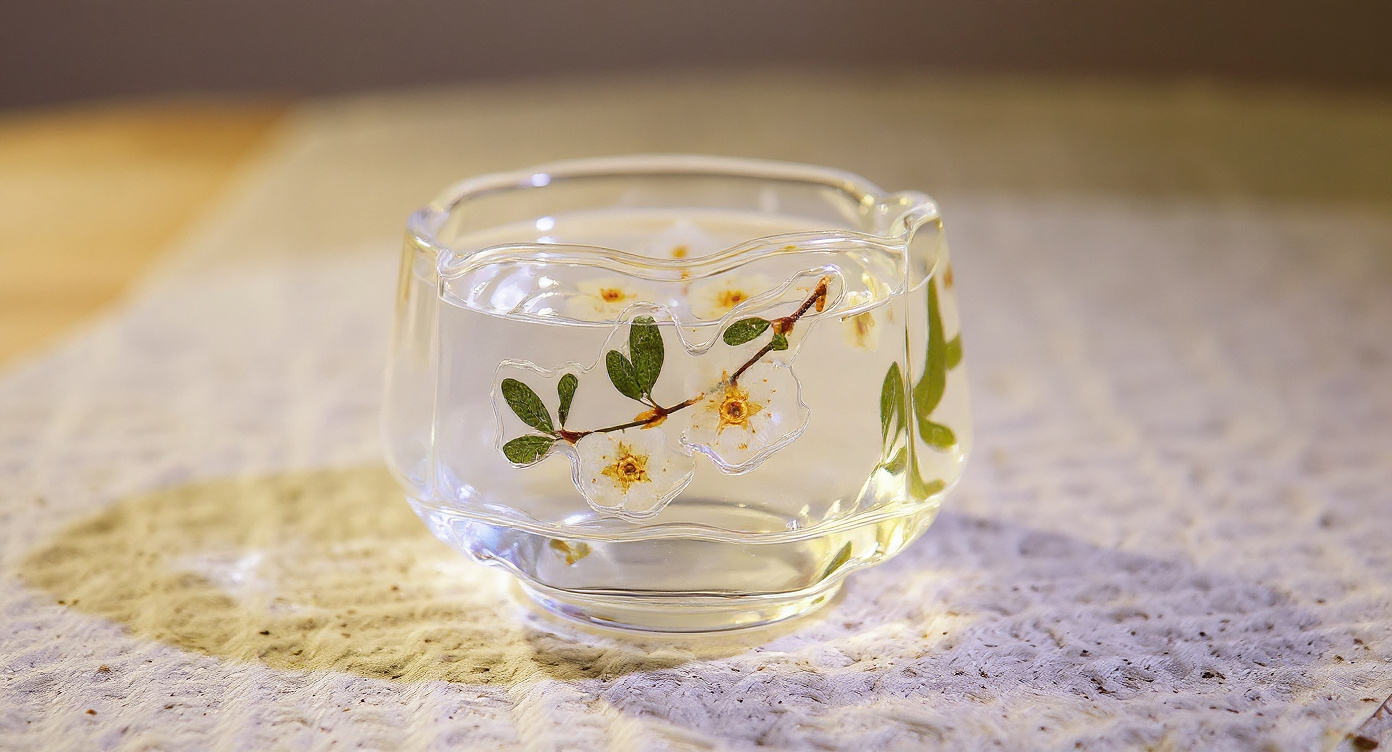
1. Rinse soon after use so tea stains do not sit on the glass. 2. Wash by hand with mild dish soap and lukewarm water. 3. Skip the dishwasher, because heat and spray pressure are rough on resin and preserved floral detail. 4. Use a soft cloth or soft sponge, not an abrasive pad. 5. Dry it before storage so water spots do not build up on the clear glass. 6. Store it away from harder cups and plates, because edge knocks are the fastest way to chip a small vessel.
No dishwasher. No scrub pad. No shortcuts.
That routine is not glamorous, but it is practical. If a cup has preserved material on the outside, a little restraint keeps the surface looking clean for longer. That matters more than most product pages admit.
Why the aesthetic works
The natural wood or stone setting, soft diffused natural light, and warm neutral background are not just styling choices. They match the object itself. A cup like this does not need a loud scene. It needs space for the white plum blossoms and green leaves to show under the transparent coating.
This is where Pampasroom tends to sit: handmade floral objects that are meant to be seen at close range. The cup is small, but the visual detail is not. The relief effect does the work. Quietly.
FAQ
Is this cup for daily tea use or display?
Both, if the owner is fine with hand washing. If convenience matters more than detail, a plain cup is the better fit.Is the tea in contact with resin?
It should not be. The sensible design is glass on the inside and resin on the exterior floral layer.Can it handle boiling water?
The cup is described as heat-resistant glass, but small glass vessels still need a careful pour to reduce thermal shock. A cold cup and a sudden pour are a bad mix.Will the white plum blossoms fade?
They can change over time. Direct sun, heat, and harsh cleaning are the main reasons.Can I put it in the dishwasher?
No. Hand washing is the safer choice for both the resin finish and the preserved botanicals.Is this a good gift?
Yes, if the person likes tea objects, preserved florals, or small display pieces. If they want a mug that lives in the dishwasher, no.What makes this different from a printed floral cup?
The flowers are real preserved material under a clear coating, not a flat print. The surface has a 3D relief feel, which changes the whole object.Who is this cup not for?
Anyone who wants large servings, machine washing, or zero maintenance. A small botanical cup asks for a little care.So when does it make sense?
It makes sense when the cup is meant to do two jobs at once: hold tea and hold attention. The 60ml size fits gongfu tea, the heat-resistant glass handles the drink, and the exterior resin layer keeps the white plum blossoms and tiny green leaves visible as a tactile floral relief.
If that balance is the target, the Pampasroom botanical tea cup is a sensible place to start. If not, a plain cup will be easier. Sometimes that is the right answer.