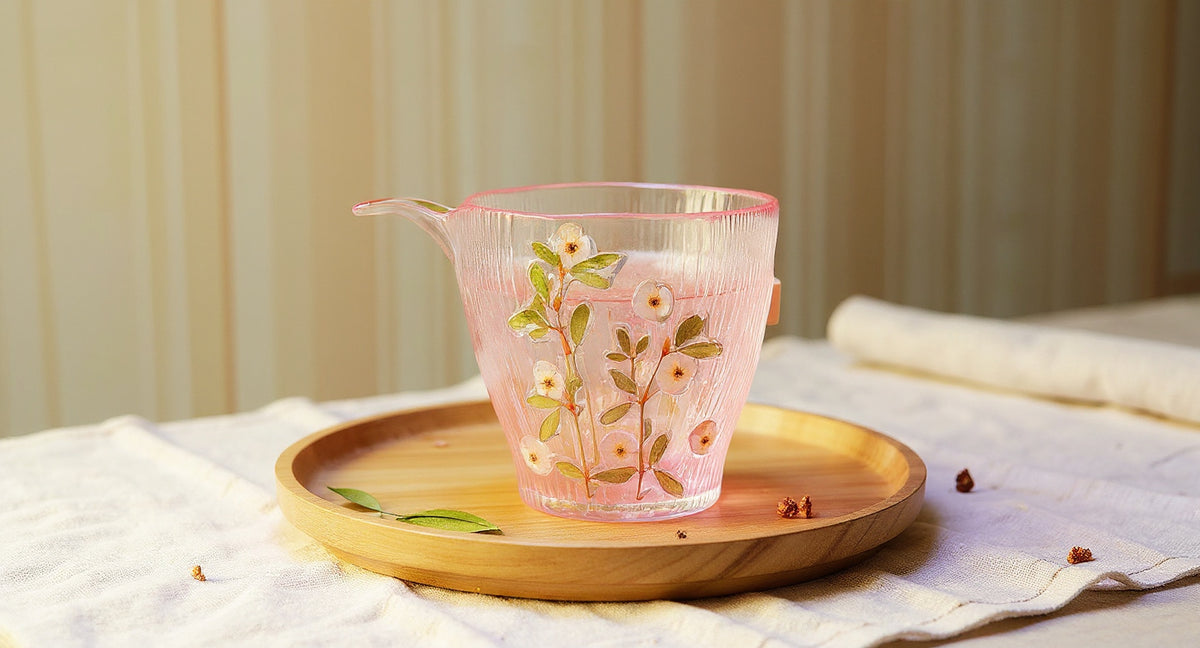
A unique coffee mug with real flowers inside can work for daily coffee, provided the botanicals sit outside the drinking surface and the cup is treated as hand-wash glassware rather than ordinary dishwasher-safe crockery. The flowers matter, but construction matters more: heat resistance, protected placement, a comfortable capacity, and realistic care instructions decide whether it becomes part of a routine or stays on a shelf.
A flower cup is best understood as functional art. It needs to hold a hot drink safely, clean without damaging the botanical work, and remain useful after the novelty of the first few pours has passed. A printed blossom pattern can do the visual job cheaply. Real preserved petals bring texture, variation, and the fact that no two pieces will develop exactly alike.
Real botanicals need to stay out of the drink path
The sensible construction for floral drinkware places preserved petals and leaves on the exterior of the vessel, not loose in the beverage. That distinction affects hygiene, durability, and how the cup feels in use. Flowers trapped beneath or integrated into an outer decorative layer can be admired without tea, coffee, milk, or dishwater repeatedly soaking the plant material.
Pressed and dried flowers have long been used in decorative craft because drying removes much of the moisture that would otherwise cause rapid decay. The basic practice behind pressed flower craft is simple, but turning botanicals into a usable cup requires better protection than placing petals between paper or under a picture frame.
A unique coffee mug with real flowers inside should therefore be read as a search phrase, not a literal construction requirement. Loose flowers floating in coffee are impractical. Flowers applied to the outer surface of a heat-resistant cup are the more useful format because the beverage remains in a clean, non-botanical interior.
There are a few practical signs of a well-considered floral cup:
1. The drinking rim is smooth and free from raised petals or decorative material. 2. Botanical elements sit on the outside rather than in the liquid chamber. 3. The cup has enough volume for an actual drink, not just a short display pour. 4. Care guidance specifically calls for hand washing instead of vague promises of durability. 5. The maker explains what happens if the item arrives damaged. 6. Raised decoration is protected from hard knocks, abrasive scouring pads, and long dishwasher cycles.
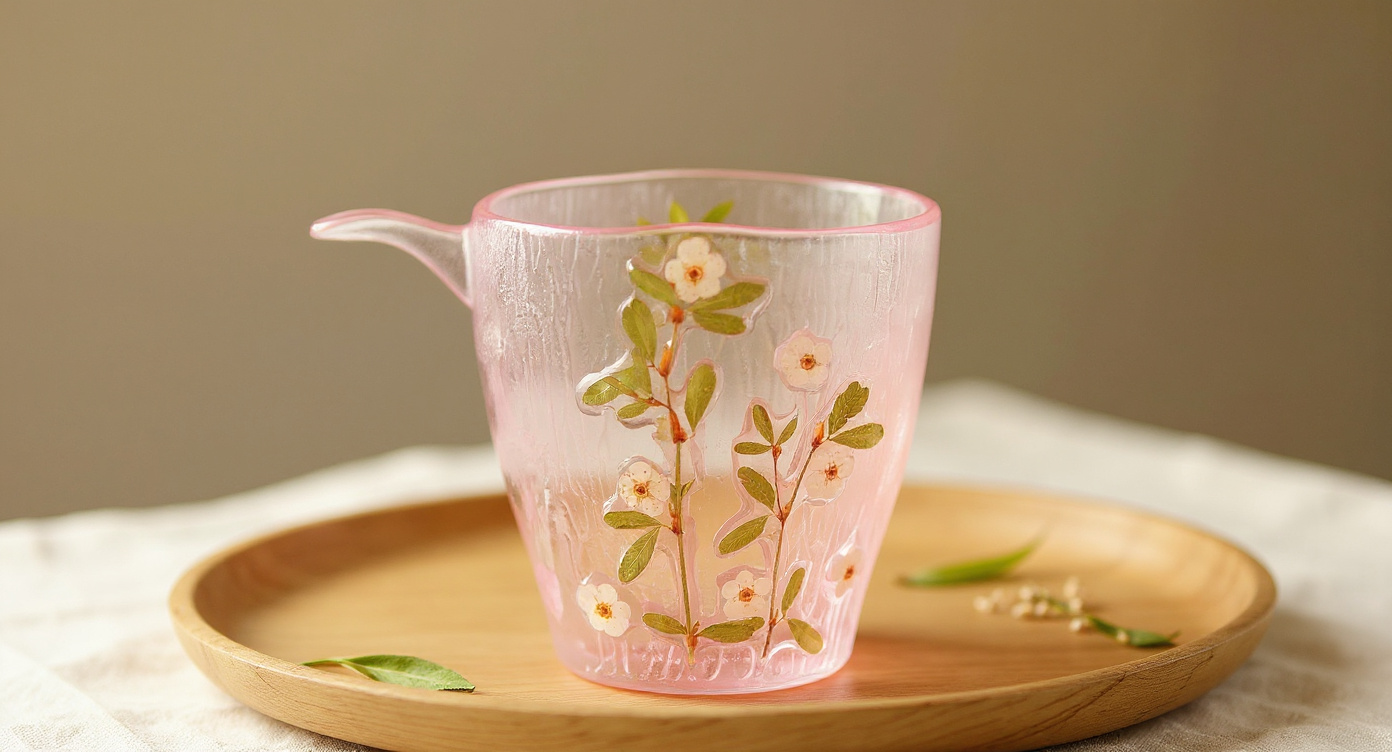
The 400ml capacity on the Handmade Pink Pearl Plum Blossom Glass Tea Cup | Real Flower Art | 400ml Eco Gift puts it in useful territory for coffee, tea, herbal infusions, or a generous milk-based drink. It isn't a tiny ornamental tasting cup pretending to be practical.
Heat-resistant glass is the part that earns daily use
Flowers attract attention, but glass selection and wall construction determine whether a cup can handle a hot morning drink. The product is specified as heat-resistant glass, which is the relevant claim for normal tea and coffee service. Heat resistance does not mean indestructible, microwave-proof, dishwasher-proof, or safe to move directly from a cold refrigerator into near-boiling water.
Glass can crack when one area heats or cools much faster than another. The problem is thermal shock. Pouring hot coffee into a cup that has just been rinsed in icy water creates a bigger temperature difference across the material than allowing the cup to come closer to room temperature first.
Some laboratory and kitchen glassware uses borosilicate glass, a material known for relatively low thermal expansion. Borosilicate glass is often chosen where resistance to temperature change matters. Still, no borosilicate specification is supplied for this cup, so it shouldn't be assumed. “Heat-resistant glass” is the supportable description, and it calls for ordinary care rather than heroic treatment.
For coffee use, 400ml is a meaningful volume. It can hold roughly 13.5 US fluid ounces, leaving room for coffee and milk without filling to the rim. It also suits tea drinkers who want a full serving rather than repeated small refills. The trade-off is obvious: a larger glass cup holds more hot liquid, so it takes longer to cool and can feel heavier than a small porcelain mug.
The product's raised floral texture is another reason to treat it differently from plain glassware. The tactile surface is part of the point. It is also the vulnerable area. A cup like this belongs in a hand-wash routine, not in the lower rack next to heavy pans.
By the end of its 3-to-5-day handcraft process, the piece is meant to function as a cup and a small botanical object. That combination suits a slower daily ritual. It won't suit someone who wants stackable, dishwasher-safe mugs for a busy shared kitchen.
Printed mugs, resin cups, and botanical glass are different purchases
The phrase “flower mug” covers several very different objects. A printed ceramic mug uses ink or transfer decoration. A resin cup often suspends botanical material in plastic-based resin. A glass cup with preserved flowers on its exterior takes a different route again, prioritising real plant material and visible surface texture.
| Type of drinkware | Flower treatment | Capacity or construction stated | Price information supplied | Best fit |
|---|---|---|---|---|
| Mass-produced floral mug | Printed floral design | Usually opaque ceramic, exact specification varies | $15–$40 on Amazon | Low-cost everyday use where replacement is easy |
| Handmade flower resin cup | Flowers incorporated into resin | Resin construction, specifications vary by maker | $45–$120 on Etsy | Decorative gifting with a handmade feel |
| Handmade Pink Pearl Plum Blossom Glass Tea Cup | Real preserved plum blossom petals and leaves hand-embedded on the exterior surface | 400ml heat-resistant glass with raised floral texture | $114.032857142857 | A functional art piece for careful daily tea or coffee use |
The least expensive option isn't automatically the poorer choice. Printed ceramic is the practical answer for offices, households with dishwashers, or anyone who needs a mug that can be replaced without thought. It is also a different experience. A printed design lies flat, repeats across production runs, and has no real botanical variation.
Resin has another set of trade-offs. It can be useful for decorative work, but it isn't glass, and the product's temperature limits need to be checked individually. A resin cup should never be assumed safe for hot drinks merely because it resembles a mug. The safer buying habit is to look for an explicit food-contact and temperature statement from the seller.
The glass option asks more from its owner. It needs gentler washing and safer storage. In return, it offers a 400ml drink vessel with actual preserved plum blossom petals and leaves, not a printed approximation. Plum blossoms have long carried cultural significance, and the botanical background of plum blossom helps explain why the flower is often chosen for decorative work.
Hand washing protects the petals, glass, and raised surface
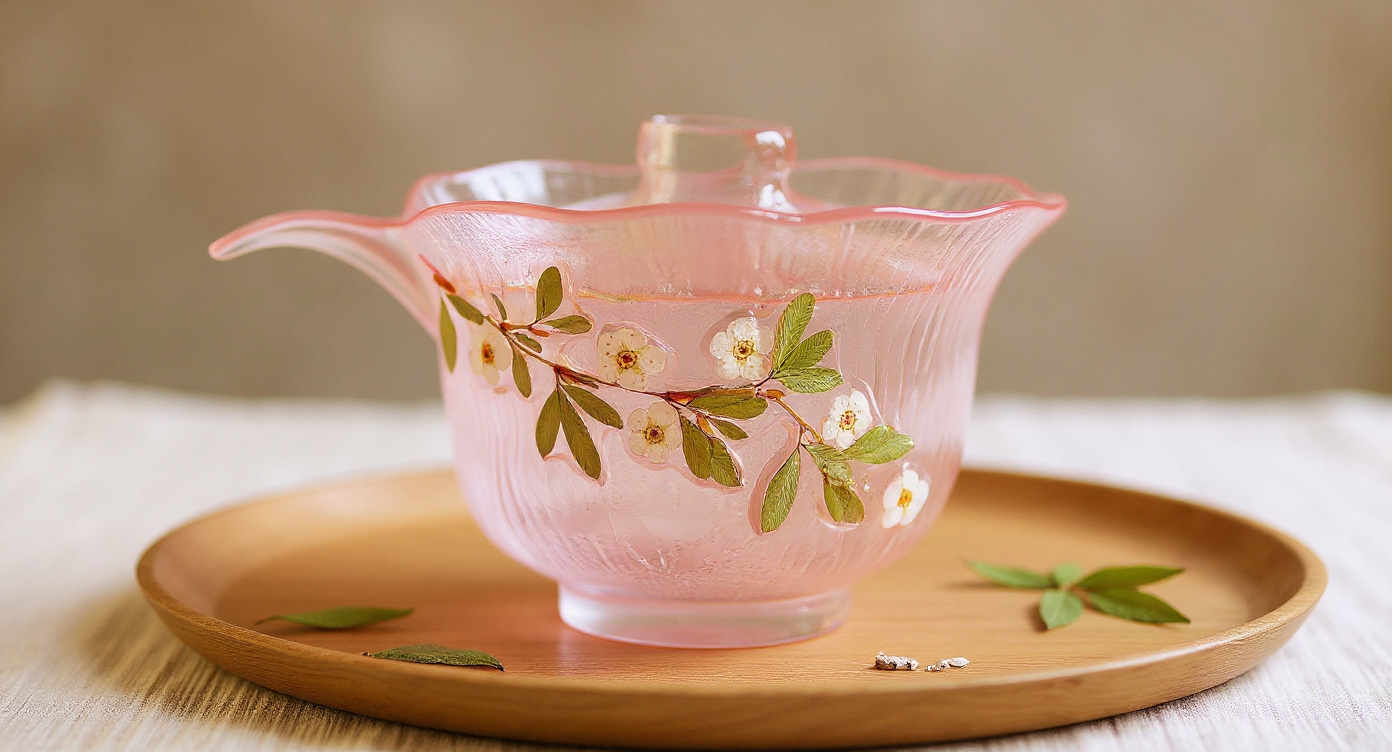
Care isn't complicated, but it must be consistent. Abrasion, standing water around decoration, rapid temperature changes, and collisions with other dishes are the risks to control.
Use this routine:
1. Let the cup cool before washing. Never take a hot cup straight to cold running water. 2. Wash by hand with lukewarm water, mild dish soap, and a soft sponge or cloth. 3. Keep abrasive pads, powdered cleansers, and stiff bottle brushes away from the raised botanical surface. 4. Rinse promptly after coffee, especially sweetened drinks or milk-heavy drinks that can leave residue. 5. Dry carefully with a soft towel, paying attention around the textured floral work rather than rubbing aggressively. 6. Store it where handles, cutlery, or stacked cups can't knock against the exterior decoration.
Dishwashers combine heat, detergent strength, water pressure, long cycles, and contact with other objects. That is a harsh environment for a cup with exterior preserved flowers and raised tactile details. Hand-wash care is not a fussy extra. It is the condition that makes the decorative construction viable over time.
Coffee staining is usually manageable if it is cleaned soon after use. For a light film inside the cup, mild dish soap and warm water are preferable to aggressive bleaching products. If odour lingers after a milk drink, a brief soak of the interior with warm soapy water is reasonable, while keeping the exterior floral area out of prolonged immersion.
The product includes eco-friendly packaging and a 48-hour damage policy. That policy matters because glass and raised exterior detailing are vulnerable during transit. On delivery, inspect the rim, body, handle, and textured botanical areas promptly rather than waiting until the first use.
A botanical cup makes sense for deliberate routines, not every kitchen
This kind of cup earns its place through repeated use, but it won't match every household. A home with crowded cupboards, frequent dishwasher loads, young children handling drinkware, or a habit of stacking mugs probably needs plain, durable ceramics instead.
It is more likely to pay off when the drinkware has a defined role: morning tea at a desk, a quiet coffee break, an occasional host gift, or a display piece that still earns its keep as a cup. The 400ml capacity gives it enough working usefulness that it doesn't need to become a permanent shelf object.
For gifting, the important question is not “Does the recipient like flowers?” It is “Will the recipient enjoy caring for a handmade glass object?” Someone who prefers throw-it-in-the-dishwasher convenience may appreciate the sentiment but use it rarely. Someone who already chooses loose-leaf tea, keeps a calm coffee ritual, or values handmade home objects is much more likely to use it often.
The higher care requirement is the trade-off. The benefit is specificity. A cup with real preserved botanicals has more individuality than a generic floral print, and the handmade process means it is intended as a considered object rather than bulk drinkware.
FAQ
Can you put real flowers in a coffee mug?
Real flowers can be used in a coffee mug when they are preserved and positioned outside the drinking area. Loose fresh flowers in coffee are not a practical or hygienic design. For a functional cup, the rim and interior should remain clear for drinking and washing.
How are real flowers preserved in glass?
Flowers are first dried or preserved to reduce moisture, then incorporated into decorative work rather than left exposed as fresh plant material. In this 400ml cup, preserved plum blossom petals and leaves are hand-embedded on the exterior surface. The exact process is handmade over 3 to 5 days.
Are mugs with real flowers dishwasher safe?
A floral cup should only go in a dishwasher if the maker explicitly says it is dishwasher safe. This cup has hand-wash care instructions. Dishwasher heat, detergent, water pressure, and contact with other dishes can damage raised exterior botanical work.
Can you drink from a mug with flowers in it?
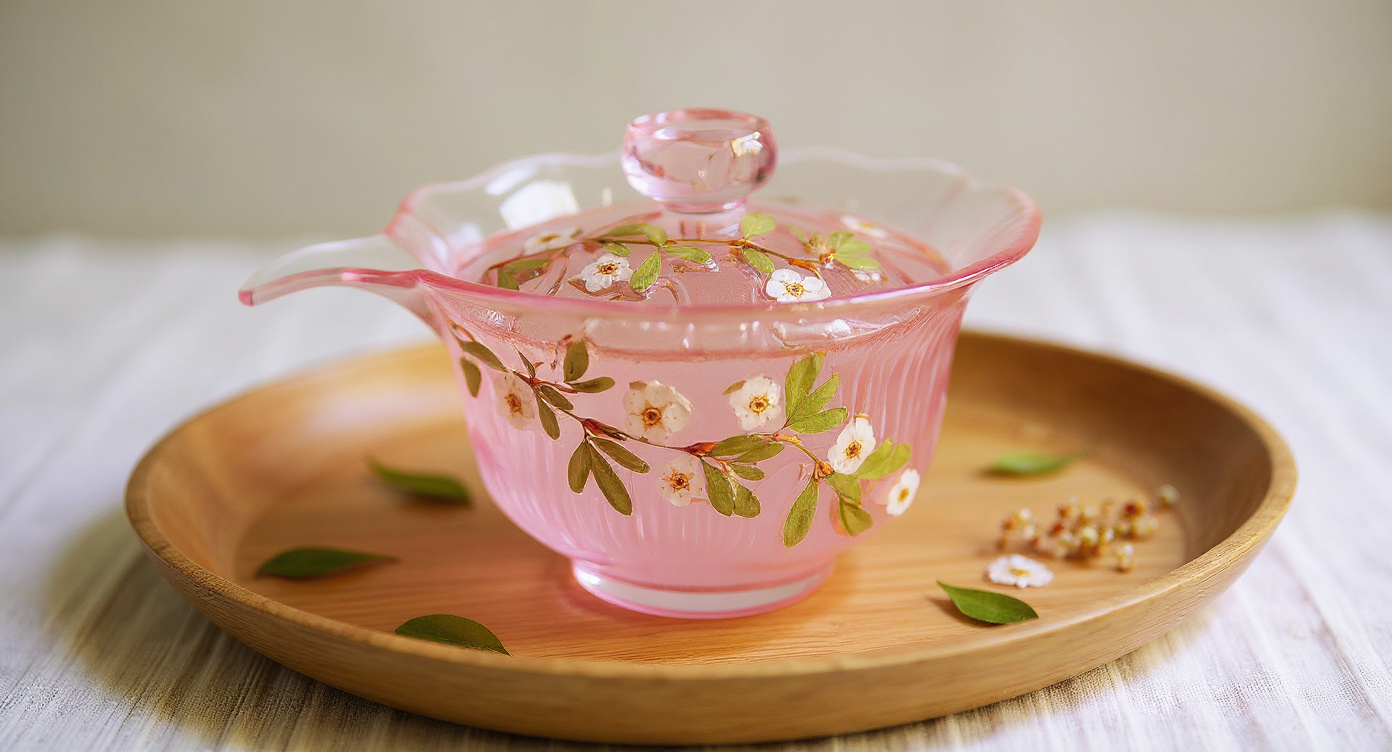
Yes, if the flowers are decorative elements outside the drink path and the interior drinking surface remains suitable for beverages. This cup is designed for tea or coffee, with the real preserved petals and leaves on the exterior surface rather than floating in the drink.
Do preserved flowers fade over time?
They can change gradually with age and exposure. Strong direct sunlight is especially hard on dried botanicals and decorative finishes. Keeping the cup away from long periods of intense sun and washing it gently gives the preserved elements the best chance of retaining their character.
How do you clean a cup with dried flowers on it?
Hand wash with lukewarm water, mild soap, and a soft sponge. Avoid soaking the decorated exterior for long periods, don't use abrasive scrubbers, and dry the textured areas gently. Clean coffee residue promptly so the interior doesn't need harsh treatment later.
What is the difference between a resin flower mug and a glass flower mug?
A resin flower mug uses resin as the main cup material or decorative layer, while a glass flower mug uses glass as the drink vessel. Resin products need individual confirmation of their heat and food-use limits. This cup is heat-resistant glass with real preserved flowers on the exterior, giving it a different feel and care requirement from resin drinkware.
The right choice depends on how the cup will be used
The concern around a real-flower cup is reasonable: fragile glass, textured petals, and daily coffee can sound like a mismatch. The match works when the cup is hand washed, protected from thermal shock, and chosen for a routine where its 400ml capacity and botanical detail will actually be appreciated. For a carefully used gift or a more intentional coffee ritual, see the Handmade Pink Pearl Plum Blossom Glass Tea Cup | Real Flower Art | 400ml Eco Gift.