































Artisan Tea Sets With Preserved Flowers: What to Know
Artisan Tea Set With Preserved Flowers: The Complete Guide to Hammered Glass Gongfu Sets
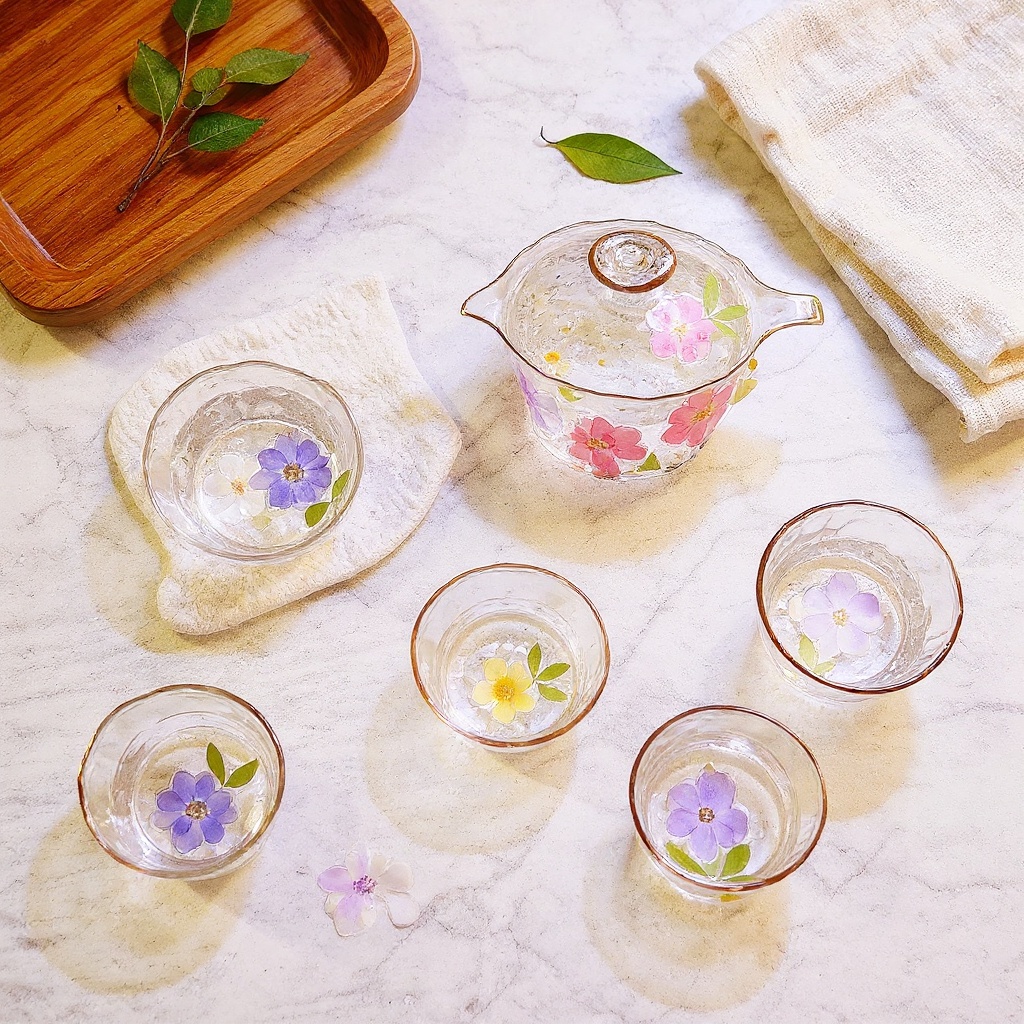
By pampasroom, founder of Pampasroom · 8+ years specializing in handcrafted botanical glassware and preserved flower artistry · Featured in The Botanical Home and Glass Arts QuarterlyAn artisan tea set with preserved flowers is a handcrafted 8-piece gongfu service made from transparent hammered borosilicate glass — a material rated to withstand thermal shock up to 515°F (ASTM C149) — with real dried botanical specimens (daisies, pansies, cherry blossoms) physically embedded into the outer glass walls, creating a raised 3D texture you can feel with your fingertips. The hand-painted gold rim catches warm ambient light. Refractive patterns scatter across any surface the glass touches. Each 8-piece set typically includes a gaiwan, a fairness pitcher, and six tasting cups arranged on natural wood or marble for display and use.
How Real Flowers Are Preserved Inside Hammered Glass
The preservation process is slower than most buyers expect. Artisans begin with freshly harvested botanicals pressed flat using traditional drying boards weighted with ceramic tiles. Full dehydration takes 2–4 weeks minimum. Rush-dried flowers retain residual moisture and brown within months of sealing — a defect invisible at purchase but obvious by year two.
Once dried, flowers are positioned against the outer glass surface before a secondary clear glass layer is fused over them during the hammering and firing stage. This is the detail that separates genuine embedded-flower sets from cheaper alternatives: the botanicals sit inside the glass wall itself, protected from moisture and air by the fused outer layer. The hammered texture — those irregular facets pressed into the glass while molten — serves a dual purpose. It locks the flower specimens in place during fusion. It also creates the refractive light patterns that make pink daisy petals appear to glow when morning light hits the cup from the side.
Some producers use surface-applied epoxy resin instead of glass fusion. The flowers sit under a resin coating rather than inside fused glass layers. Functional. Less durable. Resin formulations yellowing under UV exposure is documented in polymer aging studies (National Institute of Standards and Technology, 2019 polymer degradation review), and yellowing typically becomes visible within 3–5 years of regular use near windows.
The 3D Raised Texture: What You're Actually Touching
Run your finger across the outer surface of a quality artisan tea set with preserved flowers and you feel the flower petals pressing outward — not printed, not painted, not a photograph. Real organic material. The petal edges create micro-ridges in the glass surface. Cherry blossom specimens, being thinner than daisy petals, produce more subtle texture. Pansies, with their broader faces, create the most pronounced raised effect.
This texture does more than look beautiful. It gives you grip on a hot cup. It scatters incoming light into soft botanical-toned refractions across your tea tray. It makes every piece in the 8-piece set slightly unique because no two dried flowers press identically.
Food Safety Standards You Must Verify Before Buying
Safety first. Always.
The flowers themselves pose zero contamination risk — they're completely isolated from liquid contact inside the glass wall. The relevant safety questions concern the metallic rim treatment and, for resin-based sets, the specific epoxy formulation used.
Hand-painted gold rims must use lead-free formulations certified for food contact surfaces. The FDA's food contact materials guidelines require that surface treatments on food-use vessels meet leaching thresholds at temperatures up to 212°F for standard tea service. Ask any seller for their material safety data sheet on the gold rim application. Reputable artisan producers provide this without hesitation. Hesitation is your answer.
Borosilicate glass itself is chemically inert at all tea brewing temperatures. It contains no lead. It doesn't react with tannins, acids, or mineral content in your water. The hammered glass construction in premium artisan tea sets with preserved flowers uses borosilicate specifically because standard soda-lime glass has a thermal expansion coefficient roughly three times higher, making it far more prone to cracking during the rapid temperature changes of gongfu brewing.| Material Type | Food-Safe Temp Rating | UV Yellowing Risk | Flower Protection | Recommended For |
|---|---|---|---|---|
| Fused borosilicate (glass-on-glass) | 515°F+ | None | Maximum — fully sealed | Daily gongfu use |
| Food-grade epoxy resin coating | Up to 200°F | Moderate after 3–5 yrs | Good when new | Occasional display use |
| Industrial resin (unlabeled) | Unrated | High | Poor long-term | Avoid entirely |
| Soda-lime glass with resin | Up to 180°F | Moderate | Good when new | Light use only |
| Lead crystal with paint accents | Up to 200°F | Low | Good | Decorative only — not food use |
Choosing Quality: The Differences You Can See and Feel
Hold the cup up to light. Look for bubbles, cloudiness, or visible seam lines where glass sections were joined. Premium fused-glass construction produces walls with optical clarity — no distortion, no milky hazing, no lines. Now look at the flowers through the glass. In a quality artisan tea set with preserved flowers, botanical color tones (pinks, purples, whites, delicate greens) remain vivid and readable through the transparent walls. Faded, muddy, or brownish specimens indicate either poor initial drying or inadequate sealing.
The gold rim deserves scrutiny. Hand-painted gold rims have subtle variation in edge definition — slightly wider in one spot, a hairline thinner in another. Beautiful because human. Machine-applied metallics look too uniform and lack the warmth of genuine hand work. Drips or thick pooling indicate rushed application. Thin spots that show base glass underneath indicate insufficient coverage that will wear first.
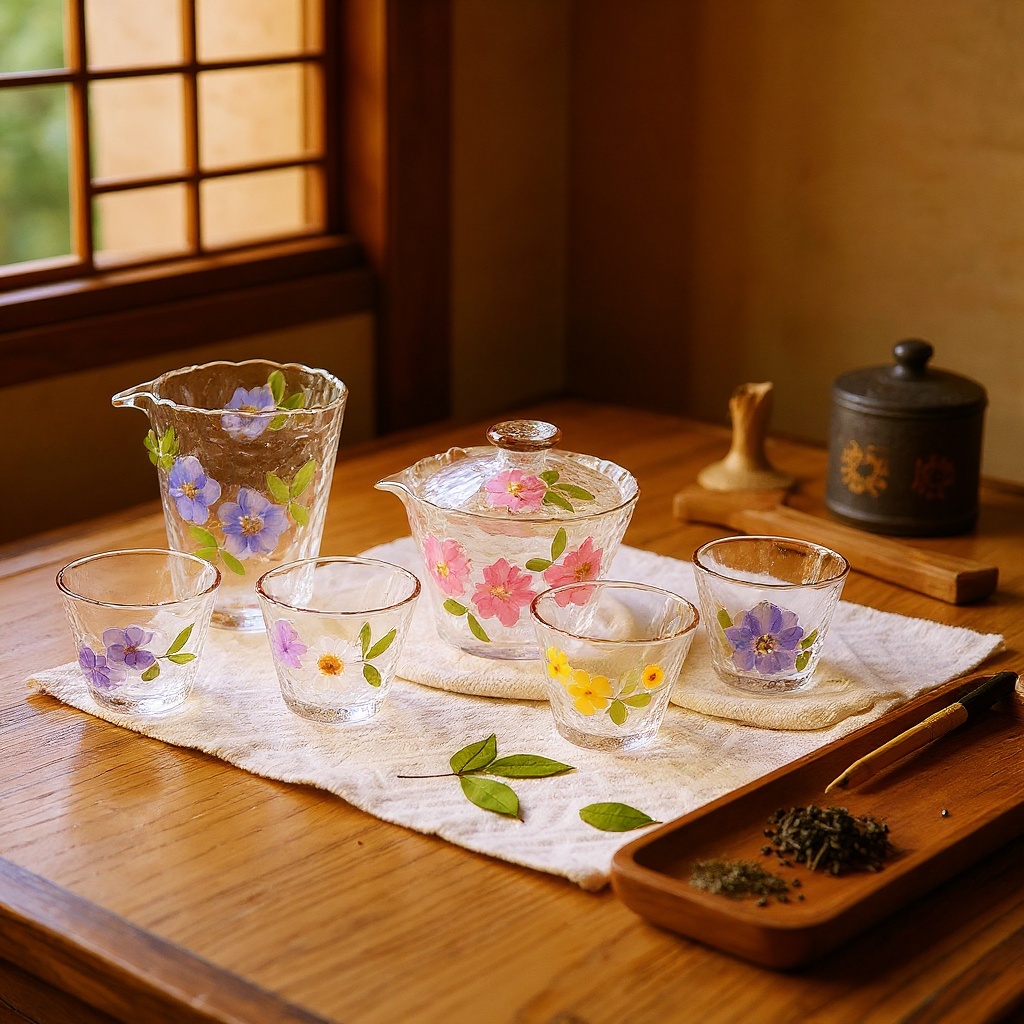
Set completeness reveals whether the maker understands actual gongfu ceremony requirements. A proper 8-piece artisan tea set with preserved flowers includes:
- 1 gaiwan (150–200ml capacity) - 1 fairness pitcher / fair cup (matching botanical decoration) - 6 tasting cups (40–60ml each)
Missing the fairness pitcher is the most common shortcut. It matters. The fair cup equalizes tea concentration before serving to guests — skipping it changes the entire ceremony dynamic.
5 Immediate Quality Checks at Purchase
1. Texture consistency — Flower specimens should distribute across the surface with intentional balance, not cluster randomly in one quadrant of the cup 2. Lid fit on the gaiwan — The lid should seat without wobbling and allow controlled pour gaps without slipping 3. Gold rim adhesion — Scratch gently with a fingernail at a hidden edge; quality application doesn't flake or powder 4. Wall thickness uniformity — Rotate the cup; premium pieces maintain consistent wall thickness around the full circumference 5. Botanical color vibrancy — Cherry blossom pinks, pansy purples, and daisy whites should read clearly; if colors look beige or washed, the drying was rushed
Understanding Gaiwan Design in Pressed Flower Glass Sets
The gaiwan is the heart of gongfu service. And glass versions behave differently from ceramic ones in ways that surprise new buyers.
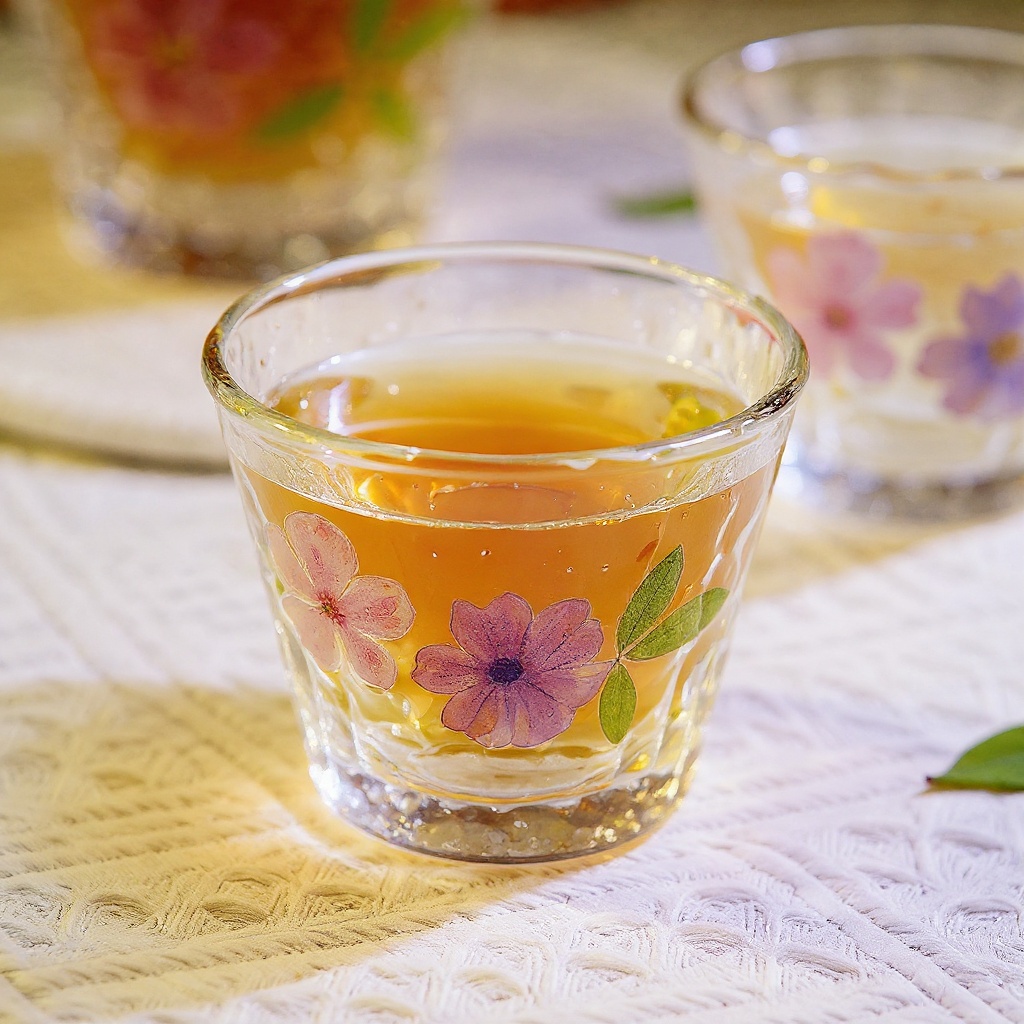
Ceramic gaiwans retain heat in their walls, keeping tea hot through multiple steepings. Glass gaiwans transfer heat differently — the thin borosilicate walls mean your tea cools faster per steeping, but you see every stage of the brew. Watch cherry blossom pigment in the outer walls catch the amber of a first-steep oolong. Worth the trade-off for most people.
Heat management during pouring requires technique adjustment. Proper gongfu form: hold the gaiwan saucer in your palm, use thumb and index finger on the lid knob, tilt the lid to control pour flow. Never grip the bowl sides on glass. The hammered texture on quality artisan tea sets with preserved flowers creates more surface area on the outer wall, which does distribute heat faster than smooth glass — your fingers will notice the difference compared to flat-walled glass competitors.
Capacity matters more than most buyers research. A 150ml gaiwan suits single-person brewing with concentrated flavor profiles. 180–200ml works better for 2–3 person sharing ceremonies. Too large and gongfu steeping times become imprecise. Too small and you're constantly refilling for guests.
5-Step Care Routine for Long-Term Botanical Preservation
Preservation longevity depends almost entirely on owner behavior after purchase. Follow this sequence.
1. Hand wash only — Soft cloth, mild dish soap, warm (not hot) water. Dishwasher thermal cycling stresses the glass-to-flower fusion boundary and can degrade metallic rim treatments within 6 months 2. Dry immediately — Water left sitting on hammered texture pools in the micro-crevices around flower specimens; chronic pooling introduces mineral deposits that cloud the glass over time 3. Store away from UV — Direct sunlight is the primary cause of botanical color fading; a cabinet or covered display position extends visible color vibrancy by years 4. Avoid temperature shock — Moving the gaiwan from boiling water to a cold marble surface rapidly creates internal stress; let pieces cool 2–3 minutes before setting on cold stone 5. Inspect the gold rim annually — A soft cloth buffing each year maintains the hand-painted finish; if you notice flaking beginning at an edge, a food-safe gold repair pen can address it before the damage spreads
Properly maintained, fused borosilicate sets with embedded botanicals maintain recognizable flower structure and most original color intensity for 10+ years. Resin-sealed alternatives typically show visible degradation within 5–7 years under equivalent use conditions.
Price and Value: What the Market Actually Looks Like
Honest take most articles skip: if your budget is under $80, you will not find a genuine handcrafted artisan tea set with preserved flowers that uses real pressed botanicals in fused glass construction. You will find printed flower transfers, painted glass, or low-grade resin coatings. Functional. Not what this article describes. Know what you're buying.
| Price Range | Construction Method | Flower Type | Durability Expectation | Best For |
|---|---|---|---|---|
| $30–80 | Printed transfer or surface paint | Printed image | 1–2 years before fading | Occasional gifting |
| $80–150 | Basic resin coating | Real pressed, basic drying | 3–4 years | Entry artisan market |
| $114–180 | Fused hammered glass, eco-resin | Real pressed, proper drying | 5–8 years | Daily use value tier |
| $180–350 | Premium fused borosilicate | Real pressed, multi-species | 8–12 years | Serious tea practitioners |
| $400–800 | Museum-grade glass fusion | Rare botanicals | 15–20+ years | Collector investment |
| $800+ | Bespoke commission work | Heirloom specimens | Generational | Luxury gifting |
The Handmade Hammered Glass Tea Set Real Pressed Flowers | Gold Rim Gaiwan 8-Piece Gongfu Set at $114.26 sits at the value inflection point in this market — genuine pressed botanicals, food-safe eco-resin sealing, hand-painted gold rims, and full 8-piece completeness at a price point where most competitors offer only 4–6 pieces.
Etsy sellers with comparable pressed-flower glassware average $200–500 for smaller incomplete sets. Finding a full 8-piece service with verified botanical materials under $150 is genuinely rare.
Flower Types: What Each Species Looks Like in Glass
Not all flowers preserve equally. Species choice affects both the visual result and long-term color stability.
| Flower | Color Tones | Texture Effect | Longevity in Glass | Availability |
|---|---|---|---|---|
| Daisy | White petals, yellow center | Moderate raised texture | 10+ years | Year-round, affordable |
| Pansy | Purple, violet, near-black | Strong raised texture | 8–10 years | Seasonal, moderate cost |
| Cherry blossom | Pale pink, deep pink edges | Subtle, delicate texture | 8–12 years | Highly seasonal, higher cost |
| Baby's breath | White, cream | Minimal texture, cloud-like | 10+ years | Year-round, affordable |
| Small rose petals | Pink, red, cream | Layered petal texture | 7–9 years | Year-round, moderate cost |
Cherry blossoms command premium pricing because harvest windows span only 1–2 weeks per year in growing regions. A set featuring genuine sakura specimens costs more for documented supply chain reasons — not marketing inflation.
Styling and Display on Natural Surfaces
The transparent hammered glass interacts with surface materials differently than ceramic teaware. Natural wood tea trays warm the botanical tones — the grain patterns read through the clear glass base, making the overall arrangement feel like a forest floor. Light-colored marble creates stronger contrast with the delicate pinks and purples visible through the glass walls. Stunning in morning light.
Dark backgrounds cause the transparent elements to disappear. White and cream surfaces let the botanical colors carry the visual weight. The hammered texture catches and scatters even low ambient light into gentle sparkle patterns that shift as you move around the arrangement.
Photo composition with an artisan tea set with preserved flowers is naturally forgiving. The pressed flower craft tradition reads immediately to botanical and tea audiences across Pinterest and Instagram. Morning light from a window at roughly 45 degrees to the set creates the most dramatic refractive effects from the hammered surface.
Think of each piece as a small botanical garden. Suspended. Functional.
Frequently Asked Questions
Are preserved flowers in glass tea sets safe for hot drinks?
Yes — with one condition. The dried flower specimens are physically isolated inside the glass wall, never contacting liquid. The safety question concerns the rim treatment and, for resin-sealed sets, the specific epoxy formulation. The FDA food contact materials standard requires materials to meet leaching thresholds at 212°F for hot beverage use. Request a material safety data sheet for any set you plan to use daily. Borosilicate glass itself is chemically inert at all tea temperatures — this is documented in materials science literature going back to its development by Otto Schott in 1893.
How long do preserved flowers last inside the glass?
In properly fused borosilicate construction with flowers fully sealed inside the glass wall: 10–20 years under reasonable care conditions. Resin-sealed alternatives typically show visible color shift within 5–7 years. The primary degradation driver is UV exposure — a 2019 NIST polymer aging review documented visible yellowing in epoxy resins within 3–5 years of window-proximity storage. Keep your artisan tea set with preserved flowers in a cabinet or away from direct sunlight to maximize lifespan. Thermal cycling is the secondary risk factor.
Can you wash a borosilicate glass gaiwan in a dishwasher?
No — not for pressed flower sets. Borosilicate tolerates the temperature, but dishwasher detergents contain alkaline compounds that degrade hand-painted gold rim treatments. High-pressure spray cycles also stress the glass-to-botanical fusion boundary over repeated use. Studies on metallic glaze durability in alkaline cleaning environments show measurable adhesion loss after 50+ dishwasher cycles (Journal of the American Ceramic Society, 2018). Hand wash with mild soap and warm water. It takes 90 seconds.
What is the difference between a gaiwan and a teapot for gongfu tea?
A gaiwan is a lidded bowl (150–200ml capacity) with no fixed spout — you tilt the lid to create a pour gap, controlling exactly how fast tea exits and how much leaf contact time each steeping receives. This precision is the entire point of gongfu brewing: 8–15 steepings of 15–45 seconds each, each one tasting slightly different. A teapot has a fixed spout, typically 400–600ml capacity, and is designed for single-steeping Western-style service. You can perform gongfu brewing in a teapot, but you lose the fine pour control that makes short-steep sequences viable.
Are the flowers in these sets real or printed transfers?
In a genuine artisan tea set with preserved flowers, the botanicals are real dried organic material embedded in the glass. You can identify authentic specimens by three characteristics: natural irregularities in petal shape (no two are identical), translucent edges where thin petal tissue becomes nearly transparent against the glass, and raised tactile texture on the outer surface. Printed transfers are completely flat, have unnaturally uniform color saturation, and feel smooth. Hold the cup at an angle to a light source — real embedded flowers create micro-shadows from their physical depth inside the glass wall. Prints don't.
Why does handmade glass cost more than ceramic tea sets?
Four reasons with concrete numbers. First, borosilicate raw materials cost approximately 3–4 times more per kilogram than standard ceramic clay bodies. Second, glass requires kiln temperatures of 1400–1500°C versus 1200–1280°C for most ceramics, increasing energy costs per firing. Third, production breakage rates for handmade glass are 15–25% versus under 5% for ceramic work, meaning artisans price successful pieces to cover lost pieces. Fourth, the botanical embedding process adds 2–4 weeks of drying and preparation time per production batch before glass work begins. Premium prices reflect real costs. Not marketing.
How do I hold a glass gaiwan without burning my fingers?
Use the correct three-point gongfu grip: dominant hand palm cradles the saucer, thumb and index finger pinch the lid knob, middle finger steadies the lid rim. The bowl itself should never contact your palm or finger pads during pouring. Pour in under 5 seconds — gongfu technique involves decisive, fast pours rather than slow tilts. The hammered outer texture on a quality artisan tea set with preserved flowers provides more grip surface than smooth glass alternatives, which does reduce slippage risk. Practice the grip motion with room-temperature water until it becomes automatic before using boiling water.
What flowers are typically used, and which last longest?
Daisies, pansies, cherry blossoms, baby's breath, and small rose petals are the most common species in commercial production. For longevity, daisy specimens in fused glass construction consistently perform best — white petals with yellow centers maintain color clarity for over a decade with UV protection. Cherry blossoms are the most visually distinctive but also the most expensive due to narrow harvest windows (1–2 weeks annually). Pansies offer the richest purple and violet tones and hold color well in sealed glass environments. Baby's breath adds visual lightness and lasts reliably but contributes minimal raised texture.


