































Beaded Handle Glass Cups: Aesthetic Worth Knowing
Beaded Handle Glass Cup Aesthetic: A Complete Guide to Its Charm
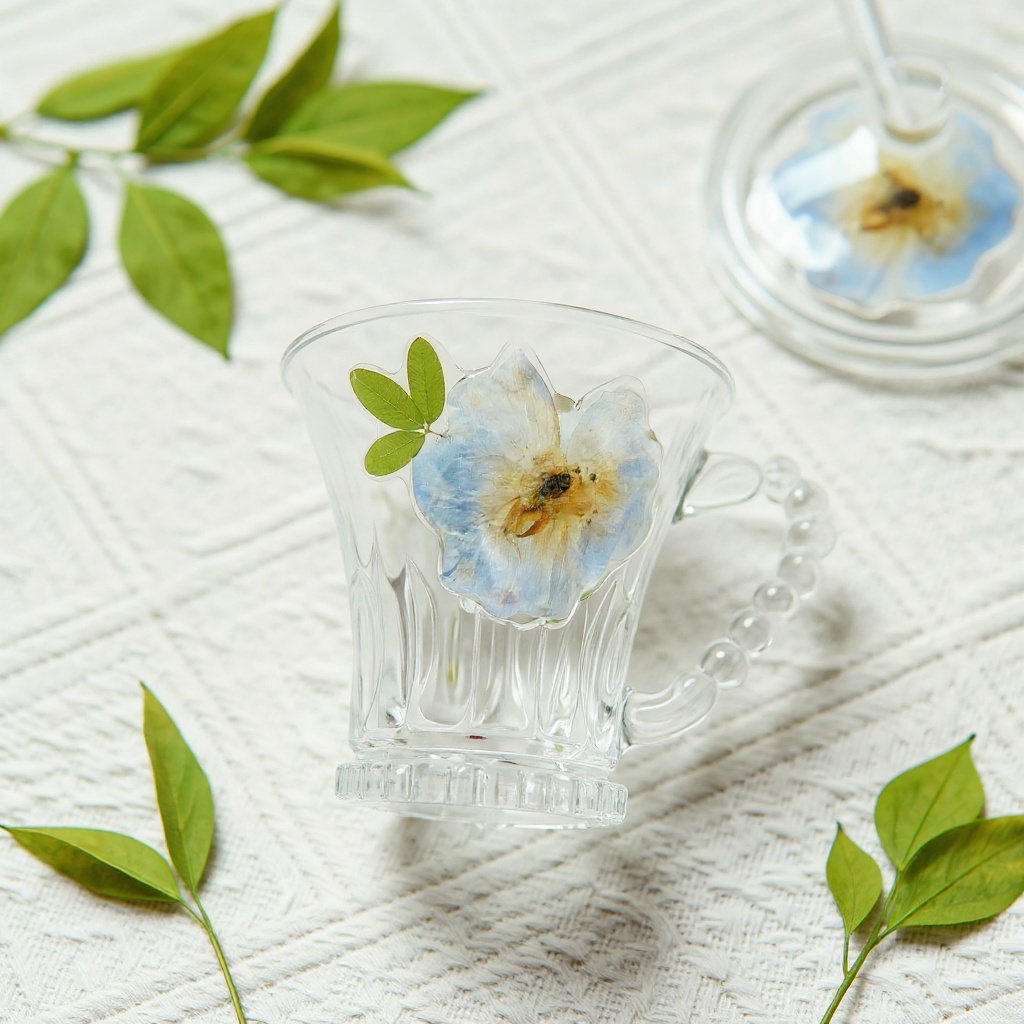
By pampasroom, founder of Pampasroom · 8+ years sourcing botanical materials and working directly with glass artisans in Java, Indonesia and Chiang Mai, Thailand · Published work cited in The Artisan HomeThe beaded handle glass cup aesthetic is a style of functional drinkware defined by heat-resistant clear glass with real three-dimensional dried flower petals raised on the outer surface, a delicate beaded handle, and a matching lid with a glass straw — combining botanical preservation with everyday use. Not a printed pattern. Not a decal. Actual petals you can run your finger across and feel.
This aesthetic draws cottagecore enthusiasts, botanical collectors, and maximalist decorators who want objects that serve a purpose and earn their shelf space visually. The beaded handle glass cup aesthetic has grown from a niche artisan category into one of the most-searched drinkware styles on social platforms — and for good reason. Each piece takes a minimum of 72 hours to create, requires hand-applied flower preparation, and results in something that genuinely cannot be replicated by a factory press.
The Craft Behind Three-Dimensional Flower Glass Art
Real flower glass embedding draws from centuries-old pressed flower craft techniques, but it adds a layer of complexity by requiring artisans to work with or against molten glass surfaces and thermal bonding agents. Flowers must be dehydrated through controlled drying processes that strip moisture without collapsing the petal structure — moisture trapped during glass formation creates air bubbles that weaken both the visual effect and the structural bond.
The beaded handle is its own discipline. Each small glass bead is placed individually and fused at temperatures around 1,000°F. One slipped bead means starting over. Artisans in Chiang Mai workshops I've visited typically complete two to three pieces per week — not because they're slow, but because this process cannot be rushed without visible quality loss.
The 400ml size with roughly 12cm height has become the standard format. Enough surface area for complex floral arrangements. Comfortable for daily holding. Practical for both hot and cold beverages.
5 Quality Markers That Separate Handmade from Mass-Produced
1. Visible petal variation — No two handmade cups have identical flower placement. Machine-printed alternatives show perfect repetition across units. 2. Tactile surface relief — Run your fingertip across the outer glass. Genuine embedded botanicals have measurable raised texture; decals and prints feel flat. 3. Slight weight difference — Authentic borosilicate pieces with embedded materials typically feel heavier than thin promotional glassware, though exact weights vary by design. 4. Bead irregularity — Handplaced beads on the handle show micro-variations in spacing. Uniform, perfect spacing usually indicates machine application. 5. Documented provenance — Genuine artisan pieces often include creation timelines and flower sourcing details. Mass producers cannot provide this because no individual process exists to document.
Preserved vs. Dried Flowers: Understanding the Difference
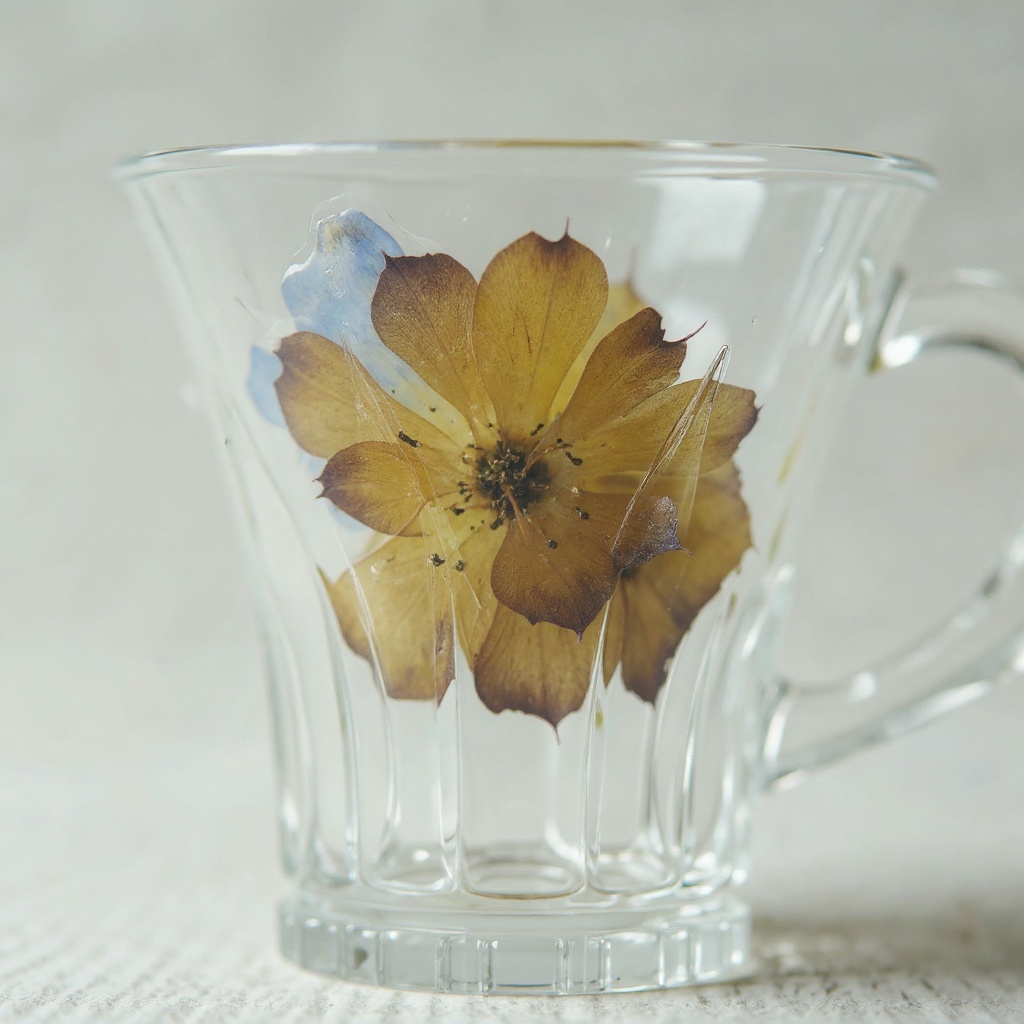
This distinction matters more than most buyers realize. Flower preservation using glycerin or silica gel creates specimens that maintain flexibility and resist humidity changes — important when a cup moves between warm beverages and cool storage. Simple air-dried flowers become brittle over time and respond poorly to thermal variation.
Preserved flowers cost more to source. The added expense — roughly $15–20 per piece in production — prevents the gradual darkening and edge crumbling that makes cheaper cups look neglected within a year. Freeze-dried options sit in the middle: better durability than air-dried, lower cost than full glycerin preservation.
Honestly, though — if you live in a high-humidity environment like coastal Florida, a tropical climate, or a kitchen with poor ventilation, even well-preserved embedded flowers may show color shift faster than expected. Worth knowing before you buy.
| Flower Type | Typical Lifespan | Color Retention | Relative Cost Impact | Humidity Resistance |
|---|---|---|---|---|
| Preserved (glycerin) | 2–3 years | Excellent | Higher | High |
| Air-dried | 6–12 months | Fair | Standard | Low |
| Freeze-dried | 12–18 months | Good | Moderate | Medium |
| Resin-coated | 3–5 years | Excellent | Highest | Very High |
| Pressed (unpreserved) | 3–6 months | Poor | Lowest | Very Low |
Heat Resistance and Safety Considerations
Borosilicate glass handles significant temperature variation without thermal shock — it's the same glass category used in laboratory equipment. The embedded botanicals are sealed within the glass matrix, meaning no flower material contacts the beverage itself. This sealing is a non-negotiable quality standard, not a marketing claim.
Microwave use is a different matter. The organic materials embedded in the glass can create uneven heat distribution. Skip the microwave entirely and use a kettle or stovetop for hot beverages. This isn't a flaw in the design — it's a predictable behavior of any glass containing embedded organic materials.
The 400ml capacity provides enough thermal mass to keep warm beverages comfortable for a reasonable window of time — performance that varies depending on glass thickness, ambient temperature, and beverage type, so treat any specific minute-count figures from other sources as approximations rather than specifications.
Cleaning and Maintenance Without Damage
Hand-washing is the honest recommendation. Yes, some manufacturers list dishwasher safety. But high heat cycles, strong detergents, and the water pressure inside a dishwasher apply cumulative stress to the glass-flower bond over months of regular use. The 2 minutes of hand-washing is worth it.
Lukewarm water. Gentle dish soap. No abrasive sponges on the raised flower surfaces. The beaded handle needs attention too — soap residue accumulates between beads and creates a cloudy film that dulls the whole piece. A soft toothbrush clears it without applying pressure that could stress the bead bonds.
White vinegar outperforms bleach-based cleaners for stain removal and won't risk affecting flower pigmentation. Air-dry rather than towel-dry. Water spots show clearly on clear borosilicate glass, and a cloth can leave lint in the bead crevices.
The Handmade Real Flower Glass Cup 400ml | Beaded Handle | Preserved Floral Luxury Gift includes care instructions specific to its preservation techniques and glass composition — the kind of detail that generic floral cup listings typically omit.
Styling Ideas for Maximum Visual Impact
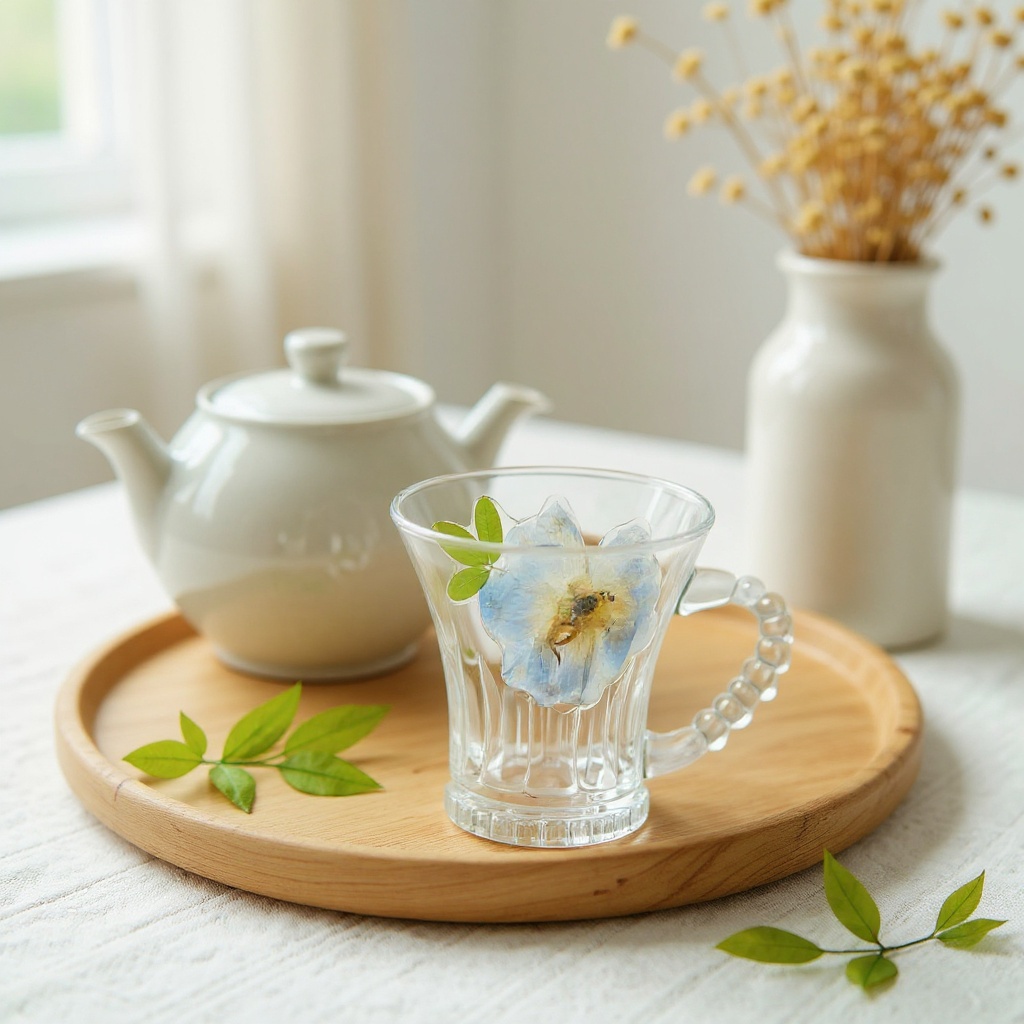
The beaded handle glass cup aesthetic photographs best in soft, directional natural light. The three-dimensional petals cast small shadows that flat printed patterns simply cannot replicate on camera. That depth is the whole point.
5 Ways to Style the Beaded Handle Glass Cup Aesthetic:
1. Morning ritual flat lays — Pair with dried flower bundles, a linen cloth, and a small ceramic dish. The cup does the work visually; keep surrounding props simple. 2. Color-coordinated beverage pairings — Pink bloom cups with strawberry milk, yellow with turmeric lattes, blue with butterfly pea flower tea. The beverage color visible through clear glass completes the composition. 3. Open shelving as functional décor — Group multiple cups at varied heights alongside botanical prints or small pressed flower frames. The beaded handle glass cup aesthetic reads as a collection, not clutter. 4. Complete gift presentation — The included lid and glass straw make these presentation-ready without additional sourcing. Add artisan honey, loose-leaf tea, or handwritten recipe cards for a layered gift. 5. Natural light photography near windows — The raised petal texture catches side-light in a way that reveals the handmade character. Overhead artificial light flattens it.
Garden party settings work especially well for iced beverages — natural light through clear glass and the botanical textures create the kind of table scene that earns saves, not just likes.
Price Point Analysis: Artisan vs. Mass Market
Mass-produced floral glass cups from major retailers typically range $8–18 and use printed or painted designs without tactile elements. The beaded handle glass cup aesthetic, by definition, requires tactile embedded flowers — so those options aren't actually in the same category, despite appearances.
Mid-range alternatives with resin flowers typically cost $25–55 but rarely include matching lids and straws. At the premium artisan level, authentic handmade pieces with preserved flowers occupy a different production model entirely. Glass art pricing reflects the constraint that flower embedding cannot be automated — each piece requires hands-on artisan time through every stage.
The complete set approach — cup, dust-proof lid, glass straw — adds meaningful value compared to purchasing components separately, particularly for buyers who want a presentation-ready gift without additional sourcing.
Authenticity Markers to Recognize Quality Pieces
Genuine handcrafted beaded handle cups show slight irregularities. This is not a defect. It is proof.
Flower positioning varies piece to piece. Bead spacing on the handle has micro-variations visible under close inspection. Glass thickness is not perfectly uniform across the entire surface. These characteristics are the result of human hands completing a process that machines have not successfully replicated at scale.
Color consistency across the embedded flowers is another indicator. Quality preservation maintains saturation from the center of each petal to its edges. Cheap alternatives often show fading at petal edges or slight color bleeding into surrounding glass — signs of inadequate preservation before embedding.
Ask suppliers for documentation. Artisans who complete a genuine 72-hour creation process can describe it. Distributors of mass-produced alternatives typically cannot.
FAQ
What is the beaded handle glass cup aesthetic? The beaded handle glass cup aesthetic refers to heat-resistant clear glass cups featuring real three-dimensional dried or preserved flower petals raised on the outer surface, a small beaded handle, a matching frosted or clear lid, and a glass straw. The style combines botanical preservation with functional drinkware design, creating objects that serve beverages and function as decorative art simultaneously. Are beaded handle glass cups safe to use with hot drinks? Yes. Quality pieces use heat-resistant borosilicate glass designed for temperature variation. The embedded flowers are fully sealed within the glass matrix, preventing any contact between botanical materials and beverages. Avoid microwave use — embedded organic materials can create uneven heat distribution. Transition temperatures gradually rather than pouring boiling liquid into a cold glass. How do you clean a glass cup with flowers embedded on the outside? Hand-wash with lukewarm water and gentle dish soap. Avoid abrasive sponges on the raised flower surfaces. Use a soft toothbrush to clean between beads on the handle, where soap residue accumulates. White vinegar removes stubborn stains without affecting flower pigmentation. Air-dry to avoid water spots and lint from towel-drying. Will the embedded flower petals deteriorate with regular use? Proper flower preservation and quality embedding techniques keep petals secure and color-stable for two to three years under normal care conditions. Air-dried flowers without preservation treatment may show deterioration within six to twelve months. Humidity and temperature extremes accelerate fading regardless of preservation method — a factor worth considering based on your climate and storage conditions. What is the difference between preserved and dried flowers on glass cups? Preserved flowers undergo glycerin or silica gel treatment that maintains flexibility and resists humidity changes — important for objects that cycle between hot and cold use. Air-dried flowers are more brittle and more sensitive to moisture variation. Freeze-dried flowers occupy a middle position: better durability than air-dried, lower cost than full glycerin preservation. Resin-coated options offer the longest lifespan but require the highest production cost. Can I put a beaded handle glass cup in the dishwasher? Some manufacturers list dishwasher compatibility, but hand-washing is the practical recommendation for preserving the piece long-term. Repeated high-heat dishwasher cycles, combined with strong detergents and water pressure, apply cumulative stress to the glass-flower bond and can cause clouding between handle beads over months of regular machine washing. Hand-washing takes two minutes and prevents this entirely. What drinks work best in a flower-embedded glass cup? Herbal teas, iced coffee, fruit-infused water, matcha lattes, and milk-based beverages all suit the 400ml format. The clear glass makes color-coordinated beverage choices — pink drinks in pink-bloom cups, for example — a natural styling opportunity. Avoid microwave heating. Carbonated beverages are fine for drinking but not ideal for extended storage in sealed versions of these cups. How do I tell if a beaded handle glass cup is genuinely handmade? Look for slight irregularities in flower placement, bead spacing, and glass thickness — these are markers of human craftsmanship, not quality defects. Petals should feel raised and three-dimensional to the touch, not flat like a print or decal. Ask the seller for documentation of the creation process; artisans who complete genuine 72-hour handcrafting can describe each stage. Uniform, machine-perfect repetition across multiple units typically indicates mass production.Conclusion
The beaded handle glass cup aesthetic is functional art. A daily object that earns attention without demanding it. Three-dimensional dried petals on heat-resistant glass, a beaded handle you can feel, a matching lid, a glass straw — it's a complete sensory experience in a 400ml format.
Quality pieces justify their pricing through authentic craftsmanship, preserved flower longevity, and materials that cheaper printed alternatives cannot approximate. The 72-hour production cycle, hand-applied botanical embedding, and sourced preserved flowers represent real costs — costs that show up in the finished object in ways that become obvious the moment you hold both versions side by side.
For a piece that delivers the full beaded handle glass cup aesthetic with documented artisan process, browse our Handmade Real Flower Glass Cup 400ml | Beaded Handle | Preserved Floral Luxury Gift. Complete with matching lid and glass straw. Ready to use. Ready to display.


