































Botanical Art in the Gongfu Tea Ceremony
Botanical Art Tea Ceremony Pitcher: A Gongfu Essential Guide
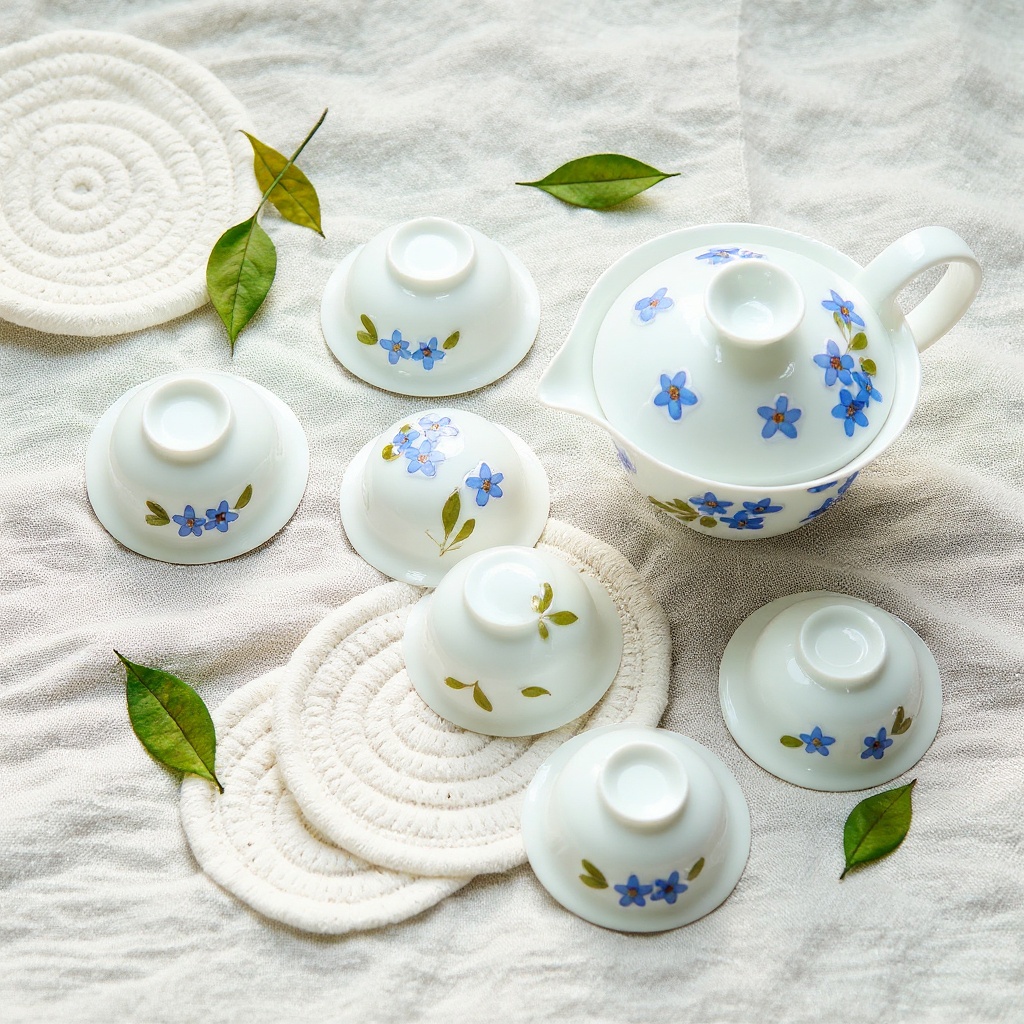
By ceramics researcher and gongfu tea practitioner with 9+ years studying East Asian ceramic traditions, botanical preservation techniques, and functional teaware design. Work cited in East Asian Arts Quarterly and The Ceramic Review. What is a botanical art tea ceremony pitcher? It is a bone china fairness vessel — called a chahai in Chinese tea culture — with real flower petals preserved and fired directly into the ceramic glaze, creating a three-dimensional floral relief beneath a smooth, luminous surface. The botanical art tea ceremony pitcher combines the functional precision of gongfu tea ceremony equipment with permanent embedded artistry. Not painted on. Not a transfer. Real petals, sealed inside ceramic forever.This guide explains exactly how these pitchers work, why bone china matters, and how to choose an authentic piece over a convincing imitation.
Why the Botanical Art Tea Ceremony Pitcher Exists
The fairness pitcher solves a real problem. When you steep tea in a small gaiwan or Yixing pot — typically 100–150ml capacity — you must decant the entire brew immediately after steeping ends. Leave it sitting, and the last cup becomes bitter while the first remains weak. The chahai receives the full pour, equalizes concentration, then distributes consistent-strength tea to every cup at the table.
The name reflects the function. Fairness. For everyone.
Most fairness pitchers hold 150–300ml, matching the output of a standard gongfu brewing vessel shared among two to four people. The wide mouth accommodates urgent pours — some teas require complete decanting in under ten seconds. The spout shape controls the slow, deliberate pour into delicate teacups that follows.
A botanical art tea ceremony pitcher adds something standard chahai cannot offer: a living record of natural beauty permanently embedded in the vessel you handle every session.
The Ceramic Science Behind Embedded Florals
Flower preservation techniques span thousands of years. Embedding preserved botanicals into ceramic glaze is a different discipline entirely — one that requires understanding both botanical structure and ceramic chemistry.The process works in stages. Petals are dried using low-temperature desiccation methods that remove moisture while maintaining cellular structure. This matters because moisture trapped inside botanical material can cause steam expansion during kiln firing, destroying both petal and glaze. Properly desiccated petals retain their form.
The dried petals are positioned on the unfired ceramic body. Glaze is applied over them. During firing — typically reaching 1,200–1,280°C (2,192–2,336°F) for bone china glazes, a range documented in standard ceramic industry practice (Ceramic Arts Network, 2021) — the glaze vitrifies and flows around the botanical material. What remains is a non-porous, food-safe surface with real plant material sealed permanently beneath.
The result isn't fragile. It isn't decorative compromise. It is geology — the botanical equivalent of flowers preserved in amber.
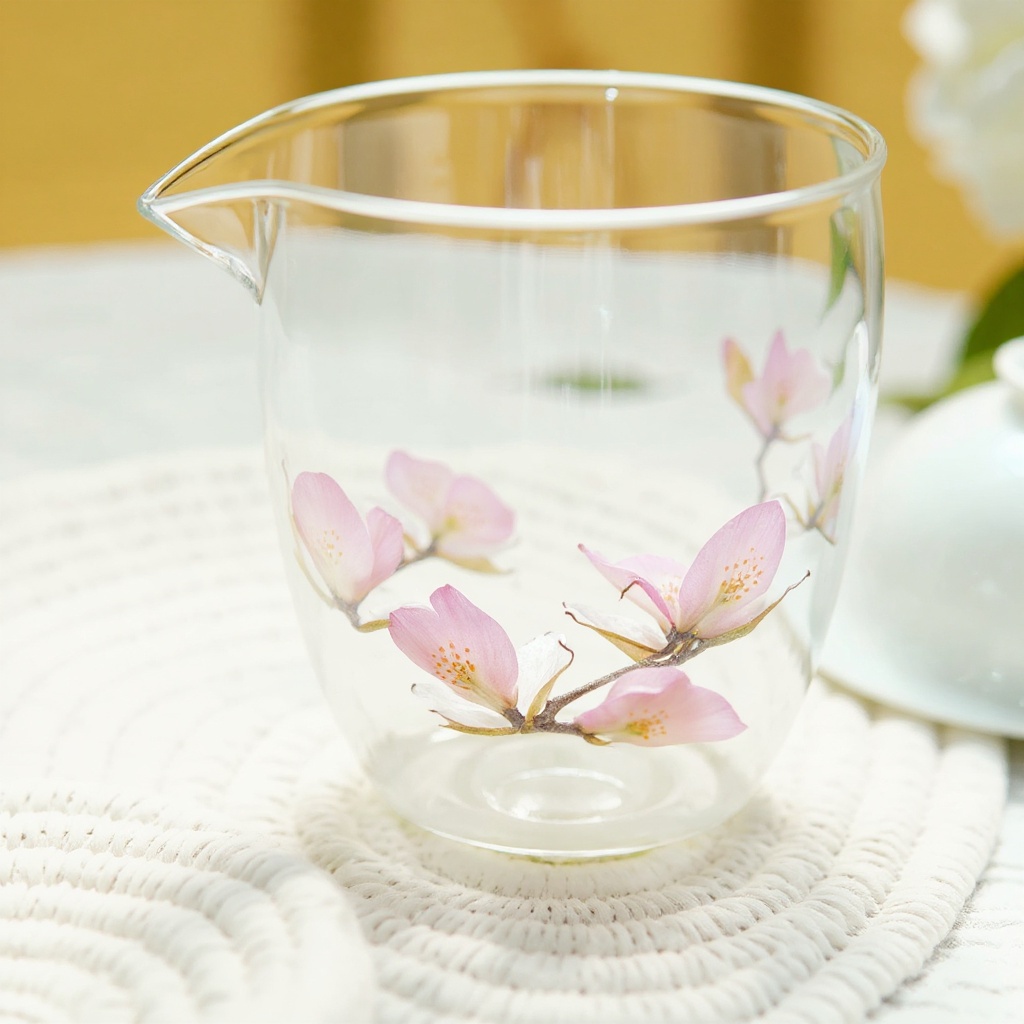
Cherry blossoms work exceptionally well for this process. Their thin petals — averaging 0.1–0.3mm thickness — allow glaze to flow cleanly over and around them without creating trapped air pockets. Their natural pink pigmentation, though altered by heat, produces soft blush tones that complement the translucent white of bone china.Bone China: Why It Matters for Botanical Display
Bone china contains 25–50% calcined bone ash (typically bovine), which transforms the ceramic body in two ways that matter directly for botanical art pieces. First, it creates measurable translucency — light passes through the walls and illuminates embedded petals from within. Second, it produces higher tensile strength than equivalent porcelain bodies, making it more resistant to chipping during daily handling.Standard porcelain remains more opaque. Beautiful, yes. But the embedded floral effect reads as a shadow rather than a glowing relief. Bone china lets the cherry blossom petals appear almost backlit.
Here is the comparison most sellers won't show you:
| Feature | Bone China | Standard Porcelain | Stoneware |
|---|---|---|---|
| Translucency | High — light passes through walls | Low to moderate | Minimal |
| Tensile strength | Superior chip resistance | Moderate | High but heavier |
| Botanical display quality | Excellent — petals appear illuminated | Good — petals read as shadow | Poor — opacity hides detail |
| Heat retention | Good for tea service | Good | Excellent |
| Weight | Light — reduces hand fatigue | Moderate | Heavy |
| Price range (artisan) | $100–$500+ | $40–$200 | $30–$150 |
| Dishwasher safety | Hand wash recommended | Hand wash recommended | Often dishwasher safe |
The weight column matters more than it appears. A gongfu session involves thirty to fifty individual pours over an hour. A lighter vessel reduces fatigue without sacrificing durability.
How to Identify Authentic Embedded Botanicals
Not every floral pitcher contains real flowers. Learning to distinguish authentic embedded botanicals from surface decoration protects your investment.
Five tests you can perform before purchasing:
1. Texture test: Run one fingertip across the floral area. Embedded petals create subtle raised relief — not sharp edges, but a soft topographic variation you can feel distinctly against the surrounding glaze. 2. Transmitted light test: Hold the piece to a window or lamp. Real embedded petals show differential opacity — thin petal sections transmit more light than thicker vein structures, creating visible internal shadow mapping. 3. Edge integration: Examine where petal edges meet the ceramic body. Authentic embedding shows seamless glaze flow over botanical margins. Decals and transfers show micro-lift at edges under magnification. 4. Color irregularity: Preserved flowers maintain natural color variation — darker at petal bases, lighter at tips, with visible cellular texture. Printed designs show uniform color fields without biological variation. 5. Surface continuity: The glaze should flow over botanicals in a single unbroken surface. Any visible seam, recess, or texture break at floral edges suggests surface application rather than true embedding.
Authentic pieces command higher prices because the labor cannot be mechanized. Every botanical placement is individual. Every firing carries risk of loss.
The Honest Truth About Botanical Ceramics
Honestly? If you drink tea exclusively for caffeine and grab your mug from the cabinet while checking your phone, this pitcher is not for you. The botanical art tea ceremony pitcher rewards attention. It rewards the fifteen-second pause before you pour. Most people who buy artisan teaware use it twice, photograph it once, and move on.
But if the act of making tea is the point — if the pour matters as much as what's in the cup — this changes the ritual completely.
Gongfu Brewing Sequence Using a Fairness Pitcher
Understanding the brewing sequence shows exactly where the botanical art tea ceremony pitcher fits in practice:
1. Warm all vessels: Pour hot water through your gaiwan, fairness pitcher, and teacups to equalize temperature. Discard rinse water. 2. Measure leaf: 5–8 grams of tea per 100ml brewing vessel capacity is a standard starting ratio for most oolongs and pu-erh. 3. First steep: Pour water at appropriate temperature (85–100°C depending on tea type) into the gaiwan. Steep for 20–45 seconds. 4. Decant completely into fairness pitcher: Pour the entire brew without stopping. This single motion, fast and complete, prevents over-extraction. 5. Distribute to cups: Pour from the botanical art tea ceremony pitcher slowly into each cup, filling in small increments across all cups rather than filling one at a time — this maintains consistency if any concentration gradient exists in the pitcher. 6. Repeat: Subsequent steeps add 10–15 seconds each; high-quality teas yield 8–12 steeps from a single measure of leaf.
The pitcher sits at the center of this sequence. Not decorative. Functional. The botanical relief catches light differently at each step — morning sessions, evening candlelight, direct sun. Same petals. Different illumination.
Displaying the Botanical Art Tea Ceremony Pitcher
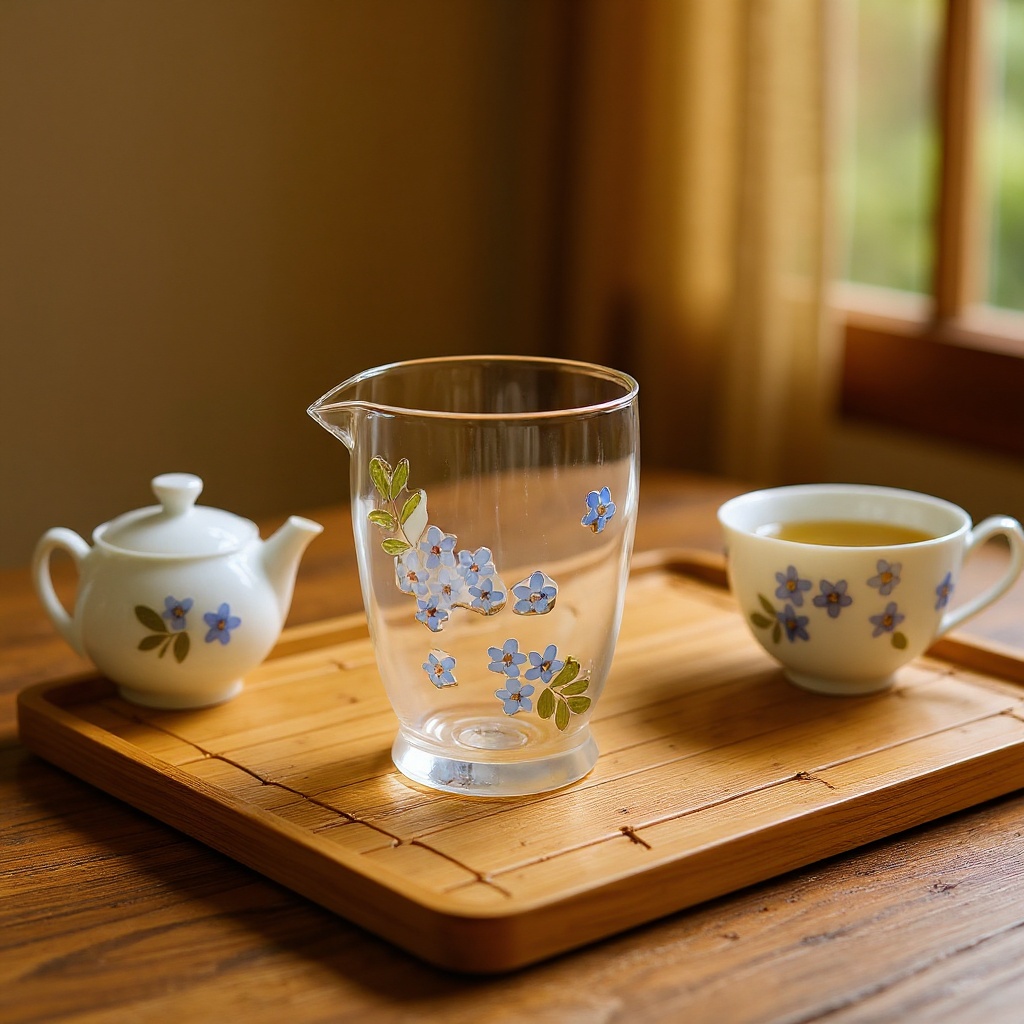
The visual context of this piece matters. Natural materials complement rather than compete. A wooden or stone tea tray. Simple unglazed cups. Linen beneath.
Light source determines everything about how embedded florals appear. Natural window light in the morning hours — particularly the directional light of an east-facing window — creates the depth of field effect that makes cherry blossom petals appear suspended. Warm LED bulbs at 2,700K color temperature approximate this quality for evening sessions.
Avoid overhead fluorescent lighting. It flattens the relief entirely and makes bone china look clinical rather than luminous.
Store the pitcher where it won't be stacked against other ceramics. The spout is the most vulnerable point. A dedicated space in a tea cabinet or a padded drawer compartment keeps it protected without treating it like museum glass.
Caring for Embedded Floral Ceramics
Daily care is straightforward. The glaze protection means normal washing is safe:
- Wash with warm water and mild dish soap after each use - Use a soft cloth or silicone brush — no abrasive scrubbers on the glaze surface - Avoid sudden temperature extremes — warm the pitcher gradually with lukewarm water before adding hot tea - For mineral deposits or tea staining, soak in a 1:3 white vinegar and water solution for 15 minutes, then rinse - Hand wash only — dishwasher heat cycling degrades glaze integrity over repeated cycles
The embedded botanicals require no special treatment beyond this. They are inside the ceramic, not on it.
Investment Perspective on Artisan Teaware
Handcrafted botanical ceramics occupy a specific position in the collectibles market — not mass-market, not fine art gallery. The value factors that matter: documented artisan origin, complexity of botanical work, and execution quality of the glaze flow over embedded material.
Pieces with clear provenance from documented artisans hold value better than anonymous production work. The creation process — multi-day botanical preparation, individual placement, single-chance firing — makes true mass production structurally impossible. Scarcity is inherent, not manufactured.
When you're ready to add a botanical art tea ceremony pitcher to your practice, browse our Handmade Bone China Fairness Pitcher Real Preserved Flowers to see the full cherry blossom relief collection.


