
Chinese Gongfu Tea Set Modern Aesthetic: Reimagined for Contemporary Homes
By pampasroom, founder of Pampasroom · 8+ years studying and sourcing functional artisan glassware for tea ceremony use · Trained in gongfu brewing technique under Fujian tea masters · Contributing writer for specialty tea and home design communities A modern Chinese gongfu tea set combines transparent hammered borosilicate glass with real embedded pressed flowers—daisies, pansies, cherry blossoms—sealed beneath a hand-painted gold rim, producing an 8-piece functional brewing set that performs the full gongfu ceremony while acting as a botanical art object. This definition matters because the chinese gongfu tea set modern aesthetic is not simply a restyled clay set. It is a category shift. Traditional Yixing clay has dominated Chinese tea culture for centuries. Glass changes every rule: you see the tea color, the leaf expansion, the liquor clarity across multiple infusions—visual information clay permanently hides.For tea enthusiasts aged 28–55 seeking meaningful daily ritual that also photographs with genuine beauty, this format delivers both. The meditative precision of gongfu brewing survives the material change intact.
The Evolution from Clay to Botanical Glass
Traditional Yixing clay sets have dominated Chinese tea culture for centuries. Glass alternatives offer genuinely different advantages—not better in every dimension, but different in ways that matter for modern households. Borosilicate glass withstands temperature cycling from 32°F to 515°F without cracking, making thermal shock a manageable rather than catastrophic risk. The transparency lets you observe tea color shift across multiple infusions—essential for evaluating oolong clarity and pu-erh depth.
Here is the contrarian truth most glass tea set articles skip: if you brew exclusively aged Yixing-seasoned pu-erh and want clay's flavor-absorption effect, glass will disappoint you. Full stop. Glass is neutral. It gives you pure, unmodified tea flavor every single time. That is an advantage for variety drinkers and a limitation for purists. Know which one you are before buying.
Pressed flower preservation introduces a contemporary layer. Real daisies, pansies, and cherry blossoms are sealed within food-safe eco-resin. A raised 3D texture forms on the outer glass surface. This pressed flower craft tradition originates in Victorian botanical documentation but has found functional application in modern glassware. The hammered texture diffracts light into soft, shifting patterns across your tea tray. Clay cannot do this.
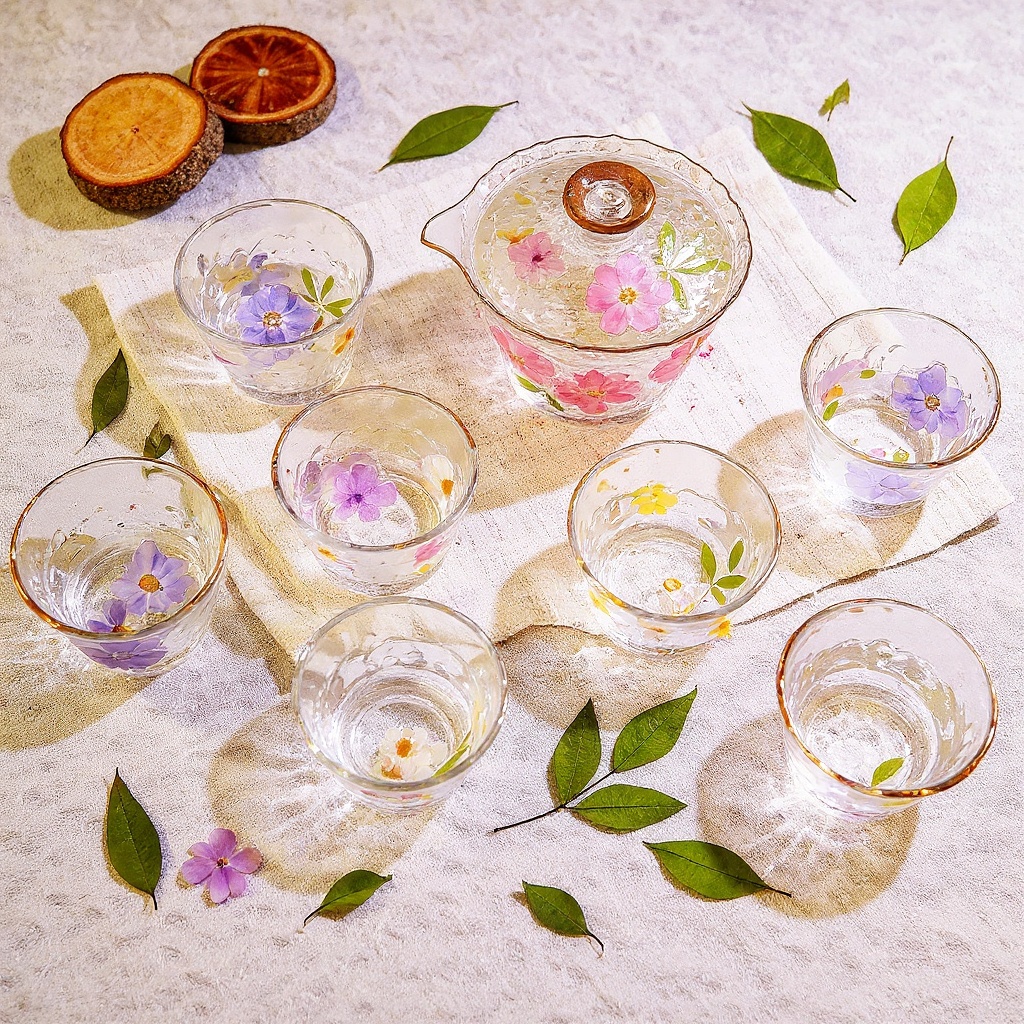
Understanding the 8-Piece Gongfu Set Configuration
The chinese gongfu tea set modern aesthetic in its complete form requires specific vessel sizes and proportions. Improvising with mismatched cups destroys the water-to-leaf ratio discipline that makes gongfu brewing distinct from casual steeping.
Essential 8-Piece Gongfu Set Components:1. Gaiwan (160ml) — Primary brewing vessel with lid and saucer for precise steeping control 2. Fair Cup (210ml) — Equalizes tea strength across all tasting cups before serving 3. Six Tasting Cups (50ml each) — Individual serving vessels maintaining consistent pour volume 4. Tea Tray — Catches overflow water during warming rinse and brewing 5. Tea Pitcher — Alternative to fair cup for larger guest servings 6. Strainer — Filters loose leaf fragments from poured liquor 7. Tea Tools — Bamboo scoop, tongs, and needle for precise leaf handling 8. Serving Tray — Presents the complete ceremony setup on wood or marble surface
The gaiwan design specifically enables precise steeping time and temperature management. Its 160ml capacity accommodates 7–10g of loose leaf, producing concentrated liquor that the fair cup equalizes before reaching individual cups. This ratio system is the defining technical difference between gongfu preparation and Western-style brewing.
The 8-piece configuration. Not 5. Not 6. All 8—because ceremony incomplete is ceremony abandoned.
Step-by-Step Gongfu Brewing Protocol for Glass Sets
Glass vessels require minor timing adjustments compared to clay, particularly for temperature-sensitive teas. Follow this sequence to extract maximum flavor while protecting the hammered glass surfaces.
Standard Gongfu Brewing Steps:1. Warm all vessels — Pour lukewarm water into gaiwan, fair cup, and tasting cups; swirl and discard 2. Measure leaf — Add 7–10g loose tea to warmed gaiwan (7g for delicate green; 10g for robust oolong) 3. Rinse the leaf — Pour water at appropriate temperature (175°F green, 205°F oolong, 212°F pu-erh); steep 5 seconds; discard rinse 4. First infusion — Steep 20–30 seconds; pour immediately and fully into fair cup 5. Equalize and pour — Transfer from fair cup to all tasting cups simultaneously for consistent strength 6. Observe the glass — Note liquor color against the embedded flowers; color depth signals extraction quality 7. Extend each infusion — Add 10–15 seconds per subsequent steep; quality leaves yield 6–8 infusions 8. Cool between rounds — Glass releases heat faster than clay; adjust timing accordingly for temperature-sensitive varieties
This protocol works with the transparency of hammered glass rather than against it. The botanical color tones—pinks, purples, whites, greens—visible through the clear walls create a living background against which tea color reads with unusual clarity.
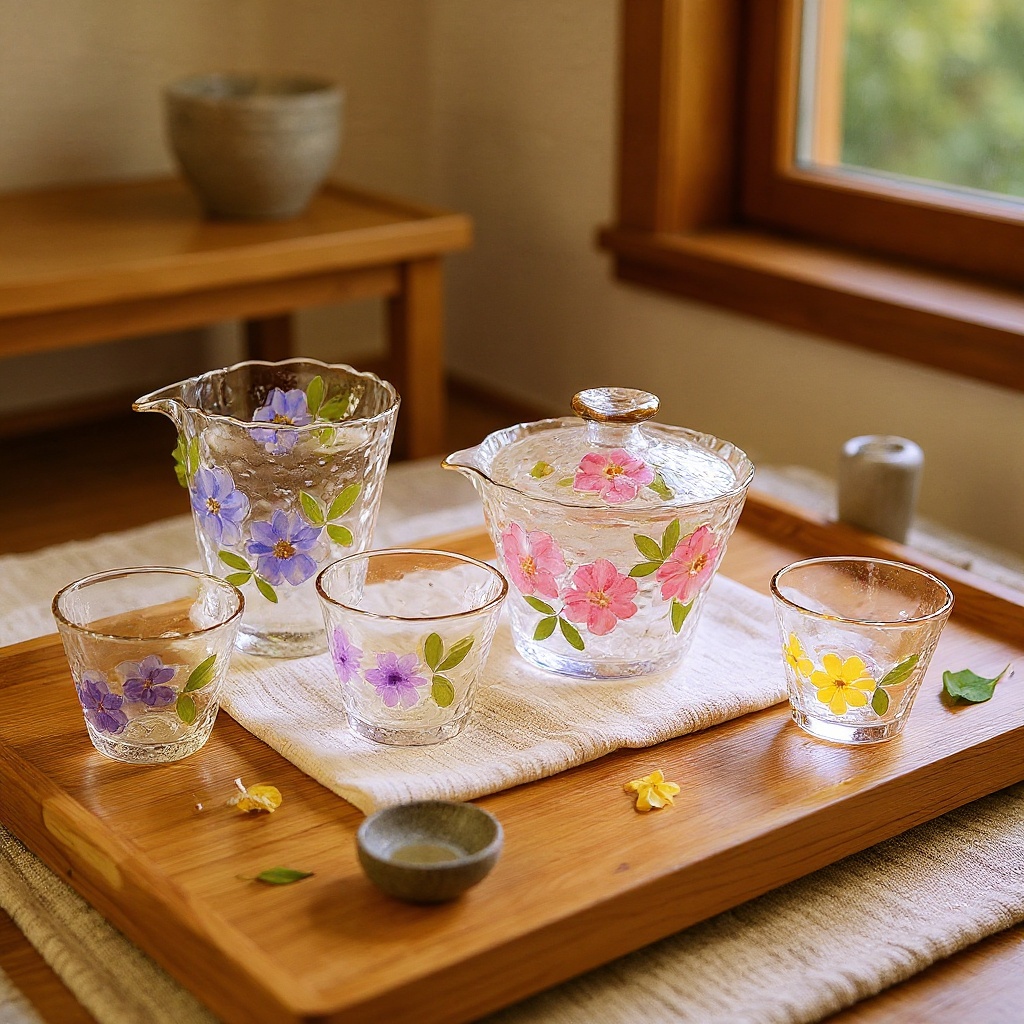
Material Safety and Food-Grade Considerations
Hammered glass paired with pressed flowers raises legitimate food safety questions that deserve direct answers rather than reassurance.
The flowers are sealed with eco-resin meeting FDA Generally Recognized as Safe standards for food contact applications. No botanical material contacts hot tea directly. The resin barrier maintains structural integrity through repeated thermal cycling. Glass walls run 3–4mm thick—enough to insulate hands during pouring while preserving the heat transfer properties gongfu brewing requires.
Hand-painted gold rims use lead-free metallic compounds formulated for food-contact ceramic and glass surfaces. The hammered texture distributes surface stress across raised and recessed areas, which strengthens the outer wall against minor impacts compared to smooth-walled alternatives.
Flower longevity is finite. Properly sealed botanical elements hold color and structure for 2–3 years under normal indoor use. UV exposure accelerates fading. A set positioned beside a south-facing window daily will show visible color shift within 12–18 months. Store away from direct sunlight when not in use.
Modern Gongfu Glass vs. Traditional Clay: Honest Comparison
| Aspect | Traditional Yixing Clay | Modern Hammered Glass |
|---|---|---|
| Heat Retention | Excellent — porous clay holds warmth longer | Good — 3–4mm borosilicate walls retain adequate heat |
| Visual Brewing | Opaque — tea color invisible during steeping | Transparent — full liquor color observation |
| Flavor Effect | Seasoned clay enhances tea oils over years | Neutral — delivers pure, unmodified tea flavor |
| Maintenance | Complex — no soap, no dishwasher, air dry only | Simple — warm soapy water safe; handle gold rim gently |
| Thermal Shock Risk | Fragile — rapid temperature changes cause cracks | Resistant — rated 32°F to 515°F thermal cycling |
| Aesthetic | Earthy, traditional, meditative | Botanical, refractive, Instagram-documented |
| Breakage Pattern | Chips and cracks at rim edges | Shatters under sharp impact; chips less easily |
| Price Range (quality) | $40–150 for authentic Yixing | $150–400 for genuine pressed-flower artisan glass |
Neither wins universally. The chinese gongfu tea set modern aesthetic wins specifically for: visual brewing feedback, botanical artistry, multi-tea households, and gift occasions requiring visual impact.
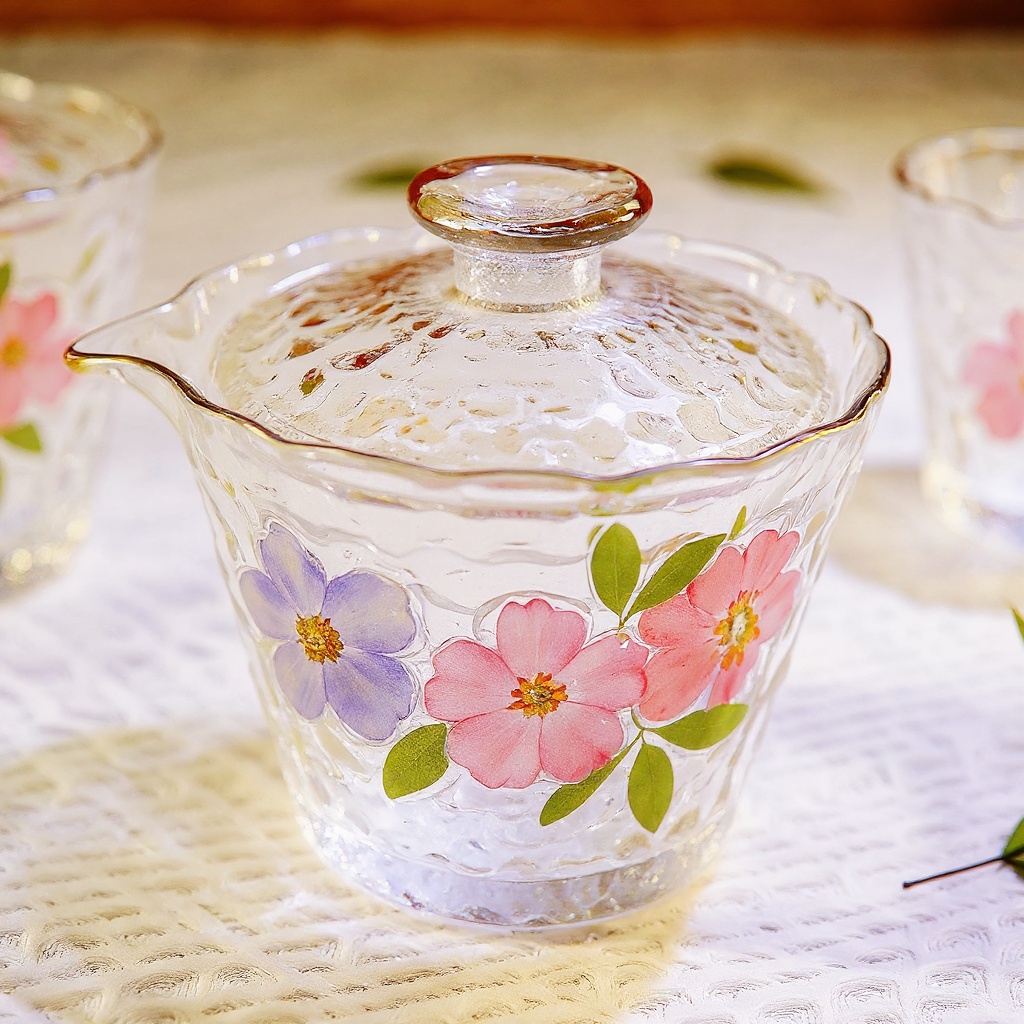
The Art of Botanical Preservation in Tea Vessels
Every hammered glass set carries a different flower arrangement. No two are identical. Daisies provide white contrast against clear walls. Pansies add purple and yellow tones. Cherry blossoms deliver delicate pink that catches the hand-painted gold rim's warm reflection differently in morning versus evening light.
Flowers are harvested at peak bloom, pressed flat for 4–6 weeks to remove all moisture, then positioned by hand before resin application. The 3D raised texture comes from layering flowers at different depths—surface elements create pronounced tactile relief, deeper elements provide color gradation visible only through the glass from certain angles.
This process requires precise timing during forming. Too hot and flowers char. Too cool and positioning becomes imprecise. The result is a functional tea vessel that doubles as preserved botanical documentation. A record of a specific bloom, a specific season, locked permanently into the glass.
The Handmade Hammered Glass Tea Set Real Pressed Flowers | Gold Rim Gaiwan 8-Piece Gongfu Set exemplifies this approach—genuine botanical specimens sealed within borosilicate walls, not printed or transfer-applied patterns.
Caring for Hammered Glass and Preserved Flowers
Handmade glass demands gentler handling than factory-produced alternatives. The hammered texture traps tea tannins in recessed areas if not cleaned promptly after each session.
Cleaning Protocol:1. Rinse immediately after each brewing session while vessels are still warm 2. Use warm soapy water with a soft-bristled brush sized for the gaiwan interior 3. Reach recessed areas in hammered texture using a thin detailing brush 4. Avoid abrasives — scrubbing pads scratch glass surfaces and dull resin clarity 5. Skip harsh chemicals — bleach and acidic cleaners cloud protective resin over repeated use 6. Dry upside down on a soft cloth; avoid stacking tasting cups while wet 7. Warm before use — always condition vessels with lukewarm water before introducing near-boiling infusions
Temperature shock remains the primary breakage cause. Not dropping. Not stacking. Pouring 212°F water into a cold glass vessel. That single habit causes more breakage than all other factors combined.
Pricing and Value in the Artisan Tea Set Market
Mass-produced ceramic gongfu sets retail between $30–120 based on data from major online tea retailers and marketplaces as of 2024. Mid-range handmade glass versions without botanical elements run $100–200. Pressed-flower artisan glass sets occupy a premium tier due to material cost, hand-positioning labor, and individual variation in flower placement.
At $114.26, the featured set positions at the accessible entry of the artisan glass category. This reflects genuine pressed flowers, food-safe resin sealing, hand-painted gold accents, and complete 8-piece functionality. The value case is heirloom potential and uniqueness—no two sets carry identical botanical arrangements, which matters for wedding registries and meaningful gifts in ways that mass-produced alternatives cannot replicate.
The Handmade Hammered Glass Tea Set Real Pressed Flowers | Gold Rim Gaiwan 8-Piece Gongfu Set represents this category's combination of daily functional brewing and long-term decorative value.
FAQ
Is borosilicate glass safe for hot gongfu tea steeping? Yes. Borosilicate glass withstands temperature cycling from 32°F to 515°F without thermal shock damage, a property that makes it standard in laboratory and culinary equipment designed for rapid temperature changes. Wall thickness of 3–4mm in quality sets provides hand insulation while maintaining the heat transfer properties gongfu brewing requires. Always warm vessels gradually with lukewarm water before introducing near-boiling infusions. Are the pressed flowers in glass tea sets food safe—will they contact the tea? No botanical material contacts hot tea directly. The flowers are fully sealed within eco-resin that meets FDA Generally Recognized as Safe standards for food-contact applications. The resin barrier prevents any plant material from leaching into brewing liquid across normal thermal cycling. Harsh chemicals can cloud resin clarity over time, so gentle cleaning preserves both the seal integrity and the visual appearance of embedded specimens. What is the difference between a gaiwan and a teapot in gongfu ceremony? A gaiwan has three components—bowl, lid, and saucer—that allow precise steeping time control and direct sensory access to developing aromas through the open lid. A teapot uses an enclosed fixed chamber and spout that limit real-time observation. Gaiwans also cool faster, which benefits temperature-sensitive teas like green and white varieties that require steeping below 185°F. For the transparency-based visual feedback that glass sets offer, the gaiwan format is the correct choice. Can a glass gongfu set replace a traditional Yixing clay set for everyday use? For most users, yes—with one honest caveat. Glass is flavor-neutral; it delivers unmodified tea character across every brewing session. Seasoned Yixing clay absorbs tea oils over years of use, gradually contributing subtle flavor complexity that glass cannot replicate. If you brew a wide variety of teas and want consistent pure flavor, glass is more versatile. If you dedicate a single vessel to one tea type for years of seasoning, clay offers something glass permanently cannot. How do I clean a hammered glass tea set without damaging the embedded flowers? Use warm soapy water and soft-bristled brushes immediately after each session while vessels are still warm. A thin detailing brush reaches into hammered recesses where tannins accumulate. Avoid abrasive scrubbers that scratch glass surfaces and dull resin clarity. The pressed flowers themselves are fully sealed and protected from moisture, but repeated exposure to bleach or acidic cleaners will cloud the protective resin layer over months of use. Do real pressed flowers in resin-sealed glassware fade over time? Yes. Properly sealed flowers maintain color and structural integrity for approximately 2–3 years under normal indoor use. Ultraviolet exposure is the primary accelerant—a set placed beside a south-facing window daily may show visible color shift within 12–18 months. Storing the set away from direct sunlight when not in use preserves botanical colors significantly longer. The transparent glass makes monitoring any gradual change straightforward. What makes a gongfu tea set 'complete'—how many pieces do I actually need? A minimum functional set requires a gaiwan (160ml), a fair cup (210ml), and two to six tasting cups (50ml each). The fair cup is non-negotiable for authentic gongfu technique—it equalizes tea strength before individual pours, which is architecturally different from Western single-pour service. Additional pieces like tea trays, strainers, and tool sets enhance ceremonial completeness but are not required for correct brewing. The 8-piece configuration provides everything needed for multi-guest tea service without redundancy. What tea types work best in a modern glass gongfu set? Glass performs best with teas where visual observation adds value: oolong, white tea, and yellow tea all produce liquor colors that shift meaningfully across infusions. Light green oolongs show jade-to-amber progression. White peony produces pale gold that deepens visibly by the third steep. Pu-erh works functionally but the dark liquor obscures the botanical backlight effect that makes glass sets visually distinctive. Black teas brew correctly in glass but similarly lose the transparency advantage.Conclusion
The chinese gongfu tea set modern aesthetic is a specific, definable category: transparent hammered borosilicate glass, real embedded pressed flowers creating 3D raised texture on outer surfaces, hand-painted gold rims, complete 8-piece gongfu configuration. It is not a restyled clay set. Not a decorative object that happens to hold tea. A fully functional brewing system that operates as botanical art while it works.
Glass changes what gongfu brewing teaches you. Every infusion visible. Every color shift legible. The ancient precision of the ceremony survives the material change—and gains a new dimension of sensory feedback that four centuries of Yixing clay never offered.
For those seeking that combination of authentic technique and handcrafted botanical uniqueness, the Handmade Hammered Glass Tea Set Real Pressed Flowers | Gold Rim Gaiwan 8-Piece Gongfu Set delivers complete 8-piece functionality with individual flower arrangements that make each piece genuinely unrepeatable.
Ceremony, preserved in glass. Blooms that outlast the season.