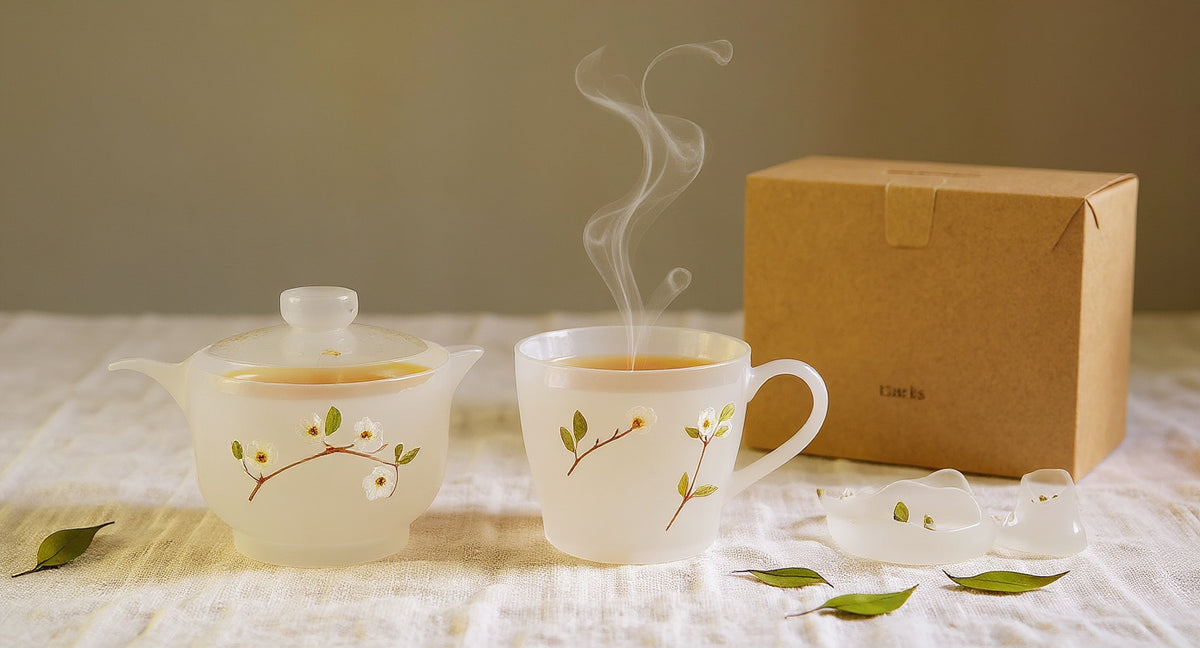
A nature inspired tea set home accent should earn its space by being useful first, then decorative. The best choice has enough capacity for a real drink, materials suited to warm liquids, a care routine that fits daily life, and botanical detail that doesn’t look like a disposable printed novelty.
Real preserved flowers change the equation. They need more consideration than a decal, but they also give a tea cup a physical material quality that printed florals and flat transfers can’t reproduce. A piece made over 3–5 days is a different proposition from a factory cup pulled from a repeated production run.
Real botanicals are the dividing line
There are plenty of floral cups that photograph well and disappoint once they arrive. Most fall into one of two groups: a printed pattern under a glossy coating, or a resin decoration that sits on the surface with no connection to the actual plant material it imitates.
A tea set with hand-embedded preserved petals and leaves has a more direct relationship with botanical craft. Pressed flower craft has long relied on preserving and arranging actual plant material rather than reproducing it with a printed image. That distinction matters most when the cup is intended to remain on a shelf, tray, desk, or vanity between uses.
Real flowers also create a maintenance trade-off. Raised exterior petals are more vulnerable to scrubbing, long soaking, dishwasher jets, and crowded cabinets than printed decoration. Anyone wanting an indestructible everyday mug should buy a plain stoneware cup instead. A preserved-flower glass piece suits someone willing to hand-wash carefully in exchange for a more individual object.
The botanical choice carries some meaning beyond surface decoration. Plum blossom has a long cultural association with late winter and early spring, which makes it particularly fitting for a tea ritual built around renewal, seasonal change, and a slower start to the day.
Why a nature inspired tea set home accent still has to pour well
A decorative cup that holds only a few mouthfuls is better treated as a display object. A 400ml capacity is more practical. It gives enough room for a full serving of tea, a milk coffee, herbal infusion, or a larger morning drink without forcing a refill halfway through a quiet break.
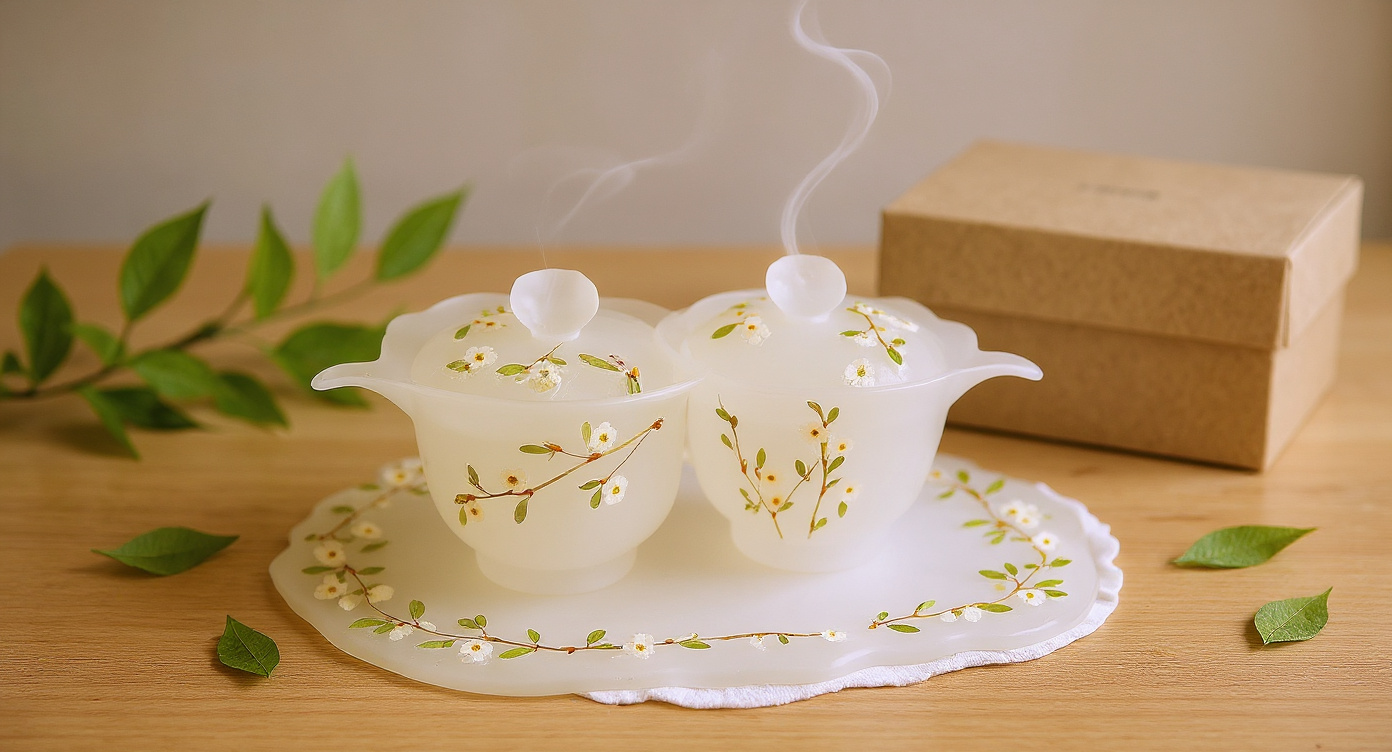
The Handmade Frosted Pearl Plum Blossom Tea Set | Real Preserved Flower Glass Teacups | Eco Gift uses a heat-resistant glass body, an approximate 400ml capacity, and real preserved plum blossom petals and leaves embedded on the exterior surface. Its listed price is $114.065714285714, with eco-friendly packaging included.
The preserved plum blossom glass tea set makes more sense as functional décor than as a hard-use utility cup. It can handle a warm daily drink, but its raised botanical work calls for gentler treatment than an unadorned café tumbler.Heat-resistant glass is useful for tea because it is designed for warm-liquid use, but it is not a licence for careless temperature shock. Don’t move a cold cup directly into very hot water, and don’t rinse a hot cup under cold running water. Sudden temperature change is harder on glass than ordinary tea service.
Care is part of the material choice
Hand-wash-only care isn’t a minor footnote with a cup that has raised preserved petals on the outside. It is the practical condition that protects the decorative work. Dishwashers combine heat, detergents, spray pressure, and contact with other items, exactly the combination that can shorten the life of delicate exterior embellishment.
Use this routine instead:
1. Let the cup cool before washing, especially after black tea, coffee, or boiling-water infusions. 2. Wash the inside with warm water, mild dish soap, and a soft sponge or cloth. 3. Support the cup from the body rather than gripping or rubbing the raised flower details. 4. Avoid abrasive pads, powdered cleaners, stiff brushes, and prolonged soaking. 5. Rinse gently, then place it on a soft towel to air-dry rather than stacking it with other glassware. 6. Keep it out of the microwave unless the maker specifically confirms microwave use.
Tea stains are usually easier to prevent than remove. Rinsing after use stops tannin residue from setting inside the glass. If tea film develops, a mild baking-soda paste can be used on the interior only, with a soft cloth and no pressure against the exterior botanical elements.
The included eco-friendly packaging is useful for gifting and storage, though “eco-friendly” should not be treated as a universal environmental claim without details on fibre content, recycling access, inks, and transport. The EPA’s guidance on greener products is a useful reminder that material claims need specifics. In practical terms, packaging that can be retained for safekeeping is preferable to a disposable box that gets discarded after one use.
What the price buys compared with printed floral cups
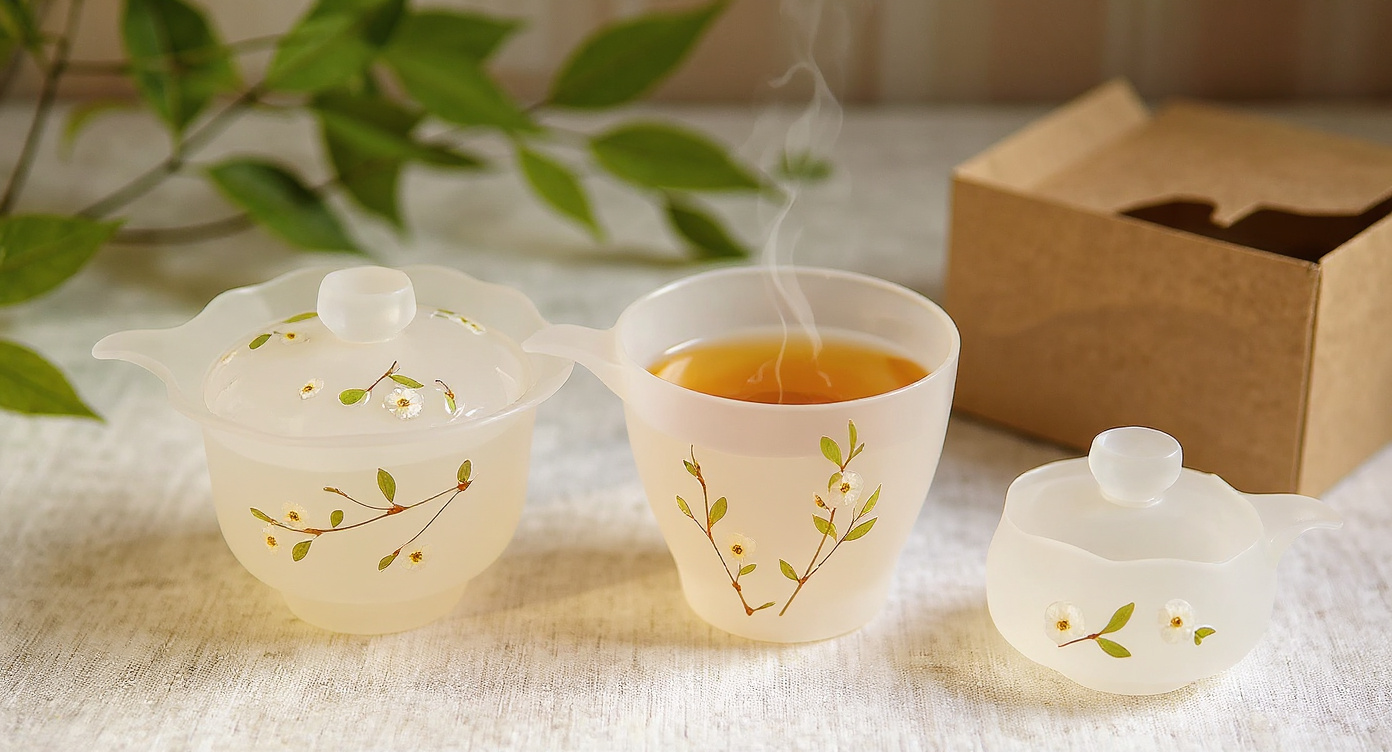
Price alone doesn’t tell the full story, but construction does. A lower-priced cup may be perfectly fine if the goal is casual dishwasher use, a repeated printed pattern, or a replacement that won’t be mourned if it breaks. The premium starts to make sense when the buyer values genuine botanical material, handwork, display value, and a gift that isn’t interchangeable with the next one.
| Type of tea cup or set | Price information supplied | Floral construction | Best fit | Main trade-off |
|---|---|---|---|---|
| Mass-produced floral glass cups on Amazon | $15–$60 | Printed or decal designs | Casual use, easy replacement, lower spend | Less individual material character |
| Mid-range artisan sets on Etsy | $80–$200 | Simpler resin flowers | Handmade-style gifting and display | May not use preserved botanical material |
| Handmade Frosted Pearl Plum Blossom Tea Set | $114.065714285714 | Hand-embedded preserved plum blossom petals and leaves | Intentional gifting, daily ritual, home display | Hand-wash-only care |
| Luxury Japanese ceramic sets | $500–$1,200 | Varies by set | Collectible tableware and high-end gifting | Higher entry price, different material experience |
The least expensive option is not automatically poor value. It is the sensible choice for a busy shared kitchen, student housing, office break room, or anyone who knows the cup will be run through a dishwasher several times a week.
The preserved-flower option is more likely to pay off when the cup is used deliberately, stored carefully, and displayed in between drinks. The 3–5 day handcrafting time explains why it belongs closer to artisan gift territory than to a printed floral tumbler. It is not competing on dishwasher convenience. It is competing on material presence and the fact that no two arrangements of real petals behave exactly alike.
Placement matters more than a crowded display shelf
A tea set becomes part of a softer home when it has a defined place rather than being treated as random shelf filler. One cup can work as a small decorative point in a living room, but it needs breathing room. Put it beside a stack of tea books, a small tray, a ceramic pot, or a linen runner. Avoid cramming it between heavy objects that can knock against the glass.
For regular use, a tray is usually the most practical choice. It creates a home for the cup, loose-leaf tea tin, spoon, and small dish without turning the whole kitchen counter into a styled display. In a bedroom or vanity area, keep the cup decorative unless it can be cleaned promptly after use. Sweetened drinks left in any glass vessel will attract residue and make display impractical.
Tea culture has always involved more than the liquid itself. Tea culture includes the utensils, serving habits, social rituals, and domestic spaces around tea. A cup used for one unhurried drink each morning can be more meaningful than a formal set that stays boxed for years.
A good housewarming gift also has to avoid becoming another object the recipient feels obliged to display. The safest occasions for a botanical tea cup are people who already drink tea or coffee, appreciate handmade objects, keep a visible tray or shelf, and won’t resent hand-washing one special item. For everyone else, choose something simpler.
FAQ
Are glass teacups good for hot tea?
Yes, heat-resistant glass can be a good material for hot tea because it does not retain odours and lets the drink’s colour remain visible. It still needs sensible handling. Avoid sudden changes between cold and hot temperatures, and use care with a cup that has raised decoration on its exterior.
How do you clean glass teacups?
Wash them by hand with warm water, mild soap, and a soft sponge. Rinse soon after tea or coffee to limit staining. For a decorated preserved-flower cup, clean around exterior details gently and do not use abrasive scrubbers.
Are glass tea cups dishwasher safe?
Some plain glass tea cups are dishwasher safe, but that does not mean every decorated glass cup is. A cup with hand-embedded preserved petals and leaves should be hand-washed because dishwasher heat, detergent, spray pressure, and contact with other dishes can damage the raised floral work.
What is the best material for a tea set?
There is no universal best material. Porcelain and stoneware are sensible for hard daily use. Cast iron retains heat but needs more maintenance. Heat-resistant glass is a strong choice for people who enjoy seeing the colour of tea and want a lighter-feeling cup. Preserved-flower glass is best treated as a careful-use material rather than a utility option.
Can you use a glass cup for coffee?
Yes. The 400ml capacity suits coffee as well as tea, including milk coffee and larger filter coffee servings. Rinse the cup after use, since coffee oils can leave a film if they sit for long periods.
How do you display a tea set in a living room?
Give it a stable, low-traffic position on a tray, open shelf, side table, or cabinet shelf. Keep it away from the edge, direct hard sunlight, and heavy objects that could strike it. One tea cup alongside a book, coaster, or small vessel is usually stronger than a crowded collection of unrelated décor.
Are preserved flowers durable?
Preserved flowers can remain attractive for a long time when protected from abrasion, moisture, harsh detergents, and repeated handling. They are not as durable as printed decoration or bare glass. Their longevity depends heavily on careful hand-washing and thoughtful placement.
What makes a tea set a good housewarming gift?
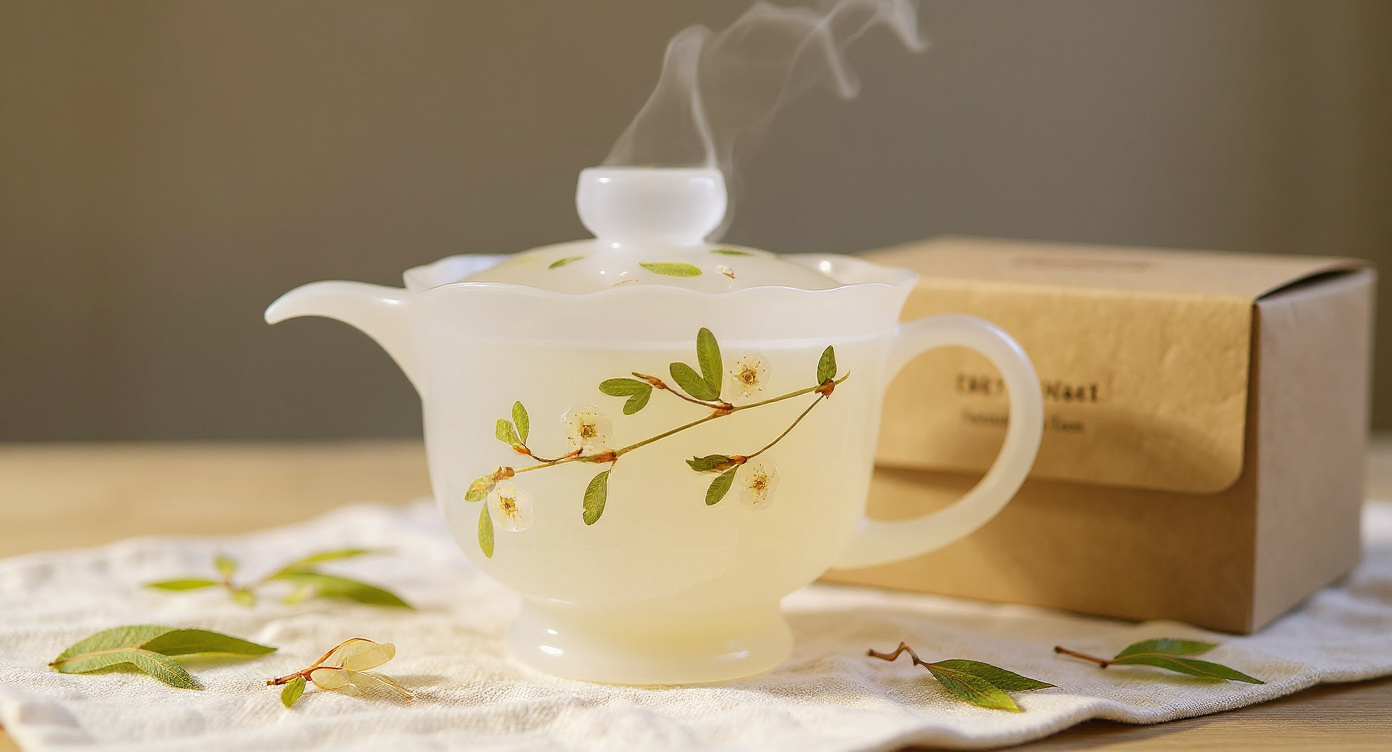
A good housewarming tea set is useful, compact, easy to store, and personal without requiring the recipient to redecorate their home around it. A 400ml cup with real preserved plum blossom detail works especially well for someone who enjoys tea, coffee, botanical décor, or slow morning rituals. The included packaging also makes presentation easier.
A considered gift for a daily ritual
The main hesitation with a preserved-flower cup is reasonable: delicate details demand hand-washing, and nobody wants to give a beautiful object that becomes too precious to use. The better approach is to choose it for someone whose routines already make room for a careful cup of tea or coffee, rather than forcing it into a high-volume dishwasher household.
For a gift or home piece that can hold a real 400ml drink while doubling as botanical décor, see the Handmade Frosted Pearl Plum Blossom Tea Set | Real Preserved Flower Glass Teacups | Eco Gift. It is a natural fit when the goal is something more lasting and personal than a printed floral cup, without pretending that hand-wash care is no effort at all.