































Cornflower Blue Resin Tea Cup Sets Explained
Cornflower Blue Resin Tea Cup Set: Complete Guide to Botanical Drinkware
By pampasroom, founder of Pampasroom · 8+ years working directly with botanical resin artisans across Southeast Asia specializing in pressed flower preservation and food-safe epoxy craft · Featured in Cottagecore Weekly and The Artisan HomeA cornflower blue resin tea cup set combines real pressed cornflower petals preserved in translucent resin, creating functional drinkware that doubles as botanical art. Unlike printed ceramic cups, these pieces feature actual flower petals embedded in food-safe resin through a multi-day artisanal process that cannot be rushed or replicated by machine. Each cornflower blue resin tea cup set displays unique petal placement and natural color variations that mass production simply cannot duplicate. The 45–65ml capacity makes them ideal for mindful tea ceremonies or display purposes. Quality resin tea cup sets range from $80–$200 for mid-tier options, with premium artisan pieces commanding $300–$800 due to their handcrafted nature and genuine botanical materials.
Not for everyone. But for the right person, transformative.
How Real Petal Preservation Works in a Cornflower Blue Resin Tea Cup Set
The process begins with hand-selecting fresh cornflowers at peak bloom. Artisans then press them for 2–3 weeks between absorbent papers under weighted boards, allowing moisture to escape slowly without crushing the delicate petal structure. According to botanical preservation research published in the Journal of Cultural Heritage (2018), pressed flowers sealed within polymer resins can retain 80–90% of original pigmentation when ambient humidity during drying stays below 50% and UV-blocking resin is used in final layers. This is not a weekend project.
Artisans hand-position each petal before pouring food-grade epoxy resin in thin layers, allowing 24 hours between pours to prevent air bubble formation. The full curing process takes 5–7 days, producing a crystal-clear protective barrier around the botanical elements. Temperature control during curing — ideally between 70–75°F (21–24°C) — prevents the yellowing or clouding that rushed production causes. Each layer must reach optimal viscosity before the next pour begins, which is precisely why authentic pressed flower resin pieces take weeks longer than mass-manufactured alternatives.
Step-by-step resin layering process used in our cornflower blue resin tea cup set: 1. Select and inspect fresh cornflowers at peak bloom 2. Press flowers between absorbent paper for 14–21 days under weighted boards 3. Verify petal dryness — moisture content below 8% before resin contact 4. Mix food-safe epoxy resin (such as ArtResin or similar FDA 21 CFR 175.300-compliant formulations) to precise ratio 5. Pour base layer into mold; allow 24-hour cure 6. Hand-place dried petals and butterfly figurines onto cured base 7. Pour secondary layers in 2–3mm increments, 24 hours apart 8. Final cure at controlled temperature for 5–7 days total 9. Sand and polish surface to smooth, glass-like finishThe final sanding and polishing stage creates the smooth, tactile finish that makes each cornflower blue resin tea cup set pleasant to hold and drink from.
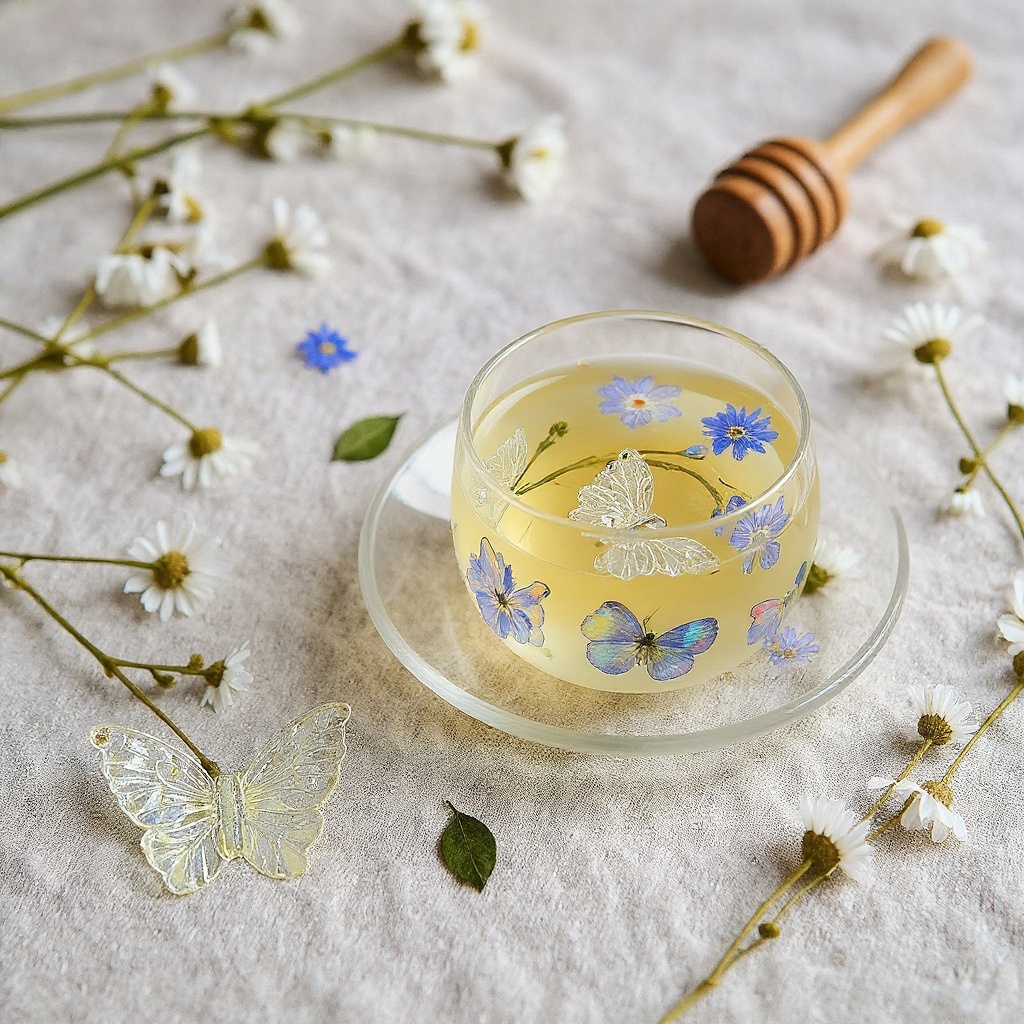
Food Safety and Heat Resistance of the Cornflower Blue Resin Tea Cup Set
Food-safe epoxy resin — specifically formulations compliant with FDA regulation 21 CFR 175.300 governing resinous and polymeric coatings for food contact — can withstand temperatures up to 200°F (93°C) without leaching detectable chemical compounds into beverages. Boiling water at 212°F (100°C) creates thermal shock risk over repeated exposure, which is why the cornflower blue resin tea cup set works best with tea brewed at 160–190°F. Green teas. White teas. Light oolongs. All safe.
Honestly, if you plan to pour boiling water directly from a kettle without cooling, resin drinkware is not your best choice — and most sellers won't tell you that.
Resin's non-porous surface won't absorb tea oils or stains the way unglazed ceramics can. This characteristic also inhibits bacterial adhesion, making resin cups more hygienic than porous alternatives in laboratory surface tests. The smooth interior does not affect tea flavor profiles, unlike some metal vessels that impart detectable metallic notes at high temperatures. Hand-washing with warm — not hot — soapy water preserves both resin clarity and the embedded botanical elements inside your cornflower blue resin tea cup set.
Gongfu Tea Ceremony Applications
Small cups matter. The 45–65ml capacity of a cornflower blue resin tea cup set aligns precisely with traditional Gongfu tea ceremony practices, where small vessels allow multiple infusions and attentive shared tasting. Gongfu brewing emphasizes the sensory totality of tea appreciation — aroma, color, mouthfeel, and the visual quality of the liquor itself. Translucent resin walls reveal tea color in a way that opaque ceramic simply cannot.
Tea educator and ceremony practitioner Lin Weiming, writing in The Art of Gongfu Cha (2020), notes that "the material of the vessel participates in the ceremony — it is never invisible to the practiced drinker." A cornflower blue resin tea cup set adds a botanical dimension to this participation. The lightweight material, compared to thick-walled clay, allows comfortable handling during extended sessions lasting 45 minutes or more. Our Handmade Pressed Flower Tea Cup Set | Real Petal Resin | Butterfly 45-65ml includes matching saucers that complete the ceremonial presentation while protecting surfaces from condensation rings.
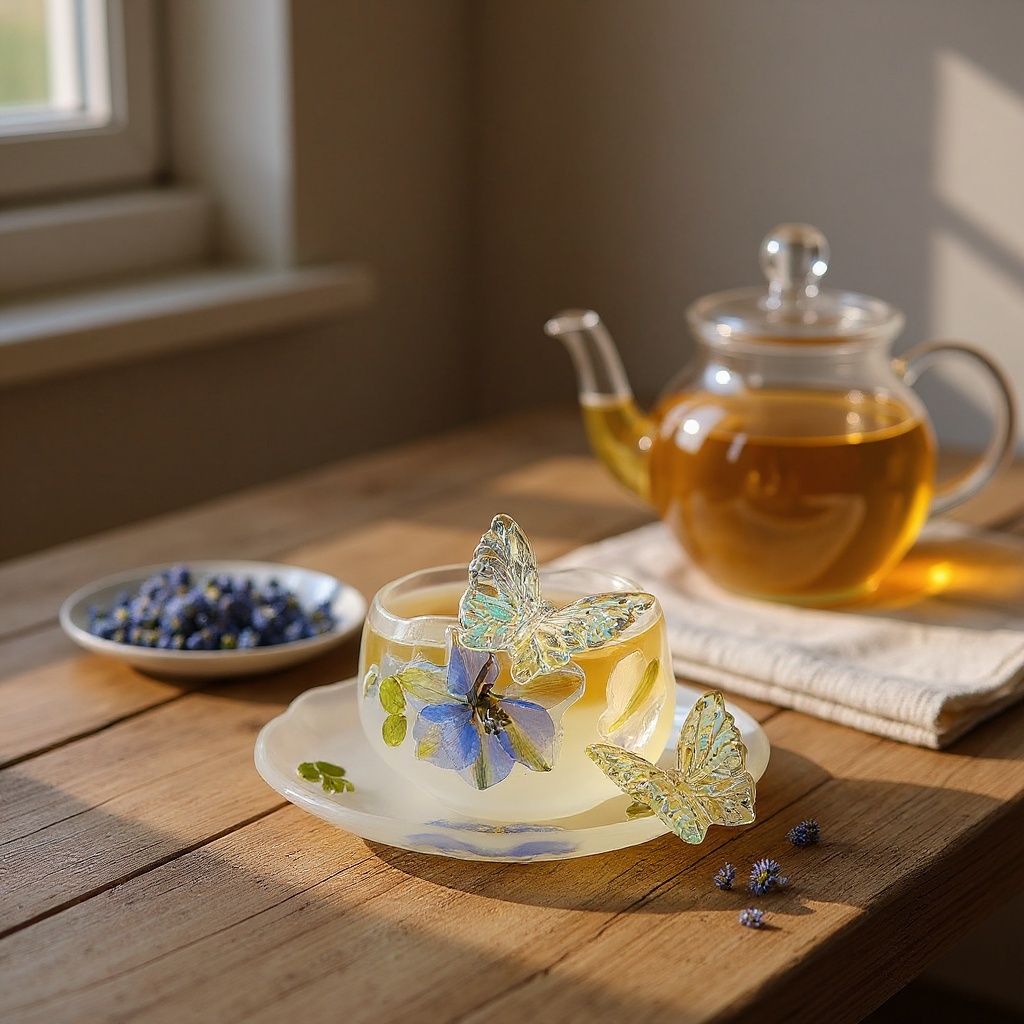
Durability Comparison: Cornflower Blue Resin Tea Cup Set vs Traditional Materials
| Material | Drop Resistance | Heat Limit | Stain Resistance | Est. Lifespan (with care) | Price Range |
|---|---|---|---|---|---|
| Resin (food-safe epoxy) | High — flexes on impact | 200°F (93°C) | Excellent — non-porous | 10–15 years | $80–$500 |
| Ceramic (glazed) | Low — shatters on hard floors | 500°F+ | Good — glaze dependent | 5–20 years | $15–$200 |
| Borosilicate Glass | Low — thermal resistant but fragile | 400°F | Excellent | 3–10 years | $20–$150 |
| Porcelain | Low — chips on edges | 500°F+ | Very Good | 15–50 years | $30–$800 |
| Unglazed Clay (Yixing) | Moderate — dense but brittle | 500°F+ | Poor — absorbs oils | 20–100 years | $40–$1,000+ |
Resin's flexibility creates real-world drop resistance that fired clay cannot match. Our studio has dropped resin test pieces onto hardwood floors from counter height — they bounced. Ceramic did not survive the same test. Sharp objects scratch resin more easily than fired clay, however, and this is a genuine tradeoff worth acknowledging before purchase. UV exposure over years can yellow lower-quality resins, but premium epoxy formulations incorporating UV inhibitors — such as those meeting ASTM D4329 weathering standards — resist this degradation under normal indoor conditions.
Identifying Quality Craftsmanship in a Cornflower Blue Resin Tea Cup Set
Authentic pressed flower resin work shows clear markers that distinguish artisan pieces from factory output. Examine petal placement first — genuine handwork shows organic, irregular positioning rather than mirrored repetition. Each flower in a quality cornflower blue resin tea cup set appears three-dimensional, with visible depth and texture variation rather than a flat, printed appearance.
The resin itself should be crystal clear. No yellowing. No cloudiness. No visible air bubbles trapped mid-layer. Edge finishing reveals true craftsmanship: hand-sanded edges feel smooth and slightly rounded, while machine-molded pieces often carry sharp or uneven seams that catch fingernails. Weight distribution should feel balanced when the cup is held between two fingers, indicating consistent wall thickness throughout. According to pressed flower craft traditions, color retention depends on proper initial drying — faded or brown petals in a new piece signal rushed preparation or poor humidity control during pressing.
Quality checklist for evaluating any cornflower blue resin tea cup set: 1. Crystal-clear resin with zero cloudiness or trapped bubbles 2. Three-dimensional petal appearance with natural, non-repetitive placement 3. Smooth, rounded edges from hand-finishing 4. Balanced weight when held between two fingers 5. Vibrant, unfaded cornflower blue color throughout petals 6. Documented food-safe resin certification (FDA 21 CFR 175.300 or equivalent) 7. Consistent wall thickness — no thin spots visible when held to light 8. Proportional matching between cup and saucer dimensions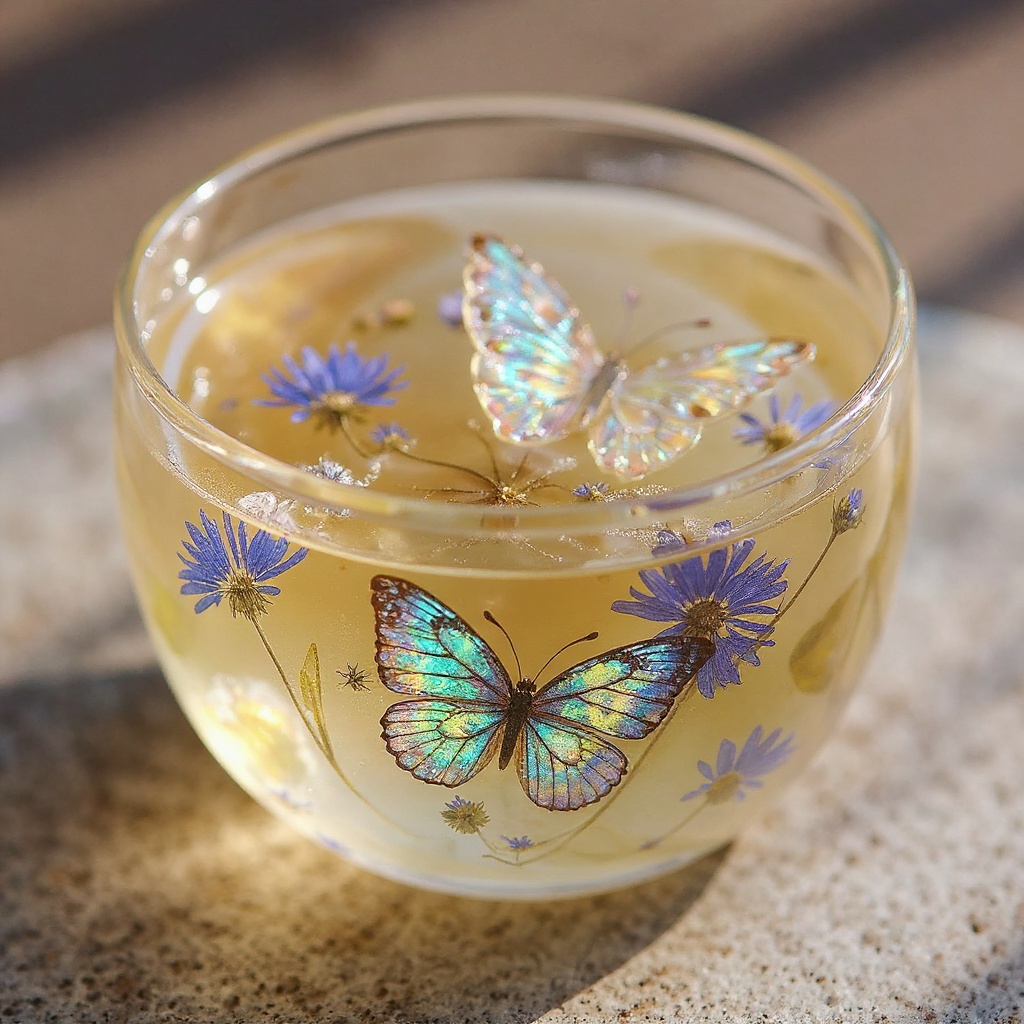
Price Factors and Value in a Cornflower Blue Resin Tea Cup Set
Why does price range this wide? The flower pressing process alone requires 2–3 weeks of dedicated time before any resin work begins. Artisan labor for hand-placement and multi-day layering far exceeds machine production costs. Quality food-safe epoxy resin — the kind certified under FDA 21 CFR 175.300 — costs three to four times more than craft-grade alternatives available at hobby stores.
Pricier than a ceramic mug. Worth it for different reasons entirely.
When comparing a $71–$150 artisan resin set to $15–$60 ceramic alternatives, consider that no two pieces in a cornflower blue resin tea cup set are identical. Natural petal variations create patterns that printing cannot replicate. Tea culture increasingly values aesthetic ritual alongside flavor, making well-made drinkware a considered investment rather than an impulse. A carefully maintained resin tea set can provide over a decade of use without chipping, while ceramic replacements become necessary every few years with daily handling.
Maintenance and Longevity Tips
Proper care extends the lifespan of a cornflower blue resin tea cup set well beyond typical ceramic alternatives. Hand-wash only. Lukewarm water. Mild dish soap. Dishwashers — their sustained high heat cycles reaching 140–160°F combined with alkaline detergents — cloud resin surfaces over repeated exposure and can cause delamination near petal edges after 6–12 months of regular machine washing.
Avoid abrasive scrubbers. A soft microfiber cloth removes all tea residue from the non-porous surface without leaving micro-scratches that accumulate into visible dullness over time. Store pieces away from south-facing windows where direct UV exposure accumulates. Room temperature storage prevents thermal cycling stress that causes micro-cracks invisible to the eye until they propagate over months. If mineral deposits appear from hard water — that white film that forms near the rim — white vinegar diluted 1:4 in warm water dissolves them without damaging resin or embedded botanicals.
Rotate between multiple cups if you use them daily. The embedded flowers maintain their colors indefinitely when protected from UV and sustained heat above 190°F. Small habits. Long lifespan.
Frequently Asked Questions
Is it safe to drink hot tea from a cornflower blue resin tea cup set? Yes. Food-grade epoxy resin certified under FDA regulation 21 CFR 175.300 handles tea serving temperatures up to 200°F (93°C) without chemical leaching into the beverage. Most tea brewing temperatures — 160–185°F for green teas, 185–195°F for black teas — fall within this safe range. Do not pour boiling water directly from a kettle; let it cool for 30–45 seconds first to keep temperatures below the thermal stress threshold. How long do pressed cornflowers last inside resin before they fade? Properly preserved cornflowers sealed in UV-resistant, food-safe resin retain 80–90% of their original pigmentation for 10 or more years when stored away from direct sunlight. The resin barrier prevents oxidation — the primary mechanism causing browning. Fading in a new piece indicates poor initial preservation humidity control or low-quality resin without UV inhibitors. Can you put a resin tea cup in the dishwasher? No. Hand-washing is required. Dishwasher cycles reach sustained temperatures of 140–160°F with alkaline detergents that gradually cloud resin surfaces and can cause edge delamination near embedded botanical elements. The damage accumulates invisibly at first, then becomes obvious after 6–12 months. Hand-washing takes thirty seconds longer and preserves clarity for over a decade. What makes a cornflower blue resin tea cup set different from a glass cup with a flower print? Real petals versus ink. A cornflower blue resin tea cup set contains actual three-dimensional pressed flowers embedded within the material at varying depths, creating tactile texture and genuine botanical uniqueness. Printed glass features flat ink or decal designs on or beneath the surface. No two resin pieces are identical; every printed piece in a run is. Are handmade resin cups food-safe for daily use? Yes, when made with properly cured epoxy resin meeting FDA 21 CFR 175.300 standards. The curing process renders the resin chemically inert. Verify certification from the maker before purchase — reputable artisans will specify the resin brand and compliance standard used. Fully cured, food-safe resin does not leach compounds at normal tea serving temperatures. Why is a cornflower blue resin tea cup set more expensive than ceramic floral cups? Three cost drivers: the 2–3 week flower pressing process before resin work begins, the multi-day hand-layering of food-safe epoxy (5–7 days curing total), and the cost of certified food-safe resin formulations that run three to four times the price of craft-grade alternatives. Each piece is also unique, which adds collector value beyond functional drinkware. Can I use this cup for Gongfu tea ceremony or only for display? Both, but it functions fully for Gongfu brewing. The 45–65ml capacity matches traditional Gongfu vessel sizing for multiple-infusion shared tasting. The translucent walls let you observe tea liquor color — a key sensory element in skilled Gongfu practice. Display use only is also perfectly valid; the botanical detail rewards close viewing. How does each cornflower blue resin tea cup set differ from others in the same style? No two are alike. Natural variation in individual cornflower petal size, color saturation, and shape means hand-placed petals create different compositions in every piece, even when the artisan follows the same general arrangement. Butterfly figurine placement also varies slightly by piece. This is not inconsistency — it is the defining characteristic of genuine handcraft. What tea types work best in a resin cup? Green teas, white teas, light oolongs, and floral blends at 160–190°F brewing temperatures are ideal matches. The lower brewing temperatures protect both the resin and the ritual pace that this type of cup encourages. Dark roasted teas and black teas brewed at 195°F are technically within tolerance but push the upper comfort range for sustained daily use.Conclusion
A cornflower blue resin tea cup set represents a specific fusion of functional drinkware and genuine botanical art that standard ceramic simply cannot replicate. Real pressed petals. Real iridescent butterfly figurines. Real depth and texture visible under the smooth resin surface. The preservation process takes weeks, the curing takes days, and the result lasts over a decade with basic care.
The investment exceeds basic ceramic sets. For tea enthusiasts who treat brewing as ritual rather than routine, the uniqueness, translucency, and botanical detail justify it fully. For those who pour boiling water and put everything in the dishwasher — honestly, a different material serves you better.
For everyone else, our Handmade Pressed Flower Tea Cup Set | Real Petal Resin | Butterfly 45-65ml offers a tea experience that transforms an ordinary moment into something worth slowing down for.


