An eco friendly teaware gift set is worth giving when its intended use is documented, its care requirements suit the recipient, and its environmental claims have evidence behind them. Real botanical decoration can make a gift feel personal. It doesn’t establish food safety or a lower environmental impact.
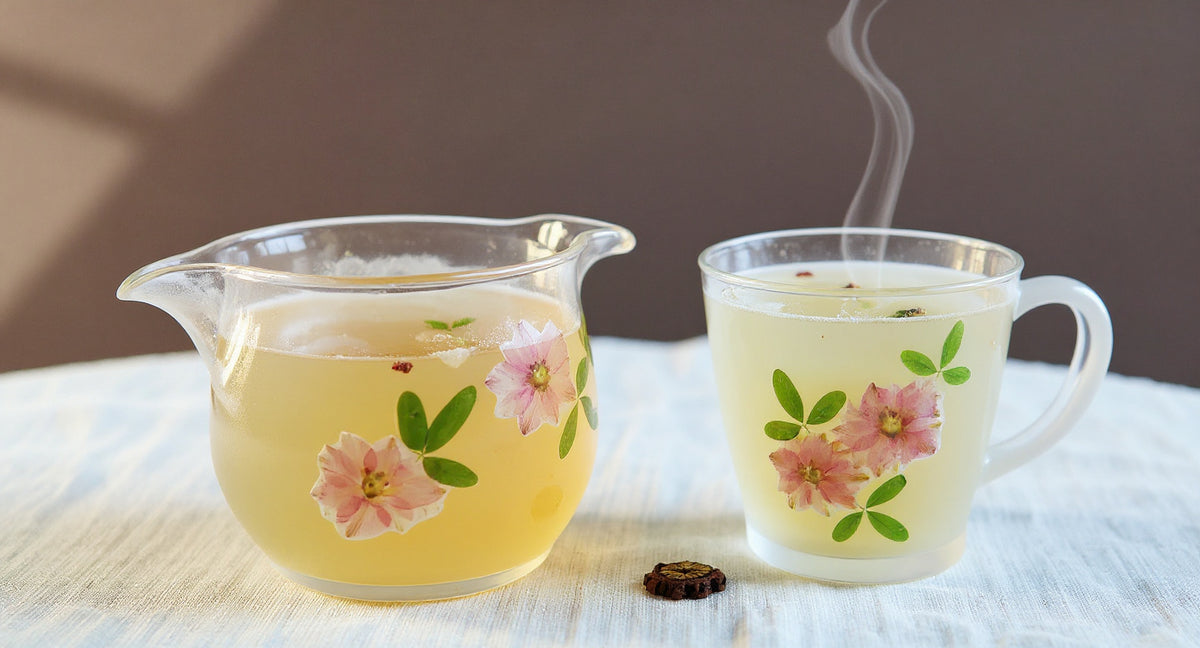
The Pampasroom set pairs a frosted translucent glass gaiwan and fair cup, with visible real dried flower petals and green leaves embedded beneath a smooth eco-resin surface. Soft raised floral relief gives the decoration dimension. In warm natural light, against white or linen, the botanical details create an earthy, serene presentation. Delicate steam rising from tea completes that setting, but a photograph isn't evidence of tested temperature limits.
Beautiful, with conditions.
The supplied product description states approximately 400ml and 3–5 days of handcraft per unit. It doesn't establish which vessel the capacity describes, what resin formulation is used, or which cleaning methods are approved. Those gaps deserve answers before the set becomes a hot-tea gift.
What is documented about this preserved-flower teaware?
The Handmade Frosted Glass Gaiwan Set | Real Preserved Flowers | Eco Resin Floral Tea Cup provides a specific construction description: heat-resistant glass, real preserved botanical materials, an eco-resin finish, and a gaiwan with a fair cup.
Keep the facts separate from the implications. The stated handcraft time explains the making process, but it isn't a dispatch promise, a durability test, or proof of reduced environmental impact.
| Product detail | Supplied information | What still needs confirmation |
|---|---|---|
| Named vessels | Gaiwan and fair cup | Complete package contents: varies by seller |
| Capacity | Approximately 400ml | Vessel allocation and working capacity: varies by seller |
| Construction | Heat-resistant frosted translucent glass with real botanical decoration under eco resin | Glass composition and resin specification: varies by seller |
| Making time | 3–5 days per unit | Dispatch and arrival date: varies by seller |
| Price | varies by seller | Shipping and taxes: varies by seller |
No tested temperature range, food-contact documentation, resin composition, or maker-approved care protocol is available in the supplied information. These are unverified details, not evidence that the product has failed a test.
That distinction matters.
Why the botanical construction makes a thoughtful gift
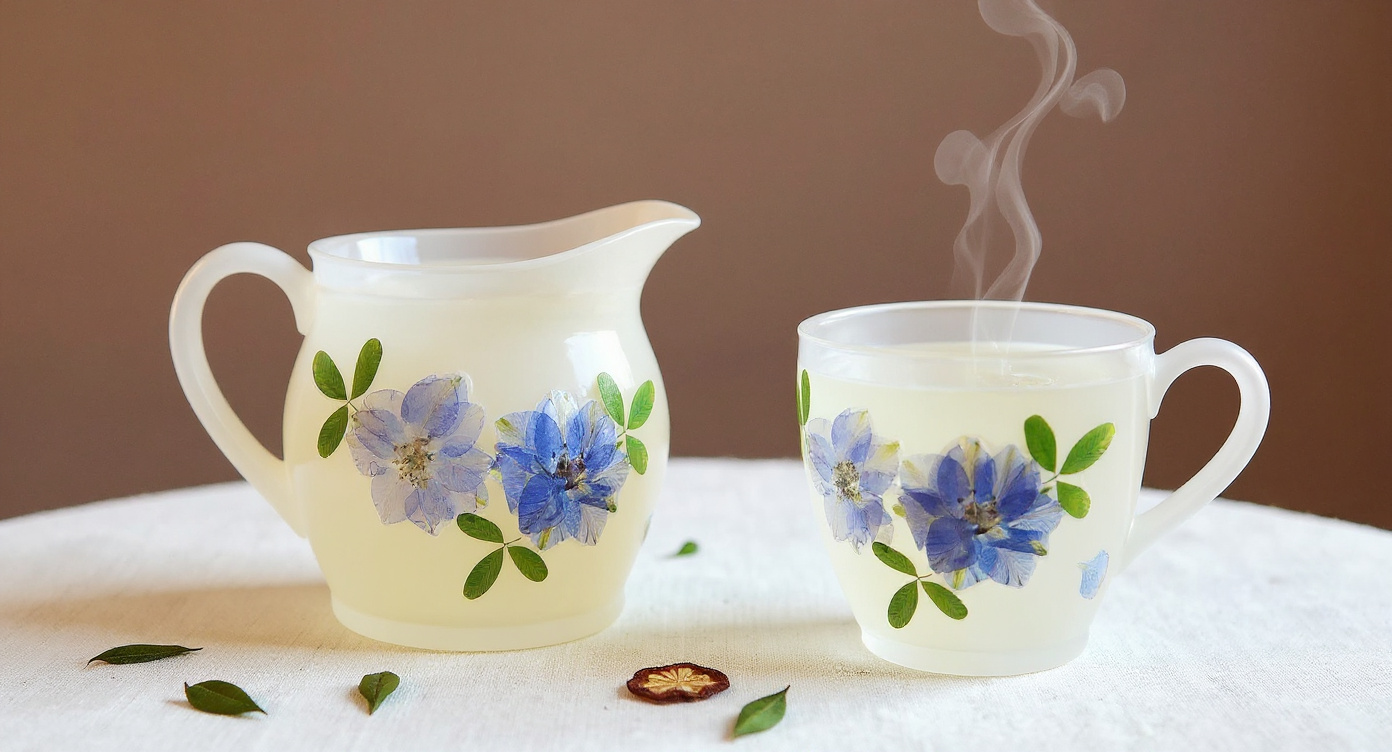
The flowers aren't a printed motif. Real dried petals and green leaves remain visible beneath the smooth sealed surface, while the soft raised floral relief adds texture to the frosted glass.
For someone who enjoys botanical craft, that material choice gives the gift a clear identity. The translucent finish also suits a quiet tea setting: warm light, a minimal linen background, and enough visual space for the vessels rather than an elaborate display.
The craft perspective here starts with one hands-on milestone: when I sealed my first batch of preserved blooms into a heat-resistant glass cup. That experience is not a laboratory test or evidence of this set's food-contact compliance. A founder's familiarity with botanical glassware shouldn't replace documentation for the finished product.
Handcraft has value. It also has limits. A recipient who dislikes delicate handling may get more use from a less decorated brewer, even if the floral set makes the more memorable gift.
What “eco resin” does, and doesn't, establish
“Eco resin” is a material description, not a food-safety certificate or a complete environmental assessment. Ask what the term means for the formulation used on this set.The FDA's food-contact substances guidance explains the regulatory framework for substances used in food-contact materials. It provides context, not approval for this product. Relevant documentation must address the actual material and its intended contact conditions.
The location of the resin matters. An exterior decorative surface raises different questions from a coating inside the vessel or along a drinking edge. The product description doesn't establish that location in enough detail to settle the issue.
Ask for a surface diagram or clear photographs, supported by written specifications. Don't infer placement from the floral appearance.
Environmental wording needs equal care. The FTC Green Guides caution against broad, unqualified environmental benefit claims and explain the need for substantiation. Preserved flowers, handcraft, and a resin described as eco don't establish the impact of the complete object.
Useful evidence would explain the resin's claimed environmental advantage, the scope of that claim, and any disposal limitations. Glass combined with a resin finish shouldn't be assumed suitable for a local glass-recycling stream without checking its acceptance rules.
The honest judgement: if food-contact suitability and hot-use limits cannot be confirmed, this set isn't a sound choice for someone expecting unrestricted hot-tea brewing. Its supplied appearance and making time don't resolve those missing specifications.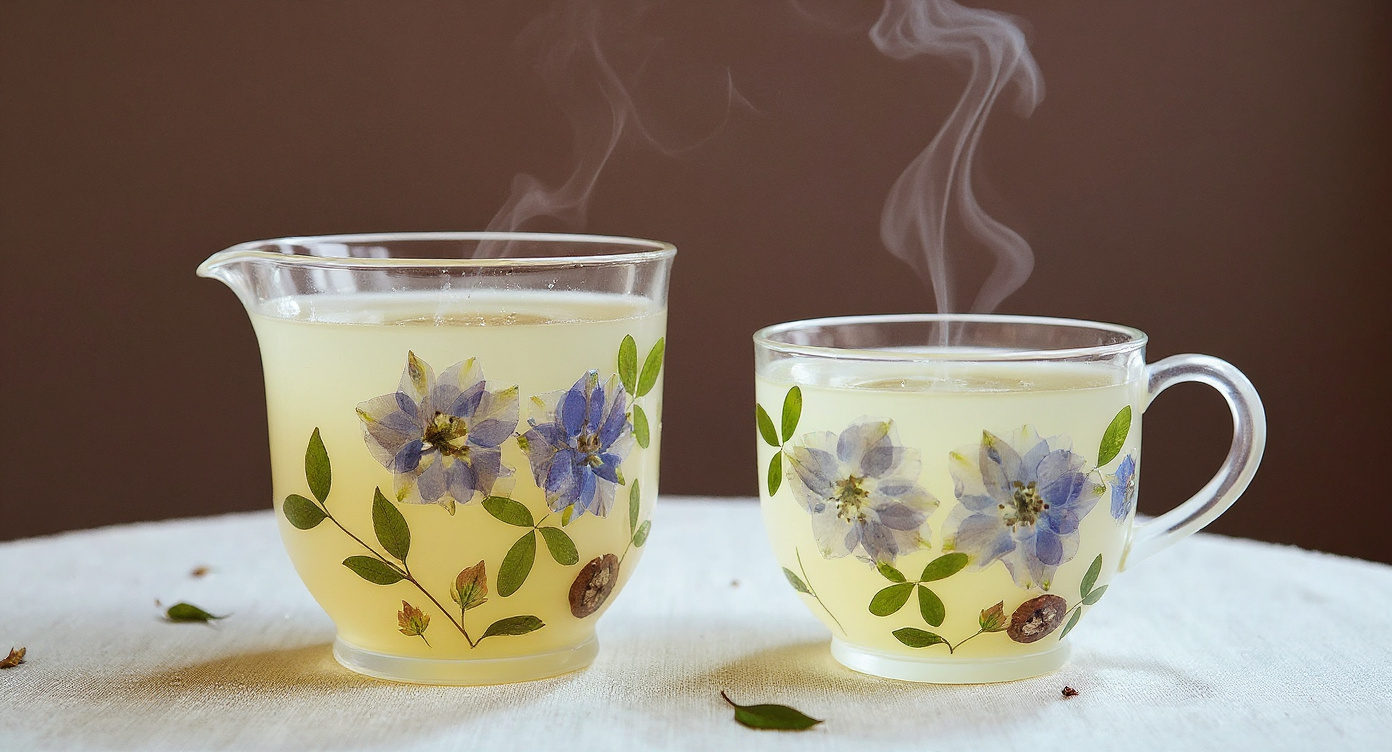
Match the gaiwan and fair cup to the recipient
A gaiwan is a lidded brewing bowl. Its lid helps retain tea leaves during pouring, as described in the reference entry on gaiwans. The fair cup receives the brewed tea before serving, helping combine the infusion before it is divided among drinking cups.
These are brewing vessels. Not a confirmed complete serving set.
The named components don't establish that drinking cups, a saucer, or other accessories are included. A gift can look complete in a styled photograph while still requiring additional equipment.
Use this recipient-fit check before ordering:
1. Identify the brewing habit. Someone who wants to practise lid-controlled pouring may appreciate a gaiwan. Someone who wants a quick drink without handling a hot bowl may prefer another brewer. 2. Check the capacity against the intended session. Ask which vessel the approximately 400ml figure describes and whether it is brim capacity or usable capacity. Don't calculate serving size from an ambiguous listing. 3. Consider the care routine. A botanical resin finish shouldn't be treated as dishwasher-safe unless the maker approves that use. This won't work if appliance cleaning is non-negotiable and approval is absent. 4. Confirm what the recipient already owns. Establish whether drinking cups or other essentials are needed, then check the package inventory rather than guessing from the word “set.”
Tea practice varies across households and traditions. The overview of tea culture offers useful context, but the recipient's existing habits are the better guide to a successful gift.
Compare the floral set without inventing specifications
There isn't a universal winner between decorated glass and ceramic. Compare documented construction, permitted use, and care obligations rather than assuming that one material is safer or greener.
| Gift option | Construction | Capacity | Making time | Price |
|---|---|---|---|---|
| Preserved-flower gaiwan and fair cup | Frosted translucent heat-resistant glass; real botanical decoration under eco resin | Approximately 400ml; allocation unconfirmed | 3–5 days per unit | varies by seller |
| Plain ceramic gaiwan | varies by seller | varies by seller | varies by seller | varies by seller |
| Undecorated glass brewing set | varies by seller | varies by seller | varies by seller | varies by seller |
| Artisan ceramic teaware | varies by seller | varies by seller | varies by seller | varies by seller |
Unknown cells stay unknown. Without individual listings, there is no defensible price ranking, measured durability comparison, or claim that an alternative permits dishwasher use.
A less decorative set can be the better gift if it comes with clear hot-use and cleaning documentation that the floral option lacks. That's a practical judgement, not a verdict against botanical craft.
Before ordering: obtain answers that travel with the gift
A useful eco-friendly tea gift includes usable information, not just attractive packaging. Save the seller's answers and pass them to the recipient.
1. Request a complete contents list. Confirm the gaiwan, lid, fair cup, and any serving accessories. Ask whether individual replacement components are available. 2. Establish resin placement and intended contact. Request documentation relevant to tea, lips, water temperature, and the actual finished surfaces. A generic resin brochure may not answer these questions. 3. Get operating and cleaning instructions. Ask about temperature limits, sudden temperature changes, soaking, detergents, dishwasher use, and microwave use. Heat-resistant glass alone doesn't answer them. 4. Separate production from delivery. The stated 3–5 days per unit concerns handcraft. Confirm dispatch timing and transit estimates before planning an occasion around arrival. 5. Check packaging and damage terms. Ask how separate components are cushioned, when damage must be reported, and whether the remedy is replacement or refund. 6. Verify the complete cost. Use the current checkout price, shipping charge, and applicable taxes. No verified selling price is supplied here.
For a direct-to-recipient order, arrange for the parcel to be inspected within the seller's reporting window. Leaving it unopened until the occasion can complicate a damage claim.
Protection before presentation.
Care guidance must follow the finished object
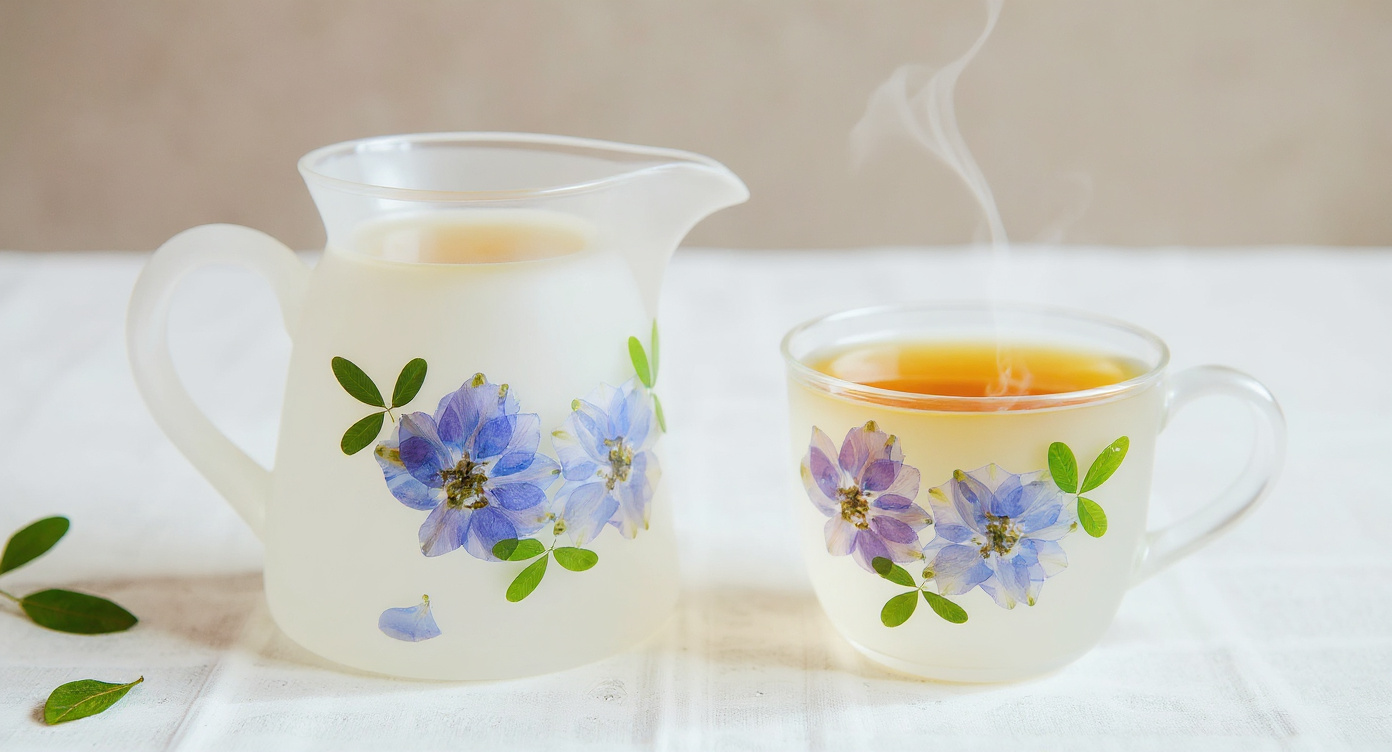
The resin surface encloses the botanical decoration. That construction doesn't establish resistance to prolonged soaking, abrasive cleaners, or repeated exposure to heat.
Ask whether gentle handwashing with a soft cloth and mild detergent is approved. Until the maker supplies instructions, don't present that suggestion as a verified care protocol or assume that dishwasher cycles and microwave heating are permitted.
Likewise, no numerical water-temperature recommendation can be justified from the supplied description. Ask for limits instead of borrowing instructions from undecorated glassware.
During cleaning, look for cracks, chipped edges, lifting coating, or persistent tackiness. If these appear, stop using the affected vessel for tea and seek the maker's guidance. Don't attempt a home resin repair on a food-contact surface.
The pressed flower craft reference explains the botanical craft tradition. It does not establish the safety, service life, or cleaning tolerance of this resin-decorated set.
FAQ
What makes an eco friendly teaware gift set worth buying?
Documented suitability, a good fit with the recipient's brewing habits, and care requirements they can follow. Environmental claims need evidence about the actual product. Botanical decoration and handcraft add gift appeal, but don't establish a lower environmental impact.
What does this floral teaware set include?
The supplied description names a gaiwan and fair cup. It doesn't confirm a complete inventory of drinking cups, a saucer, or other accessories. Request a written contents list before ordering.
Is the set made with real flowers?
Yes. Its defining construction uses visible real dried flower petals and green leaves embedded beneath a smooth eco-resin surface, with soft raised floral relief on frosted translucent glass. The decoration isn't described as a printed floral pattern.
How large is the gaiwan?
The listing states approximately 400ml, but the supplied information doesn't identify which vessel that figure describes or whether it is brim capacity. A confirmed gaiwan working capacity is therefore unavailable.
Does eco resin mean the set is food-safe?
No. The term doesn't establish suitability for contact with tea, lips, or hot water. Confirm the resin formulation, its placement, and documentation covering the intended use of the finished vessel.
Can this set go in a dishwasher or microwave?
Neither use is confirmed in the supplied information. Heat-resistant glass isn't blanket appliance approval, particularly when a resin finish is present. Obtain maker-approved instructions before using either appliance.
How long does the set take to make?
The stated handcraft time is 3–5 days per unit. That isn't a confirmed dispatch or delivery timeframe. Ask how the making schedule applies to the ordered set and when it is expected to arrive.
Is a gaiwan suitable for a beginner?
It can suit someone who wants to learn lid-controlled pouring. Handling a hot brewing bowl takes practice, and the unconfirmed working capacity prevents a precise judgement about this model's handling. It isn't the strongest choice for every beginner.
Choose the gift for use, not just appearance
The Pampasroom preserved-flower set has a distinct appeal: frosted translucent glass, visible petals and leaves, and a softly textured botanical surface suited to an earthy tea setting. Its approximately 400ml description and 3–5-day handcraft time give buyers concrete starting points.
The remaining questions are practical. Confirm capacity, food-contact suitability, temperature limits, complete contents, and care before choosing it for hot tea. If those answers aren't available, don't let the word “eco” stand in for them.
See the handmade preserved-flower gaiwan and fair cup set, then use the ordering checklist to decide whether it fits the recipient's routine.