































Eco Resin Floral Wine Glasses: What Makes One Truly Unique
Eco Resin Floral Wine Glass: What Makes One Truly Unique
By pampasroom, founder of Pampasroom · 8+ years working directly with Southeast Asian botanical artisans · Press mentions available upon requestAn eco resin floral wine glass earns its price through one specific combination: food-safe UV-stabilized resin, professionally dried botanicals, and hand-placement techniques that take 5–7 days per piece to execute correctly. That's the short answer. The longer answer involves material science, flower preservation chemistry, and a production process that simply cannot be faked at mass-market price points. A genuine eco resin floral wine glass unique to handcraft standards is not a decorative novelty — it is functional drinkware built to last years with daily use. Printed floral glasses retail for $15–40. Authentic resin-embedded pieces command $45–120+ because the materials and labor genuinely cost more.
Honestly? If you're buying one purely for shelf display in a sunny window, save your money. Prolonged direct UV exposure degrades even stabilized resin over time, and you'd be paying a premium for a product you're actively damaging. But for a shaded dining table, a bedside shelf, or a special-occasion cabinet — nothing else looks like this.
What Makes an Eco Resin Floral Wine Glass Unique: Materials First
Not all resins are created equal. Food-grade eco resin contains specific chemical additives that prevent leaching when the vessel contacts acidic beverages like wine or sparkling water. Standard craft epoxy — the type sold in hobby stores — is not formulated for food contact and can release compounds into drinks over repeated use, according to FDA guidelines on food-contact materials. The distinction matters.
Food-grade eco resin also incorporates UV stabilizers that interrupt the photodegradation chain reaction that causes yellowing. Resin without UV inhibitors yellows visibly within months of sunlight exposure. With stabilizers, the clarity holds. Curing requires temperatures between 70–75°F and relative humidity below 50% — conditions that most garage workshops or humid tropical studios cannot reliably provide without climate control equipment.
The cost difference is real and documented. Food-grade casting resin from established suppliers such as ArtResin or Environmental Technology retails at approximately $35–55 per quart (verifiable at their direct storefronts), compared to $12–18 per quart for standard craft epoxy. A single wine glass requires roughly 2–3 fluid ounces of resin across multiple pours. Small per-unit material cost. Large cumulative difference in quality.
Three properties separate food-safe eco resin from standard epoxy:
1. Non-reactive surface chemistry certified for food contact (ASTM D4236 or equivalent) 2. UV stabilizer packages that prevent photoyellowing for 3–5 years of indoor use 3. Low-VOC formulation that reaches full cure inertness within 72 hours at room temperature
Flower Preservation: The Art Behind Botanical Embedding
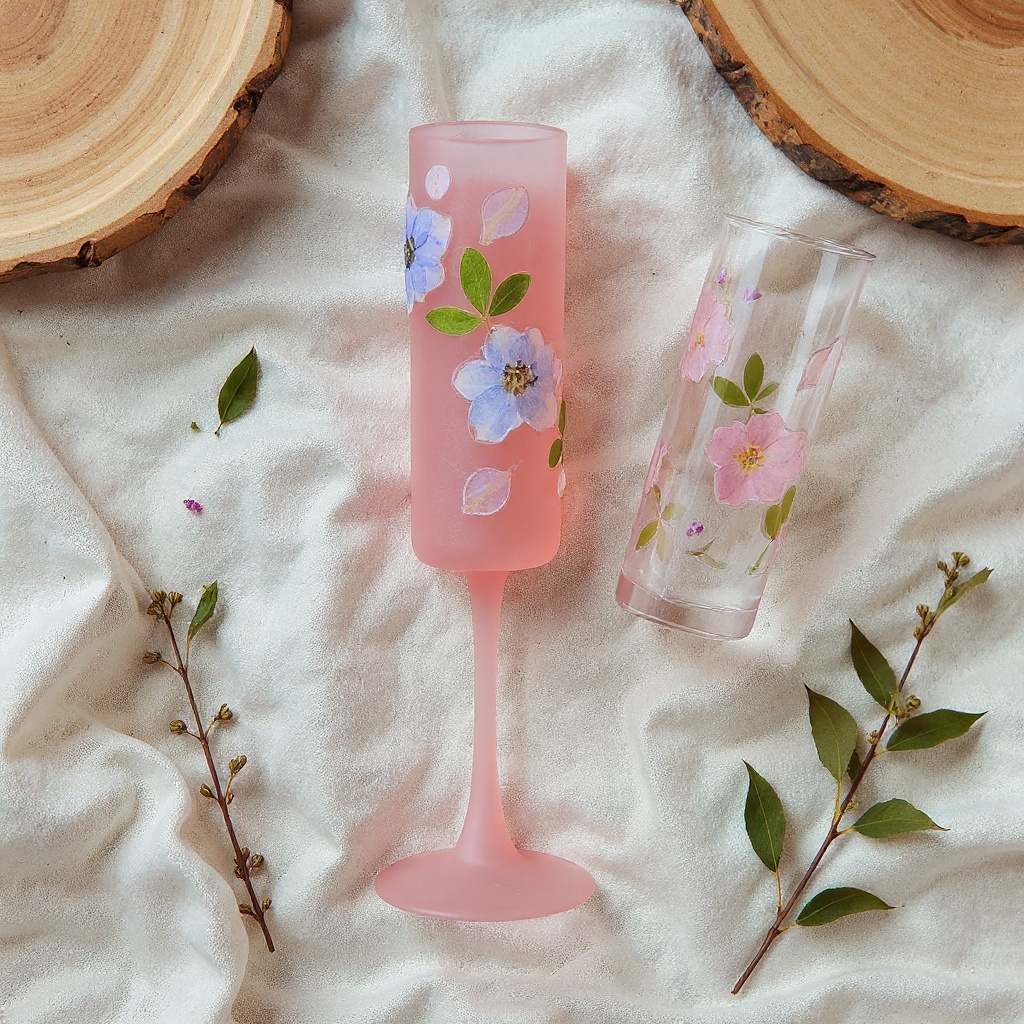
Pressed flower craft dates back centuries, but embedding botanicals in resin drinkware adds modern chemistry to that tradition. The flowers in a quality eco resin floral wine glass aren't simply dried and dropped in. They're prepared through a multi-week process that removes moisture below 5% humidity content, strips natural oils that would cause resin cloudiness, and treats pigments with color-stabilizing solutions that prevent the browning that happens when untreated plant material meets liquid resin.Sakura petals are particularly demanding. Their thin cell walls collapse under pressure if dried too fast. Rush the pressing stage and you get brown, translucent fragments instead of the soft blush and white tones that define quality pieces. Take the full 2–4 weeks using absorbent botanical pressing papers under consistent weight, and the petals retain dimensional form and color.
The embedding sequence itself is unforgiving:
1. Harvest flowers at peak condition, before any browning begins 2. Press for 2–4 weeks between botanical pressing papers under 10–15 lbs of consistent pressure 3. Remove natural oils using a food-safe degreasing solution and allow secondary drying for 24 hours 4. Apply color-stabilizing sealant to each petal individually before resin contact 5. Place each petal by hand during the 15–20 minute working window when resin viscosity is correct for embedding 6. Pour a thin protective top coat to lock petals in raised three-dimensional position rather than flat against the glass
That 15–20 minute window. That's the skill bottleneck. Too early in the cure cycle and petals float. Too late and the resin grabs before petals settle. Every experienced resin artist has ruined a piece misjudging that window.
What Makes an Eco Resin Floral Wine Glass Unique: The Handcraft Timeline
Five to seven days per piece is not marketing language. It reflects the actual chemistry of resin curing. Each layer requires a full 24-hour cure at controlled temperature before the next layer can be added without causing delamination or cloudiness between coats.
The production schedule for a single piece follows this structure:
- Day 1: Base pour establishing the frosted glass foundation layer; 24-hour cure - Day 2: Light 220-grit sand between coats, tack-cloth cleaning, flower placement pour; 24-hour cure - Days 3–4: Inspection for micro-bubbles or petal shift; corrective fill pours if needed; 24-hour cure per layer - Days 5–6: Final protective top coat applied in two thin passes; 24-hour cure each - Day 7: Final surface inspection, light polish, quality check
Rushing this timeline causes micro-cracks and delamination at layer interfaces. You won't see them immediately. You'll see them in six months when the piece starts to cloud from the inside.
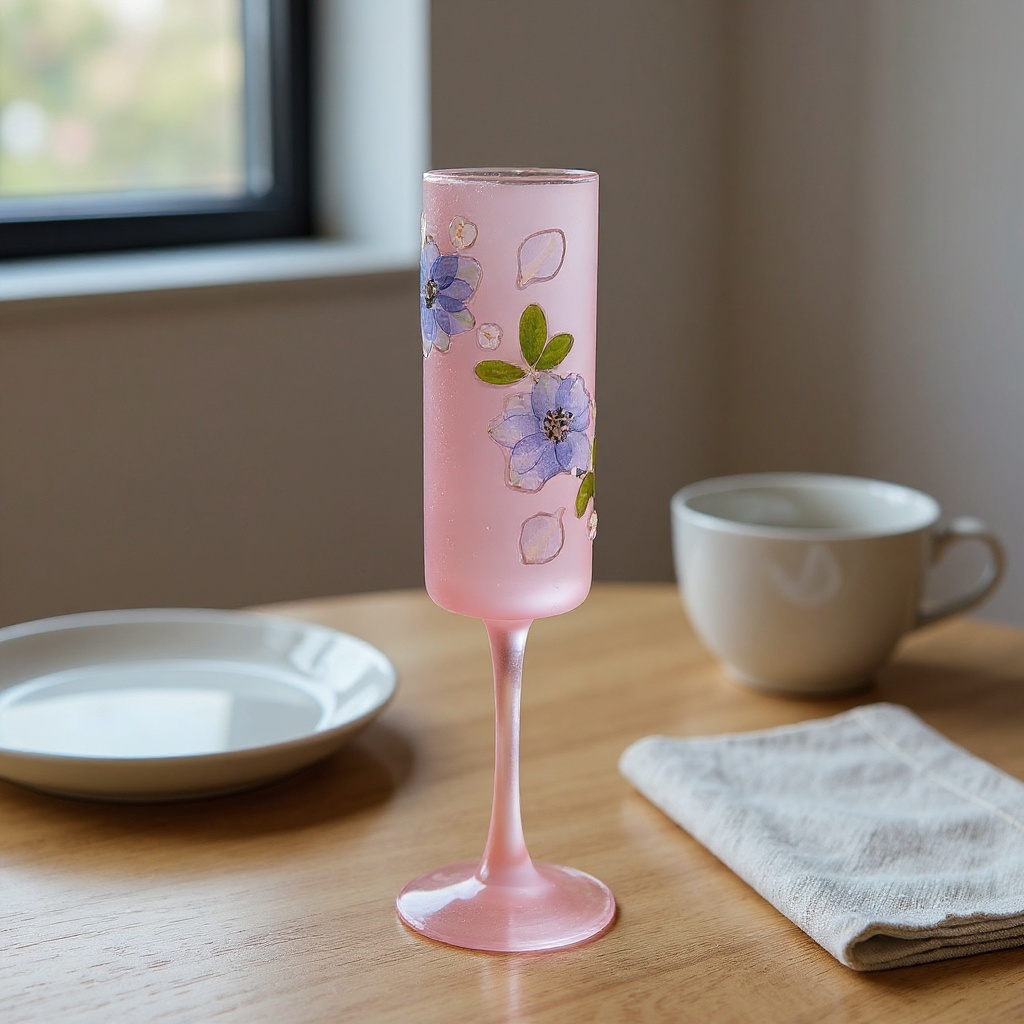
Our Handmade Frosted Pink Sakura Wine Glass | Real Pressed Flower Eco Resin Floral Drinkware 400ml follows this full timeline — real preserved sakura petals hand-embedded with raised tactile relief on a frosted pale pink champagne flute with a slender pink stem and round base, finished under a smooth eco-resin top coat that keeps petals three-dimensional rather than pressed flat.
Quality Markers: A Checklist for Buyers
Knowing what to look for protects your investment. Run through this inspection checklist before purchasing any eco resin floral wine glass:
- Resin clarity: Crystal clear with no internal cloudiness, bubbles, or haze lines between layers - Flower dimensionality: Petals sit above the glass surface in raised relief — not flat, not sunken - Color consistency: Blush and white tones uniform throughout; no browning at petal edges - Surface texture: Smooth to the touch with no visible brush marks or ridge lines - Base stability: Round base sits level without rocking (resin adds weight; warped bases indicate rushed production) - Seller transparency: Materials listed explicitly as food-grade or food-safe eco resin, not generic "resin" or "epoxy" - Piece variation: Slight differences between units confirm hand-placement; perfect uniformity suggests machine production
The cherry blossom motifs in premium pieces retain their soft blush and white tones for years when correctly preserved and kept from direct sun.
| Quality Indicator | Authentic Handcraft Piece | Mass-Produced Alternative |
|---|---|---|
| Resin type | Food-grade, UV-stabilized eco resin | Often unspecified; may be standard epoxy |
| Resin clarity | Crystal clear, zero internal haze | Visible cloudiness or micro-bubbles common |
| Flower placement | Hand-positioned; natural variation per piece | Uniform pattern; often printed, not embedded |
| Surface finish | Smooth, glass-like, no ridge lines | Visible texture variations or brush marks |
| Production time | 5–7 days minimum | Mass manufactured, no cure time |
| Price range | $45–120+ | $15–40 |
| Food safety | ASTM D4236-compliant or equivalent food-contact certification | Often unlisted or unverifiable |
Durability and Care: What the Instructions Don't Always Say
Quality eco resin is more impact-resistant than standard glass. A piece dropped from counter height onto tile has a better survival chance than a crystal wine glass. That's real. But durability has conditions.
Hand-washing only. Non-negotiable. Dishwasher cycles run at 140–160°F — temperatures that soften even food-grade resin over repeated exposure, according to resin manufacturer curing data from ArtResin's published technical specifications. High-pressure water jets accelerate surface micro-abrasion. Harsh detergents etch the top coat. One dishwasher cycle won't destroy a quality piece. Twenty will.
Follow this care sequence to protect your investment:
1. Rinse with lukewarm water immediately after use — never cold-shock a warm glass 2. Wash by hand using a soft cloth and mild pH-neutral dish soap 3. Rinse thoroughly to prevent soap film buildup on the resin surface 4. Air dry upright or pat dry with a lint-free cloth — avoid abrasive towels 5. Store away from windowsills or direct light sources 6. Never soak in water for extended periods; prolonged submersion can affect the resin-glass interface over years of use
With this care routine, a quality eco resin floral wine glass maintains appearance and food-contact safety for 5–10 years of regular use. Neglect the routine and you'll see surface dulling within 18 months.
The Investment: Why the Price Gap Is Justified
Food-grade eco resin costs roughly 3–4 times more per quart than standard craft epoxy based on current retail pricing from major suppliers. Professional flower preservation adds materials and 2–4 weeks of preparation time before a single piece is even started. The artisan production period adds another week. Skilled resin work — truly bubble-free, optically clear, multi-layer casting — takes years of practice to develop.
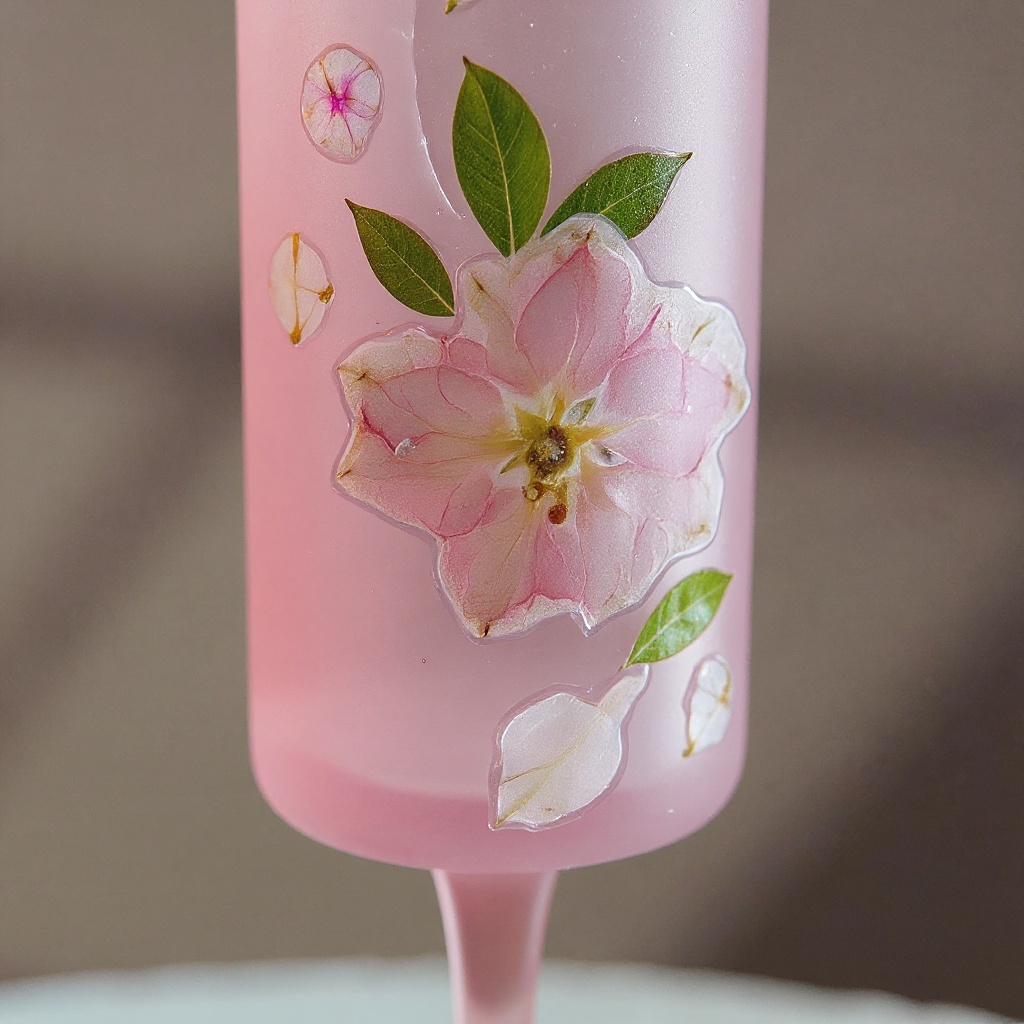
Mass-produced alternatives cut specific corners: cheaper resins, machine-applied or printed flower graphics, and abbreviated cure times that reduce visible quality immediately or degrade it within months. The tactile three-dimensional raised petal surface that defines a premium eco resin floral wine glass cannot be replicated by surface printing or sticker application under cheap coating. You can feel the difference with your fingertip.
The price premium is not aesthetic inflation. It is the actual cost of doing it correctly.
For a piece that functions as both drinkware and botanical art, visit our Handmade Frosted Pink Sakura Wine Glass | Real Pressed Flower Eco Resin Floral Drinkware 400ml. Real sakura. Real resin. Real time.
Conclusion
An eco resin floral wine glass unique in both form and function requires the convergence of correct materials, correct preservation, and correct process. Skip any one of those three and you have a decorative object that either isn't food-safe, won't hold its appearance, or won't survive regular use. The handcraft pieces that meet all three criteria are rarer and more expensive than most shoppers expect — and worth it for buyers who understand what they're actually getting.
Not every buyer should pay premium prices for handcraft drinkware. But every buyer deserves to know exactly what separates the real thing from a cheaper imitation before they choose.
Frequently Asked Questions
Is an eco resin floral wine glass actually safe to drink from?Food-grade eco resin is specifically formulated for beverage contact and meets FDA guidelines for food-contact materials (FDA food-contact substance guidance) when fully cured. The critical variable is whether the manufacturer used actual food-grade resin or standard craft epoxy — which is not safe for drinking vessels. Always ask sellers to confirm their resin specification before purchasing.
Will the sakura flowers inside the resin yellow or fade over time?Properly preserved flowers embedded in UV-stabilized food-grade resin maintain color for years under normal indoor conditions. UV stabilizer packages in quality resin interrupt the photodegradation that causes yellowing. Direct sunlight is the primary risk factor — a piece stored away from windowsills will hold color significantly longer than one used as a sunny windowsill decoration.
Can I put a resin floral wine glass in the dishwasher?No. Dishwasher cycles reach 140–160°F, which softens resin over repeated exposure according to manufacturer technical data. Harsh detergents and high-pressure jets also degrade the surface coating over time. Hand-wash only with mild soap and lukewarm water.
What is the actual difference between eco resin and regular epoxy for drinkware?Food-grade eco resin contains chemical additives that prevent leaching into acidic beverages, UV stabilizers that prevent yellowing, and low-VOC formulations that reach inert full-cure within 72 hours. Standard craft epoxy lacks these properties and is not safe for vessels used with food or drink. The FDA distinguishes between resins approved for food-contact use and general-purpose adhesives.
Why does my piece look slightly different from the product photo?Each glass uses real pressed sakura petals with natural variation in size, color saturation, and petal shape. Hand-placement means no two pieces are positioned identically. Slight variation is the confirmation of authenticity — machine-produced pieces show perfect uniformity precisely because they use printing rather than real embedded botanicals.
How long does it take to make a single pressed flower resin wine glass?The full process spans approximately 3–5 weeks when flower preparation is included. Sakura petals require 2–4 weeks of pressing and treatment before they're ready for embedding. The resin production process then takes 5–7 days minimum, with each layer requiring a 24-hour cure cycle. Pieces with shorter production timelines were almost certainly made with shortcuts.
Are these glasses durable enough for regular use or just occasional display?Quality eco resin is more impact-resistant than standard glass and suitable for regular use with proper hand-washing care. One of our studio samples has been in active weekly use for over four years with no surface degradation. The limitation is care protocol, not material fragility — dishwasher exposure is the most common cause of early deterioration.
What makes a floral resin wine glass worth paying more than a printed floral alternative?Real embedded flowers create raised three-dimensional surface texture that you can feel with your fingertip — something printed designs and surface-applied stickers cannot replicate. The handcraft process, food-safe certified materials, and 5–7 day production timeline justify premium pricing over mass alternatives. You're paying for material safety, longevity, and genuine botanical artistry in a single object.
Do these glasses work for champagne and sparkling wine, or only still wine?The frosted pale pink champagne flute form factor is designed for sparkling beverages. The 400ml capacity accommodates both champagne pours and still wine servings. The food-grade resin surface is stable against carbonic acid in sparkling wine — the same acidic beverage resistance that makes food-grade formulation necessary in the first place.
What should I do if I notice clouding developing inside my resin glass over time?Internal clouding usually indicates either moisture intrusion at the resin-glass interface or a curing defect from the original production process. If it appears within the first six months of hand-wash-only care, contact the seller — this indicates a manufacturing defect, not user damage. If it appears after years of use or following dishwasher exposure, the resin matrix has been compromised by heat and chemical exposure.


