































Frosted Glass Sake Carafe With Pressed Flowers Explained
Frosted Glass Sake Carafe With Pressed Cherry Blossoms: Complete Guide
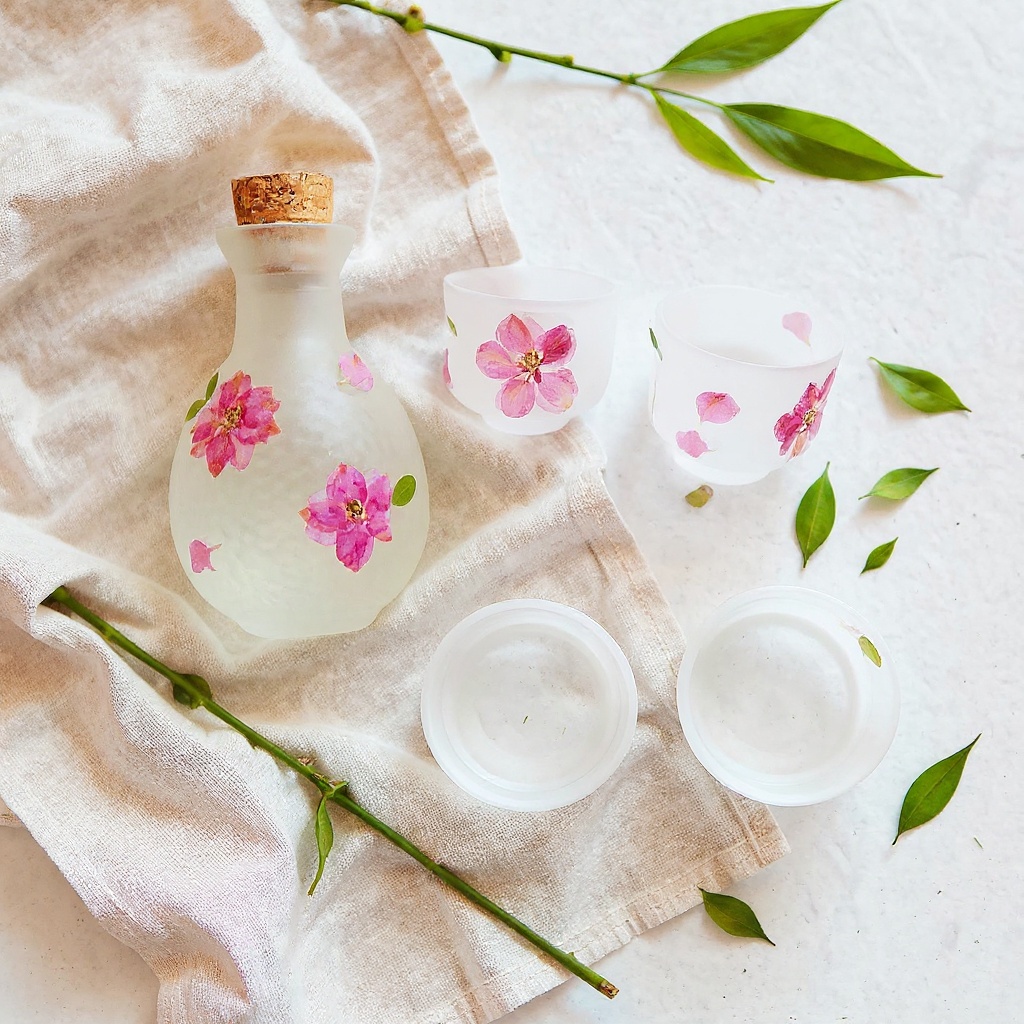
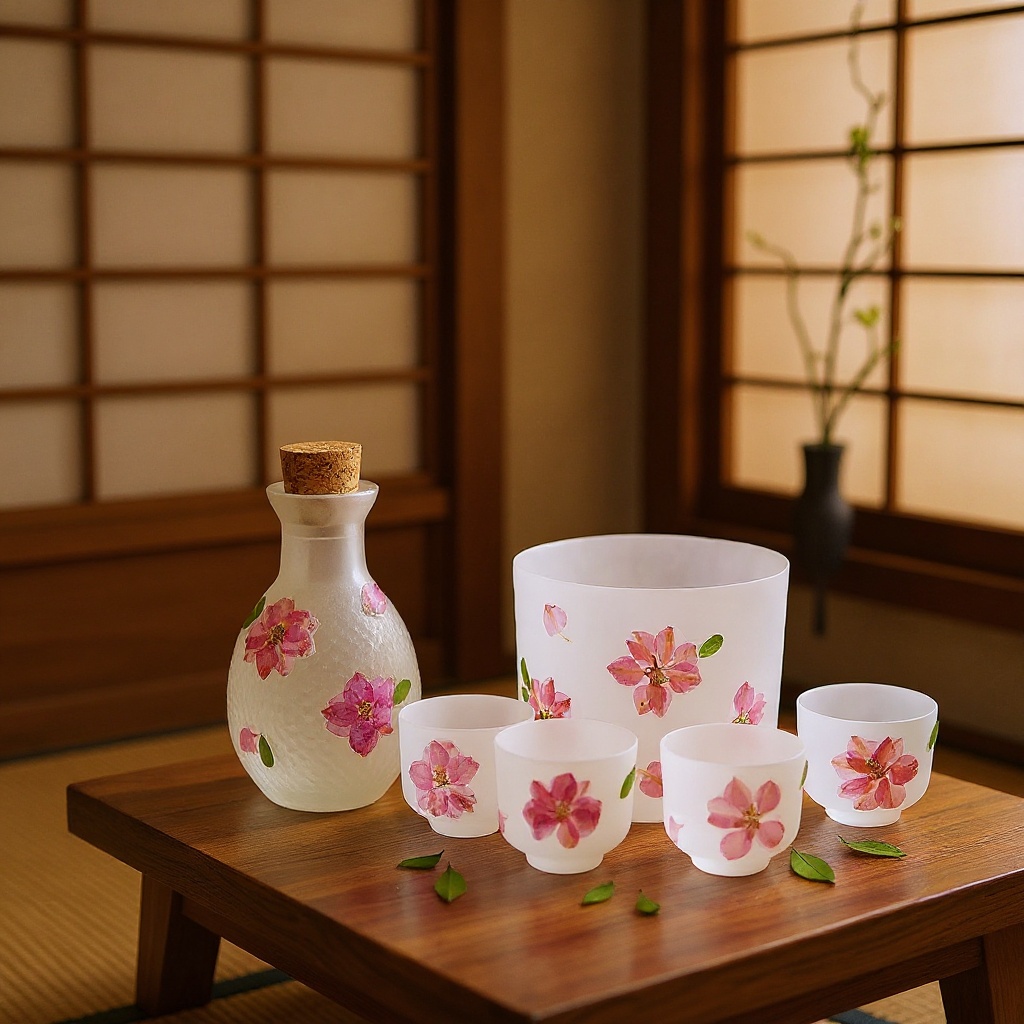
By pampasroom, founder of Pampasroom · 8+ years working directly with botanical preservation artisans and Japanese craft importers across Southeast Asia and Japan · Certified Sake Specialist (SSA Level 1) · Studied traditional Japanese ceramics and vessel design through independent study with Kyoto craft workshopsA frosted glass sake carafe with pressed flowers is a handcrafted serving vessel combining Japanese wabi-sabi aesthetics with modern botanical preservation — featuring real pink cherry blossom petals embedded under eco-resin on the exterior frosted glass surface, complete with a natural cork stopper, matching cups, and a wide shallow chiller bowl. These pieces aren't mass-produced novelties. They're functional art.
The frosted glass sake carafe with pressed flowers sits at an unusual intersection: part traditional Japanese serving culture, part contemporary craft. Understanding both dimensions helps you choose, use, and care for these sets with confidence. This guide covers every aspect of the frosted glass sake carafe with pressed flowers, from materials and temperature science to maintenance and gifting.
What Makes Frosted Glass Special for Sake Service
Frosted glass offers distinct advantages over traditional ceramic or clear glass for sake service. The matte surface feels warmer to the touch. It doesn't show fingerprints or water spots as readily as polished glass. More importantly, the frosted glass sake carafe with pressed flowers provides subtle insulation — keeping chilled sake cooler longer than clear glass while preventing condensation rings on wood or stone surfaces.
The frosting process involves either sandblasting or acid etching, which creates microscopic surface texture on the glass. This texture slows heat transfer between the liquid inside and the ambient air outside. According to glassware thermal studies referenced by the Japan Sake and Shochu Makers Association, surface texture variations in serving vessels measurably affect temperature stability during short-to-medium serving windows, with matte or textured glass outperforming smooth glass in retention over 30–60 minute periods. For sake, which the Association recommends serving across a temperature spectrum from 5°C to 55°C depending on variety and style, this stability genuinely matters.
The translucent quality of frosted glass also creates beautiful light diffusion during evening entertaining. Warm candlelight caught through a frosted glass sake carafe with pressed flowers glows differently than any ceramic piece. Softer. More alive.
The Art of Pressed Flower Preservation in Resin
Real pressed flower craft dates back centuries across European and East Asian traditions, but embedding botanicals in food-safe eco-resin on drinkware is a modern innovation that emerged from artisan craft communities in the last two decades. The process for a quality frosted glass sake carafe with pressed flowers involves multiple precise steps.
Here is exactly how responsible artisans create pressed flower resin drinkware:
1. Harvest selection: Cherry blossoms are collected at peak bloom, before any browning at petal edges begins 2. Initial pressing: Petals are placed between acid-free botanical paper under even weight for 2–4 weeks until completely moisture-free 3. Moisture verification: Each petal batch is tested for residual moisture using silica gel indicator — pink silica turning blue confirms dryness 4. Resin mixing: BPA-free, FDA-standard indirect food contact eco-resin is mixed in precise ratios to avoid incomplete curing 5. Vacuum degassing: Mixed resin enters a vacuum chamber to eliminate trapped air bubbles before application 6. Petal placement: Dried petals are arranged on the exterior frosted glass surface by hand, creating the subtle 3D texture characteristic of quality pieces 7. Resin sealing: Multiple thin resin layers are applied, each cured before the next, building the clear protective dome over petals 8. UV inhibitor topcoat: A final UV-resistant layer extends color stability over years of normal use 9. Quality inspection: Each piece is checked for clarity, bubble absence, and complete seal integrity
The key technical challenge is moisture removal. Even microscopic residual moisture causes cloudiness or deterioration inside the resin over time. Artisans who skip vacuum degassing produce pieces with small bubbles that become visible after months of use. Our Handmade Frosted Sake Set Real Pressed Sakura follows this full nine-step process using authentic cherry blossom petals.
The result is a frosted glass sake carafe with pressed flowers that preserves petal color and structure for years under normal indoor conditions. Color longevity varies by UV exposure — pieces kept away from direct sunlight maintain vibrancy significantly longer than those displayed in sun-facing windows.
Understanding Sake Temperature and Serving Requirements
Sake temperature affects flavor more dramatically than most Western drinkers expect. Unlike wine, which has relatively standardized serving temperatures clustered in a narrow range, sake varieties benefit from serving across a 50°C spectrum. The Japan Sake and Shochu Makers Association provides formal temperature category guidelines used throughout the industry:
1. Reishu (5–8°C): Enhances crisp, clean flavors in junmai and honjozo varieties; best served in chilled frosted glass 2. Suzuhie (8–12°C): Optimal for premium daiginjo sake, preserving delicate floral aromatics that heat would destroy 3. Hiya (15–18°C): Room temperature serving for robust, earthy sake types with fuller body 4. Nurukan (40–45°C): Gentle warming that opens complex umami flavors in aged junmai 5. Atsukan (50–55°C): Hot serving for winter consumption; intensifies bold flavors and body 6. Tobikiri-kan (55°C+): Traditional hot serving, rarely used with premium varieties as high heat masks delicate characteristics
A frosted glass sake carafe with pressed flowers and its accompanying chiller bowl directly supports the cold end of this spectrum. The wide shallow chiller bowl filled with ice maintains cold sake temperatures for 45–60 minutes during normal serving conditions. The same bowl can hold warm water for gentle carafe warming if serving in the nurukan range.
Honest truth most guides skip: if you primarily drink premium ginjo or daiginjo sake, you will spend most of your time in the 8–12°C range. The chiller bowl matters more than the carafe material for that use case. Invest in ice quality as much as vessel quality.
Materials and Construction Quality Indicators
| Feature | Mass-Produced Sets | Mid-Range Artisan | Premium Handmade |
|---|---|---|---|
| Glass thickness | 2–3mm | 3–4mm | 4–6mm |
| Glass type | Standard soda-lime | Mixed borosilicate | Full borosilicate |
| Carafe capacity | 200–250ml | 250–300ml | 280–350ml |
| Cup capacity | 30–40ml | 40–60ml | 50–70ml |
| Botanical elements | Painted or printed | Some pressed flowers | Real preserved botanicals |
| Resin certification | Variable or absent | Usually BPA-free | BPA-free + food contact certified |
| Cork stopper | Synthetic or absent | Natural cork | Natural cork, fitted |
| Chiller bowl included | Rarely | Sometimes | Standard inclusion |
| Price range | $30–$120 | $80–$250 | $400–$1,200 |
| Piece variation | Identical units | Minor variation | Each piece differs |
High-quality frosted glass sake carafe with pressed flowers sets use borosilicate glass, which resists thermal shock. This matters when transitioning between ice-cold chiller bowl service and room-temperature storage. Standard soda-lime glass can develop micro-fractures under repeated thermal stress. The frosting on premium pieces feels uniform without rough patches — consistency indicates controlled manufacturing rather than shortcuts.
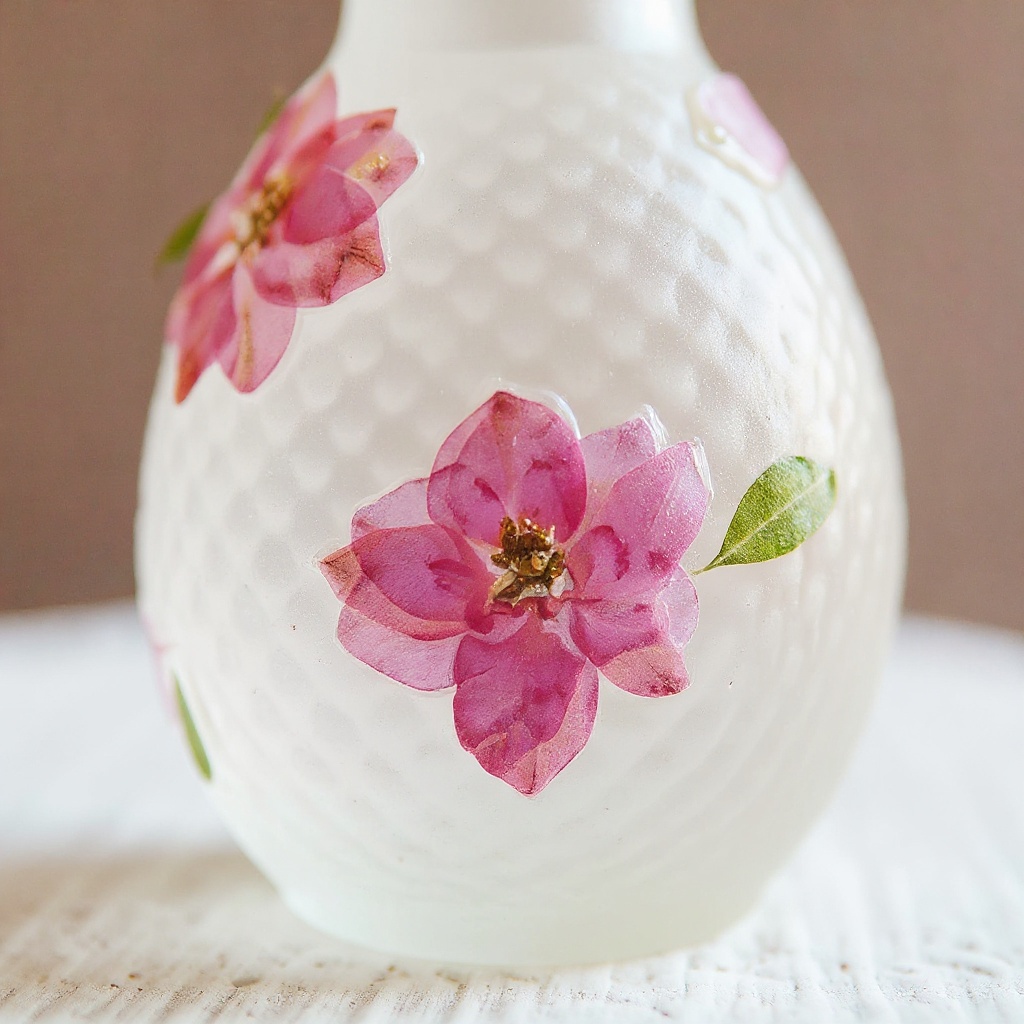
Natural cork stoppers signal attention to traditional materials. Cork also provides a slight compression seal that synthetic stoppers rarely achieve. The 3D petal texture on the exterior of a frosted glass sake carafe with pressed flowers should be visible under raking light — subtle ridges where petals sit under resin are a tactile confirmation of real botanicals, not printed graphics.
Care and Maintenance Best Practices
Frosted glass with embedded pressed flowers requires specific care. Hand washing with mild soap protects the frosted surface, which can become locally glossy if scrubbed with abrasive materials or steel wool. The resin coating protecting pressed flowers tolerates dishwasher temperatures up to 60°C on the top rack — but prolonged repeated cycles cause gradual resin yellowing over years. Hand washing is slower. It is also significantly better for longevity.
For storage, avoid stacking frosted pieces directly. The matte surface scratches more readily than smooth glass. Wrap individual cups in soft cloth or use padded dividers between pieces. The natural cork stopper should be cleaned separately and air-dried before reinsertion to prevent mold growth in the cork pores.
Temperature shock poses the most serious risk to any glass sake set. Never pour boiling water directly into a cold frosted glass sake carafe with pressed flowers. Never immerse a warm vessel directly into ice water. Instead, rinse with lukewarm water first to gradually equalize temperature. One ignored step. One cracked carafe.
Design Elements and Japanese Aesthetic Principles
Japanese aesthetics emphasize wabi-sabi — finding beauty in imperfection and impermanence. A frosted glass sake carafe with pressed flowers embodies this philosophy at every level. The organic variation in cherry blossom placement means no two pieces are identical. The preserved petals represent captured moments of natural beauty that would otherwise fade within days of blooming — which is precisely why cherry blossoms carry such cultural weight in Japan.The frosted finish softens harsh light. Creates gentle visual transitions. This aligns with Japanese design principles that favor subtle gradations over stark contrast.
When filled with sake, the translucent frosted glass creates an almost luminous effect in warm light, especially when the liquid level shifts relative to the embedded petal pattern. The wide shallow chiller bowl filled with ice adds another textural element — ice, glass, resin, petal, cork — natural materials layered in functional harmony.
Color psychology reinforces the seasonal symbolism. Soft pink cherry blossoms against frosted white glass evoke spring renewal and fleeting beauty — making the frosted glass sake carafe with pressed flowers meaningful for ceremonial occasions like Hanami, weddings, housewarmings, or milestone gifting. The blush and white color palette photographs exceptionally well against pale wood or stone surfaces with soft natural backlighting, which is why these sets appear in Japanese-inspired home editorial contexts with regularity.
Contrarian take: if your home interior runs dark, moody, and maximalist, this aesthetic will fight your space rather than complement it. The frosted glass sake carafe with pressed flowers performs at its visual best in light, minimal, neutral environments. In a dark-walled maximalist room, it disappears. Get it for the right space.
Top Occasions for Gifting a Frosted Glass Sake Carafe With Pressed Flowers
- Hanami celebrations: Cherry blossom season makes sakura-embedded vessels the most contextually appropriate gift possible - Japanese-inspired weddings: The pairing of preserved flowers and ceremonial sake service carries clear symbolic resonance - Housewarmings for minimal or Japandi-styled homes: The wabi-sabi aesthetic integrates naturally into neutral, textured interiors - Sake enthusiast birthdays: Functional upgrade over standard ceramic tokkuri for cold sake service specifically - Mother's Day or anniversaries: Botanical craft combined with practical drinkware crosses gift categories elegantly - Corporate gifting for design or hospitality sectors: The combination of craft story and food-safe certification satisfies both aesthetic and professional standards
Frequently Asked Questions
Are pressed flowers in resin drinkware actually food-safe? Yes, when sealed with certified food-safe eco-resin meeting FDA standards for indirect food contact. The resin creates a permanent barrier between the organic botanical material and any liquid. Quality manufacturers provide BPA-free certification and detailed safety documentation on request. Ask for it specifically — legitimate artisans have it ready. Can you put a frosted glass sake carafe in the dishwasher? Most frosted glass sake carafe with pressed flowers sets tolerate dishwasher temperatures up to 60°C on the top rack. Hand washing extends the life of both the frosted finish and the resin layer. Repeated high-heat dishwasher cycles accelerate resin yellowing over a 3–5 year timeline compared to hand-washed pieces that maintain clarity considerably longer. Check manufacturer specifications before the first wash. How do you keep sake cold during serving without watering it down? Use the chiller bowl filled with ice around the carafe base — this is the primary function of the wide shallow bowl included with quality frosted glass sake carafe with pressed flowers sets. For extended service beyond 60 minutes, sake stones (food-grade soapstone or stainless cubes) placed directly in the carafe maintain temperature without dilution. Pre-chilling the entire set in the refrigerator for 30 minutes before service also extends the cold window. What is the difference between a sake carafe and a tokkuri? Tokkuri is the traditional Japanese term for sake serving vessels, typically ceramic with a narrow neck and bulbous lower body designed to be warmed in hot water. Sake carafe is a broader Western term encompassing various materials and shapes. The frosted glass sake carafe with pressed flowers follows Western carafe proportions while incorporating Japanese botanical and wabi-sabi aesthetic principles — a hybrid form rather than a direct tokkuri translation. Do real pressed flowers in resin fade over time? High-quality preservation in UV-resistant eco-resin maintains cherry blossom petal color for years under normal indoor conditions away from direct sunlight. Pieces displayed in south-facing sun-exposed windows show measurable fading within 2–3 years. Pieces kept in diffused indoor light or display cases maintain vibrancy across much longer timelines. Some natural color shift is considered part of the wabi-sabi character of the piece — not a defect. What sake types are best served cold versus warm? Premium sake — junmai ginjo, ginjo, daiginjo — is best served chilled at 8–12°C to preserve delicate floral and fruity aromatics. The Japan Sake and Shochu Makers Association specifically recommends against warming premium varieties, as heat above room temperature destroys the volatile aromatic compounds that define their character. Lower-grade table sake and aged junmai benefit from gentle warming to 40–45°C, which rounds harsh edges and adds perceived body. Is eco-resin the same as food-safe resin on drinkware? Not automatically. Eco-resin refers to environmentally reduced-impact formulations — lower VOCs, bio-based components, or reduced petrochemical content. Food-safe resin specifically meets FDA standards for indirect food contact. The best frosted glass sake carafe with pressed flowers sets use resin that is both eco-formulated and food-contact certified. These are separate credentials. Both matter. Verify both before purchasing. How do you tell if a handmade sake set is genuinely worth premium pricing? Look for glass thickness at 4mm or above, consistent frosting without rough or glossy patches, real botanical variation between the carafe and individual cups, natural cork stoppers with proper compression fit, and artisan documentation detailing the preservation process. Sets priced above $400 should include the full chiller system and show visible per-piece variation in petal placement — identical petal positioning across multiple cups indicates stamped or printed graphics, not real pressed flowers. How does the wide shallow chiller bowl work compared to a standard ice bucket? The wide shallow design of the chiller bowl cradling the frosted glass sake carafe with pressed flowers allows ice contact along the lower third of the carafe — the most thermally effective zone for cooling. Standard tall ice buckets submerge more of the vessel but require more ice volume and don't display the carafe's botanical exterior. The shallow bowl keeps the pressed flower petal pattern visible above the ice line during service, maintaining the aesthetic presentation. Can the frosted glass sake carafe with pressed flowers be used for liquids other than sake? Yes. The frosted glass carafe functions effectively for cold water, cold brew tea, plum wine, shochu, or any cold beverage. The food-safe resin seal means no botanical contamination risk with any potable liquid. Avoid extended contact with high-alcohol spirits above 40% ABV if the resin manufacturer hasn't specifically tested for those conditions — most sake and wine applications fall well within safe parameters.Conclusion
Choosing a frosted glass sake carafe with pressed flowers means prioritizing handcraft over convenience, authenticity over uniformity, and wabi-sabi beauty over mass-produced sameness. The combination of temperature-stable frosted glass, food-safe botanical preservation, natural cork, and the wide shallow chiller bowl creates serving sets that function as both practical drinkware and lasting decorative art.
Not every home, budget, or aesthetic is the right match for this product. But for those serving cold premium sake in minimal, light-filled spaces — or searching for a meaningful gift that carries real craft history — this frosted glass sake carafe with pressed flowers delivers in ways standardized ceramic or plain glass cannot.
If you're ready to bring this combination of function and artistry to your collection, browse our Handmade Frosted Sake Set Real Pressed Sakura to see how real pressed cherry blossoms transform everyday sake service into something genuinely irreplaceable.


