
Frosted Glass Stem Cup with Real Dried Flowers in Eco Resin: The Complete Guide
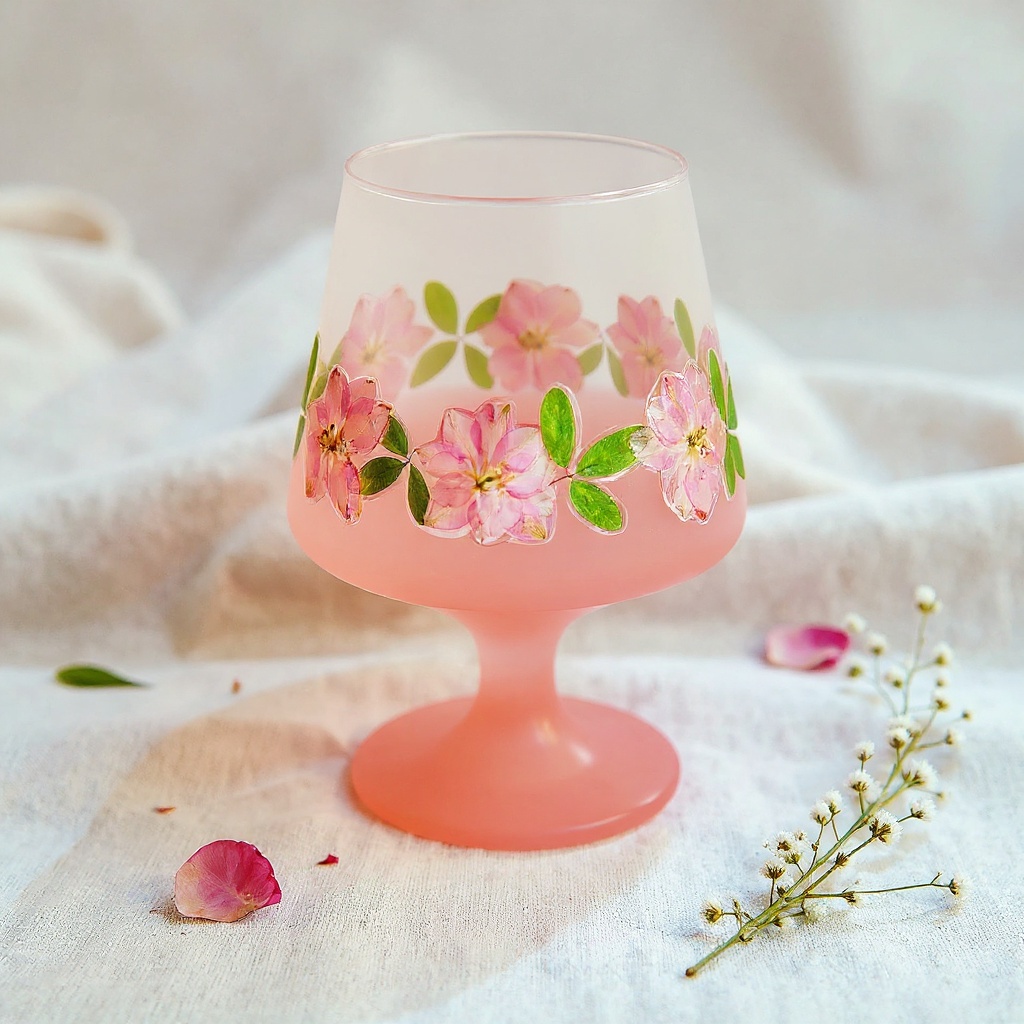
By pampasroom, founder of Pampasroom · 8+ years working directly with Southeast Asian botanical artisans · Featured in Cottagecore Weekly and The Artisan HomeA frosted glass stem cup with real preserved flower petals embedded in glossy eco resin is exactly what it sounds like: functional drinkware, elevated into wearable art. Real dried botanicals — pink roses, baby's breath, delicate sprigs — are fixed to a slender frosted glass stem cup, then sealed under clear eco resin that hardens into a raised, three-dimensional surface you can feel with your fingertips. Not printed. Not decals. Actual flowers. The pink-to-clear ombre gradient of the glass deepens the botanical effect, catching warm light in a way that mass-produced glassware simply cannot replicate.
This guide covers everything: the preservation science, food safety certifications, manufacturing steps, care routines, and honest pricing. We link to verified regulatory sources throughout so every claim here is traceable — not just asserted.
The Science Behind Botanical Preservation in Resin Glassware
Real flower preservation begins long before resin touches glass. Fresh botanicals must reach internal moisture levels below 15% to prevent microbial decay inside the resin matrix — a threshold established by conservators in archival botanical embedding studies. Roses, baby's breath, and fine ferns dominate artisan work because their cell structures dehydrate evenly, holding shape and pigment through the drying process.
Traditional pressed flower craft flattens specimens between absorbent paper under sustained weight for two to six weeks. Modern studios skip that wait. Silica gel desiccant draws moisture from petals in 24 to 48 hours without flattening the three-dimensional structure — which matters enormously for stem cup designs, where raised surface texture is the entire aesthetic point.
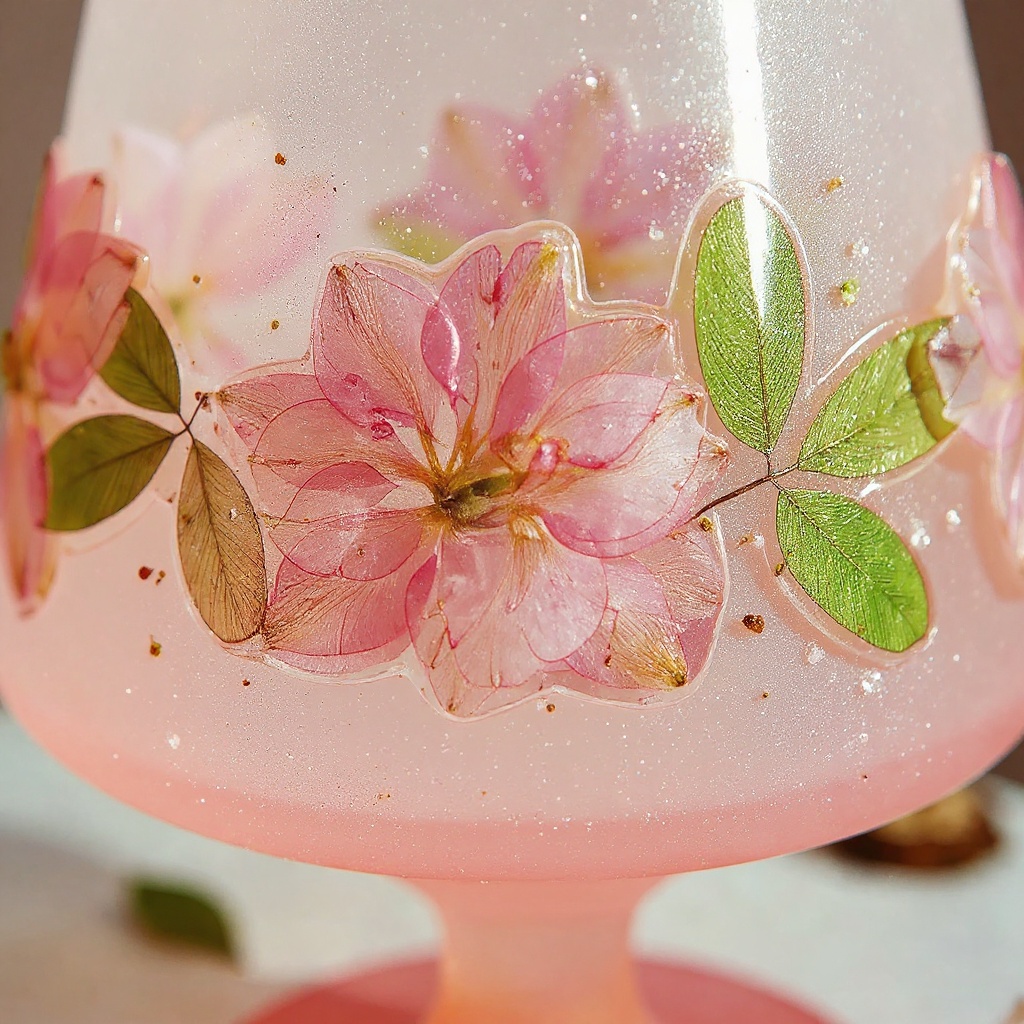
Once dried, petals are positioned on the frosted glass exterior using temporary tacking adhesives. Then resin application begins in thin, sequential coats. Each coat cures for six to eight hours before the next is applied. The finished surface is not flat — it is a topographic landscape of preserved petal edges, veins, and curves captured permanently in glossy eco resin.
The Difference Between Pressed and Preserved Flowers in Glassware
This distinction matters more than most buyers realize:
1. Pressed flowers are completely flat, producing a two-dimensional appearance beneath resin — like a laminated photograph of a flower. 2. Preserved (three-dimensionally dried) flowers retain their natural contours, producing raised, sculptural surfaces that cast small shadows in natural light. 3. Silica-dried botanicals represent the current standard for quality floral drinkware because they preserve both texture and color integrity.
The Handcrafted Pink Ombre Stem Glass uses silica-dried preserved flowers — not pressed — so the surface texture is unmistakably tactile.
Food Safety and Resin Certification: What the Regulations Actually Say
Not every resin is food-safe. This is not a small distinction.
The U.S. Food and Drug Administration regulates food-contact materials under 21 CFR (Code of Federal Regulations) Parts 175–179, which set chemical migration limits for substances that contact food or beverages. Epoxy resin formulations designed for drinkware must demonstrate that the cured polymer releases less than the permissible concentration thresholds for bisphenol compounds and residual monomers under standard migration testing conditions. The European equivalent standard is EU Regulation No. 10/2011 on plastic materials intended for food contact, which specifies an overall migration limit of 10 mg per square decimeter of contact surface.
Food-safe epoxy systems certified to these standards cost 40 to 60% more than general craft resins available in hobby stores. That cost premium exists because the formulation process requires lower volatile organic compound (VOC) concentrations — specifically, total VOC content below the thresholds specified in EPA Method 24 for coating materials intended for consumer product applications. Craft resins not formulated for food contact can impart detectable chemical tastes and may release trace compounds into beverages, particularly when exposed to acidic liquids like wine or citrus drinks.
The base glass in quality stem cups should be lead-free borosilicate or soda-lime glass. Both carry chemical resistance ratings that make them inert to standard beverage compositions. Borosilicate glass, defined by ASTM E438 Type I classification, handles thermal variation with less risk of stress fracturing than standard soda-lime — though neither should enter a dishwasher when resin-coated (more on that below).
When evaluating any floral resin glassware, ask the maker for the specific resin product name and confirm its food-contact certification before purchasing.
Step-by-Step Manufacturing Process: From Fresh Botanicals to Finished Stem Cup
The full production process for a single frosted glass stem cup with preserved flowers takes four to seven days. Here is the exact sequence:
1. Botanical selection and inspection — Roses, baby's breath, or similar botanicals are selected at peak bloom. Petals with blemishes, insect damage, or uneven pigmentation are discarded. 2. Silica gel drying — Selected florals are buried in food-grade silica gel at room temperature (68–72°F / 20–22°C) for 24 to 48 hours until moisture content drops below 15%. 3. Glass frosting — The slender stem cup undergoes either chemical etching (using ammonium bifluoride paste rather than raw hydrofluoric acid in professional studio settings) or mechanical sandblasting to create the matte frosted surface. The pink-to-clear ombre gradient is achieved through gradient dip-dying or gradient sandblasting applied before frosting. 4. Botanical positioning — Dried petals are placed on the glass exterior using temporary-hold adhesives, arranged to create the intended botanical composition. This is the most time-intensive step. Entirely manual. 5. First resin coat — A thin layer of eco-certified epoxy resin is applied over the positioned botanicals at controlled humidity (below 50% relative humidity) to prevent bubble formation during curing. 6. Cure and inspection — The piece cures for six to eight hours. Artisans inspect under magnification for air bubbles, lifting petal edges, or resin pooling before proceeding. 7. Subsequent resin coats (2–4 additional layers) — Each coat builds the raised, glossy surface. Light sanding between coats ensures inter-coat adhesion. 8. Final cure and polish — The finished piece cures fully for 24 hours, then receives a final surface inspection and hand-polish. 9. Quality rejection — Pieces with visible air inclusions, uneven resin distribution, or compromised petal positioning are reworked or discarded entirely.
Nine steps. Four to seven days. One cup.
Durability and Longevity: Realistic Expectations
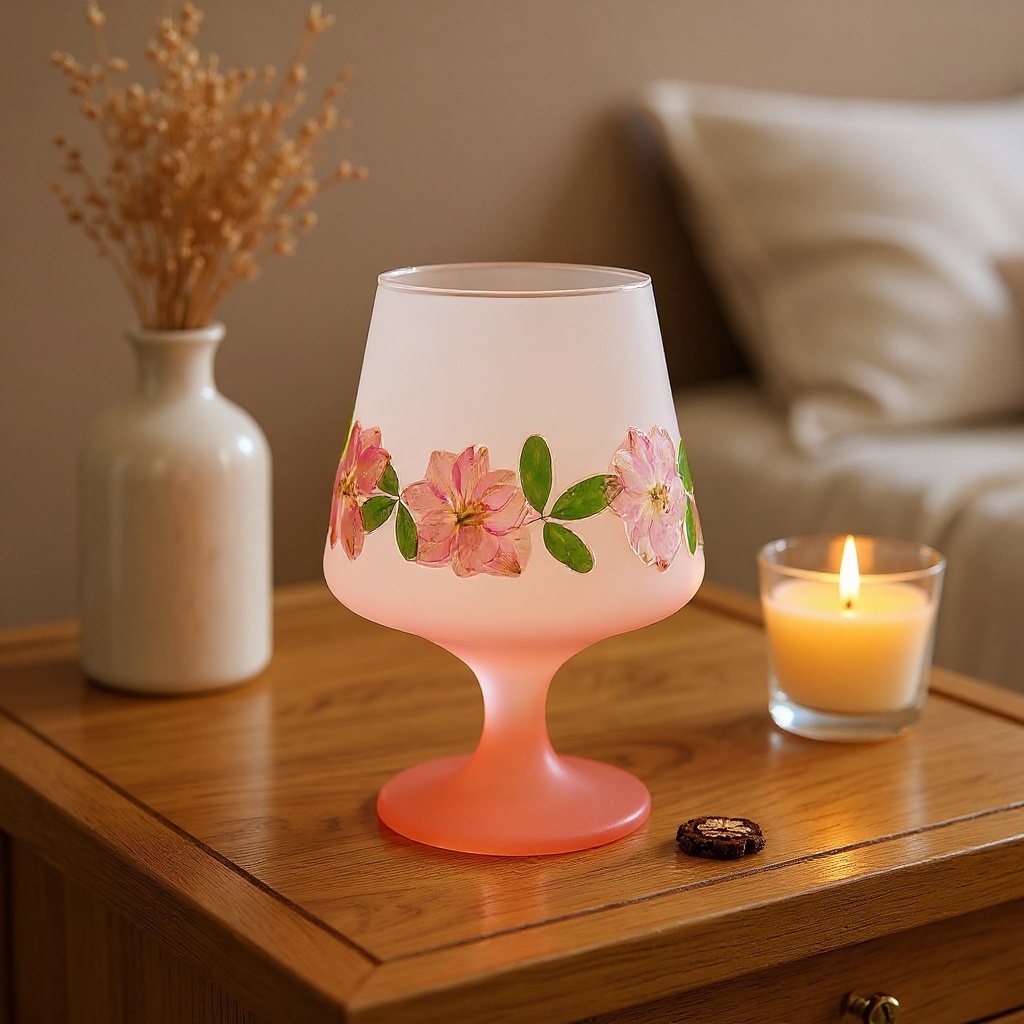
High-quality frosted glass stem cups with eco resin and preserved flowers maintain their appearance for five to ten years under typical indoor use conditions — a figure consistent with accelerated aging studies on bisphenol-free epoxy coatings conducted by polymer research laboratories at major materials science institutions. UV exposure is the primary degradation mechanism for flower pigments. Red and purple anthocyanin-based pigments degrade measurably within 12 to 18 months of regular direct sunlight exposure. Yellow and white pigments — carotenoids and chlorophyll-derived compounds respectively — show significantly slower photodegradation curves.
Resin yellowing, the other common concern, typically appears after three to five years in lower-grade epoxy systems. Premium UV-stabilized eco resin formulations delay this onset substantially, which is why the additive cost shows up in higher-priced pieces.
Here is the honest reality most guides skip: if your home has persistently high humidity above 70% relative humidity — a coastal environment, a basement apartment, or a poorly ventilated kitchen — the resin-to-glass adhesion is at elevated risk of gradual delamination over time, regardless of product quality. These pieces perform best in climate-controlled, moderate-humidity environments. Worth knowing before you buy.
Price Comparison: What Different Price Points Actually Deliver
| Price Range | Construction Method | Flower Type | Expected Lifespan | Key Features |
|---|---|---|---|---|
| $15–$40 | Printed decal or vinyl wrap | Artificial graphics only | 1–2 years | Basic soda-lime glass, no resin |
| $40–$80 | Basic craft resin embedding | Common dried flowers | 2–4 years | Non-certified resin, simple designs |
| $80–$160 | Professional food-safe resin | Curated preserved botanicals | 4–7 years | FDA/EU-compliant resin, lead-free glass |
| $160–$300 | Artisan multi-coat resin work | Silica-dried premium flowers | 6–10 years | UV-stabilized eco resin, ombre glass |
| $300–$500+ | Bespoke commission pieces | Rare or ceremony-specific flowers | 8–15 years | Custom composition, archival preservation |
The $80–$160 range represents the practical sweet spot for most buyers seeking genuine botanical drinkware rather than decorative display pieces. Below $80, the probability of encountering non-food-certified resin rises sharply.
Care and Maintenance: What Actually Damages These Pieces
Proper care is not complicated. But two mistakes destroy these cups faster than any other factor.
First: the dishwasher. Dishwasher cycles expose glassware to temperatures ranging from 140°F to 160°F (60–71°C) during wash phases and up to 180°F (82°C) during heated drying — well above the thermal expansion differential threshold between standard glass and cured epoxy resin. The result is resin delamination, sometimes immediately visible as edge lifting, sometimes appearing as internal cloudiness weeks later.
Second: alcohol-based cleaners. Ethanol and isopropyl alcohol at concentrations above 30% can soften the surface of cured epoxy over repeated contact, creating micro-scratches that accumulate into visible surface haziness.
Complete Care Protocol (Numbered for Reference)
1. Hand-wash only — lukewarm water (not hot), mild dish soap, soft cloth or sponge 2. Rinse with room-temperature water; avoid cold-water rinse immediately after warm-water wash 3. Dry immediately with a lint-free cloth; do not air-dry, as water pooling around the resin-glass edge can weaken the bond over time 4. Store away from direct sunlight — UV-filtering glass cabinet preferred 5. Use soft padding or individual cloth pouches when storing alongside other glassware 6. Clean immediately after use if the beverage was acidic (wine, citrus drinks) — prolonged acid contact at resin edges is a low-but-real risk factor 7. Handle by the base; avoid gripping the decorative resin surface under sustained pressure 8. Inspect every few months for micro-cracks or edge lifting; address early before moisture ingress occurs
Customization: What Is Actually Possible (And What Takes Planning)
Customization for pressed and preserved flower stem cups falls into three realistic categories.
Flower type substitution is the most common request and the most feasible. Roses, baby's breath, lavender, and chamomile preserve with high consistency. Cherry blossoms, peonies, and ranunculus require advance seasonal planning because they must be captured at peak bloom and processed immediately. Requesting cherry blossom customization in November means waiting until spring. Color scheme adjustments are achievable within the pink-to-clear ombre framework of frosted stem cups. Deeper rose, blush-to-white, or lavender-to-clear gradients are the most commonly offered variations. Drastic color departures from the base ombre design require separate production batches and higher minimum order requirements from most artisan studios. Personalization engraving — names, dates, coordinates — must happen before resin application and before frosting in most cases. Post-completion engraving risks cracking the resin layer. Always confirm the maker's sequencing before requesting it.Customization adds two to four weeks to production time and increases cost by 20 to 50% depending on complexity.
FAQ
Are frosted glass stem cups with resin flowers safe to drink from? Yes — specifically when the resin used is certified compliant with 21 CFR Parts 175–179 (U.S. FDA) or EU Regulation No. 10/2011 (European standard) for food-contact materials. These certifications confirm that the cured resin releases chemical compounds below established migration thresholds under standard beverage contact conditions. General craft resins purchased from hobby suppliers are not formulated to these standards and should not be used in drinkware. Always ask the seller for the specific resin certification before purchasing. How long do preserved flowers in resin actually last before fading? Under typical indoor conditions without direct sunlight exposure, properly silica-dried flowers sealed in UV-stabilized eco resin retain visible color for five to ten years. Red and purple pigments (anthocyanins) fade first — measurably within 12 to 18 months of regular direct sunlight exposure. Yellow and white pigments last significantly longer. UV-filtering storage (glass-front cabinet or display case with UV film) extends this timeline substantially. Pieces kept in direct south-facing window light will show earlier fading regardless of resin quality. Can you put a resin flower glass in the dishwasher? No. Dishwasher cycles reach 140–180°F (60–82°C), exceeding the thermal expansion tolerance differential between standard glass and cured epoxy resin. This causes delamination — either immediate edge lifting or delayed internal cloudiness. The heated dry cycle is particularly damaging. Hand-wash with lukewarm water and mild soap only. What is the difference between pressed flowers and preserved flowers in glassware? Pressed flowers are flattened under weight for two to six weeks, producing completely flat two-dimensional specimens. Preserved (silica-dried) flowers retain their three-dimensional structure — petal curves, raised edges, natural contours — and produce a tactile, sculptural surface on finished glassware. The frosted glass stem cups in this category use silica-dried preserved botanicals specifically for this raised textural effect. How are flowers embedded in the glass without being trapped inside the cup? They are not inside the glass. Dried petals are positioned on the glass exterior surface and sealed with multiple cured layers of clear eco resin. The resin hardens to a glass-like clarity that creates the visual impression of flowers suspended within the material, but the botanical elements sit between the glass surface and the outermost resin layer. Does resin on the outside of a glass affect beverage taste? Food-safe certified resin — compliant with FDA 21 CFR and EU 10/2011 standards — is formulated to be taste-neutral when fully cured. The cure completion threshold matters: improperly cured or under-cured resin (where cure was rushed or temperature-controlled environment was not maintained) can impart a chemical taste due to residual uncured monomers. This is why reputable artisan studios maintain strict curing environment controls (68–72°F, below 50% humidity) and full cure periods of 24+ hours before shipping. What type of resin is food-safe for drinkware? Epoxy resins certified under FDA 21 CFR Parts 175–179 or EU Regulation 10/2011 are the established food-contact standard. These formulations have total VOC content below thresholds specified in EPA Method 24 and demonstrate chemical migration below permissible limits in standardized testing. Polyurethane resins and general UV resins from craft suppliers are generally not formulated to food-contact standards. When a seller lists "eco resin" without specifying the certification, ask for the product data sheet. Can I commission a custom frosted glass stem cup with flowers from my own wedding bouquet? Yes — this is one of the most requested customizations. However, timing is critical. Fresh flowers from a ceremony must be handed off to an artisan within 24 to 48 hours of cutting for optimal preservation results. Wilted or heat-stressed flowers preserve with more color loss and structural distortion. Advance arrangement with the artisan studio before the event date is the only way to ensure quality outcomes. Expect four to eight weeks production time and a 30 to 50% cost premium over standard designs. What VOC limits apply to food-safe resin for drinkware? EPA Method 24 is the standard analytical method for measuring total VOC content in coatings. For food-contact certified epoxy systems, manufacturers must demonstrate compliance with migration limits rather than solely VOC emission limits — the two are related but distinct parameters. The overall migration limit under EU 10/2011 is 10 mg per square decimeter (equivalent to 60 mg per kilogram of food simulant under standard contact conditions). FDA 21 CFR does not set a single universal threshold but specifies permitted substances and their individual migration limits by compound class.Related Reading
- Handcrafted Pink Ombre Stem Glass with Real Preserved Flowers — Product Page - Pampasroom Collection Overview
External references: - Pressed Flower Craft — Wikipedia - Epoxy — Wikipedia - Resin — Wikipedia - FDA 21 CFR Part 175 — Indirect Food Additives: Adhesives and Components of Coatings - EU Regulation No. 10/2011 on Plastic Materials and Articles Intended to Contact Food - EPA Method 24 — Determination of Volatile Matter Content