
Handcrafted Botanical Glassware 400ml: The Complete Buyer's Guide
By pampasroom, founder of Pampasroom · 8+ years sourcing and designing botanical drinkware with Southeast Asian artisan cooperatives · Coverage in Cottagecore Weekly, The Artisan Home, and Pressed Botanicals QuarterlyHandcrafted botanical glassware 400ml pieces embed real dried flowers and leaves into food-grade eco-resin coatings on premium glass, creating functional drinkware that doubles as preserved botanical art. Authentic pieces range from $45–$120 for mid-range artisan production, while collectible handcrafted botanical glassware 400ml editions reach $400+ depending on flower rarity and craft complexity. The 400ml capacity suits wine, champagne, and cocktails equally well. Unlike mass-produced floral-print glasses ($15–$40), genuine botanical glassware requires 5–7 days of skilled handcrafting per piece — a timeline rooted in resin chemistry, not tradition.
What Makes Handcrafted Botanical Glassware 400ml Truly Authentic
Authenticity starts at the flower-pressing stage. Real. Not printed. Not plastic.
Genuine pressed flower craft requires harvesting blooms at peak color saturation, then pressing them between acid-free absorbent papers under 5–10 kg of uniform weight for 2–4 weeks. This removes approximately 95% of cellular moisture, per standard botanical preservation protocols, while retaining pigment integrity. Artisans working with sakura petals — the soft blush and white blooms prized in frosted pink champagne flute designs — must time the harvest precisely because cherry blossoms have a usable window of roughly 48–72 hours after opening before color begins shifting toward brown.
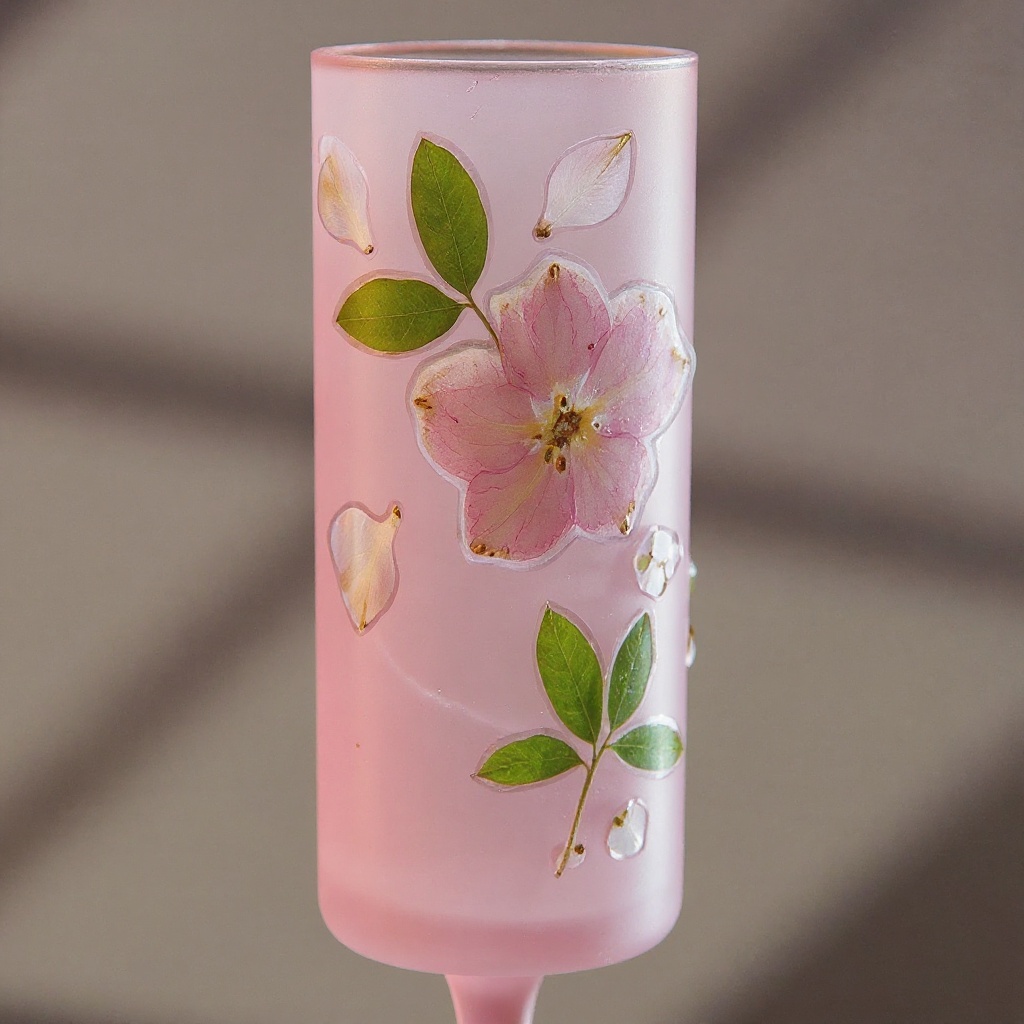
Factory alternatives skip all of this. They use inkjet-printed floral graphics or injection-molded plastic elements sealed under generic clear coatings. You can spot the difference in under ten seconds: real pressed flowers show natural color gradients, translucent veining, and micro-imperfections at petal edges. Printed versions repeat identical patterns at uniform spacing. The distinction isn't subtle.
Authentic handcrafted botanical glassware 400ml pieces also show slight variation between units. Two glasses from the same artisan batch will never be identical because no two sakura petals are geometrically identical. That variability is quality evidence, not a defect.
Materials That Determine Quality: Glass, Resin, and Real Botanicals
The base glass matters more than most buyers investigate. Borosilicate glass — the same material used in laboratory equipment — withstands thermal shock up to 165°C differential without cracking, per ASTM E438 standards. This matters during the resin curing phase, where surface temperatures can fluctuate 20–30°C across multiple coating cycles. Standard soda-lime glass, used in budget pieces, has a thermal shock resistance roughly 40% lower, which explains the stress fractures that appear after 6–12 months on cheaper botanical glassware.
Eco-friendly resin formulations have changed the safety profile of botanical drinkware. Food-contact epoxy resins cured above 65°C for a minimum of 72 hours meet FDA 21 CFR 175.300 indirect food-contact standards. UV-stable variants include benzotriazole or triazine UV absorbers that block wavelengths below 380nm — the range primarily responsible for pigment degradation in pressed flowers. Without UV stabilization, sakura petals in direct light fade measurably within 8–14 months.Flower selection shapes both the aesthetic and the lifespan of the piece. Cherry blossom petals, small green leaf accents, and layered blush botanicals embedded in frosted pink elongated champagne flutes represent a specific curatorial choice — these botanicals maintain their color for 3–5 years when sealed under UV-stable resin and kept from direct sunlight. Delicate varieties like garden roses or peonies fade within 18–24 months under identical conditions.
Material Quality Comparison: Budget vs. Premium Botanical Glassware
| Component | Budget Option | Mid-Range Artisan | Premium Collectible | Longevity Difference |
|---|---|---|---|---|
| Base Glass | Soda-lime | Borosilicate | Lead-free crystal | 5–8 yrs vs 15+ yrs |
| Resin Type | Standard epoxy | UV-stable epoxy | Food-grade UV-stable BPA-free | 2–3 yrs vs 5–7 yrs |
| Botanical Material | Printed / artificial | Mixed real/artificial | 100% real pressed flowers | Permanent vs natural fade |
| Flower Selection | Generic mix | Seasonal botanicals | Curated sakura / rare blooms | Color retention varies |
| Curing Process | Single coat, rapid | 3–4 layers, 24hr cure | 5–7 layers, 48hr cure | Adhesion & clarity |
| Price Range | $15–$40 | $45–$120 | $120–$400+ | N/A |
| Dishwasher Safe | Usually not | Hand-wash recommended | Hand-wash recommended | N/A |
The 5–7 Day Handcrafting Process Explained Step by Step
Creating authentic handcrafted botanical glassware 400ml pieces follows a non-negotiable timeline determined by resin chemistry. Rushing it produces cloudiness, weak adhesion, or trapped air bubbles that ruin the piece.
1. Botanical preparation (weeks before assembly): Harvest flowers at peak bloom. Press between acid-free papers under 5–10 kg weight. Allow 2–4 weeks of drying at controlled humidity (ideally 40–50% RH) until moisture content drops below 5%. 2. Glass surface preparation (Day 1, 1–2 hours): Clean the glass with isopropyl alcohol to remove oils and particulates that would prevent resin adhesion. Inspect for micro-scratches or stress points. 3. Botanical arrangement (Day 1, 2–3 hours): Position individual sakura petals, leaf accents, and blush botanicals by hand using fine tweezers. Adjust for visual balance across the full 360-degree glass surface — this step cannot be rushed or mechanized. 4. Base resin coats (Days 2–3): Apply thin initial coats of food-grade eco-resin to secure botanicals without displacement. Each coat requires 24–48 hours of cure time at 20–25°C before the next application. 5. Build-up layers (Days 4–6): Add 3–5 additional resin layers to achieve the smooth raised surface characteristic of premium pieces. Each layer adds depth and protects against chipping. 6. Final inspection and finishing (Day 7): Check adhesion at all petal edges, inspect for cloudiness or bubbles, sand any rough edges on the base, and package for shipping.
Seven days minimum. No shortcuts. The chemistry doesn't negotiate.
How Handcrafted Botanical Glassware 400ml Differs from Mass-Produced Alternatives
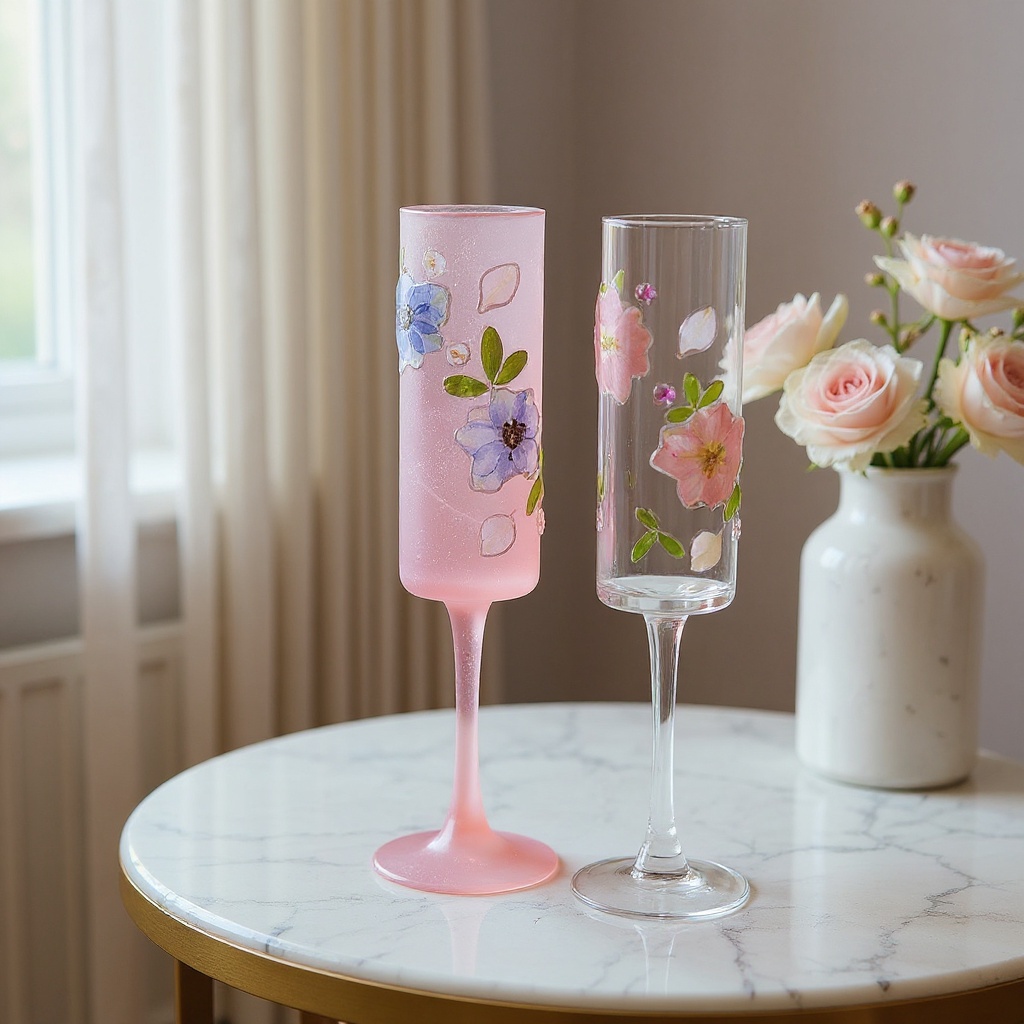
The production gap is wider than most comparison articles admit. Honest take: if you want something that looks good in a photograph but don't plan to keep it longer than two years, a $25 printed glass will serve that purpose. There is no shame in that choice. But if you want a piece where the flowers are real — where the sakura petals embedded under smooth eco-resin were once alive, pressed by hand, and positioned by a person making deliberate aesthetic decisions — the $45–$120 price tier is the minimum entry point for genuine botanical craft.
Mass production uses screen printing or pad printing for floral graphics. The process takes seconds per unit. Botanical resin application takes 5–7 days per unit. These are not comparable products wearing the same label.
Handcrafted botanical glassware 400ml also offers something factories cannot replicate: each piece is unique. The frosted pale pink champagne flute with real sakura petals you purchase will have a petal arrangement no other glass shares. That individuality has no production-line equivalent.
Sizing and Proportions: Why the 400ml Capacity Works
The 400ml capacity represents a functional sweet spot for versatile drinkware. Standard sommelier pours for still wine run 150ml (5 oz), leaving room for swirling in a 400ml glass. Champagne pours of 120–150ml show well in an elongated flute shape at this volume. The frosted pink champagne flute form — with its slender stem and round base — keeps botanical decoration visible at every pour level without crowding the design.
Pieces below 200ml feel ceremonial rather than functional. Pieces above 500ml can visually overwhelm the botanical elements, which are calibrated for smaller surface areas. The 400ml volume also photographs well — a genuine consideration for buyers purchasing handcrafted botanical glassware 400ml pieces as gifts or for styled home photography.
Weight increases approximately 20–30% compared to uncoated glass due to the multi-layer resin coating. Well-designed pieces compensate with balanced stem proportions, distributing weight between the bowl and base so the glass feels substantial without causing hand fatigue.
Common 400ml Botanical Glass Shapes
1. Frosted champagne flute — Elongated bowl, slender stem, round base; optimized for sparkling wine and formal occasions; the shape used in sakura petal botanical designs 2. Wine goblet — Rounded bowl with wider opening; versatile for still reds and whites; botanical elements wrap the full bowl surface 3. Tulip shape — Gently curved sides that narrow at the rim; concentrates aromas; suits wine appreciation contexts 4. Cocktail coupe — Shallow, wide bowl; botanical accents on the exterior base and stem; elegant for mixed drinks 5. Straight-sided tumbler — Cylindrical, stable, casual-friendly; botanical elements applied as band patterns around the lower third
Care and Maintenance: A Step-by-Step Cleaning Protocol
Proper care determines whether your handcrafted botanical glassware 400ml piece lasts 2 years or 15.
1. Daily cleaning: Hand-wash immediately after use with lukewarm water (30–40°C maximum) and pH-neutral dish soap. High heat causes differential expansion between the glass and resin layers — a stress cycle that accumulates damage over time. 2. Cleaning tools: Use soft microfiber cloths or silicone sponges only. Abrasive scrubbers will scratch the resin surface and create micro-channels where bacteria accumulate. 3. Around raised elements: Clean gently around petal edges and leaf accents using a soft-bristled brush (a clean watercolor brush works well). Residue accumulates in these recessed areas. 4. Monthly deep clean: A solution of equal parts white vinegar and water, applied with a microfiber cloth and rinsed thoroughly, removes mineral deposits without damaging resin or flower pigments. 5. Storage: Store upright in a dry cabinet away from direct sunlight and heat sources. UV exposure degrades even stabilized resins over time; a cabinet with UV-filtering glass extends the life of botanical pigments. 6. What to avoid absolutely: Dishwashers (thermal shock plus harsh detergent), bleach-based cleaners (attacks resin polymers), abrasive powders, and storage near heating vents.
Honestly, if you live in a high-humidity climate — above 70% RH year-round — the glass-resin bond on pieces stored without climate control may show micro-separation within 3–4 years regardless of cleaning habits. A silica gel packet in the storage cabinet adds meaningful protection at zero cost.
Pricing: Understanding the Premium Cost Structure
Pricing for handcrafted botanical glassware 400ml reflects labor hours, material costs, and production scale — not marketing. Mass-produced floral glasses retail at $15–$40 because printed graphics require seconds of machine time and standard glass molds produce thousands of identical units. Artisan botanical pieces occupy a different production economy entirely.
At the mid-range ($45–$120), buyers get real pressed botanicals, borosilicate glass, and UV-stable resin from small-batch workshops. At the premium tier ($120–$400+), they get curated botanical selection — specific sakura varieties, particular leaf accents, intentional color palette curation — plus individually inspected quality control.
The 5–7 day production timeline represents 15–20 hours of skilled artisan labor per piece. At fair wage rates for skilled craft work, that labor cost alone justifies a significant price floor before materials are factored in. Buyers evaluating cost-per-use: a $57 piece used weekly for special occasions over five years costs approximately $0.22 per use. A $20 printed glass that fades or chips in 14 months costs more per use at comparable frequency.
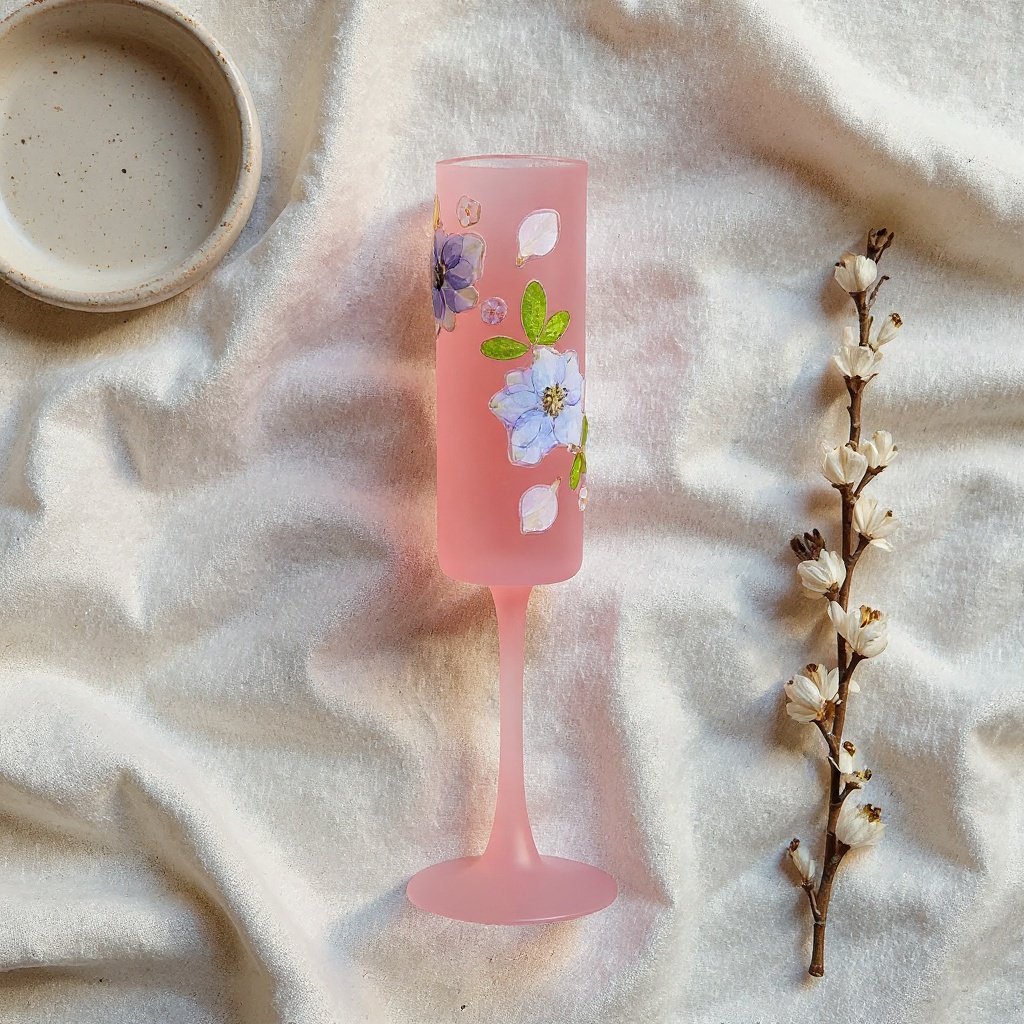
The Handmade Frosted Pink Sakura Wine Glass | Real Pressed Flower Eco Resin Floral Drinkware 400ml exemplifies this pricing structure — real sakura petals, small green leaf accents, smooth eco-resin coating over a frosted pale pink elongated champagne flute form with a slender pink stem and round base.
Choosing the Right Handcrafted Botanical Glassware 400ml Piece
Match the piece to the use case first. Everyday wine drinkers need durable borosilicate pieces with subtle floral accents that won't visually compete with wine color. Gift buyers for weddings, anniversaries, or spring celebrations benefit from the romantic botanical aesthetic of sakura designs — the blush and white petals read universally as celebratory without requiring specific event alignment.
Cherry blossom symbolism in East Asian cultural contexts carries associations with renewal, transience, and beauty — which is why the frosted pink sakura champagne flute has become the signature form for this category. The botanical meaning layers onto the functional object. That matters to many buyers.Verify authenticity before purchasing. Request high-resolution close-up photographs showing individual petal veining and organic edge variation. Ask sellers to specify glass type (borosilicate vs. soda-lime), resin grade (food-contact vs. standard), and curing timeline. Reputable artisan workshops answer these questions with specific technical detail. Vague responses — 'premium glass,' 'safe resin' — suggest mass-produced origins.
Also worth exploring: our guides to botanical home décor collections, pressed flower gift sets, and artisan glassware care accessories for complete styling and maintenance resources.
FAQ
Are the flowers in resin wine glasses real or artificial? Authentic handcrafted botanical glassware uses real pressed flowers and leaves. Real botanicals show natural color gradients, translucent petal veining, and organic size variation between individual specimens. Artificial flowers appear uniform in color and geometry, with crisp symmetrical edges that pressed flowers never produce. When examining product photography, look for translucency in thin petal areas — a characteristic of genuine dried botanicals that printed or plastic alternatives cannot replicate. How long do preserved flowers in resin last before fading? Properly pressed botanicals sealed in UV-stable food-grade resin retain visible color for 3–5 years under normal indoor conditions. Hardy varieties like sakura, pansies, and violas outperform delicate specimens like garden roses or peonies, which may show fading within 18–24 months. The primary degradation factors are UV exposure (wavelengths below 380nm degrade most floral pigments) and thermal cycling. Consistent storage away from direct sunlight extends color retention beyond the 5-year baseline. Can I put a resin flower glass in the dishwasher? No. Dishwasher cycles expose glassware to water temperatures of 55–75°C combined with alkaline detergents — a combination that stresses the glass-resin interface through differential thermal expansion and chemical attack on the polymer surface. Even food-grade epoxy resins rated for food contact are not rated for repeated high-temperature dishwasher exposure. Hand-washing at 30–40°C with pH-neutral soap is the correct protocol for preserving botanical color and resin adhesion long-term. Is eco-resin food-safe for drinkware? Food-grade epoxy resins that meet FDA 21 CFR 175.300 indirect food-contact standards are considered safe for drinkware applications when fully cured. Full cure for most food-contact epoxy formulations requires 65–72°C for 72 hours minimum, or ambient temperature cure cycles of 7–10 days. Partially cured resin can leach uncrosslinked bisphenol compounds. Always confirm with sellers that the specific resin used has completed full cure before the piece was sold — responsible artisan makers document their curing protocols. What is the borosilicate glass advantage for botanical glassware? Borosilicate glass contains approximately 12–13% boron trioxide, which reduces thermal expansion to roughly 3.3 × 10⁻⁶/°C — compared to 8–9 × 10⁻⁶/°C for standard soda-lime glass, per ASTM E438 material specifications. This lower expansion coefficient means the glass flexes less during the multi-cycle resin curing process, reducing stress fracture risk. For botanical glassware that undergoes 5–7 resin coating cycles over seven days, the difference in substrate stability between borosilicate and soda-lime glass is practically significant. What is the best way to clean a resin-coated champagne flute without damaging it? Hand-wash immediately after use using lukewarm water (30–40°C) and a pH-neutral dish soap. Use a soft microfiber cloth or silicone sponge — never abrasive pads or steel wool. Clean around raised botanical elements with a soft brush to remove residue from petal edges. Rinse thoroughly with clean lukewarm water and air-dry upside down on a padded rack. Monthly treatment with a 1:1 white vinegar and water solution removes mineral deposits without attacking resin polymers or degrading flower pigments. Are botanical resin glasses safe to drink from? Yes, when manufactured using fully cured food-contact epoxy resin meeting FDA 21 CFR 175.300 standards and free of BPA. The cured resin surface is non-porous, preventing microbial growth, and chemically inert under normal beverage contact conditions. The botanicals embedded within the resin are fully encapsulated and do not contact the beverage. Verify that any piece you purchase specifies food-grade, fully-cured resin — this is the determining safety factor, not the presence of dried flowers. Can I commission a custom floral design on a handmade botanical glass? Many artisan workshops accept custom commissions specifying flower types, color palettes, or arrangement patterns. Custom handcrafted botanical glassware 400ml orders typically require 3–6 weeks lead time: 2–4 weeks for botanical preparation and pressing, plus the standard 5–7 day production cycle. Custom pieces are generally priced 25–50% above standard catalog designs due to the bespoke botanical sourcing and lower production volume. Provide reference images and specific color hex values where possible — artisans can better match botanical selection to precise palette requirements with visual references.Conclusion
Handcrafted botanical glassware 400ml pieces represent a category where production method, material selection, and artisan skill create tangible, measurable differences in what you hold in your hand. Real pressed sakura petals embedded under smooth eco-resin on a frosted pale pink elongated champagne flute are not a product category you stumble into by accident — they're the result of deliberate craft choices at every stage from flower harvest to final inspection.
The investment is real. So is the result.
For a piece that embodies all of these qualities — frosted blush glass, real botanical embeds, smooth raised resin surface, slender pink stem, round base — the Handmade Frosted Pink Sakura Wine Glass | Real Pressed Flower Eco Resin Floral Drinkware 400ml is the reference standard in this category. Browse our full botanical home décor collections and pressed flower gift sets to find the right piece for your occasion.