































Handmade Glass Mug With Real Pressed Flowers Explained
Handmade Glass Mug With Real Pressed Flowers Explained
By pampasroom, founder of Pampasroom · 8+ years developing botanical preservation and eco-resin craft techniques · Specialist in pressed flower encapsulation and food-safe resin applications for functional homewareA handmade glass mug with real pressed flowers features genuine dried botanicals preserved inside eco-friendly resin applied to the outer surface of a clear 400ml glass vessel. The flowers — petals from roses, daisies, and lavender — are arranged and sealed beneath a smooth resin coating that creates protection and a raised tactile texture. Each handmade glass mug with real pressed flowers takes 3–5 days to complete due to the multi-step curing process. No two mugs look identical. Real flowers vary naturally in size, color, and placement, and that variation is the entire point.
I've worked with botanical preservation long enough to know that the gap between a mug that lasts a decade and one that clouds and yellows within a year comes down to decisions most buyers never see — resin grade, layer thickness, curing temperature, and how dry the flowers truly are before encapsulation begins. This article walks through all of it.
How Real Pressed Flowers Are Embedded in Resin
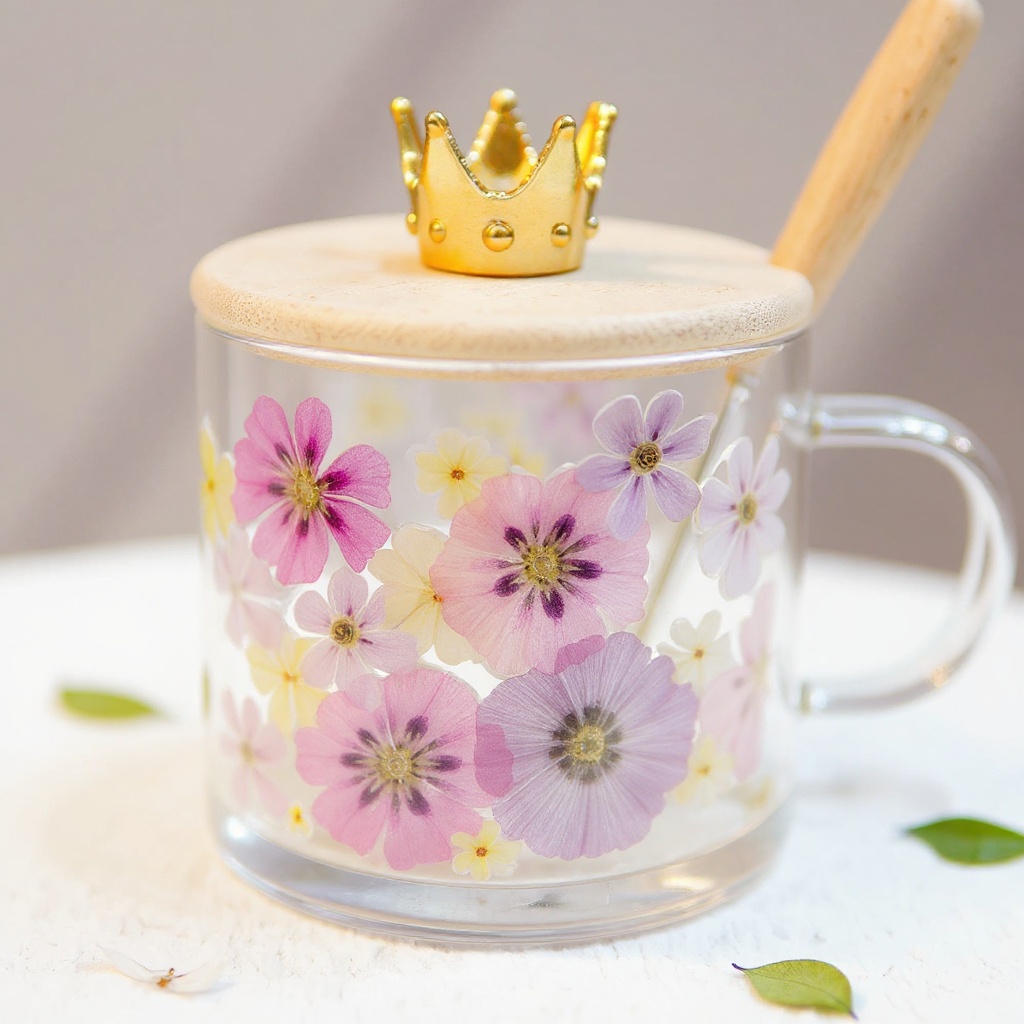
The process starts with pressed flower craft, where fresh botanicals are flattened and dried for several weeks to remove all moisture content. Artisans then hand-select individual petals and leaves. They arrange them directly onto the glass surface in natural patterns that showcase pink, cream, lavender, and green tones — the botanical palette that defines the handmade glass mug with real pressed flowers aesthetic.
Once the arrangement is complete, eco-resin is applied in thin layers. This isn't any plastic coating. Epoxy resin designed for food-contact applications must cure at controlled temperatures — typically 20–25°C — to avoid trapping air bubbles that would cloud the final appearance. The resin bonds permanently with both the glass and the dried flowers, preserving every petal detail underneath a smooth outer surface. Each layer requires 24–48 hours of cure time. That curing schedule, more than anything else, is why these mugs cost significantly more than mass-produced alternatives.
When I first tested layering schedules on standard soda-lime glass blanks, rushing the second pour by even six hours produced visible hazing at the glass-resin interface. Patience. That's the material requirement no spec sheet can fully communicate.
Why Each Handmade Mug Looks Completely Different
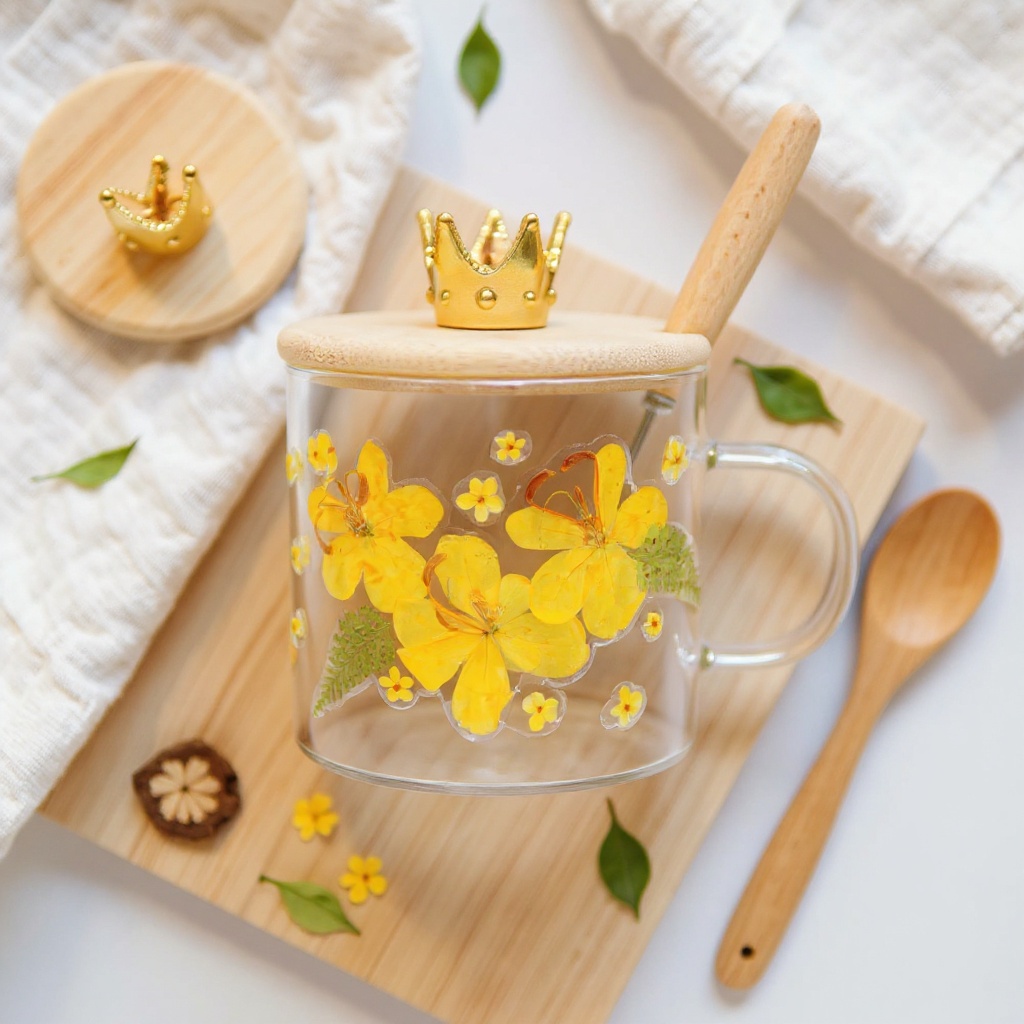
No two handmade glass mugs with real pressed flowers can ever be identical. Real flowers don't grow in perfect uniformity — a rose petal might measure 15mm wide on one mug and 22mm on another, while lavender stems naturally curve in different directions based on how they dried.
Color variations are equally unpredictable. Pressed flowers fade during drying, but they fade differently based on original pigment concentration, ambient humidity during pressing, and storage duration before use. A daisy that started bright white might develop cream undertones. Purple petals can shift toward dusty mauve. These shifts are chemistry, not error. When you invest around $71 in a handmade glass mug with real pressed flowers, natural variation increases value — you own something that cannot be replicated exactly.
| Feature | Mass-Produced Floral Mug | Mid-Range Handmade | Premium Pressed Flower Mug |
|---|---|---|---|
| Price Range | $8–$20 | $25–$45 | $49–$75 |
| Flower Type | Printed patterns | Faux silk flowers | Real preserved botanicals |
| Production Time | Minutes | 1–2 days | 3–5 days |
| Uniqueness | Identical copies | Limited variations | One-of-a-kind |
| Resin Quality | None / decal glaze | Basic coating resin | Multi-layer food-contact eco-resin |
| Fade Resistance | 6–12 months (print) | 2–3 years | 10+ years when sealed correctly |
| Companion Accessories | None | Generic lid | Bamboo lid and wooden spoon |
The Science Behind Eco-Resin Safety and Durability
Eco-resin used in quality handmade glass mugs with real pressed flowers meets food-contact safety standards, but there are important limitations to understand clearly. High-grade eco-resins formulated for food-contact applications conform to FDA 21 CFR 175.300 (resinous and polymeric coatings) and EU Regulation 10/2011 on plastic materials intended to contact food. These standards require the fully cured resin to be free from BPA and other endocrine-disrupting compounds, and to show no measurable migration of harmful substances at normal use temperatures. The EPA's greener products guidelines further identify low-VOC, bio-based resin formulations as preferred for consumer goods.
Temperature tolerance matters. Quality eco-resins used in handmade glass mugs with real pressed flowers maintain structural integrity up to approximately 80°C (176°F) — a threshold consistent with manufacturer technical data sheets for bio-based epoxy systems such as those meeting ASTM D648 heat deflection standards. That range covers hot coffee, tea, and most brewed beverages comfortably. Boiling water pours are a different situation entirely, and I'll address that directly in the FAQ.
Here's the honest thing most articles won't tell you: if you live in a coastal or high-humidity climate and store your mugs near a window with temperature swings, the glass-resin bond is your weakest point — not the flowers, not the resin surface itself. Thermal cycling in humid conditions can introduce micro-stress at the bond interface over years. It won't happen fast. But it will happen faster than in a climate-controlled interior.
The raised texture created by the resin coating serves a practical function beyond aesthetics. It adds grip surface and provides slight thermal insulation between your hand and the hot liquid inside. The included bamboo lid amplifies this insulation effect significantly for very hot drinks.
Material Costs: What the Price Actually Reflects
At $71, a handmade glass mug with real pressed flowers costs 3–4 times more than a basic ceramic mug. The pricing reflects real material and labor inputs:
- Food-contact eco-resin: $45–$60 per gallon at artisan purchase volumes - Quality pressed botanicals: $8–$12 per curated arrangement - 400ml heat-resistant glass blank: $12–$15 per unit in small-batch quantities - Bamboo lid and wooden spoon: $4–$6 per set - Specialized protective packaging: $2–$4 per unit - Active labor: 15–20 hours spread across 3–5 days per mug
Raw materials alone reach $25–$30 per mug before any labor calculation. The handmade glass mug with real pressed flowers isn't a premium-priced commodity product. It's a handcrafted object where the cost structure is transparent.
Caring for Your Pressed Flower Resin Mug
Hand-washing is the single non-negotiable care requirement. Dishwasher cycles run at 60–70°C combined with alkaline detergents — that combination will cloud the resin surface over time and may cause the glass-resin bond to weaken at the edges. The flowers can fade or shift position. Don't risk it.
Proper cleaning routine:
1. Rinse with lukewarm water immediately after use to prevent staining 2. Apply mild dish soap to a soft sponge — never abrasive scrubbers or steel wool 3. Clean raised resin areas with gentle circular motion, following the flower patterns 4. Rinse completely and dry with a soft cloth to prevent water spots on the glass 5. Store upright to avoid sustained pressure on any single area of the resin surface 6. Never pour cold water into a warm mug — thermal shock stresses the glass-resin interface
The bamboo lid needs separate handling. Wood absorbs water if soaked. Wipe it clean with a damp cloth and allow complete air drying before reassembling with the mug.
Seasonal Flower Availability: What You Can and Can't Customize
Most artisans who create handmade glass mugs with real pressed flowers can accommodate specific color requests or botanical types, though customization adds 1–2 weeks to the production timeline and typically increases cost by $15–$25. Popular requests include birth month flowers, wedding bouquet recreations, and color schemes matched to specific interior palettes.
Seasonal and botanical limitations are real, though. Here's what the constraints actually look like:
- Year-round reliable options: Roses, baby's breath, ferns, statice, and most wildflowers - Seasonally limited: Peonies (spring only), sweet peas (late spring), cosmos (summer–fall) - Poor candidates for pressing: Succulents (too moisture-dense), thick orchid blooms (retain moisture unevenly), and most tropical flowers - Color retention considerations: White and cream flowers hold color best; deep reds and vibrant oranges shift most significantly during pressing - Lead time for custom orders: 3–5 weeks from confirmation to shipping for non-standard requests
The standard botanical mix in our Handcrafted Glass Mug Real Pressed Flowers | Eco Resin 400ml | Bamboo Lid includes pink and cream rose petals, lavender sprigs, and green fern fronds — botanicals selected for their reliable pressing behavior and long-term color stability inside resin.
FAQ
Are the flowers in resin mugs real or fake?
The flowers in quality pressed flower mugs are genuine botanicals that have been dried and preserved through the pressed flower craft process. They are not silk, plastic, or printed patterns. You can see individual petal texture and natural color variation through the clear resin coating — details that manufactured alternatives cannot replicate.
Can you put a pressed flower resin mug in the microwave?
No. Never microwave a handmade glass mug with real pressed flowers. Resin can overheat unevenly, and some dried botanical matter contains trace minerals that can cause sparking inside a microwave cavity. Heat your liquid separately in a microwave-safe vessel, then pour it into the mug.
How long do the flowers last inside the resin?
Properly sealed pressed flowers can last decades without significant deterioration. The fully cured resin creates an oxygen-reduced environment that prevents decomposition. Some natural color shifting may occur over 5–10 years — particularly in mugs stored in direct sunlight — but the botanical structure remains intact and visible.
Will the resin crack if I pour boiling water into the mug?
Boiling water at 100°C exceeds the safe operating range for most eco-resins and creates thermal shock risk for the glass. Quality eco-resins maintain integrity up to approximately 80°C — sufficient for standard hot coffee and tea. For boiling-temperature pours, allow the liquid to cool for 60–90 seconds before filling the mug.
Is eco-resin food-safe and non-toxic?
Fully cured eco-resin that meets FDA 21 CFR 175.300 and EU Regulation 10/2011 food-contact material standards is considered safe for use with hot beverages within the rated temperature range. These standards require BPA-free formulation and verified non-migration of harmful substances under normal use conditions. Always confirm that your specific mug's resin meets one of these named certifications — not just a general 'food-safe' marketing claim.
Why does my handmade resin mug look different from the product photo?
Normal. Expected. The entire point. Real flowers vary in size, color saturation, and natural arrangement. The difference between your mug and the product photograph is proof of authenticity, not evidence of a manufacturing defect. A handmade glass mug with real pressed flowers that matched a product photo exactly would be cause for suspicion, not satisfaction.
Can I personalize or custom-order a pressed flower mug?
Many artisans accept custom orders for specific flower types or color palettes. Expect 2–3 weeks of additional production time and a $15–$25 cost increase above the standard price. Seasonal flower availability limits options — peonies in November, for example, simply aren't accessible as fresh botanical material for pressing.
How do I clean a resin mug without ruining the flowers?
Hand-wash only. Use mild dish soap, lukewarm water, and a soft sponge or cloth. Never use abrasive scrubbers. Never use a dishwasher. Dry with a soft cloth after washing and store the mug upright.
Does the bamboo lid fit securely enough to prevent spills?
The bamboo lid is designed for heat retention and light splash resistance during transport — not as a sealed travel lid. It seats snugly on the 400ml glass opening but should not be inverted or shaken. For commuting, treat it as an insulating cover rather than a spill-proof cap.
What makes eco-resin different from standard epoxy?
Eco-resins use bio-based or partially bio-derived components to reduce petroleum dependency and lower VOC emissions during production. The cured result is functionally comparable to conventional epoxy in hardness and clarity, but the production process aligns with sustainability standards that conventional epoxy formulations often don't meet. For a mug you're drinking from daily, that sourcing distinction matters.
A handmade glass mug with real pressed flowers is the kind of object that rewards slower mornings. The bamboo lid stays warm in your hand. The resin surface catches light differently depending on the angle. The flowers underneath don't look the same on Tuesday as they did on Monday — not because they've changed, but because you're finally looking. That's what artisan craft does that mass production cannot. It earns attention over time rather than burning it up at the moment of purchase.
See our Handcrafted Glass Mug Real Pressed Flowers | Eco Resin 400ml | Bamboo Lid to find the botanical combination that fits your space.


