































Handmade Preserved Flower Drinking Glass: A Complete Guide
Handmade Preserved Flower Drinking Glass: The Complete Buyer's Guide
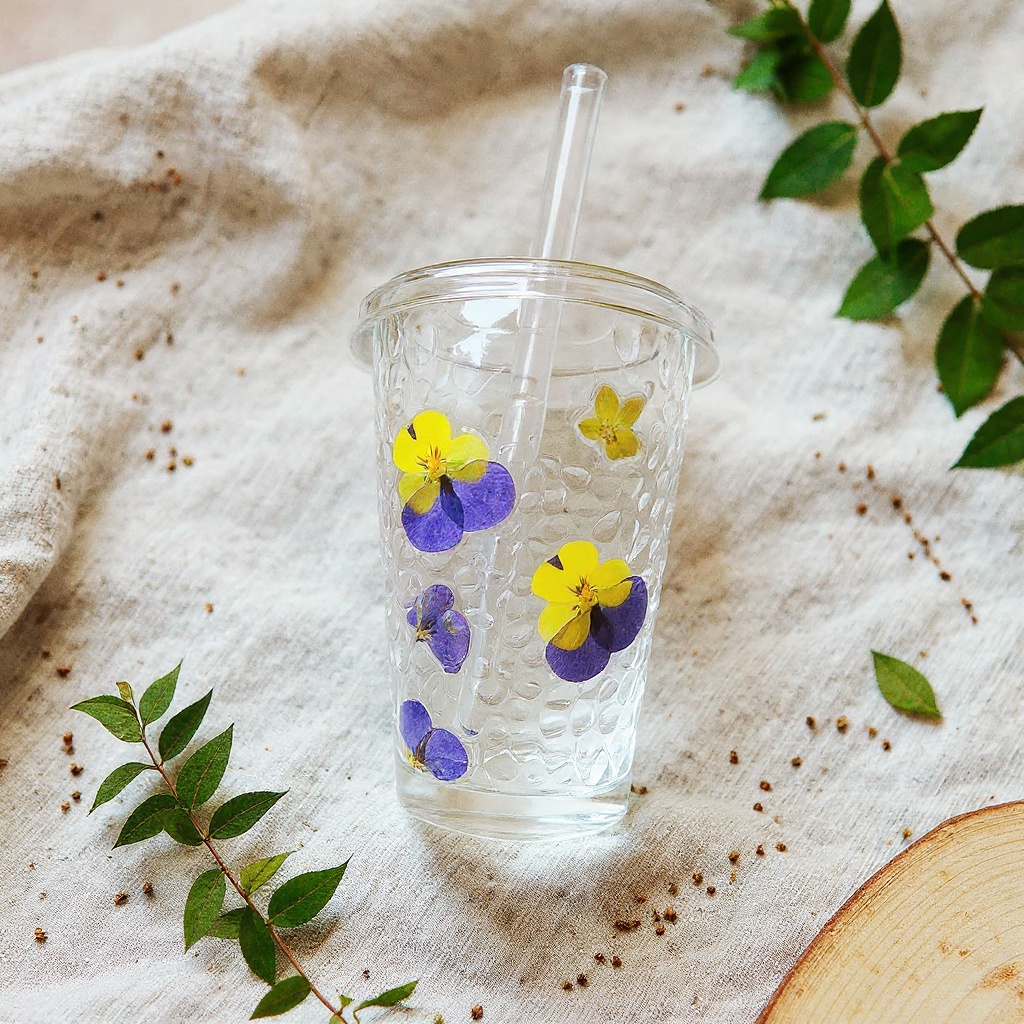
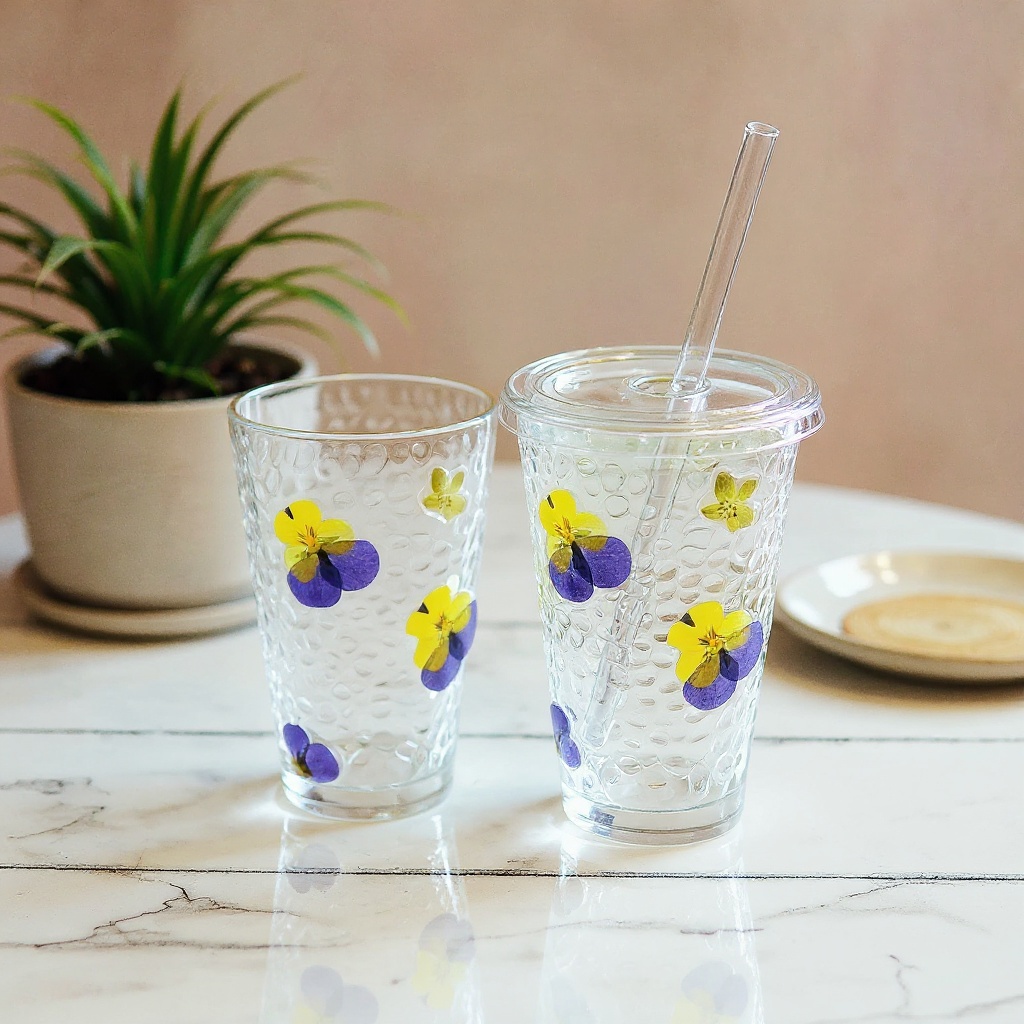
By pampasroom, founder of Pampasroom · 8+ years sourcing and crafting botanical drinkware with Southeast Asian artisans · Botanical drinkware collections featured in independent home décor publicationsA handmade preserved flower drinking glass is a clear borosilicate glass cup with real dried flower petals and green leaves physically adhered to the exterior surface, creating raised, tactile textures you can feel with your fingertips — not printed, not painted, not flat. The flowers are dehydrated at peak bloom, hand-positioned by artisans, and sealed under multiple layers of food-safe protective coating. Each 400ml glass ships as a complete set with a dust-proof lid and a reusable clear glass straw. The result is functional drinkware that doubles as living botanical art, with a pastel palette of pink, yellow, and blue blooms that varies slightly from piece to piece because no two flowers dry identically.
Real talk: if you want something you can toss in the dishwasher every night without thinking, this is not your glass.
What Is a Handmade Preserved Flower Drinking Glass?
A handmade preserved flower drinking glass combines the thermal resilience of borosilicate glass with authentic botanical craftsmanship. The flowers are real. The texture is real. The process takes three days minimum. Each artisan begins by selecting fresh blooms at peak color density, then applies specialized desiccant-based or silica-gel drying methods — the same category of techniques documented in flower preservation literature — to remove moisture while retaining petal structure and pigment. The dried botanicals are arranged by hand on the glass exterior and locked in place with layered clear sealants that comply with food-contact safety standards.
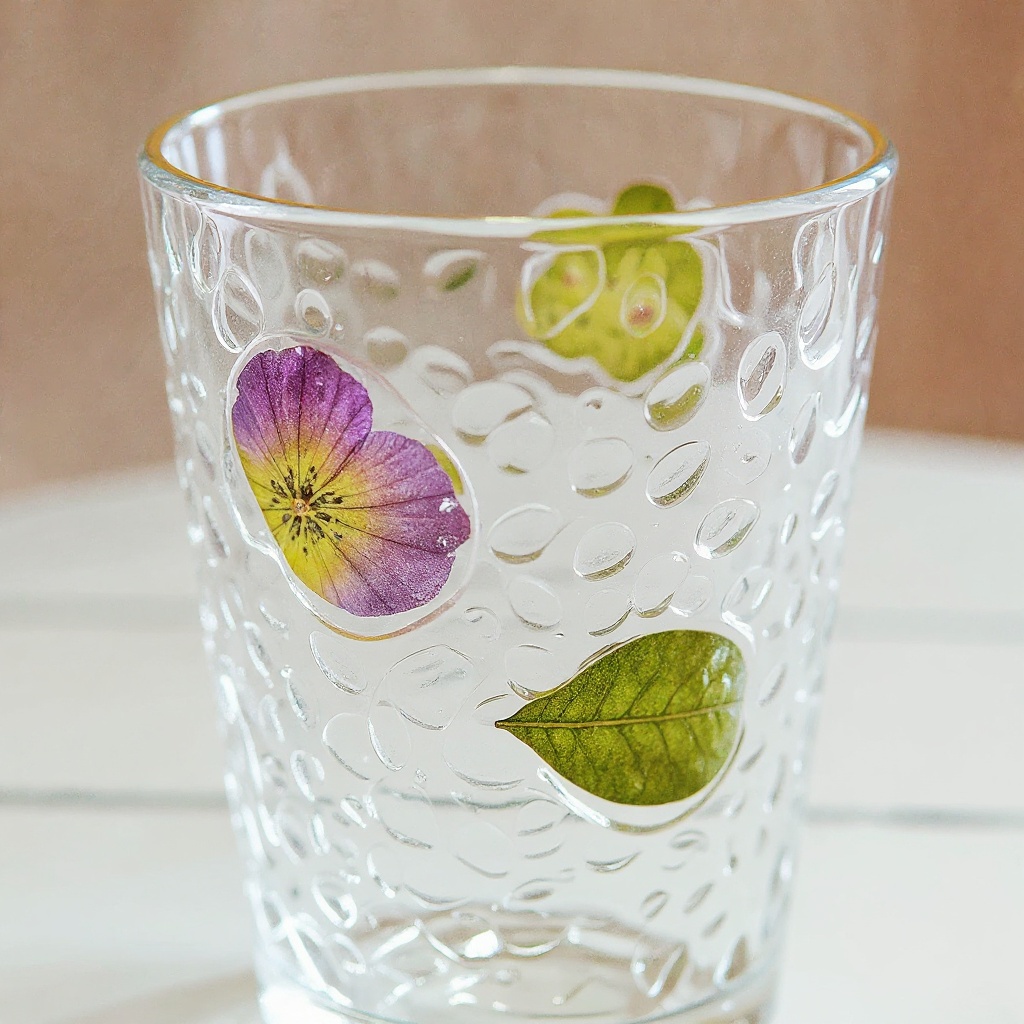
The raised relief texture is the defining characteristic. Run your finger across the surface and you feel every petal edge. That dimensional quality is impossible to replicate with printing or decals, and it's the first thing most owners mention when describing why they love their glass.
The 3-Day Artisan Embedding Process
Creating an authentic handmade preserved flower drinking glass is not fast work. Day one involves flower selection and drying preparation — blooms that are too moist will brown under coating; too dry and they become brittle and crack during application. Day two is placement: artisans hand-position each petal, leaf, and stem fragment directly onto the borosilicate surface, working around the natural curvature of the glass to ensure adhesion at every contact point. Day three applies the first protective sealing layer, followed by inspection and additional coating passes.
This is why the pressed flower craft tradition, which dates back several centuries, still commands respect in modern markets. Artisan. Not algorithm.
Since every botanical element is positioned individually, no two glasses in the collection are identical. The color distribution, petal angle, and leaf placement shift from piece to piece. You're not buying a product from a mold. You're buying someone's Tuesday afternoon.
Material Quality and Food Safety Standards
Borosilicate glass contains approximately 12–13% boron trioxide by weight, which dramatically lowers its thermal expansion coefficient compared to standard soda-lime glass. Laboratory and consumer data consistently show borosilicate withstands temperature differentials up to 165–200°C without thermal shock failure — a critical threshold for drinkware used with both hot teas and cold beverages. This material also resists alkaline and acidic leaching better than soda-lime alternatives, which matters when you're drinking citrus-forward beverages daily.Food safety is the question every first-time buyer should ask. The preserved flowers on a properly constructed handmade preserved flower drinking glass never contact your beverage. They live entirely on the exterior surface, separated from the drink cavity by the glass wall itself and an additional multi-layer food-safe sealant barrier. Professional artisans use sealants that meet food-contact material requirements under frameworks like the FDA food contact substance regulations (21 CFR), which govern indirect food contact materials. The flowers are decorative. The glass interior is clean.
Hand-washing only. Always.
Durability and Longevity: What the Data Actually Shows
Preserved flower glasses maintain aesthetic integrity for 2–5 years under normal indoor conditions — that range is wide because it depends heavily on UV exposure, humidity levels, and cleaning frequency. Color fading in dried botanicals follows predictable photochemical degradation pathways; research on natural dye stability in dried plant material (see botanical pigment research via USDA Agricultural Research Service) shows that indirect light exposure extends color vibrancy significantly compared to direct sun placement.
Honestly, if you live in a very humid coastal environment where condensation forms on every surface, the protective coating on your glass will degrade faster than the 2–5 year estimate. Plan for the lower end of the range and consider it a pleasant surprise if you exceed it.
| Durability Factor | Expected Timeline | Key Maintenance Variable |
|---|---|---|
| Initial color vibrancy | 6–12 months at full saturation | UV exposure — indirect light extends this period |
| Flower adhesion to glass | 2–3 years | Hand-washing only; abrasives accelerate separation |
| Protective coating clarity | 18–24 months | Gentle soap; harsh chemicals cloud the sealant |
| Glass structural integrity | 10+ years | Thermal shock prevention; no extreme temperature swings |
| Overall aesthetic appeal | 3–5 years | Combined care practices; humidity control matters |
| Straw and lid longevity | 2–4 years | Hand-wash; glass straws chip if dropped on hard surfaces |
The glass itself outlives the botanical decoration by years. Many owners keep using the vessel long after they notice gradual fading — the patina of aged preserved flowers has its own quiet appeal.
Handmade Preserved Flower Drinking Glass vs. Alternatives
The floral drinkware market spans a wide spectrum of price points, materials, and craftsmanship. Here is how the major categories compare:
1. Printed floral glass cups ($8–$20) — Flat ink-printed designs, no tactile texture, prone to fading and peeling in dishwashers, mass-produced, no botanical materials involved. 2. Resin flower tumblers ($25–$45) — Artificial silk flowers encapsulated inside clear resin walls, visually striking but not made from real botanicals, plastic construction cannot be repaired if cracked, heavier than borosilicate glass. 3. Pressed flower glass art pieces ($60–$120+) — Museum-quality botanical glass art, not typically designed for daily beverage use, display-oriented rather than functional drinkware. 4. Handmade preserved flower drinking glass ($40–$80) — Real dried botanicals adhered to borosilicate glass exterior, raised tactile texture, food-safe barrier construction, complete set with lid and straw, artisan-made with natural color variation. 5. Mass-produced "botanical" ceramic mugs ($15–$35) — Printed or embossed floral patterns on ceramic, no real flowers, durable for dishwasher use but lacks the visual clarity and botanical authenticity of glass construction.
The core distinction: printed and resin options replicate the look of flowers. A handmade preserved flower drinking glass uses the actual thing.
Care Instructions That Actually Protect Your Investment
Proper care is straightforward. It just requires consistency.
Essential Care Guidelines:1. Hand-wash only — Lukewarm water and a small amount of mild dish soap; this is non-negotiable 2. Soft cloth or sponge — Abrasive scrubbers scratch the glass surface and can catch on raised flower edges 3. Air dry face-down — Dish towels snag on the tactile botanical texture and can pull at petal edges 4. No direct sunlight storage — UV exposure is the primary driver of color degradation in dried botanicals 5. No microwave — Even short microwave exposure can heat and warp the protective sealant coating 6. No dishwasher — High heat and alkaline detergents degrade both the adhesive layers and coating clarity 7. No freezer — Thermal contraction stress risks adhesion failure at the glass-to-botanical bond points 8. Monthly inspection — Check for any lifting petal edges; early resealing prevents larger separation
Gentle. Consistent. Patient. Those three habits extend the life of a handmade preserved flower drinking glass from the lower end of the 2–5 year range to the upper end.
How to Choose the Right Style and Color
Selecting your handmade preserved flower drinking glass comes down to two decisions: color palette and botanical density.
For color: yellow flower varieties bring warmth and energy to kitchen and breakfast table settings. Blue tones offer a calming counterpoint that pairs well with minimalist or coastal interior schemes. Pink options carry a soft romantic quality suited to cottage-core and vintage-inspired spaces. The pastel palette across all three colorways is consistent with natural dried flower pigmentation — these are not saturated neons; they are the quiet colors of dried gardens.
For botanical density: sparse arrangements with visible glass between each element feel refined and airy. Dense full-coverage arrangements read as bold statement pieces. Neither is objectively better. It depends entirely on whether your aesthetic leans delicate or maximalist.
The 400ml capacity is the practical sweet spot. Large enough for a full cold brew or generous herbal tea. Small enough to feel balanced in one hand. The decorative arts principle of form following function applies directly here — a glass that's too large to use comfortably defeats the purpose of daily-use drinkware.
For reference, the Handmade Real Flower Glass Cup 400ml complete set includes the decorated borosilicate glass, dust-proof lid, and reusable clear glass straw at $50 — available in yellow, blue, and pink colorways, each 10cm tall.
Gift Value and Who This Is Actually For
A handmade preserved flower drinking glass works as a gift because it solves the hardest gift problem: it is beautiful and useful. It doesn't go in a closet. It sits on a desk or kitchen counter and gets used daily, which means the recipient thinks of the gift every time they reach for it.
Milestone occasions where this gift lands consistently well: Mother's Day, milestone birthdays, housewarmings, bridal showers, teacher appreciation events. The natural botanical aesthetic crosses generational lines — it appeals to a 24-year-old with a cottagecore aesthetic and a 58-year-old who loves gardening for genuinely different but equally valid reasons.
The complete set packaging — glass, lid, straw — means the gift is immediately functional. Nothing additional required.
Frequently Asked Questions
Are the flowers on a preserved flower drinking glass safe if they touch my drink?Yes, when properly constructed. The flowers are on the exterior surface only, separated from the interior drink cavity by the borosilicate glass wall and an additional food-safe sealant layer. The botanical elements never contact your beverage. Quality artisan pieces use indirect food-contact sealants that comply with food safety material standards. The flowers are decorative. Your drink is isolated from them entirely.
How long do preserved flowers last on a glass before fading or falling off?With indoor placement away from direct sunlight and consistent hand-washing, preserved flowers maintain strong color for 6–12 months and remain visually appealing for 2–5 years total. Adhesion typically holds for 2–3 years before the first signs of edge lifting appear. UV exposure is the primary accelerant of color fading; humidity is the primary accelerant of adhesion failure.
Can I put a preserved flower drinking glass in the microwave or dishwasher?No. Neither. The microwave's electromagnetic heating affects the sealant coating, and dishwashers combine high heat with alkaline detergents that degrade both the adhesive bond and the coating clarity. Hand-wash only with lukewarm water and mild soap. This is the single most important care instruction.
Is a handmade preserved flower drinking glass worth $50 compared to cheaper floral cups?The $50 price reflects a 3-day artisan creation process, genuine dried botanical materials, borosilicate glass construction, and a complete accessory set. Printed alternatives at $8–$20 are flat, fadeable, and mass-produced. Resin tumblers at $25–$45 use artificial flowers and plastic construction. The $50 price point is the threshold where real materials, real craft, and functional durability converge. Whether that value matches your priorities is a fair personal calculation.
What is the difference between a resin flower tumbler and a real preserved flower drinking glass?Resin tumblers encapsulate artificial silk flowers inside plastic walls — the flowers are fake, the material is resin, and the construction is molded rather than handcrafted. A preserved flower drinking glass uses actual dried botanicals adhered to the exterior of a real glass surface. The texture, the color variation, and the organic imperfection are all genuine. You can feel the difference with your fingertips before you even fill it with water.
How do I know if the flowers are real or printed?Run your finger across the surface. Real preserved flowers create a raised, dimensional texture — you feel petal edges, leaf veins, and the slight unevenness of naturally dried botanicals. Printed designs are completely flat against the glass surface. Real flowers also show natural color gradations within individual petals that printing cannot replicate at this scale.
Can I use a preserved flower drinking glass for hot drinks like tea or coffee?Yes. Borosilicate glass handles hot beverages safely, withstanding temperature differentials up to approximately 165–200°C without thermal shock. Allow near-boiling liquids to cool for 60–90 seconds before pouring as a precaution. Hold the glass by the undecorated base rather than the flower-covered sides when the contents are hot.
What happens if one of the petals starts to come loose?Address it quickly. A small amount of clear craft sealant applied carefully to the lifting edge and pressed back into contact will re-bond the petal before larger separation occurs. If multiple petals begin lifting simultaneously, it typically indicates the protective coating has thinned and the entire exterior may benefit from a fresh clear sealant application. Prevention through gentle hand-washing is far easier than repair.
Can I use the glass straw that comes with the set with hot drinks?Yes, borosilicate glass straws handle both hot and cold beverages. Allow very hot liquids to cool slightly before using the straw to avoid direct contact of very hot liquid with your lips and mouth. Glass straws should be hand-washed with the included cleaning brush and stored carefully — they are durable but will chip if dropped onto hard tile or stone surfaces.
Conclusion
A handmade preserved flower drinking glass is one of the rare objects that earns its place on your counter twice over — once for how it looks, once for how it works. Real dried flowers. Tactile texture. Borosilicate durability. A complete set with lid and straw at a price point that reflects genuine artisan labor rather than factory margins.
The care requirements are real. The longevity is real. And the experience of reaching for a glass that is genuinely beautiful, every single morning, is something mass-produced drinkware cannot replicate.
If you're ready to bring that into your daily routine, browse the Handmade Real Flower Glass Cup 400ml collection. Each piece is made to last, made by hand, and made from actual flowers — not an approximation of them.


