































How 3D Flower Embedded Glass Teacups Are Made
How 3D Flower Embedded Glass Teacups Are Made
By pampasroom, founder of Pampasroom · 8+ years working directly with Southeast Asian rattan artisans · Featured in Cottagecore Weekly and The Artisan HomeA 3d flower embedded glass teacup is created through a meticulous multi-step process where real preserved botanicals are hand-positioned and sealed beneath a transparent resin layer on frosted glass. The artisan first prepares fresh hydrangea petals through glycerin preservation, carefully positions them against the glass exterior to create depth, then applies multiple thin resin coats to lock the flowers in place. The result isn't just decoration—it's functional art where real botanical elements appear to float in three-dimensional space, creating an ethereal effect that changes with light and viewing angle. Unlike printed floral patterns or artificial materials, these teacups capture actual living petals that retain their natural texture and translucency for years when properly made.
The Botanical Preservation Process
The magic starts with selecting the right flowers. Not all botanicals work well for embedding—the petals need to maintain their structure and color after preservation. Hydrangea varieties are particularly favored because their multi-layered petals create rich visual depth and their natural purple-blue tones resist fading better than delicate pastels.
The preservation process typically takes 3-5 days using glycerin solution. Fresh hydrangea petals are submerged in a mixture of glycerin and water, which gradually replaces the plant's natural moisture while maintaining flexibility. This prevents the brittle, paper-like texture you'd get from simple air-drying. The glycerin method keeps petals supple enough to position naturally against curved glass surfaces without cracking.
Timing matters here—petals preserved for too long become overly saturated and lose their dimensional quality, while under-preserved flowers will shrink and distort once sealed in resin. Professional artisans test each batch by pressing a sample petal; it should bend without breaking but still hold its natural shape.
Glass Preparation and Surface Treatment
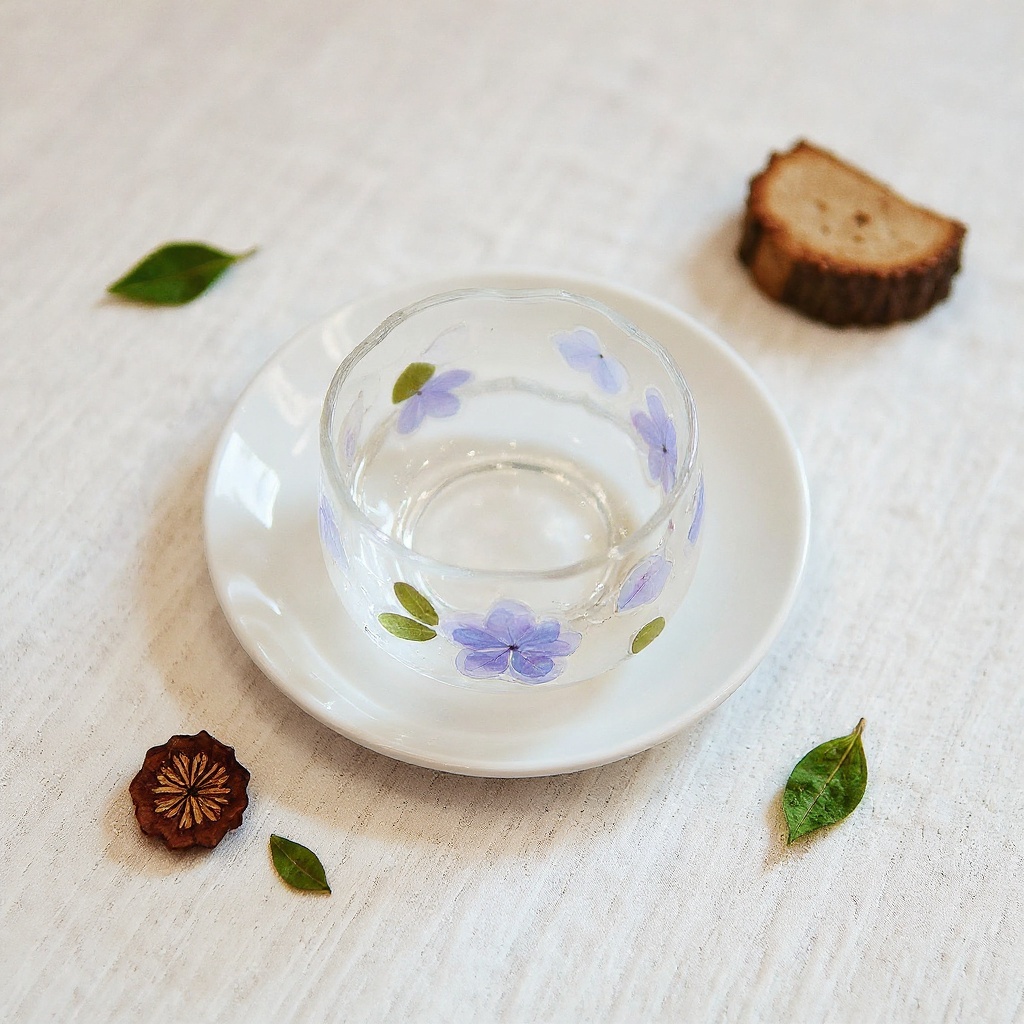
The glass base requires specific preparation to ensure the resin bonds properly and the 3d flower embedded glass teacup maintains its translucent quality. Most artisan teacups use double-walled borosilicate glass with a frosted exterior finish. The frosting isn't just aesthetic—it creates microscopic texture that helps resin adhere without visible air bubbles.
Before flower placement, the glass surface gets cleaned with isopropyl alcohol to remove any oils or dust particles. Even fingerprints can create weak spots where the resin might eventually separate. The frosted texture is typically achieved through acid etching or sandblasting, creating uniform surface roughness that's invisible to touch but crucial for resin bonding.
Temperature control is critical during this stage. Glass that's too cold will cause condensation when resin is applied, while overly warm glass can cause the resin to cure too quickly, trapping air bubbles. Most artisans work at room temperature between 68-72°F with low humidity for optimal results.
The Resin Embedding Technique
The actual flower embedding requires both artistic vision and technical precision. Artisans use food-safe epoxy resin specifically formulated for items that might contact beverages. The process starts with a thin base coat—just enough to create a tacky surface for flower positioning.
Petals are arranged one by one using tweezers, creating natural-looking clusters that follow the teacup's curves. The key is building layers: background petals first, then mid-ground elements, finally foreground details. This creates the true 3D effect where some flowers appear to float behind others. A single 40-60ml teacup typically uses 15-20 individual hydrangea petals carefully positioned to avoid overlapping that would create thick spots.
Once positioned, the flowers are sealed with multiple thin resin coats rather than one thick layer. Each coat cures for 6-8 hours before the next application. This prevents the resin from flowing and displacing the carefully arranged petals. The final result should have completely smooth surfaces with no visible resin lines or texture changes.
Creating the Perfect 3D Depth Effect
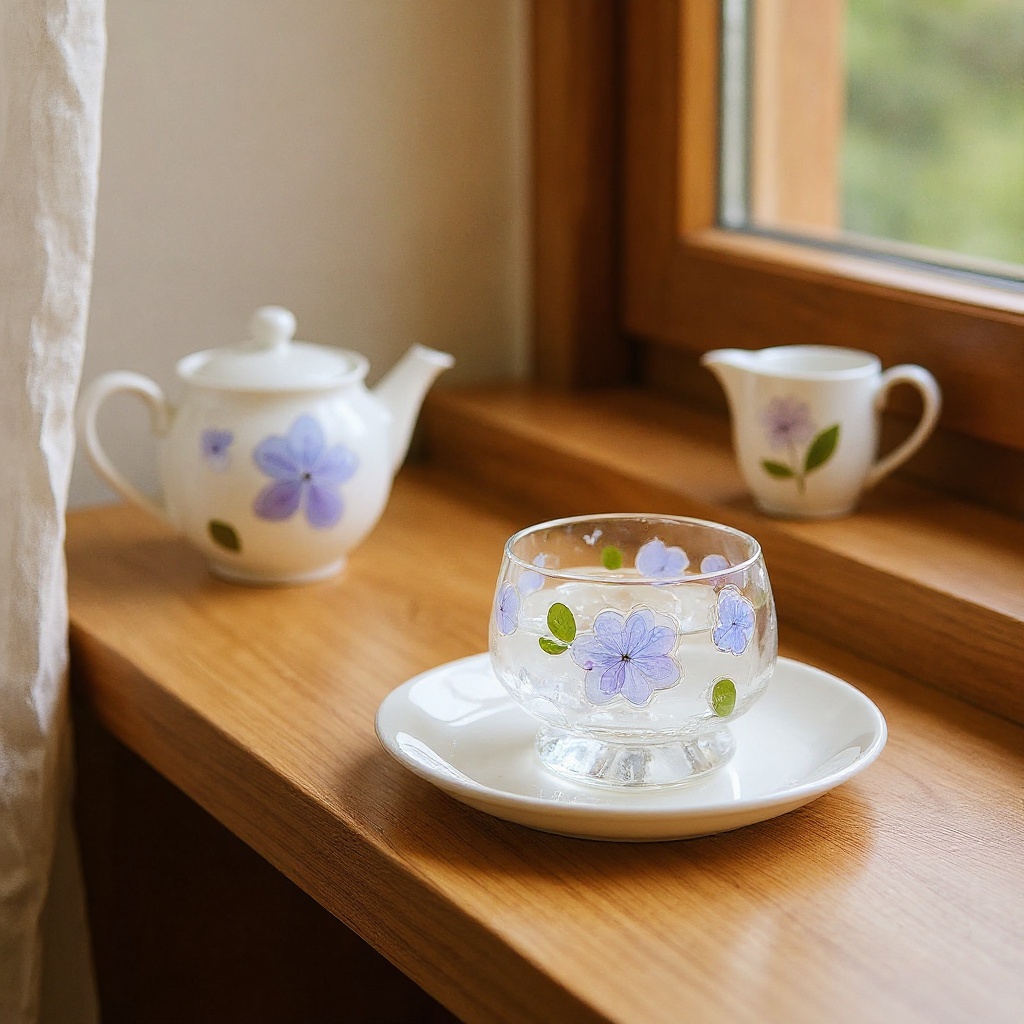
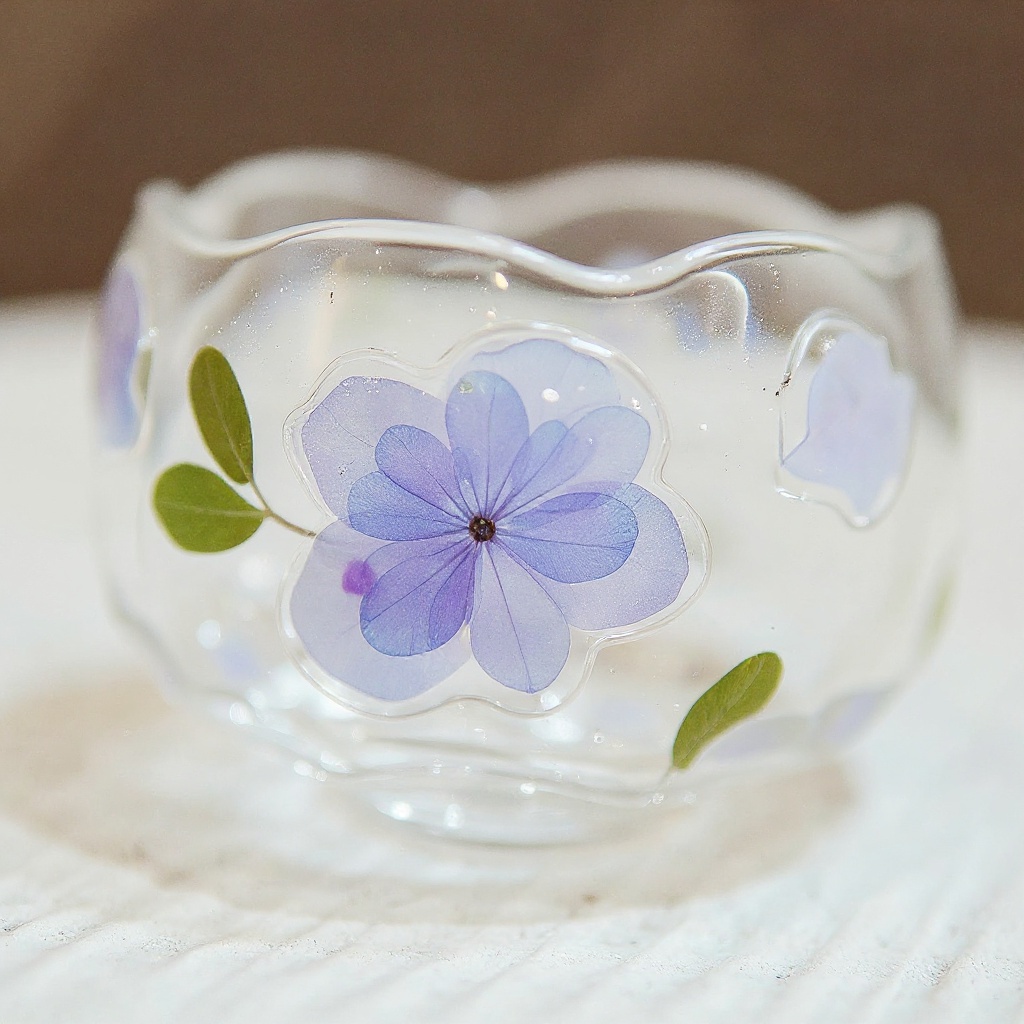
The floating illusion that defines a quality 3d flower embedded glass teacup comes from understanding how light interacts with layered materials. Skilled artisans position flowers at varying depths—some flush against the glass, others raised slightly on small resin pedestals. This creates parallax effects where the floral arrangement appears to shift as you move the cup.
Color placement matters enormously. Darker purple petals work best in background positions where they create shadow-like depth, while lighter blue and lavender tones are positioned as foreground elements to catch light. The frosted glass itself acts as a diffusion layer, softening harsh shadows and creating the ethereal glow that makes embedded flowers appear luminous.
Artisans often include tiny air bubbles intentionally—not defects, but controlled elements that mimic dewdrops or create additional light refraction points. These micro-bubbles are positioned using fine needles during the early resin stages and add to the underwater garden effect that makes premium embedded teacups so captivating.
Quality Control and Curing Process
Proper curing separates amateur attempts from professional results. After the final resin coat, embedded teacups cure for 48-72 hours in controlled conditions. Temperature fluctuations during this period can cause internal stress that leads to eventual cracking or clouding. Professional workshops use curing ovens that maintain steady 75-80°F temperatures with minimal air circulation.
The Handmade Floating Flower Teacup Set | Frosted Glass & Real Blue Hydrangea | Gongfu Tea Gift exemplifies this careful attention to curing—each piece undergoes multi-day processing to ensure the resin reaches full hardness while maintaining optical clarity. Quality control includes checking for any soft spots, measuring resin thickness consistency, and testing the bond between glass and resin layers.
Final inspection covers both aesthetic and functional elements. The embedded flowers should appear naturally positioned without visible glue lines or resin pooling. The interior glass surface must remain completely smooth for easy cleaning, while the exterior resin should feel uniform to the touch. Any piece showing cloudiness, trapped debris, or uneven curing gets rejected.
Comparing Embedded vs. Other Floral Teacup Styles
| Style | Durability | Visual Impact | Price Range | Maintenance |
|---|---|---|---|---|
| 3D Resin Embedded | 5+ years | High depth/dimension | $60-180 | Hand wash only |
| Ceramic Painted | 2-3 years | Flat surface design | $15-40 | Dishwasher safe |
| Decoupage/Applied | 1-2 years | Medium texture | $25-60 | Gentle hand wash |
| Pressed Flower Glass | 3-4 years | Natural but flat | $40-90 | Hand wash recommended |
| Digital Print Ceramic | 1-2 years | Photo-realistic but flat | $20-45 | Machine washable |
The embedded style clearly offers superior longevity and visual impact, though it requires more careful handling. While ceramic options can handle dishwashers, they can't match the dimensional depth that makes embedded flowers so compelling.
Understanding Gongfu Tea Culture and Cup Sizing
The small 40-60ml capacity that characterizes quality embedded teacups isn't arbitrary—it reflects traditional Gongfu tea ceremony practices. These "master cups" are designed for multiple quick infusions rather than slow sipping of large volumes. The concentrated brewing method extracts different flavor notes with each successive steep, making the small cup size essential for proper tasting.
Gongfu practitioners typically brew the same tea leaves 4-6 times, with each infusion lasting just 30-60 seconds. The small cup ensures you taste each brew at optimal temperature while it's still aromatic. Larger Western-style mugs would cause the tea to cool before you could finish it, missing the subtle flavor evolution that makes Gongfu brewing special.
This sizing also enhances the visual impact of embedded flowers. In a small cup, the botanical elements create a more intimate, jewelry-like effect. The same flower arrangement that looks striking in a 50ml cup might appear sparse or underwhelming in a 200ml mug. It's about proportion and presence.
Care Instructions for Long-Term Beauty
Proper maintenance can keep embedded flowers vibrant for 5+ years, while poor care can cause deterioration within months. The resin surface should never be scrubbed with abrasive materials or soaked in hot soapy water for extended periods. Instead, use lukewarm water with gentle dish soap, washing by hand immediately after use.
Avoid temperature extremes that can stress the bond between glass and resin. Never pour boiling water directly onto the embedded exterior, and don't put the teacup in freezers or leave it in direct sunlight for hours. UV exposure won't immediately fade preserved hydrangea petals, but it can gradually yellow the resin matrix over several years.
Storage matters too. Embedded teacups should be kept in soft cloth pouches or padded boxes to prevent scratches on the resin surface. Even minor scratches can eventually collect oils and dust, making the embedded flowers appear cloudy. Handle by the interior glass portions when possible, avoiding unnecessary contact with the decorated exterior.
Investment Value and Artisan Pricing
High-quality 3d flower embedded glass teacups represent significant time investment—typically 3-4 days of active work per piece when you include flower preservation, positioning, multiple resin coats, and proper curing time. This explains why authentic artisan pieces command premium pricing compared to mass-produced alternatives.
The price difference becomes clear when comparing construction methods:
1. Machine-pressed ceramic with decal transfers - 15 minutes production time, $15-25 retail 2. Hand-painted ceramic designs - 2-3 hours active work, $35-55 retail 3. Pressed flower under glass coating - 4-6 hours with drying time, $40-70 retail 4. 3D resin-embedded real botanicals - 3-4 days multi-stage process, $60-180 retail 5. Premium artisan embedded with matching accessories - 5-7 days including custom elements, $70+ retail
The labor intensity of true embedded work, combined with the skill required to achieve professional results, justifies the higher cost. You're not just buying a teacup—you're acquiring a piece of functional art that required days of specialized craftsmanship.
FAQ
Do the real flowers inside glass teacups fade over time? Properly preserved hydrangea petals maintain their color for 3-5 years when sealed in quality resin. The glycerin preservation process and UV-resistant resin protect against fading, though direct sunlight exposure should be avoided. Is the resin on floral teacups food-safe if it touches the tea? Reputable artisans use food-grade epoxy resin that meets FDA standards for indirect food contact. The resin coating is on the exterior only—tea never directly touches the embedded flowers or resin layer. Can you put a resin-embedded teacup in the dishwasher? No, always hand wash embedded teacups. Dishwasher heat and harsh detergents can damage the resin coating and cause cloudiness or separation from the glass base. How long does it take to handmake one botanical resin teacup? Complete production takes 3-4 days including flower preservation (2-3 days), positioning and initial resin application (4-6 hours), and final curing (48-72 hours). Active work time is about 6-8 hours spread across multiple days. What is a Gongfu master cup and why is it so small? A master cup (40-60ml) is designed for traditional Chinese Gongfu tea ceremony, where the same leaves are brewed multiple times in quick succession. The small size ensures you taste each infusion at optimal temperature. Are the flowers in 3D flower teacups real or artificial? Authentic artisan pieces use real preserved botanicals, typically hydrangea petals treated with glycerin. This creates natural texture and translucency that artificial materials can't replicate. Will the resin on my floral teacup turn yellow? High-quality UV-resistant resin should remain clear for 5+ years with proper care. Cheaper resins or excessive sun exposure can cause yellowing within 1-2 years. How do I know if a handmade floral teacup is worth the price? Look for natural petal positioning (not perfectly uniform), smooth resin finish without bubbles, clear depth layers, and authentic botanical details. Quality pieces show individual petal veining and natural color variation.Conclusion
Creating an authentic 3d flower embedded glass teacup requires genuine artisan skill, quality materials, and patience for proper curing processes. The multi-day creation timeline and specialized techniques explain why these pieces command premium pricing compared to simple painted or printed alternatives. When you hold a well-made embedded teacup, you're experiencing the culmination of pressed flower craft traditions merged with modern resin technology.
For tea enthusiasts seeking that perfect balance of functional beauty and artisan craftsmanship, the time-intensive creation process becomes part of the appeal. Each piece represents days of careful work to capture and preserve natural botanical elements in a form that will maintain its beauty for years. If you're drawn to the ethereal quality of flowers suspended in translucent resin, see Handmade Floating Flower Teacup Set | Frosted Glass & Real Blue Hydrangea | Gongfu Tea Gift to experience this unique artform firsthand.


