































Preserved Cherry Blossom Tea Cups: What's Real
Preserved Cherry Blossom Petal Tea Cup: What's Actually Real (And What Isn't)
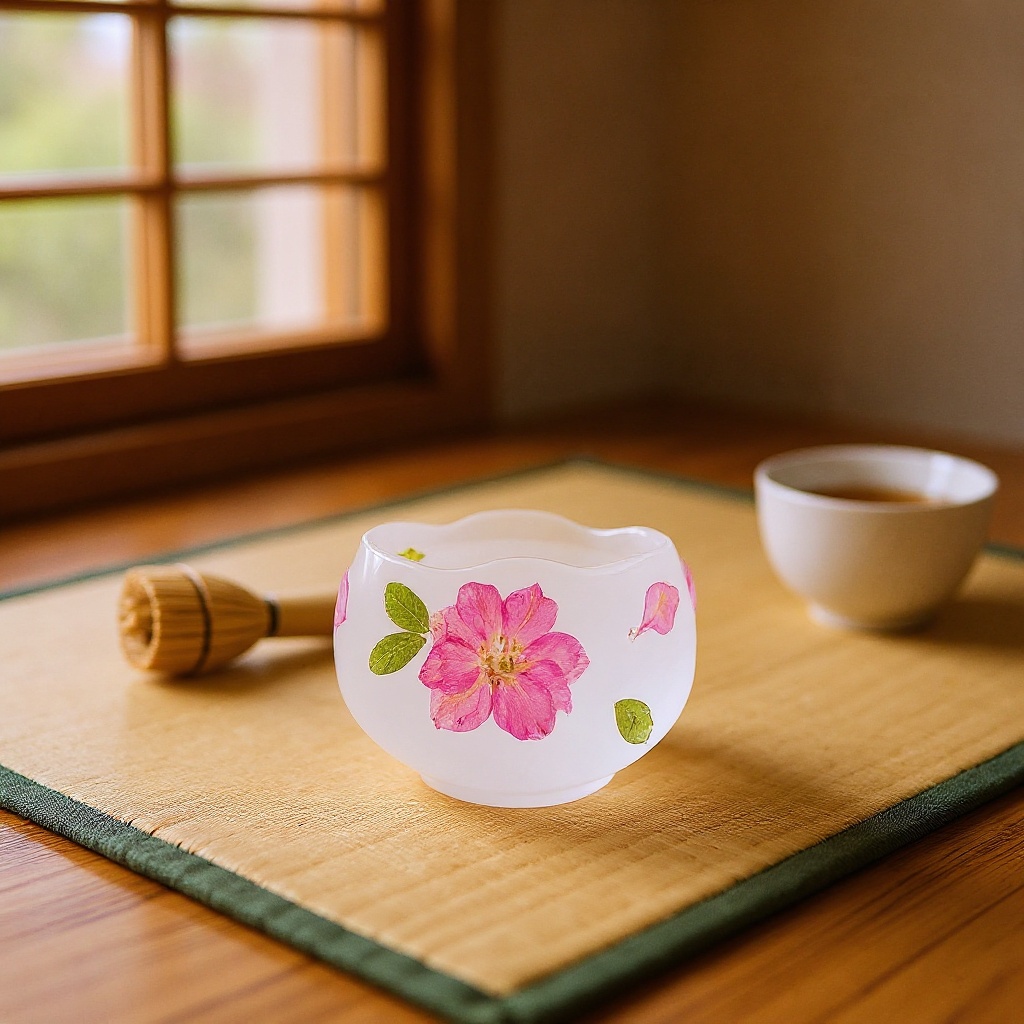
By pampasroom, founder of Pampasroom · 8+ years specializing in botanical resin preservation and Japanese-inspired handcraft · Featured in Cottagecore Weekly and The Artisan HomeA preserved cherry blossom petal tea cup contains real botanical matter. Not a print. Not a decal. Actual petals — dehydrated, hand-positioned, and sealed permanently inside layers of clear eco-resin applied to the exterior of a 60ml glass cup. The result is a floating 3D petal effect where soft pink and white sakura petals appear suspended in crystal clarity, visible through the translucent glass from every angle. This is a specific craft technique that takes 3–7 days per cup to execute properly. It differs completely from anything you'll find at a general homeware retailer.
The process is labor-intensive by design. And that matters when you're deciding whether a $71 preserved cherry blossom petal tea cup makes sense compared to a $15 printed alternative.
How Real Cherry Blossoms Get Preserved Inside Resin
Timing is the first constraint. Cherry blossoms bloom for just 7–14 days per year, giving artisans an extremely narrow window for fresh petal collection — a reality documented in Japanese botanical preservation traditions dating back centuries. Fresh petals are immediately processed using silica gel dehydration or low-temperature drying methods. According to materials science literature on botanical preservation, effective desiccation removes approximately 93–95% of a petal's moisture content while retaining its pigmentation and structural form. Residual moisture above 5% creates conditions for microbial growth once the resin seals the environment.
Resin application follows a strict layered sequence:
1. The clean glass cup exterior receives a base coat of eco-friendly epoxy resin mixed at precise hardener ratios (typically 2:1 resin-to-hardener by volume) 2. This first layer cures for 24–48 hours at 65–75°F with humidity below 50% 3. Dehydrated cherry blossom petals and green leaves are hand-positioned on the tacky surface 4. A second resin layer seals the petals, creating the embedded 3D effect 5. A final finish coat achieves the smooth, glossy exterior surface 6. Full cure runs an additional 48–72 hours before the cup is handled or packed
The temperature and humidity requirements explain something most sellers won't admit: authentic preserved cherry blossom petal tea cups cannot be produced in high-volume factory environments without compromising cure quality. Real. Controlled. Slow.
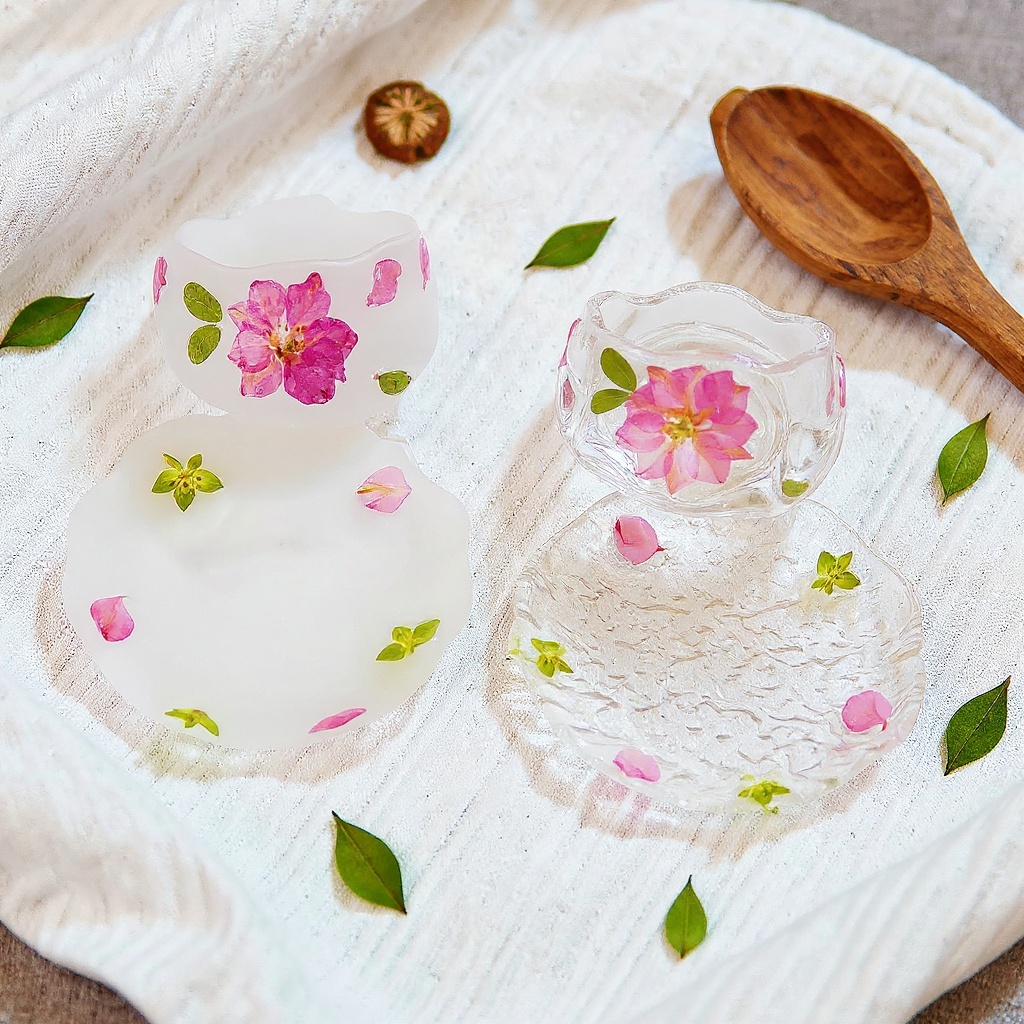
The Science Behind Long-Term Petal Preservation
Once properly dehydrated and sealed, cherry blossom petals maintain their appearance for 5–10 years under normal indoor conditions. This longevity claim is supported by research into epoxy encapsulation of biological specimens — a technique used in scientific specimen preservation as well as craft applications. The key variable is UV exposure. Standard epoxy resins yellow noticeably within 18–24 months of light exposure because they lack photoinitiator stabilizers. High-grade eco resins used in botanical preservation include UV inhibitors that slow this photodegradation significantly, extending aesthetic clarity well beyond the baseline.
Dr. materials. Dr. chemistry. The language gets dense fast.
Here's the practical version: a preserved cherry blossom petal tea cup made with UV-resistant eco resin, stored away from direct sunlight and hand-washed, will still show vivid pink and white petal tones years after purchase. One that was made with budget resin and left on a windowsill may look amber-tinted within 18 months. The resin quality is the single biggest predictor of long-term appearance.
The epoxy resin formulation also determines food safety. The resin covers the cup's exterior only — your tea contacts only the glass interior — but "food-safe" or "eco-resin" labeling should still indicate compliance with standards for indirect food contact, meaning no harmful plasticizers or heavy metal pigments in the formulation.
Comparing Real Preserved Petals vs. Other Floral Cup Types
| Feature | Real Preserved Petals (This Cup) | Printed/Transfer Floral | Painted Ceramic Floral | Artificial Silk Inlay | Dried Flower Resin Slab Style |
|---|---|---|---|---|---|
| Petal Material | Actual botanical matter | Ink on surface | Glaze over paint | Synthetic fiber | Real dried flowers, non-botanical spec |
| 3D Depth Effect | Yes — visible petal layers | No — flat surface | No — surface only | Slight — depends on fill | Yes — but often chunky |
| Durability | 5–10 years with UV resin | Permanent but chips at edges | Fades or chips with use | Yellows within 1–2 years | 3–7 years depending on resin |
| Price Range | $60–150 handmade | $10–30 mass-produced | $20–50 mid-range | $25–65 mid-range | $40–90 varies widely |
| Uniqueness | Every cup completely different | Identical reproductions | Near-identical | Limited variety | Somewhat variable |
| Food Safety | Eco-resin exterior, glass interior | Ceramic glaze dependent | Lead-free glaze varies | Often not rated | Resin quality varies |
| Gongfu-Appropriate | Yes — 60ml master cup size | Depends on shape | Depends on shape | Rarely | Rarely |
Handling both types side by side removes any remaining doubt. Real preserved petals create surface micro-variations you feel through the resin. Printed patterns are glass-smooth with machine-perfect edges. Real petal color shows natural gradation — deep pink at the center, fading toward pale white at the tips, with occasional translucent zones where the petal was thin. No printing process replicates this with any authenticity.
Honestly: Who Should NOT Buy This
Most product articles skip this part. Here it is.
If you live in a humid subtropical climate and your home regularly exceeds 80% relative humidity without air conditioning, a preserved cherry blossom petal tea cup is a harder recommendation. High ambient humidity doesn't affect properly cured resin directly, but it makes curing conditions during production far more critical — and it means you need to be more careful about where you store and display the cup. Not a dealbreaker. But worth knowing before you spend $71.
If you want something you can throw in a dishwasher without thinking about it, this is also not the right purchase. The resin surface requires hand washing. That's a real usage constraint.
If you want a cup that looks identical to a reference photo every time, real preserved petals will disappoint you — because natural petal placement varies by definition. That variation is the point for most buyers. But not all.
Quality Markers: What to Check Before Buying
Authentic preserved cherry blossom petal tea cups show specific indicators that separate them from cheaper imitations. Here is a concrete checklist:
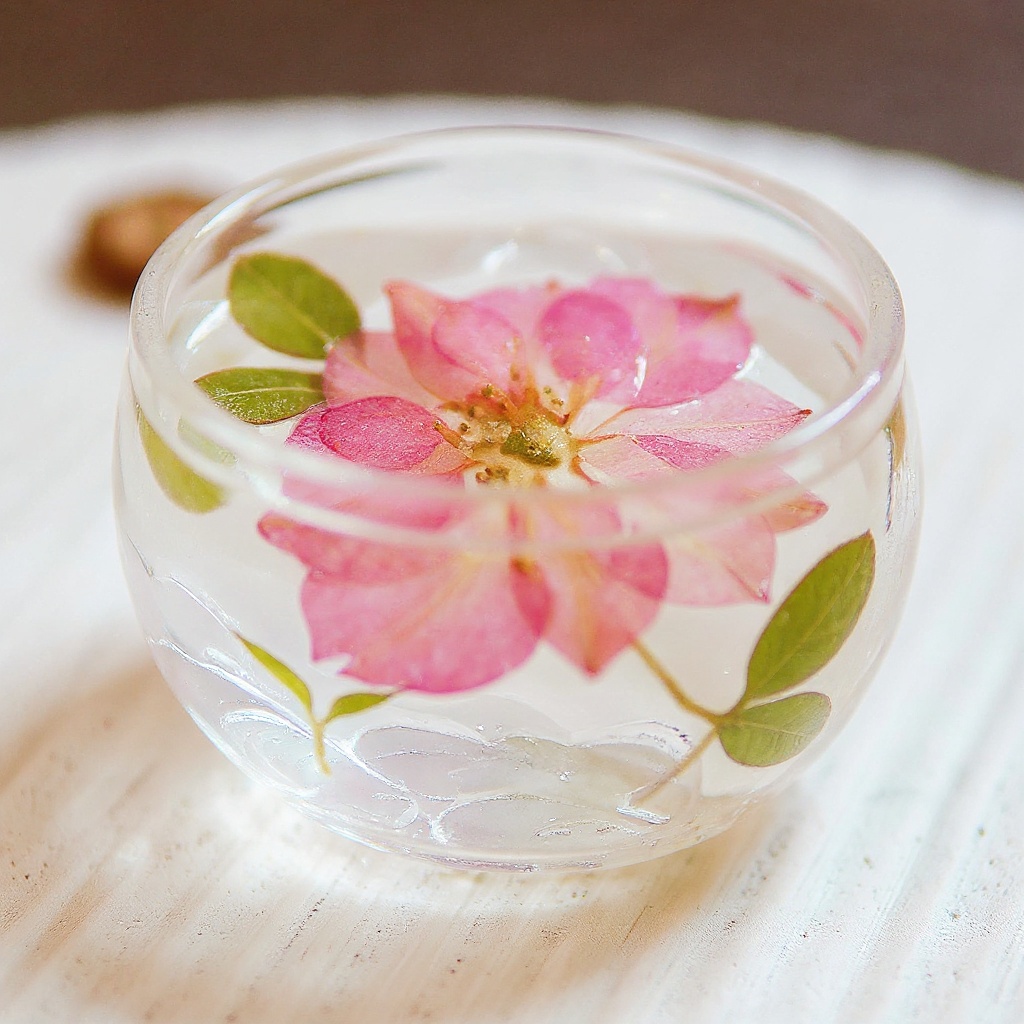
1. Zero visible air bubbles — hold the cup to natural light; any cloudiness or trapped bubbles indicate rushed curing or poor humidity control during production 2. Asymmetrical petal placement — real artisan positioning shows natural scatter; too-perfect symmetry signals machine placement or artificial flowers 3. Natural color variation within petals — look for pink-to-white gradation and occasional translucent zones; uniform color suggests printed or artificial material 4. Consistent resin thickness — professional application maintains approximately 2–3mm around the exterior; thin spots crack, thick spots feel bulky 5. Glass-smooth surface finish — no tackiness, no fingerprint retention; stickiness means incomplete cure or inferior resin formulation 6. Green leaf inclusions — authentic cherry blossom preservation includes leaves alongside petals; leaf-free cups may use selectively sourced or artificial components 7. Visible petal depth layers — the defining characteristic of the 3D floating effect; petals should appear at different depths through the resin, not all on one plane
Seven markers. Check all of them.
Master Cup Traditions and the 60ml Standard
The 60ml capacity is not a design choice made for aesthetics. It follows centuries of gongfu tea ceremony proportion guidelines where small vessel volume allows precise steeping control across multiple infusions. Traditional Zhu Ren Bei (master cups) were made from Yixing clay or thin-walled porcelain. Glass versions introduce a modern transparency that lets you observe the tea's color shift from infusion to infusion — something clay cannot offer.
Cherry blossoms carry specific symbolic weight within tea culture and Japanese ceremony more broadly. Cherry blossom season — mono no aware in Japanese aesthetics — represents the beauty of impermanence, the appreciation of what is briefly present. A preserved sakura petal tea cup literalizes that symbolism. The bloom that lasts only two weeks is made permanent. The fleeting becomes the enduring. This is why these cups work as ceremony objects and not just drinkware.
Modern uses extend across the full range of tea practice: - Daily gongfu sessions with oolong, white tea, or aged pu-erh - Mindfulness-focused green tea preparation - Special occasion tea service for guests - Display pieces resting on wooden tea trays between uses - Documentary photography of tea setups and seasonal tablescapes
Care Instructions That Actually Matter
Hand wash only. Lukewarm water. Mild dish soap. This is non-negotiable for long-term resin clarity.
The resin surface sits between glass and tempered glass in hardness — harder than ceramic glaze, softer than borosilicate. Abrasive sponges create micro-scratches that accumulate into surface haze over time. A soft cloth or silicone brush keeps the exterior clear.
Thermal shock is the structural risk. Pouring boiling water (212°F) into a cold cup or setting a hot cup on a frozen surface can stress the bond between glass and resin coating. The ideal serving temperature range is 160–180°F — hot enough for proper extraction of most tea types, within safe thermal range for the cup construction.
Storage away from direct sunlight matters more than most buyers expect. UV exposure is cumulative. A cup displayed in indirect natural light for years will look better than one sitting on a south-facing windowsill for months. A tea cabinet or enclosed display shelf provides ideal conditions.
Understanding the Price
The $71.22 price point for an authentic preserved cherry blossom petal tea cup reflects three compounding cost factors.
First: time. Each cup requires 3–7 days of production time across silica drying, resin mixing, layered application, positioning, and full cure. This cannot be accelerated without compromising quality.
Second: materials. Food-safe eco resin costs approximately 3–4 times more per unit than standard industrial epoxy. Hand-blown glass bases cost 5–6 times more than molded alternatives. Real cherry blossom petals require seasonal sourcing.
Third: skill. Bubble-free resin application requires practiced technique. Petal positioning that reads as naturally botanical — neither too sparse nor overcrowded — is a design skill. The cure environment must be monitored throughout.
For context within the broader tea ware market: Yixing clay teapots from established potters run $200–800. Vintage export porcelain tea sets sell at $300–1000 or above. A handmade preserved cherry blossom petal tea cup at $71 sits at a considerably accessible entry point for genuine artisan tea ware with cultural and botanical specificity.
No two cups will ever be identical. That is structural, not marketing language.
Frequently Asked Questions
Are the flowers inside resin tea cups real or fake? Authentic preserved flower cups contain real cherry blossom petals that have been dehydrated and sealed in eco-friendly resin. Real petals show natural color gradations — deep pink centers fading to pale white edges — and irregular organic shapes. Artificial or printed alternatives display too-uniform color and machine-perfect symmetry that looks immediately different under close inspection. Is it safe to drink from a resin-coated glass cup? Yes, when the cup is made with food-grade eco resin meeting EPA green product standards for indirect food contact. The resin forms a protective exterior layer only — your beverage contacts exclusively the glass interior. Quality manufacturers use resin formulations certified to contain no harmful plasticizers or heavy metal pigments. Will the cherry blossom petals fade inside the resin over time? Properly preserved petals in UV-resistant resin maintain their color for 5–10 years under normal indoor conditions. The primary degradation factor is UV light exposure, which causes photoyellowing in the resin itself. Keeping the cup in indirect light significantly extends color vibrancy. Fading within 1–2 years typically indicates low-grade resin without UV stabilizer additives. How are flowers preserved inside resin without rotting? The dehydration step removes approximately 93–95% of the petal's moisture content via silica gel or low-temperature drying before any resin contact occurs. Removing moisture to this level prevents bacterial and fungal activity. The resin then creates a sealed anaerobic environment that maintains this preserved state. Any moisture remaining above approximately 5% can cause browning or mold formation inside the sealed layer. What is a Zhu Ren Bei (master cup) and why is it so small? Zhu Ren Bei refers to the small-format cups used in traditional gongfu tea ceremonies. At 60ml, the volume allows for multiple quick successive infusions where the drinker observes how flavor complexity develops through each steep. It is a tasting practice, not a drinking-volume practice. Glass versions add the dimension of color observation that opaque clay cups cannot provide. Can I put a resin flower tea cup in the dishwasher? No. Dishwashers subject the cup to temperatures exceeding 140°F in the wash cycle and higher in the heated dry cycle, combined with alkaline detergents. This combination degrades resin clarity over time and can stress the thermal bond between the glass base and resin exterior coating. Hand washing at 100–110°F with mild soap takes under 60 seconds and preserves surface clarity for years. What is eco resin and how is it different from standard epoxy? Eco resin refers to epoxy formulations with reduced volatile organic compound (VOC) content and improved safety profiles compared to industrial-grade epoxy. Standard industrial epoxy can contain bisphenol-A (BPA) and other compounds flagged for indirect food contact. Food-safe eco resin formulations meet FDA 21 CFR standards for indirect food contact applications and carry no harmful plasticizer content. Cure ratios of 2:1 resin-to-hardener by volume are standard for most food-safe eco resin systems. Why does petal placement look asymmetrical in some cups? Asymmetry is a quality indicator, not a defect. Real artisan positioning mimics natural petal fall patterns — scattered, overlapping at irregular angles, varying in density across the cup surface. Perfect radial symmetry or evenly spaced placement indicates artificial flowers or template-guided positioning rather than hand craft. Natural petal placement is one of the clearest visual signals of authentic botanical preservation. How do I spot a fake preserved flower tea cup online? Look for: perfectly uniform petal color without gradation (printed or artificial), identical-looking product photos across multiple unrelated sellers (dropship stock), pricing below $40 for claimed handmade resin work (production costs make this economically implausible for authentic pieces), and absence of green leaf inclusions (real cherry blossom preservation includes foliage). Surface-smooth exterior photos without any visible petal texture depth are also a warning sign.Where to Buy
For a verified authentic preserved cherry blossom petal tea cup made with real botanical petals, UV-resistant eco resin, and hand-blown 60ml glass, the Handmade Cherry Blossom Glass Tea Cup | Real Flower Eco Resin | 60ml Master Cup Gift at Pampasroom is produced to the standards described throughout this article.


