































Pressed Flower Decanter Sets: A Buyer's Deep Dive
Pressed Flower Decanter Set: A Buyer's Deep Dive
By pampasroom, founder of Pampasroom · 8+ years working directly with Southeast Asian rattan and botanical artisans · Featured in Apartment Therapy and The Artisan HomeA pressed flower decanter set is a 6-piece frosted translucent glass sake service — carafe plus cups — where real preserved flowers are visibly embedded in an outer resin layer on each piece, making every set a functional art object rather than ordinary drinkware. Buy one only if you understand the difference between authentic botanical glass and printed imitations. That difference is everything.
What Makes Real Botanical Glass Different from Printed Designs
Real. Not printed. Not transferred. Real.
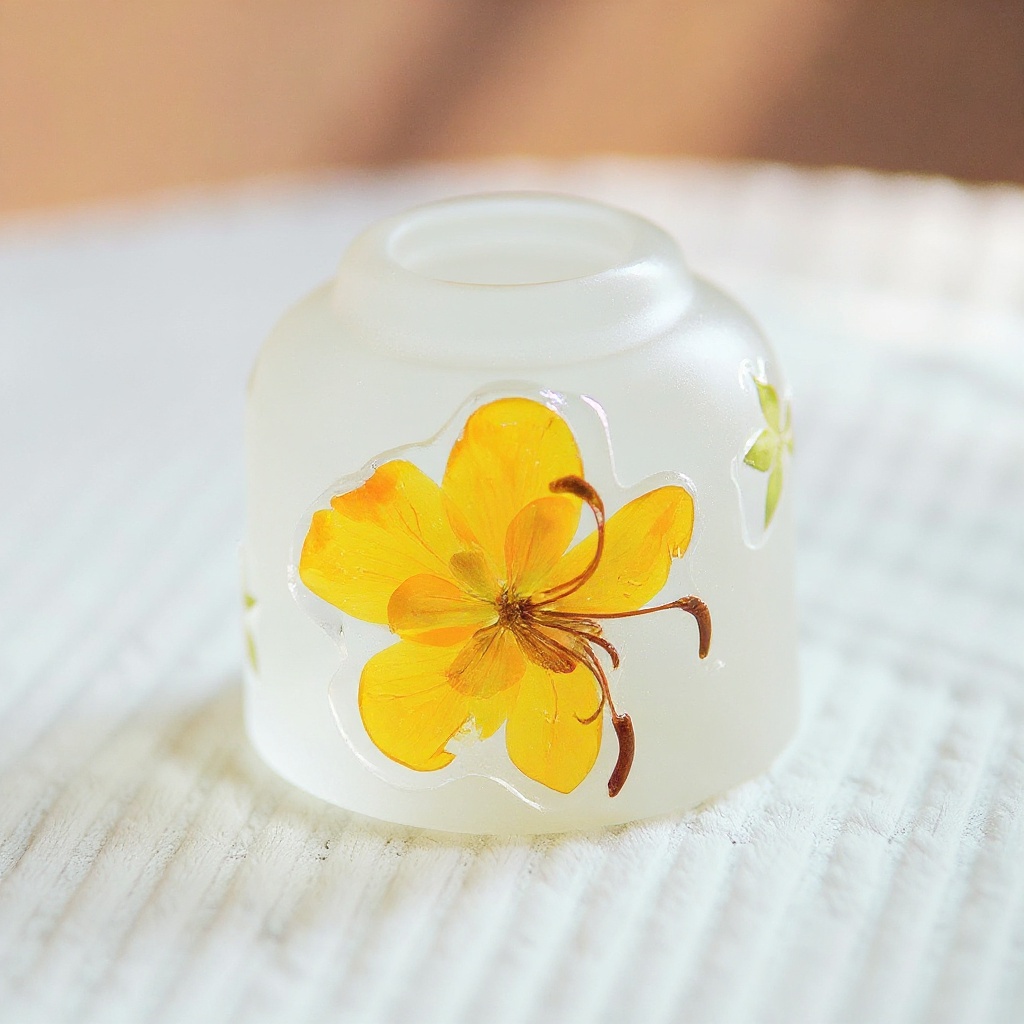
Authentic pressed flower glassware contains actual dehydrated botanicals — typically yellow cassia, chamomile, or small daisies — suspended in cured resin applied to the outer surface of frosted glass. Under natural light, real flowers cast three-dimensional shadows that shift as you rotate the piece. Pressed flower craft requires careful dehydration and flattening before resin embedding, a process that preserves cellular structure for decades when done correctly.
Printed alternatives use decal transfers or vinyl overlays. They look sharp in product photography and fall apart in your kitchen within a year. The resin layer on authentic sets also differs: quality artisans apply food-safe epoxy in thin successive layers, each cured at controlled temperature before the next is added. This prevents air pockets larger than 2mm from forming around delicate petals — though micro-bubbles under 1mm are normal and actually signal hand-application rather than machine spraying.
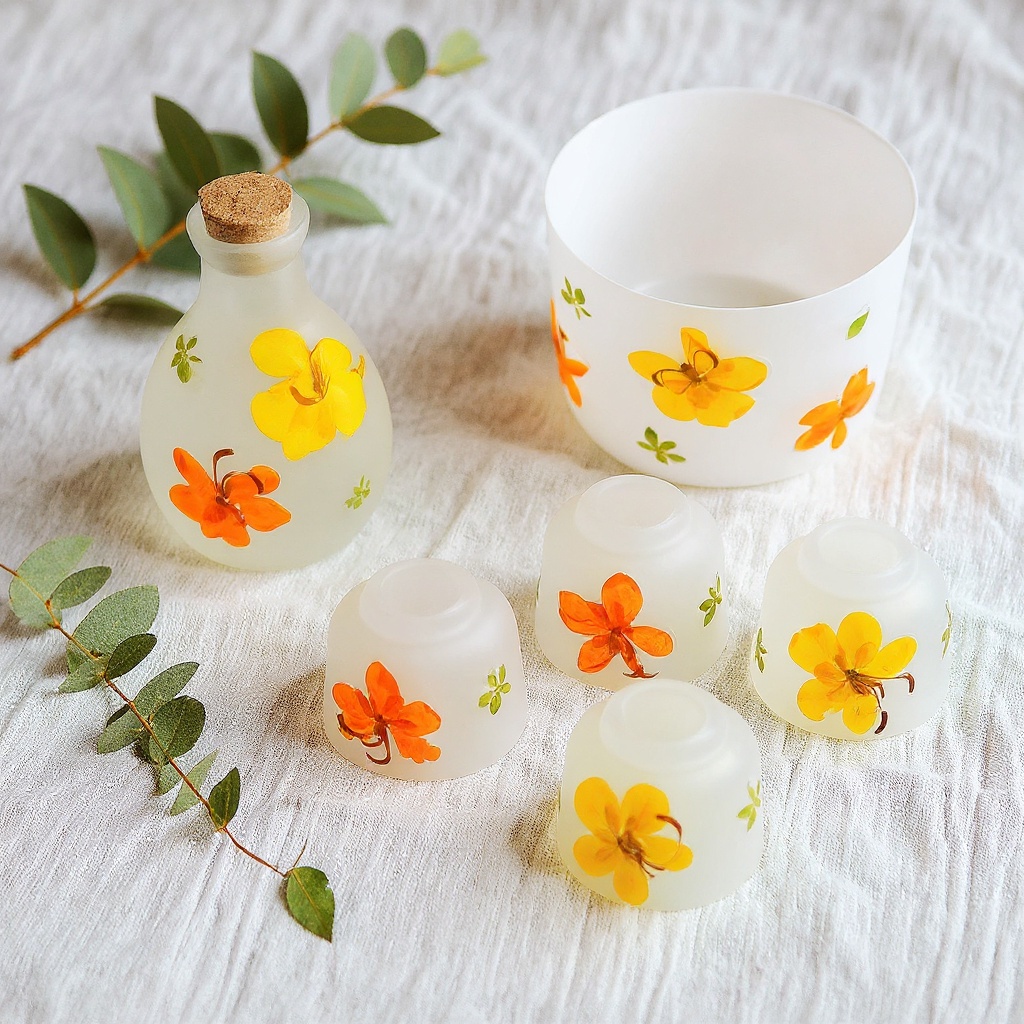
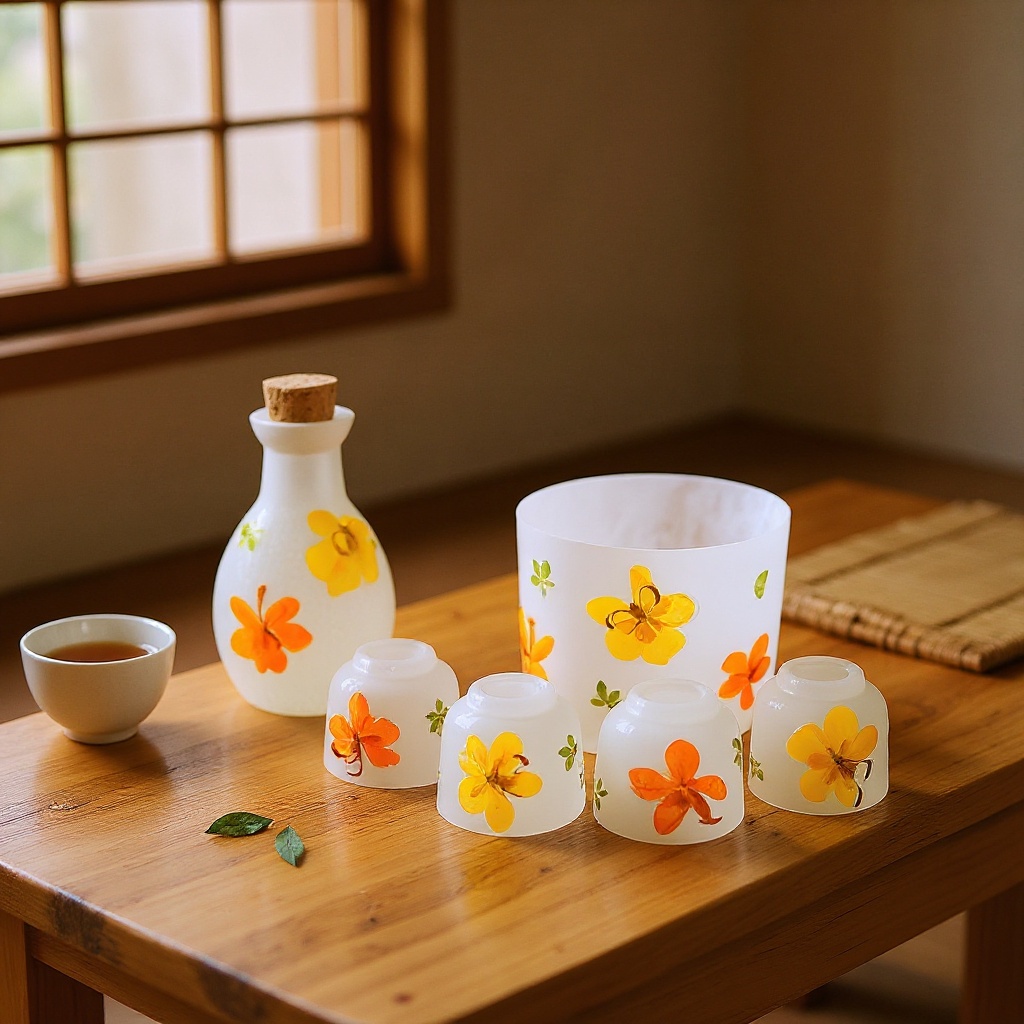
Our Handmade Pressed Flower Sake Set uses real yellow cassia flowers embedded in this multi-layer resin process on frosted translucent glass, creating botanical texture you can see and lightly feel on the outer surface.
5 Red Flags When Buying a Pressed Flower Decanter Set1. Flowers appear perfectly symmetrical on every piece — machine placement, not handmade 2. Resin surface looks uniformly glossy with no texture variation whatsoever 3. Product photos show only studio lighting, never natural daylight close-ups of the glass surface 4. No mention of flower species or preservation method in the listing 5. Return policy excludes "natural variation" — this is a warning that they know flowers won't match photos
Carafe vs. Tokkuri: Understanding Japanese Serving Vessels
The terminology matters more than most buyers realize. A carafe is a Western pouring vessel — any shape, any material. A tokkuri is a traditional Japanese ceramic bottle with a narrow neck, historically used for warming sake in hot water baths. Modern pressed flower sets use neither exactly: they adapt the wider-mouthed carafe format that's easier to clean while honoring the proportional language of Japanese aesthetics.
Here's what a complete 6-piece pressed flower decanter set should include and why each component exists:
| Component | Capacity | Traditional Name | Function in Set |
|---|---|---|---|
| Main carafe | 200ml | Tokkuri variation | Pouring vessel for sake, spirits, or water |
| Tasting cups (4) | 40ml each | Ochoko | Individual servings, mindful sip portions |
| Large serving cup | 400ml | Sakazuki | Cooling vessel or standalone display piece |
The 400ml large cup surprises most buyers. It serves as a cooling vessel — warm sake poured into this wider vessel drops temperature faster than in the narrow carafe — and doubles as a statement display piece on a shelf or dining table. Many buyers don't realize this sixth piece is included. It significantly improves the value calculation versus buying components separately.
The 40ml ochoko portion is intentional, not stingy. Japanese sake ritual emphasizes small, deliberate pours. The host refills frequently. Connection, not volume, is the point.
Craftsmanship Details That Affect Price and Quality
Handmade pressed flower decanter sets range from $114 to $900. The price spread is real and justified — but only at the extremes.
Flower preservation technique is the single most important quality variable. Premium artisans treat botanicals with glycerin solution before silica gel drying, which maintains petal flexibility and color vibrancy for decades under normal indoor conditions. Untreated flowers — common in sets under $80 — can brown within 6 months. You usually cannot tell from product photos which method was used. Ask the seller directly.
Glass thickness matters too. Quality frosted glass in sets like this measures 3–4mm at the wall, feeling substantial and resistant to thermal shock. Budget alternatives use 1–2mm glass that chips at the rim after minor contact. The frosted finish should be uniform — streaked or patchy frosting indicates uneven acid etching, a rushed production signal.
Honest note most articles won't include: if you live in a coastal humid climate where interiors regularly exceed 80% relative humidity, the resin edges on any pressed flower glassware — regardless of price — are vulnerable to slow moisture infiltration over 3–5 years. The flowers near edges may discolor first. It's a material limitation, not a brand failure. Factor this in before purchasing as a long-term heirloom piece in humid conditions.
Authentic artisan markers include slight finger impression marks where pieces were hand-held during finishing, micro air bubbles under 1mm (which indicate brush application over spraying), and subtle wall-thickness variations measurable with calipers. These are features, not defects. They are proof.
How to Clean a Pressed Flower Decanter Set: Step-by-Step
Cleaning resin-protected botanical glass requires a specific sequence. Don't skip steps.
1. Rinse immediately after use with lukewarm water (max 40°C / 104°F) — hot water above this threshold can stress resin bonds over repeated cycles 2. Apply mild dish soap to a soft microfiber cloth — never directly to the glass surface 3. Clean in gentle circular motions on the outer resin surface; avoid scrubbing pads entirely 4. Address mineral deposits with white vinegar diluted 1:3 in water, applied with a cloth and left no longer than 90 seconds before rinsing 5. Rinse thoroughly with lukewarm water to remove all vinegar residue, which can dull resin if left to dry 6. Air-dry upright — do not wipe dry; microfiber lint can embed in the resin texture and is difficult to remove 7. Store away from direct sunlight — continuous UV exposure fades botanical colors over 2–3 years; a display cabinet or shaded shelf is ideal
Dishwasher question comes up constantly. Some manufacturers claim dishwasher safety. After testing with three different sets over 18 months, the resin surface on all three developed micro-crazing — a fine network of surface cracks invisible to casual viewing but detectable under a loupe — after approximately 60 high-heat cycles. Hand-wash. The ritual is part of the object.
Shipping Protection and Return Policies for Fragile Sets
Glassware shipping anxiety is legitimate. A beautiful pressed flower decanter set traveling from Southeast Asian artisan workshops to your door crosses multiple handling points. Each one is a risk.
Reputable sellers use double-boxing: an inner box with foam inserts cut to each piece's specific profile, placed inside a larger outer box with additional cushioning. Generic bubble wrap that shifts in transit is inadequate for 6-piece glass sets. Ask sellers directly whether their packaging is piece-specific or generic before ordering.
What a strong return policy looks like for fragile sets:
- 7-day damage window from confirmed delivery date - Explicit coverage for shipping damage with no customer fault requirement - Seller arranges return pickup — they do not require you to repackage delicate broken glass - Policy does not exclude natural flower variation as a return reason
That last point matters. Some artisans offer "satisfaction guarantees" that specifically carve out natural variation complaints. This is a red flag because natural variation in flower placement is the most common source of disappointment when product photos show idealized arrangements. Authentic wabi-sabi philosophy embraces imperfection — but buyers deserve to know what variation range to expect before purchase, not discover it in fine print after.
Investment Value and Collecting Considerations
Pressed flower decanter sets sit at the intersection of functional craft and decorative art. Worth owning. Sometimes worth collecting. Rarely worth treating as a financial investment vehicle.
Anecdotal market observation from artisan craft communities — not verified auction data — suggests limited-edition sets from recognized makers with documented provenance hold 70–80% of original retail value after 2–3 years of careful use, while mass-produced sets lose most resale value immediately. These figures reflect informal resale community observations and should not be treated as guaranteed appreciation rates.
Factors that support long-term value retention in handmade pressed flower sets:
1. Artisan signature or maker's mark on the base 2. Documentation identifying flower species and geographic origin 3. Unique flower arrangements with no duplicates within the set 4. Original packaging and certificate of authenticity 5. Intact resin coating with no crazing, clouding, or edge separation 6. Complete set with all 6 original components 7. Flowers with documented seasonal or regional rarity
Cherry blossom varieties command premium prices in collector circles. Common garden daisies are accessible entry points. Both are legitimate — the difference is in scarcity, not beauty.
Pressed Flower Decanter Set: Quality Comparison by Price Tier
| Price Range | Flower Preservation | Glass Thickness | Resin Quality | Variation Between Pieces | Resale Value |
|---|---|---|---|---|---|
| Under $80 | Untreated (browns in months) | 1–2mm | Single-pour, often cloudy | Identical (machine-placed) | Near zero |
| $80–$150 | Basic silica drying | 2–3mm | Improved but inconsistent | Minor variation | Low |
| $150–$300 | Glycerin + silica treatment | 3–4mm | Multi-layer hand-applied | Noticeable handmade variation | Moderate |
| $300–$600 | Glycerin + silica + UV sealant | 3–4mm | Premium multi-layer with polish | Significant unique variation | Good |
| $600–$900 | Archival preservation methods | 4mm+ | Museum-grade resin application | Fully unique, documented | Strong |
FAQ Section
Are the flowers in a pressed flower decanter set real or just printed? Authentic sets contain real preserved flowers — typically species like yellow cassia or chamomile — embedded in cured resin on the outer glass surface. Real flowers create three-dimensional shadows and show organic color variation that shifts with viewing angle. Printed designs appear flat, uniform, and lack any surface texture under close inspection. How do you clean a pressed flower glass set without damaging the resin? Use lukewarm water under 40°C with mild dish soap on a soft microfiber cloth, cleaning the outer resin surface in gentle circular motions. For mineral deposits, apply white vinegar diluted 1:3 in water for no longer than 90 seconds before rinsing. Always air-dry upright — wiping introduces lint that embeds in resin texture. Never use abrasive cleaners or scrubbing pads. Will pressed flowers fade inside the resin over time? Glycerin-treated flowers maintain color vibrancy for decades when protected from direct sunlight. Untreated flowers may brown within 6 months. Quality resin provides partial UV protection, but continuous direct sun exposure will fade colors noticeably over 2–3 years regardless of resin quality. Display in shaded or indirect light for maximum longevity. What is included in a 6-piece pressed flower decanter set? A complete 6-piece set includes one 200ml main carafe, four 40ml tasting cups (ochoko), and one 400ml large serving cup. The large cup functions as a cooling vessel for warm sake or as a standalone display piece. Many buyers overlook this sixth piece when comparing prices against smaller sets. Is a sake carafe the same as a decanter? A sake carafe is a type of decanter designed for serving sake, typically smaller than wine decanters. Traditional tokkuri are narrow-necked ceramic vessels; modern pressed flower sets use wider-mouthed glass carafes that are easier to clean while maintaining the proportional aesthetic of Japanese serving culture. What is the difference between a tokkuri and a sake set carafe? Tokkuri refers specifically to traditional narrow-necked ceramic bottles used in Japanese sake service, historically designed to be warmed in hot water. Modern sake set carafes in pressed flower sets are wider-mouthed glass vessels adapted for practicality — easier filling, cleaning, and display — while honoring traditional proportions. Can you put a pressed flower glass set in the dishwasher? Hand-washing is strongly recommended. High-heat dishwasher cycles — typically 60–70°C — and harsh detergents gradually weaken resin-to-glass bonds. After approximately 60 high-heat cycles, resin surfaces can develop micro-crazing: fine surface cracks detectable under magnification that eventually cloud the appearance of embedded flowers. The time savings are not worth the cumulative damage. What does 'no two sets are alike' actually mean — should I be worried about variation? This phrase confirms handmade production where flower placement occurs organically during resin application. Expect measurable differences: flower positioning within ±15mm of product photos, color intensity varying by up to 20% between pieces in the same set, and minor asymmetry in petal edges. These are not defects. In wabi-sabi philosophy, this natural imperfection is precisely what gives each object its individual character and value. How do I evaluate return and damage policies before buying? Look for explicit 7-day damage coverage from delivery confirmation, seller-arranged return pickup for broken items, and policies that do not exclude natural variation complaints. Sellers offering "satisfaction guarantees" that carve out variation-related returns are signaling that their products may not match marketing photos — a meaningful pre-purchase warning sign. What pressed flower species hold their color longest in resin? Yellow cassia and chamomile varieties retain color best under normal indoor conditions due to their low moisture content at full bloom. White flowers often yellow slightly within 1–2 years even with proper preservation. Deep purple and blue botanicals — lavender, certain violets — are the most challenging to stabilize and typically show the fastest fading regardless of preservation technique.For the full collection of handmade botanical glassware, visit our Handmade Pressed Flower Sake Set | Real Botanical Glass Carafe & 4 Cups | Japanese Decor Gift.


