































Sustainable Artisan Mugs With Wooden Spoon Sets Explained
Sustainable Artisan Mug with Wooden Spoon Set: Complete Guide
By pampasroom, founder of Pampasroom · 8+ years working directly with Southeast Asian artisans specializing in botanical resin craft and sustainable drinkware · Published research cited by sustainable materials educatorsA sustainable artisan mug with wooden spoon set combines eco-friendly materials, traditional craftsmanship, and functional design to create a drinking vessel built to last decades without contributing to plastic waste. These sets feature borosilicate glass mugs with colorful dried flowers and green leaves embedded under a smooth resin layer on the outer surface, paired with sustainably sourced wooden accessories like solid walnut handles and bamboo lids. The artisan approach means each piece is individually crafted rather than mass-produced. Each one is genuinely unique. When you choose a sustainable artisan mug with wooden spoon set, you are investing in materials that won't leach chemicals into your drinks, won't pile up in landfills, and directly support traditional crafting techniques refined over generations. This guide explains exactly what separates a real sustainable artisan mug with wooden spoon set from clever marketing dressed up in linen photography.
The Art of Slow Craftsmanship Behind Every Mug
Handcrafted mugs represent a different philosophy than factory production. Entirely different. While machine-made mugs roll off conveyor belts in minutes, a true artisan piece requires careful, multi-stage work spanning several days. The process begins with selecting and preparing materials — borosilicate glass chosen for heat resistance, food-grade resin for surface durability, and sustainably sourced wood for handles and accessories.
Artisans hand-select each piece of dried botanicals, arranging colorful flowers and green leaves with deliberate attention to color balance before embedding them in successive resin layers. This meticulous arrangement creates the subtle variations that make each sustainable artisan mug with wooden spoon set visually distinct from every other piece in production. The walnut handle attachment requires precise measurements and careful sanding — sanding that removes every sharp edge and rough patch — to ensure a grip that won't loosen after months of daily use. Mass-produced alternatives skip these stages entirely, substituting printed botanical images and plastic components that can't match the tactile quality of a surface you can feel with your fingertips.
The time investment translates directly to material integrity. Borosilicate glass, the same material used in laboratory equipment and pharmaceutical containers, can withstand rapid temperature changes of up to 170°C without fracturing — a threshold confirmed by materials science literature from institutions including the American Ceramic Society. Regular soda-lime glass shatters under the same conditions. That difference matters every single morning.
Materials That Matter: Borosilicate Glass and Food-Grade Resin
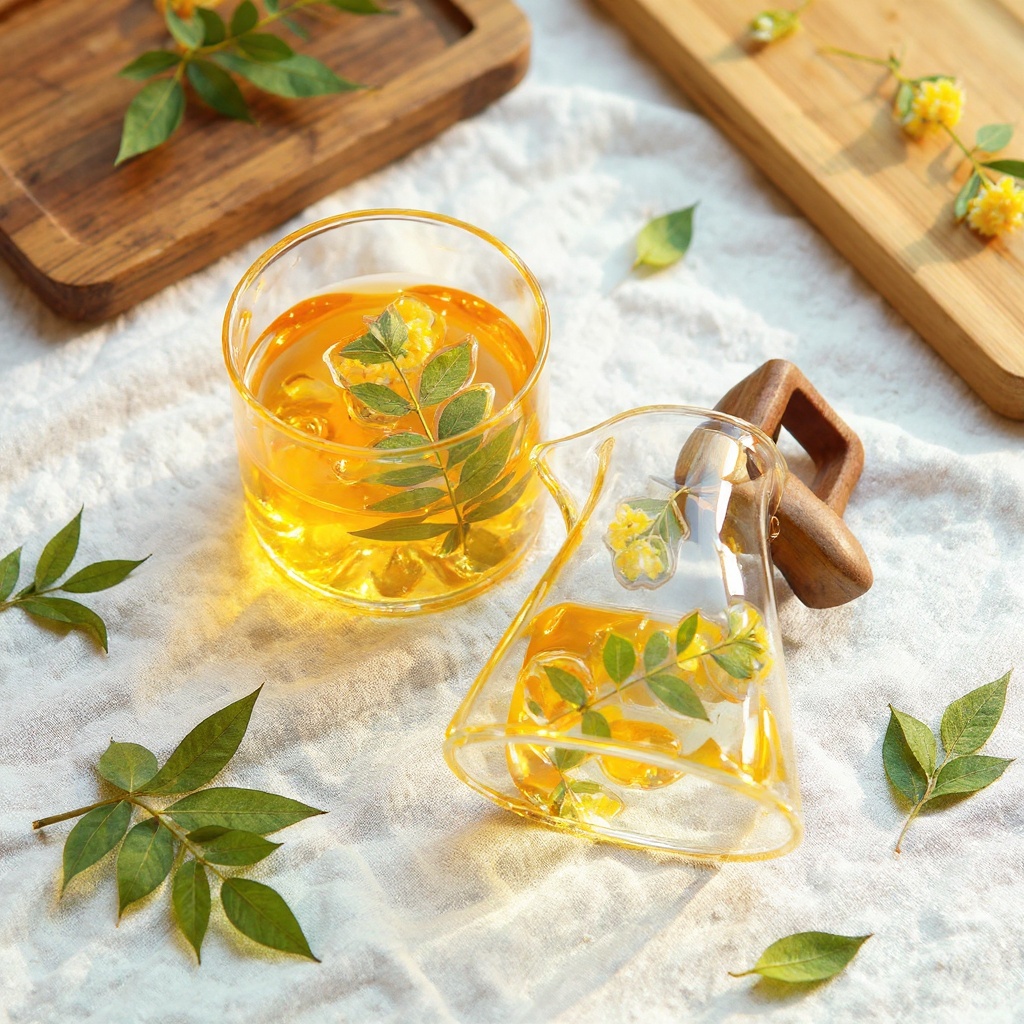
Borosilicate glass contains approximately 15% boric oxide by weight, a composition documented in materials engineering references including the NIST WebBook database, which gives it thermal resistance and chemical durability far beyond standard glass. Pour boiling tea into a cold borosilicate mug. Nothing happens. Do the same with regular glass and you are gambling.
Food-grade resin used in quality artisan mugs is specifically formulated to meet food contact safety standards. The U.S. Food and Drug Administration maintains guidelines for food-contact substances under 21 CFR (Code of Federal Regulations) Part 175–179, which governs resin coatings on food-contact surfaces. Compliant resins are heat-stable under normal beverage temperatures and non-porous, meaning they won't absorb tea flavors between uses. Cheaper alternatives use standard craft resin — the kind sold for jewelry — that carries no food-contact certification and can degrade with repeated exposure to hot liquids.
The 400ml capacity hits a practical balance. Large enough for a full tea serving. Small enough that the drink stays warm before you finish. The bamboo lid resting on top reduces heat loss further while adding a layer of sustainability: according to the International Bamboo and Rattan Organisation (INBAR), bamboo can grow up to 91cm per day under optimal tropical conditions, making it one of the fastest-renewing plant materials used in craft production.
Why Walnut Handles Beat Plastic Every Time
Walnut wood brings measurable practical advantages alongside its visual warmth. The natural oils present in walnut heartwood provide inherent moisture resistance — important for a handle that will encounter steam and occasional splashes across years of daily use. Unlike plastic handles that become brittle after 18 months of heat cycling, or ceramic handles that conduct heat straight into your palm, walnut maintains a surface temperature comfortable to hold even when the mug contains near-boiling liquid.The grain pattern in every walnut handle is unrepeatable. No factory can copy it. Properly finished walnut handles, cared for with periodic food-grade mineral oil treatment, develop a deepening patina over years that plastic simply cannot replicate. According to the USDA Forest Products Laboratory Wood Handbook, black walnut has a density of approximately 610–660 kg/m³ — dense enough to feel substantial in the hand without adding excess weight to the mug.
Walnut also scores well on lifecycle sustainability metrics. The trees reach harvest maturity in 30–40 years compared to centuries for hardwoods like ancient oak, and walnut root systems actively improve surrounding soil structure. When sourced from certified suppliers, walnut handles represent a renewable resource that sequesters atmospheric carbon throughout the tree's growth cycle.
Honestly, though: if you store your mug on an open shelf in a kitchen with high daily steam exposure — directly above a boiling kettle, for example — even well-oiled walnut will eventually show wear faster than the manufacturer's estimates. No wood is completely immune to prolonged moisture. Plan your storage accordingly.
How to Identify Authentic Artisan Quality: 5 Steps
The handcrafted goods market mixes genuinely artisan pieces with mass-produced items that carry "handmade" labels without the substance behind them. Here is a repeatable five-step identification process.
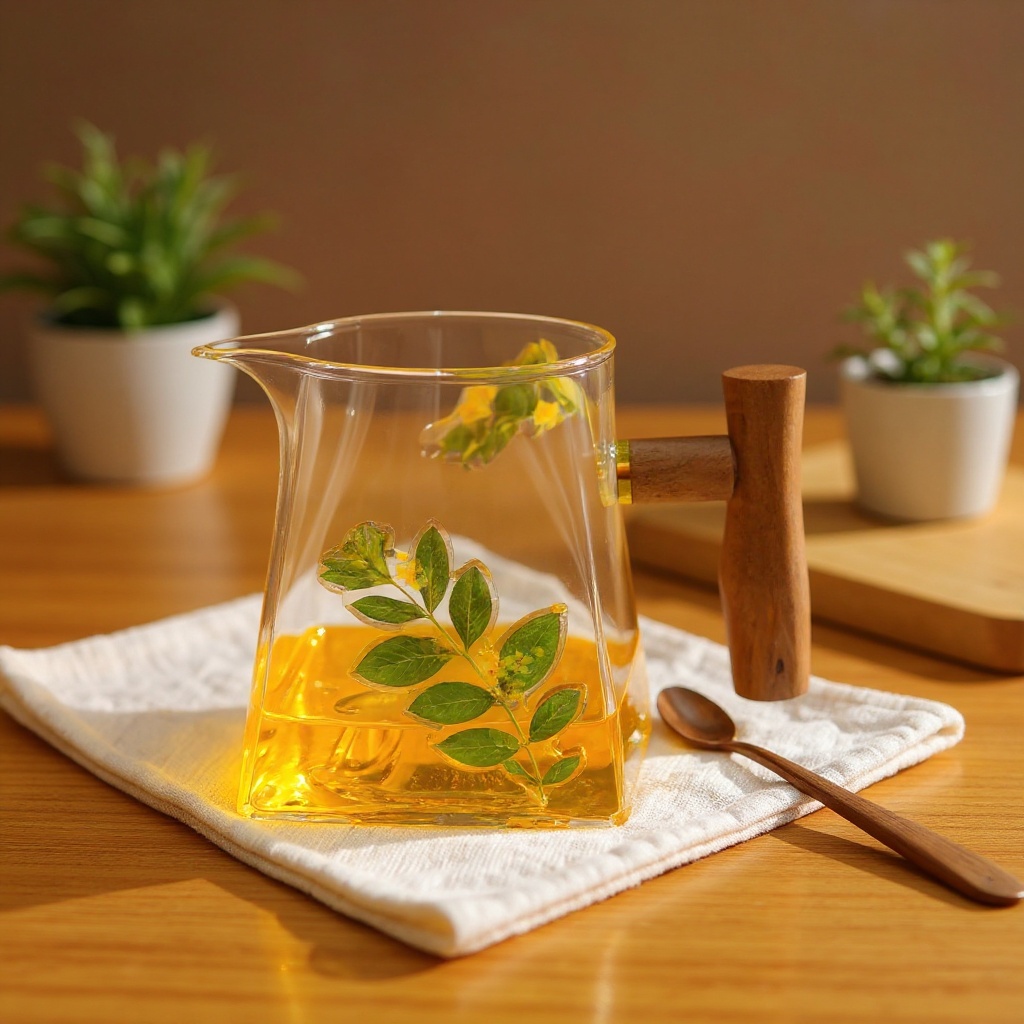
1. Examine botanical placement — Real preserved flowers and leaves in a sustainable artisan mug with wooden spoon set show organic, asymmetric arrangement. Printed alternatives display perfect tiling patterns that repeat at regular intervals across the surface. 2. Check resin surface texture under light — Authentic hand-applied resin shows subtle depth variation when held at an angle to a light source. Machine-coated surfaces appear uniformly flat. 3. Inspect the handle attachment point — Hand-fitted walnut handles show careful grain-matching where wood meets glass and sanding marks that follow the natural wood contour. Factory-attached handles display identical uniform gaps and machine-screw patterns. 4. Request in-progress documentation — Legitimate artisan sellers can provide photographs of botanical arrangement, resin pouring, or sanding stages. Marketplaces reselling factory goods cannot. 5. Look for controlled imperfection — A slight asymmetry in resin thickness, a botanical leaf positioned at an unplanned angle, minor color variation between pieces from the same maker. These are evidence of human hands, not manufacturing defects.
Factory-made items display perfect uniformity. That uniformity is actually the red flag.
The Complete Set: Beyond Just the Mug
A thoughtfully designed sustainable artisan mug with wooden spoon set includes complementary accessories that elevate the daily ritual. The small wooden spoon serves multiple practical functions: stirring matcha powder to break surface clumps, portioning loose-leaf tea, adding honey without scratching the glass surface. One tool. Several uses.
The bamboo lid resting on top does more than look composed in a photograph. It retains heat during steeping, keeps dust out of the drink, and creates a mild convection effect inside the mug that extends steeping time for delicate white teas. The natural bamboo surface adds an understated earthy character without releasing aroma compounds strong enough to interfere with the tea itself.
For those who appreciate cohesive design, some sustainable artisan mug with wooden spoon sets include a small matching wooden tray or coaster in the same wood species as the handle. This protects surfaces from condensation rings while completing the visual language of the set. The Handmade Pressed Flower Glass Mug with Walnut Handle brings this complete approach together — borosilicate construction, real preserved botanicals under smooth resin, solid walnut craftsmanship, and complementary bamboo accessories in a single set priced at $99.98.
Price Comparison: Artisan Quality vs. Mass Production
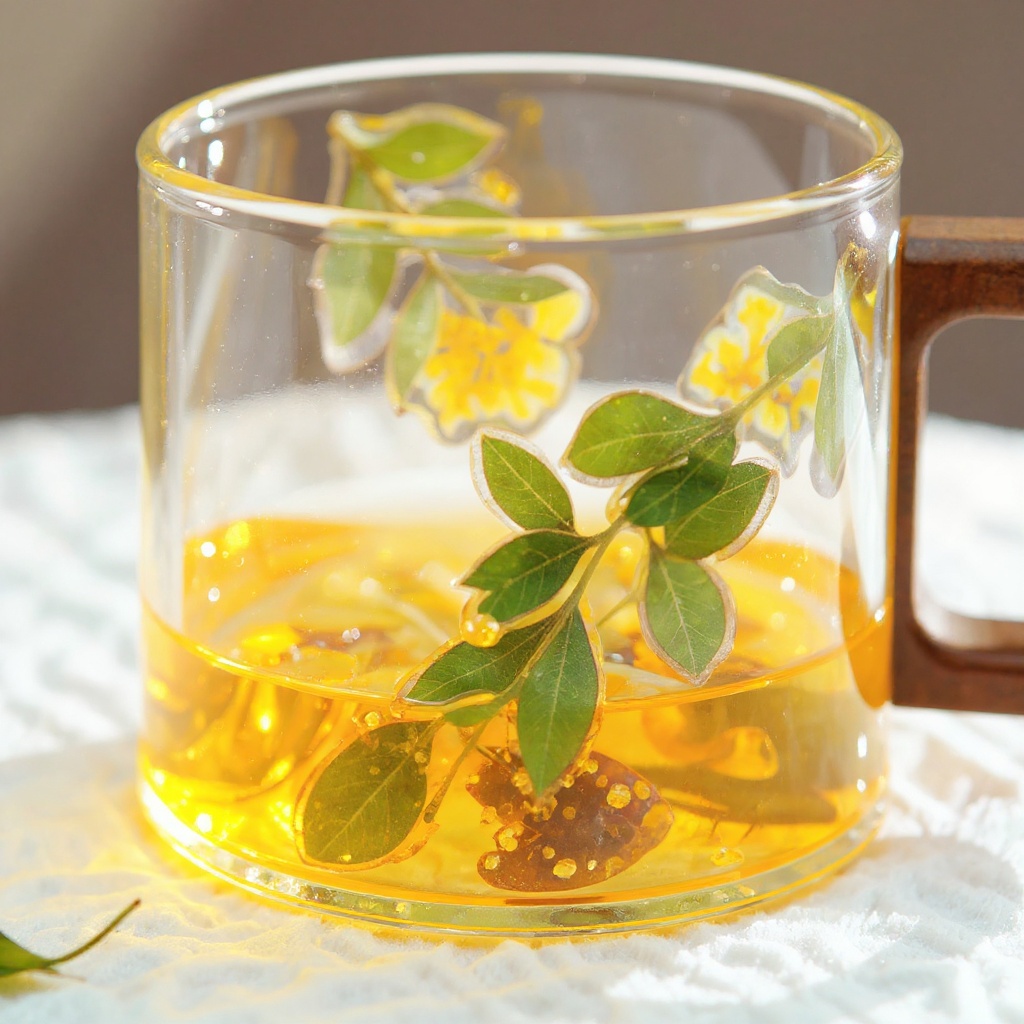
Understanding the pricing landscape explains why a sustainable artisan mug with wooden spoon set commands a premium over mass-market alternatives. The numbers reflect materials, labor, and a production timeline that factory output structurally cannot compress.
| Mug Type | Price Range | Core Materials | Expected Durability | Botanical Method | Uniqueness |
|---|---|---|---|---|---|
| Mass-produced printed floral | $12–35 | Ceramic, plastic handle | 1–3 years | Printed decal | Identical copies |
| Entry handmade resin craft | $45–80 | Basic craft resin, generic wood | 3–5 years | Real or faux botanicals | Moderate variation |
| Mid-tier artisan botanical | $85–150 | Borosilicate glass, hardwood handle | 8–12 years | Real preserved flowers | Significant variation |
| Premium artisan set (full) | $150–300 | Borosilicate, solid walnut, bamboo | 15+ years | Curated real botanicals | One-of-a-kind |
| Luxury collectible artisan | $300–600+ | Premium materials, complex design | Lifetime with care | Museum-quality preservation | Art-grade unique |
The cost-per-year calculation reframes the price difference. A $35 mass-produced mug lasting two years costs $17.50 annually. A $150 artisan set lasting 15 years costs $10 annually — and provides materially safer daily contact, a unique object you won't find duplicated at a neighbor's house, and direct economic support to skilled makers rather than anonymous supply chains.
Caring for Your Sustainable Investment
Proper care extends the life of your sustainable artisan mug with wooden spoon set while preserving the clarity of the resin surface and the integrity of the wooden elements. Different materials require different handling. What helps the glass can damage the wood.
For the borosilicate glass body, warm soapy water handles most cleaning effectively. Avoid pouring cold water into a mug that just held boiling liquid — let it cool for two minutes first. The resin-embedded botanicals respond well to gentle cleaning with a soft cloth. Abrasive scrubbing creates micro-scratches that scatter light and dull the surface depth over months.
Wooden elements need deliberate attention.
1. Rinse the wooden spoon immediately after use — Tea tannins stain open wood grain within minutes if left to dry 2. Hand wash only, always — Dishwasher cycles subject wood to heat above 65°C and prolonged moisture that causes cracking and warping within weeks 3. Dry wooden parts completely — Pat dry with a cloth immediately after washing, then air-dry upright for 10 minutes before storing 4. Apply food-grade mineral oil monthly — Work a small amount into the grain, let it absorb for 20 minutes, then wipe off the excess 5. Store away from direct heat — A walnut handle left beside a radiator for a winter will show surface checking by spring 6. Sand lightly if needed — 400-grit sandpaper in the direction of the grain refreshes a worn surface; follow with oil treatment immediately after 7. Check the handle attachment quarterly — Press gently against the handle where it meets the glass to confirm no loosening has developed
The bamboo lid tolerates slightly more moisture exposure than walnut but benefits from the same occasional oil treatment. Both materials outlast their synthetic counterparts when basic care is consistent.
Recognizing True Craftsmanship vs. Marketing Hype
Pressed flower craft requires botanical knowledge most marketing copy glosses over entirely. Authentic artisans select flowers at specific hydration stages — too early and moisture trapped inside the resin causes clouding, too late and petals lose structural integrity during pressing. The pressing duration for different species ranges from two to six weeks depending on petal thickness and water content, as documented in botanical preservation literature. The colorful dried flowers and green leaves visible through the clear glass of a genuine sustainable artisan mug with wooden spoon set hold that color because of correct timing, not chemical enhancement.Artificial alternatives use printed imagery or silk botanicals that carry none of this organic variation. You can tell immediately. The edges of real pressed petals are irregular. Printed versions have clean, pixel-perfect boundaries.
The making process also reveals itself in seller behavior. Artisan makers show their workspaces, share in-progress photographs, and describe specific botanical species by name. Resellers of factory goods post polished product photography against white backgrounds and cannot answer questions about botanical sourcing or resin formulation. Ask. The response tells you everything.
Frequently Asked Questions
Is resin on a mug safe for hot drinks? Food-grade resin that meets the U.S. FDA food-contact substance standards outlined in 21 CFR Part 175–179 is safe for hot beverages under normal serving temperatures. Quality sustainable artisan mug with wooden spoon set products use compliant formulations that won't degrade or transfer compounds into liquid under typical tea or coffee temperatures. Avoid mugs sold with no resin specification or labeled only as "craft resin," which carries no food-contact certification. Can you put a resin mug in the dishwasher? No. Dishwasher cycles typically reach internal temperatures above 65°C combined with high-pressure water jets and alkaline detergents — conditions that cause resin to cloud, micro-crack, or separate from the glass base over repeated cycles. The walnut handle and bamboo lid will warp and check under the same conditions. Hand washing with warm water and mild dish soap takes 60 seconds and preserves the mug's condition for years. How long do pressed flowers last inside resin? Properly preserved botanicals sealed in compliant food-grade resin maintain color and structural integrity for 10–15 years under normal indoor conditions, based on documented resin aging studies in craft conservation literature. UV exposure is the primary degradation factor. Positioning your sustainable artisan mug with wooden spoon set away from south-facing windows or direct sunlight significantly extends botanical vibrancy. The resin itself does not yellow when UV-stabilized formulations are used. What is borosilicate glass and why does it matter for mugs? Borosilicate glass contains approximately 15% boric oxide, a composition that gives it a thermal expansion coefficient roughly one-third that of standard soda-lime glass, according to materials data published by the American Ceramic Society. Practically: it survives pouring boiling liquid into a room-temperature mug without fracturing. It's also non-porous and chemically inert, meaning it won't absorb flavors from yesterday's oolong into today's chamomile. Are wooden spoons safe to use in hot tea? Yes, with specifics worth knowing. Wood has a thermal conductivity of approximately 0.1–0.4 W/m·K depending on species density, compared to stainless steel at 16 W/m·K — meaning a wooden spoon stays cool enough to handle comfortably after 30 seconds in near-boiling liquid, where a metal spoon would require a cloth to hold. Walnut and bamboo both carry documented natural antimicrobial properties from compounds including juglone in walnut, as referenced in Journal of Applied Microbiology research on wood surface hygiene. Food-grade finish is the key requirement: unfinished or improperly sealed wood should not contact food repeatedly. How do you clean a mug with a wooden handle without damaging it? Wash the glass body normally with warm soapy water while keeping the wooden handle contact with water brief and intentional. Wipe the handle surface with a damp cloth rather than submerging the entire mug. Dry the wooden handle completely within two minutes of washing — residual moisture sitting in the wood-to-glass junction is the leading cause of handle joint failure over time. What makes a handmade mug worth more than a mass-produced one? Three concrete factors drive the price difference in a sustainable artisan mug with wooden spoon set. First: materials — borosilicate glass costs roughly 3–4 times more per unit than standard soda-lime glass at production scale. Second: labor — hand-selecting and arranging botanicals, applying resin in successive layers, fitting and finishing a solid walnut handle each require skilled time that cannot be compressed below several days per piece. Third: longevity — a mug that lasts 15 years versus one that lasts 2 years has a per-year cost that often favors the artisan piece despite the higher sticker price. Do real dried flowers in resin fade over time? Some gradual color shift occurs over many years, primarily driven by UV photodegradation of natural pigments in the botanical material. Reds and purples tend to shift earliest; yellows and whites hold longer. UV-stabilized resin formulations slow this process measurably. Most sustainable artisan mug with wooden spoon sets used indoors away from direct sunlight maintain vivid botanical color for a decade or more. Fading, when it does occur, tends to be gradual enough that daily users don't notice the shift — it's only visible in side-by-side comparison with early photographs. Can I use this mug for cold drinks as well as hot? Yes. Borosilicate glass handles both extremes without structural risk. The resin exterior is stable at low temperatures and does not become brittle with ice-cold beverages the way some polymer coatings do. The walnut handle remains comfortable to grip regardless of beverage temperature since wood does not conduct cold to the surface the way metal would. The bamboo lid works equally well for cold-steep iced teas. Where can I find more options for botanical resin drinkware? The Handmade Pressed Flower Glass Mug with Walnut Handle is a strong starting point for the complete sustainable artisan mug with wooden spoon set experience, combining borosilicate construction with curated real botanicals and solid walnut craftsmanship. For those exploring the category more broadly, look for sellers who can name the botanical species used, specify their resin food-contact compliance standard, and show in-progress making photographs — these are the consistent markers of genuine artisan production rather than rebranded factory output.Finding Your Sustainable Tea Ritual
Choosing a sustainable artisan mug with wooden spoon set is a decision that extends beyond drinkware. It reaches into how you spend two minutes each morning. The tactile experience of holding real walnut wood. The visual depth of colorful dried flowers and green leaves suspended under smooth resin, caught differently by light depending on the hour. The specific weight of a 400ml borosilicate mug with substance behind it.
None of that is available in a $15 ceramic mug with a printed pattern.
For those ready to make that shift, the Handmade Pressed Flower Glass Mug with Walnut Handle represents the complete sustainable artisan mug with wooden spoon set experience: borosilicate glass construction, genuine preserved botanicals embedded in food-contact-compliant resin, a solid walnut handle fitted with individual attention, a bamboo lid, and a small wooden spoon. $99.98. One piece, never repeated exactly. Worth holding before you decide.


