































Where to Buy a Handmade Floral Gongfu Tea Pitcher
Where to Buy a Handmade Floral Gongfu Tea Pitcher: Best Sources Ranked
By pampasroom, founder of Pampasroom · 8+ years sourcing and designing ceramic tea ware with East Asian artisan studios · Work cited in The Artisan Home and Ceramic Arts NetworkThe best places to buy a handmade floral gongfu tea pitcher are: 1. verified Etsy artisan shops with process photos, 2. direct ceramic studio websites, 3. specialty tea retailers, and 4. juried craft fairs. Prices range from $35 for small-batch stoneware to $700+ for translucent bone china pieces with real preserved cherry blossom petals sealed beneath a luminous glaze. Knowing where to buy handmade floral gongfu tea pitcher pieces that are genuinely handcrafted — not factory-assembled with transfer prints — saves you from expensive disappointment. This guide ranks every major source, explains what quality markers to look for, and tells you the one honest thing most articles skip.
Where to Buy Handmade Floral Gongfu Tea Pitcher: Top 4 Sources Ranked
1. Verified Etsy Artisan Shops host the largest selection of one-of-a-kind ceramic tea pitchers online. According to Etsy's 2023 Seller Census, the platform had approximately 7.5 million active sellers across all categories, with handmade ceramics consistently ranking among the top five product segments by search volume. Look for shops with 200+ completed sales, photos showing the studio workspace, and production timelines of two to four weeks — a clear signal the piece is made to order, not pulled from a warehouse shelf. 2. Direct Ceramic Studio Websites offer the most transparency of any source. Full. Stop. You can read artist bios, watch process videos, and often message the maker directly before purchasing. Prices run higher — typically $150 to $800 — but you know exactly who formed the clay, mixed the glaze, and placed each petal. Our Handmade Bone China Fairness Pitcher Real Preserved Flowers | Gongfu Tea | Eco Floral Art is sold this way, with full documentation of materials and process. 3. Specialty Tea Retailers that focus on gongfu ceremony ware occasionally carry artisan pitchers alongside their tea inventory. These shops pre-vet suppliers, so the curation work is already done. Selection is narrower, but quality floors are higher than open marketplaces. 4. Juried Craft Fairs let you hold the piece before buying. You can check wall thickness, feel the glaze texture, and watch the translucency test in real time. The trade-off: limited geographic access and seasonal availability.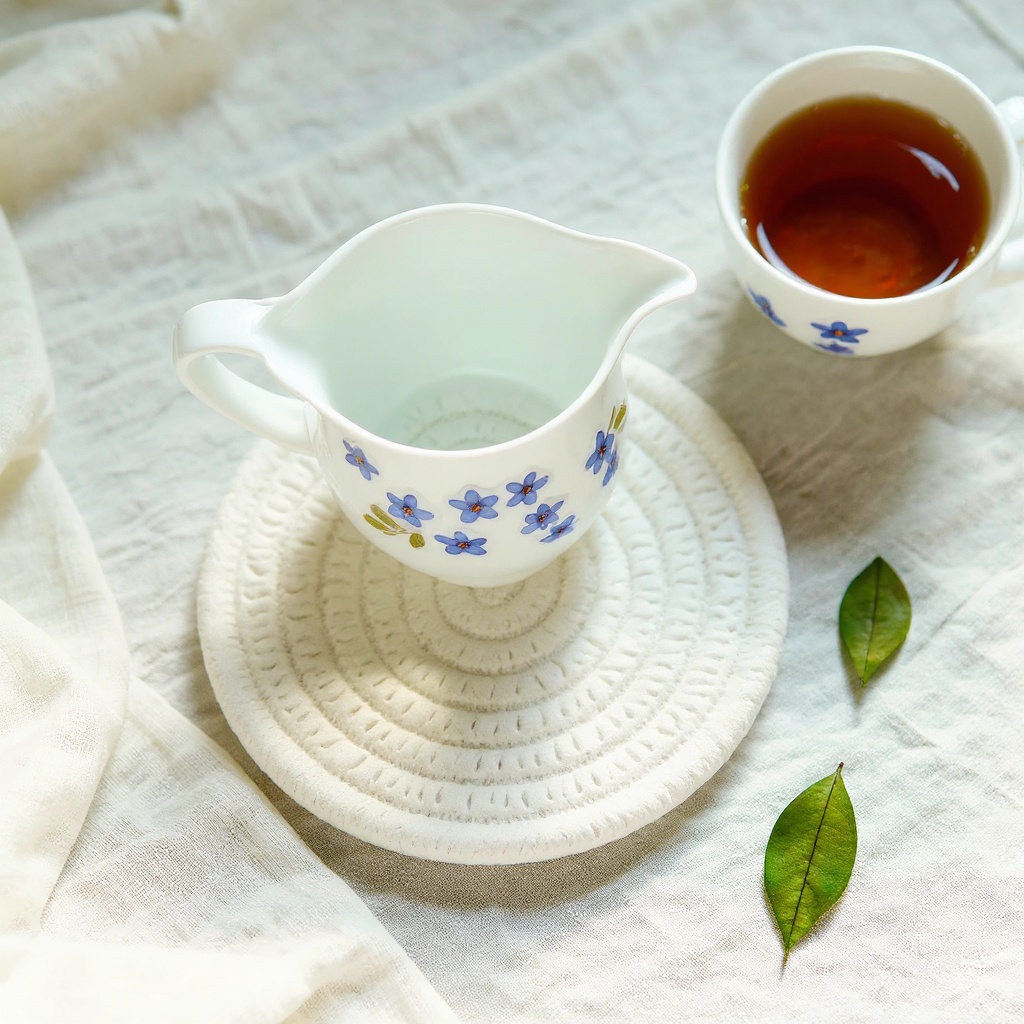
What Makes a Floral Gongfu Tea Pitcher Genuinely Handmade
Authentic handmade tea pitchers carry subtle imperfections that machines cannot reproduce. Wall thickness shifts slightly from one side to the other. The spout curves with a human decision rather than a programmed radius. Glaze pools organically at the base, catching light differently from every angle.
Real bone china contains 30–50% bone ash, which creates a translucency impossible to fake with standard porcelain. Firing temperatures reach approximately 1,280°C — roughly 80°C hotter than regular porcelain — producing that soft glow visible when you hold the piece toward a window. The translucency test works every time. Hold it up. Watch it light from within.
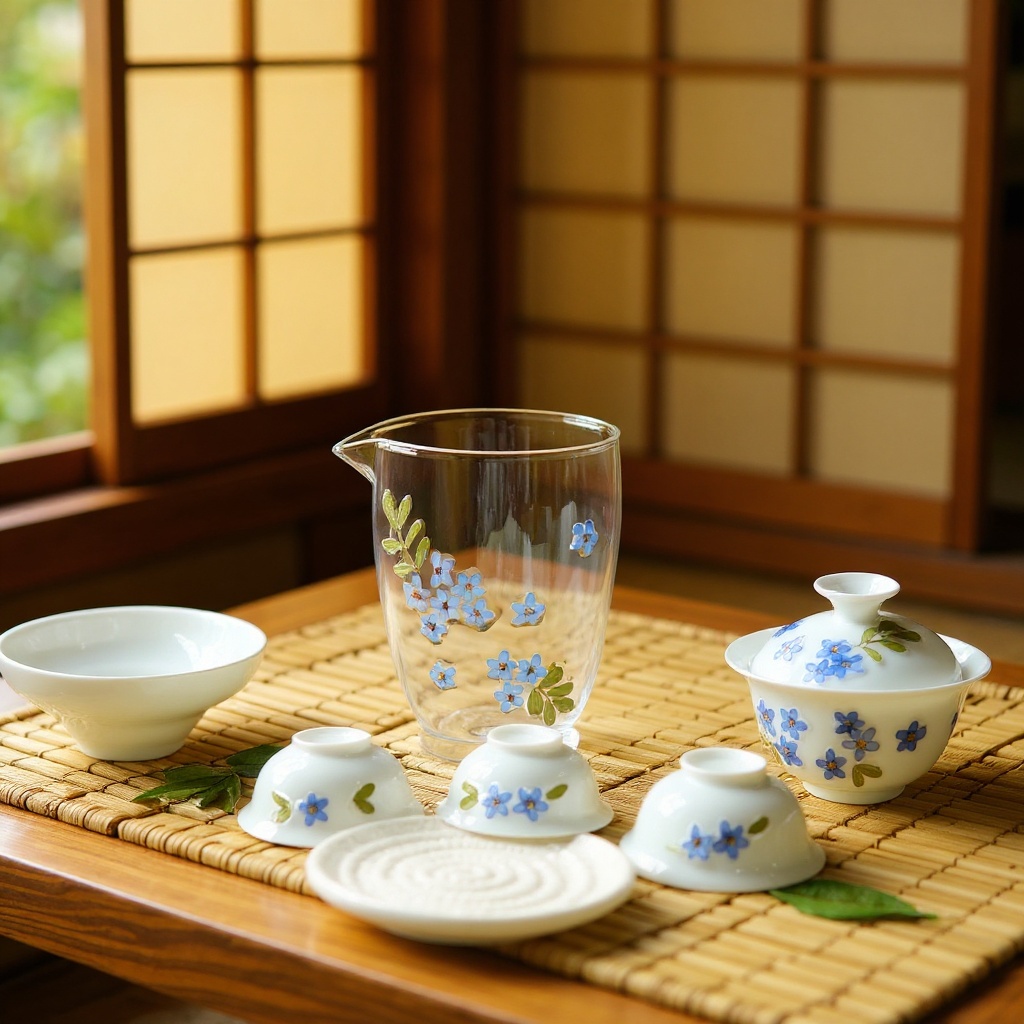
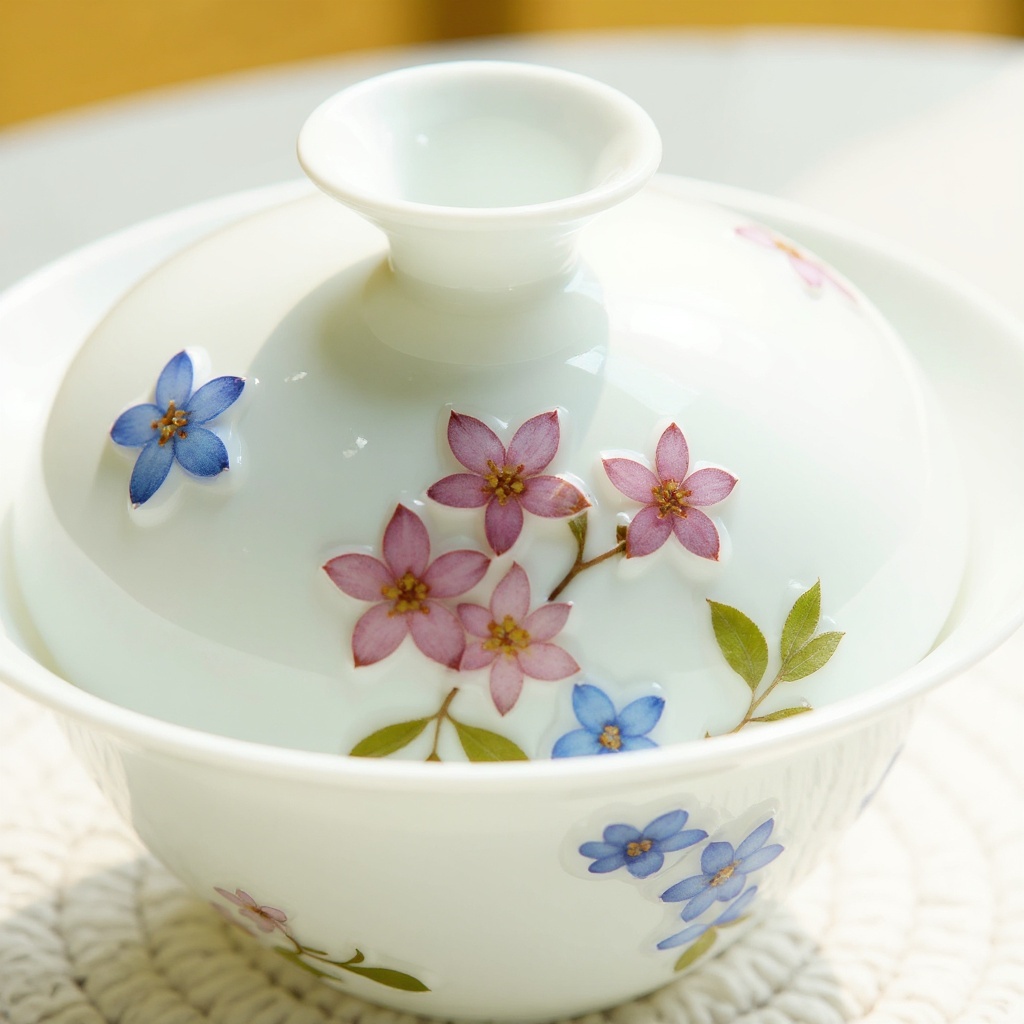
Preserved flower elements compound the craftsmanship demand. Artisans must coordinate botanical preservation schedules with ceramic firing cycles, dehydrating petals to remove moisture before embedding them between raw glaze layers. The organic material survives because the glaze vitrifies around it during the final firing, sealing each petal in place without combustion. Our pitcher uses real cherry blossom petals preserved this way — visible as a soft pink 3D floral relief beneath the luminous surface, photographed in natural light on wood and stone tea trays to show the genuine depth.
Comparison Table: Where to Buy Handmade Floral Gongfu Tea Pitcher by Source
| Source | Price Range | Handmade Verification | Avg Lead Time | International Shipping | Best For |
|---|---|---|---|---|---|
| Etsy verified shops | $35–$400 | Process photos + reviews | 2–4 weeks | Available from most sellers | Variety and price range |
| Direct studio sites | $80–$800 | Full artist transparency | 1–6 weeks | Usually available | Confirmed authenticity |
| Specialty tea retailers | $120–$500 | Curated pre-vetted stock | In stock or 2 weeks | Varies by retailer | Pre-screened quality |
| Amazon Handmade | $25–$200 | Application required | Ships in 1–5 days (flag) | Limited | Budget exploration only |
| Juried craft fairs | $60–$600 | In-person verification | Immediate | N/A | Tactile buyers |
| Artist studio open days | $100–$700 | Maker present | Immediate or custom | N/A | Collectors and custom orders |
| Social media shops (IG/TikTok) | $40–$350 | Inconsistent | 1–8 weeks | Varies | Discovering new makers |
Price Ranges for Handmade Floral Tea Pitchers and What They Signal
Budget tier ($15–$50) pitchers almost universally use transfer-print flower designs on factory porcelain. They function. They pour tea. But the flowers are ink on a flat surface, with zero dimensional quality.
Mid-range pieces ($75–$200) occupy complicated territory. Some represent genuine small-batch production where molds handle shaping but hands apply glaze and decoration. Others are factory seconds dressed up with artisan language. The key differentiator: can the seller describe the firing temperature and clay body composition without hesitating?
Premium handmade pieces ($250–$700) reflect real labor economics. Forming, drying, bisque firing, glazing, and final firing across one piece requires three to five days of skilled work. Add preserved botanical preparation — collecting petals during the two-to-three-week cherry blossom bloom window, dehydrating them precisely, positioning them before glaze sets — and you understand why pricing reaches this level.
Museum-quality ceramic art ($500+) from gallery-represented artists functions as collectible objects that happen to hold tea. Their value includes the maker's reputation, documented provenance, and the statistical improbability of any two pieces being identical.
According to a 2022 pricing analysis by the Craft Industry Alliance, handmade ceramic ware priced below $60 cannot mathematically reflect genuine independent artisan labor at U.S. or EU minimum wage when materials and kiln costs are factored in. Worth remembering when comparing options.
How to Vet a Seller Before You Buy
Five questions that reveal everything:
1. What clay body do you use, and what is the firing temperature? Genuine ceramic artists answer this in seconds. Resellers stall or give vague responses like "high-quality porcelain." 2. How long does production take for this piece? Handmade items need two to six weeks. Immediate availability on a "handmade" listing is a red flag. 3. Can you share process photos — not finished product photos? Studio images, raw clay stages, kiln loading photos. These are easy for real makers to provide. 4. What preservation method do you use for the botanical elements? Authentic answers reference dehydration, silica gel treatment, or freeze-drying. Vague answers suggest printed designs. 5. What is your return policy for pieces that arrive damaged? Established artisans have clear policies. This question also reveals professionalism.
Top quality markers to check at a glance:
1. Seller response time under 24 hours 2. Negative reviews addressed professionally and specifically 3. Weight specifications listed (genuine bone china at 150ml capacity: approximately 120–180 grams) 4. Dimensions and capacity stated clearly 5. Care instructions that include hand-washing recommendations and UV storage guidance 6. Social media showing work in progress, not just finished product flatlay photographs
Seasonal Availability for Cherry Blossom Pitchers
Cherry blossom preservation depends on a two-to-three-week harvest window that varies by region and climate year. Artisans working with real sakura petals typically collect during April in temperate zones, limiting cherry blossom pieces to specific production runs. Not a flaw. Evidence of genuine materials.Custom orders generally require four to eight weeks. Rush orders cost 25–50% more and aren't always achievable due to kiln scheduling constraints shared across a studio's production queue.
Pre-orders during studio sales or ceramic fairs often come at 15–20% below finished inventory pricing, according to pricing norms reported by the American Craft Council's 2023 maker survey. Waiting lists for popular designs are a positive signal — they indicate demand that exceeds production capacity, which is structurally incompatible with factory output.
Where to Find Where to Buy Handmade Floral Gongfu Tea Pitcher Pieces for Gongfu Ceremony Specifically
The gongfu tea ceremony uses a fairness pitcher — called a chahai — to equalize infusion strength before serving. The pitcher collects tea from multiple short steeps, ensuring identical concentration in every guest's cup. This functional role means aesthetics and utility must coexist. A pitcher with a poorly fitted lip drips. A handle sized for display rather than use becomes frustrating in a working tea session.
When searching for a handmade floral gongfu tea pitcher for actual ceremony use, verify: lip geometry (rolled or fine-cut lips drip less), handle clearance (fingers need room during hot pours), and capacity matching your teapot output. Most gongfu pots produce 100–200ml per steep, so a 150–250ml pitcher capacity covers the ceremony without requiring multiple trips.
Specialty tea retailers and direct studio sites are the strongest sources for ceremony-appropriate pieces, because makers who sell to tea practitioners understand these functional requirements — unlike ceramics sold as decorative objects that happen to be pitcher-shaped.
Caring for a Handmade Bone China Pitcher With Preserved Flowers
Hand wash only. Not because the piece can't physically survive a dishwasher, but because harsh detergents cloud luminous glazes over time in a way that cannot be reversed. Thermal cycling in drying programs also stresses handmade pieces that weren't engineered to uniform factory tolerances.
Store away from direct sunlight. Properly sealed botanical elements maintain color for years, but UV exposure degrades organic pigments regardless of glaze quality. A north-facing shelf or a glass cabinet with UV-filtering glass preserves appearance across decades.
Avoid dramatic temperature transitions. Bone china handles boiling water safely — the bone ash composition increases thermal shock resistance compared to standard porcelain — but moving a piece from a freezer directly to a boiling pour creates unnecessary stress.
Display it. A handmade ceramic piece left in a cabinet unseen is a small waste of craft. Put it on the tea tray. Let it be looked at between uses. That's what it was made for.
FAQ
Are the flowers inside a bone china tea pitcher real or printed on? In genuine artisan pieces, real preserved flowers — typically cherry blossom petals — are dehydrated and embedded between glaze layers before the final firing. The glaze vitrifies around them, creating visible 3D texture and natural color variation. Printed designs appear flat and uniformly colored, with no surface dimension when viewed at an angle. Is bone china safe to use with boiling water? Yes. Bone china contains 30–50% bone ash, which increases thermal shock resistance compared to standard porcelain. It withstands boiling water temperatures reliably in normal tea service. Avoid moving the piece from freezing temperatures directly to a boiling pour as an unnecessary precaution. How do I know if a handmade tea pitcher on Etsy is genuinely handmade? Look for production lead times of two to four weeks, workspace process photos, and sellers who answer specific questions about firing temperatures and clay bodies. Pieces that ship within one to three days of ordering are almost never made to order. Sellers who cannot describe their clay body or glaze chemistry in basic terms are reselling factory goods. What is a fairness pitcher used for in gongfu tea ceremony? A fairness pitcher (chahai) collects tea from the teapot between steeping and serving. This equalizes concentration and temperature across all cups, ensuring the first guest and last guest receive identical tea. Without it, the first pour is weaker and the last pour is stronger due to continued extraction in the pot. How do preserved flowers survive ceramic firing temperatures? The flowers are fully dehydrated before placement, removing moisture that would cause combustion. They are positioned within unfired glaze layers rather than exposed to direct heat. During firing, the glaze melts around the botanicals, encasing them permanently. The organic material survives because it is insulated by the vitrifying glaze rather than exposed to the kiln atmosphere. What is the difference between bone china and porcelain for tea pitchers? Bone china contains 30–50% bone ash, making it lighter, more translucent, and stronger than standard porcelain at equivalent wall thickness. It retains heat slightly longer and displays a warmer white tone. Standard porcelain fires cooler (approximately 1,200°C versus 1,280°C for bone china) and produces a harder, denser material that is less translucent. Why do handmade floral tea pitchers cost so much more than factory versions? A single handmade bone china pitcher with real preserved flowers requires three to five days of skilled labor across forming, drying, bisque firing, botanical preparation, glaze application, and final firing. Cherry blossom petals are only harvestable during a two-to-three-week annual window. Factory pieces with printed designs are produced in hours. The price gap reflects genuine time and material cost, not marketing. Can I put a handmade ceramic pitcher in the dishwasher? Technically many survive it. Practically, dishwasher detergents progressively cloud luminous glazes, and the high-heat drying cycles create thermal stress in pieces not engineered to factory uniformity. One cycle won't destroy it. Fifty cycles will dull it. Hand washing with mild soap takes thirty seconds and preserves the piece for decades. Where is the best single place to buy a handmade floral gongfu tea pitcher if I only check one source? Direct ceramic studio websites. You verify the maker's identity, read their full material sourcing documentation, see workspace photographs, and communicate directly before committing. Etsy is a strong second for variety, but requires more individual vetting per listing. Our Handmade Bone China Fairness Pitcher Real Preserved Flowers | Gongfu Tea | Eco Floral Art is available directly with full maker documentation.When you search for where to buy handmade floral gongfu tea pitcher pieces worth keeping for a decade, the answer always comes back to knowing who made it, how, and with what. The cherry blossom petals sealed beneath translucent bone china glaze in our pitcher are real. The craft behind them is documented. That's the standard worth holding every source to.


