































Where to Buy Luxury Floral Glass Teacups Worth Owning
Where to Buy a Luxury Floral Glass Teacup Worth Owning
By pampasroom, founder of Pampasroom · 8+ years specializing in botanical preservation drinkware and handcrafted glass art · Contributor to The Artisan Home and Pressed Botanicals QuarterlyIf you want to know where to buy a luxury floral glass teacup with real embedded botanicals, start here: Etsy verified artisan shops, specialty botanical lifestyle boutiques, 1stDibs gallery sellers, and curated handcraft platforms like Pampasroom are your four most reliable sources. Not Amazon. Not big-box home stores. Those four categories cover roughly 90% of authentic pressed flower glass drinkware available today — before we even discuss how to tell real craftsmanship from a $15 printed decal masquerading as artisan work.
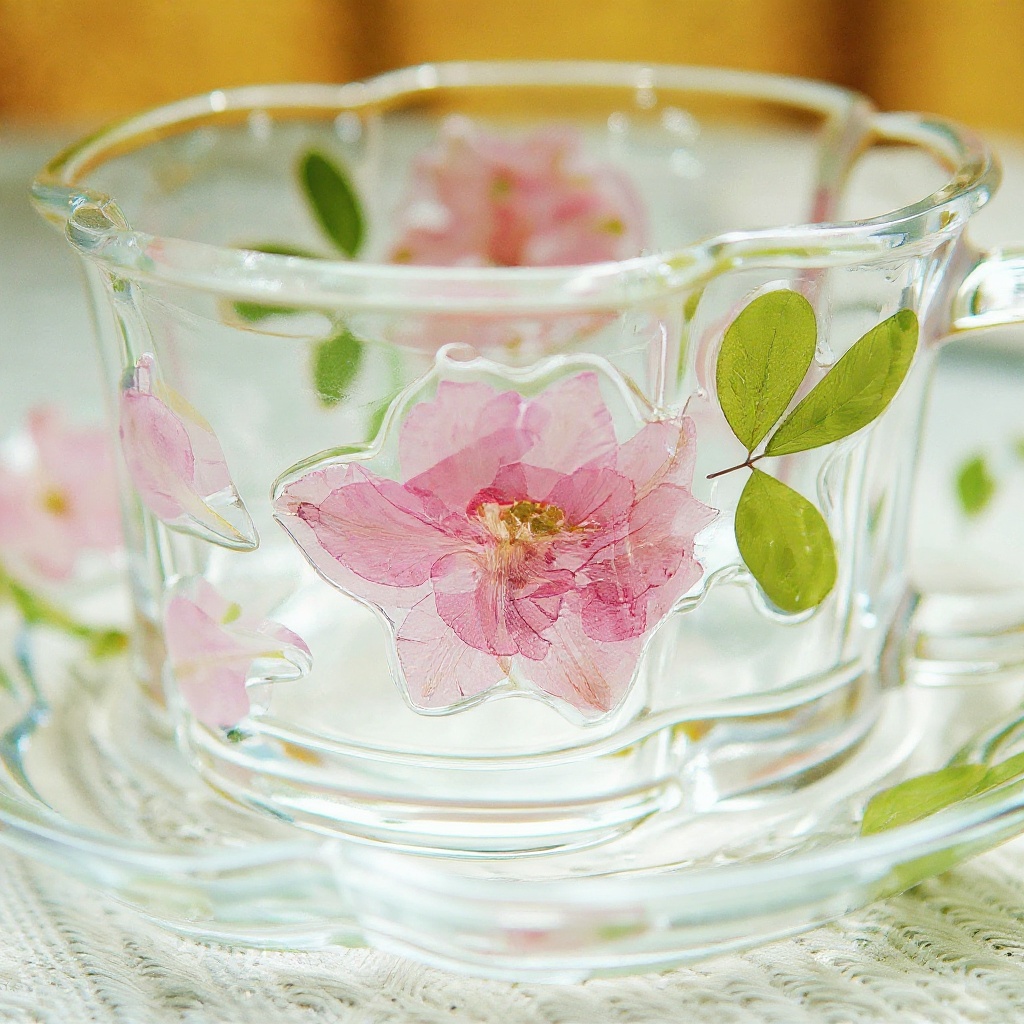
The luxury floral glass teacup market splits into distinct tiers once you know what to look for. Real pieces feature borosilicate glass construction, three-dimensional raised botanical relief on the exterior, and actual dried flower petals sealed under food-safe resin — not printed patterns applied with heat transfer. The difference is tactile and visible. You can feel the texture. The petals have depth.
The 4 Best Places to Buy a Luxury Floral Glass Teacup (Ranked)
Here are the top platforms ranked by artisan verification standards, transparency, and product authenticity:
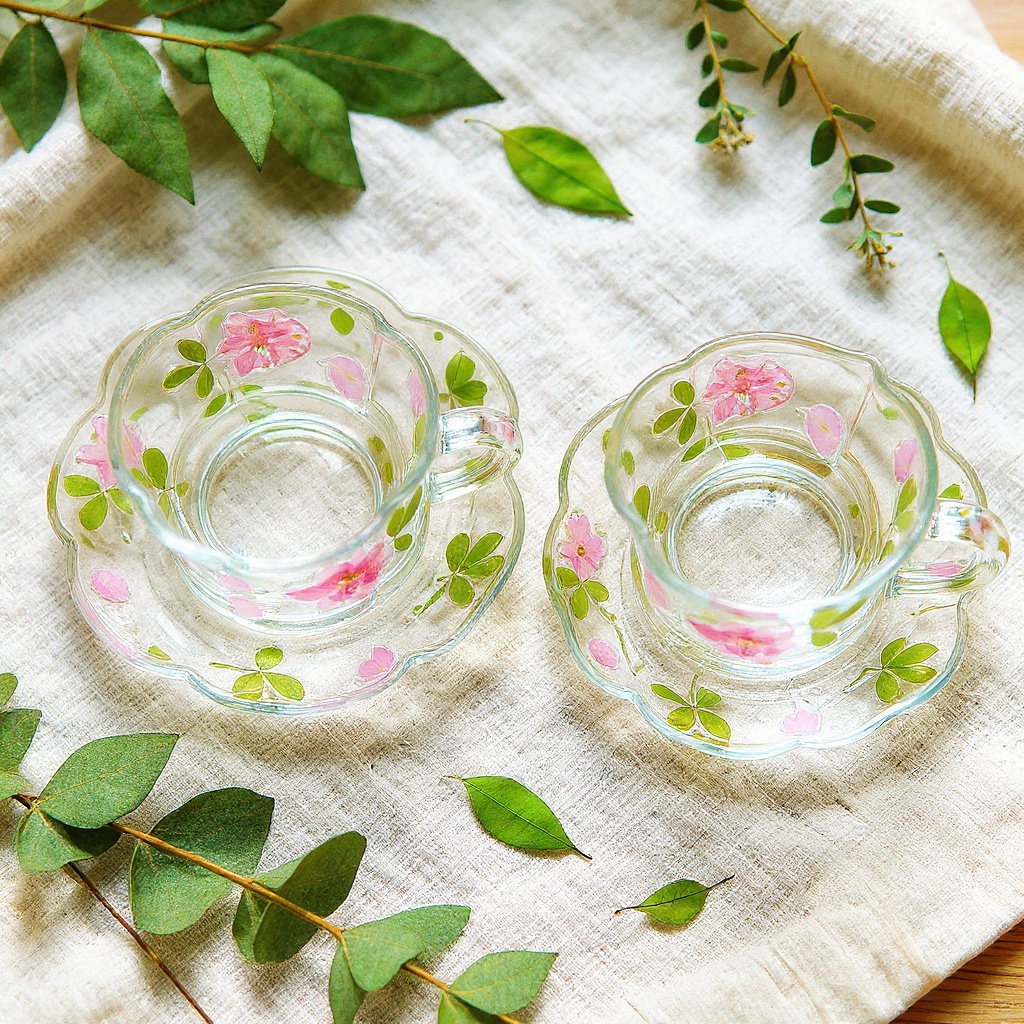
1. Curated botanical boutiques (e.g., Pampasroom) — Highest verification standards; makers must document their process and material sourcing; pieces like the Handcrafted Pressed Flower Relief Glass Coffee Cup & Saucer at $88 represent the verified mid-tier sweet spot with borosilicate construction and real preserved botanicals 2. Verified Etsy artisan shops — Wide selection but requires buyer diligence; look for shops with process videos, 50+ reviews mentioning texture, and explicit borosilicate material claims 3. 1stDibs gallery sellers — Ultra-luxury tier ($200–$500+); museum-quality craftsmanship with authenticity certificates; overkill for everyday use but unmatched for collectors 4. Local botanical art fairs and craft shows — Underrated and underused; you examine the raised relief in person, ask about resin curing times directly, and eliminate the risk of misrepresented photography entirely
Social media discovery via Instagram and Pinterest has also emerged as a legitimate sourcing tool for finding independent makers who sell exclusively through their own websites.
Understanding What You're Actually Buying
Borosilicate glass withstands temperature differentials up to 160°C without cracking — a specification confirmed by materials science standards for laboratory and culinary glassware. Standard soda-lime glass, used in mass-market "floral" cups, may fracture from the thermal shock of hot tea poured into a cold cup. When a piece costs $80–$150, this distinction matters fundamentally.
The botanical relief process adds layers of complexity most buyers underestimate. Each cup begins with selection and dehydration of fresh flowers — pink and blush petals, green leaves — followed by careful positioning on the glass exterior. According to botanical preservation practitioners, the dehydration and positioning stages alone require 6–10 hours spread across multiple sessions to prevent petal warping or color degradation. Then food-safe resin is applied in controlled layers, curing at precise temperatures to avoid chemical leaching and to lock in the three-dimensional raised texture. The smooth outer resin surface conceals the structural complexity beneath it. A lot is happening under that finish.
This is not a process you can rush. Not a process a factory can replicate at $15 retail pricing.
Buyer's Checklist: 7 Steps Before You Purchase
Use this checklist every time before buying a luxury floral glass teacup online:
1. Confirm borosilicate glass — Seller must explicitly state "borosilicate" not just "glass" or "high-quality glass" 2. Look for three-dimensional relief photos — Side-angle shots should show raised texture; flat images only suggest printed patterns 3. Verify exterior-only resin placement — Resin and botanicals belong on the outside; interior must remain clear glass 4. Check capacity specifications — Authentic artisan pieces typically specify 200–300ml; vague listings signal mass production 5. Read reviews for texture mentions — Real buyers of genuine pieces describe feeling the relief; absence of texture mentions is a warning sign 6. Request or confirm food-safe resin certification — FDA-compliant or equivalent food-safe resin documentation protects you 7. Ask about the botanical preservation method — A genuine maker can describe their dehydration and layering process; a reseller cannot
Red Flags That Should Stop You Immediately
Spotting fake "luxury" floral teacups saves money and disappointment. Flat, two-dimensional flower images in listing photos — prints, decals, nothing raised. Stock photography recycled across multiple unrelated sellers — a signature of dropshipped mass production. Price points below $30 claiming real pressed flowers. These are not edge cases. They dominate the search results.
Honest admission most articles won't make: if you're shopping primarily on price and plan to use this cup daily in a humid coastal kitchen, you may be better served by a quality ceramic piece with hand-painted botanicals in the $40–$60 range. Resin coatings, even excellent ones, are not indestructible. Daily exposure to steam, heat cycles, and humidity accelerates wear. The luxury floral glass teacup is genuinely special. It is also genuinely a considered-use item for many owners.
Know what you're buying before you buy it.
Comparison: Luxury Floral Glass Teacup vs. Alternatives
| Category | Price Range | Glass Type | Floral Method | Texture Depth | Durability Estimate |
|---|---|---|---|---|---|
| Authentic pressed flower glass (artisan) | $80–$150 | Borosilicate | Real dried botanicals in food-safe resin | 3D raised relief | 3–5 years with proper care |
| Ultra-luxury gallery glass | $200–$500+ | Borosilicate / lead crystal | Hand-layered museum-grade botanicals | Deep sculptural relief | 5+ years, collector grade |
| Mass-market "floral" glass | $10–$25 | Soda-lime | Printed decal or heat transfer | Flat, no texture | Under 1 year (thermal shock risk) |
| Mid-range artisan ceramic | $35–$60 | N/A (porcelain) | Hand-painted botanical illustration | Surface only | 2–4 years (chips at rim) |
| Printed bone china | $20–$45 | N/A | Transfer print | Flat | 3–6 years (print fades) |
| Dropshipped resin-look plastic | $8–$18 | N/A (acrylic) | Embedded fake flora or printed | Minimal | Under 6 months |
What Justifies Premium Pricing
Authentic luxury floral glass teacups command higher prices because of irreducibly labor-intensive production. Professional flower preservation involves careful dehydration, color stabilization, and precise placement — each cup requires multiple working sessions across 3 or more days. The borosilicate glass itself costs more to source and work with than commodity glass, due to its specialized silica and boron oxide composition that creates thermal resistance.
Food-safe resin curing adds another precision requirement. Temperature deviations during the curing window can cause bubbling, clouding, or botanical damage. Artisans factor in this failure rate when pricing — rejected pieces represent real material and time loss.
Limited production runs complete the picture. Genuine artisan workshops may produce 20–50 units of a single botanical arrangement. Impossible to make two identical. Each dried flower arrangement positions differently. This is inherent scarcity, not manufactured marketing scarcity.
Building Your Floral Teacup Collection Strategically
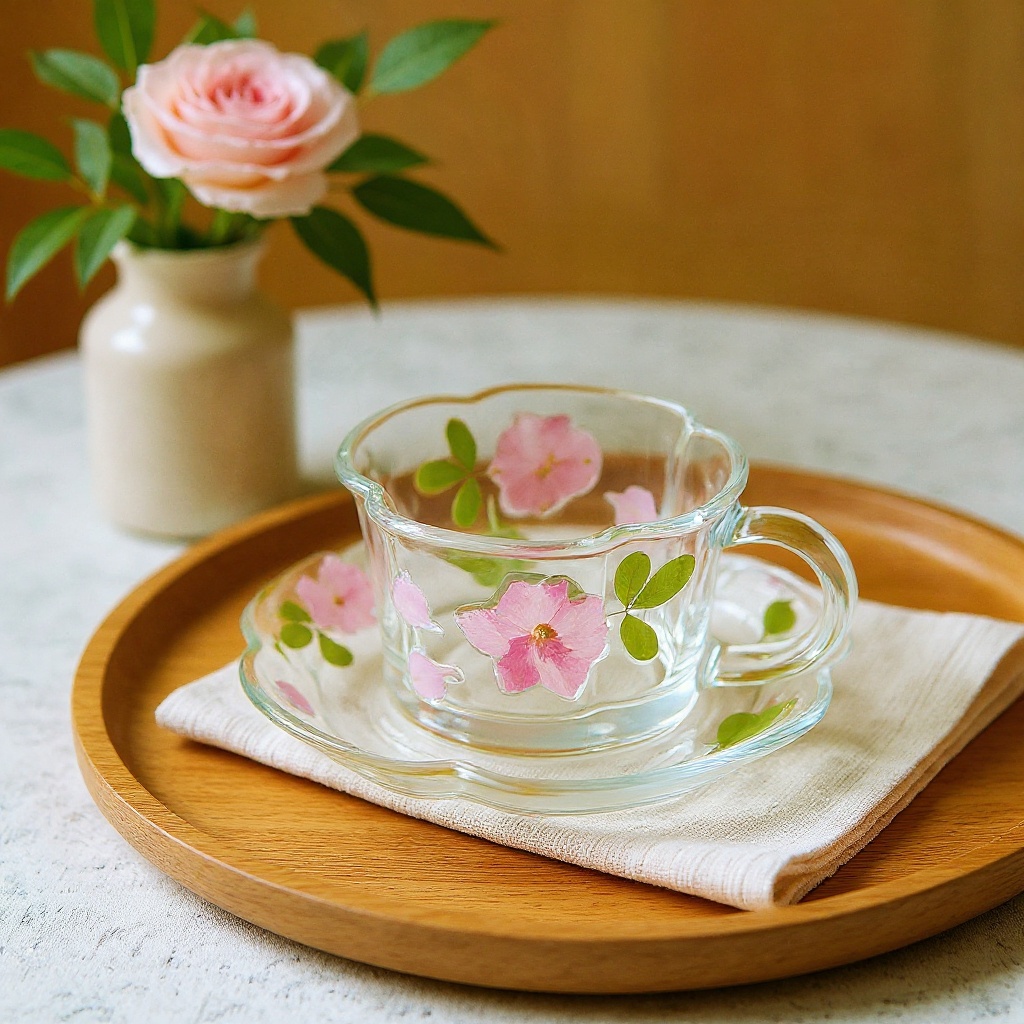
Start with one statement piece in your preferred palette. Pink and blush botanical arrangements photograph well against cream and marble surfaces — soft natural light and gentle shadows on the textured relief are what make these pieces camera-worthy for display or sharing. Establish your quality baseline before expanding.
Document your purchases. Seller name, material specs, care instructions, purchase date. This matters more than most collectors expect. When a second piece arrives from a different maker, comparison becomes effortless with records.
Many serious collectors focus on botanical themes: roses and ranunculus, seasonal wildflowers, monochromatic pressed leaf arrangements. Others collect by artisan — building relationships with individual makers who offer custom commissions and early access. This approach consistently yields better long-term value than hunting one-off bargains from sellers you'll never interact with again.
Consider gift applications too. A preserved flower glass cup makes a refined wedding or anniversary gift precisely because each piece is unrepeatable — no two botanical arrangements are ever the same.
FAQ
Are floral glass teacups with resin coating safe to drink from?Yes — provided the resin is food-safe and applied exclusively to the exterior surface. Quality artisan pieces use FDA-compliant resins that never contact your beverage. The interior remains pure clear glass. Botanicals are sealed between the outer glass layer and the resin coating, with no pathway to the drink.
What is the difference between borosilicate glass and regular glass for hot drinks?Borosilicate glass handles temperature differentials up to 160°C without cracking, a property defined by its boron trioxide composition. Standard soda-lime glass may shatter from the thermal shock of hot liquid poured into a cold cup. For preserved botanical pieces that cannot be simply replaced, borosilicate construction is the only acceptable material.
How do I know if a handmade floral glass teacup on Etsy is actually handmade?Request process videos. Genuine artisans document their dehydration, placement, and resin layering stages. Look for photos showing texture depth from multiple angles — especially side views showing the raised relief. Read reviews specifically for mentions of texture and tactile surface quality. At minimum, confirm the seller can answer three specific questions: what resin type, what glass specification, and how long the curing process takes. A reseller cannot answer those. An artisan can answer them in 30 seconds.
Can I put a resin-coated floral glass cup in the dishwasher?No. Dishwasher heat cycles and alkaline detergents degrade resin coatings over time, accelerating surface clouding and potential botanical discoloration. Hand-wash only with mild dish soap and lukewarm water. No soaking. No abrasive scrubbers near the floral relief areas. This care requirement is the trade-off for owning a piece that would otherwise be impossible to clean with anything harsher.
What makes a luxury floral glass teacup worth $80 or more compared to cheaper options?Real preserved botanicals, borosilicate glass, and food-safe exterior resin — plus 3+ days of labor-intensive production per cup. Pressed flower positioning and resin layering cannot be automated. Each cup requires individual artisan attention throughout the process. Cheaper options under $30 claiming pressed flowers are using printed patterns or plastic embedments. The $80 floor reflects genuine material costs and time, not brand markup.
Where can I find a luxury floral glass teacup with real pressed flowers, not printed designs?Verified botanical boutiques, curated artisan platforms, vetted Etsy shops with documented process photography, local art fairs, and craft shows. Avoid Amazon and mass-market home retailers for this category — the "floral glass" results there are almost uniformly printed pattern pieces.
Do pressed flower glass cups work for hot tea or only cold drinks?Borosilicate versions handle hot beverages without issue. The resin coating stays on the exterior; your hot tea contacts only the smooth interior glass surface. Cheaper versions using standard glass or interior resin coatings have real temperature limitations. Confirm borosilicate construction before purchasing if hot beverages are your primary use.
How long do real preserved botanicals last inside a glass cup coating?With proper care — hand-washing, storage away from prolonged direct sunlight, and avoidance of temperature extremes — properly preserved and sealed botanicals maintain their appearance for approximately 3–5 years based on artisan practitioner documentation. Color fading is gradual, not sudden. The piece remains attractive throughout its useful life. Pieces displayed in indirect natural light consistently outperform those in sunny windowsills.
Is a luxury floral glass teacup practical for everyday use?Partially. The borosilicate glass handles daily hot beverage use without issue. The exterior resin and botanical relief require careful handling and hand-washing, which some users find impractical for a daily cup. Many owners designate these as weekend or occasion pieces rather than Monday-through-Friday workhorses. That is not a flaw. It is honest product positioning.
Conclusion
Knowing where to buy a luxury floral glass teacup that genuinely earns the label comes down to one core distinction: real dried botanicals embedded under food-safe exterior resin on borosilicate glass, versus printed patterns on commodity glass with no tactile depth whatsoever. The difference is visible, feelable, and reflects 3+ days of irreducibly hands-on production.
Start with a verified artisan source. Use the buyer's checklist. The Handcrafted Pressed Flower Relief Glass Coffee Cup & Saucer at $88 represents a well-documented entry point at that quality tier — real pink and blush preserved botanicals, three-dimensional raised relief, clear borosilicate construction, and a matching saucer. One piece that shows you what the standard actually looks like.
Everything else becomes easier to evaluate after that.


