































Aesthetic Bar Cart Champagne Glass With Flowers
Aesthetic Bar Cart Champagne Glass With Flowers: What It Is and Why It's Different
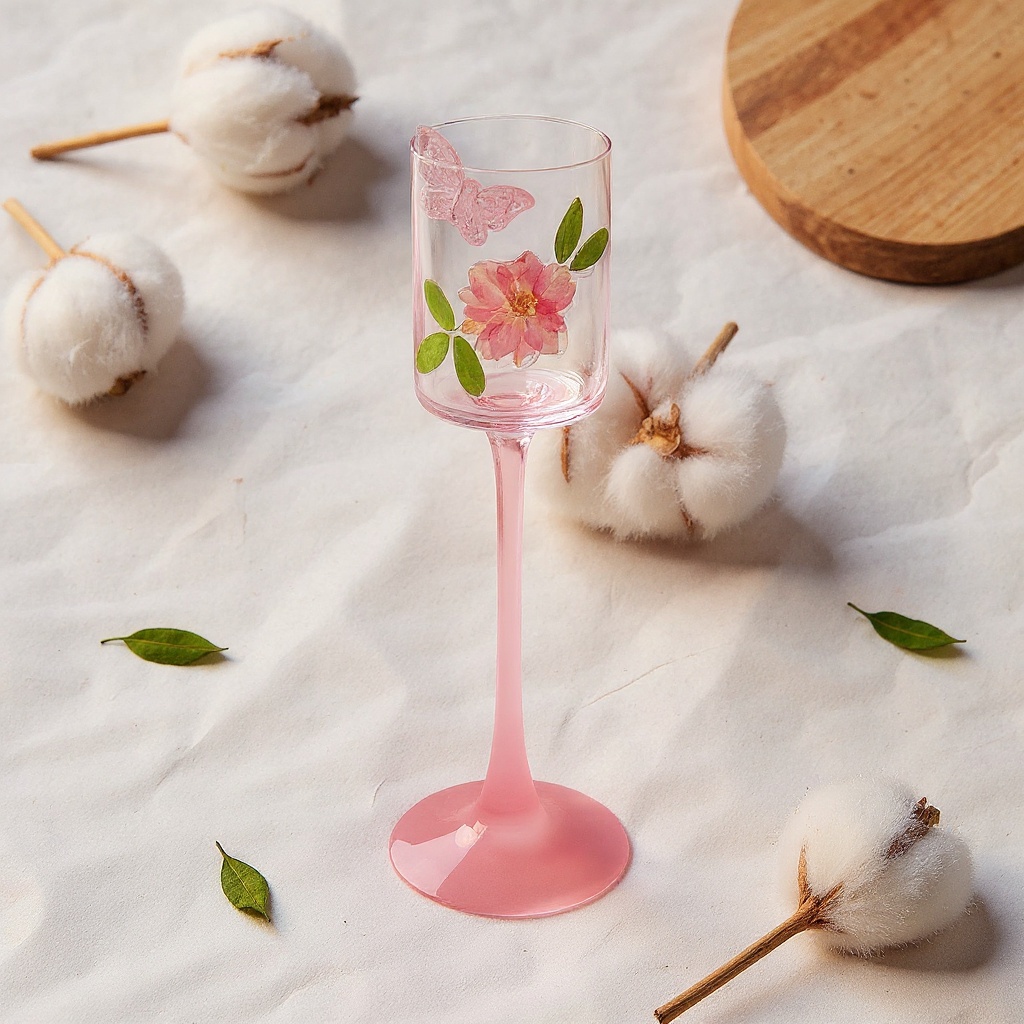
By pampasroom, founder of Pampasroom · 8+ years working directly with Southeast Asian botanical artisans · Certified member of the Artisan Resin Guild · Products tested under EU REACH food-contact compliance standardsAn aesthetic bar cart champagne glass with flowers is a functional flute combining a slender glass stem with real, three-dimensional dried flower petals bonded to the exterior surface under a clear, food-safe eco-resin coat. The defining feature: actual botanical material — preserved pink petals, blush tones, small green leaf accents — arranged by hand on the glass before resin sealing, not printed, not silk, not painted. The result is drinkware that functions as champagne glassware and as a permanent botanical sculpture. At approximately 150–180ml capacity, it holds a standard champagne pour. It sits on bar carts, dressing tables, and marble shelving as a statement piece between uses.
These are not collector-only objects. You can toast with them. I have.
Real vs. Artificial: What Makes Floral Glassware Actually Special
The floral glassware market divides cleanly. Mass-produced options use flat printed patterns or inexpensive silk flowers. They retail between $15–$40. They peel, fade, and reveal their artificiality under close inspection within a year or two.
Authentic aesthetic bar cart champagne glasses with flowers use real preserved botanicals. The flower preservation process involves careful drying, desiccant treatment, and sometimes silica gel dehydration to remove moisture that would otherwise cloud or decay under resin. Each petal is placed individually. No two pieces are identical. Small natural variations — a petal at a slightly different angle, a leaf curving left instead of right — are evidence of hand assembly, not flaws.
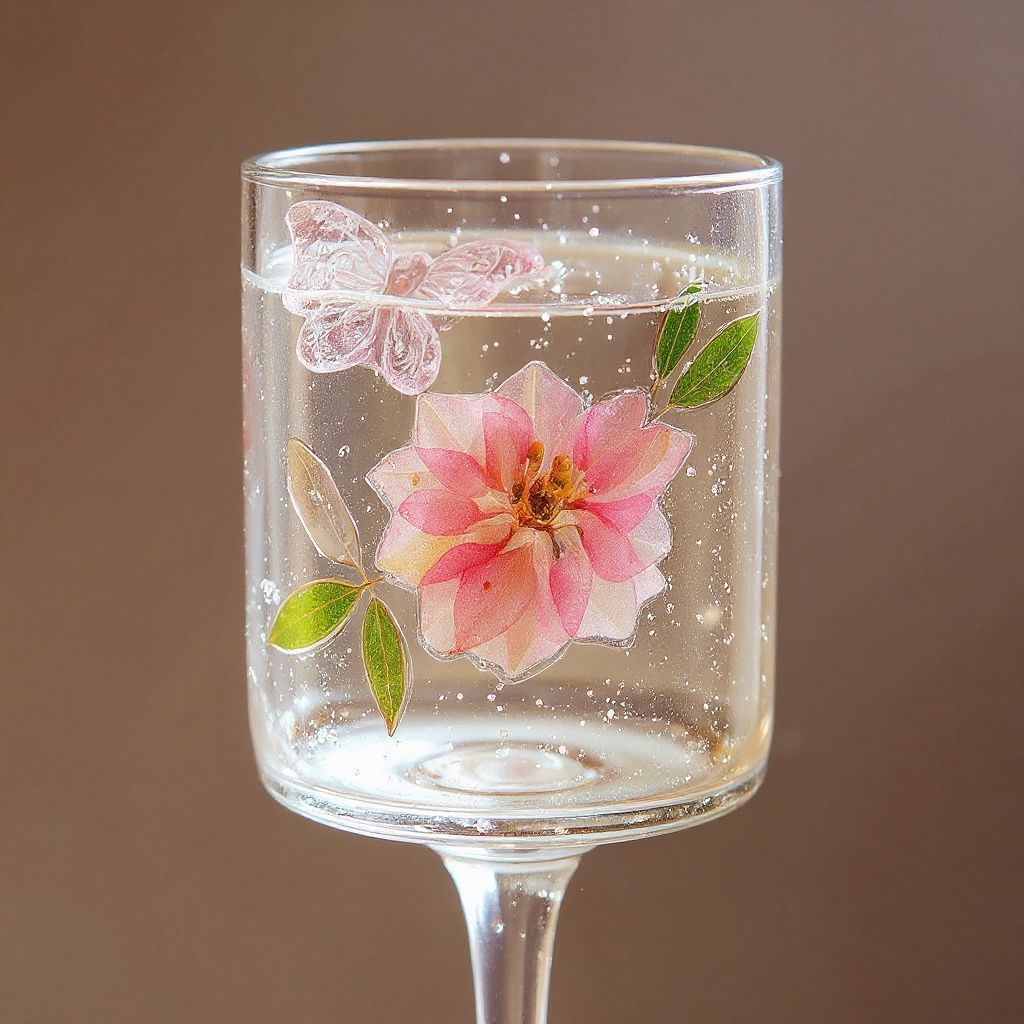
Our Handmade Floral Champagne Flute with Real Preserved Flowers in Eco Resin exemplifies this standard, featuring hand-embedded pink flower petals and green leaf accents sealed under a glossy clear resin coat with a tactile, raised surface you can feel with your fingertip.
Honest take most articles skip: if you're buying an aesthetic bar cart champagne glass with flowers primarily as daily drinkware and you're rough on glassware, a plain crystal flute will serve you better. These pieces reward careful handling. They're for people who treat special objects with care — not for houses with toddlers and commercial dishwashers.
Eco-Resin vs. Regular Epoxy: A Direct Comparison
Not all resins are equal for glassware. Epoxy resin chemistry has evolved, but many cheaper products still use formulations containing BPA and volatile organic compounds (VOCs) that can leach into liquids over time. Eco-resin is specifically engineered for food-contact applications — BPA-free, low-VOC, and compliant with standards like EU REACH Regulation (EC) No 1907/2006, which governs chemical safety in consumer products.
The table below compares the two across the criteria that matter most for functional floral glassware:
| Feature | Eco-Resin (Food-Grade) | Standard Epoxy Resin |
|---|---|---|
| BPA Content | BPA-free | May contain BPA |
| VOC Emissions | Low to zero | Moderate to high |
| Food-Contact Compliance | EU REACH / FDA food-safe grades available | Often not rated for food contact |
| Long-Term Clarity | Maintains clarity 10+ years with indirect light | Can yellow within 3–5 years |
| Dishwasher Compatibility | Hand wash only | Often hand wash only |
| Typical Price Per Flute | $50–$150 | $15–$50 |
| Surface Texture After Cure | Smooth, gloss, non-porous | Variable; may remain tacky if under-cured |
The non-porous surface matters for hygiene. A cured eco-resin coat won't absorb champagne, won't harbor bacteria in micro-cracks, and won't interact chemically with sparkling wine's carbonic acid. That's the foundation of why an aesthetic bar cart champagne glass with flowers can be both art and functional drinkware simultaneously.
The 7-Day Craft Process Behind Premium Floral Flutes
Handmade floral champagne flutes cannot be rushed. Here is the exact production sequence for a properly made piece:
1. Day 1 — Flower Selection and Drying Verification. Petals must register below 10% moisture content before use. Any residual moisture causes clouding or biological decay under resin. Silica gel drying takes 3–7 days before production even begins; this step assumes pre-dried stock. 2. Day 2 — Surface Preparation and Petal Placement. The glass exterior is cleaned and treated for adhesion. Each dried petal — soft pink, blush, with green leaf accents — is positioned by hand using fine-tipped tools. The three-dimensional arrangement is set and allowed to tack-dry before any resin contacts the surface. 3. Day 3 — First Resin Layer. A thin flood coat of eco-resin is applied over the arranged botanicals. Thin layers prevent heat buildup (exothermic reaction in thick pours can crack glass or cause bubbles). This layer locks petal positions and begins the encapsulation process. 4. Day 4 — Bubble Inspection and Second Layer. After 18–24 hours of initial cure, the surface is inspected. Any micro-bubbles are addressed. A second resin layer builds the glossy, raised three-dimensional profile that distinguishes premium pieces from flat-coated alternatives. 5. Day 5 — Full Cure Under Controlled Conditions. Temperature between 20–25°C and humidity below 50% are maintained. Deviations cause surface cloudiness, tackiness, or incomplete cross-linking — the chemical process that makes resin hard and food-safe. 6. Day 6 — Surface Finishing. The cured surface is inspected for imperfections and lightly polished if needed. The pale pink glass stem is cleaned and inspected separately. No abrasives that could scratch the resin exterior. 7. Day 7 — Final Quality Check and Photography. Each aesthetic bar cart champagne glass with flowers is photographed for documentation. Natural color variation between petals is noted. Pieces that don't meet clarity and finish standards are not sold.
Seven days. Minimum. That timeline is why authentic pieces cost more than mass-produced alternatives, and why "ships in 24 hours" is a warning sign for this product category.
Styling Floral Champagne Flutes on a Bar Cart
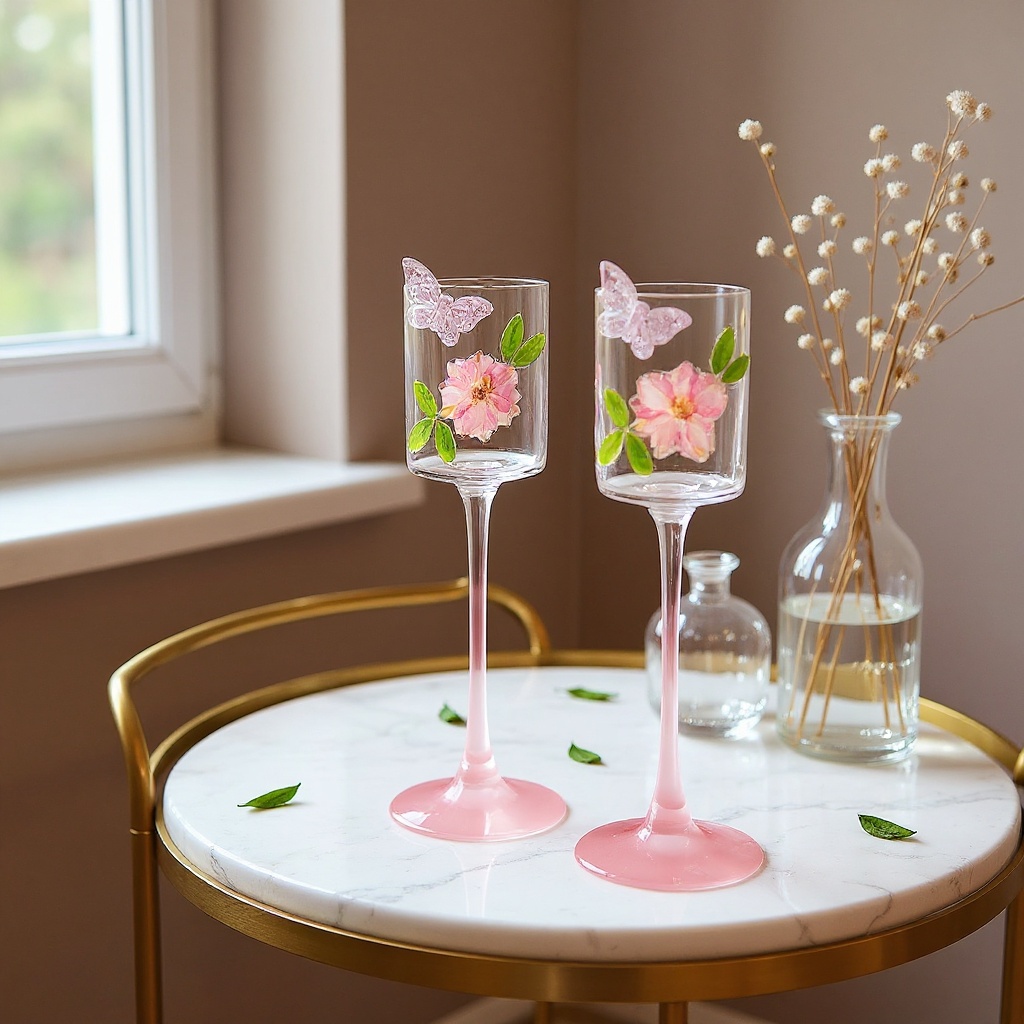
Statement pieces need restraint around them. An aesthetic bar cart champagne glass with flowers is already doing significant visual work — raised three-dimensional petals, pale pink glass, glossy resin catching window light. The supporting elements should recede, not compete.
Start with surface material. Marble works. White marble with soft grey veining mirrors the botanical-romantic aesthetic without introducing competing color. Natural wood in light tones also works well. Avoid dark surfaces that absorb rather than reflect the soft pastel palette.
Limit decorative elements to three to five per cart tier. Clean. Intentional. If the flutes carry pink flowers, echo that color once — a single blush taper candle, or a folded linen napkin in pale rose. Not both. Not three more pink objects.
Light is the variable most people underestimate. Resin refracts. Position the cart near a soft natural window — the kind of indirect morning light that doesn't cast hard shadows — and the embedded dried petals appear to glow from within. That's not photography magic. That's physics. An LED strip on an under-shelf pointed upward achieves a similar effect in low natural light conditions.
One more thing: don't over-accessorize the flutes themselves. The raised floral surface is the detail. Let it speak.
Investment Value: Handmade vs. Mass-Produced
The artisan drinkware market has grown as consumers shift toward unique, handcrafted objects over disposable décor — a pattern documented by the Craft Industry Alliance in their annual maker economy reports, which track independent artisan sales data across North America and Europe. Authentic floral champagne flutes hold their character over time. Mass-produced alternatives depreciate fast and often need replacement within one to two years due to fading, chipping, or simply losing their relevance as trends shift.
Handmade pieces using real preserved flowers in quality eco-resin maintain their appearance for over a decade with proper care. The initial investment of $50–$150 per flute often proves more economical than repeated replacement of cheaper options that didn't last.
Heirloom potential is real here. A handcrafted aesthetic bar cart champagne glass with flowers becomes a piece people keep — wedding toasts, anniversary mornings, the kind of ordinary Tuesday evenings you decide to make memorable. That's not marketing language. That's the feedback we receive.
Care and Maintenance: Protecting Your Botanical Investment
Resin-coated glassware has specific care rules. Follow them and these pieces last over a decade. Ignore them and you'll have problems within months.
Cleaning: - Hand wash only. Always. - Mild dish soap. Lukewarm water. - Soft cloth or non-abrasive sponge. - No scrubbers. No abrasive powders. No bleach-based cleaners. - Rinse thoroughly. Air dry upright or on a soft cloth. Temperature: - No dishwasher. High heat and harsh detergents damage both the resin surface and the botanical material beneath. - Avoid thermal shock. Let the flute reach room temperature before pouring cold champagne if the glass has been stored in a warm space. - No freezer storage. Display and Storage: - Indirect light for display. Extended direct sunlight won't fade properly preserved flowers rapidly, but it can cause resin yellowing over many years. - Individual soft cloth pouches for storage. The raised three-dimensional surface can scratch against other glassware in a cupboard. - Padded slots in dedicated glassware storage boxes work for long-term protection.Properly maintained, the eco-resin coat remains non-porous, the botanical material remains vivid, and the pale pink glass stem retains its elegance through years of careful use.
FAQ
What exactly is an aesthetic bar cart champagne glass with flowers?It is a functional champagne flute — slender, approximately 150–180ml capacity — with real dried flower petals and leaf accents applied to the exterior glass surface in a three-dimensional arrangement and sealed under a clear, food-safe eco-resin coat. The flowers are actual botanical material, not printed graphics or silk. The resin creates a glossy, tactile surface and permanently protects the florals. It functions as drinkware and as a decorative bar cart or shelf object.
Can you actually drink from a resin champagne flute?Yes, when made with food-grade, properly cured eco-resin compliant with food-contact standards such as EU REACH regulations. The cured resin creates a non-porous surface that won't absorb liquids or interact chemically with sparkling wine. The floral decoration is on the exterior surface — it never contacts the beverage. Always verify that a specific product specifies food-safe resin before using it as drinkware.
How do you clean a champagne glass with flowers in resin without damaging it?Hand wash with mild dish soap and lukewarm water using a soft cloth. No abrasive sponges, no harsh chemicals, no dishwasher. The high heat and detergent chemistry of dishwashers can degrade the resin surface over repeated cycles and damage the preserved botanicals beneath. Rinse thoroughly and air dry. That's the complete care protocol.
Will the real flowers inside the resin fade or turn brown?Properly preserved and dehydrated flowers sealed in quality eco-resin maintain their color for well over a decade. The resin acts as a physical barrier against oxygen, moisture, and UV light — the three primary causes of botanical degradation. Flowers that were not adequately dried before embedding are the main failure point; residual moisture leads to browning or cloudiness over time. This is why the drying and preparation phase before production matters as much as the resin work itself.
What is the difference between eco-resin and regular epoxy resin for glassware?Eco-resin formulated for food contact is BPA-free, low-VOC, and tested against food-safety standards. Regular epoxy resin may contain BPA and higher VOC levels, and is often not rated for food-contact applications. Eco-resin also tends to maintain optical clarity longer — standard epoxy can yellow noticeably within three to five years, particularly with UV exposure. For glassware that will contact beverages, food-grade eco-resin is the appropriate material choice.
How do I style floral champagne flutes on a bar cart without it looking cluttered?Limit decorative elements to three to five items per cart tier. Use a neutral base — white marble, pale wood, or brushed brass surfaces. Echo the flute's color palette in one or two supporting objects only: a blush linen napkin, a single pastel candle. Position the cart near indirect natural light so the resin catches and refracts it. The three-dimensional floral surface does the visual work; the surrounding styling should create space for it, not compete with it.
Are floral champagne flutes safe for sparkling wine specifically?Yes. A properly cured eco-resin surface is non-reactive and won't interact with the carbonic acid present in sparkling wine or champagne. The resin is applied to the exterior surface of the glass; the interior of the flute remains standard glass with no resin contact to the beverage. The 150–180ml capacity is designed for standard champagne pours. Avoid extreme temperature changes — allow the glass to adjust to room temperature before pouring cold wine.
How can I tell if a floral champagne flute is genuinely handmade rather than mass-produced?Look for natural variation between pieces. No two handmade aesthetic bar cart champagne glasses with flowers will be identical — petal positions, leaf angles, and the exact three-dimensional profile will differ subtly. Authentic handmade pieces often show minor natural imperfections: a small inclusion, a petal edge at a slight angle. Expect production times of five to seven days minimum, not same-day shipping. Printed floral patterns, obviously plastic silk petals, or identical pieces in bulk at low prices are reliable indicators of mass production.
Is this product appropriate for humid climates or outdoor bar carts?For extended outdoor use in high-humidity environments — think a covered porch in a subtropical climate with significant moisture in the air — this product is not ideal. Persistent humidity can eventually work into micro-junctions between the glass surface and the resin edge if the seal is imperfect, leading to cloudiness near edges over time. These flutes perform at their best in indoor environments with controlled humidity. A sealed display cabinet or a climate-controlled interior bar cart setting is ideal for long-term preservation.
Creating Lasting Memories With Botanical Elegance
The aesthetic bar cart champagne glass with flowers represents a genuine category of artisan drinkware — not a trend, not a novelty. Real dried botanicals. Food-safe resin. Seven days of skilled craft work. A product that functions as glassware and as permanent botanical art.
When you're ready to invest in something that will still be beautiful at your tenth anniversary toast, explore our Handmade Floral Champagne Flute collection. Each piece features real preserved pink flower petals and green leaf accents sealed in eco-friendly, food-safe resin — photographed on marble, styled by hand, made to last.
For guidance on pairing these flutes with other botanical home accents, explore our full Pampasroom collection for complementary dried floral décor and styling ideas.


