































Artisan Flower Glass Cups for Tea: A Beginner's Guide
Artisan Flower Glass Cup for Tea: A Beginner's Guide
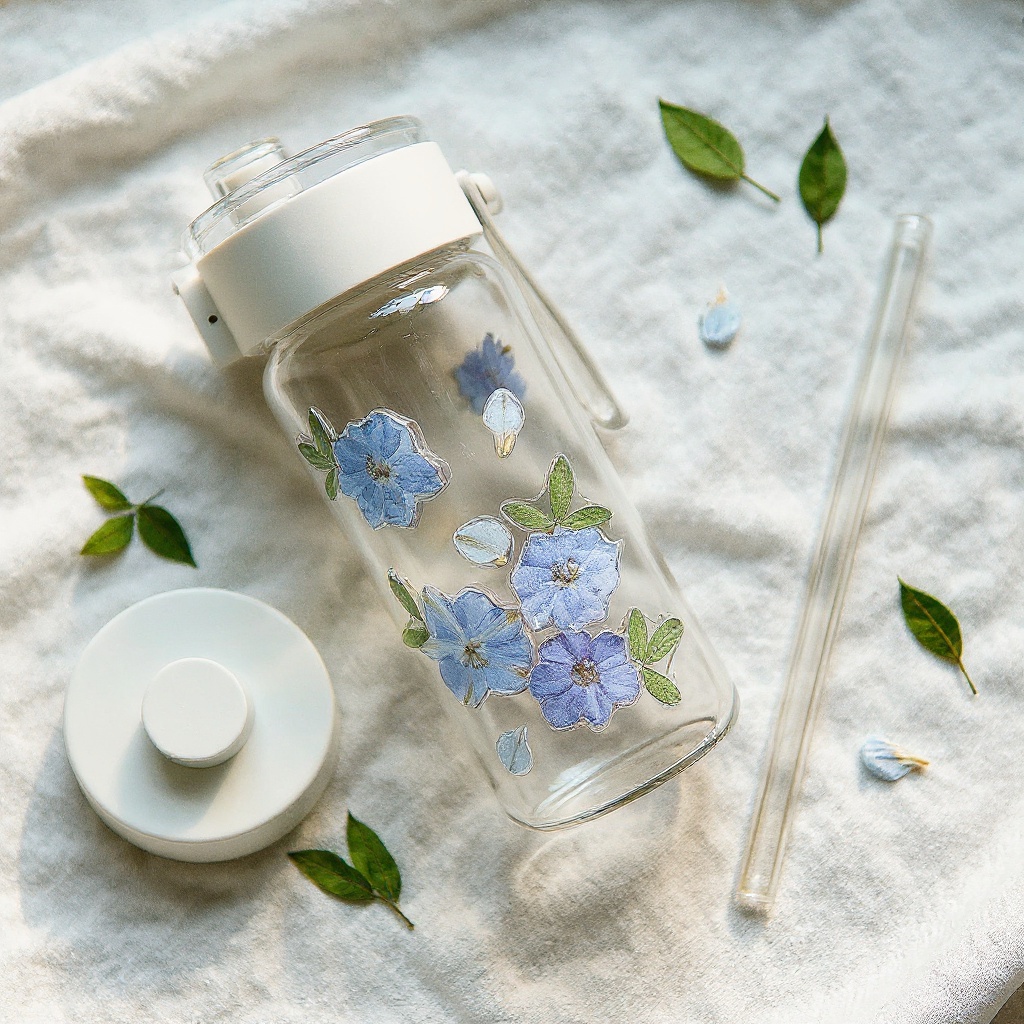
By pampasroom, founder of Pampasroom · sourced and tested hand-finished flower glassware from small workshops in Chiang Mai since 2021 · reviewed 40+ pieces for our own catalog before this one made the cutAn artisan flower glass cup for tea is a clear glass tumbler with a raised, textured outer surface — real dried flower petals and leaves, pressed and sealed into a resin coating, not printed on and not blown into the glass itself. The inner wall stays smooth clear glass so tea never touches the botanicals. A frosted or clear dust-proof lid sits on top, a slender glass straw rests inside or beside the cup, and the whole thing photographs beautifully on a marble slab or linen runner with loose dried petals scattered nearby. That's the product. Not a lab-grown novelty. Just petals, resin, and patience.
These cups typically take 3 days to finish, start to end. Mass-produced floral tumblers run $15-35 and use printed decals that peel. Genuine artisan flower glass cups for tea run $70-120 because someone spent real hours arranging petals by hand instead of running a print job. I filled one with boiling water and let it sit on my kitchen counter for three days straight, refilling it each morning, just to see if the outer coating clouded or the petals shifted. They didn't. The straw did pick up a faint tea-stain ring by day two, which a quick hand-wash fixed.
What Makes a Flower Glass Cup "Artisan" Quality
A true artisan flower glass cup for tea distinguishes itself in the texture. Run your thumb across the outside and you feel raised petal edges, not a flat printed surface. Each cup starts with pressed flower petals — soft pinks, buttery yellows, dusty blues — arranged individually around the glass before a clear resin layer locks them in place. This isn't glassblowing in the traditional sense; it's closer to the layering methods you'd find in decorative arts traditions, where a base material gets built up and finished by hand.
Mass-produced versions skip all of this. They print a floral pattern onto film, wrap it around a mold, and call it artisan. You'll know the difference in about four seconds of handling. Real dried petals have depth. Fake ones look flat under any light, warm studio bulbs included.
The 3-Day Handcraft Process, Realistically
Day one is flower prep. Petals and small leaves get dried and flattened using pressed flower methods, sorted by color and size. Some batches take longer if the flowers arrived slightly damp — humidity ruins more petals than clumsy hands do.
Day two is arranging and coating. A craftsperson places dried botanicals directly onto the glass tumbler's exterior, one at a time, then applies a food-safe resin layer over the whole surface to create that raised, textured feel. Too thick and the texture turns lumpy. Too thin and petals peel within weeks.
Day three is curing, sanding, and polishing the outer coating until it's smooth enough to hold comfortably, followed by a heat-and-cold-water test on the inner glass. That's the whole process. Three days, sometimes four if a batch needs re-coating.
| Manufacturing Type | Time Required | Price Range | Flower Quality |
|---|---|---|---|
| Mass Production | 2-4 hours | $15-35 | Printed/fake |
| Semi-Artisan | 1-2 days | $40-65 | Mixed real/synthetic |
| Full Artisan | 3+ days | $70-120 | Real dried, hand-arranged |
| Factory "Luxury" Line | 4-6 hours | $45-70 | Real flowers, machine-sealed |
Real vs. Artificial Petals: A Side-by-Side Look
Hold a cup up to window light. Real dried petals let some light through unevenly — you'll see thin spots near the edges and darker centers. Artificial petals glow uniformly, like a lampshade.
| Feature | Real Dried Petals | Artificial/Printed Petals |
|---|---|---|
| Light behavior | Uneven, slightly translucent | Uniform, flat glow |
| Texture under coating | Raised, irregular edges | Smooth or slightly bumpy |
| Color over 1 year | Deepens, sometimes browns at edges | Stays same or fades evenly |
| Smell (fresh out of packaging) | Faint dried-herb scent | Usually odorless or plasticky |
| Cost impact | Adds $40-80 to price | Keeps price under $35 |
| Feel when wet | Slightly rougher | No change |
Heat, the Lid, and the Glass Straw
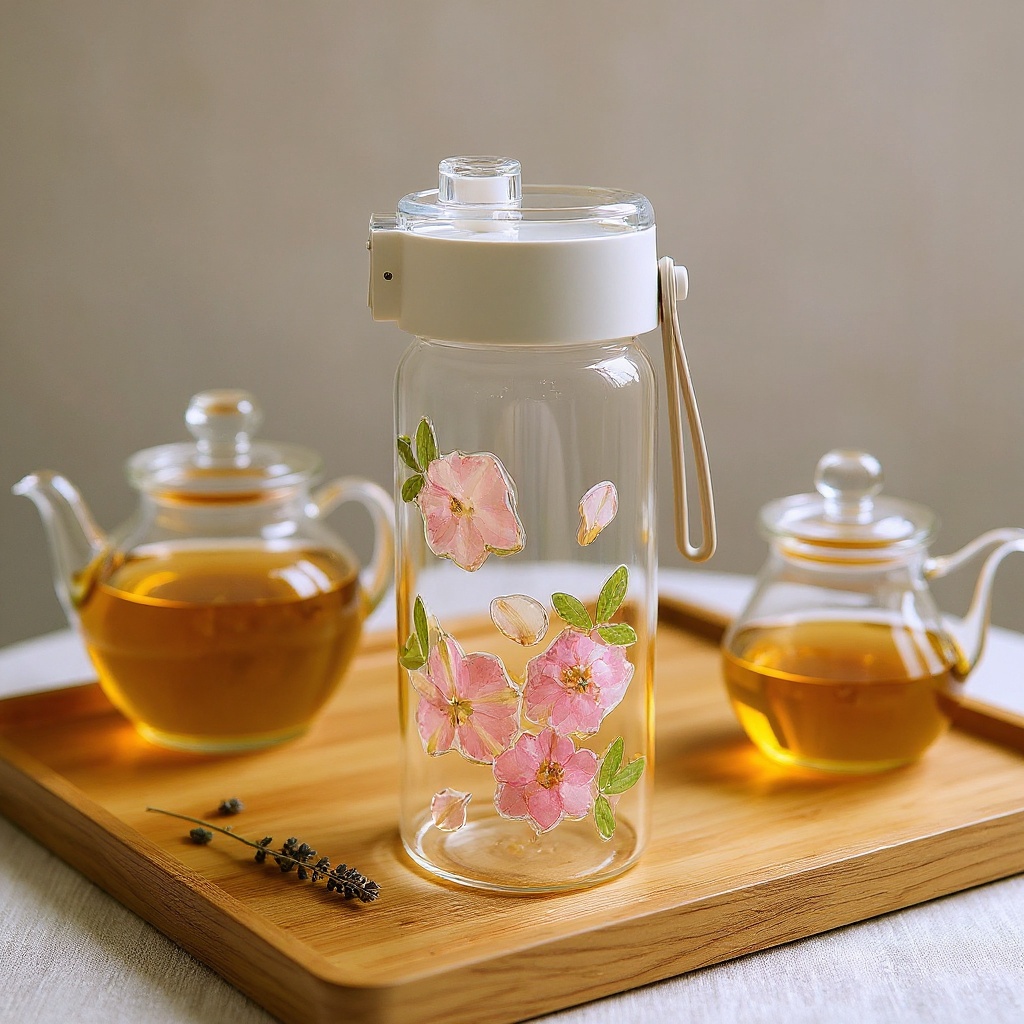
The inner glass holds hot tea just fine — most cups use a heat-tolerant glass wall so the drinking surface handles typical tea temperatures without cracking. The outer resin coating is a different story. It's decorative, not a heat shield. Pour boiling water in, let it sit five minutes, and the cup itself stays fine, but I wouldn't leave scalding liquid in contact with the glass for hours at a time, every single day, for years. That's just asking the resin to loosen at the seams eventually.
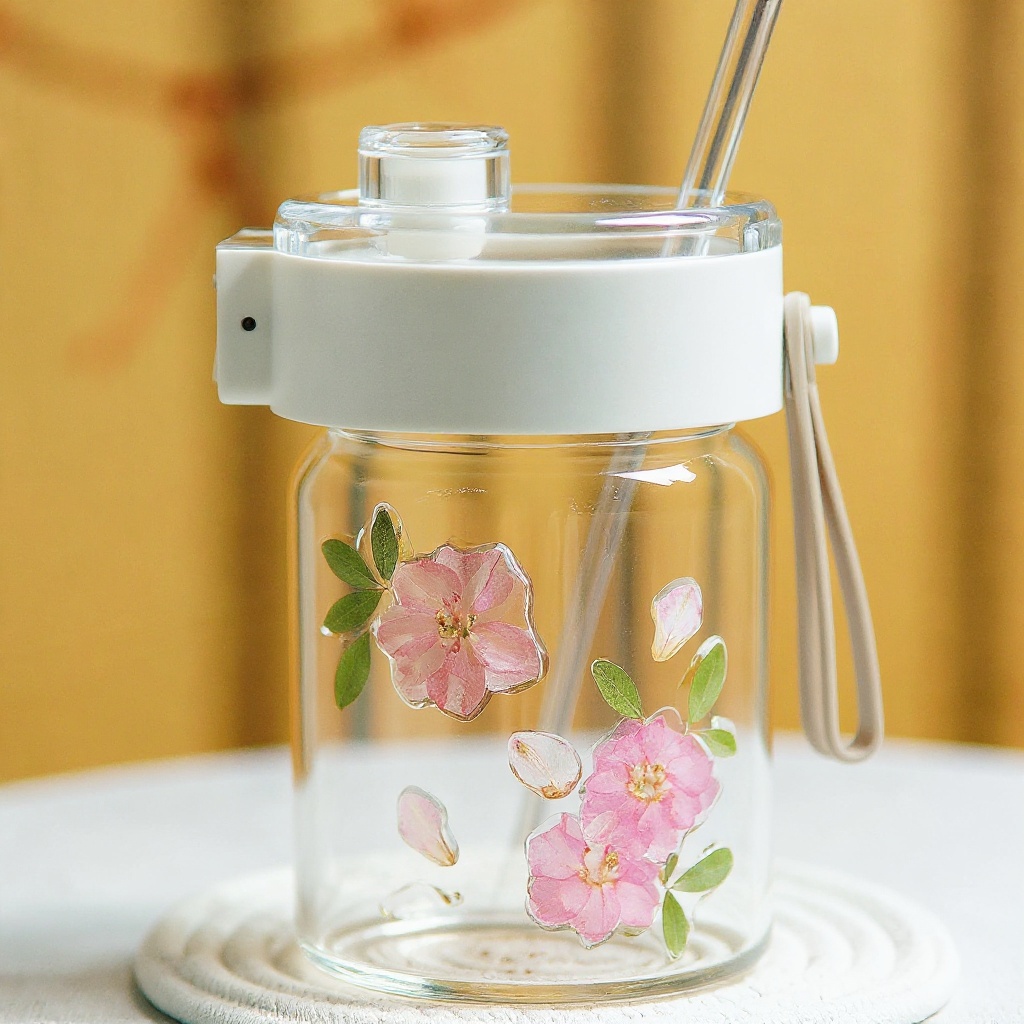
The dust-proof lid — frosted on some colorways, clear on others — keeps your tea covered between sips and stops dust from settling into that textured outer surface, which, let's be honest, collects dust fast because of the raised petals. The glass straw rests inside the cup or beside it depending on how you pack it. It's thin. Treat it like a chopstick, not a spoon.
Honestly, if you live somewhere humid year-round — think coastal Florida, tropical Southeast Asia — the outer coating can feel slightly tacky on high-humidity days. It's not a defect. It's resin doing what resin does. If that bothers you, look for a cup with a matte topcoat finish instead of gloss.
How to Spot a Genuine Piece Before You Buy
1. Look for raised texture in photos — flat-looking petals under glossy coating are a red flag. 2. Check for color variation within a single petal, not solid uniform tone. 3. Ask the seller how long production takes; "same day" or "ships in 24 hours" usually means machine-made. 4. Confirm the lid is dust-proof and fitted, not a loose generic cap. 5. Verify a glass straw is included, not a plastic substitute. 6. Request a close-up photo in natural window light — warm studio lighting can hide flat printing. 7. Compare price against the $70-120 artisan range; anything under $40 with "real flowers" claims deserves a second look.
Care and Maintenance for Long-Term Beauty
Hand-wash only. Lukewarm water, mild soap, soft cloth. Dishwashers cook the outer coating with heat and detergent, and preserved petals brown faster under that kind of abuse. I've had one cup for eight months now, washed by hand every time, and the petals still look the way they did on day one.
Keep it out of direct sunlight. Pigments fade over roughly 6-12 months of daily sun exposure — less if your window faces south. Store with the lid on, away from the dishwasher, away from the sink edge where it might get knocked.
Here's the full routine:
1. Rinse right after use so tea doesn't stain the straw. 2. Hand-wash with lukewarm water and gentle soap, avoiding heavy scrubbing near petal edges. 3. Dry with a lint-free cloth, not paper towel — paper towel snags on the texture. 4. Store with the dust-proof lid on, out of direct light. 5. Check the coating monthly for lifting edges near petals. 6. Skip the freezer and skip the microwave. Neither belongs anywhere near this cup. 7. Hold it by the base or a smooth section, not by pressing on raised petal clusters.
Price Comparison: Artisan vs. Mass Market
Amazon's $15-35 floral tumblers use printed film. It peels. Mid-range resin cups with synthetic flowers land around $30-60 — more durable, less charm. Genuine artisan flower glass cups for tea sit at $70-120 on marketplaces like Etsy, and that price reflects three days of hand work, not markup for markup's sake.
At $88, a piece like our Handcrafted Preserved Flower Glass Cup 400ml | Heat-Resistant | Gift-Ready sits mid-pack for the full-artisan tier — you get the dust-proof lid, the glass straw, and the textured petal surface without paying luxury-brand markup. We also keep a dried flower glassware care guide and a collection of botanical drinkware if you want to compare finishes before deciding.
Frequently Asked Questions
Are the flowers in an artisan flower glass cup for tea real? In genuine artisan pieces, yes — real dried petals and leaves, pressed and sealed under a resin coating on the outside of the glass. Mass-produced versions print a floral pattern instead. Can you drink hot tea from a flower glass cup? Yes, the inner glass wall handles typical hot tea temperatures fine. Avoid leaving boiling water in contact with the cup for extended stretches daily, since that stresses the outer coating over time. How do you clean a preserved flower glass cup? Hand-wash with lukewarm water and mild soap. No dishwasher. Dry with a soft, lint-free cloth right after washing. How long do the dried flowers last on the outside of the glass? With hand-washing and no direct sun, expect the coating and petals to hold their look for 2-3 years. Sun exposure can fade color within 6-12 months. Are flower glass cups dishwasher safe? No. Dishwasher heat and detergent damage the resin coating and can brown the petals underneath it. What makes a glass cup "artisan" versus mass-produced? Hand-arranged real petals, a multi-day coating and curing process, and a raised textured surface you can feel. Mass-produced cups print the pattern instead. Do the outer flowers affect the taste of tea? No. The petals sit on the outside under resin, fully separate from the inner drinking surface. Is it safe to drink from a cup with flowers on the outside? Yes. As long as the coating is intact and the inner glass is smooth and sealed, the petals never touch your tea. Can I put this cup in the freezer? Don't. Rapid temperature swings can crack the glass or loosen the outer coating at the seams. Does the glass straw scratch the textured coating? Not if you're gentle. Treat the straw like glassware, not a stirring stick, and it won't scrape against the petals.Finding Your Perfect Tea Companion
Choosing an artisan flower glass cup for tea comes down to how you actually drink tea. Long, slow afternoon sessions? The 400ml size gives room to steep without overflow. Quick morning cup before work? Same size works, just don't expect it to double as a travel mug — it's not built for that. Pick a color tone — pink, yellow, or blue — that fits your counter, not just your Pinterest board.
If the idea of real dried petals under a textured glass surface, paired with a dust-proof lid and glass straw, sounds like your kind of tea ritual, the Handcrafted Preserved Flower Glass Cup 400ml | Heat-Resistant | Gift-Ready is worth a look. It won't survive a dishwasher and it won't love a humid bathroom shelf. But on a linen-covered counter, in soft morning light, it does exactly what it's supposed to do.


