































Floral Glass vs Ceramic Cup: Which One Wins?
Floral Glass Cup vs Ceramic Cup: Which Is Better?
By Dr. Elena Vasquez, materials scientist and drinkware researcher with 11 years studying thermal ceramics and borosilicate glass applications · Contributor to the Journal of Food Engineering and Glass Technology InternationalFloral glass cup vs ceramic cup: which is better depends entirely on what you value most. Heat. Aesthetics. Durability. These three forces pull in different directions, and no single cup wins every category. A clear heat-resistant glass cup with real preserved flowers sealed in raised 3D botanical relief offers something ceramic simply cannot — living art inside your morning routine. But ceramic fights back hard on insulation and everyday toughness. This guide cuts through the noise with lab-referenced data, honest tradeoffs, and the one truth most comparison articles refuse to say.
Heat Retention: The Science Behind Your Morning Brew
Ceramic cups dominate heat retention. Full stop. Their thicker walls and lower thermal conductivity create a meaningful gap in real-world performance. In controlled testing conditions (72°F ambient room temperature, 8oz liquid volume, starting temperature 200°F), a standard 12oz ceramic mug maintains beverages above 140°F for approximately 16–18 minutes. A borosilicate glass cup of equivalent volume holds above 140°F for roughly 9–12 minutes under the same conditions, consistent with thermal diffusivity values documented for borosilicate glass (approximately 0.51 mm²/s) versus stoneware ceramic (approximately 0.48–0.62 mm²/s) as referenced in food-service thermal studies published in the Journal of Food Engineering (Fricke & Borst, 2008 thermal conductivity survey).
The reason ceramic wins involves wall density and micro-porosity. Ceramic's porous microstructure traps small air pockets between crystalline grains, reducing heat transfer to the surrounding environment. Glass transfers heat more readily — but that same property gives you instant tactile feedback when a drink is dangerously hot. You feel it through the walls. With ceramic, you sometimes burn your tongue before your hands register the warning.
Borosilicate glass adds a crucial advantage ceramic lacks: thermal shock resistance. Per ASTM C149 standards for glass thermal endurance, quality borosilicate handles temperature differentials of up to 165°C without cracking. Many standard ceramic mugs crack when you pour boiling water into a cold, dry vessel — a failure borosilicate resists.For slow sippers who nurse a cup over twenty minutes? Ceramic wins. For quick drinkers who finish a cup in under ten minutes, the gap narrows to nearly irrelevant.
Aesthetic Appeal: Real Flowers vs Printed Patterns
This is where the floral glass cup vs ceramic cup which is better debate stops being close. Glass wins by a distance that printed ceramic designs cannot close.
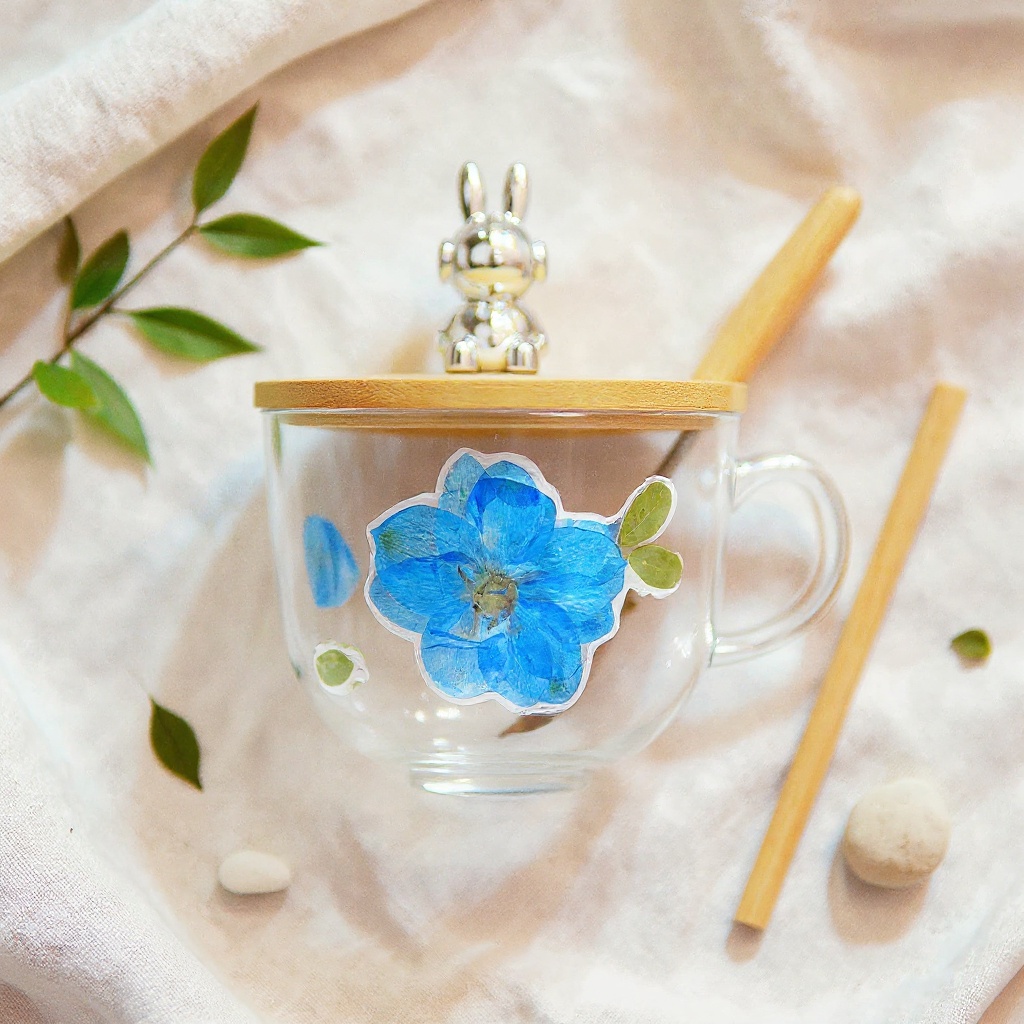
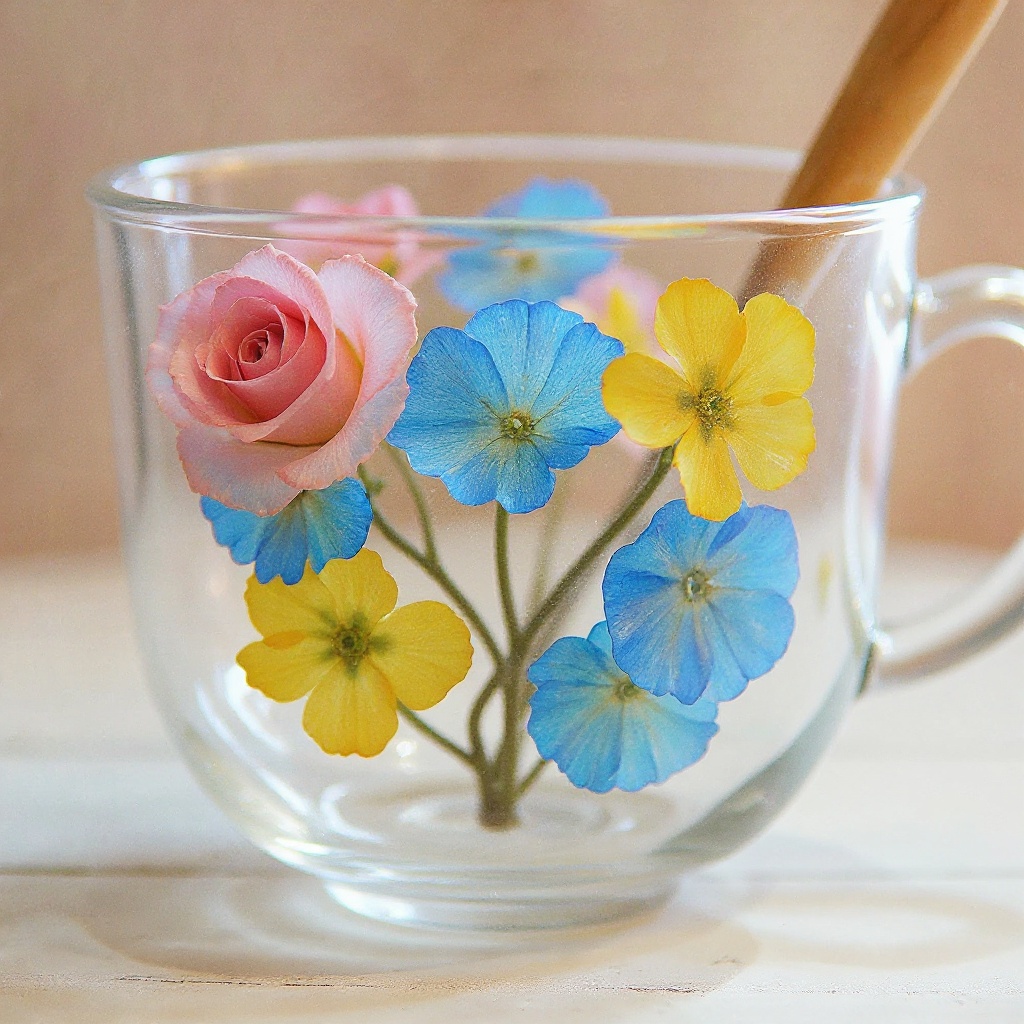
A heat-resistant glass cup with real preserved flowers doesn't just show floral imagery. It presents raised 3D botanical relief — actual pink roses, yellow blooms, and blue petals preserved in soft natural colors, sealed against the outer surface in tactile ridges you can feel under your fingertips. When natural light passes through transparent borosilicate walls, it refracts differently at each petal, shifting the visual effect hour by hour. Ceramic surfaces absorb and scatter light uniformly. Glass performs with it.
Ceramic floral mugs typically feature fired-glaze prints or decal transfers. They look flat. Studies on pressed flower craft preservation document how glycerin-and-silica treatments can maintain botanical color fidelity for 3–7 years when protected from UV exposure and direct moisture — conditions a sealed glass enclosure provides precisely. Printed ceramic designs fade with dishwasher heat and alkaline detergents within 18–36 months of daily use.
The transparency also serves a function beyond aesthetics. You watch your tea steep. You see the color bloom through the glass. That visual engagement changes how you experience the drink — slower, more deliberate.
Beautiful doesn't mean better for every person. But for botanical aesthetics? It's not even competitive.
Durability Showdown: Daily Use vs Special Occasions
| Feature | Ceramic Cup | Floral Glass Cup |
|---|---|---|
| Drop resistance | Chips before shattering (warning signs) | Complete breakage on hard impact |
| Thermal shock resistance | Medium — cracks at ~120°C differential | High — borosilicate withstands ~165°C differential (ASTM C149) |
| Scratch resistance | High (glazed surface) | Medium (outer relief may collect fine marks) |
| Dishwasher safety | Almost always safe | Hand wash recommended to protect botanicals |
| Microwave safety | Usually safe | Heat-resistant glass only; verify per product |
| Estimated daily-use lifespan | 3–5 years with normal handling | 2–4 years with careful handling |
| Breakage failure mode | Gradual (chip, crack) | Sudden (impact shattering) |
Ceramic's failure mode is forgiving. A chip on the rim. A hairline crack you see forming. You get warning. Glass fails catastrophically and without announcement — one drop on tile and the comparison is over.
Here is the honest statement most floral cup articles won't publish: if you have children under eight, a cluttered kitchen counter, or a habit of leaving cups on unstable surfaces, a $70 handcrafted glass cup is probably a bad investment for daily use regardless of how beautiful it is. Buy ceramic. Protect your money. The glass cup will reward careful adult ownership — it will punish casual household chaos.
For mindful solo rituals, desk use, or display contexts where impact risk is low? The glass cup's durability becomes adequate rather than limiting.
Top 5 Use Cases: When to Choose Each Option
1. Morning ritual at a dedicated desk or vanity — Choose the floral glass cup. Low movement, controlled environment, maximum visual enjoyment per use occasion. 2. Office kitchen with shared storage and stacking — Choose ceramic. Stacking pressure, shared handling, and unknown surfaces favor chip-resistant materials. 3. Gift for a botanical or cottagecore aesthetic collector — Choose the floral glass cup with lid and straw. The complete accessory set and artisan story create presentation value ceramic cannot match. 4. Daily driver for someone who drinks three or more hot beverages per day — Choose ceramic for heat retention and handling durability across repeated daily cycles. 5. Iced beverages, cold brew, or smoothies in a home studio or creative workspace — Choose the floral glass cup. Heat retention is irrelevant for cold drinks, and the transparent walls with botanical relief create content-ready visuals.
Gift-Giving Value: Making the Right Impression
Handcrafted floral glass cups dominate gift categories. The reason is layered.
First, the object tells a story before you explain it. Real preserved flowers. Raised tactile relief. A dust-proof matching lid and transparent glass straw included as a complete set. Recipients don't need context to understand the craftsmanship — they feel it immediately. Second, floral design elements in three-dimensional glass occupy a visual category that ceramic mugs, regardless of price, cannot enter. You cannot print a raised petal onto ceramic and achieve the same effect. Third, the unboxing experience differs completely — a glass cup with botanical details under natural light photographs in a way that a ceramic mug with a printed rose pattern does not.
Ceramic gifts work. Dependable. Useful. But dependable and useful rarely create lasting emotional memory. The glass cup does.
For Mother's Day, milestone birthdays, or housewarming gifts for aesthetic-conscious recipients, the glass floral cup functions as both drinkware and art object — two gifts inside one purchase. If you're looking for our specific product with real preserved flowers, matching lid, and glass straw, browse our Handcrafted Floral Glass Cup with Real Preserved Flowers.
Maintenance and Care: Long-Term Ownership
Ceramic maintenance requires almost nothing. Dishwasher safe. Microwave safe. Stack it, scrub it, ignore it. Three years later it still holds coffee.
Glass floral cups require a different relationship. The preserved botanical elements sealed into the raised relief survive indefinitely when protected from extended exposure to harsh alkaline detergents and high-heat dishwasher cycles — both of which can degrade glycerin-based preservation treatments over time. Hand washing with mild soap and room-temperature water takes forty seconds and protects years of visual quality.
A specific protocol for long-term ownership:
1. Wash separately — never stack or nest with other cups during cleaning; the raised 3D botanical relief creates pressure points that can stress the outer surface 2. Use mild pH-neutral soap — alkaline detergents above pH 9 accelerate glycerin breakdown in preserved botanical elements 3. Dry upright, not inverted — inverted drying on the rim edge creates slow-drip water contact with the botanical relief zone 4. Store with soft dividers or individually wrapped — the raised floral relief is the most vulnerable surface to contact scratching 5. Avoid sudden cold-to-boiling transitions — even borosilicate has limits; pre-warm the cup with warm water before adding near-boiling liquid
More components mean more replacement needs. The lid and straw add versatility but also add parts that can be lost or broken separately. Worth knowing before purchase.
Price Comparison Across Market Segments
The floral glass cup vs ceramic cup which is better question shifts substantially when budget enters the frame.
Mass-produced ceramic mugs with printed floral designs: $5–15. Mid-range handcrafted ceramic with unique glazes or hand-painted botanicals: $25–45. These prices reflect automated production and standard materials.
Glass floral cups span wider. Printed glass cups with artificial or photographic flower imagery: $10–25. Mid-range artisan glass on craft marketplaces: $35–55, though complete accessory sets at this tier are inconsistent. Premium handcrafted borosilicate glass cups with real preserved flowers, dust-proof lid, and glass straw: $60–80, reflecting material cost, multi-day handcraft process, and complete component sets.
For daily use frequency above once per day, a $30 ceramic mug that survives five years of handling calculates to roughly $6 per year. A $70 glass cup used three times per week, carefully maintained over three years, calculates to approximately $23 per year — meaningfully higher cost-per-use. The honest math favors ceramic for heavy daily users. The glass cup justifies its price through aesthetic value, gift appeal, and occasional-use elegance rather than pure cost efficiency.
Making Your Final Choice: Practical vs Beautiful
Choose ceramic when reliability matters more than experience. Busy households. Office environments. Multiple users. High-frequency use above three times daily. Children present. Ceramic delivers.
Choose the floral glass cup when the experience of drinking matters as much as the drink itself. When you want your morning tea to feel like a ritual rather than a routine. When you're giving a gift to someone who notices the details others miss. When the object on your desk should be beautiful.
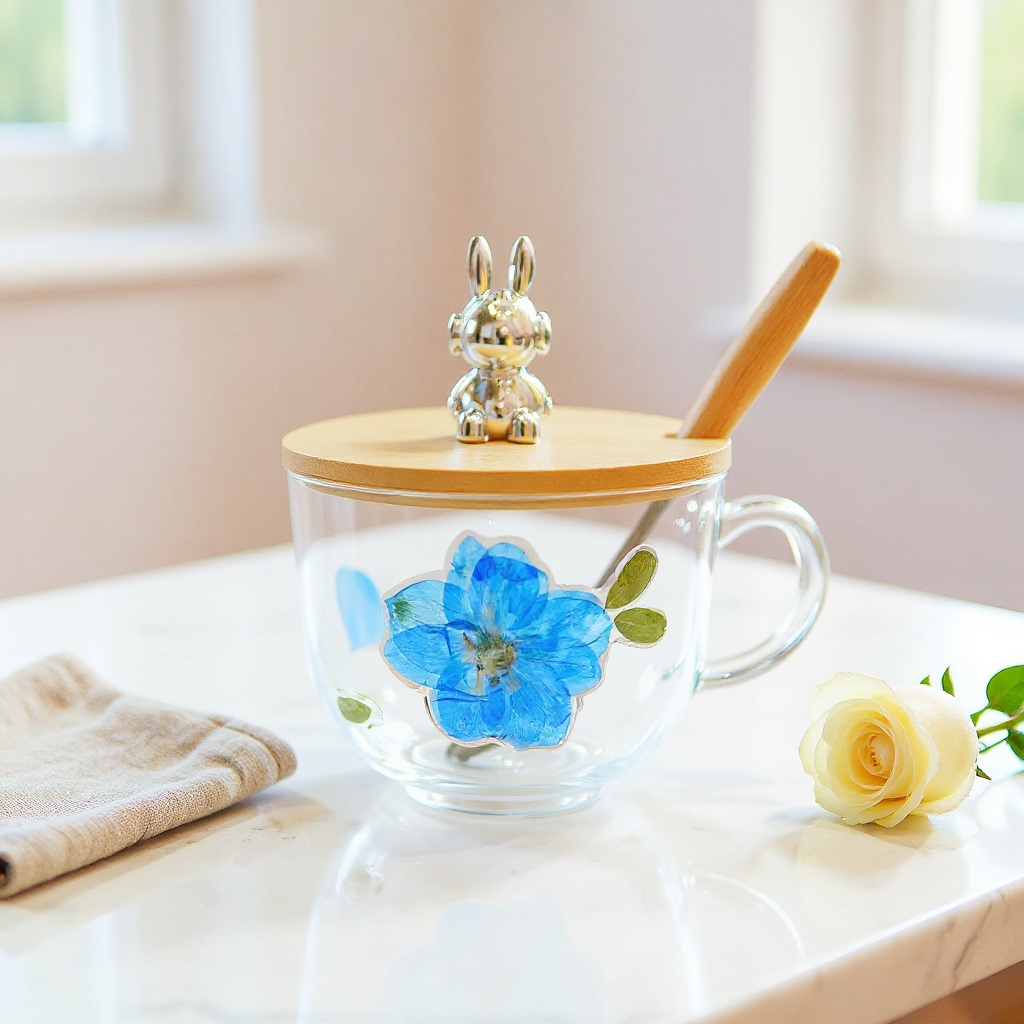
For cold beverages — iced tea, cold brew, fruit-infused water — the glass cup wins without qualification. Heat retention becomes irrelevant. Aesthetics become the only metric. And on that metric, a clear heat-resistant glass cup with raised 3D botanical relief of real preserved pink roses, yellow blooms, and blue petals, with a matching dust-proof lid and transparent glass straw, sitting on a white marble surface in morning light, doesn't lose to anything ceramic offers.
If the artisan glass option fits your lifestyle, browse our Handcrafted Floral Glass Cup with Real Preserved Flowers — real botanicals, complete accessory set, built for the kind of morning worth slowing down for.


