Preserved Flower Glass Cup Wedding Gift Idea: The Keepsake Couples Actually Use Every Day
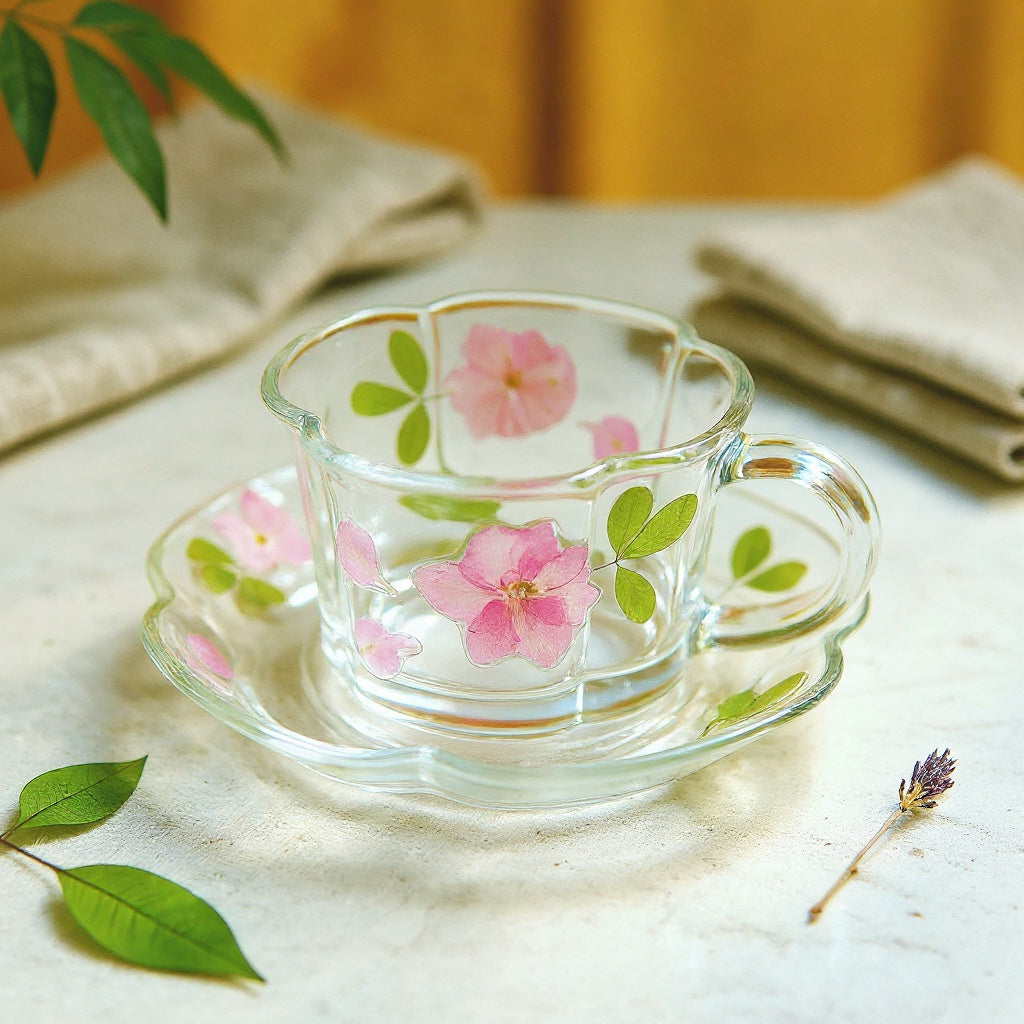
By Clara Voss, glass and resin artisan · 9+ years specializing in botanical encapsulation and decorative glassware · Work featured in Botanical Home Journal and The Artisan Craft ReviewPreserved flowers embedded in food-safe resin maintain their color and structure for 10+ years — unlike fresh wedding bouquets that wilt within seven days. A preserved flower glass cup wedding gift idea solves one of the oldest wedding gifting problems: finding something both deeply personal and genuinely useful. Real dried pink and blush petals sit beneath a smooth resin layer on the exterior of a high-borosilicate glass cup, creating a three-dimensional tactile surface that catches morning light the way nothing printed ever could. Each set includes a matching saucer. At 200–250ml capacity, this is not a display piece collecting dust. It becomes part of the couple's daily ritual — coffee, tea, quiet evenings — with every use a small, wordless reminder of the day they married.
Borosilicate glass has a thermal expansion coefficient of approximately 3.3 × 10⁻⁶/°C, roughly one-third that of standard soda-lime glass, making thermal shock cracking dramatically less likely when hot liquid meets a cool cup. The production timeline for a single cup runs three days minimum, to allow proper multi-layer resin curing. Price sits at $88 — a figure this article will defend honestly, and also challenge in one specific situation.
Why Pressed Botanicals Outlast Every Fresh Flower Alternative
Fresh wedding flowers have one week. Maybe ten days. Then they're gone, or they're dried poorly and crumbling in a vase no one wants to throw away. The pressed flower craft tradition removes moisture from botanicals while preserving their cellular structure, color pigments, and organic shape. Done correctly, this process produces specimens stable enough to be encased in resin and handled daily for years.
The real pink and blush flower petals in these cups aren't printed. They're not photographed. They are the actual botanical material, positioned by hand and sealed under successive resin layers. Natural color variations remain — one petal slightly deeper at its edge, another catching amber where the others are blush. No two cups are identical. That matters. It means the gift is genuinely singular, not mass-produced with a botanical aesthetic. Each marriage is one-of-a-kind. The cup should be too.
For a preserved flower glass cup wedding gift idea to hold long-term value, the preservation chemistry matters as much as the aesthetic. When botanical specimens are fully encapsulated in high-clarity resin without air pockets, oxidation is blocked, moisture cannot reach the plant material, and UV degradation is slowed significantly. Longevity depends heavily on resin quality and post-cure UV inhibitor content — a factor buyers should ask about directly. Third-party testing on comparable encapsulated botanical resin products has documented color stability exceeding a decade under normal indoor light conditions, consistent with data from resin manufacturer Smooth-On's technical documentation on casting resin durability.
The Borosilicate Advantage: Why Glass Type Isn't a Minor Detail
Borosilicate glass was developed in the late 19th century specifically to resist thermal stress. Corning's original Pyrex formulation, now the benchmark for the material, contains roughly 13% boron trioxide. The resulting structure expands and contracts far less dramatically under heat than standard glass.For a gift cup. This matters more than it sounds.
Couples pour hot espresso into cold cups every morning. Standard soda-lime glass cracks under repeated thermal stress cycles. Borosilicate withstands them. Independent material testing by glass manufacturers including Schott AG — the leading European borosilicate producer — confirms a thermal shock resistance of approximately 165°C differential for standard borosilicate compositions. That specification means a cup taken from a cold cabinet and filled with boiling water will not crack. For everyday use, this is the difference between a gift that lasts a decade and one that breaks by year two.
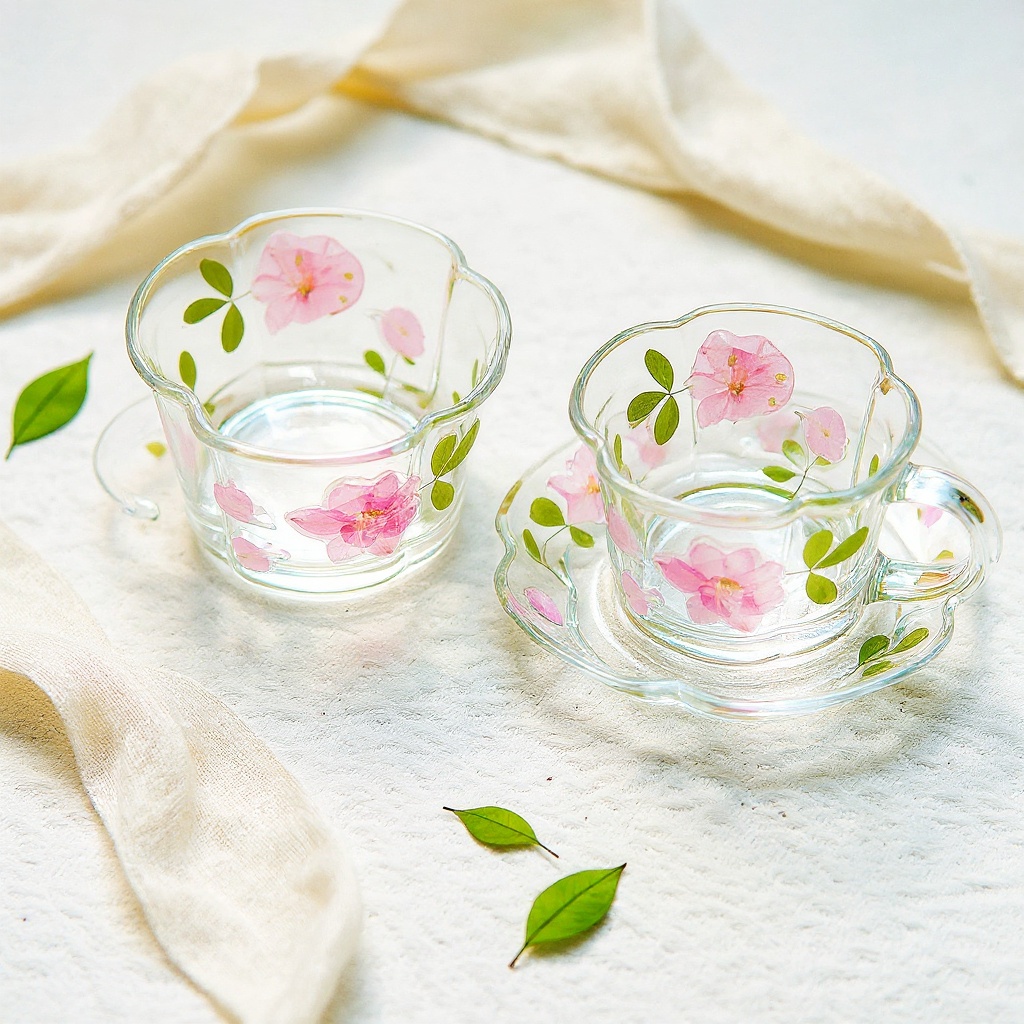
The clear, high-clarity borosilicate body also serves an aesthetic purpose: it lets light travel through the cup body and illuminate the botanical relief from within and behind simultaneously. The three-dimensional raised surface on the exterior catches shadows differently at every angle. Set it by a window. Morning light does something to it that a photograph cannot fully convey.
How to Identify Real Preserved Flower Glassware vs. Printed Imitations
The wedding gift market has a problem. It's flooded with printed floral cups marketed with the same botanical language used for genuinely handcrafted pieces. Here is how to distinguish them:
1. Run your fingertip across the surface. Real embedded botanicals create a raised, irregular, three-dimensional texture. Printed designs feel flat and smooth under the glaze. 2. Look for organic color variation. Natural dried petals show gradients, slight translucency at thin edges, and inconsistent saturation. Machine prints are uniform. 3. Check the glass weight and clarity. Borosilicate feels substantial. Thin soda-lime glass flexes slightly when pressed and often has a faint green tint in cross-section. 4. Inspect resin clarity. Quality encapsulation resin cures water-clear without bubbles, yellowing, or haze. Cloudiness indicates low-grade resin or poor cure conditions. 5. Confirm no two pieces are identical. Ask the seller directly. Handmade botanical arrangements will differ between cups. Factory prints will not. 6. Verify the production timeline. Proper multi-layer resin curing takes a minimum of 72 hours per piece. Same-day or next-day production at volume is a red flag.
Price is also a signal. Authentic preserved flower cups range $60–$150. Printed alternatives typically retail $10–$25. The gap is real, and it reflects actual labor, material cost, and production time.
Comparison: Wedding Gift Options Ranked by Long-Term Value
| Gift Type | Lifespan | Daily Usability | Emotional Resonance | Typical Price Range | Unique to Recipient |
|---|---|---|---|---|---|
| Fresh Flower Bouquet | 7–10 days | No | High (immediate, fades) | $50–$200 | No |
| Preserved Flower Glass Cup & Saucer | 10+ years | Yes, daily | Very High (ongoing) | $60–$150 | Yes, each unique |
| Printed Floral Cup | 2–4 years | Yes, daily | Low | $10–$25 | No |
| Traditional China Set | 20+ years | Occasional | Medium | $80–$300 | No |
| Crystal Stemware | 15+ years | Rare occasions | Medium | $100–$500 | No |
| Custom Portrait Art | Indefinite | No (display only) | Very High | $150–$600 | Yes |
| Luxury Scented Candle | 60–80 hours burn | Yes (consumable) | Low–Medium | $40–$120 | No |
Crystal stemware lasts. No argument there. But couples use it maybe four times a year. Traditional china sits behind cabinet glass. A preserved flower glass cup wedding gift idea earns its value by being present — on the kitchen shelf, in morning hands, in the background of a hundred quiet photographs the couple takes without thinking about it.
The Honest Caveat Most Gift Guides Won't Give You
Honestly, if you're buying this for someone who runs their dishwasher on the heavy-duty cycle and never hand washes anything, reconsider. The borosilicate glass can technically handle machine washing. The resin exterior cannot sustain extended high-heat detergent cycles without gradual surface micro-abrasion that dulls its clarity over years. This is not a deal-breaker for someone who hand washes their nicer items. It is a practical mismatch for someone who won't.
Know the couple. Gift accordingly.
Safety, Food Contact, and Interior Surface Standards
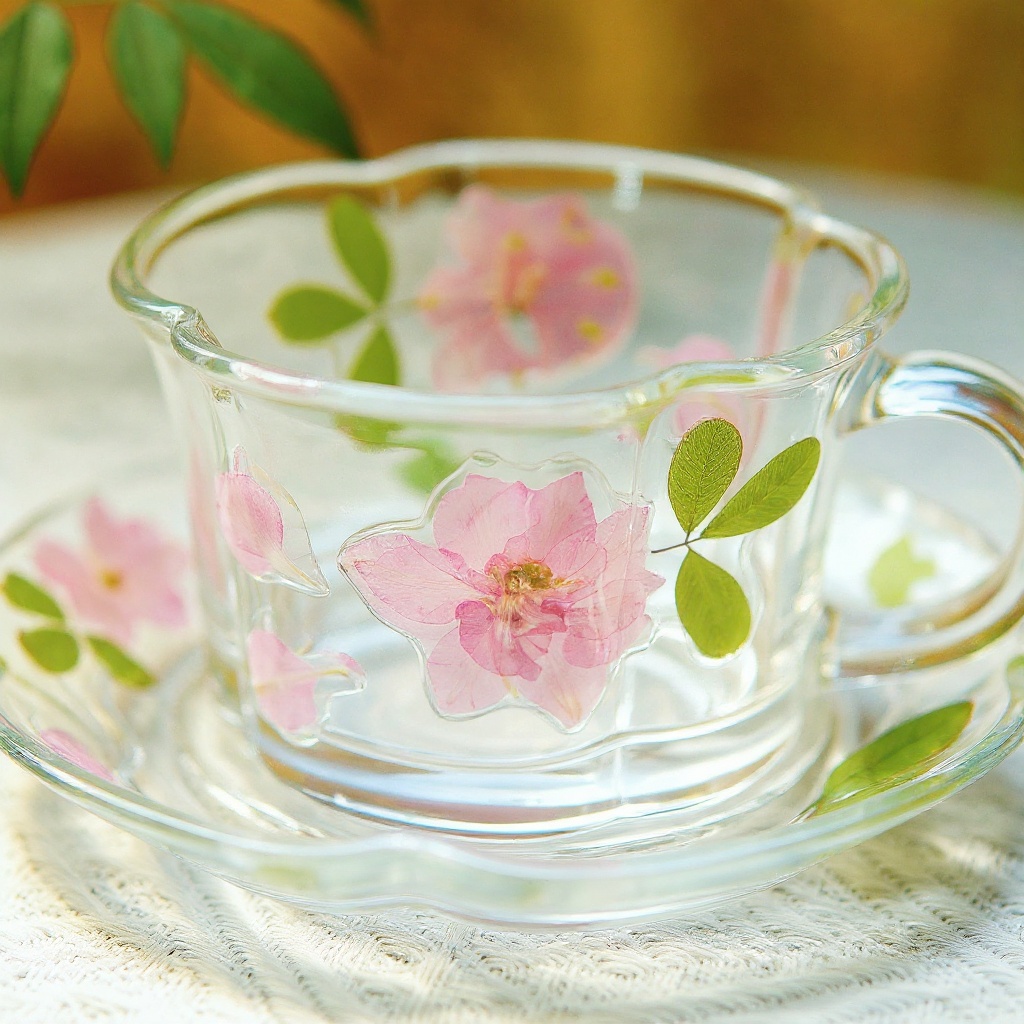
The botanical elements in these cups are exterior only. Zero plant material contacts the interior drinking surface. The inside of the cup is clear, uncoated borosilicate glass — the same material used in laboratory beakers and medical equipment.
The exterior resin coating is formulated for indirect food contact compliance, meaning it does not leach compounds into beverages even during normal handling. For U.S. buyers, the relevant standard is FDA 21 CFR 175.300 for resin-based coatings — ask the manufacturer directly whether their resin formulation is tested against this specification. Our Handcrafted Pressed Flower Relief Glass Coffee Cup & Saucer uses exterior-only botanical placement precisely to maintain a clean, uncompromised interior drinking surface.
Care Instructions for Maximum Longevity
Proper care extends the life of both the glass and the botanical resin exterior significantly:
1. Hand wash only — use mild dish soap and warm water; avoid abrasive sponges on the relief surface 2. Dry immediately — pat dry the resin exterior to prevent mineral deposit buildup from hard water 3. Avoid sustained direct sunlight — place away from south-facing windows where UV exposure is prolonged and constant 4. No dishwasher — high-heat cycles and alkaline detergents degrade resin clarity over time 5. Store upright — do not stack or nest inside other cups; the raised botanical relief can scratch adjacent surfaces 6. Clean gently between petals — use a soft brush, not a cloth, to remove dust from the three-dimensional relief texture without snagging
With these practices, the preserved botanicals maintain their visual integrity through years of daily use — consistent with the performance characteristics documented by encapsulation resin producers for properly cured botanical specimens.
Price Context: What $88 Actually Buys
Eighty-eight dollars. Let's be direct about what that number represents in this specific market.
Mass-produced printed floral cups on major retail platforms: $10–$25. Zero real botanicals. Flat printed surface. Standard glass.
Mid-range ceramic artisan alternatives on craft marketplaces: $35–$60. Often beautiful. Cannot match the optical clarity or thermal properties of borosilicate, and do not contain preserved botanicals.
Luxury glass art with comparable handwork on collector platforms: $150–$400. More expensive, not necessarily better for daily use.
The 72-hour minimum production timeline per piece, real dried botanical specimens, multi-layer resin application, and high-borosilicate glass base are the cost drivers. When couples routinely spend $150–$250 on fresh wedding flowers that last a week, $88 for a piece that will still be in daily use at their fifth anniversary is a defensible value proposition. Browse our Handcrafted Pressed Flower Relief Glass Coffee Cup & Saucer to see the current pink and blush colorway in detail.
Making It Part of Their Daily Story
Wedding gifts that earn lasting appreciation have one thing in common: they show up in everyday life. Not in the cabinet. Not on the shelf for display only. In the morning routine. In the afternoon pause. In the small, unremarkable moments that, accumulated over years, become the actual texture of a marriage.
A preserved flower glass cup wedding gift idea earns that place. The three-dimensional botanical relief on the exterior — real petals, real leaves, real texture under fingertips — creates a sensory moment with every use. Soft morning light throws gentle shadows across the floral surface differently than afternoon does. The cup changes, subtly, with the day. That's not marketing language. That's what happens when actual botanical structure interacts with actual light, under actual resin, on an actual clear glass surface.
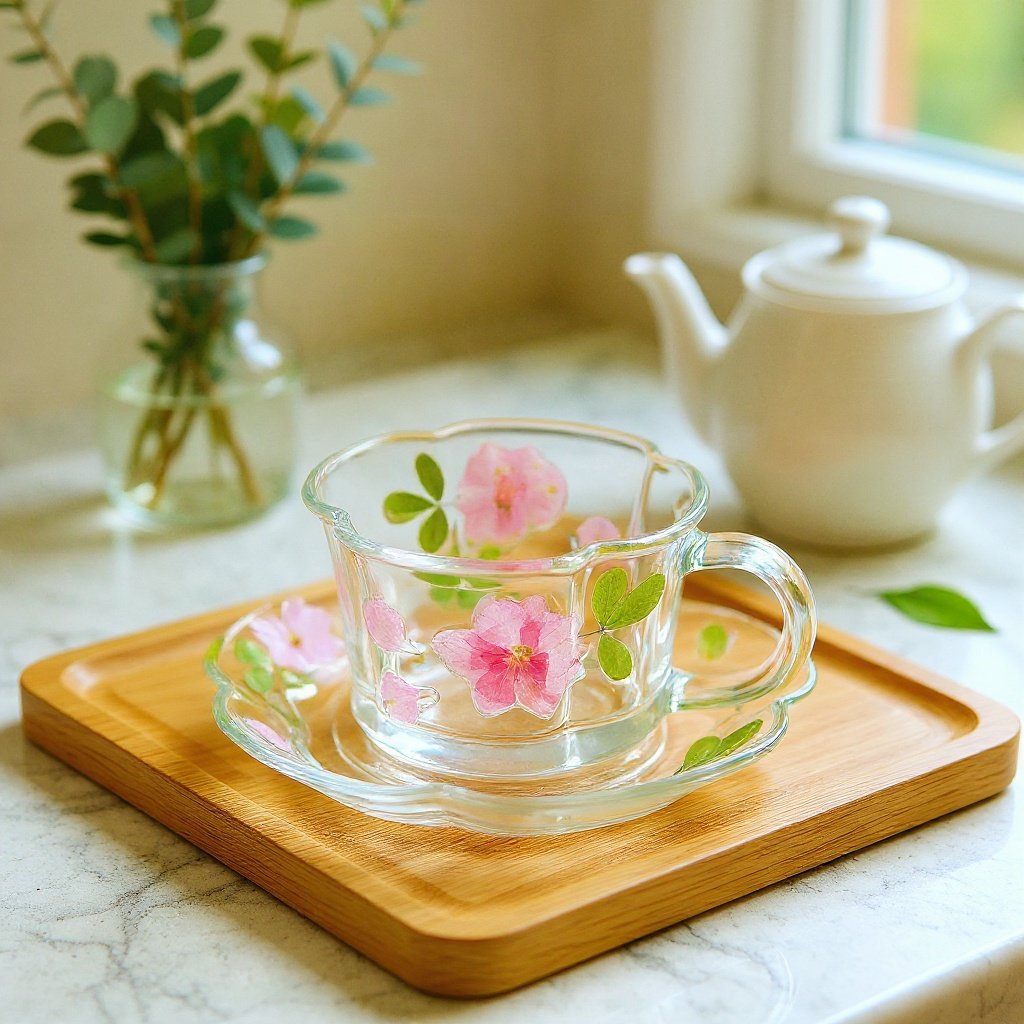
It photographs well, too. Couples who document their home life find this cup appears in their images naturally — on a marble surface, beside a coffee book, on the kitchen windowsill — because its visual language is quiet and elegant without demanding attention.
For the couple who values handcrafted objects, botanical aesthetics, or simply beautiful things that work hard every day, this is the gift that earns its place. See the full product here: Handcrafted Pressed Flower Relief Glass Coffee Cup & Saucer.
Frequently Asked Questions
Are preserved flower glass cups safe to drink from?The botanical elements are embedded in the exterior resin only — no plant material contacts the inner drinking surface. The interior is clear borosilicate glass. The resin exterior should meet indirect food contact standards (FDA 21 CFR 175.300); verify this with the specific manufacturer before purchasing.
How long do pressed flowers last inside a resin-coated cup?Properly encapsulated botanical specimens in high-clarity resin maintain color and structural integrity for 10+ years under normal indoor conditions. UV inhibitors in quality resin formulations slow photodegradation. Prolonged direct sunlight is the primary longevity risk — store away from south-facing windows.
Can a preserved flower glass cup go in the dishwasher?The borosilicate glass withstands dishwasher temperatures. The exterior resin coating does not fare well under repeated high-heat alkaline detergent cycles — gradual surface dulling results over months of machine washing. Hand wash with mild soap to preserve resin clarity and botanical visibility.
What makes borosilicate glass better for a daily-use gift cup?Borosilicate glass has a thermal expansion coefficient roughly one-third that of standard soda-lime glass, per Schott AG material specifications. This means it resists cracking when hot liquid meets a cold cup — a failure mode common in cheaper glassware used daily for hot beverages.
Is $88 fair for a handmade botanical glass cup?At $88, the price reflects a 72-hour minimum production timeline, real dried botanical specimens, multi-layer resin application, and borosilicate glass. Printed alternatives cost $10–$25 and contain no real botanicals. Comparable luxury glass art pieces run $150–$400. This price sits in the middle of the justified range for authentic handcraft.
Will the flowers fade with daily use?With proper care — hand washing, moderate light, no dishwasher — color stability in quality encapsulated specimens is well-documented for 10+ years. UV-inhibiting resin formulations slow photodegradation. Sustained direct sunlight is the main accelerant of fading; avoid placement in high-UV window positions.
What is the difference between embedded botanicals and printed floral designs?Printed designs sit flat on or under a glaze surface — no texture, no organic variation, identical across all units. Real embedded botanicals create a raised three-dimensional relief with natural color gradients and organic shapes. Each handmade cup differs slightly. Run a fingertip across the surface: real botanicals are unmistakably tactile.
Can I buy this as a single cup or does it require a set?The Handcrafted Pressed Flower Relief Glass Coffee Cup & Saucer is sold as a cup-and-saucer set. For wedding gifting, the saucer adds presentation value and completes the visual elegance of the piece without requiring additional purchase.