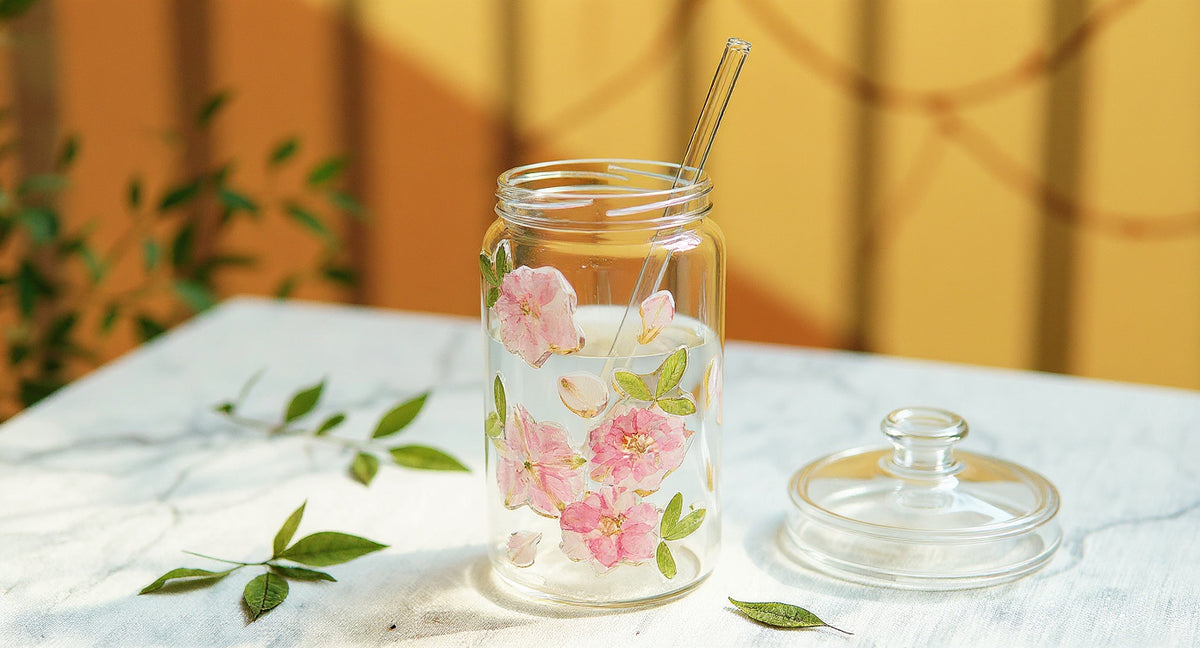
A handmade glass cup with dust proof lid is worth choosing for its material quality, lid fit, heat rating, and the way any decorative work is protected, not because a lid makes it spill-safe. For floral glasswork, the key distinction is equally plain: real preserved botanicals require gentler care than printed graphics, and that care should be part of the purchase decision.
The appealing part is easy to understand. A 400ml tumbler can serve iced coffee, fruit water, herbal tea, or an afternoon drink while also functioning as a small decorative object. The less glamorous questions matter more over time: Can the lid handle a bag? Is the straw practical for warm drinks? Will the flowers wash cleanly? How much craftsmanship is actually behind the finish?
A dust-proof lid keeps debris out, not liquid in
A dust-proof lid has a narrow job. It covers the drinking opening and limits exposure to household dust, loose debris, and the occasional curious pet while the cup is sitting on a counter or bedside table. It is useful for slow sipping, refrigerating a prepared drink, and keeping an outdoor drink cleaner during a calm lunch.
It is not a travel lid. A dust cover shouldn't be treated like the threaded, gasketed lid on an insulated bottle. Unless a maker specifically calls a lid leakproof and describes a sealing system, assume it can leak if tipped, shaken, or carried loosely in a handbag. That isn't a defect. It is a different product category.
This distinction is especially important with a handmade glass cup with dust proof lid. A fitted lid adds everyday convenience, but the cup remains best suited to stable surfaces, careful carrying, and drinks consumed close to where they are prepared. Anyone needing a commuter vessel should buy a purpose-built leakproof bottle instead.
Lid fit still matters. A good lid should sit evenly without excessive force, cover the rim consistently, and allow the straw opening to be used without scraping the straw against the glass. Loose-fitting lids let in dust and make the cup feel unfinished. An overly tight lid creates stress at the rim and encourages twisting or pulling that can damage a delicate cup.
Three days of handwork changes the value calculation
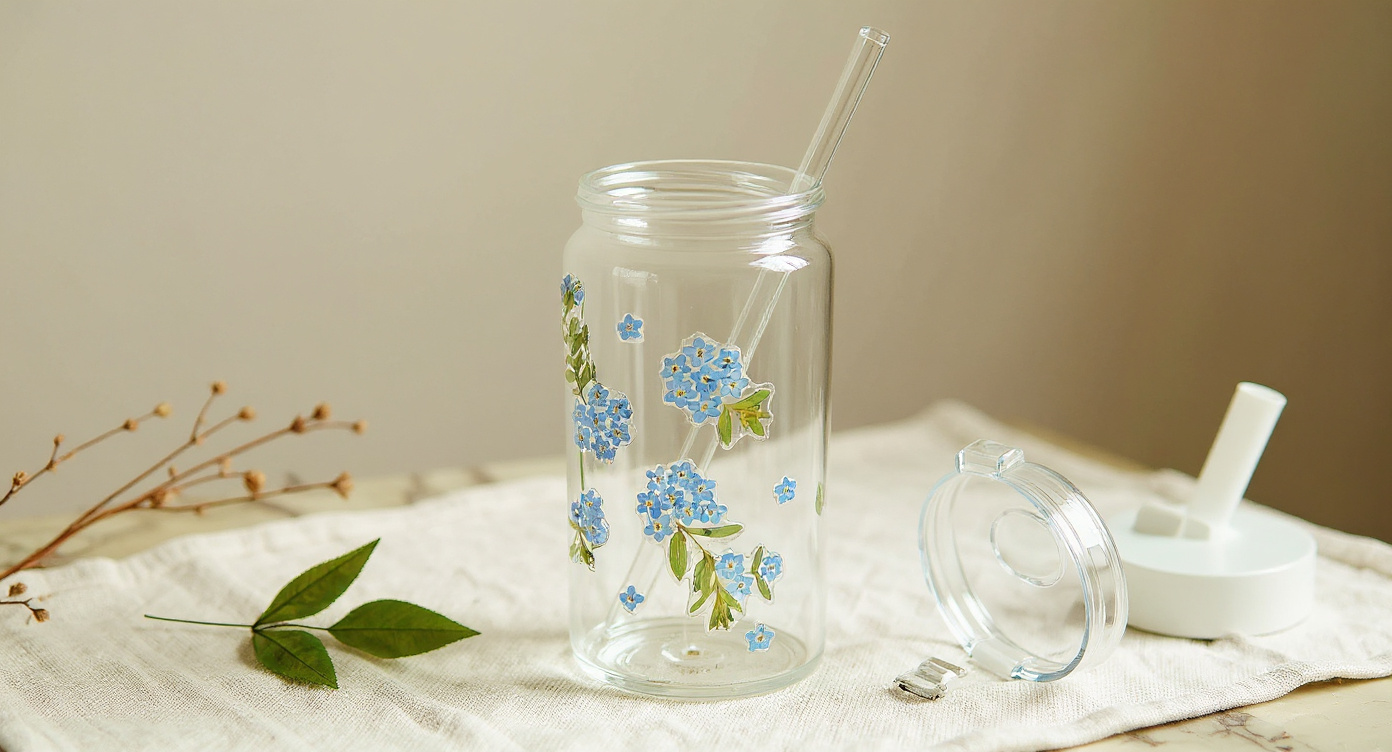
Real flowers are not interchangeable with floral printing. Printed cups can reproduce the same pattern thousands of times, usually at low cost. Preserved petals and leaves vary in contour, thickness, and placement, so a hand-finished floral surface cannot be perfectly identical from cup to cup.
The Handcrafted Preserved Flower Glass Cup 400ml | Heat-Resistant | Gift-Ready is made over a stated three-day handcraft process, with real preserved flower petals and leaves embedded across the outer glass surface. Its tactile relief is part of the object, rather than an image applied to the glass. Pressed botanical work has a long decorative history, as shown by the reference entry on pressed flower craft, but using those materials on a drinking vessel demands more care than framing a pressed flower.
The cup's $88 price is not competing with a $15 printed tumbler on identical terms. It is paying for 400ml heat-resistant glass, real preserved botanicals, a dust-proof lid, a reusable glass straw, gift-ready eco-friendly packaging, and slower manual finishing. That premium will make sense for somebody who wants a functional decorative piece or a gift with actual material distinction. It won't make sense for somebody who needs dishwasher durability, a leakproof commute cup, or a replaceable workday tumbler.
The flowers are also on the exterior rather than loose inside the drinking chamber. That matters for use and cleaning. Drinks contact the glass interior, while the botanical relief remains a protected decorative surface that should not be soaked, scrubbed hard, or exposed to prolonged dishwasher heat.
A real-flower cup should never be judged by factory uniformity. Slight variation is the evidence of the process. A perfectly repeated floral arrangement is generally a print, decal, or molded decorative pattern, not hand-placed preserved material.
Heat-resistant glass still needs sensible temperature changes
Heat-resistant glass broadens the range of drinks the cup can handle. It supports hot herbal tea and other warm beverages better than ordinary decorative glass, and it is useful when one cup needs to cover iced drinks in the morning and tea later in the day.
Heat resistance does not mean immunity to thermal shock. Glass can be damaged when one area changes temperature much faster than another. Pouring very hot liquid into a cold cup straight from the refrigerator, resting a hot cup on an icy wet surface, or rinsing hot glass under cold water are all avoidable risks.
Use a gradual approach instead:
1. Let a chilled cup return closer to room temperature before adding a hot drink. 2. Warm the inside with a small amount of lukewarm water if the drink will be very hot. 3. Avoid placing hot glass directly onto a cold stone, metal, or wet surface. 4. Let the cup cool before washing it. 5. Keep the floral exterior away from prolonged steam, soaking, and sudden temperature shifts. 6. Use the lid as a dust cover while drinking, not as proof that the cup can be shaken or transported full.
The reusable glass straw deserves the same common sense. It is suitable for a warm drink that is comfortable to sip, but it shouldn't be used with liquid hot enough to burn the mouth. A straw can deliver hot liquid farther into the mouth than sipping from the rim, which reduces the natural pause that helps judge temperature.
There is also a structural point. Glassmaking encompasses many distinct forming methods and material behaviors, as outlined in this reference on glassblowing. A heat-resistant claim speaks to the glass used, but it does not erase the need to avoid knocks, drops, and concentrated force at the rim or straw opening.
Cleaning raised floral glasswork without ruining it
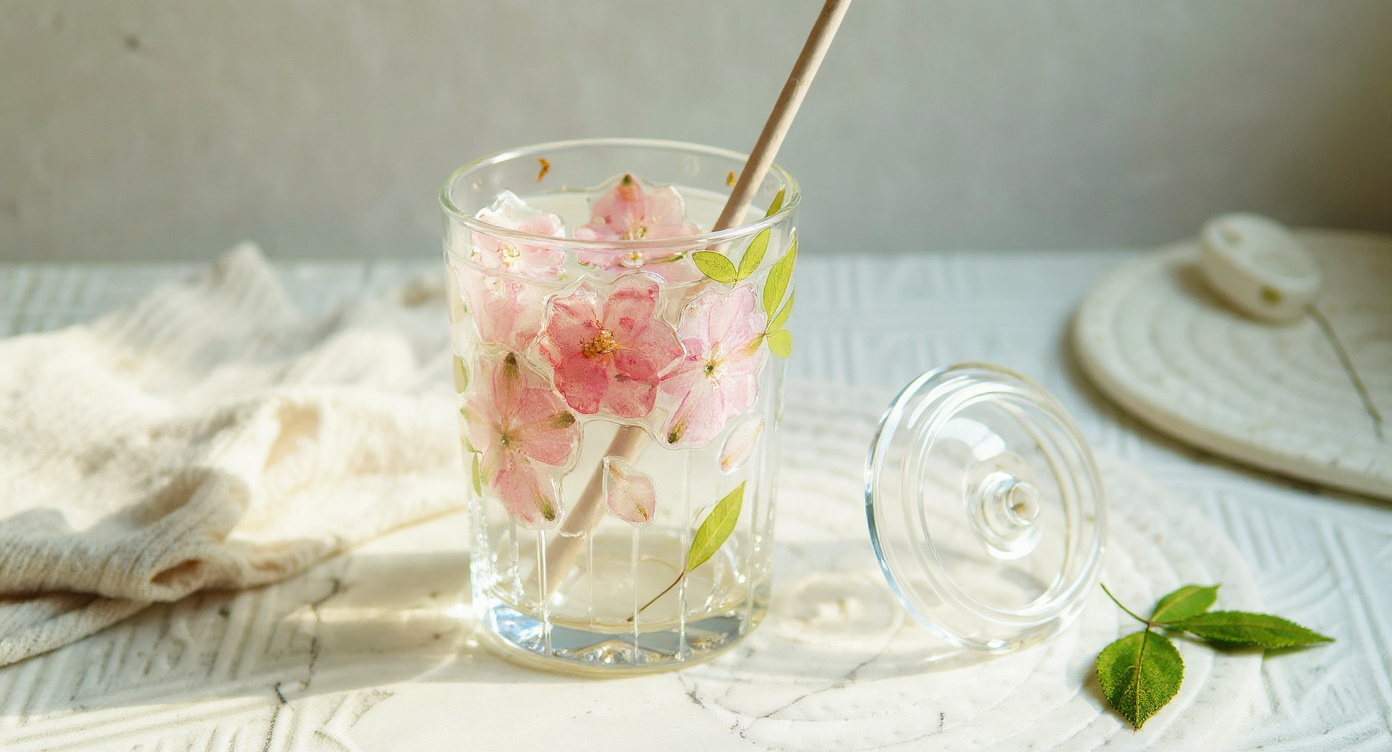
The interior should be easy to clean because it is glass. The exterior is the part that sets the care standard. Raised petals and leaves create tiny edges where residue can collect if drinks drip down the side, but aggressive cleaning is the wrong answer.
Hand washing is the sensible default. It protects both the glass and the preserved botanical finish from high heat, detergent exposure, and repeated mechanical abrasion. Dishwasher cleaning is not a reasonable trade for a cup whose value lies in hand-applied relief work.
Use this method after each drink:
1. Empty the cup promptly, especially after milk-based coffee, sweet tea, or fruit-infused water. 2. Rinse the inside with lukewarm water before residue dries onto the glass. 3. Wash the interior with a soft sponge, mild dish soap, and gentle circular pressure. 4. Clean the rim, straw opening, lid, and glass straw separately, using a suitable soft straw brush for the straw's interior. 5. Wipe the floral exterior with a lightly damp soft cloth rather than holding it under a strong running stream. 6. Pat dry with a lint-free towel. Don't scrub the raised petals or leaves. 7. Leave the lid off until the cup is fully dry, particularly if it has been used for a cold drink that created condensation.
For dried beverage residue inside the cup, soak only the interior with lukewarm water and mild soap for a short period, keeping the outer floral surface dry. A soft bottle brush can help with the inside walls, but avoid hard brushes, scouring pads, abrasive powders, bleach, and solvent-based cleaners.
The same restraint applies to storage. Don't stack other cups against the floral relief. Store it upright with enough clearance that the outside isn't continually rubbed by mugs, bottles, or utensils.
Where an $88 floral cup sits against common alternatives
Price alone doesn't explain the difference between decorative drinkware options. The more useful comparison is material, construction, care burden, and intended use. A printed cup is inexpensive and easy to replace. A resin tumbler offers a different kind of durability. A preserved-flower glass cup asks for more care because it is trying to do something neither of those products does.
| Type of cup | Price | Decorative material | Craft distinction | Best use | Main trade-off |
|---|---|---|---|---|---|
| Mass-produced printed floral glass cup on Amazon | $15–$35 | Printed floral graphics | Factory repetition | Casual, low-risk daily use | No real botanical material or hand-finished floral relief |
| Resin flower tumbler | $30–$60 | Synthetic materials | Decorative resin construction | Users prioritising a less fragile body | Not real preserved flowers, and resin is a different drinking material |
| Etsy handmade floral listings | $70–$120 | Varies by maker | Handmade tier | Gifts and decorative drinkware | Specifications and care requirements vary by seller |
| Handcrafted Preserved Flower Glass Cup 400ml | $88 | Real preserved petals and leaves | Three-day handcraft process, raised outer relief | Tea, iced coffee, fruit water, gifting, shelf display | Hand-wash care and no leakproof claim |
The $88 cup belongs in the artisan tier, not the novelty tumbler tier. Its 400ml capacity is practical enough for a full iced drink, a generous serving of tea, or fruit-infused water without becoming the oversized 700ml-style vessel that is awkward to hold and harder to clean.
It is also worth separating decorative value from drinking performance. Decorative arts are often judged partly by material treatment and hand process, a distinction discussed in the broader reference on decorative arts. In this case, the tactile preserved-flower surface is the reason for the premium and the reason hand washing is non-negotiable.
FAQ
Are dust-proof lids leakproof?
No. A dust-proof lid is designed to cover the cup and reduce exposure to dust and debris. It should not be assumed leakproof unless the maker explicitly states that it uses a sealed, gasketed design. Keep the cup upright and don't place it loose in a bag.
Can you put hot drinks in a glass cup with a lid?
A heat-resistant glass cup can be used for hot drinks, provided temperature changes are gradual. Don't pour very hot liquid into a chilled cup, and don't use the lid as a seal for shaking or carrying hot liquid. Let the drink cool to a safe sipping temperature before using the glass straw.
How do you clean a glass cup with dried flowers on it?
Wash the glass interior by hand with mild soap and lukewarm water. For the outer floral surface, use a lightly damp soft cloth and pat it dry. Avoid soaking the floral exterior, abrasive sponges, dishwashers, and strong cleaning chemicals.
Are the flowers on handmade floral glass cups real?
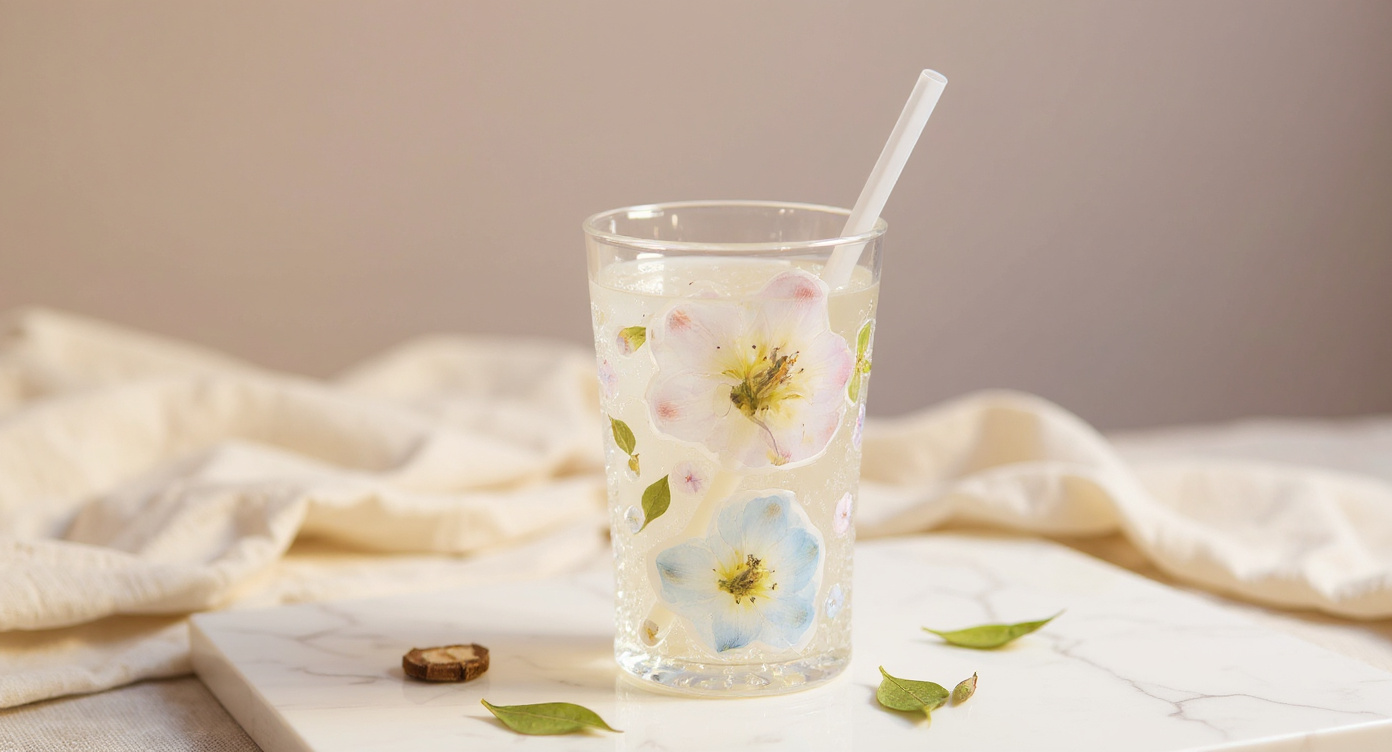
On the Handcrafted Preserved Flower Glass Cup 400ml, the petals and leaves are real preserved botanicals, not printed graphics, painted motifs, or artificial silk flowers. Natural variation between cups is expected because real botanical pieces do not repeat exactly.
Are glass straws safe to use with hot drinks?
Glass straws can be used with warm drinks, but they are not a shortcut around beverage temperature. Avoid drinks hot enough to burn the mouth, inspect the straw before use, and stop using it if it is chipped, cracked, or damaged.
Can handmade glass cups go in the dishwasher?
This type of preserved-flower glass cup should be hand washed. Dishwasher heat, water pressure, detergent, and repeated contact with other items can shorten the life of the raised floral finish and increase the risk of breakage.
Do preserved flowers fade over time?
They can fade with prolonged exposure to strong sunlight, heat, moisture, and harsh cleaners. Keeping the cup away from direct sun when it is displayed, hand washing it carefully, and drying the exterior promptly will help preserve the botanicals for longer.
The right choice for a careful daily ritual
The real question isn't whether an $88 cup can replace every drink vessel in a kitchen. It can't. It isn't the right choice for a crowded dishwasher, a rough commute, or anyone who needs a sealed bottle that can be thrown into a tote bag without thought.
It is more likely to pay off when a 400ml heat-resistant glass cup will be used deliberately, when real preserved flowers matter more than printed decoration, and when hand washing is an acceptable part of owning a delicate object. The lid keeps a resting drink cleaner, the straw makes cold drinks convenient, and the raised botanical work gives the cup a purpose beyond ordinary drinkware.
For anyone concerned about fragility, cleaning, or whether the flowers are genuine, those are valid concerns rather than details to ignore. The Handcrafted Preserved Flower Glass Cup 400ml | Heat-Resistant | Gift-Ready is the natural fit when careful use and real botanical craft are part of the appeal.