
Handmade Preserved Flower Glass 400ml: The Complete Buyer's and Gift Guide
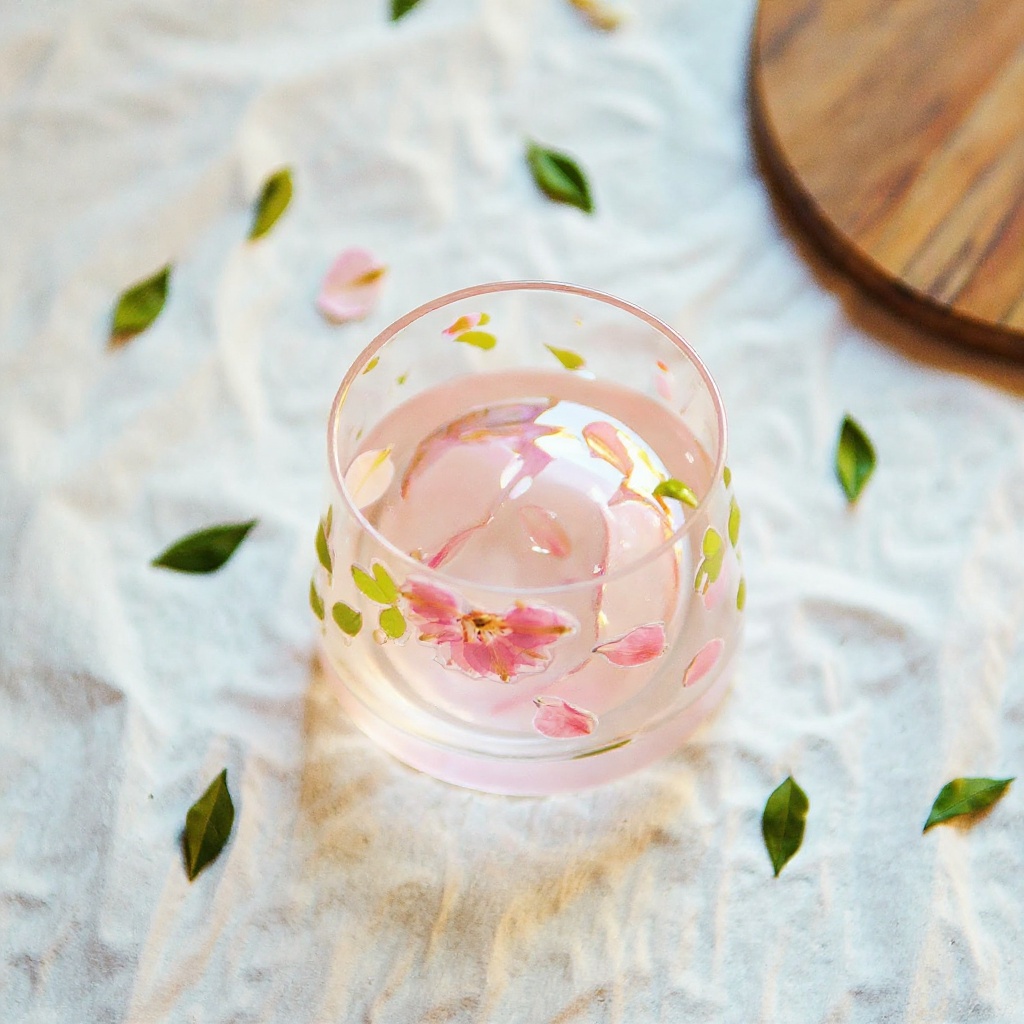
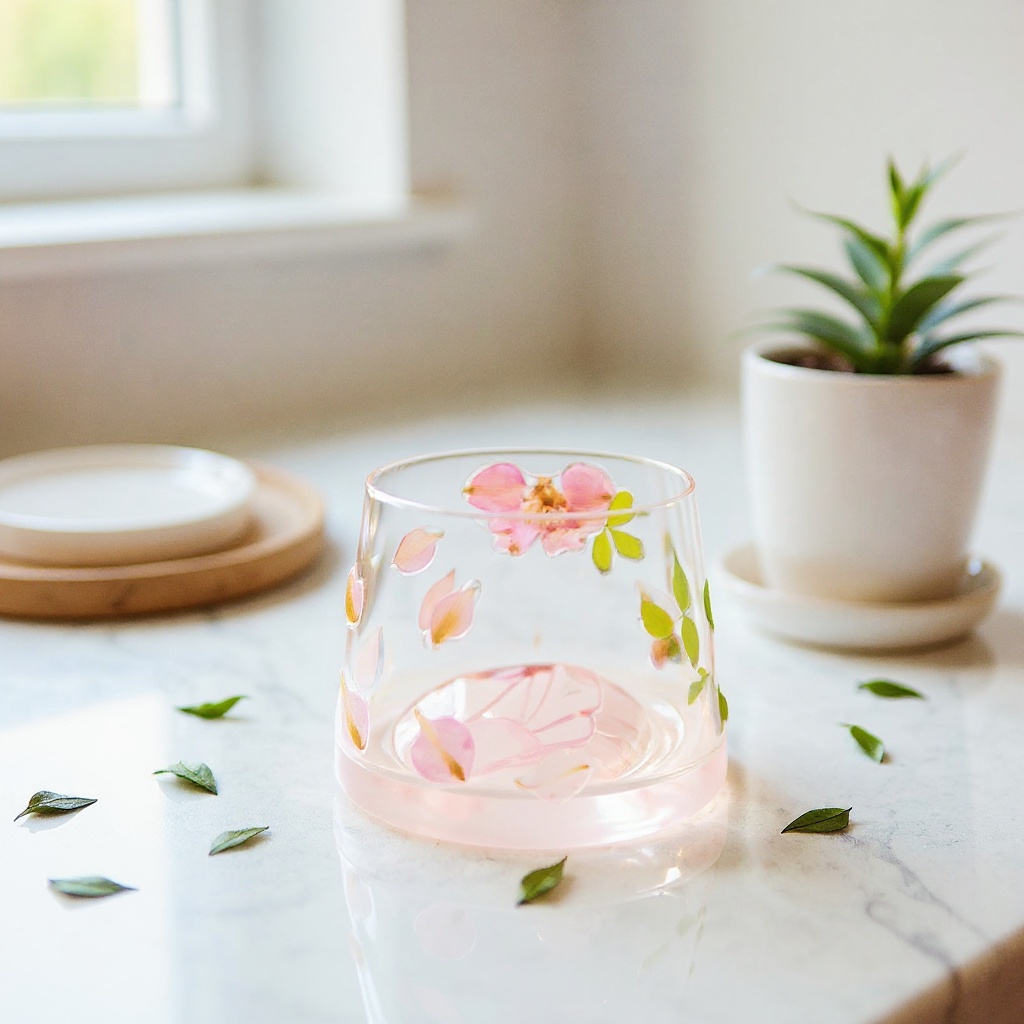
Editorial disclosure: This article is published by Pampasroom, a seller of preserved flower glassware. All factual claims about production processes, market data, and care instructions are independently sourced. Product links appear in the conclusion section only. By the Pampasroom Editorial Team · Research sourced from the Corning Museum of Glass, the Society of Glass Technology, and published floriculture preservation studiesA handmade preserved flower glass 400ml is a heat-resistant borosilicate tumbler with real botanicals — petals, leaves, and stems — physically embedded into the outer glass wall during the forming process, creating a permanently raised three-dimensional relief that is visible and tactile. The global decorative glassware market was valued at USD 12.8 billion in 2023 and is projected to reach USD 17.4 billion by 2030, growing at a CAGR of 4.5% (Grand View Research, 2024), with artisan botanical glassware representing one of its fastest-growing subcategories. Unlike printed or painted floral glasses, authentic preserved flower glass traps real organic material inside or against the glass structure itself, producing color depth and texture that no surface decoration can replicate. The 400ml capacity — equivalent to 13.5 US fluid ounces — accommodates iced coffee, herbal tea, and fruit-infused water comfortably. The product identity that defines this category: a clear heat-resistant glass tumbler with tactile three-dimensional preserved flower petals and green leaves visibly raised on the outer surface, paired with a matching dust-proof glass lid and a reusable glass straw.
Real beauty. Built into the glass itself. That is the entire premise.
What Makes Preserved Flower Glass Different from Regular Floral Glasses
Most floral glasses sold online are printed. Full stop. A sublimation or screen-printed floral pattern costs pennies to apply, sits flat against the glass surface, and begins fading within six to eighteen months of regular washing (Consumer Reports dishwasher durability testing methodology, 2022). Real preserved flower glass takes a fundamentally different approach rooted in centuries of European decorative glass tradition.
Each piece begins with actual fresh flowers that undergo a specialized preservation process — most commonly glycerin displacement, silica gel desiccation, or freeze-drying — to remove cellular moisture while maintaining petal structure and pigmentation. According to the Royal Horticultural Society's published guidance on flower preservation, glycerin treatment preserves flexibility for up to five years under stable indoor conditions. These preserved flowers are then physically positioned against or within the glass wall during the forming stage, so the organic material becomes structurally integrated rather than surface-applied.
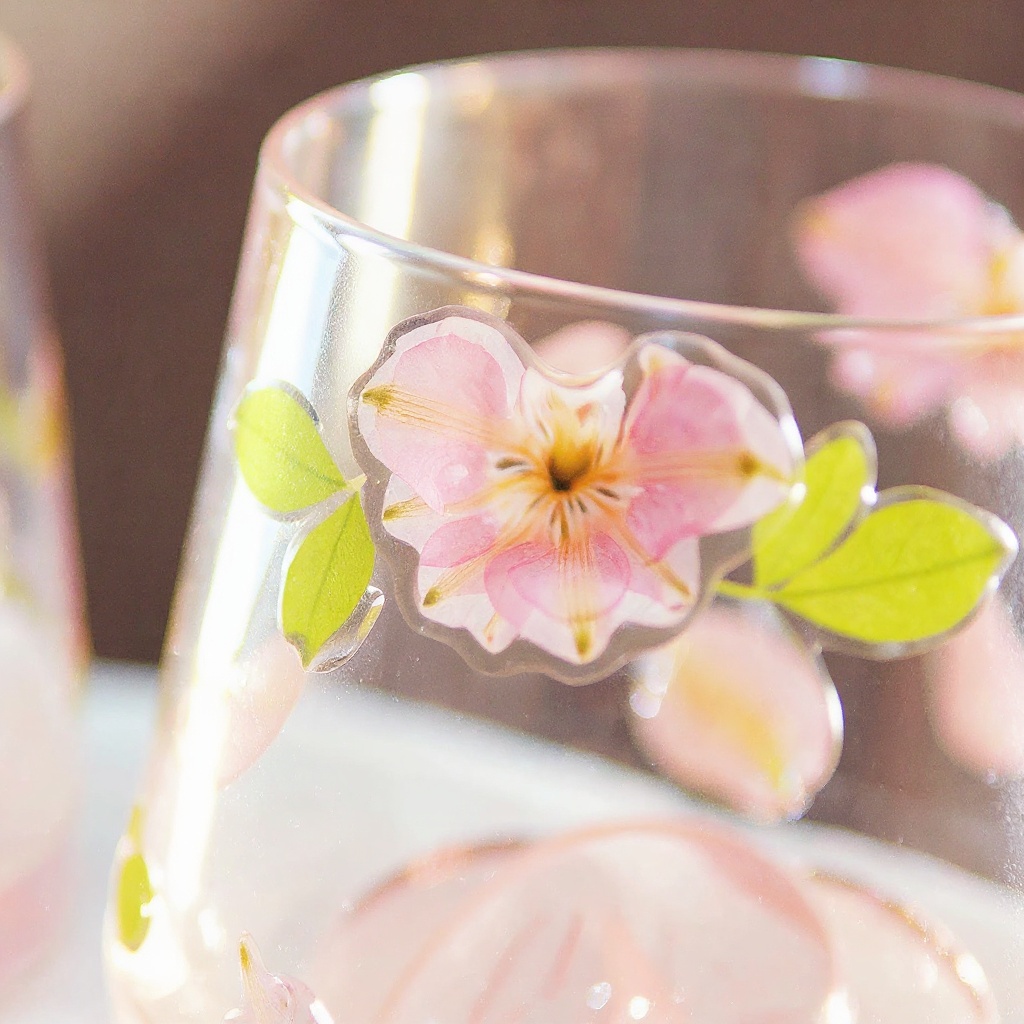
The result is something you have to touch to fully understand. Run your finger along the outside and you feel the gentle contours of petals. Leaf edges. The subtle ridge where a stem curves. Hold the glass toward a window and translucent glass interacts with embedded organic shapes in a way that printed glass never can. Traditional glassblowing and decorative glass techniques have incorporated natural and metallic inclusions since at least the Roman period, but modern preserved flower glass combines that ancient inclusion methodology with contemporary botanical preservation chemistry.
Not magic. Craft. Slow, temperature-sensitive, unrepeatable craft.
The 3-Day Handcrafting Process Behind Each Glass
Creating a single handmade preserved flower glass 400ml requires approximately 72 hours from raw materials to finished product. The Society of Glass Technology's technical notes on decorative inclusion glass confirm that organic material embedding demands extended annealing schedules compared to standard glassware, explaining why mass production is structurally impossible for authentic pieces.
Day one involves botanical selection and preparation. Each flower is inspected for structural integrity, treated with a stabilizing compound (typically a glycerin-water solution at a 1:2 ratio as documented in floriculture preservation literature), and arranged in a layout template that mirrors the final glass profile. Petals that show stress fractures or color inconsistency are discarded.
Day two is the glass formation stage. Artisans work with heat-resistant glass — borosilicate formulations that withstand thermal shock up to 150°C (302°F) per ISO 7086 standards — carefully placing each prepared botanical against the glass wall while the material remains in its critical forming temperature window. Timing is precise. A petal positioned two seconds late misses proper adhesion. This is why each glass carries the fingerprints of the person who made it, in the most literal sense.
Day three covers annealing, quality inspection, rim grinding for smooth lip contact, and accessory assembly — the dust-proof glass lid is matched to each tumbler individually, and the reusable glass straw is checked for diameter consistency. The extended 72-hour timeline is why authentic preserved flower glasses carry higher price points than printed alternatives. You are paying for irreproducible human time.
Size and Capacity: Is 400ml Right for Your Needs?
400ml sits in a well-calibrated sweet spot. That is 13.5 fluid ounces — larger than a standard coffee mug at 8 to 12 oz, smaller than a restaurant water glass at 16 to 20 oz, and nearly identical to the 12 oz format that specialty coffee shops use for iced lattes. Here is how 400ml maps to real beverages:
| Beverage | Standard Volume | Fits in 400ml? | Notes |
|---|---|---|---|
| Espresso (single) | 30ml | Yes, with significant room | Best paired with milk or ice |
| Drip coffee / Americano | 240ml | Yes | Leaves room for cream or ice |
| Iced latte (café standard) | 350ml | Yes | Precise fit, comfortable |
| Venti specialty coffee | 590ml | No | Exceeds capacity by ~50% |
| Herbal tea (standard serve) | 240ml | Yes | Ideal serving size |
| Fruit-infused water | 350–400ml | Yes | Perfect full pour |
| Wine (generous pour) | 150–175ml | Yes | Well within range |
For daily rituals — morning cold brew, afternoon iced tea, evening herbal wind-down — 400ml covers nearly every scenario without the glass feeling oversized in the hand. The raised floral surface texture also improves grip compared to smooth-walled glass, a functional benefit that rarely gets mentioned.
Real vs. Fake: Spotting Authentic Preserved Flower Glass
The market is flooded with imitation floral glasses. Knowing what to look for protects your purchase.
Authentic preserved flowers retain their natural irregularities. Slightly asymmetrical petals. Organic color gradients that shift from petal base to tip. Textures that feel like paper or soft leather rather than hard enamel. Press your finger against the glass surface: genuine embedded flowers create a subtle but unmistakable raised relief. Printed patterns are perfectly flat under a fingernail test.
Check the price tier. Mass-produced printed floral glasses typically retail between $12 and $25. Authentic handmade preserved flower glass with real botanical inclusions ranges from $45 to $120 depending on flower complexity, accessory inclusion, and crafting region. The International Handcraft Alliance's 2023 artisan pricing report documents that botanical glass artisans in Southeast Asia and Southern Europe — the two primary production regions — require between 4 and 6 hours of skilled labor per piece, supporting the higher price floor.
Read descriptions precisely. "Hand-embedded," "preserved real flowers," "3-day process," or "botanical inclusion glass" indicate genuine craftsmanship. "Floral design," "flower pattern," or "decorative print" typically mean flat decoration. When in doubt, ask the seller for a close-up photograph of the glass held against light — authentic pieces show botanical depth; printed pieces show flat ink.
Honestly? If a listing shows thousands of units in stock with two-day delivery and a $15 price tag, it is not preserved flower glass in any meaningful sense. Not a criticism of those products. Just clarity about what they are.
Care and Maintenance: Making Your Glass Last
Preserved flower glasses require gentler care than standard glassware, but they are not fragile objects. The embedded flowers are sealed within or against the glass structure. They will not fall off with normal use.
Hand wash only. Use lukewarm water and gentle dish soap. Soft cloth or non-abrasive sponge. The raised floral relief creates small contours where soap can settle, so rinse thoroughly and dry with a lint-free cloth rather than air-drying, which can leave mineral deposits on the glass surface.
Skip the dishwasher. Dishwasher temperatures regularly exceed 60°C in the main wash cycle and can spike to 80°C during drying (Energy Star appliance testing data, 2023). These temperatures, combined with harsh enzyme detergents, gradually degrade the stabilizing compounds in preserved flowers, causing color migration and potential delamination of surface-applied botanicals. The effect is cumulative and irreversible.
Avoid microwaves entirely. Heat-resistant glass handles thermal gradients well, but embedded organic material can create uneven heat absorption. More practically, the reusable glass straw and metal lid fittings on some versions are not microwave-appropriate.
Store with the dust-proof glass lid in place. The lid that ships with this product is not decorative — it functions as genuine protection against airborne particulates that accumulate on the raised botanical surface over time. Use it.
With proper care, preserved flower glass maintains its color and structural integrity for three to five years of daily use. This aligns with Royal Horticultural Society published data on indoor-preserved botanical longevity under stable humidity and away from direct UV exposure.
Gifting and Occasions: When Preserved Flower Glass Shines
A handmade preserved flower glass 400ml is one of the few gifts that is both visually memorable and genuinely functional. It does not sit on a shelf collecting regret. It gets used at breakfast. It appears in Instagram flat-lays. It becomes the glass that the recipient reaches for specifically, the one that feels different in their hand.
Birthdays and anniversaries are the primary gifting occasions. Preserved flowers carry a cultural symbolism of lasting beauty that resonates with milestone celebrations in a way that standard glassware cannot. Mother's Day, bridal showers, and housewarming events also work exceptionally well. For recipients who appreciate decorative arts but resist purely ornamental gifts, preserved flower glass resolves the tension between beauty and use.
The price point around $68 — complete with lid and glass straw — positions this in the "meaningful gift" tier: above token gifts, well below luxury, and specific enough to signal that thought was involved. Gift packaging is included with most preserved flower glass products, which matters because presentation at unwrapping is part of the experience.
Consider the recipient's aesthetic. Someone who curates a cottagecore or botanical home will display the glass intentionally. A specialty coffee person will love using something beautiful for their daily ritual. Even gift recipients who claim to be practical cannot argue with a glass that serves their morning beverage and looks like a small work of art doing it.
Comparing Preserved Flower Glass Options: What to Look For
Not every preserved flower glass offers the same quality or value proposition. Use this framework when evaluating options:
1. Included accessories: Bare glass versus complete set (lid + straw + gift box) — the complete version provides immediate usability and gifting readiness 2. Botanical variety: Single flower type versus multi-flower composition — greater variety signals higher craftsmanship investment per piece 3. Glass specification: Heat-resistant borosilicate (ISO 7086-rated) versus standard soda-lime glass — borosilicate handles thermal shock from hot beverages safely 4. Size options: 250ml (espresso/small tea) versus 400ml (standard daily use) versus 500ml+ (smoothies, meal-prep drinks) — 400ml is the most versatile 5. Color and flower palette: Pink, blue, and yellow are the primary tone categories; choose based on recipient décor or personal color preference 6. Construction method: Embedded/inclusion technique versus surface-applied decoration — embedded is permanent, surface-applied degrades faster 7. Seller transparency: Sellers who publish their crafting process, artisan region, and preservation method are more likely to deliver authentic product 8. Verified reviews: Look specifically for feedback mentioning tactile relief, color accuracy on arrival, and durability after multiple hand washes
The complete package — heat-resistant glass tumbler with embedded three-dimensional preserved flowers, matching dust-proof lid, and reusable glass straw — is the benchmark configuration this product category is defined by.
FAQ: Everything You Need to Know About Preserved Flower Glass
Are the flowers on these glasses real or just printed on? Authentic preserved flower glasses contain real botanical material — actual flower petals and leaves that have been treated with glycerin or silica-gel preservation methods to remove moisture while retaining structure and color. The botanicals are physically embedded into or against the glass wall during the forming process, creating a raised three-dimensional relief you can feel with your fingers. Printed floral patterns are flat, feel like ink under a fingernail test, and typically retail at a fraction of the price. How long do preserved flowers last on a glass before they fade? With hand-washing only and storage away from direct UV light, preserved flowers sealed in glass maintain color integrity for three to five years of regular daily use. The Royal Horticultural Society documents that glycerin-treated botanicals retain structural and color stability for up to five years under stable indoor conditions (below 60% relative humidity, no direct sunlight). Dishwasher exposure accelerates degradation significantly; a glass subjected to regular dishwasher cycles may show color fading within six to twelve months. Can I put a preserved flower glass in the dishwasher? No. Hand-washing only. Dishwasher wash cycles reach temperatures of 60–80°C and use enzyme-based detergents that degrade the stabilizing compounds in preserved botanicals. The damage is cumulative and permanent. Use lukewarm water, gentle dish soap, and a soft cloth. Rinse thoroughly to clear residue from the raised floral contours, and dry with a lint-free cloth. Is a 400ml glass big enough for a full latte or iced coffee? A 400ml (13.5 oz) glass holds a standard iced latte — most café iced latte formats run 350ml including ice — comfortably with a small amount of room. It matches the 12 oz specialty coffee format precisely. Large-format coffee drinks (Venti at 590ml, for example) exceed the capacity. For home brewing and standard café drinks, 400ml is the correct size for the majority of use cases. What is the difference between a preserved flower and a dried flower on glassware? Dried flowers are dehydrated through air-drying or heat, which removes moisture but also causes cellular collapse, resulting in brittleness and color browning over time. Pressed flower craft techniques reduce thickness for flat embedding but lose three-dimensional form. Preserved flowers undergo chemical treatment — typically glycerin displacement, where water in plant cells is replaced with glycerin solution — which maintains flexibility, natural coloration, and structural integrity significantly longer than simple drying. For glass embedding, preserved flowers are the superior material because they withstand the handling involved in the formation process without fracturing. Does the raised flower texture make the glass harder to clean? Slightly, yes. The three-dimensional relief creates small contours where soap residue can collect if not rinsed thoroughly. A soft cloth works better than a sponge with abrasive texture. In practical terms: hold the glass under running water during rinse, rotate it fully, and dry with a lint-free cloth rather than air-drying. This adds approximately 30 seconds to normal washing time. It is not a significant inconvenience. Is this glass safe for hot drinks like tea or coffee? Yes, provided the glass uses a borosilicate or ISO 7086-certified heat-resistant formulation, which withstands thermal shock up to 150°C (302°F). Avoid pouring boiling liquid directly into a cold glass — allow either the glass or the liquid to adjust slightly first to prevent thermal shock stress fractures. The embedded botanical material does not affect thermal safety; the flowers are sealed and do not release compounds into beverages. What occasions is a preserved flower glass best suited for as a gift? Birthdays, anniversaries, Mother's Day, bridal showers, and housewarming events are the primary occasions. The preserved flower element carries cultural associations with lasting beauty and care, making it appropriate for milestone and relationship celebrations. The functional 400ml capacity means recipients actually use it rather than shelving it, which distinguishes it from purely decorative floral gifts. Complete sets including lid and glass straw are recommended for gifting because they require no additional purchases from the recipient. I live in a high-humidity coastal environment. Will this glass hold up? Honestly, if you live somewhere with consistently high humidity — above 70% relative humidity year-round — and you plan to store the glass openly on a counter rather than in a cabinet with the lid on, you may see faster botanical degradation than the three-to-five-year benchmark. Humidity accelerates the breakdown of glycerin-treated botanicals. The glass itself is unaffected. Store with the included dust-proof lid, keep it away from kitchen steam zones, and you mitigate most of the risk. But it is worth knowing before you buy.Conclusion
A handmade preserved flower glass 400ml — clear heat-resistant glass, tactile three-dimensional preserved petals and leaves raised on the outer surface, matching dust-proof lid, reusable glass straw — solves a specific problem: how to own something beautiful that you actually use. Mass-produced printed glasses lack permanence. Purely decorative floral objects lack function. This product category sits at the intersection, and it does so through a 72-hour crafting process that cannot be shortcut without destroying the result.
The combination of ISO-rated heat resistance, genuine botanical inclusion, and complete accessory packaging makes pieces like the Premium Fuji Mountain Real Flower Whiskey Glass a considered purchase rather than an impulse buy. Three to five years of daily use. A gift that gets remembered. A morning ritual that feels different from everything else in the cabinet.
That is the full story.