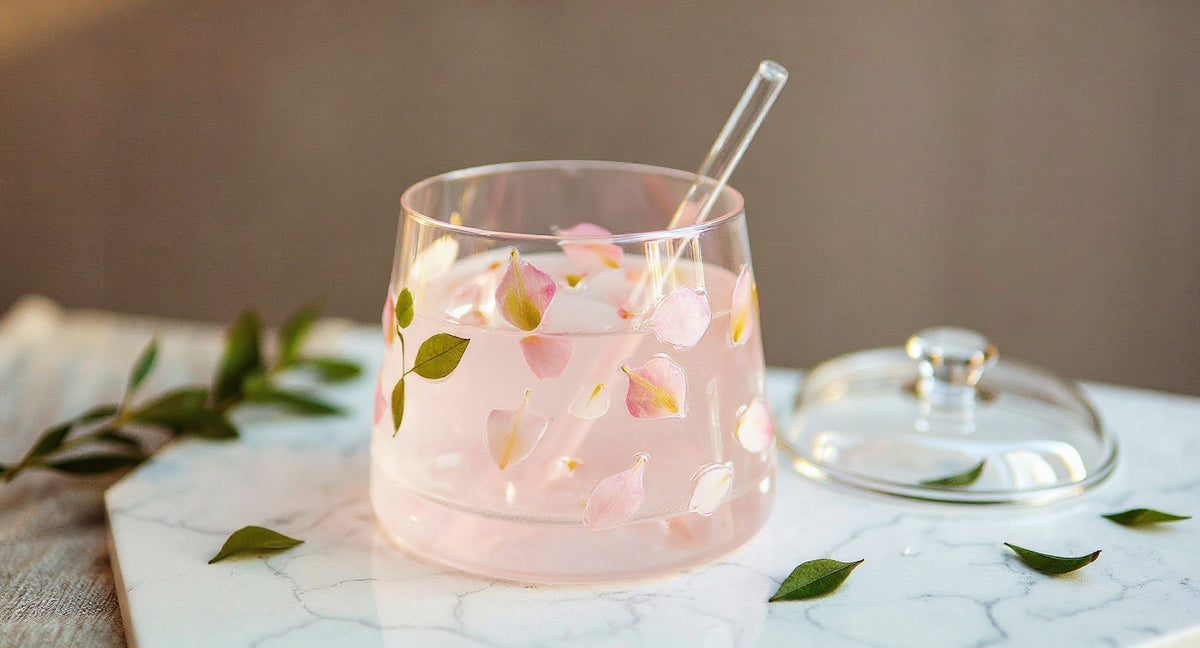
A heat resistant floral glass tumbler can handle warm drinks when its construction is genuinely rated for heat, but it still needs gentler treatment than an ordinary drinking glass. The deciding factors are where the flowers sit, whether the drinking surface remains plain glass, and how quickly the cup is heated or cooled.
A floral tumbler with real botanicals on its exterior can be a practical daily cup, but it isn't interchangeable with laboratory borosilicate glass or a heavy café mug. Heat resistance reduces risk. It doesn't make thermal shock impossible.
What a heat resistant floral glass tumbler can actually take
Heat-resistant glass is intended to tolerate moderate temperature changes better than standard soda-lime drinkware, but no useful temperature ceiling can be assumed unless the maker gives one. A warm floral tea, latte, or coffee is a reasonable use case for a cup sold as heat-resistant. Pouring boiling water into a cold glass taken straight from a refrigerator is a different situation.
Thermal shock happens when one part of the glass expands or contracts much faster than another. The rim, base, and thicker decorative areas can warm at different rates. Glass doesn't flex much, so sudden internal stress can result in a crack even when the glass feels substantial in the hand.
The safest routine is straightforward:
1. Start with a room-temperature cup rather than one chilled in the fridge or left in a cold car. 2. Warm the glass gradually with a small amount of warm water before adding a very hot drink. 3. Avoid placing a hot cup on a wet, cold stone surface immediately after filling it. 4. Don't pour iced liquid into a glass that has just held hot tea or coffee. 5. Let the tumbler cool naturally before washing it. 6. Keep it away from microwave use unless the maker explicitly confirms that the flowers, lid, and glass are microwave-safe.
This is where a lot of broad "heat resistant" claims become unhelpful. A cup can be suitable for hot drinks and still be poorly suited to a rapid swing from near-boiling water to ice cubes. Those are different stresses.
Glassmaking itself depends on controlled heating and cooling, which is why the basic glassblowing process includes careful shaping and cooling rather than abrupt temperature changes. Finished drinkware deserves the same common sense.
Real flowers need to stay on the outside
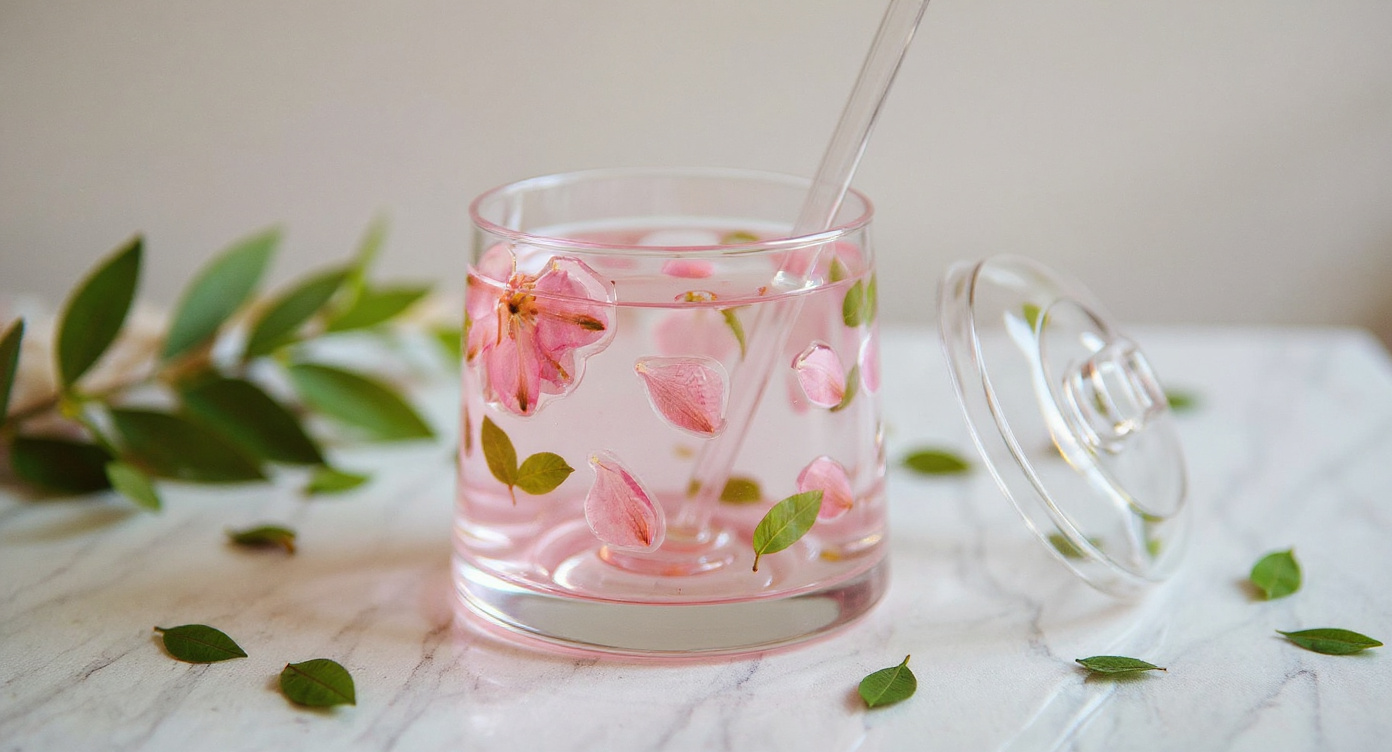
The best floral glassware separates decoration from the beverage path. Real preserved petals and leaves should be embedded or sealed onto the outer wall, leaving the inner drinking surface smooth, non-porous, and easy to wash.
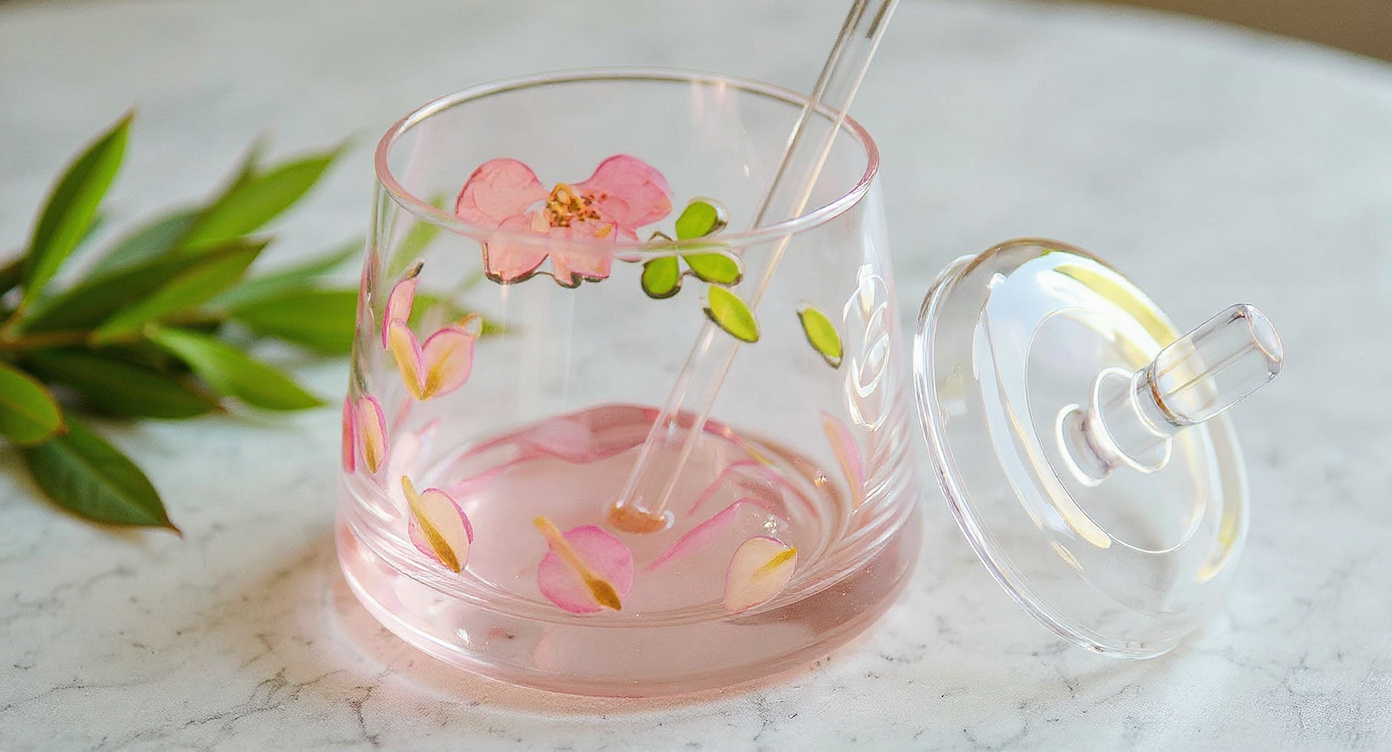
The Stemless Wine Glass Real Pink Flowers Inside | Handcrafted | 400ml Gift uses real hand-embedded preserved flower petals in raised relief on the outer surface of a 400ml heat-resistant stemless cup. The floral material is visible and tactile on the exterior, while the drink remains inside the glass vessel rather than against exposed botanical material.
That construction matters more than the marketing phrase. A flower-print tumbler has decoration applied as ink, film, or decal. A resin tumbler may hold artificial flowers beneath a thick resin coating. A real-flower glass relies on preserved botanical material as part of the external decorative finish.
Flower preservation is the process of retaining botanical material beyond its fresh lifespan. Preserved flowers are decorative material, not an ingredient. For drinkware, the sensible standard is simple: the flowers should remain outside the beverage chamber and the manufacturer should give clear care instructions.A raised exterior also changes care. It gives the cup more character than a flat printed pattern, but it creates crevices where dried coffee drips, dust, or hand lotion can collect. That isn't a defect. It just means this kind of cup should be hand-washed with more attention than a plain juice glass.
Warm-drink use without chipped rims or cloudy glass
A 400ml capacity is large enough for tea, iced coffee, sparkling water, cold brew, or a generous latte. It is not so oversized that warm drinks sit untouched for an hour and go lukewarm. For most daily use, that size is more useful than a decorative glass that only holds a small pour.
The included dust-proof glass lid helps keep loose dust and kitchen debris out between sips, particularly for cold drinks, fruit tea, or an iced coffee left on a desk. It shouldn't be treated as a leakproof travel lid. A glass tumbler with a straw opening is for stationary use, not for being tossed into a bag.
The reusable glass straw is suitable for cool and warm drinks, with one limitation: glass straws can become hot when left in very hot beverages. A warm tea is generally less troublesome than a freshly boiled drink, but the straw should never be handled carelessly after sitting in hot liquid. Inspect it for chips, cracks, or roughness before use. A damaged glass straw should be replaced rather than kept for occasional use.
For a hot-drink routine, a few habits do more than any label:
- Use warm rather than aggressively boiling water when the maker has not published a maximum temperature. - Hold the cup around its plain glass area instead of pressing fingers into raised botanical relief. - Remove the lid before adding very hot liquid so steam doesn't build up beneath it. - Wash the straw with a narrow straw brush, then rinse it thoroughly. - Store the tumbler where the decorative exterior won't rub against stacked ceramics or metal utensils.
A heat-resistant cup should still be retired if a crack appears at the rim, base, or decorative boundary. Small cracks can propagate quickly once hot liquid is involved.
Real-flower glass, printed glass, and resin tumblers are not the same thing
A floral motif alone says very little about construction. The material beneath the pattern determines how the tumbler feels, cleans, ages, and handles warm drinks.
| Type of drinkware | Floral element | Typical care | Heat considerations | Price information supplied |
|---|---|---|---|---|
| Handcrafted preserved-flower glass | Real preserved petals and leaves applied in exterior raised relief | Hand-wash only | Suitable for warm drinks within the maker's stated heat-resistant use, avoid thermal shock | $28.2857142857143 |
| Mass-produced flower-print glass | Printed or decal floral design, no real botanical elements | Care varies by seller | Depends on the underlying glass and print durability | $15–$40 on Amazon |
| Resin flower tumbler | Artificial flowers under resin | Care varies by maker | Resin can have different heat limits from glass | $35–$80 on Etsy |
A printed flower glass can be perfectly fine for everyday cold drinks. It is usually the practical lower-cost option, especially where dishwasher convenience matters more than material character. But it won't have the irregular depth of preserved petals set into relief, and it isn't trying to.
Resin tumblers solve a different problem. They can protect decorative elements beneath a sealed surface, but the resin layer becomes part of the functional question. Heat, scratching, staining, and long-term surface wear all depend on the resin formula and curing quality. Without a stated temperature rating, a resin tumbler should not be assumed safe for hot drinks.
The appeal of botanical craft is that real materials retain variation. Pressed flower craft has long relied on the shape, veins, and natural irregularity of preserved plant material. In a handmade glass piece, those differences are part of the object rather than something to be printed flat and repeated thousands of times.
This makes real-flower glass more gift-oriented than a standard printed cup. It has a specific care burden, though. Anyone shopping for an indestructible dishwasher tumbler should choose plain, machine-safe drinkware instead of paying for raised botanical work.
Cleaning raised floral relief without damaging it
Hand-washing is not optional for this type of cup. The 400ml preserved-flower glass is specified as hand-wash only, and that instruction protects both the glass and the exterior decorative work.
Dishwashers combine heat, detergent, water pressure, and repeated contact with other dishes. Any one factor might be manageable. Together, they are unnecessary wear for a cup with an exterior relief finish. The risk is not only breakage. Repeated dishwasher cycles can dull the glass, loosen delicate decorative edges, trap detergent residue around relief details, or cause pieces to knock together.
Use lukewarm water, a mild dish soap, and a soft sponge or microfiber cloth. Clean the inside first, then support the cup from the plain glass section while washing around the floral exterior. Don't scrub the raised sections with abrasive pads, stiff brushes, or powdered cleanser.
For dried residue around the relief, dampen a soft cloth and let the moisture loosen it before wiping. A soft toothbrush can be used sparingly around detailed areas, but it should be clean, gentle, and reserved for this task. No scraping tools.
Dry the cup upright on a padded towel rather than wedging it into a crowded rack. The lid and glass straw should also be washed by hand. Letting water remain inside the straw is a poor habit, especially after milk drinks or sweetened tea.
FAQ
Can you put hot drinks in a heat-resistant glass tumbler?
Yes, a genuinely heat-resistant glass tumbler can be used for warm drinks such as tea, coffee, or a latte. The safer approach is gradual heating. If no maximum temperature is provided, don't assume it is intended for freshly boiling water or severe hot-to-cold changes.
Do heat-resistant glass cups break with hot water?
They can. Heat-resistant construction lowers the risk, but rapid temperature change can still crack glass. A cold cup filled suddenly with very hot water is riskier than a room-temperature cup filled with a warm drink.
Are the flowers in floral glass tumblers real?
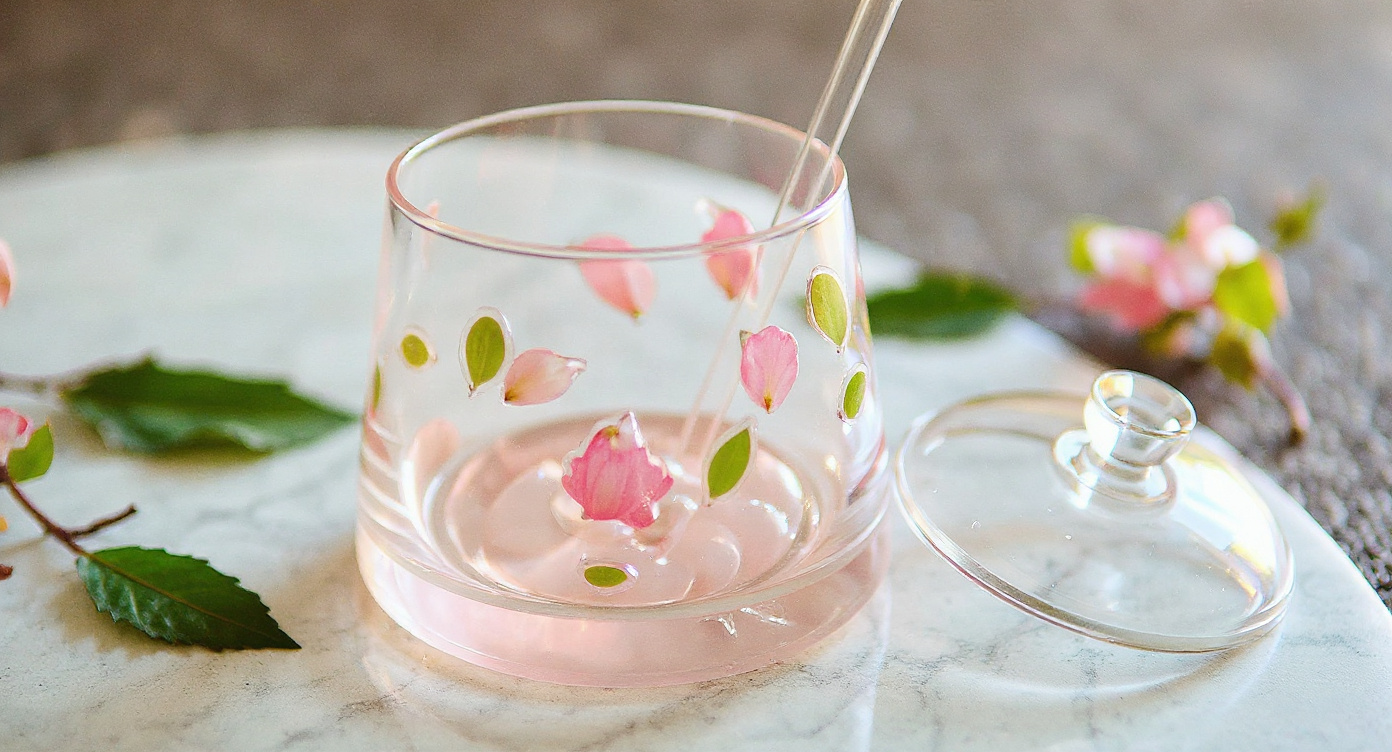
Some are real and some are printed or artificial. The 400ml handcrafted stemless glass uses real preserved flower petals and leaves in raised relief on the outer surface. Flower-print glasses use flat decoration, while many resin tumblers use artificial flowers.
Can a floral glass tumbler go in the dishwasher?
Only if the manufacturer says it is dishwasher-safe. This preserved-flower glass is hand-wash only. Dishwasher heat, detergent, and contact with other dishes are not suitable for raised exterior botanical details.
Can you use a glass straw with hot drinks?
A glass straw can be used with warm drinks, but it may become hot after sitting in very hot liquid. Check it for damage before use, don't use it with a chipped edge, and avoid treating it like a metal travel straw.
How do you clean a tumbler with flowers on the outside?
Hand-wash it with lukewarm water, mild soap, and a soft sponge or cloth. Clean carefully around the raised floral sections, avoid abrasive scrubbers, and dry it on a padded towel. A soft toothbrush can help remove residue from detailed areas without scraping.
Are preserved flowers safe in drinkware?
Preserved flowers should not be loose inside the drinking area or used as a beverage ingredient. In a properly constructed floral glass, the botanicals are decorative material placed on the outside of the glass while the beverage remains in the smooth interior chamber.
What is the difference between a flower-print glass and a real flower glass?
A flower-print glass uses an applied image, decal, or printed pattern. A real flower glass incorporates preserved botanical material, which creates natural variation and physical texture. The trade-off is care: printed glass may be easier to maintain, while real-flower relief needs hand-washing and gentler storage.
A better choice for gifts that still get used
The main concern with floral drinkware is reasonable: nobody wants to give a beautiful cup that is too fragile, too difficult to clean, or too precious to use. A real-flower tumbler makes sense when the recipient values botanical detail, uses cups carefully, and is happy to hand-wash a special piece.
It is less suitable for a household that runs every glass through a dishwasher, needs a leakproof commuter bottle, or expects one cup to survive careless stacking with heavy ceramics. Those are not minor compromises. They are the wrong use case.
For a birthday, anniversary, Mother's Day gift, bridal party favor, or a daily tea and iced-coffee ritual, the real appeal is more specific: a usable 400ml glass with preserved botanical texture rather than a flat flower print. For anyone weighing that balance between beauty and practical care, see the Stemless Wine Glass Real Pink Flowers Inside | Handcrafted | 400ml Gift and decide based on how it will actually be used.