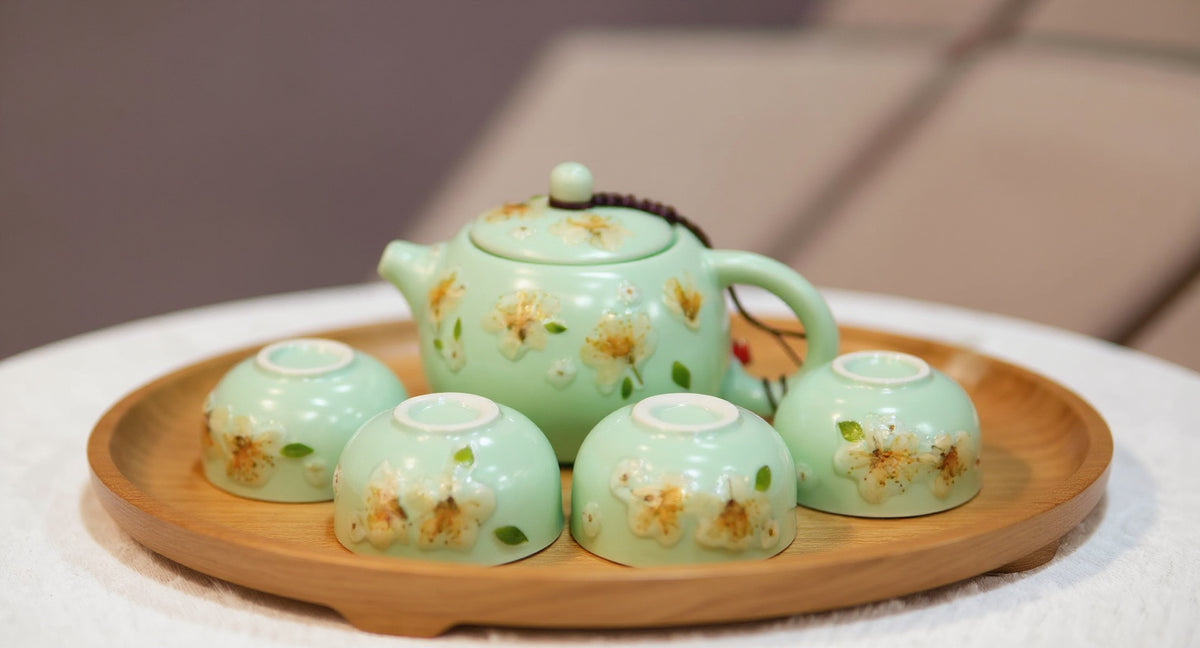
Choose a floral teapot by separating decoration from function: check where the botanical detail sits, how it is sealed, what the vessel holds, and how much careful washing it will need. A decorative teapot set with floral design can serve tea well, but only if its materials and construction suit regular use rather than display alone.
The practical choice is usually porcelain or stoneware for brewed tea, especially when the interior is smooth and glazed. Raised flowers, applied petals, metallic details, unglazed clay, and loose handles all add care requirements. They are not automatic deal-breakers. They do mean that a dishwasher cycle and a crowded cupboard are poor matches.
Floral decoration has to survive more than a shelf
There are several ways flowers appear on teaware, and they don't wear the same way.
Painted floral patterns are generally the easiest to maintain when they sit beneath a fully fired glaze. The decoration is protected by the glassy surface, so ordinary hand washing is usually enough. Decals may also be durable, but their lifespan depends on firing quality and whether the pattern is beneath or over the glaze.
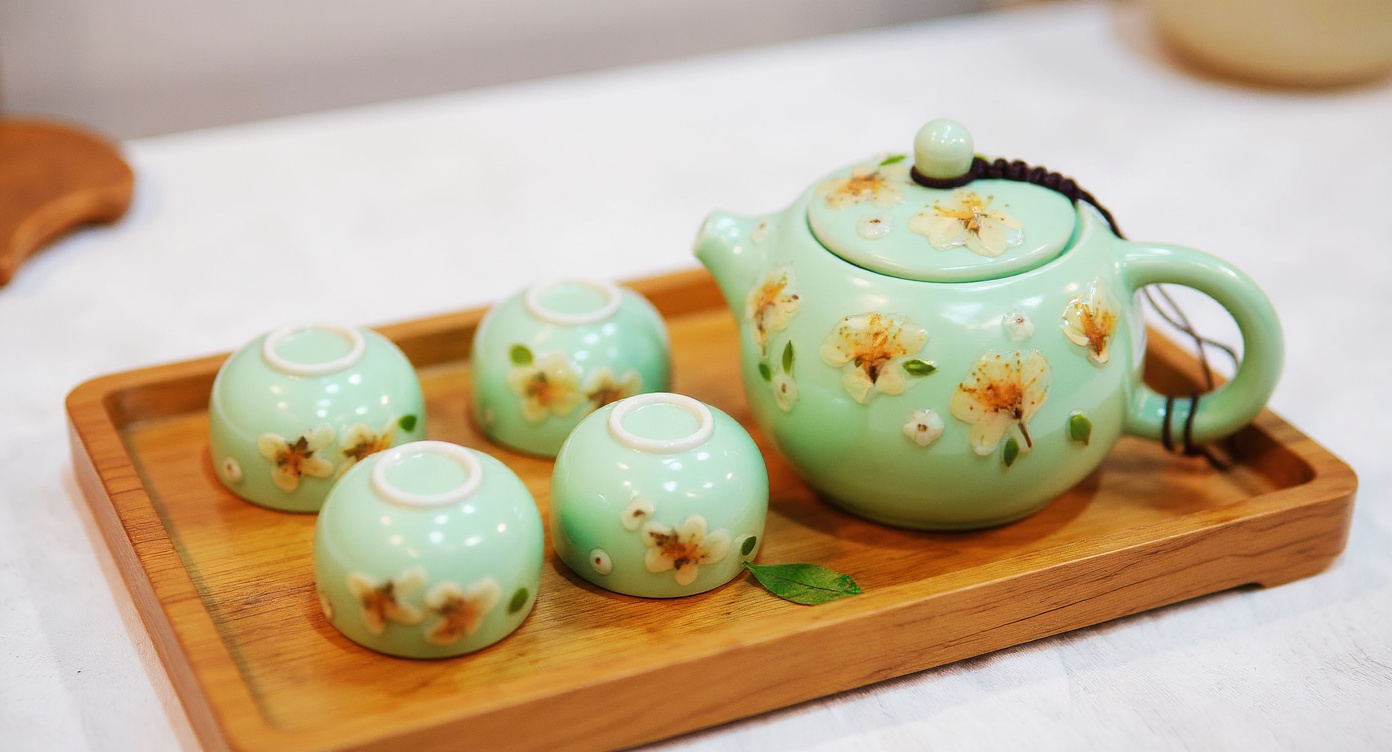
Applied decoration is more complicated. Molded flowers, hand-built leaves, beads of slip, and preserved petals create texture that a flat painted design doesn't have. That texture catches dust, tea residue, and the edge of a dishcloth. It can also be more vulnerable to chipping if pieces knock together in storage.
Real botanical inclusion is its own category. The relevant question isn't whether the flower is real, but whether it has been preserved and protected by a suitable sealant. Winter jasmine is the flowering plant identified as Jasminum nudiflorum, and preserved petals will naturally vary in shape and placement. That variation is part of hand-finished work, but it also means each set needs gentler cleaning than a factory-printed porcelain pot.
Look closely at these five details before choosing:
1. Placement of the floral relief. Decoration on the exterior is easier to keep clean than relief inside the pot, around the spout opening, or near the rim where tea passes. 2. Protection of the botanical material. A stated food-safe sealant matters. Avoid sets with glued-on dried flowers and no clear explanation of how the surface is protected. 3. Glaze coverage inside the teapot. A smooth glazed interior is the practical choice for most loose-leaf tea because it rinses clean and doesn't retain old aromas as readily as porous clay. 4. Handle, lid, and spout fit. Decoration can't compensate for a loose lid, a poorly balanced handle, or a spout that dribbles down the body. 5. Storage risk. Raised details need space. Stacking cups directly against textured flowers is an easy way to chip an otherwise sound set.
A decorative teapot set with floral design should be purchased as functional craft, not treated like an indestructible serving set. If the plan is to run it through a dishwasher after every breakfast, choose plain glazed porcelain with an underglaze pattern instead.
Capacity decides whether the set fits the tea habit
A teapot that looks suitable on a shelf may still be the wrong size for the way tea is actually served. Capacity affects leaf quantity, steeping speed, heat retention, the number of pours, and how often water must be reheated.
For gongfu-style brewing, small pots are intentional. Multiple short infusions bring out changing aromas and texture across a session, rather than making one large, extended steep. The gongfu tea ceremony reference describes a preparation style associated with small vessels and repeated infusions, which is why a 180ml to 250ml pot is often more useful than a 600ml household teapot.
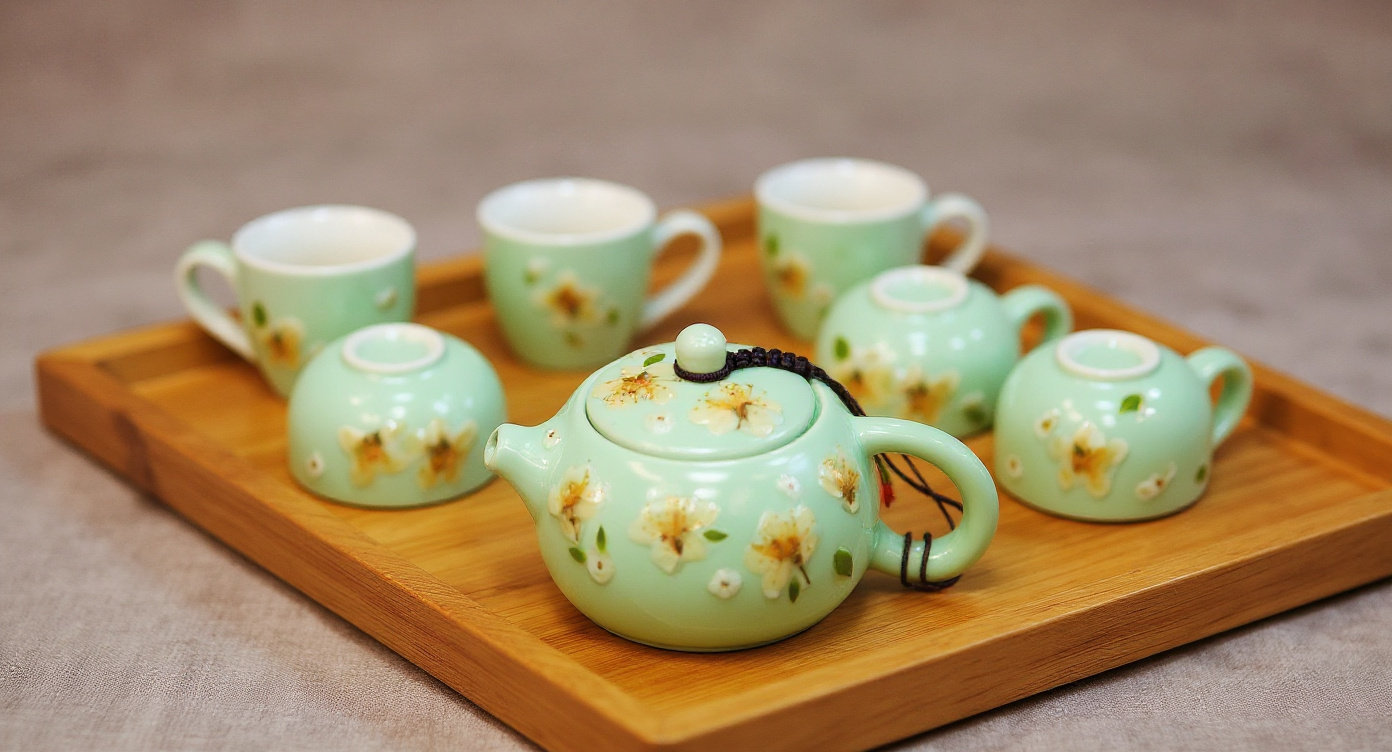
The Handmade Celadon Tea Set Real Pressed Jasmine | Eco Porcelain Teapot 4 Cups | Gongfu Gift has a teapot of about 200ml and four cups of about 45ml each. Four full cups total roughly 180ml, leaving sensible room for leaves and avoiding the need to fill a 200ml pot to its rim. That is a practical configuration for two to four people taking small pours, or for one person brewing several rounds.
| Set type | Typical capacity or format | Best use | Decoration and care | Price information supplied |
|---|---|---|---|---|
| Handmade pressed-jasmine celadon set | Teapot about 200ml, 4 cups about 45ml | Gongfu sessions, small guest servings, display between use | Hand-embedded preserved petals with food-safe sealant; hand washing is the cautious choice | $114.28 |
| Mass-produced Chinese ceramic tea set | Varies by set | Everyday shared tea | Usually easier to replace; decoration method varies | $30–$150 |
| Japanese cast iron or porcelain set | Varies by configuration | Larger shared servings or formal table service | Cast iron and porcelain have very different care needs | $80–$250 |
| Handmade artisan botanical set | Varies by maker | Gift giving, display, slower tea service | Often needs careful handling because decoration is hand applied | $200–$600 |
A 200ml pot isn't a solution for a large family breakfast or a long meeting where everyone wants a full mug. It is deliberately small. For that use, a larger plain teapot is more sensible, while the floral set can remain reserved for focused tea sessions and small gatherings.
Porcelain, clay, glass, and cast iron do different jobs
There is no single best teapot material. The better question is which material suits the tea, brewing style, cleaning tolerance, and expected frequency of use.
Porcelain is the safe default for a decorative set intended to brew varied teas. It is relatively non-porous when glazed, easy to rinse, and neutral enough for green tea, white tea, oolong, black tea, and scented tea. It doesn't need to be dedicated to one category of leaf. High-fired celadon is a ceramic glaze tradition within the wider history of Chinese ceramics, valued for its glaze rather than for the porous, seasoning-dependent behavior associated with some unglazed clay pots.
Unglazed clay can be excellent, but it is specialized. A clay pot may absorb fragrance and seasoning over time, which can suit repeated brewing of one tea type. It is a poor choice for someone switching from smoky black tea to jasmine green tea in the same pot. It also isn't the best material for ornate surface decoration that needs frequent scrubbing.
Glass makes steeping visually clear, though it loses heat faster and can be fragile. Cast iron holds heat well, but enamel-lined and unlined pieces should not be treated as interchangeable. An enamel-lined iron teapot is easier to use with varied teas. An unlined cast-iron vessel requires more careful drying and rust prevention.
| Material | Strength | Limitation | Best fit |
|---|---|---|---|
| Glazed porcelain or celadon | Neutral brewing surface, easy rinsing, suitable for many tea types | Can chip from impacts | Decorative daily gongfu use |
| Unglazed clay | Can suit repeated brewing of a single tea family | Holds aroma and needs dedicated use | Experienced tea drinkers with a consistent tea preference |
| Glass | Makes leaf expansion and liquor color visible | Lower heat retention and higher breakage risk | Delicate teas and casual visual brewing |
| Enamel-lined cast iron | Strong heat retention | Heavy, and not ideal for raised botanical decoration | Larger servings and heat-focused service |
For a floral teapot that may be used with several teas, glazed porcelain is the more adaptable material. It won't produce the same specialized effect as a dedicated clay pot, but versatility is usually the point.
Raised petals need a slower cleaning routine
Dishwashers combine heat, detergent, water pressure, and movement against other objects. That combination is hard on raised floral relief, sealed botanical material, and teapot lids. A decorative porcelain teapot with textured work should be hand washed even if the underlying porcelain itself would tolerate a dishwasher.
Use lukewarm water, mild unscented dish soap, and a soft cloth for the smooth areas. A soft natural-bristle brush or a very soft toothbrush can clean around raised petals, lid knobs, and small crevices. Brush outward gently rather than scrubbing across a raised edge.
Avoid abrasive scouring pads, powdered cleansers, bleach, concentrated citrus cleaners, and prolonged soaking. These aren't needed for ordinary tea residue and can dull a finish or work at the edge of a sealed decorative area. Never use a metal pick to remove residue around an embedded petal.
Tea stains inside a glazed pot respond better to time than force. A short soak with warm water and a little mild soap is usually enough. If staining persists, consult the maker's care guidance before using baking soda or any stronger cleaning method, particularly where food-safe sealant is part of the construction.
Dry each piece separately on a towel. Put the lid beside the pot until both are dry, then store cups without stacking them against raised decoration. The tray should also be dried after use so moisture doesn't sit beneath the teapot or cups.
A floral set should match the occasion, not every task
Daily use doesn't have to mean rough use. A carefully made teapot can be part of a daily tea routine when the routine is small, deliberate, and compatible with hand washing. The wrong daily use is one involving a crowded sink, a dishwasher basket, or a rushed cupboard where cups strike one another.
A 200ml floral gongfu set makes sense for these situations:
- A single person brewing 5g to 7g of oolong, black tea, or pu-erh through repeated short infusions. - Two people sharing a tea session with small cups rather than large servings. - Hosting up to four guests for tasting pours, with the expectation that the pot will be refilled. - A housewarming, wedding, or birthday gift where the set is meant to be used and displayed. - A tea table or meditation space where one beautiful functional object earns its place through regular ritual.
It makes less sense for iced tea, large breakfast pours, children’s parties, office kitchens, or any setting where replacement and speed matter more than craft. A plain 700ml to 1L pot is cheaper, easier to wash, and better suited to those jobs.
The choice also depends on what “decorative” means. A set with painted flowers may be primarily serviceware with ornament. A set with hand-embedded preserved petals is closer to usable art. The latter deserves a more protected place in the household, even when it is used frequently.
FAQ: floral teapot safety, care, and sizing
Are floral teapots safe to use for tea?
They can be, provided the teapot is made for food use and the decoration is protected with an appropriate food-safe finish. Check that the maker specifically identifies the material and sealant. Avoid using vessels with loose glued-on flowers, flaking paint, cracks inside the pot, or unknown coatings in contact with hot tea.
Can you put a decorative porcelain teapot in the dishwasher?
Plain porcelain may be dishwasher-safe, but raised decoration and preserved botanical elements change the recommendation. Hand washing is the safer choice for a textured floral teapot because dishwasher heat, detergent, and impacts can damage delicate surface work.
What is the best material for a teapot?
Glazed porcelain is the best all-purpose material for most homes because it is easy to clean and doesn't strongly retain previous tea aromas. Unglazed clay is better for dedicated brewing of one tea style, while glass and cast iron suit more specific needs.
How do you clean a teapot with raised decoration?
Wash it by hand with lukewarm water, mild soap, and a soft cloth. Use a soft brush around relief work, rinse carefully, and dry it separately from other pieces. Don't scrub the decoration with abrasive pads or let it knock against stacked cups.
Are celadon teapots good for tea?
High-fired glazed celadon can be a very good choice for tea because its glazed interior is generally suited to varied tea types and simple rinsing. As with any ceramic pot, inspect the interior glaze and avoid using a damaged vessel for hot tea.
What size teapot is best for gongfu tea?
For one to four people, a pot between roughly 180ml and 250ml is a common practical range. A 200ml pot works well with cups around 40ml to 50ml, allowing several small pours and repeated infusions without making too much tea at once.
Can you use a decorative teapot every day?
Yes, if daily use means careful brewing, hand washing, and protected storage. It won't work well as a dishwasher-safe utility pot or a large-volume serving vessel. The more elaborate the decoration, the more important those limits become.
The right set earns its place through use
The hesitation around floral teaware is reasonable. Buyers don't want a fragile ornament that cannot safely hold tea, yet they also don't want a generic pot with a flower pattern that could appear on any shelf. The strongest choice is one with stated food-safe materials, a manageable capacity, a smooth brewing interior, and decoration worth treating carefully.
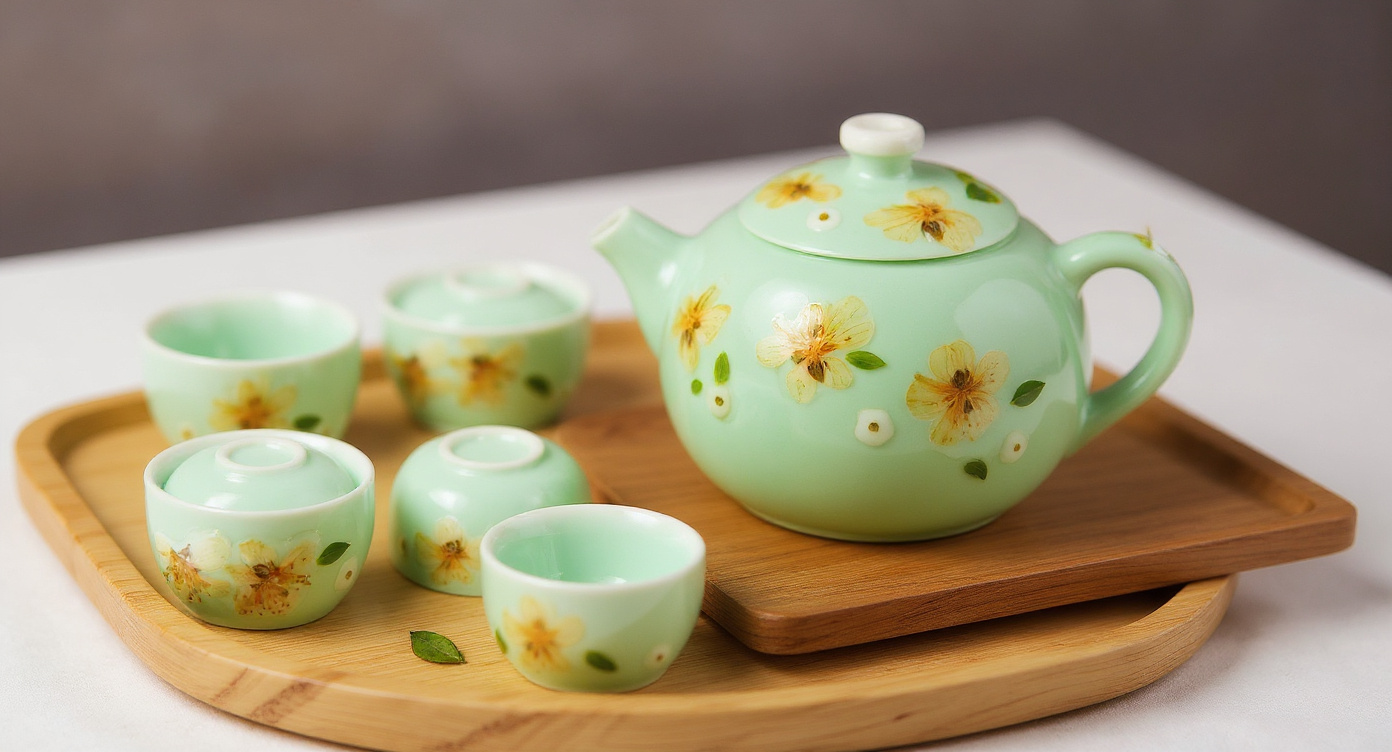
For small gongfu sessions, gift giving, or a tea table that benefits from an individual handmade object, see the Handmade Celadon Tea Set Real Pressed Jasmine | Eco Porcelain Teapot 4 Cups | Gongfu Gift. Its approximately 200ml teapot, four approximately 45ml cups, high-fired celadon porcelain, preserved winter jasmine petals, and food-safe sealant address the practical concerns without asking the set to behave like disposable everyday ware.