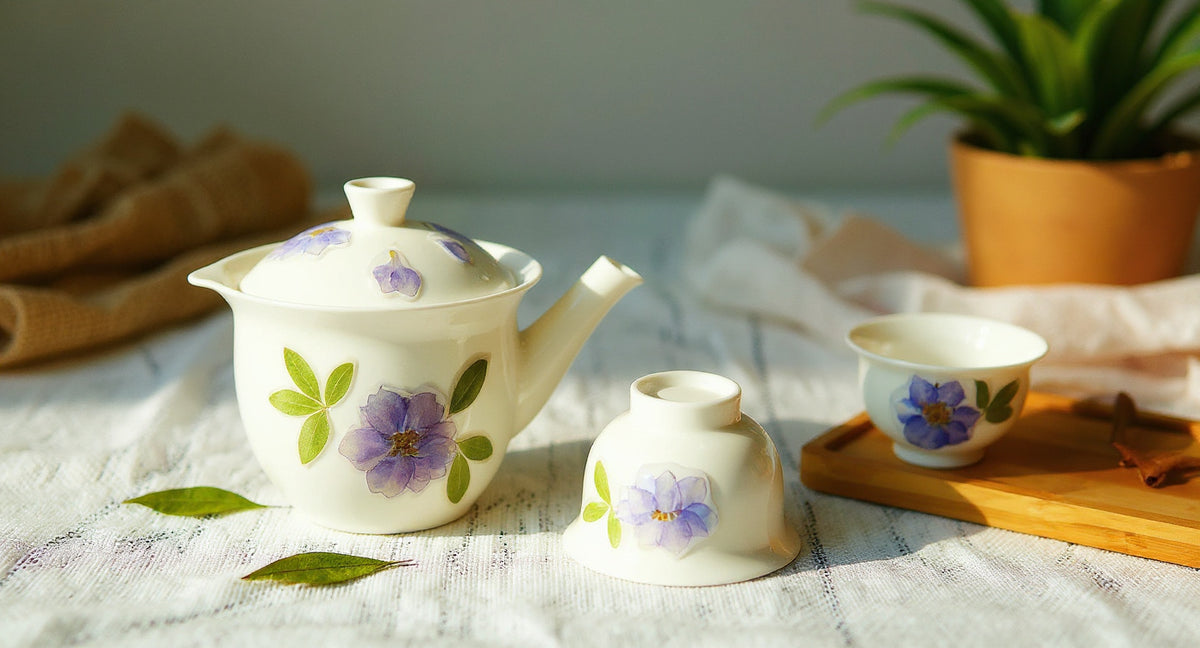
Choose a handcrafted preserved flower teapot set by checking the porcelain, vessel size, flower treatment, heat guidance, and cleaning method before considering decoration. The right set should function for the tea style being prepared, while its preserved botanicals and handwork justify the extra care that mass-produced tableware doesn't require.
A preserved flower teapot set handcrafted around a small gaiwan is best suited to gongfu-style brewing, individual tasting sessions, display, and thoughtful gifting. It isn't the right purchase for someone who wants a large family teapot, microwave convenience, or a set that can be put through every household cleaning cycle without concern.
Start with the brewing format, not the decoration
The vessel determines how the set will be used. A gaiwan is a lidded bowl with a saucer, usually held by the rim and lid while tea is poured. A teapot normally has a handle, spout, and enclosed body. Both can brew loose-leaf tea, but they encourage different pouring and tasting habits.
A 150 ml gaiwan is a compact format. It works well when tea is brewed in short infusions and shared in small portions. The accompanying cups in this set hold approximately 50 ml each, so the capacity is clearly aimed at concentrated servings rather than a large mug of tea.
Gongfu tea uses repeated infusions, careful leaf-to-water control, and small cups. The Chinese gongfu tea ceremony reference describes the broader tradition and helps explain why a small vessel can be more practical than a 700 ml pot for this style of brewing. A small gaiwan also makes it easier to change teas without committing to a full pot.
Before choosing, answer five practical questions:
1. Will the set be used for gongfu-style tea or for ordinary full-pot brewing? 2. Is a 150 ml brewing vessel large enough for the intended number of drinkers? 3. Are 50 ml cups suitable for tasting portions rather than long drinks? 4. Can the set be washed by hand after each use? 5. Is the recipient comfortable treating preserved botanical details as fragile decorative material?
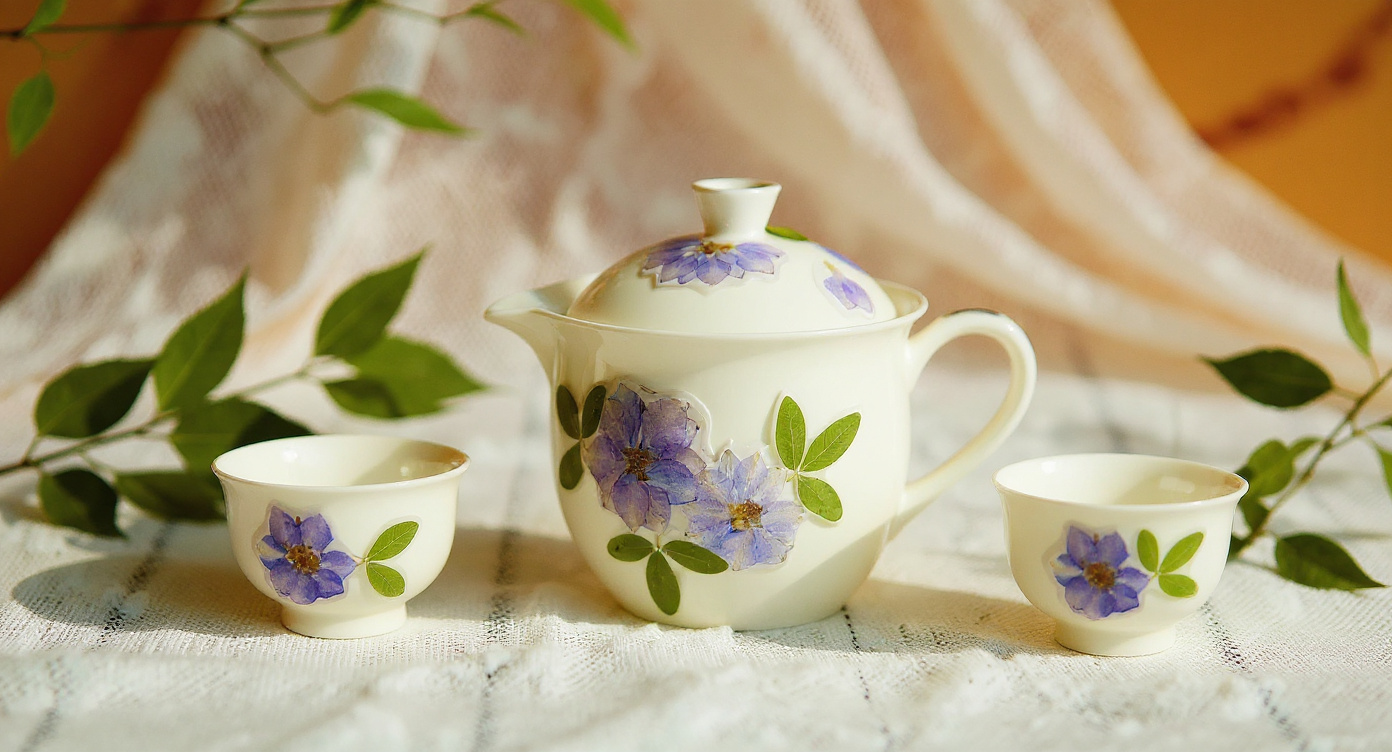
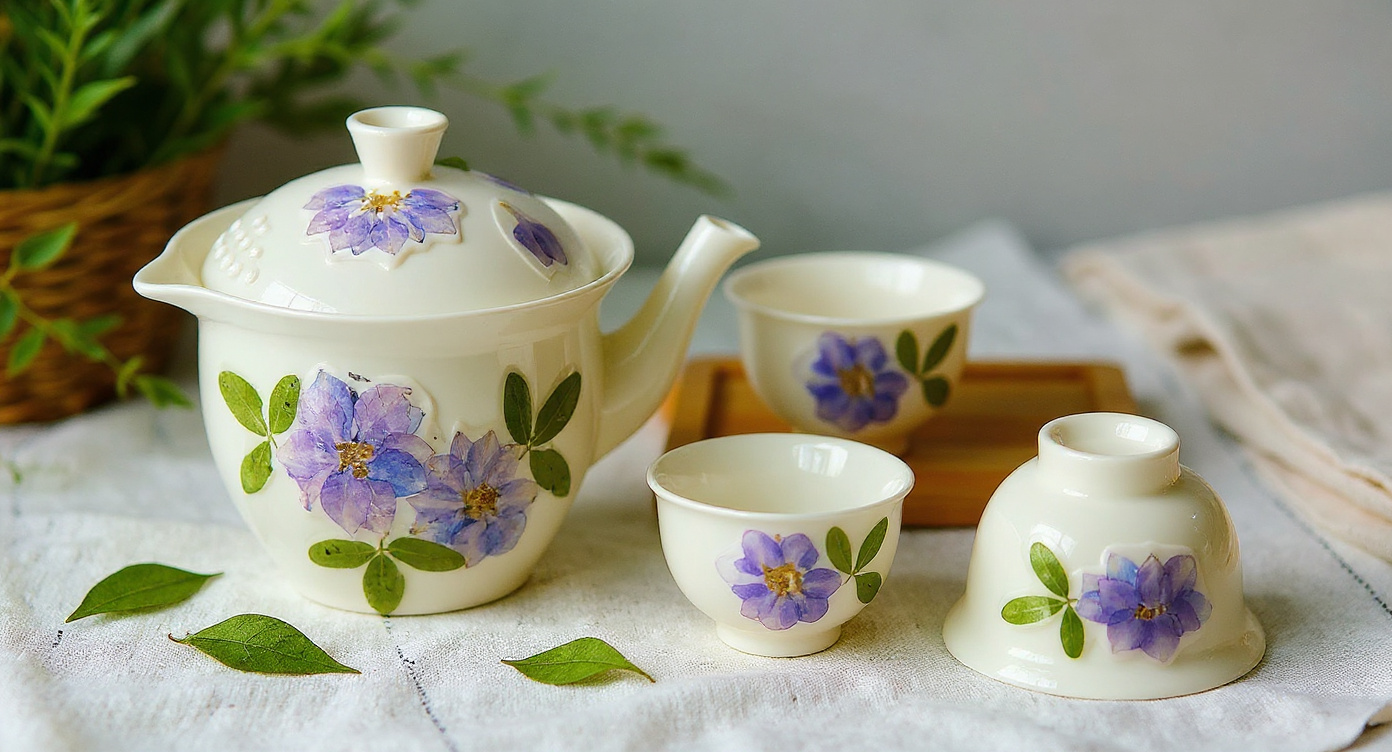
The Handmade Suet Jade Porcelain Teapot Set | Real Pressed Flowers | Gongfu Tea Gift matches the small-format gongfu use case: one approximately 150 ml gaiwan with approximately 50 ml teacups. Its hand-embedded preserved petals give it a different purpose from a plain serviceable gaiwan. It is tea equipment, but it also belongs in the category of functional botanical craft.
Why real pressed petals change the buying decision
Pressed-flower craft relies on drying and preserving plant material so it can be incorporated into decorative work. The reference on pressed flower craft provides useful context for the material itself. Once petals become part of a porcelain surface, the buyer needs to consider both the ceramic body and the treatment surrounding the botanical detail.
The important distinction is between real preserved petals and a printed floral pattern. A decal gives repeatable decoration. Hand-embedded petals produce variation from one piece to another because natural material differs in thickness, shape, and response during production. No two sets should be expected to have identical botanical placement.
That individuality is the main reason to choose this kind of set over a conventional porcelain gaiwan. It won't appeal to someone who values perfect uniformity. It makes more sense for a gift, a tea corner, a botanical collection, or a serving set that needs to carry emotional value as well as practical use.
The material also sets limits. Raised botanical texture can catch residue, and exposed decorative areas should not be treated like an indestructible dinner plate. The safest assumption is that the set needs gentle hand washing, careful handling, and a dry storage area where pieces won't knock against one another.
Porcelain, ceramic, and heat: what actually matters
Porcelain is a ceramic material fired at high temperature, generally associated with a dense body and low porosity. The porcelain reference explains why porcelain is treated as a distinct ceramic category rather than a synonym for every fired clay object. Handmade ceramic and porcelain pieces differ in body composition, firing behavior, density, translucency, surface response, and manufacturing tolerances.
A high-fired porcelain gaiwan is a sensible choice for tea because it is dense and does not readily absorb the same way a porous, lower-fired body can. The product information identifies this set as premium suet jade porcelain and describes it as high-fired. Those facts support durability, but they do not make the set immune to thermal shock.
Boiling water can be used in a porcelain teapot only when the maker's construction and care instructions support it. The greater risk is often not the water temperature alone. A cold vessel receiving boiling water, a vessel with a hidden flaw, or a piece moved suddenly between hot and cold conditions can be placed under unnecessary stress.
A cautious routine is better:
- Warm the vessel with a small amount of hot water first. - Avoid pouring boiling water into a piece straight from a cold cupboard. - Don't place a hot gaiwan on a wet stone counter or chilled metal surface. - Never move a heated piece directly into cold water. - Keep the set away from open flame, stovetops, and direct heating elements.
The floral surface adds another reason to avoid extremes. Even when the porcelain body is durable, the preserved botanical components and any surrounding finishing material may have different tolerances. Use water appropriate to the tea, but treat the set as a crafted object rather than a piece of laboratory glassware.
Compare the formats before spending more
The most useful comparison is not simply cheap versus expensive. It is standardization versus handwork, capacity versus intimacy, and low-maintenance use versus display value.
| Option | Stated capacity or price | Main strength | Main compromise |
|---|---|---|---|
| Mass-produced Chinese porcelain tea set | Prices supplied in the product context range from $30 to $150 | Lower entry cost and more consistent replacement options | Usually offers less individual botanical handwork |
| Mid-tier artisan tea set | $150 to $350 | More hand-finished character and craft detail | Higher cost without necessarily including real preserved petals |
| Handmade Suet Jade Porcelain Teapot Set | $99.9085714285714; approximately 150 ml gaiwan and approximately 50 ml cups | Real preserved petals embedded by hand and a compact gongfu format | Requires hand washing and careful handling |
| Luxury studio-crafted or boutique alternatives | Etsy artisan sets are supplied as $400 to $900; boutique Japanese ceramics as $500 to $1,200 | Greater price range for studio craft and collectability | Pricing varies widely, and features must be checked individually |
The comparison has one major limitation: price alone doesn't prove firing quality, botanical preservation, or finishing skill. A cheaper set may be entirely adequate for daily tea. A more expensive set may offer superior craft, but only if its material and construction details support that premium.
The Handmade Suet Jade Porcelain Teapot Set is more likely to pay off when the buyer wants a small gongfu service, real botanical inlay, and a gift that feels individual. It is less compelling when the priority is maximum capacity, dishwasher use, or replacing a broken cup without worrying about matching the original.
Care instructions for porcelain with preserved flowers
Hand washing is the correct default. Use lukewarm water, a mild unscented detergent when needed, and a soft cloth or sponge. Avoid abrasive powders, scouring pads, stiff brushes, and concentrated cleaners that could catch on raised details or dull the surface.
Cleaning should happen soon after use, especially after strongly colored teas. Tea oils and tannins can leave residue if allowed to dry. Rinse the gaiwan and cups, wash gently around the botanical areas, and inspect the underside of the lid and the junction between each cup and its base.
Drying matters as much as washing. Place each piece on a soft, clean towel and let water drain naturally. Don't stack damp pieces. Before storage, make sure the crevices around raised flower details are dry, because trapped moisture can create an unpleasant smell and make later cleaning harder.
Dishwashers are a poor choice for a set with real preserved petals and raised exterior texture unless the maker explicitly approves the cycle. Heat, detergent strength, water pressure, and contact with other dishes all increase risk. The same caution applies to microwaves, even if the porcelain body itself might tolerate microwave heating. Decorative components change the answer.
Storage is simple but deliberate. Keep cups separated with soft spacers if they are stacked, leave the lid slightly offset if the gaiwan is stored after washing, and avoid placing heavy objects on top. For a display arrangement, choose a stable shelf away from direct sun, steam, and frequent knocks.
This care routine is not difficult, but it is more involved than caring for undecorated commercial tableware. That trade-off should be accepted before purchase, not discovered after the first stain or chip.
Is this type of set safe for tea service?
Real pressed flowers are not automatically food-safe merely because they are natural. Safety depends on how the petals were preserved, where they are placed, what coating or binding process was used, and whether the finished surface is intended for contact with food or drink.
For that reason, the practical question is not whether flowers are natural. It is whether the maker specifies food-contact suitability and explains how the botanical material is isolated from the tea. If the product documentation does not answer that point, use the set conservatively and ask the seller before purchase. Avoid assuming that a decorative exterior treatment is suitable for direct contact with hot liquid.
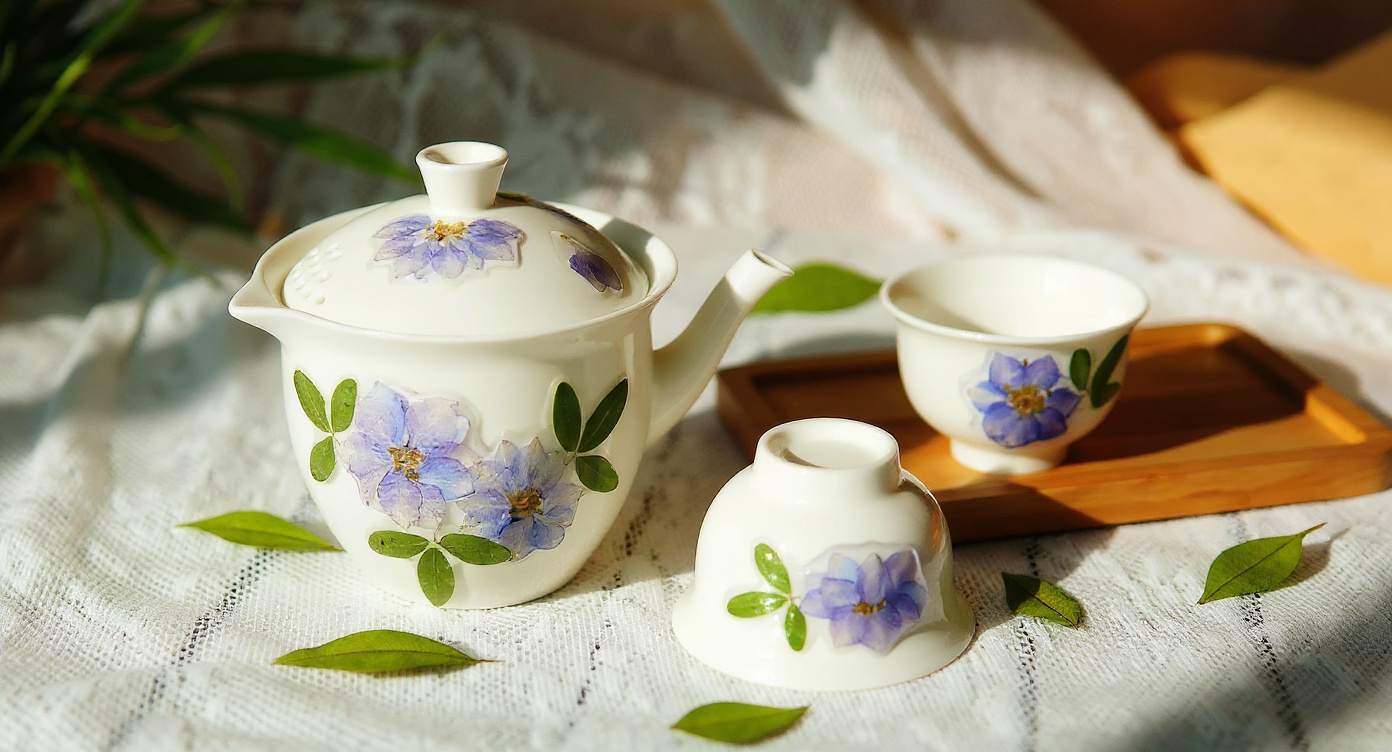
The set's stated design places the real petals in the porcelain's exterior surface, while the gaiwan and cups are intended for gongfu tea use. Even so, buyers should inspect the rim, interior, lid underside, and pouring path. Those are the areas that matter most for food and beverage contact.
A specialist tea set also deserves sensible serving habits. Don't scrape the surface with metal tools. Don't use it to hold boiling syrup, acidic cleaning solutions, or anything unrelated to tea. If a petal lifts, a crack appears, or the interior finish changes, stop using that piece for drinking until the maker confirms it is safe.
FAQ
Can you put boiling water in a porcelain teapot?
Porcelain can be used for hot water, but boiling water should be poured into a vessel gradually and only when the maker's instructions permit it. Pre-warm the gaiwan, avoid sudden hot-to-cold changes, and never use a visibly damaged piece. High-fired porcelain is durable, not immune to thermal shock.
How do you clean a porcelain teapot with flowers on it?
Hand wash it with lukewarm water, a mild detergent, and a soft cloth or sponge. Work gently around raised flower details, rinse thoroughly, and air-dry on a soft towel. Avoid abrasive cleaners, stiff brushes, dishwasher cycles, and soaking unless the maker specifically recommends it.
Are real pressed flowers safe to use on a teapot?
They can be suitable as an exterior decorative treatment, but natural material alone does not establish food-contact safety. Check whether the maker identifies the finish as suitable for tea service, and inspect the rim, interior, lid underside, and pouring path before use.
What is the difference between a gaiwan and a teapot?
A gaiwan is a lidded bowl with a saucer, usually held by the rim and lid while tea is poured. A teapot generally uses a handle and spout. A gaiwan offers direct control over the leaves and is particularly well suited to repeated gongfu infusions.
How much tea fits in a 150 ml gaiwan?
A 150 ml gaiwan holds approximately 150 ml of liquid by stated capacity. The practical serving amount is lower once tea leaves and headspace are allowed for. With approximately 50 ml cups, it is designed for small tasting portions rather than one large mug.
Can porcelain teacups go in the dishwasher?
Some plain porcelain cups can, but a set with preserved petals and raised surface details should be hand washed unless the maker explicitly approves dishwasher use. Heat, detergent, spray pressure, and contact with other dishes can damage decorative work.
Why are handmade ceramic and porcelain pieces different from each other?
They can differ in clay composition, firing temperature, density, water absorption, thermal response, surface finish, and production tolerance. Porcelain is generally denser and more refined than many ceramic bodies, while handmade construction introduces variation that factory production is designed to reduce.
How do you care for a handmade porcelain tea set?
Wash it by hand, avoid thermal shock, don't use abrasive tools, dry every piece fully, and store cups so they cannot knock together. Keep the set away from direct sun, steam, open flame, and heavy objects. A small inspection after each wash helps catch chips or lifted decorative material early.
So is this set worth choosing?
A preserved flower teapot set handcrafted for gongfu brewing makes sense when a 150 ml gaiwan, approximately 50 ml cups, hand-embedded real petals, and display value match the intended use. It won't suit a buyer who wants a large, dishwasher-safe everyday pot or who treats all porcelain as interchangeable.
For someone concerned about fragility and cleaning, the decision comes down to accepting hand washing and careful storage in exchange for a set with individual botanical work. The Handmade Suet Jade Porcelain Teapot Set | Real Pressed Flowers | Gongfu Tea Gift offers that balance in a compact format. To see the material details and included pieces, browse the Handmade Suet Jade Porcelain Teapot Set and decide whether its care requirements fit the way tea is actually served.