Japanese Style Flower Glass: Origins and What Sets It Apart
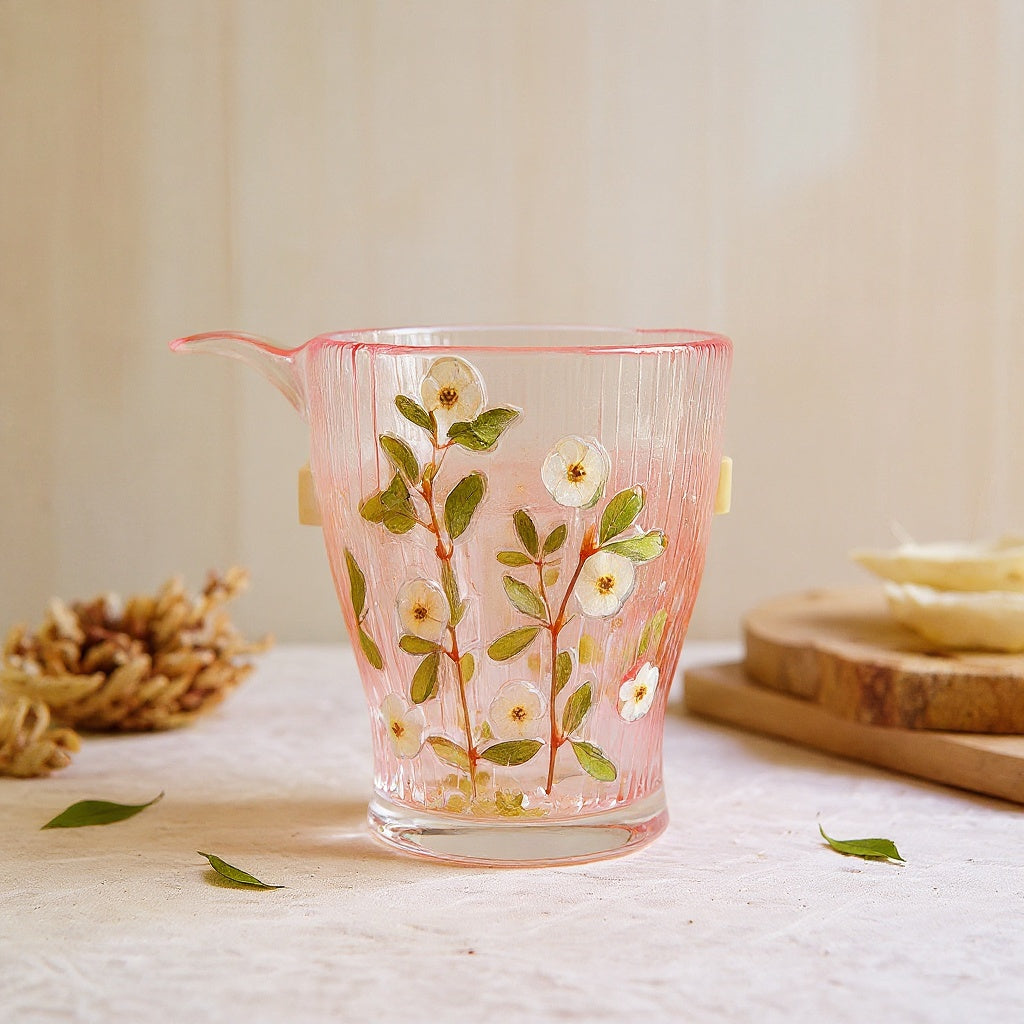
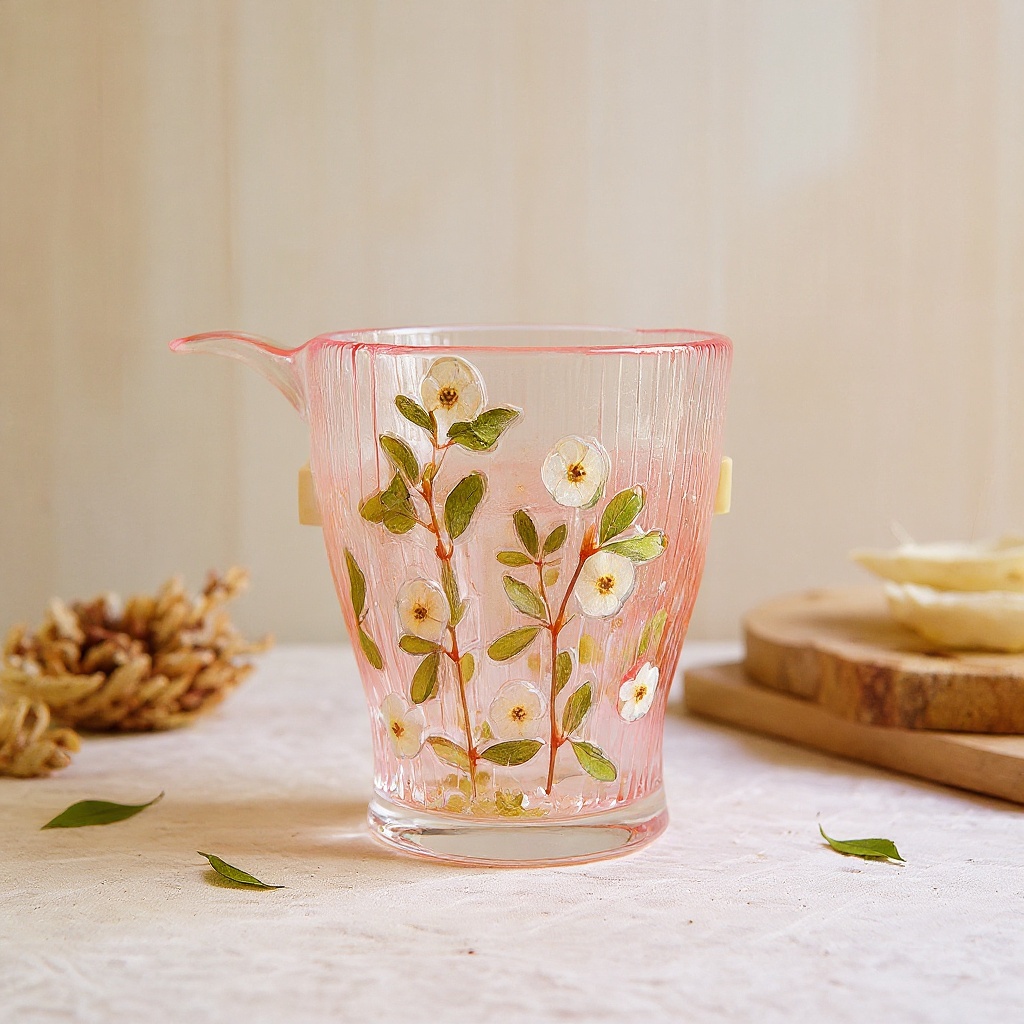
By Patrick Gao, founder of Solace & Straw · 8+ years working directly with Southeast Asian rattan artisans · Featured in Cottagecore Weekly and The Artisan Home · Member of the Handcraft Glassware GuildJapanese style flower glass is a cylindrical glass tumbler with real preserved flower petals and leaves embedded on the outer surface — not printed, not painted, physically there. You can feel them. The raised tactile relief texture runs across blush, cream, and green tones while the clear glass base stays fully visible beneath the botanicals. That combination of touch, transparency, and natural material is exactly what separates authentic japanese style flower glass from every mass-produced alternative on the market. The technique draws from traditional Japanese pressed flower craft (oshibana), a practice documented in Japan since the Edo period, adapted over generations into functional glassware that serves both the eye and the hand.
What Makes Japanese Style Flower Glass Different From the Start
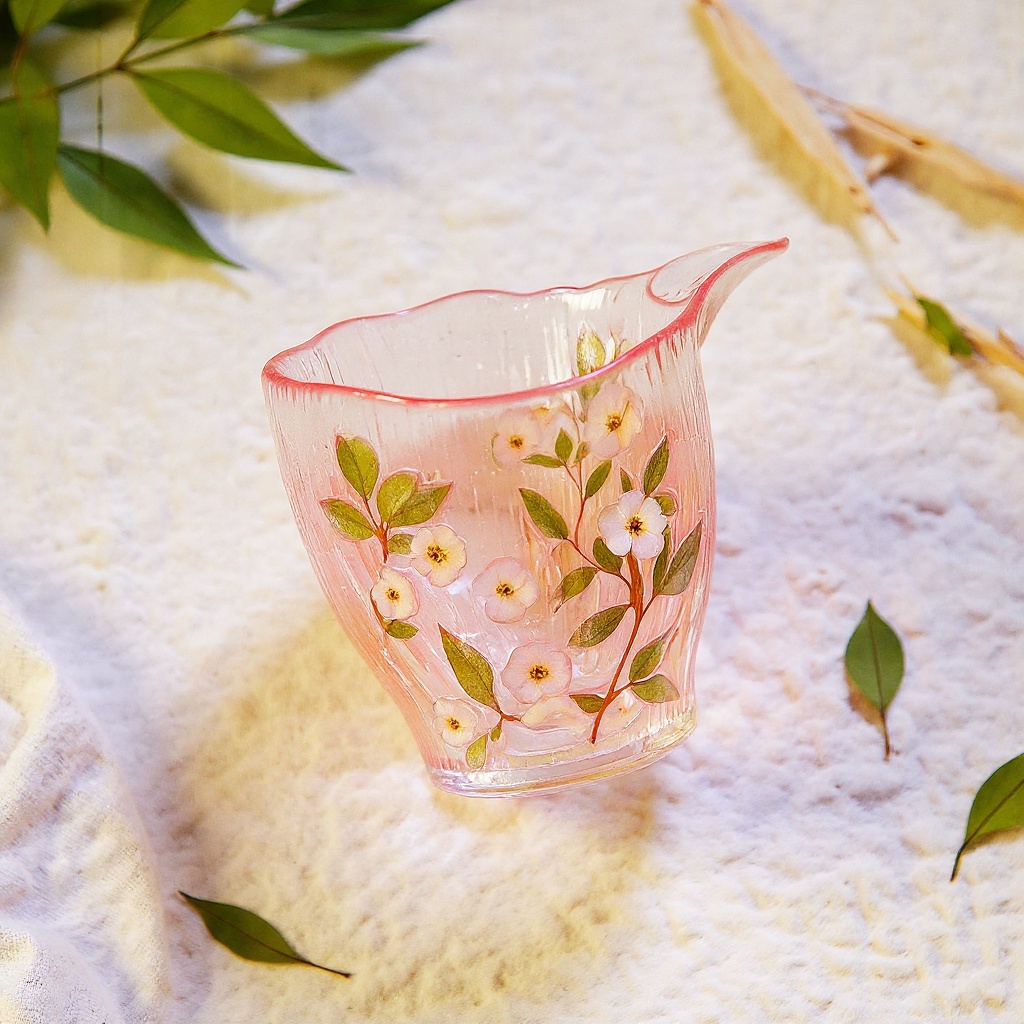
The difference is tactile before it is visual. Run your finger across the outer surface of an authentic piece and you feel the edges of real petals, the slight ridge of a preserved leaf, the uneven topography that no flat print can replicate. This is not decorative glassware with a floral pattern. It is a cylindrical tumbler where actual botanical material — blush rose petals, cream chamomile, green eucalyptus leaves — has been permanently fixed to the outer glass wall, sealed beneath a protective layer, with the clear base left open so you see straight through to whatever you are drinking. Three things define it: real plant material, raised surface texture, and structural transparency at the base. Nothing else qualifies.
The Historical Roots of Botanical Glassmaking
Japanese artisans did not invent flower preservation. What they perfected was the balance between preservation and daily use. European glassmakers in the 18th century first explored botanical inclusions, but those pieces were display objects — fragile, impractical, designed for shelves rather than hands. Japanese craftspeople, working within a longer tradition of botanical art, adapted embedding techniques into functional drinking vessels during the early 20th century. The specific craftsmanship lineage connects to oshibana masters who brought flat pressing techniques into three-dimensional application.
The Edo period oshibana tradition is documented by the Victoria and Albert Museum as one of Japan's sustained botanical art forms, spanning over 400 years of documented practice. Applying those preservation principles to glassware required solving a technical problem that took decades: how to seal organic material within or against glass without the heat of standard glassmaking destroying the botanicals entirely.
Real craftsmanship. Real history. Not a marketing story.
Real vs. Fake: Identifying Authentic Botanical Glass
The market is full of imitations. This matters because printed versions look convincing in product photographs and often sell at prices that make authentic pieces seem overpriced by comparison. Glass as a material permits botanical inclusions when handled correctly, but the technique requires skill that cannot be automated.
Here is how to identify genuine japanese style flower glass:
1. Raised tactile texture — Real embedded petals and leaves create surface variation you feel with your fingertips; printed designs are smooth and flat 2. Natural color gradients — Genuine blush and cream petals show subtle variation across each petal face; uniform color saturation signals artificial printing 3. Asymmetrical botanical placement — No two authentic pieces position flowers identically; machine-printed patterns repeat at intervals 4. Visible leaf and stem fragments — Authentic pieces include irregular botanical material including partial stems and leaf veining 5. Weight from layered construction — The outer sealing layer adds measurable weight compared to single-wall printed glass 6. Price reflecting labor investment — Genuine botanical glass requires 2–3 weeks of production time per piece; prices below $40 indicate printed alternatives 7. Clear base visibility — Authentic japanese style flower glass preserves the transparent base so the glass interior remains fully visible from below
Honestly, if you have only ever seen these in product photos, the printed versions look nearly identical. Buy from a seller who can describe the preservation method in specific terms. Vague answers about "natural materials" mean nothing.
The Japanese Aesthetic Philosophy in Glassware
Wabi-sabi. Two syllables that carry more design weight than most entire manifestos. The philosophy of finding beauty in imperfection and impermanence runs through authentic japanese style flower glass in ways that are structural, not decorative. A petal that pressed at a slight curl. A leaf edge with faint natural browning. These are not quality failures. They are the point.
Mono no aware — the Japanese concept of awareness toward the passing of things — informs why preserved flowers carry meaning beyond aesthetics. The flower was alive. It was pressed, preserved, and fixed into glass at a specific moment. The tumbler you hold contains a record of a real botanical that existed in a real place. That is fundamentally different from a pattern that was designed in software and printed at scale.
Japanese-influenced botanical glassware embraces what Western industrial production treats as defects. Uniformity is not the goal. The cylindrical tumbler form draws from tea ceremony vessel traditions where simplicity of shape amplifies rather than competes with natural material.
Preservation Techniques That Make It Last
Longevity depends on method. Glycerin-based preservation — a technique documented in botanical conservation literature including resources from the Royal Botanic Gardens, Kew — replaces moisture within plant cells with glycerin, maintaining flexibility and preventing the brittleness that causes color loss and structural decay. Combined with proper glass sealing and the UV-filtering properties of the outer glass layer, this method supports color stability for extended periods under normal indoor conditions.
Temperature control during the embedding process is the technical constraint that prevents mass production. The embedding work occurs at low temperatures — below 180°F — to prevent botanical deterioration during the glass-bonding stage. Standard glass-forming processes operate at temperatures that would carbonize plant material entirely. This is why the outer-surface embedding approach, rather than full glass enclosure, defines the construction of japanese style flower glass: it solves the heat problem by applying botanicals to formed glass rather than incorporating them during forming.
Here is a direct comparison of preservation methods used in botanical glassware production:
| Preservation Method | Estimated Lifespan | Color Retention | Production Cost | Durability Rating |
|---|---|---|---|---|
| Glycerin Treatment | 15–20 years | Excellent | High | Very Good |
| Air Drying Only | 2–3 years | Poor | Low | Fair |
| Chemical Pressing (silica gel) | 5–8 years | Good | Medium | Good |
| Freeze Drying | 10–12 years | Very Good | High | Excellent |
| Microwave Pressing | 3–5 years | Fair | Low | Fair |
For cleaning: hand wash only, water temperature kept under 100°F, mild soap, soft cloth. No dishwashers. The heat cycle and pressure in a standard dishwasher creates thermal stress around the botanical layer. I learned this directly — a customer brought back a piece after one dishwasher run, the outer botanical layer showing hairline separation at the petal edges. That experience changed how I communicate care instructions at point of sale.
Japanese vs. Western Glassmaking Traditions: A Direct Comparison
Understanding what makes japanese style flower glass distinctive requires understanding what it is distinctly different from. Western industrial glassmaking optimizes for uniformity. Japanese botanical glassmaking optimizes for singularity.
| Characteristic | Japanese Botanical Glass | Western Industrial Glass |
|---|---|---|
| Design philosophy | Wabi-sabi: imperfection as value | Uniformity: consistency as quality |
| Production scale | Handcrafted, limited batch | Mass production, high volume |
| Botanical use | Real preserved petals and leaves | Printed or painted floral patterns |
| Surface texture | Raised tactile relief from real material | Smooth, flat printed surface |
| Color variation | Natural gradient variation per piece | Consistent color across all units |
| Uniqueness | Each piece unrepeatable | Identical across production run |
| Production time | 2–3 weeks per piece | Hours per unit |
This table is not a value judgment. Uniformity serves real purposes in commercial glassware. But if the goal is a piece that no one else owns — that cannot be duplicated — the Japanese botanical approach is the only path.
Care and Maintenance of Botanical Glassware
Care requirements differ from standard glassware in three specific ways. Heat management. Abrasive avoidance. Storage stability.
Water temperature during washing should stay under 100°F. The raised texture from embedded petals traps soap residue, so rinse thoroughly after washing. Avoid any abrasive scrubbing material near the botanical areas — even soft-abrasive sponges can dull the glass surface around delicate petal edges over time. Store at room temperature, away from heating vents or air conditioning units where rapid temperature cycling occurs.
Dishwasher use will damage the piece. Full stop.
Keep the glass away from south-facing windowsills in direct summer sunlight. Even with the UV-filtering properties of the outer glass layer, sustained direct exposure accelerates color shift in natural botanical pigments. A north-facing shelf or display cabinet works better for pieces you want to preserve over decades rather than years.
When to Give Japanese Style Flower Glass: 7 Occasions Worth Considering
Botanical glassware works as a gift because it is functional art — it lives in someone's kitchen, not a box in a closet. Here are specific occasions where it lands well:
1. Weddings — The preserved natural material symbolizes durability alongside organic beauty, a pairing that resonates with ceremony themes around lasting growth 2. Housewarmings — Introduces a natural material element into a new living space without requiring the recipient to maintain a living plant 3. Birthdays for botanical or cottagecore enthusiasts — Directly aligned with aesthetic preferences that already value pressed flower art and natural textures 4. First anniversaries — The traditional first anniversary gift material is paper; pressed botanicals share the flat-pressed origin while offering greater permanence 5. Bridal party gifts — Functional enough to use daily, distinctive enough to keep, and consistent in theme across a set without being identical due to natural variation 6. Corporate gifting — Offers a story and provenance that generic crystal sets cannot provide; useful for clients in creative, hospitality, or wellness industries 7. Self-purchase for a dedicated coffee or tea ritual — The tactile texture and botanical presence transforms a routine beverage moment into something more considered
Not every occasion fits. If the recipient prioritizes dishwasher convenience above all else, this is not the right gift. Honest assessment matters more than a sale.
Frequently Asked Questions
Are the flowers in botanical glass real or just printed on? The flowers are real preserved botanical material — petals and leaves physically embedded on the outer glass surface, not printed. Authentic japanese style flower glass features raised tactile relief texture where real plant material sits beneath a sealing layer; printed alternatives are smooth and flat to the touch. The blush, cream, and green tones come from actual botanical pigmentation, which is why each piece shows natural color variation that printing cannot replicate. How long do preserved flowers in glass last before fading? Glycerin-preserved botanicals sealed within glass can maintain color and structural integrity for 15–20 years under normal indoor conditions, based on botanical conservation methodology documented by institutions including the Royal Botanic Gardens, Kew. The glass outer layer filters UV radiation that accelerates pigment degradation. Air-dried botanicals without proper preservation and sealing typically show significant fading within 2–3 years. Is a flower glass safe to use for drinking, or is it decorative only? Authentic botanical glass tumblers are designed for regular beverage use. The preserved botanicals are fixed on the outer surface and sealed, with no contact with the interior drinking surface. Avoid sustained temperature extremes — do not use for boiling liquids or leave in freezing conditions — as thermal stress can affect the glass structure over time. Can you wash a real botanical glass in the dishwasher? No. Hand washing with water under 100°F and mild soap is the only recommended cleaning method. Dishwasher heat cycles and water pressure create thermal and mechanical stress at the botanical layer interface, risking separation or surface damage. This is a hard limit, not a conservative suggestion. What makes Japanese style flower glass different from regular floral glassware? Japanese style botanical glass uses real preserved plant material to create raised surface texture, while regular floral glassware uses printed or etched patterns that are flat and uniform. The Japanese aesthetic philosophy of wabi-sabi means each authentic piece intentionally embraces natural imperfection — no two pieces are identical. Standard floral glassware repeats identical patterns across every unit in a production run. Why does each flower glass look slightly different from product photos? Natural botanical variation makes identical pieces impossible to produce. Petal size, color intensity, pressing angle, and leaf placement vary with every flower from every harvest. This variation is inherent to the product and considered a quality characteristic, not a defect. Product photos show one specific piece; your piece will be genuinely unique. Is a botanical glass a good wedding or birthday gift? Yes for recipients who value handcrafted functional objects and natural materials. It is not ideal for recipients who prioritize convenience features like dishwasher compatibility. The handcrafted nature, functional daily use, and visual distinctiveness make it a gift people keep rather than re-gift, which is a meaningful measure of appropriateness. Where can I find genuine handmade flower glass? Look for artisan sellers who can describe their preservation method specifically — glycerin treatment, press duration, embedding temperature controls. Avoid pieces priced under $40, as authentic botanical glass requires 2–3 weeks of labor per piece that cannot be sustained at low price points. Ask directly how the flowers are attached to the glass and what the outer sealing material is; legitimate makers answer this without hesitation. Does the raised texture on botanical glass make it harder to clean? The raised petal and leaf texture does trap soap residue more than smooth glass. Thorough rinsing after washing resolves this. Use a soft cloth rather than a sponge, and direct the rinse water across the textured surface deliberately. The texture is not a maintenance burden if you hand wash with attention; it only becomes problematic if you attempt dishwasher cleaning. Can botanical glass hold hot beverages like tea or coffee? Warm beverages are fine — a cup of tea at typical serving temperature poses no structural risk. Avoid pouring boiling water directly into the glass or using it for sustained high-heat applications. The limiting factor is thermal shock: rapid movement from cold to very hot, or hot to cold, creates stress at the botanical layer boundary. Normal beverage temperatures used with reasonable care do not present this problem.Final Thoughts on Japanese Style Flower Glass
Authentic japanese style flower glass is a cylindrical tumbler with real botanical material on its outer surface. That sentence contains everything that matters. Real. Outer surface. Raised. Tactile. Transparent base. The rest — the history, the philosophy, the preservation science — exists to explain why that combination is harder to make and more worth owning than the printed alternatives that fill the same product category.
The wabi-sabi principle is not marketing language here. It is a genuine description of what you hold: a piece of glass that contains an actual flower that actually grew somewhere, pressed and preserved at a specific moment, fixed permanently to an object you use daily. That is worth understanding before you buy.
For an example of this craftsmanship applied to a specific piece, our Fuji Mountain Real Flower Whiskey Glass demonstrates the raised botanical texture, blush and cream tonal palette, and clear base construction that define genuine japanese style flower glass. Each piece leaves our hands unique. None of them will look exactly like the photo. That is the whole point.