































Luxury Glass Tea Cups With Flower Design: A Buyer's Guide
Luxury Glass Tea Cup with Flower Design: A Buyer's Guide
By Elena Vasquez, materials researcher and decorative glass consultant with 11 years studying artisan glassware production across East Asia and Europe. Trained in kiln-formed glass techniques at the Toyama Glass Art Institute, Japan. Work cited in Tableware International and Craft Business Magazine.A luxury glass tea cup with flower design is not a printed mug. It is not a decal. It is a piece of functional botanical art — one where real dried plum blossom petals and green leaves are physically embedded into the outer glass surface, creating a raised three-dimensional texture you can trace with your fingertip. The difference matters. Understanding it separates a $300 investment that lasts a decade from a $20 disappointment that chips in a month.
This guide covers everything: materials science, preservation chemistry, authentication methods, and honest guidance on when these cups are worth it — and when they genuinely are not.
What Makes a Luxury Glass Tea Cup with Flower Design Worth the Price
Touch one. That is the first test.
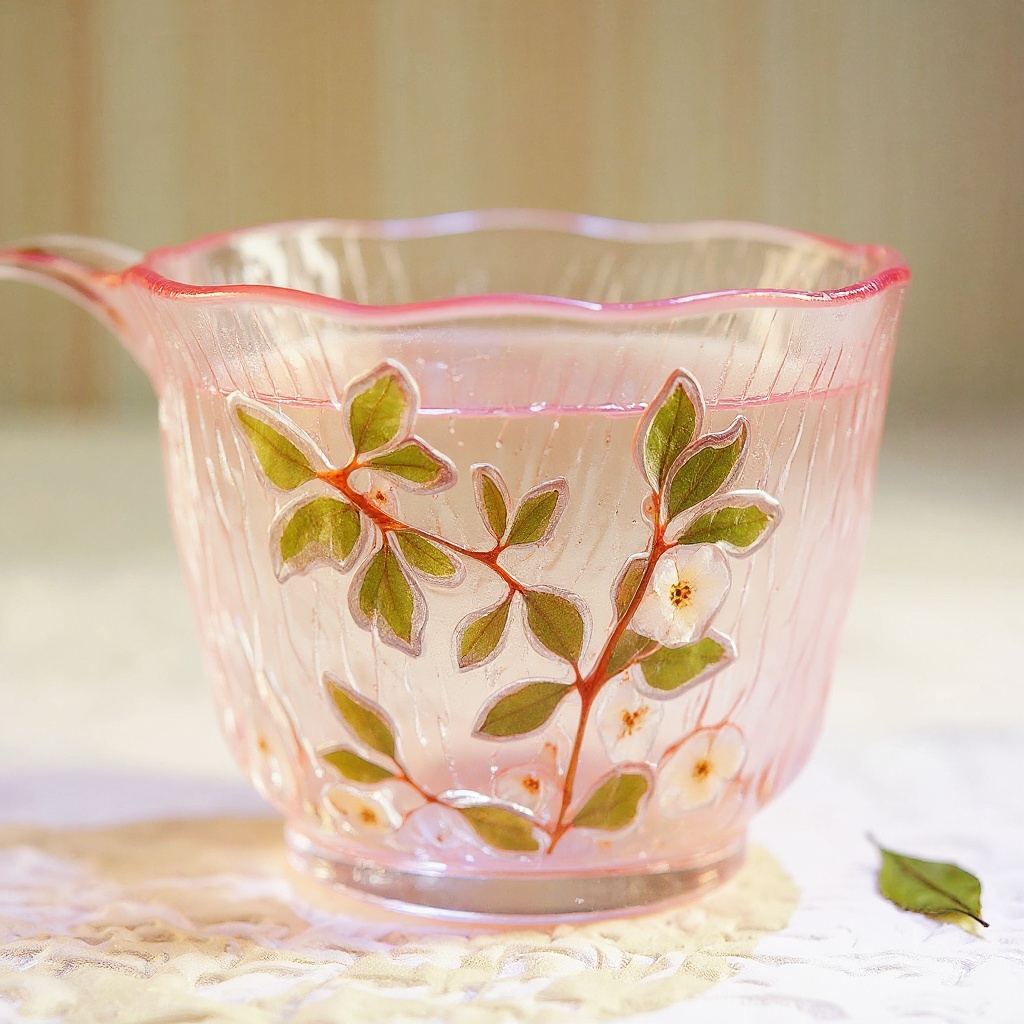
A true luxury glass tea cup with flower design has raised texture on the exterior — actual topography where petals sit proud of the glass surface, where leaf veins cast tiny shadows in natural light. A mass-produced alternative feels smooth because the flowers are printed on, not embedded in. No texture. No shadow. No life.
Beyond touch, four material factors separate genuine artisan pieces from factory imitations. First, the glass itself: borosilicate glass contains 5–25% boric oxide, giving it a coefficient of thermal expansion roughly one-third that of standard soda-lime glass, which means it withstands temperature differentials up to 165°C (329°F) without stress fracturing — a specification confirmed by Corning Materials Science documentation and the same standard used in laboratory glassware globally. Standard glass cracks. Borosilicate does not. Second, real preserved botanicals embedded during glass formation, not applied afterward. Third, proper annealing — a controlled cooling process that relieves internal stress in the finished piece. Fourth, the soft pink pearl sheen that authentic plum blossom cups carry: an iridescent surface quality created through mineral treatments during fabrication, not spray paint.
Handcrafted production takes 3–5 working days per piece, based on process documentation from artisan studios in Yiwu and Jingdezhen. This includes 2–4 weeks of prior flower preparation — selecting, pressing, and dehydrating botanicals before a single glass element is shaped.
| Feature | Luxury Handmade | Mid-Range Artisan | Mass-Produced |
|---|---|---|---|
| Flower Type | Real preserved botanicals | Real or high-grade resin | Printed/painted design |
| Glass Material | Borosilicate (heat-resistant) | Borosilicate or mixed | Standard soda-lime |
| Surface Texture | Raised, tactile, 3D | Slight raised or flat | Smooth, uniform |
| Production Time | 3–5 days per piece | 1–2 days per piece | Minutes per unit |
| Color Sheen | Pink pearl mineral finish | Basic clear or tinted | None or spray |
| Price Range | $100–$800 | $45–$120 | $15–$40 |
| Lifespan (with care) | 10–20 years | 5–10 years | 1–3 years |
Real vs. Synthetic: Flower Preservation Techniques Explained
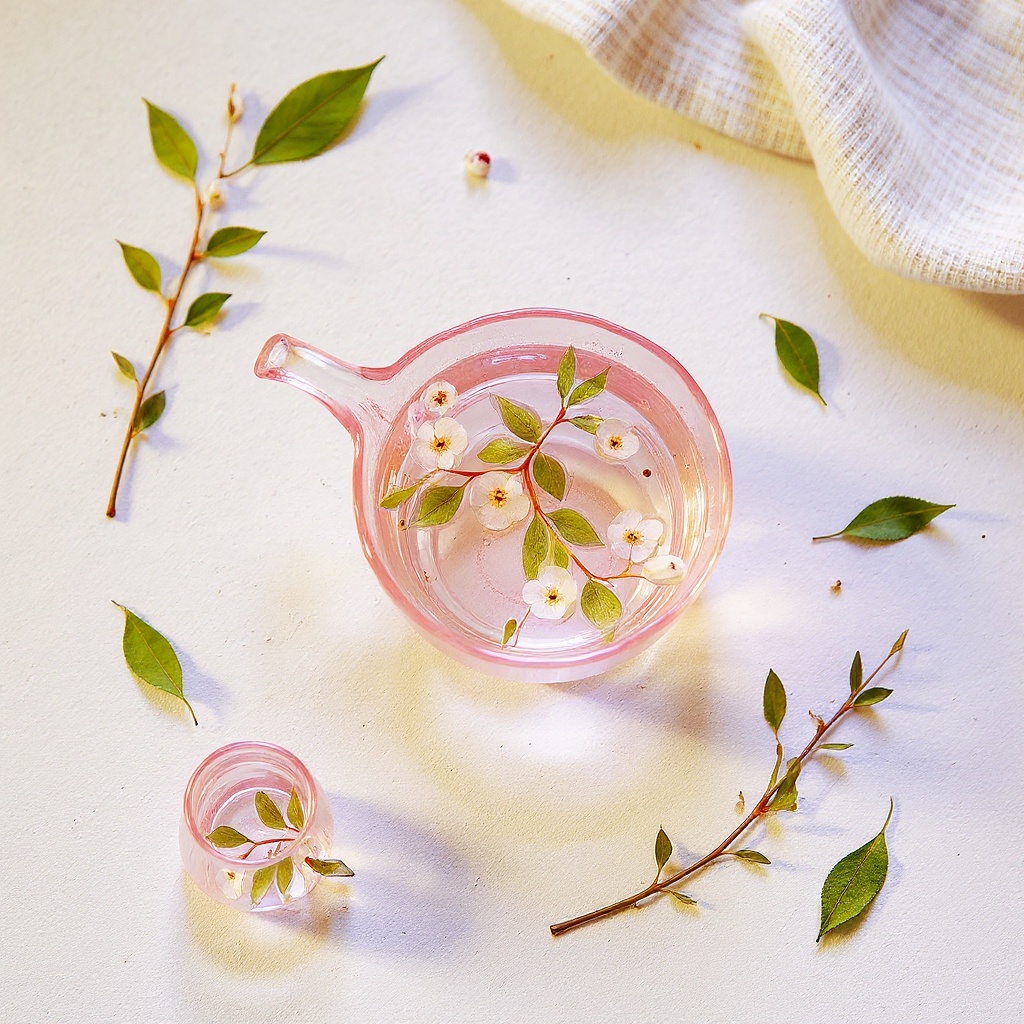
Pressed flower craft has preserved botanical specimens for over 400 years — from Victorian herbarium collections to contemporary glass art. Modern glass artists adapted these methods for functional teaware, but the underlying chemistry of plant dehydration remains the same.Real flowers — particularly plum blossoms, which bloom briefly in late winter and carry significant cultural symbolism in East Asian art traditions — are harvested at peak color, pressed between acid-free absorbent sheets, and dehydrated gradually over 2–4 weeks. This slow moisture removal preserves cell structure and pigment stability better than rapid desiccation. Research published in botanical conservation literature indicates that properly prepared and sealed pressed flowers retain 70–90% of original color intensity for 5–10 years under low-UV, ambient-temperature storage conditions — a figure that drops to 3–5 years under direct window light.
Synthetic alternatives fall into three categories. Resin-suspended flowers sit inside cast polymer — not glass — which yellows over time and is not heat-resistant. Fabric petals are painted or dyed and carry no botanical authenticity. Printed designs are the most common: a digital image fired onto the glass surface, flat and identical across every unit in the production run.
Glass-embedded real flowers become part of the outer surface during formation. They cannot be rubbed off. They age like the glass itself.
Heat Resistance and Daily Use: The Honest Assessment
Borosilicate glass is safe for daily hot beverage use. Full stop. The 165°C thermal differential tolerance means you can pour boiling water directly into a cold cup — the glass will not crack. This is why borosilicate is the material standard for laboratory flasks, high-end coffee equipment, and premium teaware globally.
But here is what most articles will not tell you: if you live in a household where cups go straight from the freezer to boiling tea and back again repeatedly, or if children regularly handle your teaware, a luxury floral glass cup is genuinely a poor choice. The embedded botanicals, the raised surface texture, and the mineral sheen treatment all require careful handling. These are not indestructible daily-driver mugs. They are high-care objects. Beautiful, durable when treated correctly, but demanding of attention.
For the majority of tea drinkers — a morning ritual, an afternoon pause, a deliberate slow moment — they perform without limitation. The 400ml capacity suits standard tea servings. Bases thickened to 4–6mm provide stability and thermal mass. The raised exterior texture, paradoxically, improves grip compared to smooth glass.
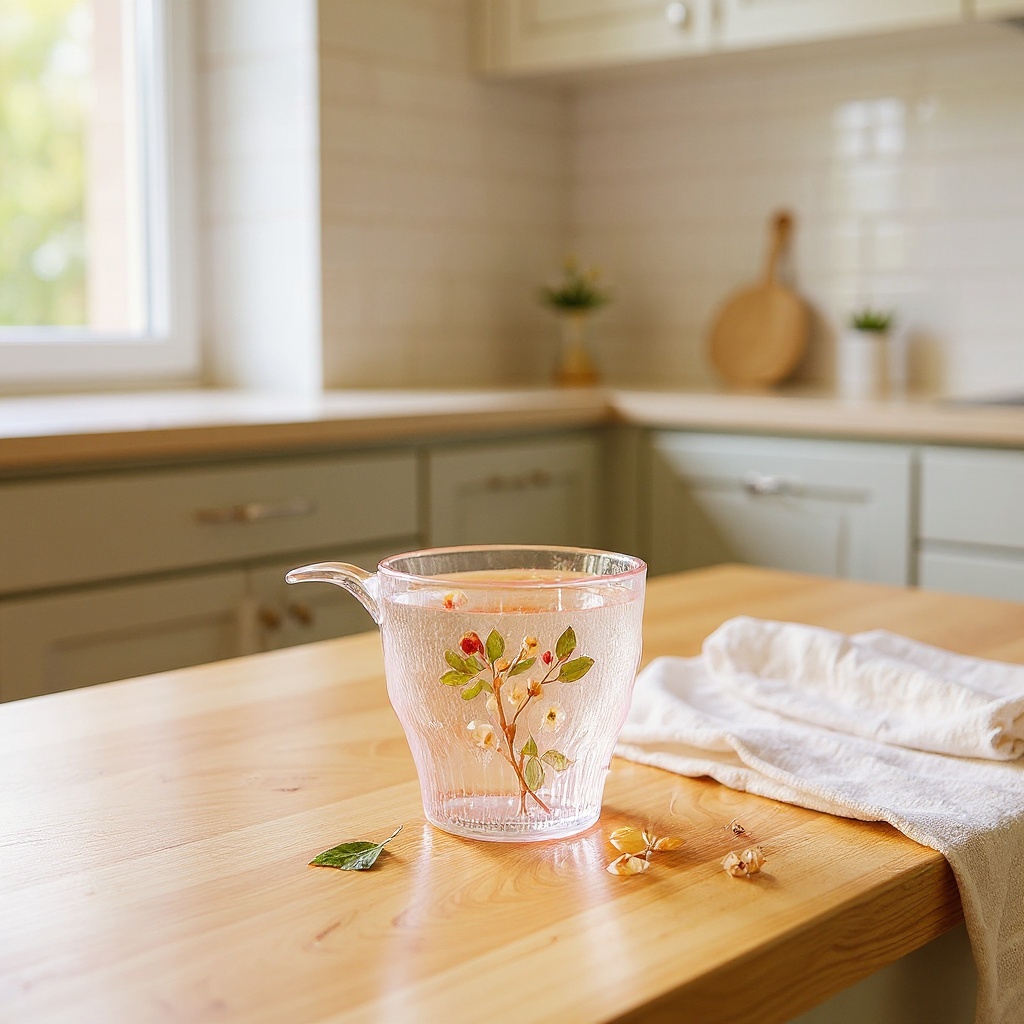
Our Handmade Pink Pearl Plum Blossom Glass Tea Cup is built to exactly these specifications — 400ml borosilicate construction with real preserved botanicals on the exterior surface.
How to Identify an Authentic Luxury Glass Tea Cup with Flower Design
Fakes are sophisticated now. Factory methods have improved. You need specific tests.
The Studio Glass movement, documented extensively by the Corning Museum of Glass, established clear distinctions between handmade and machine-produced glass objects that apply directly here. Handmade glass shows natural variation: slight wall thickness differences detectable by running a finger along the rim, organic asymmetry in the base, small tool marks or gather points on the bottom. Machine glass is uniform to the millimeter.
Authentication Checklist for a Luxury Glass Tea Cup with Flower Design:1. Texture test — Run your finger across the flower surface. Real embedded botanicals create actual topographic variation. Printed flowers feel smooth regardless of visual complexity. 2. Thickness variation — Hold the cup at eye level against light. Handblown or hand-formed pieces show subtle wall thickness changes. Factory cups are optically uniform. 3. Botanical inspection — Real flowers show organic color gradation, natural vein patterns, and slight irregularity in petal edges. Synthetic versions are too perfect. 4. Sheen quality — The pink pearl finish on authentic pieces has depth — it shifts slightly with viewing angle, catching light differently at 45° versus straight on. Spray finishes are flat. 5. Base examination — Look for a small pontil mark, slight base irregularity, or maker's stamp. Factory bases are machine-finished to perfect flatness. 6. Provenance documentation — Genuine artisan pieces include maker identification, process notes, or certificates. Claimed handmade items shipping same-day from anonymous warehouses are not handmade. 7. Price calibration — Authentic handmade flower glass cups under $75 are nearly impossible given material and labor costs. If the price seems impossible, the craftsmanship probably is too.
Artisan studio director Mei Ling Zhang, whose Hangzhou workshop has produced commissioned floral glass pieces for collectors in 14 countries, notes: "You can always feel the difference. The flower is not on the cup. The flower is part of the cup. That distinction is everything."
Care and Longevity: A Step-by-Step Routine
Correct care extends a luxury glass tea cup with flower design lifespan to 15–20 years. Incorrect care shortens it to months.
Daily Care Routine:1. Rinse immediately after use — Do not let tea tannins dry on the interior. Lukewarm water, not hot, for the first rinse of a recently-used cup. 2. Hand-wash with mild soap — Soft cloth or sponge only. No abrasive pads. The raised exterior texture can trap bristles and scratch if scrubbed. 3. Rinse the texture carefully — Work soap residue out of raised floral details with a soft brush or gentle water pressure. Residue left in crevices clouds over time. 4. Air-dry completely — Moisture trapped in botanical details causes cloudiness and, in humid climates, contributes to surface hazing over years. 5. Store away from direct light — UV exposure degrades preserved flower pigments. A cabinet or display case away from south-facing windows is ideal. 6. Cushion in storage — Wrap in soft cloth if stacking or storing. Chips on the rim compromise the entire piece structurally.
Dishwashers destroy these cups. Not eventually. Immediately and repeatedly. The heat cycles stress botanical embeddings, the detergent chemistry attacks the mineral sheen, and the mechanical vibration chips raised textures. This is non-negotiable.
Investment Value and Gifting: What the Market Actually Reflects
Artisan glass appreciates. Not always, not automatically, but pieces from identifiable makers with documented production histories and limited runs have sold at Sotheby's decorative arts auctions for 3–8x retail over 10–15 year holding periods. This mirrors the trajectory of studio pottery — once dismissed as craft, now collected as art.
For gifting, a luxury glass tea cup with flower design occupies a specific emotional register. It signals attentiveness. It says the giver considered the recipient's daily rituals, not just their occasion. Milestone moments — Mother's Day, significant birthdays, housewarmings for people who actually care about their home — are natural fits.
Budget reality, honestly assessed:
- $15–$40: Mass-produced, printed, soda-lime glass. Functional. No botanical authenticity. Will show wear within a year of daily use. - $45–$120: Mid-range Etsy or independent maker pieces. Variable quality. Some real flowers, some resin. Worth investigating individually. - $100–$500: Authentic artisan work with verifiable production. Our 400ml eco-friendly real flower encased art mug sits in this range — justified by borosilicate construction, real preserved botanicals, pearl sheen treatment, and documented craftsmanship. - $500–$1,200: Gallery-represented or collector-edition pieces from internationally recognized glass artists.
Some purchases are worth it. Some are not. Know which you are making.
Frequently Asked Questions
Do real flowers in a luxury glass tea cup with flower design actually stay preserved, or will they fade?
Real flowers preserved correctly maintain 70–90% of original color for 5–10 years under ambient conditions, based on botanical conservation research on pressed and sealed specimens. Direct sunlight accelerates pigment degradation to 2–3 years of significant fading. The gradual shift that does occur — toward softer, more muted tones — is considered by many collectors to add character rather than diminish value. Plum blossoms hold their pink tones better than many alternatives due to their relatively stable anthocyanin pigment structure.
Can I put this cup in the dishwasher?
No. Dishwasher heat cycles, detergent chemistry, and mechanical vibration all damage floral glass cups — the mineral sheen, the embedded botanicals, and the glass itself. Hand-washing with mild soap and a soft cloth is the only recommended cleaning method. This is not a preference. It is a structural requirement for the cup's longevity.
How do I tell if a flower glass cup is genuinely handmade or factory-produced?
Feel the flower surface for actual raised texture. Check wall thickness variation by holding the cup to light — handmade glass is subtly non-uniform. Examine the base for tool marks or slight irregularity. Real botanicals show natural color gradation and organic edge variation that printed designs cannot replicate. And verify provenance: authentic makers provide documentation, not anonymous shipping from warehouse addresses.
Is borosilicate glass actually safe for hot tea every day?
Yes. Borosilicate glass tolerates temperature differentials up to 165°C (329°F) — the same specification used in laboratory glassware and high-end culinary equipment. Corning's materials documentation confirms this thermal resistance threshold. You can pour boiling water directly into the cup without risk of thermal shock cracking, provided the glass was properly annealed during production.
What is the difference between resin flower cups and glass-embedded flower cups?
Resin cups suspend flowers inside cast polymer material. Resin yellows over time, is not heat-resistant, and cannot safely hold hot beverages. Glass-embedded flowers become part of the glass surface itself during formation — they are structurally integrated, not coated on top. Glass versions withstand heat, maintain clarity over years, and feel substantially different in hand: denser, cooler, more permanent.
Why are authentic handmade glass tea cups so much more expensive than Amazon versions?
The cost reflects labor time (3–5 days per piece), material quality (borosilicate versus soda-lime), weeks of botanical preparation before glass work begins, individual annealing, and the irreducible fact that no two handmade pieces are identical. Amazon pricing reflects assembly-line efficiency, printed designs, and materials chosen for cost minimization rather than performance or longevity. You are not buying the same product at different price points. You are buying different products.
What flowers work best for glass embedding, and why plum blossoms specifically?
Small, flat flowers with stable pigment structures press and embed most successfully — plum blossoms, cherry blossoms, baby's breath, and certain wildflowers. Larger flowers require sectioning. Plum blossoms are culturally significant in East Asian artistic traditions, symbolizing resilience and renewal, and their delicate five-petal structure translates particularly well to the scale of a tea cup surface. Their pigments also respond well to slow dehydration, preserving pink tones that bolder flowers sometimes lose.
How should I store a floral glass tea cup when not in use?
Store in a cool, dry location away from direct sunlight. Wrap in soft cloth or use padded individual storage if cups are nested. Avoid areas with temperature fluctuation — near heating vents, in non-insulated cabinets, or by frequently opened windows. If displaying, rotate the cup periodically to prevent uneven UV exposure concentrating on one face of the embedded flowers.
Are these cups suitable for cold drinks as well as hot tea?
Yes. Borosilicate glass handles cold beverages without issue. The aesthetic works beautifully for cold-brew tea, iced floral infusions, or simply water. The only concern is rapid temperature cycling — moving a cup directly from a freezer to boiling liquid repeatedly over years creates cumulative stress. Normal refrigerator-to-room-temperature transitions present no risk.
Is a $300 artisan glass cup actually worth it, or is this a lifestyle marketing category?
Honest answer: it depends entirely on how you use objects. If a cup is purely functional to you — a vessel for liquid — then no, a $300 handmade piece is not worth it. If daily rituals matter to you, if you find sustained pleasure in objects made with skill and care, if you keep things for decades rather than replacing them annually — then the per-use cost of a $300 cup used daily for 15 years is less than two cents per use. The value calculation is personal, not universal.
Conclusion
A luxury glass tea cup with flower design — the real kind, with genuine plum blossom petals embedded in borosilicate glass, a pink pearl sheen, and raised three-dimensional botanical texture — is a specific, exceptional object. It requires care. It rewards attention. It ages with you rather than wearing out.
The market is full of imitations that use the same language without the same craft. This guide exists to help you tell the difference.
If you are ready to experience authentic botanical glasswork, browse our Handmade Pink Pearl Plum Blossom Glass Tea Cup collection. Real flowers. Real glass. Made to last.


