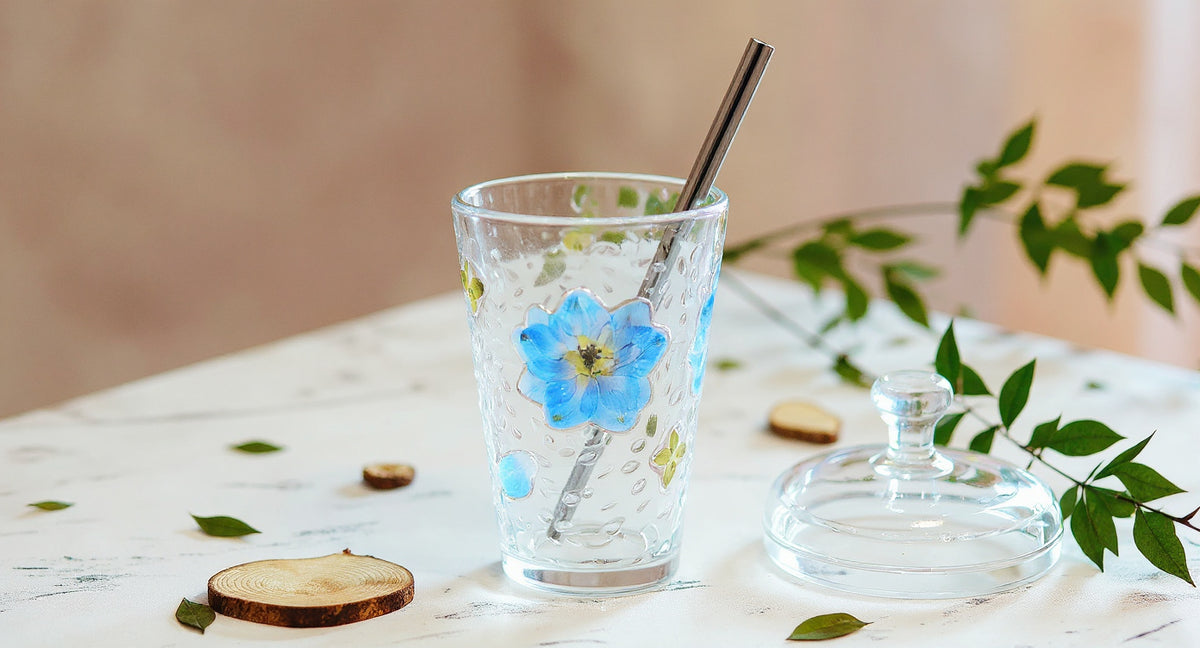
A flower glass cup in pink, blue, or yellow can be made with real preserved botanicals, printed decoration, decals, or artificial flowers. The difference matters because a real-flower cup has texture, needs gentler care, and costs more to make than a flat printed version.
A pink blue yellow flower glass cup is usually chosen for the flower color first, but construction should come first. Real petals and leaves should be visibly embedded or sealed on the outside of the glass, with a raised surface that can be felt through careful handling. If every flower looks identical, perfectly flat, and repeated around the cup, it is probably printed art rather than botanical material.
Real pressed flowers versus printed floral decoration
Pressed-flower work is a decorative craft with a long history of arranging flattened botanical material for display and objects, as explained in this reference on pressed flower craft. On a drinking cup, the practical question is where the flowers sit and how they are protected.
A properly preserved floral surface has variation. Petals differ slightly in shape, veins show in leaves, and the arrangement does not have the mechanically repeated look of a printed wrap. The flowers may be pressed flat before being set into a clear protective layer, yet the finished outer surface can still have tactile relief.
Printed flowers are not automatically poor quality. They can be durable, affordable, and easier to replace. They are the sensible choice for a daily tumbler that may be dropped, packed into a work bag, or run through frequent dishwasher cycles. What they do not offer is the material character of real plant matter.
Use these checks before buying:
1. Look for language such as “real preserved petals,” “pressed flowers,” or “hand-embedded botanicals,” not vague wording such as “floral design.” 2. Check where the decoration is placed. Flowers should be on the outer surface, leaving the beverage-contact area inside the cup clear. 3. Ask whether the arrangement is sealed. Unsealed dried flowers are decorative, not practical for a cup that will be washed. 4. Inspect close photographs for leaf veins, irregular petal edges, and slight differences between blooms. 5. Avoid listings that call plastic appliqués or silk flowers “pressed flowers.” Those materials behave differently and do not have the same natural variation. 6. Read care instructions closely. A seller that specifies hand washing, soft cloths, and no soaking is usually acknowledging a textured decorative surface rather than pretending it is an ordinary plain glass.
Real flower preservation is not the same as leaving a fresh flower to dry. Preservation methods are intended to maintain the plant material after its natural moisture is removed, though no botanical material is permanently unchanged. The broad process is covered in this background on flower preservation.
Choosing pink, blue, or yellow without overlooking build quality
Color is personal. Construction is not. Pink florals tend to suit gift occasions where a softer, romantic botanical treatment is wanted; yellow reads brighter and works well with citrus drinks or herbal tea; blue is the less common choice for someone who wants a cooler floral palette. None of those choices changes whether the cup is useful.
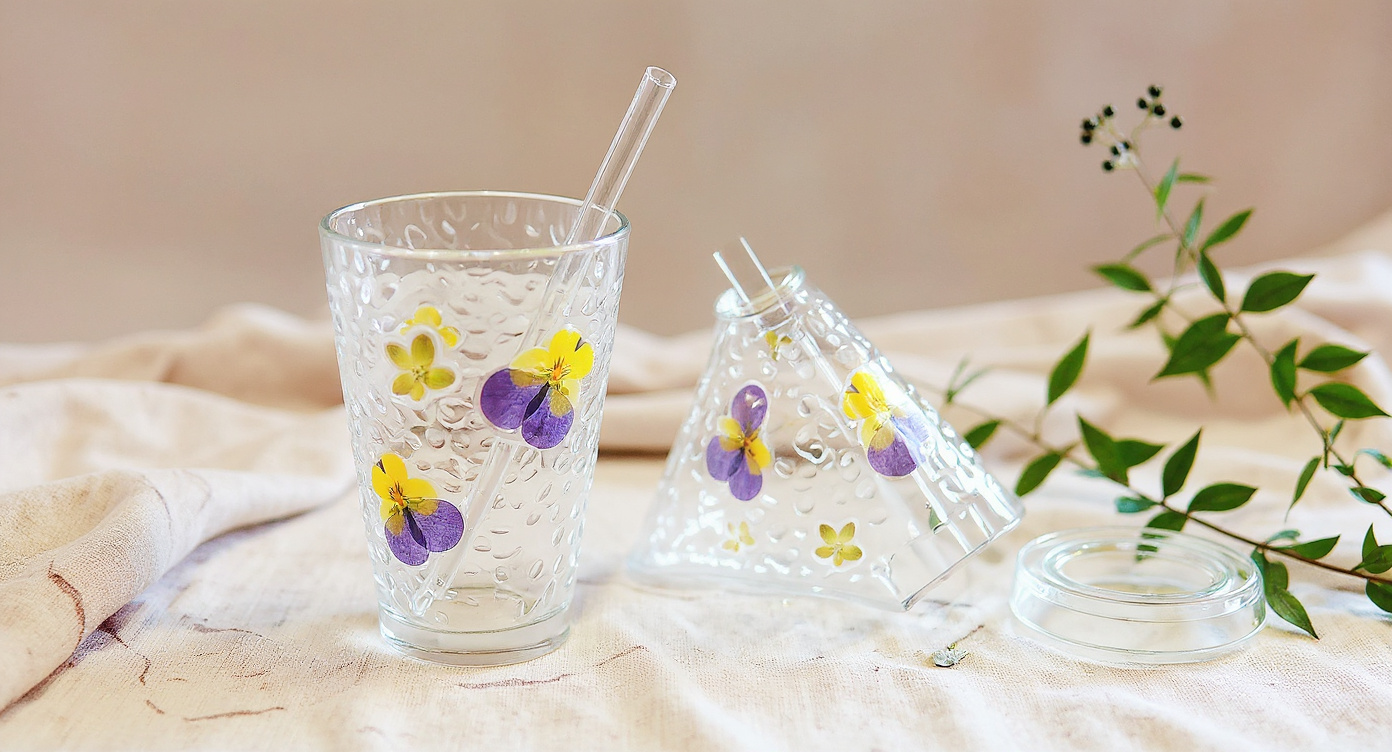
For a gift, the better question is whether the object feels complete. A cup sold alone can be enough, but a matching saucer, lid, and reusable straw make the set more usable for iced drinks, desk drinks, and covered overnight infusions. They also remove the need to source mismatched accessories later.
The Handmade Floral Glass Cup Real Pressed Flowers | 400ml Heat-Resistant | Elegant Gift for Her is built around that fuller format: an approximately 400ml heat-resistant glass cup, matching glass saucer, frosted dust-proof lid, and transparent reusable glass straw. Its preserved petals and leaves are hand-embedded on the outer surface over a three-day crafting process, creating raised floral relief rather than flat printed decoration.
That construction explains why this sort of cup should not be judged against the cheapest floral tumbler. The flower arrangement takes time, the botanical material is real, and a complete accessory set is included. A low-cost printed cup may still be the better purchase for high-abuse daily use. It is not the equivalent product.
| Cup type | Floral treatment | Surface feel | Accessories | Price information supplied |
|---|---|---|---|---|
| Handmade Floral Glass Cup | Real preserved petals and leaves, hand-embedded on the outer surface | Raised, tactile relief | Saucer, dust-proof lid, reusable glass straw | Check current product listing |
| Mass-produced floral glass cup | Printed flower artwork | Flat | Varies by seller | $15–$40 on Amazon |
| Mid-range artisan floral cup | Simpler artisan floral designs | Varies by maker | Varies by configuration | $60–$120 on Etsy |
The pink blue yellow flower glass cup category has a wide price spread because “floral” describes the look, not the construction. A printed motif, a vinyl decal, a hand-painted surface, and real preserved petals are different products with different care needs.
A 400ml cup is practical for iced drinks, not oversized
A 400ml capacity is about 13.5 US fluid ounces. That is a useful middle ground for iced coffee, tea, fruit-infused water, and a drink with some ice, without becoming a large travel tumbler.
For iced coffee, 400ml generally allows room for espresso, milk, syrup if used, and ice. It is more accommodating than a small 250ml to 300ml cup, especially when ice takes up a meaningful share of the volume. It will not suit someone who routinely makes 600ml cold drinks or wants enough space for a large blended beverage.
The lid changes the use case. A dust-proof lid is useful for drinks left on a bedside table, vanity, shelf, or home workspace. It should not be treated as a leak-proof commuting lid unless the product specifically says so. A glass straw is reusable and appropriate for cold drinks, but it needs a straw brush or careful rinsing after milk-based coffee and thick fruit drinks.
Heat-resistant glass is useful, with one important limit: “heat-resistant” does not provide a published maximum temperature unless the maker states one. It also does not mean the cup should go directly from a refrigerator to boiling water, or from hot water to a cold rinse. Thermal shock is the risk when glass experiences a rapid temperature change.
Some heat-resistant drinkware is made from borosilicate glass, a material known for relatively low thermal expansion, but heat-resistant glass is not automatically borosilicate unless that material is expressly identified. The material distinction is outlined in this reference on borosilicate glass. For this cup, the defensible guidance is straightforward: use it for hot drinks within normal serving conditions, warm the glass gradually, and avoid abrupt temperature swings.
Care that protects the floral relief
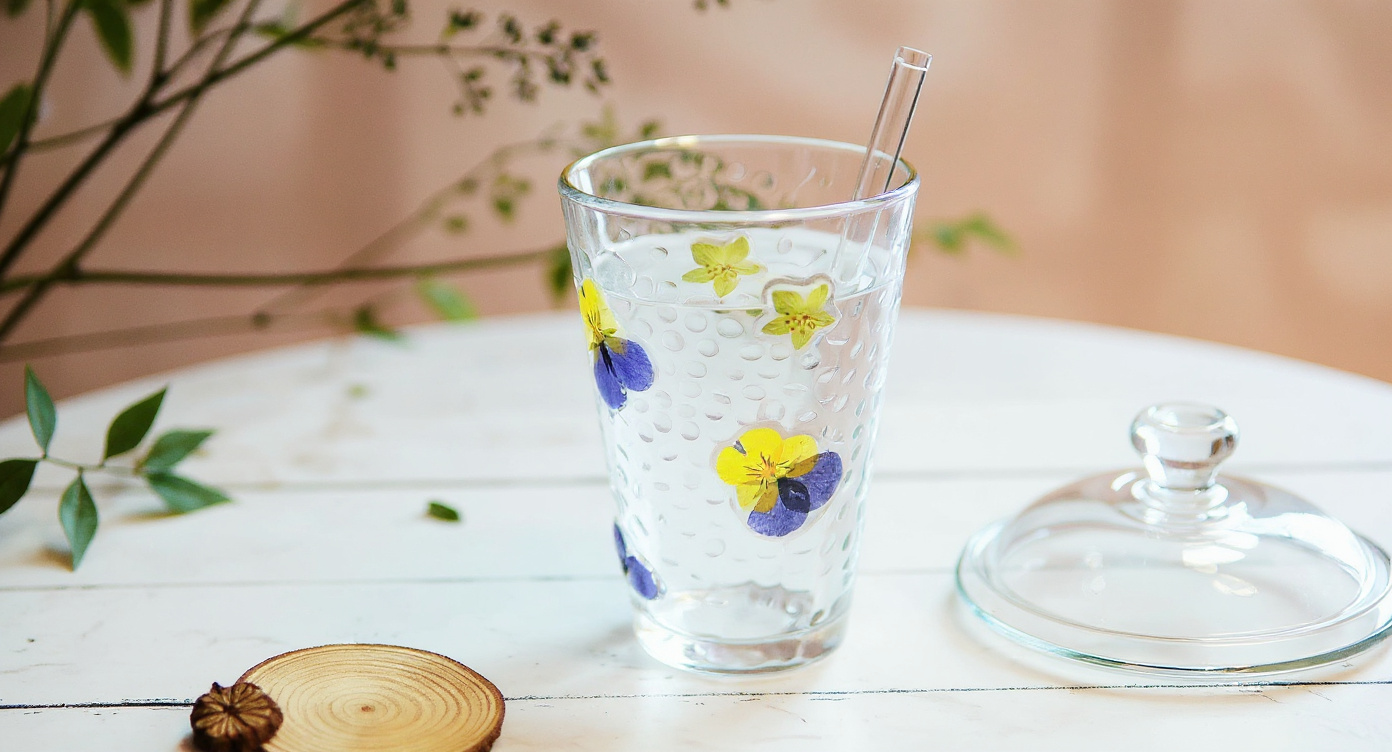
The floral decoration is the reason to hand wash. A plain drinking glass can often tolerate rougher treatment. A cup with real preserved petals under a sealed outer layer should be handled as decorative drinkware.
Use this routine:
1. Empty the cup promptly after milk, juice, tea, or coffee rather than leaving residue to dry overnight. 2. Wash the inside with lukewarm water, mild dish soap, and a soft sponge or cloth. 3. Keep abrasive pads away from the exterior floral relief. They can scratch the sealed surface or catch on raised edges. 4. Rinse the glass straw immediately after use, then clean its interior with a slim straw brush. 5. Dry the cup upright or pat it dry with a soft towel. Do not scrub the flowered surface. 6. Avoid prolonged soaking, especially if water can sit around the edge of the decorative layer. 7. Store it where it will not knock against stacked mugs, metal utensils, or hard cabinet hardware.
Do not use bleach, harsh degreasers, scouring powder, or very hot water followed by a cold rinse. None of those methods is needed for ordinary beverage residue, and they add stress to both glass and decorative sealant.
A dishwasher is a poor default for this format even if the glass body itself seems sturdy. Dishwasher heat, detergent concentration, water pressure, and contact with other items create conditions that are hard on textured exterior decoration. Hand washing takes longer. It is also the sensible trade-off for a cup whose value sits in a real botanical surface.
What preservation can and cannot promise
Preserved flowers are more stable than fresh flowers, but they are not immune to time. Direct sunlight, strong kitchen light, heat, moisture, and aggressive cleaning can gradually affect botanical color. Pink and yellow petals may show change differently from blue flowers because natural pigments vary, but no color should be promised as permanently fade-proof.
Sealing the flowers helps protect them from moisture, handling, and loose fragments. It does not turn them into glass. A raised relief can be durable under normal home use while still needing care around the edges and high-contact points.
There is also a practical distinction between a decorative object and a usable cup. Real flowers should remain outside the drinking area and under a protective seal. Loose petals, exposed plant material inside the cup, or cracking around the floral layer are reasons to stop using the vessel for drinks until its condition is assessed.
For display use, avoid a permanently sunny window ledge. For beverage use, do not leave the cup beside a heat source or soak it in a sink. Those habits matter more than choosing one floral color over another.
FAQ: real flowers, hot drinks, and cleaning
Are the flowers in flower glass cups real?
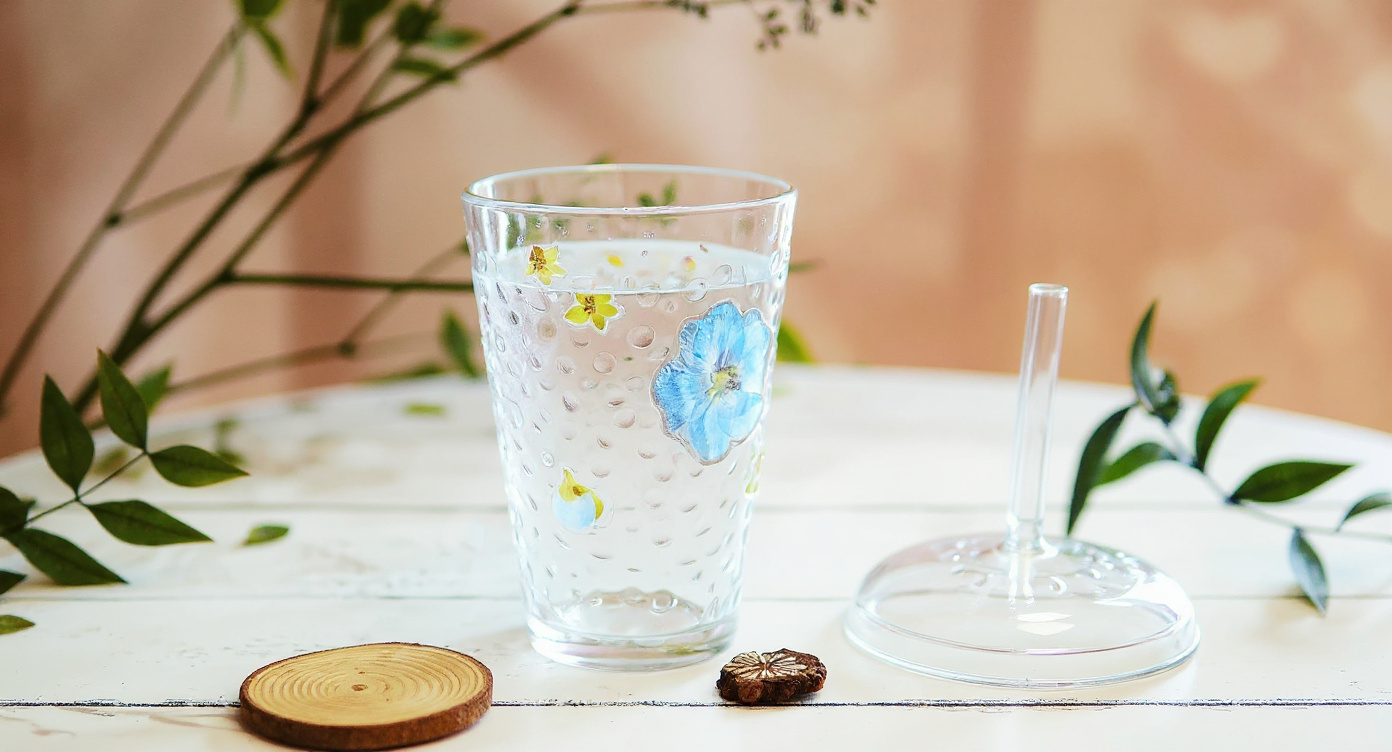
Some are, and some are printed, painted, or made from artificial materials. A real-flower cup should identify preserved petals and leaves as actual botanical material and show irregular, natural-looking details. The Handmade Floral Glass Cup uses real preserved flowers hand-embedded on the outside of the glass.
Can you drink from a glass cup with pressed flowers on it?
Yes, provided the flowers are on the exterior and sealed beneath a protective layer, leaving the inside drinking surface clear. The floral decoration should not be loose or exposed where it can contact the drink.
Are floral glass cups dishwasher safe?
A plain glass body may tolerate a dishwasher, but a cup with raised preserved floral decoration is best hand washed unless the maker explicitly states it is dishwasher safe. Heat, detergents, and collisions with other dishes are avoidable risks.
Can heat-resistant glass be used for hot drinks?
Yes, heat-resistant glass is intended to handle warm and hot beverages under normal use. Avoid thermal shock: do not pour boiling liquid into a very cold cup, and do not move a hot cup directly into cold water. If no temperature limit is published, do not assume oven, microwave, freezer, or stovetop suitability.
How do you clean a glass cup with preserved flowers?
Wash it gently by hand with mild soap, lukewarm water, and a soft sponge. Clean the inside as normal, but avoid abrasive tools on the exterior decoration. Rinse the straw after each drink and use a narrow brush for its interior.
Do preserved flowers fade over time?
They can. Light exposure, heat, moisture, and harsh cleaning products can gradually alter natural botanical color. Keeping the cup out of direct sunlight and hand washing it gives the preserved flowers the best chance of staying clear and colorful.
What size glass cup is best for iced coffee?
For a home iced coffee with ice, espresso, milk, and room to stir, about 350ml to 450ml is a useful range. A 400ml cup sits squarely in that range and is large enough for a standard iced drink without becoming bulky.
Is a floral cup with real petals a good gift?
It can be, especially for someone who values handmade objects, botanical decor, tea rituals, or iced coffee at home. The gift is less suitable for someone who wants dishwasher convenience, a leak-proof commuter tumbler, or equipment that can be treated roughly.
The better choice depends on how the cup will be used
The main concern with a floral glass cup is reasonable: real flowers sound delicate, and decorative drinkware can be impractical if the construction is vague. The useful answer is to choose a cup with sealed botanicals on the outside, enough capacity for the intended drink, and care instructions that match a textured handmade surface.
For someone looking for a meaningful gift or a 400ml home drink cup with genuine botanical detail rather than a flat flower print, see the Handmade Floral Glass Cup Real Pressed Flowers | 400ml Heat-Resistant | Elegant Gift for Her. It is a natural fit for careful daily use, iced coffee, floral tea, and gifting, but not for dishwasher-heavy routines or rough travel use.