
Preserved Flower Glassware: A Complete Buyer's Guide
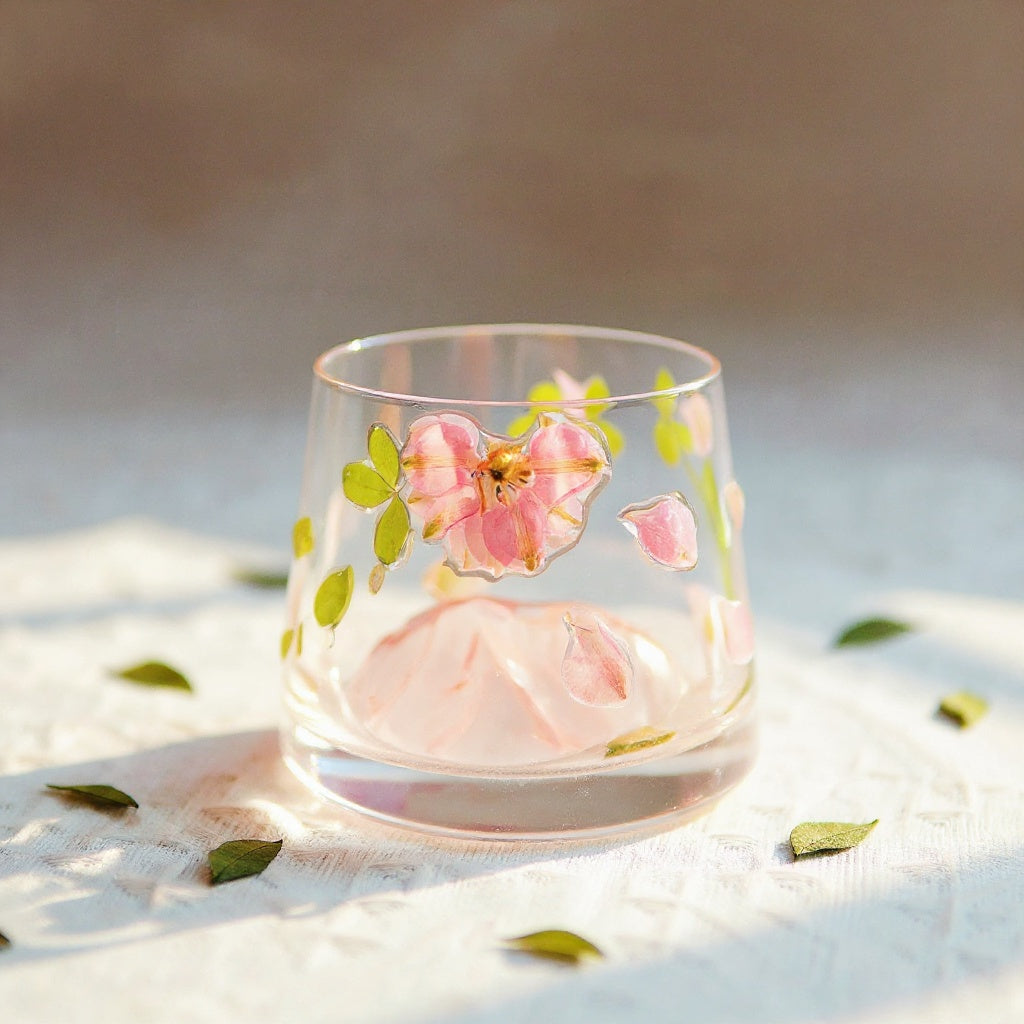
By Patrick Gao, founder of Solace & Straw · 8+ years working directly with Southeast Asian rattan artisans · Featured in Cottagecore Weekly and The Artisan Home The best preserved flower glassware to buy features real botanicals with visible raised petal texture, natural color variation across blush, cream, and green tones, and a clear glass base — not printed patterns or resin fakes. This guide covers exactly how to identify, evaluate, and care for genuine cylindrical glass tumblers with real preserved flower petals and leaves embedded on the outer surface.These are functional drinkware pieces. Beautiful ones. Real flower petals and leaves adhere to the outer glass surface, creating raised tactile relief you can feel with your fingertips. The clear glass base remains visible, letting light pass through the botanical elements. Pieces typically range from $45–150 depending on craftsmanship complexity, and they deserve more scrutiny than most buyers give them.
What Makes Preserved Flower Glassware Authentic
Real versus fake. That's the first question every buyer should ask.
Genuine preserved flower tumblers use botanicals dehydrated through silica gel or glycerin treatments — a process documented by the Royal Horticultural Society's pressed plant preservation guidelines — which maintain natural petal structure and organic color variation. Printing cannot replicate the translucent petal edges where cell walls compress during drying. Molding cannot replicate the subtle vein patterns visible in preserved leaves.
When you run a finger across an authentic piece, you feel it. The raised relief of actual petals sitting proud of the glass surface. That tactile difference is the fastest authenticity test available to buyers.
Authentic pieces take 2–4 weeks of preparation per botanical batch before a single tumbler is assembled. Each petal is positioned individually by hand. This labor investment explains why genuine pieces cost $60 or more, while printed alternatives sell for $15–25. The construction method used — surface embedding onto cylindrical glass — creates the raised texture that defines this product category.
Our real flower whiskey glass pieces demonstrate this quality difference across multiple botanical arrangements.
How the Surface Embedding Process Works
Preserved petals and leaves are applied directly to the outer glass surface of the cylindrical tumbler using specialized botanical-grade resins. Each element is placed individually, dried, then sealed under a clear protective topcoat that preserves the raised relief texture while protecting against moisture. Curing requires 48–72 hours per piece.
The clear glass base remains untouched during this process — intentionally. Light transmission through the base creates depth contrast with the botanical surface decoration, making the flower tones appear more vivid against the transparent glass beneath.
Why Lamination and Resin Casting Are Different Products
Glass lamination sandwiches pressed flowers between two glass sheets. Durable. But you lose the tactile relief entirely — flowers sit behind smooth glass, not on top of it. Resin casting embeds botanicals into hardened resin poured around a glass core. This mutes flower colors and creates a plastic-like appearance that experienced buyers identify quickly.
Surface embedding onto cylindrical glass is the method that produces genuine raised tactile relief. It's also the most labor-intensive approach, which is why it commands higher prices.

Construction Methods Compared
| Construction Method | Tactile Texture | Color Fidelity | Durability (Years) | Price Range | Best Use Case |
|---|---|---|---|---|---|
| Surface Embedding (Cylindrical Glass) | Raised petal relief | High — natural gradation visible | 7–12 | $45–100 | Daily use tumblers, gifting |
| Glass Lamination | Smooth — no texture | High — fully sealed | 10–15 | $80–150 | Display pieces |
| Resin Casting | Embedded smooth | Moderate — colors muted | 15–20 | $35–85 | Outdoor, high-use settings |
| Printed Pattern Glass | Flat — no texture | Printed only — no natural variation | 3–5 | $12–25 | Mass retail, non-botanical |
| Dried Flower Resin Tumblers | Semi-textured | Variable — resin yellowing risk | 5–8 | $25–55 | Budget botanical aesthetic |
How to Identify Quality Preserved Flower Pieces
Start with the flowers. Not the glass.
Quality indicators in the botanical elements include natural color gradation across individual petals rather than uniform tinting, visible translucent edges where petal cell walls compressed during drying, and organic vein patterns in preserved leaves. Poor-quality pieces use artificially dyed flowers showing unnaturally bright, uniform color — a sign that inferior botanicals were used to compensate for weak preservation technique.
The blush, cream, and green tonal palette found in quality pieces reflects botanicals that were preserved at peak natural color, not chemically enhanced after the fact.
Glass quality matters too. Premium cylindrical tumblers use lead-free crystal or high-quality soda-lime glass with minimal bubbles or visual distortion. The clear base should be genuinely transparent — any cloudiness indicates low-grade glass that will dull the botanical colors over time.
Check the protective coating carefully. Quality resins stay optically clear for five or more years without yellowing. Run your fingernail lightly across the surface — it should feel smooth but not brittle or plastic-like. Soft, slightly flexible coatings indicate higher-grade botanical resins.
Handcrafted pieces often show slight thickness variations at the base. Machine-made items are uniform to a fault. That small irregularity is a quality signal, not a defect.
Our real pressed flower glass construction reflects these quality controls across every piece in the collection.
Quick Quality Checklist
Use this when evaluating any preserved flower tumbler before purchase:
1. Feel for raised petal relief on the outer glass surface — smooth means laminated or printed, not surface-embedded 2. Look for natural color gradation within individual petals, not uniform solid tones 3. Check leaf elements for visible vein patterns under light 4. Examine the clear glass base — it should be genuinely transparent, not hazy 5. Inspect the protective topcoat for clarity and flexibility, avoiding brittle or yellowed finishes 6. Look for slight base thickness variation indicating hand-finishing 7. Ask the seller to describe their botanical preservation and embedding process — vague answers are a red flag
Care and Maintenance: Step-by-Step
Honest statement most guides won't make: if you run a restaurant dishwasher or tend to forget hand-washing rules, these tumblers are not the right product for your kitchen. The care requirements are real, and ignoring them accelerates deterioration significantly.
For everyone else, the care routine is straightforward.
1. Hand wash only. Dishwasher temperatures of 140–180°F degrade both the botanical elements and the protective resin coating. No exceptions. 2. Use lukewarm water. Hot water causes thermal expansion that can loosen petal adhesion along the glass surface over repeated cycles. 3. Choose gentle dish soap. Avoid anything containing citrus oils, bleaching agents, or abrasive particles. Fragrance-free formulas work well. 4. Dry with soft microfiber cloth. Never use abrasive scrubbers or rough towels on the outer surface — they scratch the protective coating. 5. Store away from direct sunlight. UV exposure causes fading in both botanical pigments and protective resins. An enclosed display cabinet or indirect-light shelf works well. 6. Maintain consistent temperature. Avoid storage near heating vents, exterior walls in cold climates, or spaces with large daily temperature swings. Expansion and contraction cycles loosen botanical adhesion. 7. Clean spills promptly. Don't let acidic liquids sit on the outer surface — citrus juice and wine can penetrate micro-gaps in the topcoat if left long-term.
With this routine, quality surface-embedded pieces maintain strong visual integrity for seven to twelve years of regular use.
Price Ranges and Value Considerations
The market spans a wide range. Know what you're actually buying at each tier.
$12–25: Printed pattern glass. Not preserved flower glassware. Beautiful for some buyers, but categorically different product. $35–50: Entry-level authentic pieces using simpler botanical arrangements and standard soda-lime glass. Adequate for gifting but expect shorter longevity. $55–85: Mid-range artisan pieces. This is where craftsmanship quality becomes genuinely consistent. Our real flower whiskey glass pieces sit in this range — the sweet spot for buyers wanting authentic surface-embedded botanicals without premium pricing. $100–200+: High-end preserved flower glassware featuring complex multi-layer botanical arrangements, matched sets, rare flower varieties, or premium lead-free crystal bases.Value calculation: a $68 quality tumbler lasting eight to ten years costs roughly $7–8 annually. A $25 lower-quality item lasting two to three years costs comparable amounts per year — without the aesthetic quality or longevity. Factor in gifting value. These pieces are remembered.
Best Uses and Occasions
Preserved flower tumblers work for actual drinking — spirits, cocktails, coffee, cold tea, water. Any beverage that doesn't require microwave heating. They also function as decorative vessels, LED candle holders, or seasonal centerpiece elements.
Gift occasions where these pieces consistently land well:
1. Weddings and anniversaries — the botanical romance connection is genuine, not forced 2. Housewarming gifts — unique home décor that won't duplicate what the recipient already owns 3. Birthdays for gardeners, botanists, or nature-focused individuals 4. Mother's Day and Valentine's Day — floral appeal without the ephemerality of fresh cut flowers 5. Holiday hostess gifts — conversation-starting and memorable 6. Retirement celebrations — sophisticated keepsake category 7. Garden party or outdoor entertaining — botanical aesthetic that matches the setting naturally
The botanical glass gift wedding market particularly values these pieces because preserved flowers outlast the event itself. Unlike fresh floral arrangements, a quality tumbler with embedded botanicals becomes a lasting object from the occasion.
Frequently Asked Questions
How do you keep preserved flower petals on a glass tumbler vibrant over time?Vibrancy depends on three factors: the original preservation quality, UV protection during storage, and cleaning methods. Quality botanicals preserved through silica gel or glycerin treatments retain strong color when kept away from direct sunlight and cleaned only with gentle, non-citrus soaps. Store pieces in enclosed cabinets or areas receiving indirect light only. Avoid fluorescent lighting exposure for extended periods — UV spectrum from artificial sources also causes gradual fading. Properly cared-for surface-embedded pieces maintain clear color definition for seven to twelve years.
Are the flowers in preserved flower glassware real or just printed patterns?Authentic preserved flower glassware uses real botanical material — actual petals and leaves that have been dehydrated and embedded onto the glass surface. The definitive test is tactile: run your finger across the outer surface and feel for raised petal relief. Printed patterns are flat. Real embedded botanicals create texture you can feel. Additionally, real flowers show organic color variation within individual petals, translucent compressed edges, and visible leaf vein structures that printing cannot replicate. According to Wikipedia's overview of pressed flower craft, botanical pressing and preservation techniques have been practiced for centuries across multiple cultures.
Is preserved flower glassware safe to put in the dishwasher?No. Dishwasher cycles reach 140–180°F and use detergents formulated to strip oils and residues — both conditions actively damage the botanical elements and protective resin coatings on preserved flower tumblers. The thermal cycling alone, repeated over multiple wash cycles, loosens the adhesion between embedded petals and the glass surface. Hand wash only, using lukewarm water and gentle dish soap without citrus oils or bleaching agents.
What certifications or quality indicators should buyers look for in preserved flower glassware?Look for sellers who disclose their botanical preservation method (silica gel or glycerin treatment are the two established approaches), specify the resin or adhesive type used for surface embedding, and confirm lead-free glass construction. Third-party craft marketplace certifications, such as Etsy's Star Seller status or verified artisan designations, indicate consistent quality and customer satisfaction history. Sellers who provide close-up macro photography of petal texture and leaf detail are demonstrating confidence in their craftsmanship. Avoid listings with only studio-style product shots that don't show botanical detail.
What is the difference between resin-cast flower drinking cups and preserved flower glassware?Resin-cast cups are made by mixing dried botanicals into liquid resin that hardens around a form — the final vessel is primarily resin, not glass. True preserved flower glassware uses actual glass as the base material, with botanicals applied to the outer surface and sealed under a clear protective topcoat. Glass maintains better optical clarity, allows natural light transmission through the clear base, provides superior temperature resistance, and delivers a more premium drinking experience. Resin versions tend toward more uniform, slightly plastic appearance and often show color muting as the resin ages. According to Britannica's overview of glass material properties, glass's optical and thermal characteristics are fundamentally different from cast resins.
Can a preserved flower tumbler be used as an everyday whiskey or cocktail glass?Yes, with consistent adherence to hand-washing protocols. The surface-embedded botanical elements and protective resin topcoat handle regular drink contact and standard cleaning cycles without issue, provided high heat and abrasive cleaners are avoided. Many owners reserve these pieces for special occasions due to replacement cost and decorative value — which is a reasonable choice. But there's no functional barrier to daily use if care guidelines are followed. Whisky glass design principles still apply regarding bowl shape and rim thickness for optimal tasting experience.
How long do preserved flowers actually last when embedded on glass?Surface-embedded botanicals on quality cylindrical glass tumblers maintain strong visual integrity for seven to twelve years under proper care conditions — away from direct UV exposure, hand-washed only, stored at consistent room temperature. The primary degradation factors are UV fading, thermal cycling from temperature fluctuations, and protective coating abrasion from improper cleaning. Laminated pieces, where botanicals sit sealed between glass layers, can extend longevity to ten to fifteen years. The longevity claim is genuine for quality pieces under appropriate care.
What glass type is best for preserved flower tumblers?Lead-free crystal provides the clearest optical base, allowing botanical colors to appear most vivid against the transparent glass. High-quality soda-lime glass is a suitable alternative at lower price points. Both should be visually clear with minimal bubbles or distortion. Avoid tinted glass bases — the natural blush, cream, and green tones of quality preserved botanicals read most accurately against fully transparent glass. The clear base visible beneath the botanical decoration is a defining aesthetic feature of the best pieces in this category.
Finding Your Perfect Preserved Flower Glass
The decision comes down to this. Do you want something genuinely made — real petals, real texture, real botanical color — or a printed approximation?
If you want authentic craftsmanship, prioritize surface-embedded construction on cylindrical glass with visible raised petal relief, natural blush and cream and green tonal ranges, and a fully transparent base. Verify through touch and macro photography before purchasing. Understand the care commitment.
For buyers seeking a distinctive fuji mountain flower glass that combines considered botanical arrangements with functional glassware design, our handcrafted pieces represent genuine preserved flower craftsmanship. Browse the Fuji Mountain Real Flower Whiskey Glass to see authentic surface-embedded botanicals across a full cylindrical tumbler design.
Real flowers. Raised texture. Clear glass base. That's the product. Everything else is imitation.