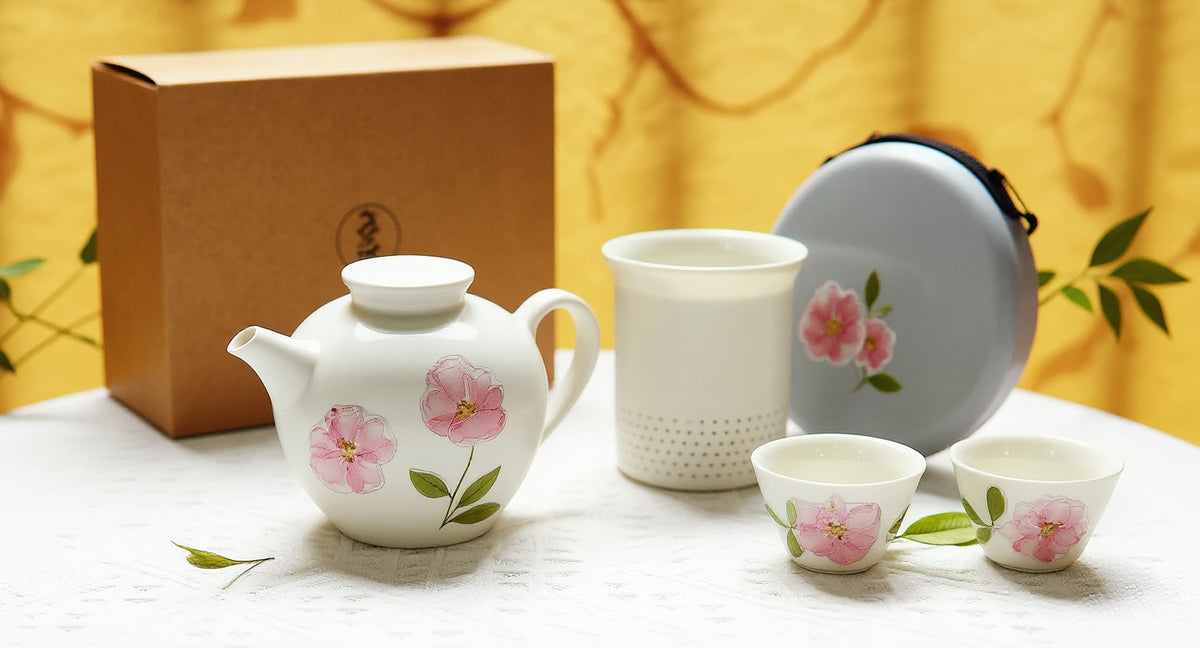
A preserved flower tea cups gift set makes a strong gift when the recipient actually enjoys loose-leaf tea, slow brewing, or handmade objects with visible variation. It’s a poor fit for someone who wants dishwasher-proof mugs, identical pieces, or a large Western-style teapot.
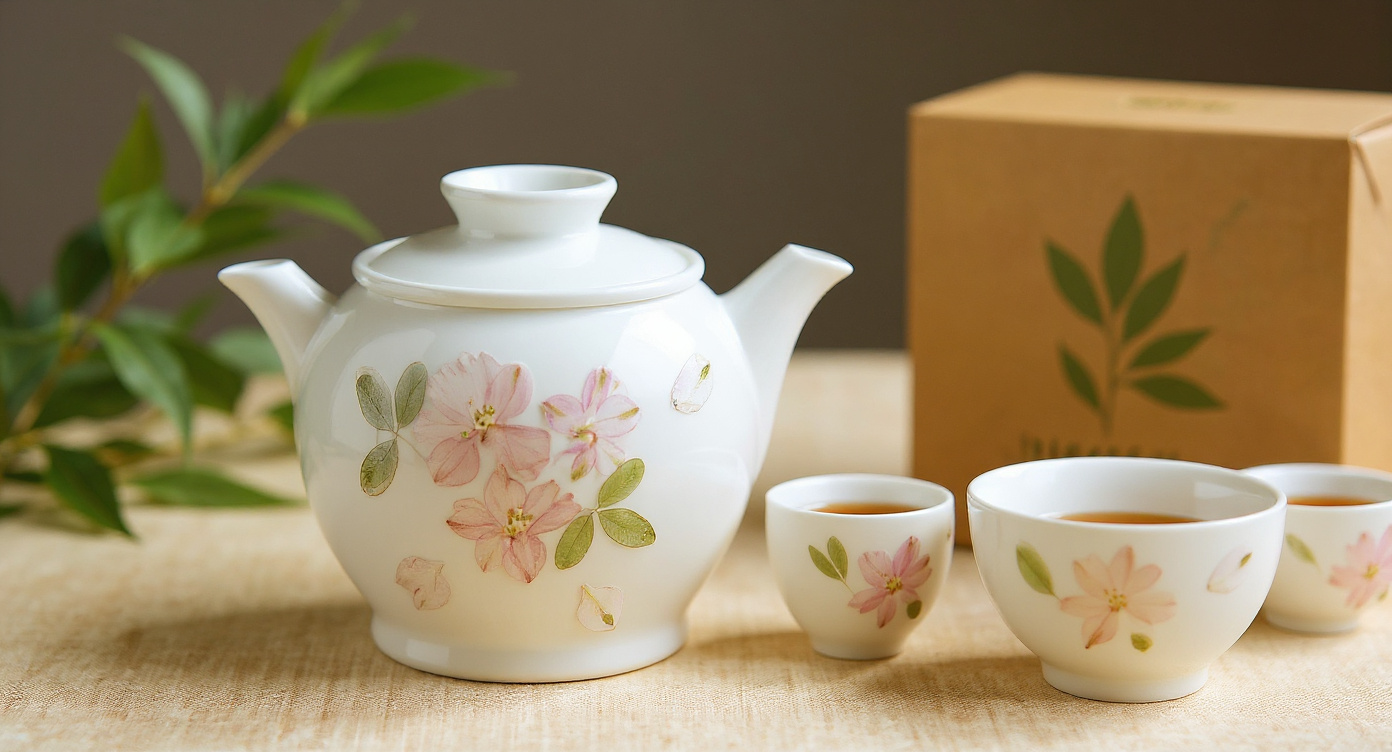
The attraction is real material difference. A flower sealed into the exterior of porcelain is not a printed floral pattern, so placement, petal shape, and relief won’t repeat exactly from one piece to the next. That makes the set feel chosen rather than picked from a generic gift shelf.
Real petals change what the gift needs to do
A floral tea cup can be decorative without being useful. The better versions keep the botanical work on the outside while leaving the brewing surfaces practical, smooth, and easy to rinse. That distinction matters more than the flower itself.
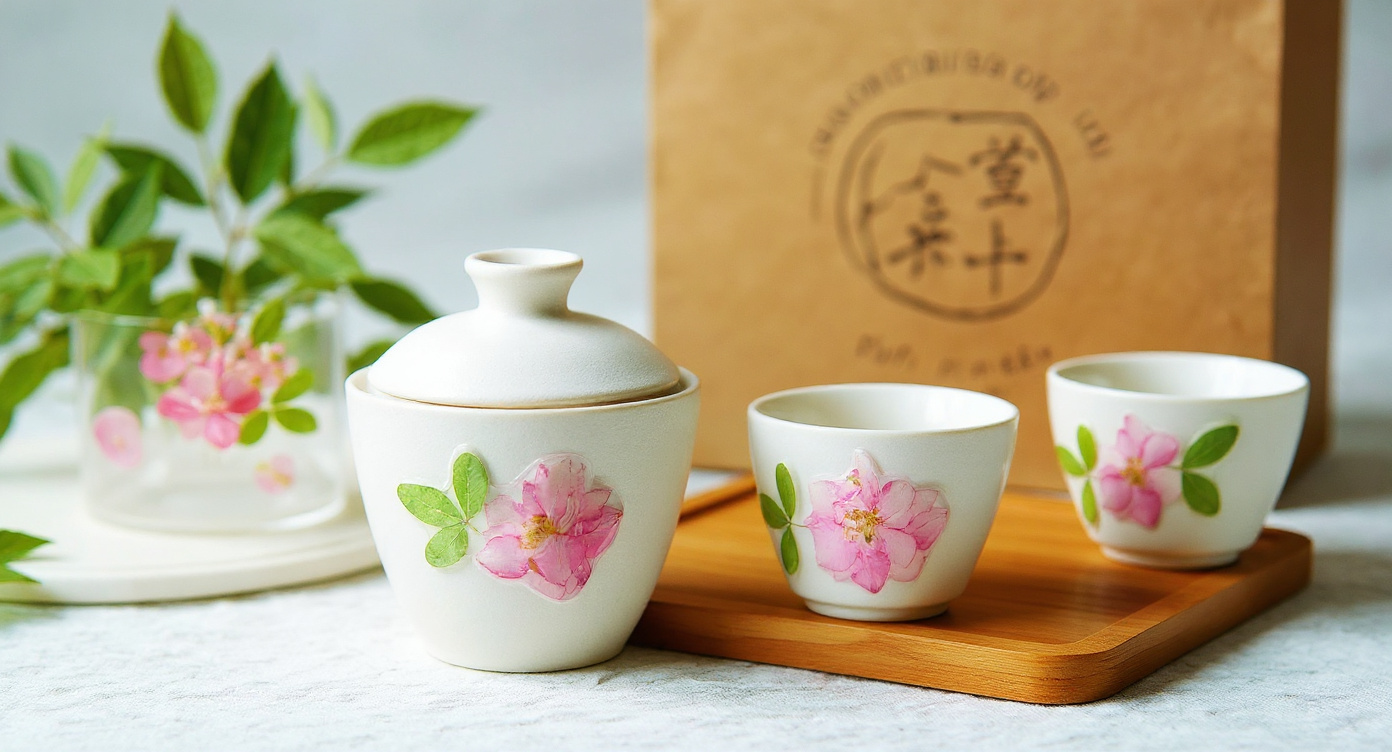
The Handmade Frosted Porcelain Tea Set uses real hand-preserved petals in raised exterior relief on a porcelain gaiwan and 100ml cups. The flowers are sealed rather than loose-applied, which is essential. Unsealed dried material catches moisture, snags on cloth, and sheds over time. A sealed botanical layer should still be treated gently, but it has a more credible place in regular tea service.
Pressed and dried flowers have long been used in decorative craft because flattening and drying preserve their form for display. The process is different from fresh floral work, as outlined in this reference on pressed flower craft. For tea ware, though, the practical question is not whether the flower is real. It is whether the botanical element is secured away from the drinking surface and protected from abrasion.
A gift set should also match the recipient’s tea habits. A 100ml cup is deliberately small. It suits repeated infusions shared between one or two people, not a single oversized breakfast tea. The roughly 400ml gaiwan gives the recipient enough brewing volume for a relaxed session, while the cup size keeps pours controlled.
Size, brewing style, and the $128.512857142857 price point
A gaiwan is a lidded bowl used for brewing and serving tea. Its lid can hold leaves back while the tea is poured, and its open form makes leaf expansion easy to watch. The traditional vessel has a direct connection to Chinese tea practice, with a useful basic description in this reference on the gaiwan.
The main trade-off is obvious: a gaiwan asks for attention. It rewards drinkers who adjust steep time, water temperature, and leaf quantity across several infusions. It is less forgiving than dropping a tea bag into a large mug and walking away.
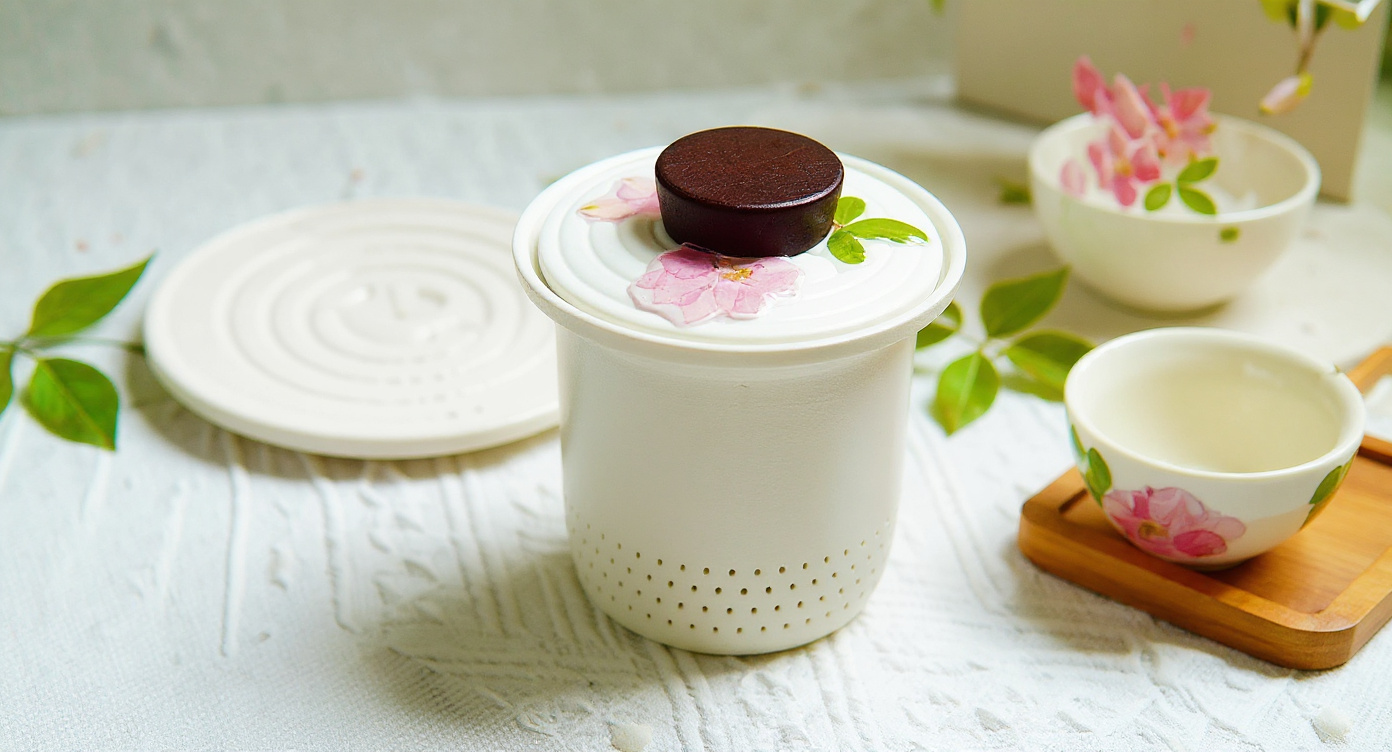
At a listed price of $128.512857142857, this set sits above basic printed-floral porcelain but below the handmade-set prices often attached to studio ceramics. The relevant value is not the flower motif alone. It is the combination of a roughly 400ml porcelain gaiwan, 100ml tasting cups, a travel-oriented kit format, and real preserved petals that won’t be identical from set to set.
The 400ml preserved-flower gaiwan kit is most suitable as a birthday, housewarming, anniversary, or personal milestone gift for someone who will use small-format tea ware. It is not the sensible choice for a recipient who wants a dishwasher-safe daily coffee cup.
Porcelain is valued in tea ware because it is fired to a dense ceramic body and typically has low porosity compared with less-vitrified earthenware. The material itself is well suited to tea, as explained in this background on porcelain, but the raised botanical exterior calls for gentler handling than plain restaurant porcelain.
Six checks before buying a botanical tea set as a gift
A preserved flower tea cups gift set should be judged as both tea equipment and a fragile handmade object. These six checks prevent most disappointing purchases.
1. Confirm where the flowers sit. Petals embedded on the exterior are easier to protect from tea stains and repeated rinsing than decoration placed inside the bowl or cup. Avoid sets where the botanical layer is near the rim, inside the drinking surface, or visibly loose.
2. Look for sealing, not glued-on decoration. A seller should be able to state that the petals are preserved and sealed. “Real flowers” by itself is not enough. Dried material without a protective layer is better suited to a frame than a tea vessel.
3. Match cup volume to the recipient’s habits. The 100ml cups in this kit suit gongfu-style service, where tea is brewed in short rounds and poured frequently. Someone accustomed to 300ml mugs may find them charming but impractical.
4. Check the brewing vessel, not only the cups. A roughly 400ml gaiwan has enough capacity for several small pours. It can also be used for larger-leaf teas that need room to open. The lid-and-bowl format will feel unfamiliar to a complete beginner, but it isn’t difficult after a few uses.
5. Ask how it will travel. A portable kit format is useful only if each piece is separated and supported. Porcelain fails at point contact. The lid, bowl, and cups should not touch each other inside the package.
6. Set care expectations before gifting. Hand washing, mild detergent, and air drying are reasonable expectations for tea ware with raised floral relief. A recipient who expects high-heat dishwasher cycles will probably be happier with plain glazed porcelain.
The flower layer should not be scrubbed with abrasive pads, stiff brushes, or powdered cleaners. Those tools can scratch sealed surfaces and wear raised details long before the porcelain itself has a problem.
Handmade floral porcelain versus the usual alternatives
The comparison below is less about declaring one category superior and more about matching the object to the recipient. A plain porcelain set can be the better gift for a hard-use household. A botanical set has more emotional weight when the recipient values process, material variation, and careful storage.
| Option | Typical price stated in available product context | Botanical detail | Best use | Main compromise |
|---|---|---|---|---|
| Handmade Frosted Porcelain Tea Set with preserved flowers | $128.512857142857 | Real hand-preserved petals in raised exterior relief | Gift giving, small-format tea sessions, display between uses | Needs careful hand washing and protective packing |
| Mass-produced porcelain tea set | $30–$150 | No botanical detail specified | Everyday service and replacement-friendly use | Less individual variation and less gift distinction |
| Mid-tier handmade tea set on Etsy | $150–$400 | Varies by maker | Handmade ceramics for a specific tea drinker | Botanical treatment and travel format vary by seller |
| Boutique studio ceramic set | $600–$1,200 | Varies by studio | Collectible ceramics and serious gift occasions | Higher cost and often limited availability |
The wrong comparison is between a preserved-flower gaiwan and a supermarket mug. They solve different problems. The more useful comparison is between this kind of set and other handmade ceramics intended to be kept, used slowly, and packed with care.
Packing matters more than a decorative gift box
Fragility is the reasonable concern with any porcelain gift, particularly one that includes a lid. The lid edge, cup rims, and the bowl’s foot ring are the vulnerable points. A pretty outer box doesn’t help if those parts can move against each other.
For gifting, the safest approach is a box-within-a-box arrangement. Each piece needs its own wrap and should be immobilized, not merely cushioned. Soft kraft packaging can work well when it is paired with enough internal separation to stop ceramic contact.
Use this packing sequence if the set will be wrapped again, mailed to the recipient, or carried to an event:
1. Wrap each cup individually with clean tissue or unprinted paper. 2. Protect the gaiwan lid separately from the bowl, with padding around the rim and knob area. 3. Fill the bowl cavity with light cushioning so the lid cannot settle into it during transit. 4. Place wrapped pieces in a rigid inner box with no empty gaps between them. 5. Put the inner box inside a larger shipping carton with cushioning on all six sides. 6. Keep the package upright where possible, but pack it securely enough that a sideways turn does not allow internal movement.
Avoid placing tape directly on porcelain or floral relief. Adhesive can leave residue, and pulling it away risks catching on raised sealed petals. Also avoid fragrant packing materials. Tea ware stored in a strongly scented box can retain odours that interfere with delicate teas.
FAQ: care, fading, and first-time gaiwan use
Do preserved flowers fade over time?
They can fade, especially with long-term exposure to direct sunlight, strong heat, or harsh cleaning chemicals. Sealed petals are more protected than loose dried flowers, but preservation does not make natural plant material permanently colour-fast. Store the set away from a bright windowsill and avoid leaving it in direct sun for weeks at a time.
Are preserved flower tea cups safe to drink from?
The key issue is where the flowers and sealant are placed. A tea cup intended for drinking should have a smooth, intact interior drinking surface, while decorative botanical work should remain on the exterior. No food-contact certification or testing documentation is stated here, so a buyer should not assume standards that have not been specified. If that documentation is required, confirm it with the seller before purchase.
Can you wash tea cups with real flowers on them?
Yes, but hand washing is the sensible method when flowers are embedded in raised exterior relief. Use lukewarm water, mild dish soap, a soft cloth or soft sponge, then rinse and dry carefully. Don’t soak the pieces for extended periods, scrub the flowered areas, or use scouring pads.
Are preserved flower tea cups dishwasher safe?
Dishwasher safety should not be assumed for porcelain tea ware with raised preserved botanical decoration unless the maker explicitly states it. Dishwasher heat, detergent strength, spray pressure, and contact with other dishes create unnecessary risk. Hand washing is the safer routine.
What is the difference between dried flowers and preserved flowers?
Dried flowers have had moisture removed so they can be kept beyond their fresh life. Preserved flowers are generally dried or treated, then protected for long-term decorative use. In a tea set, the added sealing step is what matters most because it helps keep the botanical material fixed to the exterior rather than loose and fragile.
Is a gaiwan a good gift for someone new to tea?
It can be, if the recipient is curious and willing to learn a small ritual. A gaiwan gives direct control over leaf quantity and steep time, and the lid can be used to strain leaves while pouring. It is less suitable for someone who wants automatic convenience or who mostly drinks bagged tea in a large mug.
How do you pack fragile tea cups for gifting?
Wrap each cup separately, pad the gaiwan lid independently, prevent every piece from touching another, and use a rigid box inside a larger shipping box. The goal is zero movement. A package that rattles is not ready to travel.
The right gift for a careful tea ritual
The concern around fading and breakage is valid. Real preserved petals need less sunlight and gentler cleaning than a printed pattern, while porcelain needs packing that prevents even small impacts between pieces.
For a recipient who values loose-leaf tea, small pours, and handmade variation, the Handmade Frosted Porcelain Tea Set | Real Preserved Flowers | 400ml Gaiwan Kit offers a more considered answer than generic floral crockery. For someone who needs dishwasher durability or oversized daily cups, plain porcelain remains the better choice. If the former sounds right, see the Handmade Frosted Porcelain Tea Set | Real Preserved Flowers | 400ml Gaiwan Kit and assess the packing, capacity, and care requirements before gifting it.