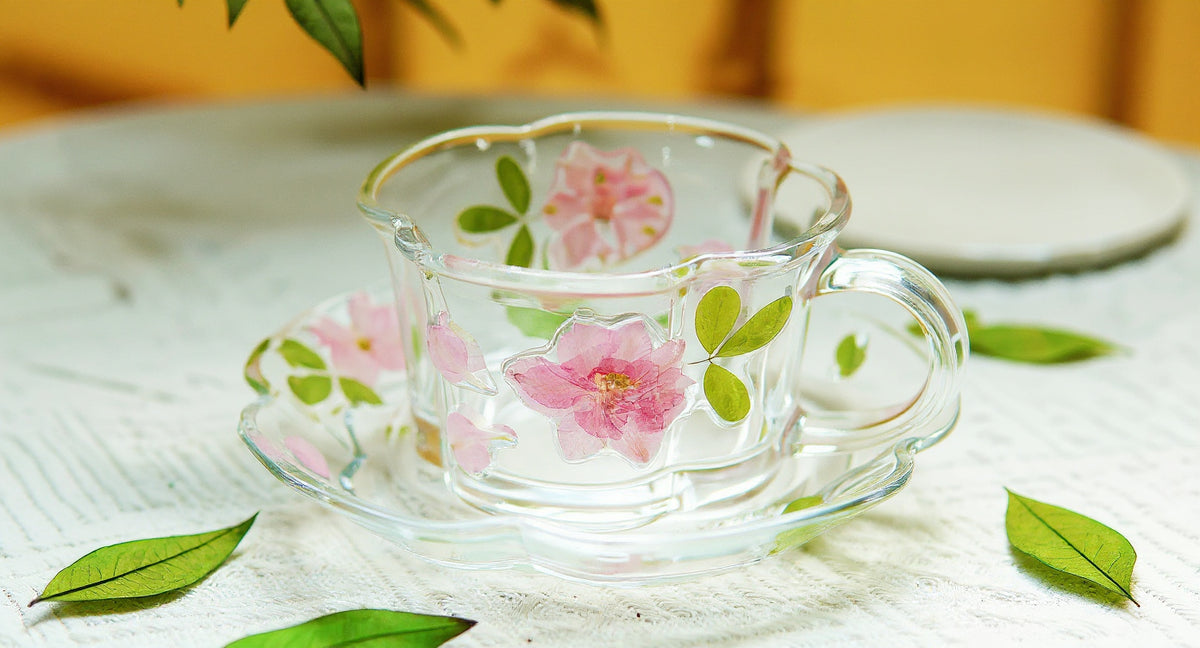
A real flower embedded glass teacup saucer set can last well when the flowers are fully sealed on the exterior, the drinking surface remains bare glass, and cleaning stays gentle. It won't hold up like a plain dishwasher-proof mug, because preserved botanicals and resin relief need protection from abrasion, prolonged heat, and soaking.
The durable version is not a printed floral cup pretending to be handmade. It is a borosilicate glass vessel with real dried petals and leaves professionally preserved beneath a smooth coating outside the cup, where the decoration cannot contact tea, coffee, milk, or the mouth.
What a real flower embedded glass teacup saucer set is actually made of
There are three separate materials to assess: the glass cup, the preserved plant material, and the clear protective layer holding the botanical relief in place. Confusing those layers is how buyers end up expecting the wrong thing from a decorative cup.
Borosilicate is the strongest practical starting point for a hot-drink cup. Its relatively low thermal expansion is why it is widely used where temperature change matters, as explained in this reference on borosilicate glass. That does not mean any borosilicate cup is immune to thermal shock. A cold cup filled immediately with boiling liquid can still be stressed, particularly if the glass has a thin wall or a cold saucer beneath it.
Pressed flowers are organic material. Their colour, texture, and tiny irregularities are the point. In traditional pressed flower craft, flowers are dried and preserved before being arranged into decorative compositions. A real petal will never be as perfectly uniform as a printed pattern, nor should it be.
The resin layer matters more than most product listings admit. Resin can protect petals from moisture and handling, but it is not the same material as the glass body. A high-quality exterior application should feel smooth at the edges, cover the botanical material completely, and stop short of the rim and interior drinking surface. If the petals are exposed, sharp, tacky, or visibly lifting at the perimeter, the cup is decorative rather than practical.
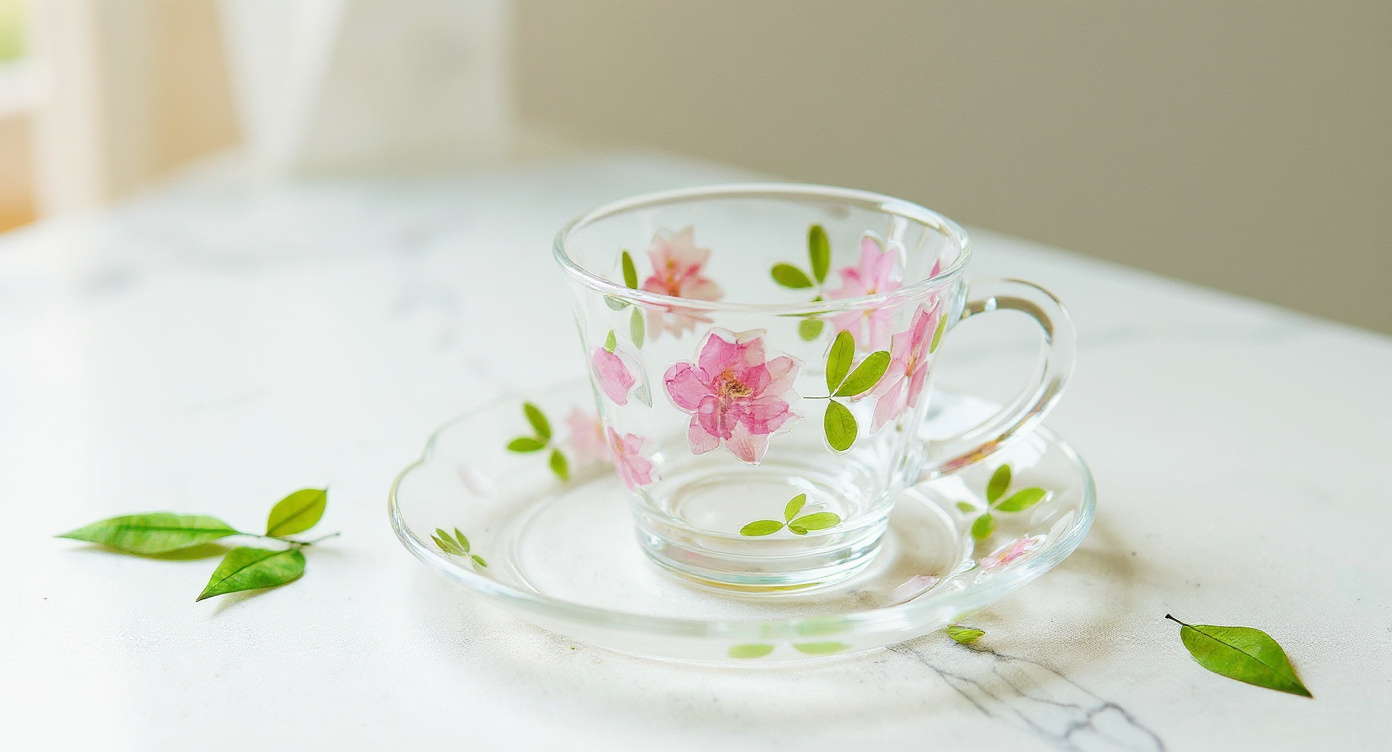
A well-made option such as the Handcrafted Pressed Flower Relief Glass Coffee Cup & Saucer | Borosilicate | Artisan Gift uses an approximately 200–250ml borosilicate cup and matching saucer, with real preserved botanicals embedded beneath a food-safe resin coating on the exterior only. That layout is the sensible one: glass handles the drink, while the sealed relief handles the ornament.
Five checks that predict whether the floral relief will last
The difference between an heirloom-style object and a short-lived novelty usually appears in the finishing details. These checks are more useful than vague claims about being handmade.
1. Check where the resin begins and ends. The coating should sit on the outside of the vessel, away from the interior, lip area, and drink contact zone. Exterior-only resin avoids treating the coating as a food-contact surface during normal use.
2. Look for fully enclosed petals and leaves. A flower should appear sealed beneath a continuous layer, not glued onto the glass with exposed edges. Loose plant fibres catch on cloths, collect moisture, and eventually pull away.
3. Run a fingertip around the relief. Raised work can be tactile without being rough. The transition from plain glass to botanical area should feel rounded and secure, not sticky, jagged, or brittle.
4. Ask about cup capacity and intended use. A 200–250ml cup is suited to tea, coffee, flat whites, and smaller milk drinks. It is not designed as a large-volume mug for repeatedly holding 400ml of very hot liquid.
5. Treat production time as a useful signal, not proof. A stated three-day production period makes more sense for a piece involving preserved flowers, placement, sealing, and curing than instant mass production. It does not replace close inspection, but it does distinguish real hand-applied relief from printed glassware.
One point deserves emphasis. No resin-coated botanical cup should be chosen because it promises to behave exactly like plain tempered glass. The floral treatment is the trade-off. It creates an individual surface, but that same surface deserves hand washing and more careful storage.
Decorative glass has a long place in the broader field of glass art, where material skill and surface treatment matter as much as basic utility. That tradition is more relevant here than the usual novelty-gift standard. A cup with real botanical relief should be bought as usable glass art, not as a disposable novelty with flowers attached.
Heat, tea, coffee, and the limits of borosilicate
Borosilicate glass is a better choice than ordinary soda-lime glass for hot tea, but “heat-resistant” is not a blank cheque. The cup should be warmed gradually when it has been stored in a cold room. Avoid putting it from refrigerator-cold conditions directly under boiling water, and do not place a hot cup onto a wet, freezing-cold countertop.
For everyday tea and coffee, a borosilicate cup is appropriate when the maker intends it for hot beverages. Pour hot liquid steadily rather than aggressively, especially into a small 200–250ml vessel. Leave a little headspace. A matching saucer helps contain drips, but it should not be treated as a trivet for cookware or a surface for direct oven heat.
The resin relief creates the bigger limitation. Food-safe resin on an exterior surface addresses normal handling, but it does not provide a stated microwave or dishwasher rating. Microwaves heat unevenly and can warm both liquid and coated areas unpredictably. Dishwasher cycles combine hot water, detergent, long exposure, and abrasion from racks or neighbouring dishes. Neither is a sensible gamble with preserved flowers.
The following care routine keeps the material choices in their proper lanes:
1. Hand wash the cup and saucer in lukewarm water. 2. Use a soft sponge or cloth, never an abrasive scrubber. 3. Keep soaking brief, especially around the raised floral areas. 4. Rinse away tea, coffee, and milk residue soon after use. 5. Dry by dabbing with a soft towel rather than rubbing hard across the relief. 6. Store with space around the cup so the raised surface does not scrape against other ceramics or glassware.
Do not use bleach, scouring powder, strong solvent cleaners, or a dishwasher. These are not fussy rules for their own sake. They protect the bond between glass, resin, and plant material.
Printed florals, ceramic sets, and handmade botanical glass
Price alone does not identify quality, but the construction and intended lifespan are different across these categories. Printed glass is easiest to replace. Handmade relief glass is more individual and demands more deliberate care.
| Type of cup or set | Typical construction | Price stated in available product context | Best use | Main limitation |
|---|---|---|---|---|
| Mass-produced floral-print glass cup | Flat printed or painted floral pattern on glass | $10–$25 on Amazon | Casual, low-stakes everyday use | No real botanical relief or handcraft value |
| Artisan ceramic floral set | Ceramic cup and saucer with floral decoration | $35–$60 on Etsy | Daily tea service and gifting | Heavier material; not transparent borosilicate glass |
| Handcrafted pressed-flower borosilicate cup and saucer | Real preserved petals and leaves sealed in exterior resin relief | $88 | Smaller tea or coffee rituals, gifting, display, careful daily use | Needs hand washing and gentler handling |
| Luxury glass art set | Varies by boutique or specialist seller | $150–$300+ | Collecting, formal gifting, decorative use | Higher entry price; specification varies by seller |
The $88 position makes sense only for someone who values actual preserved botanicals, individual variation, and a three-dimensional surface. It does not make sense for someone who needs six matching cups for a busy household dishwasher. A $10–$25 printed cup is the better tool for that job.
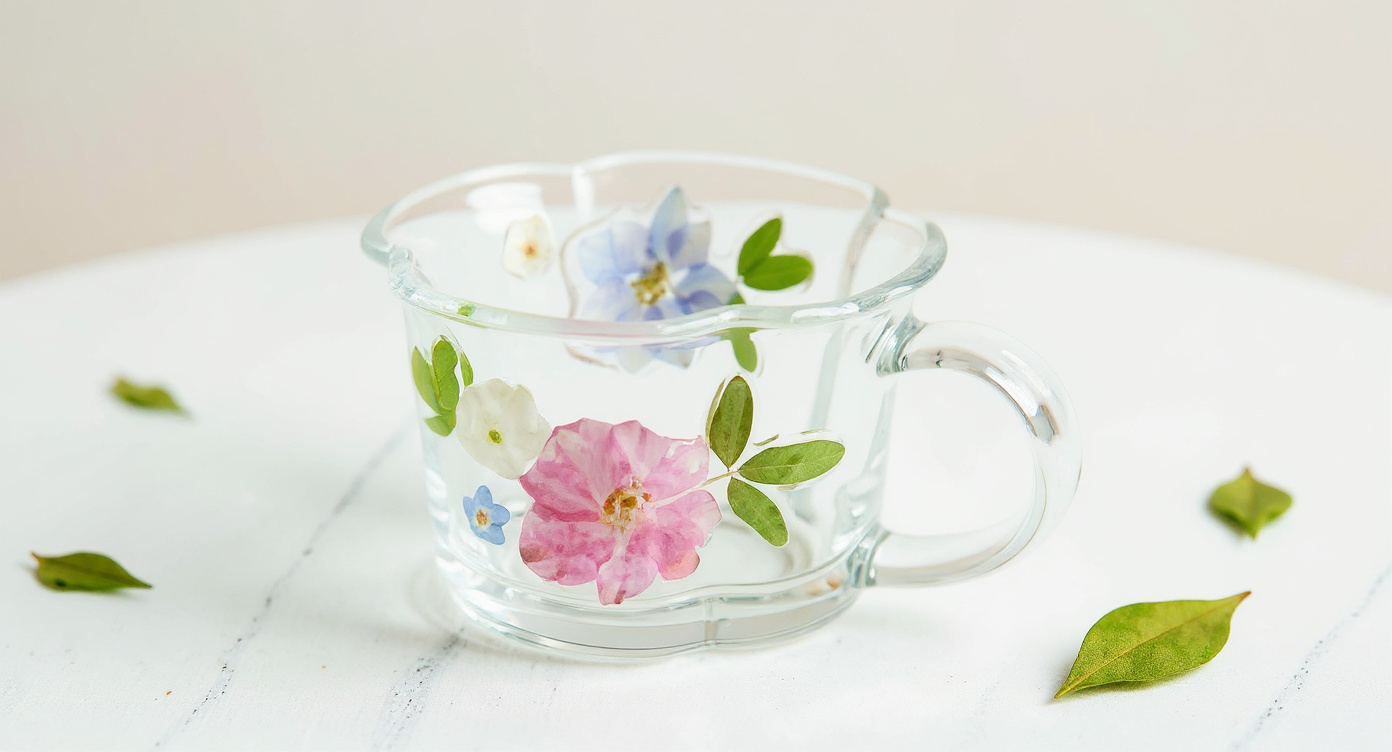
The handmade cup occupies a different category. Each arrangement of petals and leaves has natural variation, so exact duplication is not the promise. The appeal is that the floral relief is materially real rather than a flat motif applied by a machine.
FAQ
Are real flowers safe in resin cups?
They can be suitable when the flowers are professionally preserved and sealed beneath a food-safe resin layer on the exterior of the cup. The drinking surface, inner wall, and rim should remain plain glass. Food-safe exterior resin should not be treated as permission to chip, sand, heat aggressively, or use damaged pieces for drinking.
Can you drink hot tea from a borosilicate glass cup?
Yes, a borosilicate cup intended for hot beverages can be used for tea and coffee. Avoid severe temperature jumps, such as filling a cold cup straight from the refrigerator with boiling water. No specific maximum temperature is stated for this cup, so gradual warming and ordinary hot-drink use are the cautious approach.
How do you clean a glass cup with flowers on it?
Hand wash it in lukewarm water with mild dish soap and a soft sponge. Clean the raised floral area gently, rinse promptly, then pat dry. Do not soak it for extended periods or scrub the relief with a brush, steel wool, or abrasive pad.
Are pressed flower cups dishwasher safe?
A pressed-flower cup with exterior resin relief should be treated as hand-wash only unless the maker explicitly states that it is dishwasher safe. Dishwasher heat, detergent, and repeated mechanical contact can dull the coating or weaken decorative edges over time.
Do real flowers in resin fade over time?
They can. Preserved flowers are more stable when sealed, but plant pigments remain sensitive to prolonged direct sunlight and heat. Keeping the cup out of a bright windowsill and away from strong UV exposure gives the botanicals the best chance of retaining their original character.
What is the difference between pressed flower glass and printed floral glassware?
Pressed flower glass uses actual dried petals or leaves arranged on or within the decorative surface. Printed floral glassware uses ink, paint, decals, or transferred artwork to create a flat image. Printed designs can be attractive and practical, but they do not have the texture, natural irregularity, or individual composition of real botanicals.
Can resin flower cups go in the microwave?
They should not go in the microwave unless the maker gives a clear microwave-safe rating for the complete finished cup, including its resin decoration. Glass and resin react differently to heat, and microwave use introduces uneven heating that is unnecessary for a delicate raised botanical surface.
How can you tell if flowers in glassware are real?
Look for irregular petal edges, variation in vein patterns, slight differences in thickness, and a tactile raised arrangement. Real flowers will not repeat exactly from cup to cup. A perfectly identical motif with uniformly flat colour is more likely to be printed or painted.
The right purchase depends on how the cup will be used
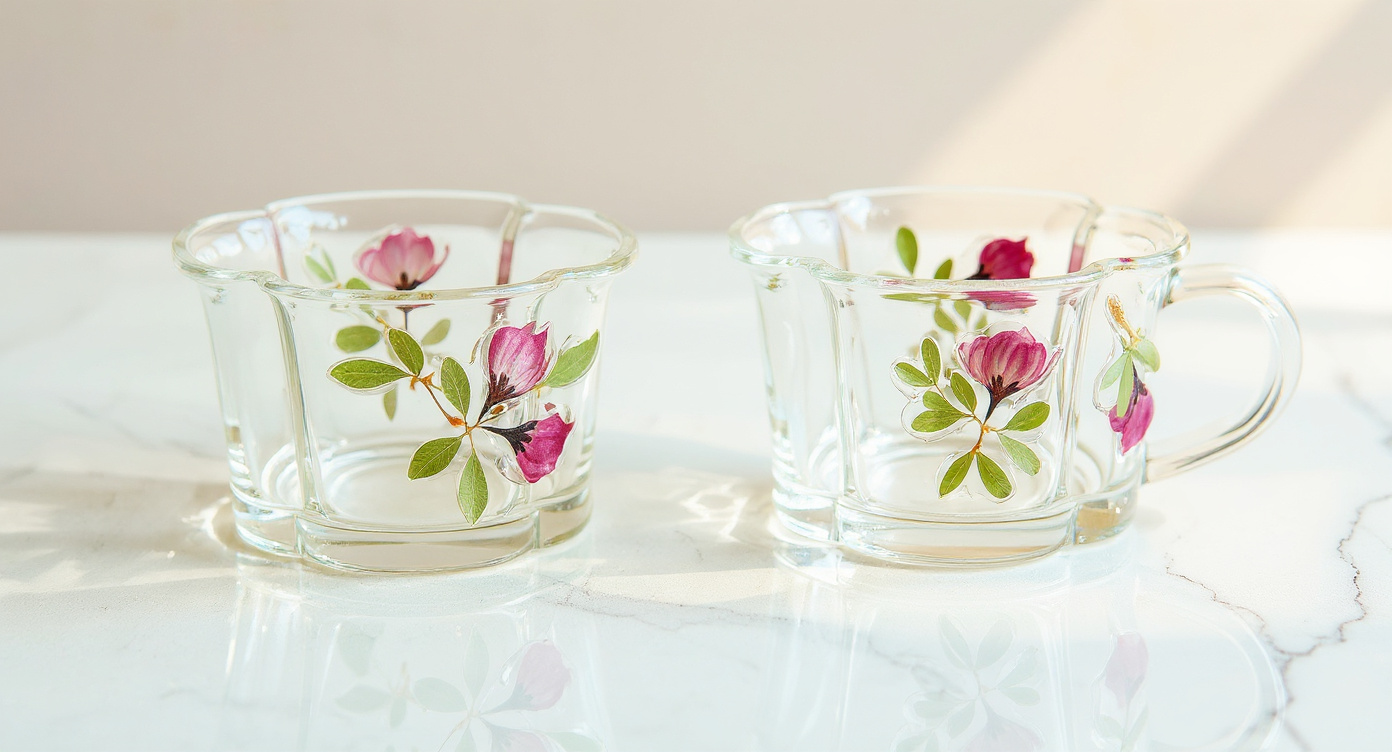
The concern is reasonable: decorative cups often look fragile, and unclear material descriptions make buyers wonder whether the flowers will peel, fade, or contaminate a drink. The answer lies in construction, not romance. Choose exterior-only botanical relief, a plain borosilicate drinking surface, full resin coverage over the preserved flowers, and a care routine that excludes dishwashers and microwaves.
For a daily tea or coffee ritual that can accommodate hand washing, the Handcrafted Pressed Flower Relief Glass Coffee Cup & Saucer | Borosilicate | Artisan Gift offers the useful balance: a 200–250ml borosilicate cup for the drink, a matching saucer, and real preserved botanicals kept outside the food-contact area. It is more likely to pay off as a considered gift or a personal ritual piece than as hard-use kitchenware, which is exactly the distinction that helps the floral work last.