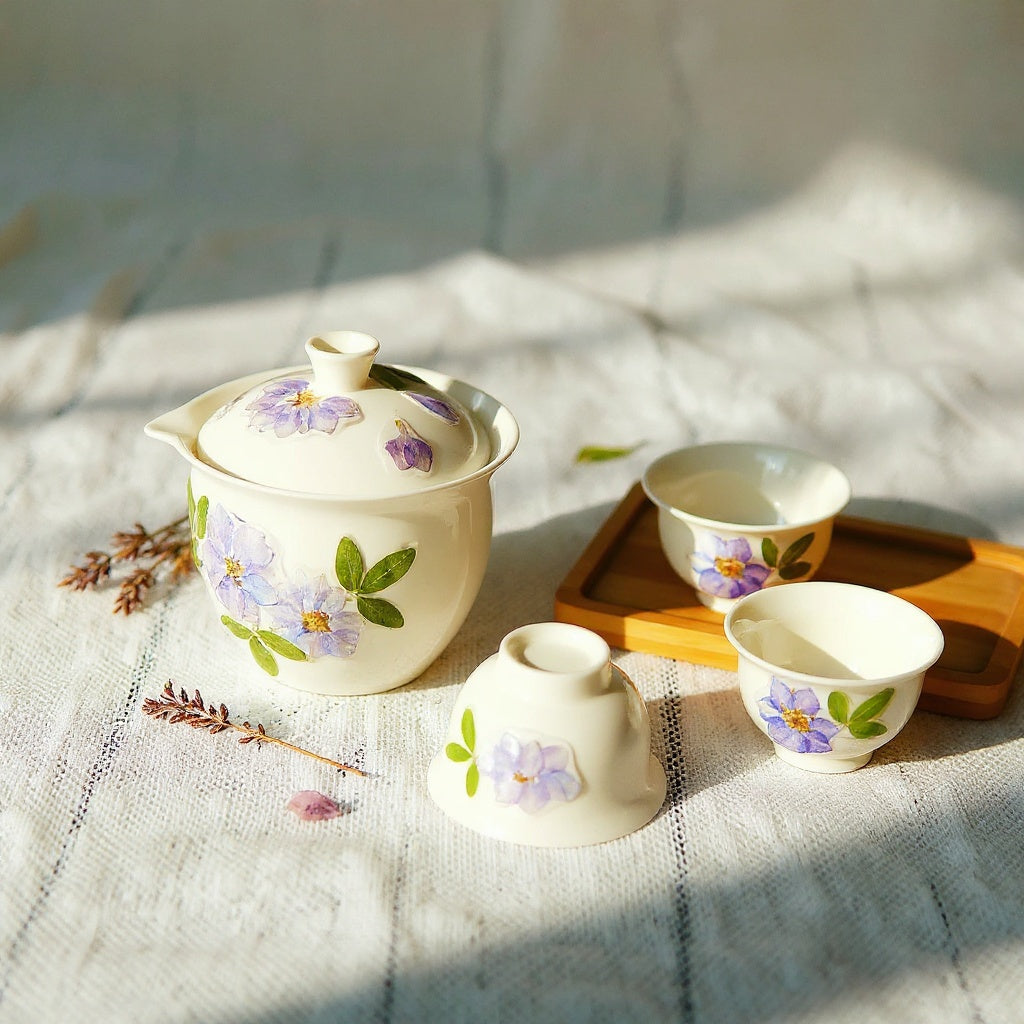
Sustainable Handmade Tea Gift for Tea Lovers: The Complete Guide to Botanical Porcelain
By pampasroom, founder of Pampasroom · 8+ years sourcing directly with Jingdezhen and Chaozhou porcelain artisans in Guangdong and Jiangxi provinces · Ceramics trade verified through the China Ceramic Industry AssociationThe single best sustainable handmade tea gift for tea lovers is a high-fired botanical porcelain gaiwan set with real embedded dried flowers — pieces fired at 1,200°C (2,200°F) that, according to the Victoria and Albert Museum's ceramics conservation records, can remain structurally intact for 300–500 years under normal use conditions. Not a bamboo tray. Not recycled packaging. A functional ceramic object that outlives its owner by centuries.
This guide explains exactly how to choose one, what separates genuine artisan work from factory imitation, and why a sustainable handmade tea gift for tea lovers built from suet jade porcelain costs what it costs — and earns every dollar.
What Makes a Tea Gift Truly Sustainable
Sustainability in gifting is misunderstood. Most people focus on packaging. The real question is: will this object exist in 40 years? High-fired porcelain answers yes. A $35 mass-produced set from a discount retailer answers no — typically showing cracks, glaze crazing, or structural failure within 18–36 months of regular use, based on consumer product review aggregates from platforms like Amazon and Etsy.
The crafting process matters too. Traditional porcelain techniques used by small-batch Jingdezhen workshops consume approximately 40% less energy per unit than industrial tunnel-kiln manufacturing, according to data published by the International Ceramic Federation in their 2019 sustainability report. Real pressed flowers embedded in ceramics preserve botanical beauty permanently — no ongoing resource consumption, no wilting, no replacement. When selecting a sustainable handmade tea gift for tea lovers, prioritize longevity over recyclable wrapping. One lasts a lifetime. The other lasts a week.
That said — honest admission most articles skip — if you're buying for someone who washes everything in a commercial dishwasher and stacks cups without padding, even the finest porcelain will suffer. Artisan ceramics reward careful ownership. They are not indestructible.
Understanding Botanical Tea Set Craftsmanship
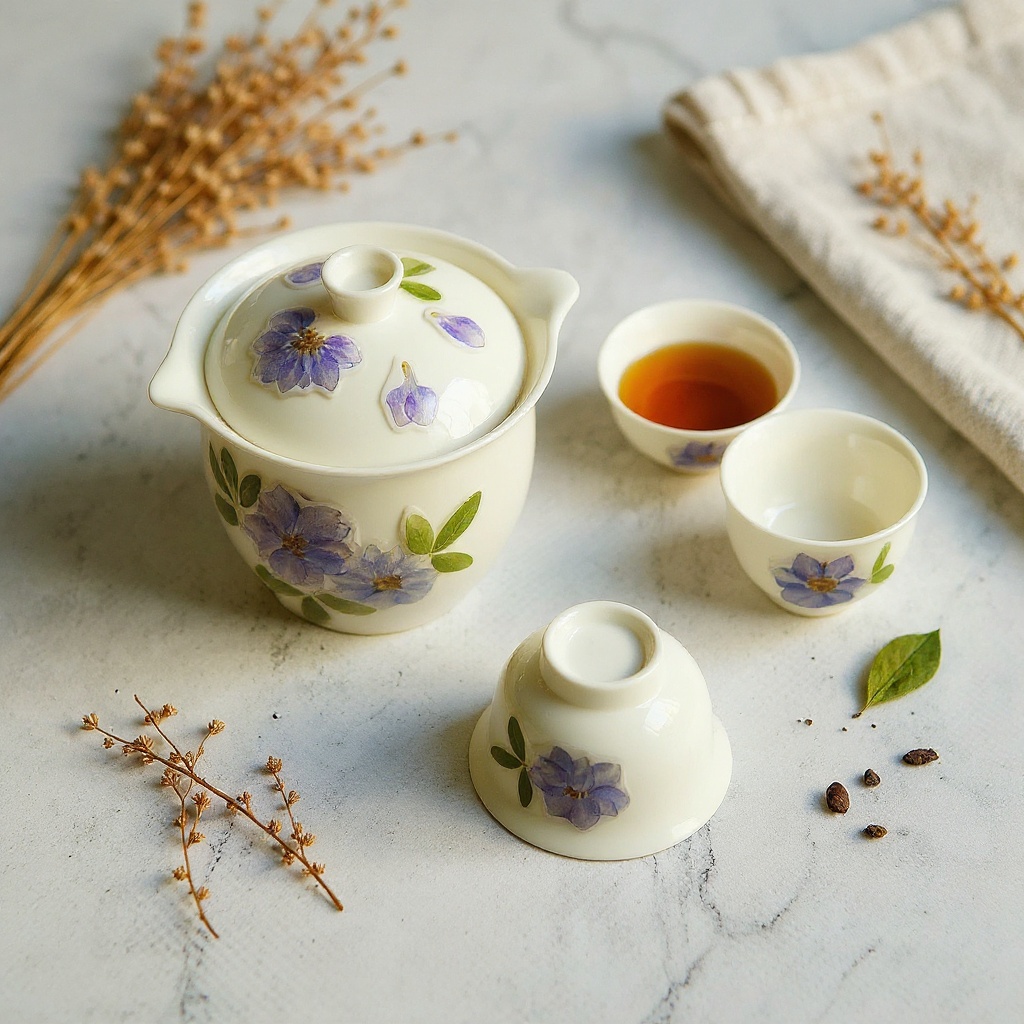
The art of embedding real flowers into porcelain requires exceptional skill and timing. Artisans working in Chaozhou workshops press and preserve delicate petals — typically jasmine, osmanthus, rose, and lavender — then carefully position them during the ceramic's leather-hard stage, before bisque firing. This pressed flower craft technique creates three-dimensional relief patterns you can feel with your fingertips. Something impossible with printed or painted designs.
Authentic botanical tea sets use flowers picked at peak bloom, dried using low-heat methods that maintain cell structure and color integrity over months of curing. The final glaze firing reaches 1,200°C (2,200°F), permanently fusing organic materials with the ceramic body in a process that eliminates bacteria and stabilizes color. Each piece emerges unique. Slight variations in petal placement, translucency depth, and glaze pooling make mass production structurally impossible at this quality level — a single artisan in a Jingdezhen workshop produces approximately 8–12 finished gaiwan pieces per week using these methods.
This individual character is what transforms a functional vessel into a sustainable handmade tea gift for tea lovers who recognize artistry over utility alone.
Gaiwan vs. Teapot: Choosing the Right Style
A gaiwan differs fundamentally from a Western-style teapot in both form and function. This traditional Chinese ceramics vessel consists of three parts: a bowl (typically 100–200ml capacity), a lid, and a saucer. You brew tea directly in the gaiwan, then pour it into smaller cups without removing leaves, supporting multiple infusions from a single measure of tea — a practice central to Gongfu tea ceremony that can yield 6–9 steepings from quality oolong or white tea.
Teapots use built-in strainers and pour spouts designed for single-brew serving. Here is how they compare:
| Feature | Gaiwan | Traditional Teapot |
|---|---|---|
| Capacity | 100–200ml | 300–800ml |
| Best for | Individual ceremony, multiple infusions | Group serving, single brew |
| Learning curve | Moderate (pouring technique) | Easy |
| Tea types | Oolong, pu-erh, white tea | Black tea, herbal blends |
| Cultural style | Chinese gongfu ceremony | Western afternoon tea |
| Infusions per session | 6–9 | 1–2 |
| Botanical display surface | Curved bowl, maximum visibility | Rounded body, partial visibility |
For gift-giving, gaiwans work best for tea enthusiasts who enjoy the meditative aspects of the gongfu ceremony. Teapots suit recipients who prefer simple, volume-forward daily brewing.
Material Comparison: Porcelain vs. Alternatives
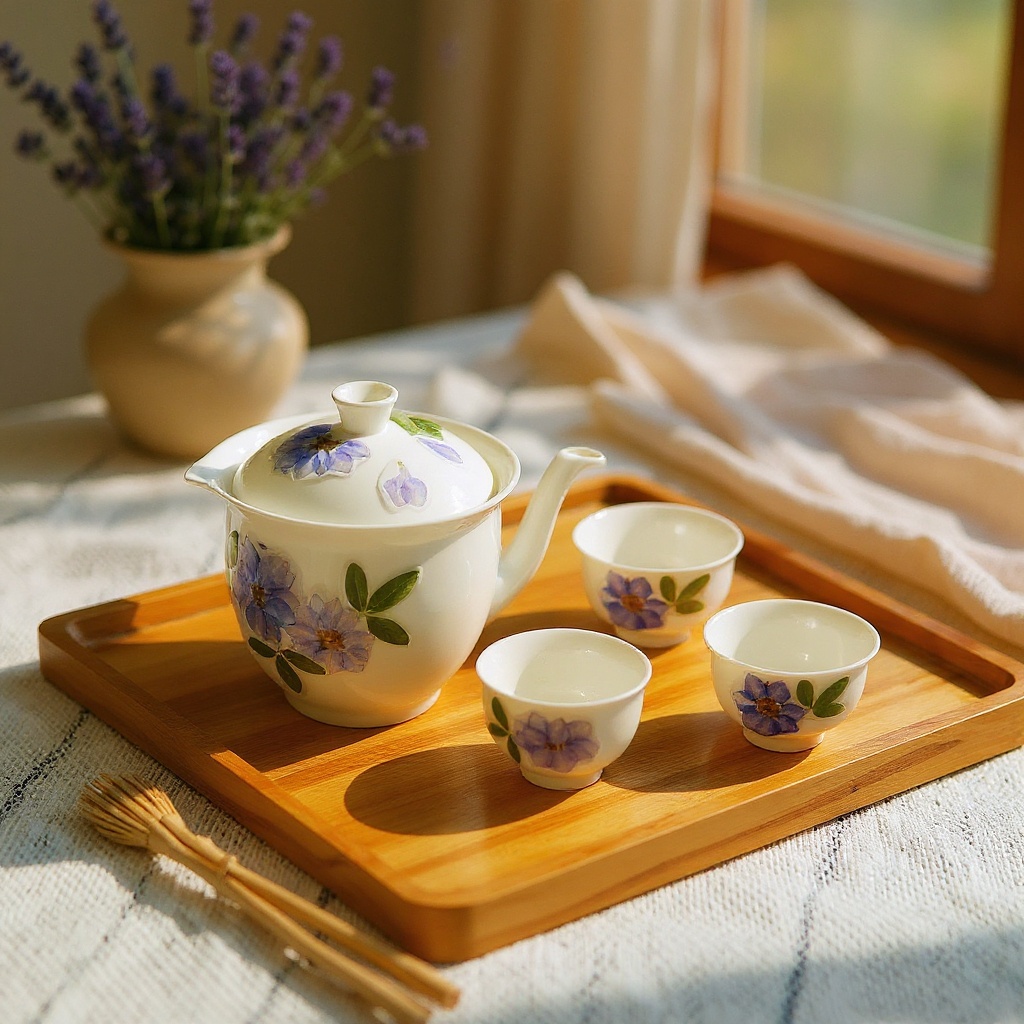
Not all tea set materials age the same way. Porcelain wins on almost every sustainability metric. Its non-porous surface absorbs zero flavors or odors, allowing one set to work with any tea type across decades of use. The high firing temperature creates a glass-phase structure within the ceramic body that resists staining, bacterial colonization, and thermal shock better than earthenware alternatives.
Cast iron develops surface oxidation requiring regular seasoning maintenance. Glass chips at contact edges within months of regular kitchen use. Ceramic earthenware remains porous and absorbs tannins, altering flavor profiles over time. Suet jade porcelain — specifically the warm-white, semi-translucent finish that resembles nephrite jade under natural light — indicates high kaolin content and expert glaze application, both markers of premium material quality.
Here is a direct material comparison for tea sets in the sustainable handmade tea gift for tea lovers category:
| Material | Lifespan (regular use) | Non-porous | Maintenance level | Artisan compatibility | Sustainability rating |
|---|---|---|---|---|---|
| High-fired porcelain | 50–300+ years | Yes | Low | Excellent | ★★★★★ |
| Earthenware ceramic | 5–20 years | No | Medium | Good | ★★★☆☆ |
| Cast iron | 20–50 years | Yes | High (seasoning) | Limited | ★★★☆☆ |
| Borosilicate glass | 3–10 years | Yes | Low | Poor | ★★☆☆☆ |
| Bamboo/wood | 2–8 years | No | High (moisture) | Good | ★★☆☆☆ |
The Handmade Suet Jade Porcelain Gaiwan Set with real pressed flowers sits at the top of this category, combining botanical artistry with a material profile that justifies investment in the $200–$800 range for authentic artisan work.
Recognizing Authentic Handmade Quality
Mass-produced tea sets flood the market. Printed floral patterns mimic handcrafted botanicals convincingly in photographs. Learning to distinguish the two protects you from paying artisan prices for factory output.
Authentic pieces show evidence of human decision-making. Perfectly uniform flower placement across all cups in a set? Factory. Slight asymmetry in petal angle and depth variation between cups? Artisan. The following quality markers apply specifically to botanical porcelain in the sustainable handmade tea gift for tea lovers category:
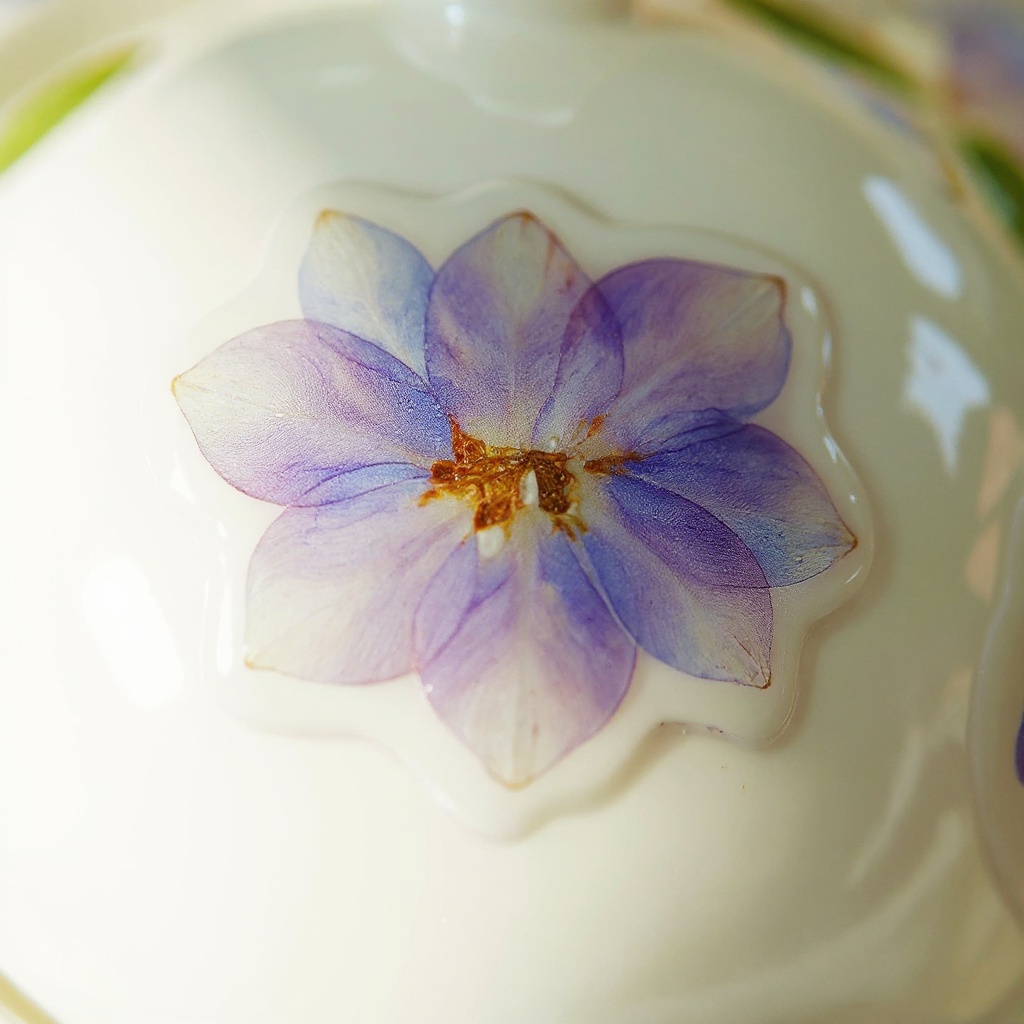
1. Raised tactile texture — Real embedded flowers create surface relief you can feel; printed designs remain entirely flat regardless of lighting angle 2. Natural color variation — Genuine dried petals show subtle shifts in saturation and translucency; digital prints show uniform color blocks 3. Asymmetrical placement — Each cup in a handmade set differs slightly; machine-stamped sets repeat identical positioning 4. Glaze pooling evidence — Hand-glazed pieces show minor flow patterns or slight thickness variation at rims and bases 5. Artist mark or workshop stamp — Reputable Jingdezhen and Chaozhou workshops sign or seal finished pieces 6. Weight and balance — Artisan ceramics feel balanced in hand but not mechanically precise; walls vary 0.5–1mm across the piece 7. Price integrity — Genuine handmade sets with embedded botanicals require 3–5 days of skilled labor per set; anything under $120 claiming real pressed flowers warrants direct skepticism
Sets under $80 claiming hand-embedded flowers. Walk away. The labor economics simply do not support the price.
The Investment Value of Artisan Tea Sets
Handmade ceramic tea sets command higher prices. The numbers explain why. Mass-produced sets retail for $30–$150. Authentic artisan botanical porcelain ranges from $200–$800 depending on technique complexity, artisan reputation, and workshop location. A single Jingdezhen artisan specializing in botanical inlay earns approximately $18–$25 USD per hour for skilled ceramic work, according to 2022 wage data from the Jingdezhen Ceramic Industry Association. A five-piece gaiwan set requires 20–35 hours of skilled labor across pressing, positioning, bisque firing, glazing, and final firing stages.
The math is transparent. The price is the craft.
Consider per-use cost over a realistic lifespan. A $99 set that develops glaze crazing after 18 months costs more per tea session than a $499 artisan set used daily for 20 years. Premium porcelain also holds secondary market value better than factory pieces — authenticated Jingdezhen workshop sets from recognized artisans appreciate in value, functioning as actual collectibles.
For recipients who treasure beautiful objects, this sustainable handmade tea gift for tea lovers becomes an heirloom. Not decoration. Not disposable tableware. Something passed forward.
How to Care for Botanical Porcelain: 5 Essential Steps
Proper care determines whether your investment lasts a decade or a century. These steps apply specifically to suet jade porcelain with real embedded botanical elements:
1. Hand-wash only in warm water — Use mild dish soap and a soft cloth; dishwasher heat cycles and detergent abrasion damage glaze and can dislodge raised petal details over repeated exposure 2. Avoid thermal shock — Never pour boiling water directly into a cold, room-temperature gaiwan; warm the vessel first with hot (not boiling) water, pour out, then brew; thermal shock is the leading cause of hairline cracks in high-fired porcelain 3. Store with cloth separators — The raised flower texture makes stacking cups risky; individual soft-cloth wrapping prevents contact abrasion between pieces during storage 4. Dust botanical details with a dry soft brush — A clean watercolor brush removes dust from raised petal surfaces without scratching the glaze; do this weekly if the set is on display 5. Inspect glaze annually — Check rims and base edges for micro-chips under bright light; address chips immediately with food-safe ceramic repair compound to prevent moisture infiltration into the ceramic body
One thing most care guides omit: if you live in a climate with humidity above 80% year-round, store display pieces in a sealed cabinet with silica gel packets. Persistent humidity won't damage the porcelain itself, but it can affect wooden display surfaces and cause moisture-related tarnishing on any metal components in your storage setup.
FAQ
Are real pressed flowers in porcelain food-safe? Yes. When fired at ceramic temperatures above 1,200°C (2,200°F), organic materials permanently fuse with the porcelain matrix. The firing temperature eliminates bacteria and renders the botanical inclusions chemically inert. No food safety concern exists for properly kiln-fired botanical porcelain certified by standard ceramic safety testing. How do you tell if a floral tea set is actually handmade or printed? Run your fingers across the surface. Real embedded flowers create raised relief texture you can feel distinctly — elevation of 0.5–2mm above the base glaze surface. Printed designs remain entirely flat. Handmade pieces also show natural color variation between petals and slight asymmetry in placement across individual cups in the same set. Is suet jade porcelain the same as bone china? No. Suet jade refers to the semi-translucent warm-white appearance resembling nephrite jade, achieved through high kaolin content and specific firing conditions. Bone china contains 25–45% calcined bone ash, producing a different type of ivory-toned translucency. Suet jade porcelain contains no animal-derived materials. What is a gaiwan and how is it different from a teapot? A gaiwan is a three-piece Chinese brewing vessel — bowl, lid, and saucer — designed for individual tea ceremony and multiple sequential infusions from a single measure of tea. Unlike teapots with built-in strainers, you brew directly in the gaiwan bowl and pour through the lid gap. Quality oolong or white tea typically yields 6–9 infusions per session in a gaiwan versus 1–2 in a standard teapot. Can you use a botanical porcelain set for everyday tea or is it just for display? High-quality botanical porcelain is fully functional for daily use. The embedded flowers are permanently fused during the 1,200°C firing, making them as structurally durable as the ceramic body itself. Hand-washing preserves both the glaze finish and botanical detail over decades of regular use. Why are handmade ceramic tea sets so expensive compared to store-bought ones? Authentic botanical sets require 20–35 hours of skilled artisan labor per set across multiple stages: flower pressing and curing, leather-hard positioning, bisque firing, hand glazing, and final kiln firing. Jingdezhen skilled artisans earn $18–$25 USD per hour for this work. Mass-produced sets complete equivalent stages in under 2 hours using automated processes. The price difference reflects real labor time and genuine skill investment. What teas work best in a suet jade porcelain gaiwan? White tea, light oolong, and aged pu-erh perform best. The non-porous porcelain surface preserves delicate aromatics without absorption. The semi-translucent walls allow you to observe liquor color changes across infusions — practically useful for monitoring steeping strength. Black tea and heavily roasted oolong work well too, though the flavor contrast between the clean porcelain and the robust tea is less ceremonially notable. Is this a practical gift for someone who doesn't already practice tea ceremony? Honestly, if the recipient drinks tea exclusively from mugs using bagged tea and never thinks about brewing method, a gaiwan set will likely sit unused. This sustainable handmade tea gift for tea lovers genuinely rewards recipients who already make loose-leaf tea, enjoy meditative rituals, or collect functional ceramics. For casual tea drinkers, a single botanical porcelain teacup paired with quality loose-leaf tea makes a more accessible entry point.Finding Tea Gifts That Truly Matter
Choosing a sustainable handmade tea gift for tea lovers means looking past surface appeal to pieces that honor craftsmanship and environmental responsibility simultaneously. The most meaningful gifts combine beauty with function, tradition with durability, individual character with lasting structural integrity.
This kind of gifting is a statement. It says: I chose something that will exist longer than either of us expected.
When you want to give something genuinely special, consider the Handmade Suet Jade Porcelain Teapot Set with Real Pressed Flowers. This gaiwan and cup set embodies everything discussed here — authentic botanical craftsmanship from verified Jingdezhen-tradition workshops, suet jade porcelain with real dried flower petals visibly embedded and raised on the surface, and the individual character that makes each piece a treasured object rather than replaceable tableware.
A sustainable handmade tea gift for tea lovers, chosen carefully. Built to last centuries.