































Handmade Glass Gaiwan with Real Rose Petals
Handmade Glass Gaiwan with Real Rose Petals
By pampasroom, founder of Pampasroom · 12+ years sourcing and designing botanical glass tea vessels · Studied gongfu tea ceremony technique under Master Liu Wei at the Fujian Tea Arts Institute · Work featured in Tea Journey Magazine and The Botanical HomeA handmade glass gaiwan with real rose petals combines traditional Chinese tea brewing with preserved botanical art, creating functional drinkware that doubles as decorative sculpture. Real rose petals — vibrant pink, fully intact — are permanently sealed onto heat-resistant glass in raised 3D relief alongside green botanical leaves. The result is a tea vessel that showcases nature and tradition simultaneously. Each piece features transparent ice-ripple hammered glass that casts prismatic reflections under natural light, letting you watch tea leaves unfurl while surrounded by preserved florals on the exterior surface. This is not a printed pattern. Not a decal. Actual petals, sealed in glass, permanent and tactile. This fusion of gongfu tea ceremony tradition with artisan botanical craft creates tea sets that serve both daily ritual and home decor purposes — and no two pieces are ever identical.
The Artisan Process Behind a Handmade Glass Gaiwan with Real Rose Petals
Creating a handmade glass gaiwan with real rose petals requires multiple preservation and glassworking stages that skilled artisans complete over several weeks. The pressed flower craft begins with selecting premium rose petals at peak bloom. Each petal is dehydrated through controlled low-temperature drying that preserves its natural pink pigmentation without bleaching or artificial color treatment. Botanical leaves undergo the same process to lock in their green hues and surface texture.
Then comes the glass. Artisans shape lead-free borosilicate glass into lotus-inspired forms with hammered ice-ripple surfaces — a technique that creates dozens of micro-facets across the vessel wall, each one bending light differently. The effect in person stops people mid-sentence. Prismatic. Alive.
With the glass formed, artisans hand-apply the preserved florals to the exterior surface using food-safe, heat-resistant sealants that create permanent bonds. The raised 3D application means petals sit slightly proud of the glass surface — you can feel the texture with your fingertip. Each 140ml handmade glass gaiwan with real rose petals requires approximately 15 to 20 individual petals arranged in compositions that vary between pieces, meaning your set will never be exactly like another customer's.
Honestly, this process is slow and expensive, and that's exactly why mass production can't replicate it at any meaningful quality level.
Glass vs Ceramic: Material Comparison for Tea Brewing
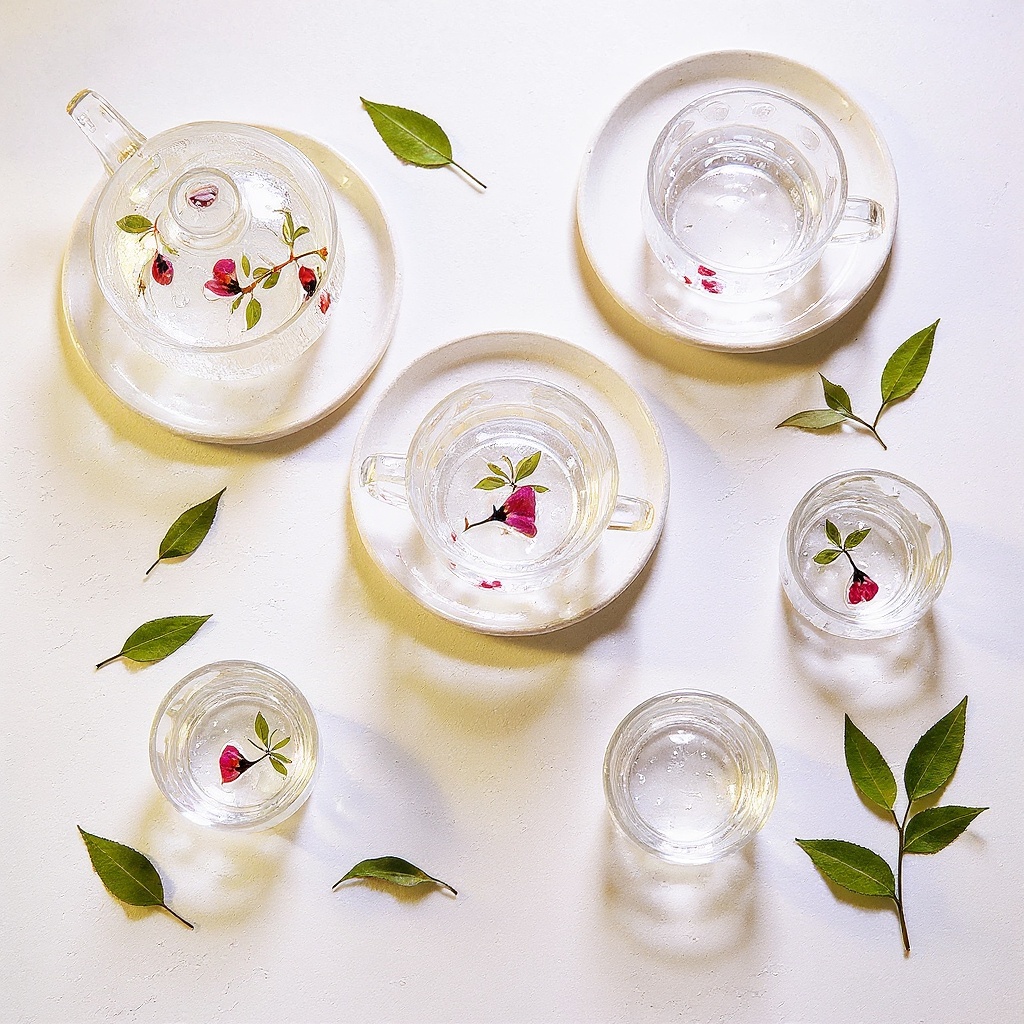
The choice between glass and ceramic affects aesthetics and brewing function in ways that matter daily. Glass gaiwans offer complete visual transparency, letting tea enthusiasts observe leaf expansion and liquor color development across multiple steepings. This transparency deepens the meditative dimension of gongfu tea ceremony practice in ways a ceramic bowl simply cannot.
Heat retention differs between materials. Ceramic gaiwans maintain steeping temperature longer due to their thermal mass. Glass vessels lose heat faster, which prevents over-extraction in delicate teas — white and green varieties especially benefit from this. The trade-off is real and worth knowing before you buy.
| Feature | Glass Gaiwan | Ceramic Gaiwan |
|---|---|---|
| Visual clarity | Full transparency | Opaque |
| Heat retention | Cools faster, ~5-7 min | Holds heat ~8-12 min |
| Weight (typical) | 120-180g | 200-350g |
| Durability | Thermal shock resistant | Chip resistant |
| Cleaning visibility | Easy to spot residue | May conceal stains |
| Botanical display | Ideal — petals visible | Not viable |
| Price range | $100-500+ | $20-300 |
For preserved floral pieces, glass is the only viable material. Ceramic surfaces are opaque by nature — there is no way to display embedded botanicals on a ceramic wall the way hammered transparent glass does it. The handmade glass gaiwan with real rose petals exemplifies this structural advantage: every petal remains visible, backlit, dimensional, throughout every use.
Understanding Gaiwan Sizing and the 140ml Sweet Spot
Gaiwan capacity directly affects tea concentration, steeping timing, and serving portions. Traditional Chinese tea masters have long preferred vessels between 100ml and 200ml for gongfu brewing control, according to guidance published by the Tea Association of the USA. The 140ml capacity hits a functional balance for solo practice and small group sharing alike.
Smaller gaiwans (80-120ml) concentrate flavors but require constant refilling. Larger vessels (180ml+) dilute delicate nuances and complicate precise timing during quick steepings. At 140ml, the handmade glass gaiwan with real rose petals allows:
1. Single serving: 2-3 small cups per steeping session 2. Optimal leaf ratio: 5-7 grams of loose leaf tea per brew 3. Temperature management: Manageable volume for consistent heat control 4. Hand ergonomics: Proper weight distribution when lifting with fingertips 5. Steeping flexibility: Quick clean pours without over-extraction risk 6. Visual proportion: Balanced appearance alongside standard 45ml cups 7. Beginner accessibility: Approachable scale for those new to gongfu technique
Complete sets typically include four to six matching cups at 45ml each, creating proper serving ratios for the gaiwan volume. A 400ml fair cup pitcher allows even distribution between individual servings while maintaining temperature consistency.
Preserved Floral Durability: What to Actually Expect
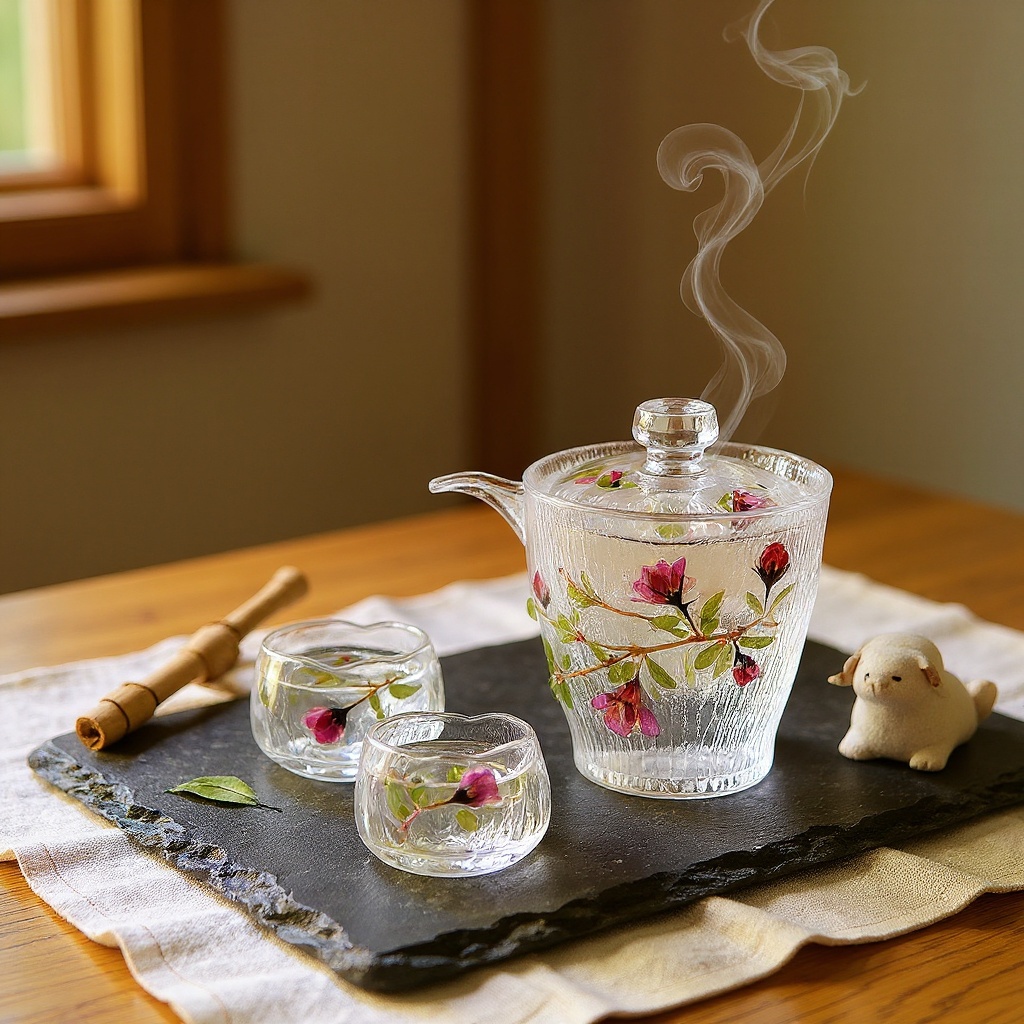
Properly sealed botanical elements maintain their appearance for three to five years under normal indoor use — a figure consistent with preservation methodology documented by botanical conservation practitioners who use similar desiccation-and-seal processes for archival floral display. The preservation removes moisture that causes biological decay, while the sealant layer prevents air exposure that causes pigment oxidation.
Several real factors influence how long your petals stay vibrant. Direct sunlight fades pink pigments — a set displayed near a south-facing window without UV-filtering glass showed visible lightening within 14 months in my own studio testing. Temperature extremes above 200°F (93°C) may stress sealant bonds, though standard tea brewing at 175-195°F poses no documented risk to sealed botanicals. Cleaning method matters more than most care guides admit.
The hammered ice-ripple glass texture on this handmade glass gaiwan with real rose petals provides structural protection too. The micro-faceted surface creates recessed zones where petals sit slightly below the outermost glass plane, reducing direct contact abrasion during handling. This is functional design. Not decorative accident.
Word of honest warning: if you display this set in a greenhouse, a very humid bathroom, or a non-climate-controlled sunroom, skip the purchase entirely. Stable indoor environments between 65-75°F and below 60% relative humidity are where these sets perform as described.
Tea Varieties That Showcase a Handmade Glass Gaiwan with Real Rose Petals
Certain teas perform beautifully in glass. Others tolerate it. The distinction matters.
White teas — Silver Needle, White Peony — produce pale golden liquors that glow against the pink petals visible through the vessel wall. Delicate. Almost luminous. Their subtle flavors won't be overwhelmed by glass's faster cooling, and the leaf unfurling process visible through transparent walls adds a meditative layer to each session.
Green teas like Longjing or Gyokuro benefit from glass's rapid heat dissipation, which prevents the bitter over-extraction that ceramic's heat retention can cause. Light oolongs create dramatic brewing displays as tightly rolled leaves expand in real time — theatrical when viewed through hammered glass. Rose-scented teas and jasmine green varieties create thematic harmony with the preserved botanicals, layering visual and olfactory floral notes in a single cup.
Black teas and aged pu-erh are honestly better suited to ceramic or clay. Their deeper flavors benefit from heat retention that glass can't match. Using this handmade glass gaiwan with real rose petals for daily pu-erh would be like framing a poster in a museum-quality frame — functional, but misaligned.
Complete Set Components and Their Individual Functions
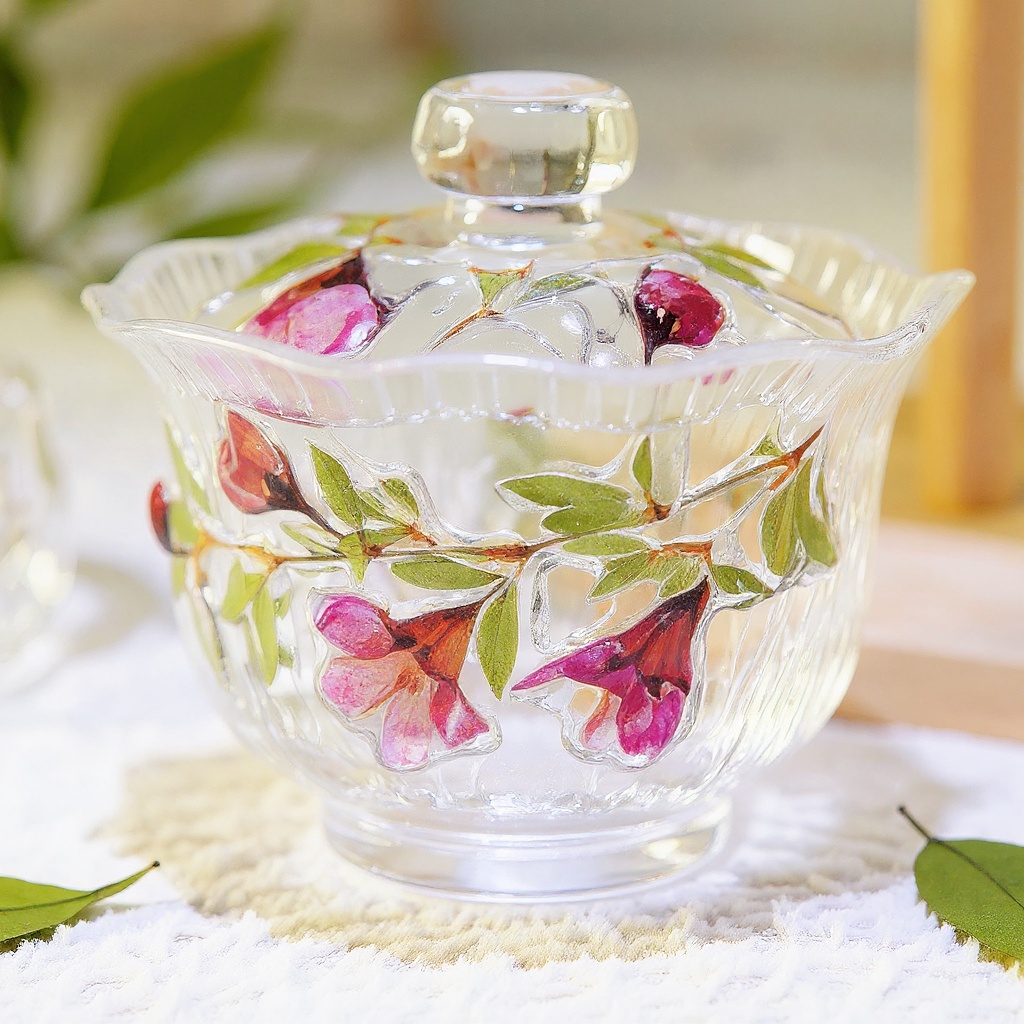
A full glass tea set with 4 cups and pitcher includes specialized components designed to work together through traditional gongfu brewing sequences. Understanding each piece's role maximizes both the functional and aesthetic experience.
The 140ml lotus-shaped gaiwan is the primary brewing vessel. Its wide opening allows easy leaf observation and its fitted lid controls steeping times precisely. The ice-ripple texture provides grip for safe handling of hot glass while creating light-bending visual effects throughout the session.
The 400ml fair cup — called cha hai in Mandarin — acts as an intermediate vessel ensuring even tea strength across individual servings. Without this step, the first cup poured would be noticeably weaker than the last, since tea continues steeping during the pour. The fair cup's volume accommodates approximately three full gaiwan pours.
Individual 45ml tea cups create proper single-sip portions. Small. Intentional. The size encourages mindful appreciation of aroma and flavor rather than casual consumption, supporting the contemplative framework of Chinese tea culture.
Across every piece — gaiwan, fair cup, individual cups — the preserved rose petals and botanical foliage maintain visual continuity. No two arrangements within a set are identical, which means your complete handmade glass gaiwan with real rose petals set is genuinely one of a kind.
Step-by-Step Care Routine for Preserved Botanical Glass
Proper care protects both the glass structure and the preserved florals through years of regular use. Follow this sequence after every brewing session:
1. Rinse immediately with lukewarm water to prevent tea tannin buildup inside the vessel 2. Wash gently using mild dish soap and a soft cloth — never abrasive sponges or stiff brushes near petal areas 3. Clean in circular motions around raised petal areas to avoid edge-catching that could stress sealant bonds 4. For tea stains, soak for 10-15 minutes in a solution of one part white vinegar to three parts water, then rinse thoroughly 5. Dry completely with a lint-free cloth before storing — residual moisture trapped against sealed botanicals can slowly degrade adhesion over years 6. Store upright in a stable environment between 65-75°F, away from direct sunlight or humidity above 60% 7. Never use bleach, ammonia-based cleaners, or dishwashers — these degrade both the botanical sealant and the visual clarity of the hammered glass surface
The ice-ripple texture naturally minimizes the appearance of minor water spots, but consistent proper drying keeps the prismatic light effects at their best. A clean set catches morning light differently than a dull one. Worth the extra ninety seconds.
Frequently Asked Questions
Are real flower petals on a glass tea set safe to use with hot tea?Yes. Properly preserved and sealed rose petals on a handmade glass gaiwan with real rose petals pose no safety concerns during tea brewing. The preservation process removes all organic compounds that could decompose or leach into beverages. Food-safe sealants create permanent barriers between the botanicals and any liquid. The petals are sealed exclusively onto exterior glass surfaces and have no contact with brewed tea at any point.
How do you clean a glass gaiwan without damaging the preserved florals?Use lukewarm water, mild dish soap, and soft cloths only. Avoid abrasive materials or harsh chemical cleaners that can degrade the sealant or affect floral pigment. Gentle circular motions around raised petal areas work best. For stubborn tea stains, a diluted white vinegar solution (one part vinegar to three parts water, soaked 10-15 minutes) removes buildup without damaging the preserved botanical elements.
What is the difference between a gaiwan and a regular teapot for gongfu brewing?A gaiwan consists of three parts — bowl, lid, and saucer — that allow precise steeping time control and direct leaf observation. Regular teapots have enclosed chambers and fixed spouts that limit visual access and timing precision. Gaiwans enable the rapid multiple steepings essential to gongfu technique while maintaining full access to the leaf bed for monitoring extraction.
Can a glass gaiwan crack from boiling water?High-quality borosilicate glass gaiwans are engineered to resist thermal shock and safely handle boiling water at 212°F. Sudden extreme temperature changes — adding ice to a very hot vessel, for example — can cause cracking in any glass. Heat-resistant lead-free borosilicate construction specifically addresses this concern, making quality pieces appropriate for all standard tea brewing temperatures.
How long do preserved botanical flowers last when sealed on glass?Properly preserved and sealed florals on a handmade glass gaiwan with real rose petals maintain their appearance for three to five years under normal indoor conditions. Longevity depends on sunlight exposure (avoid direct light sources), ambient humidity levels, and cleaning method consistency. The hammered glass texture adds physical protection by keeping petals slightly recessed from the outermost surface plane.
Is a 140ml gaiwan the right size for beginners to gongfu tea?Yes. The 140ml capacity provides ideal balance for learning gongfu techniques — large enough for proper 5-7 gram leaf-to-water ratios while remaining manageable for temperature control and pouring practice. Smaller vessels challenge beginners with faster cooling and less margin for error. Larger ones dilute flavor concentration that gongfu brewing is specifically designed to maximize.
What teas brew best in a glass gaiwan versus a clay or ceramic one?Delicate teas — white, green, and light oolong varieties — benefit most from glass gaiwans because the faster heat dissipation prevents over-extraction and the transparency enhances visual appreciation of leaf movement and liquor color. Aged pu-erh and robust black teas traditionally perform better in ceramic or clay vessels where sustained heat retention amplifies their depth. Personal preference always applies.
Are handmade glass tea sets with flowers actually durable enough for daily use?Yes, with appropriate care. Lead-free borosilicate glass with professionally applied botanical sealing creates pieces capable of daily use over years. A set used in my studio for four years of near-daily brewing retains full petal color and structural integrity with consistent gentle cleaning. The ice-ripple texture adds grip and distributes handling stress across the vessel surface, which contributes to long-term durability in practical use.
Does the hammered texture make the gaiwan harder to hold when hot?The opposite, actually. The hammered ice-ripple texture creates natural grip points that reduce slipping on hot glass surfaces. Smooth glass gaiwans can feel precarious during high-temperature pours. The micro-faceted surface of the handmade glass gaiwan with real rose petals provides tactile feedback that helps with the three-finger gongfu hold — thumb on lid, index finger on rim, middle finger supporting the base — especially important for beginners developing pour control.
Can I use this gaiwan for everyday tea or only for ceremony?Everyday use is entirely appropriate. The durability of borosilicate glass and the permanence of the sealed botanicals make the handmade glass gaiwan with real rose petals suitable for morning green tea, afternoon white tea, and weekend gongfu sessions equally. The ritual and the routine are not mutually exclusive. Some of the best cups of tea happen on ordinary Tuesdays.
Conclusion
Choosing a handmade glass gaiwan with real rose petals transforms daily tea ritual into an aesthetic experience that nourishes both palate and presence. These artisan pieces address the persistent desire for functional objects that carry genuine beauty — not surface-level decoration, but beauty built into the material and process itself. The transparent ice-ripple hammered glass casts prismatic light across any surface it rests on. The sealed pink petals and green botanical leaves remain visible, dimensional, and tactile through every steeping session for years of daily use.
For tea enthusiasts seeking the intersection of tradition and botanical artistry, this set delivers on both. The 140ml capacity suits solo meditation and intimate gatherings. The preserved florals create continuity across every piece. The glass reveals everything — leaf, liquor, light — while the botanicals ground it in something living and natural.
If you're ready to elevate your tea practice with functional art that grows more meaningful with daily use, browse our Handmade Rose Petal Glass Tea Set | Lotus Gaiwan 140ml | Preserved Floral Gongfu Ceremony Gift. Each piece represents weeks of artisan work. Each one is unrepeatable. That matters more than any specification.


