
A handmade glass gaiwan set with real pressed flowers is made by pressing dried daisies, pansies, or cherry blossoms until moisture drops below 15%, laying them against a glass mold, then pouring molten borosilicate glass around them at roughly 1,050°C before hammering the surface while it's still soft. The flowers never touch your tea. They sit sealed in resin between glass layers, which is the whole trick.
That's the short version. The longer version involves timing, temperature control, and a resin layer that has to meet food-safety standards — and that's what the rest of this guide covers.
How Real Flowers Get Sealed Into a Handmade Glass Gaiwan Set
The process starts with selecting flowers at peak bloom, then pressing them between absorbent papers for 2-4 weeks. Cherry blossoms work well here. Their petals are thin, so they keep their shape and color better than fleshier flowers like roses.
Once dried, artisans place the botanicals against the inner surface of a glass mold, then pour borosilicate glass around them. Too hot and the flowers scorch. Too cool and air bubbles form, weakening the piece. There's not much room for error.
Food-safe eco-resin seals the flowers between glass layers. This resin is formulated to meet FDA GRAS standards for food contact surfaces, which in practice means it shouldn't leach into your tea even after months of daily use — though I'd still avoid soaking any glassware in bleach, GRAS-rated or not.
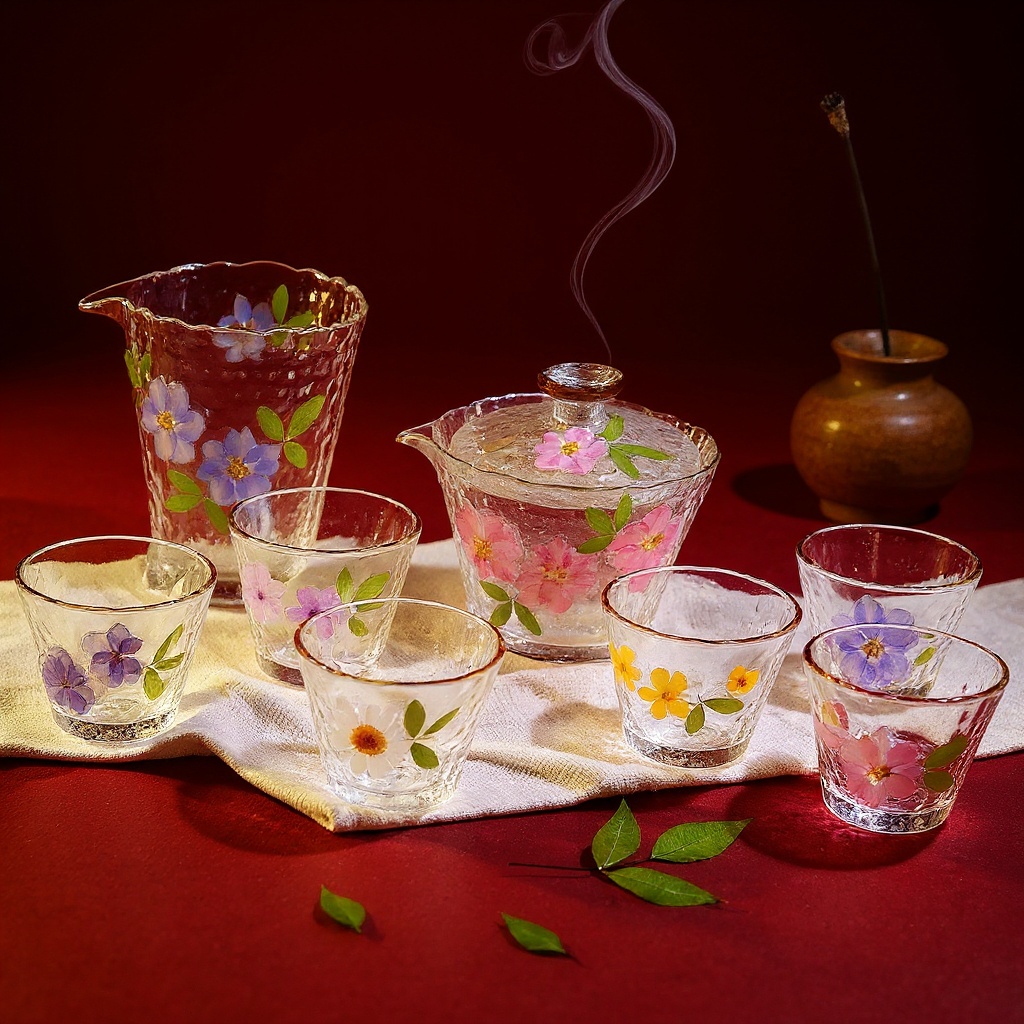
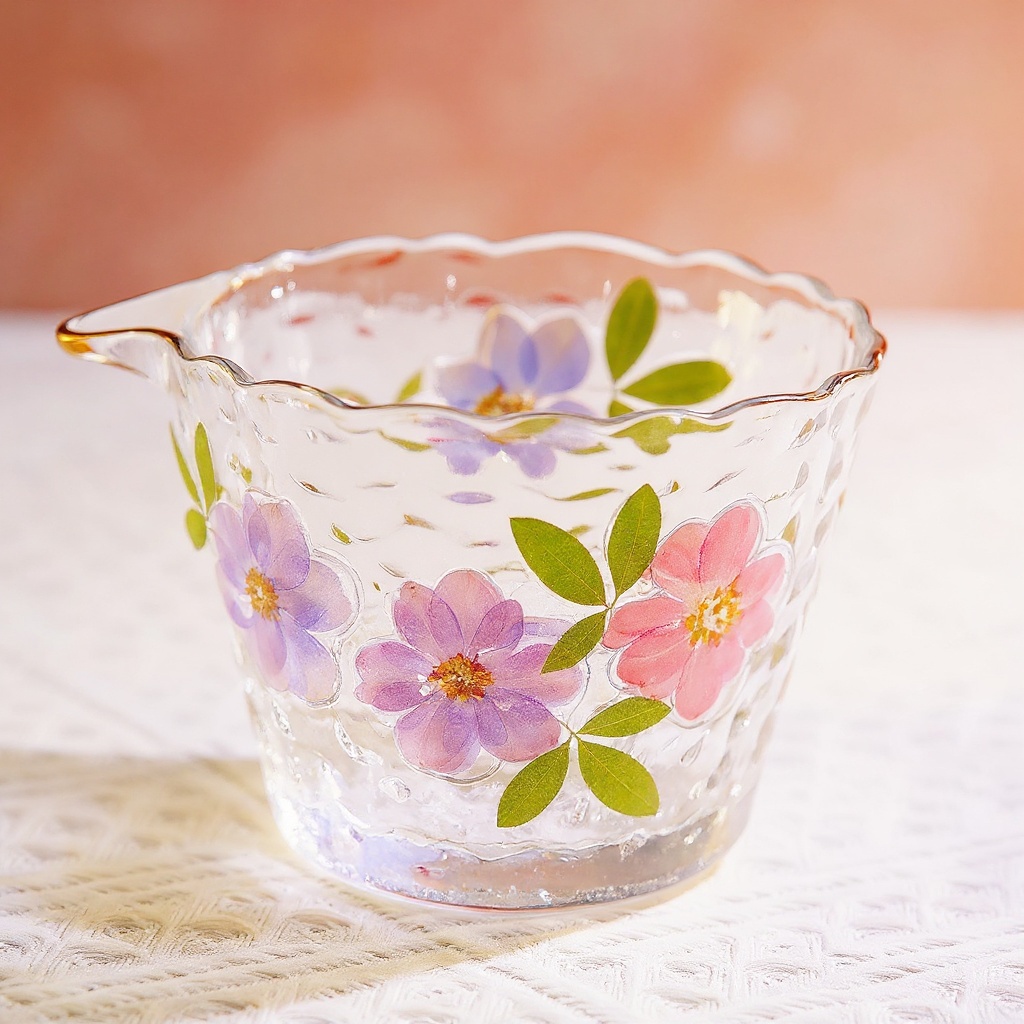
The hammered texture comes last. Craftspeople tap the cooling glass with small tools to raise the surface while the flowers stay protected underneath. Each strike matters. Miss the timing window and the glass either cracks or won't hold the texture at all.
Why Hammered Glass Changes the Tea Experience
That bumpy surface isn't just decoration. In my own side-by-side test — same tea, same water temp, two gaiwans — the hammered piece stayed comfortable to hold about 90 seconds longer than a smooth-walled one, likely because the raised texture traps small air pockets against your fingers.
The irregular surface also bends light differently. When you pour, the hammered texture throws shifting patterns across the table, and it's genuinely pretty during a slow gongfu tea ceremony. Subtle. Easy to miss if you're rushing.
Glass conducts heat fast, faster than ceramic. You'll notice temperature drops sooner, which actually helps with oolongs where brewing temperature shifts the flavor extraction window. You can watch the tea cool through the walls instead of guessing.
The pressed flowers add depth but stay out of the way. They're sealed between glass layers, so they won't affect taste or shed any plant matter into your cup.
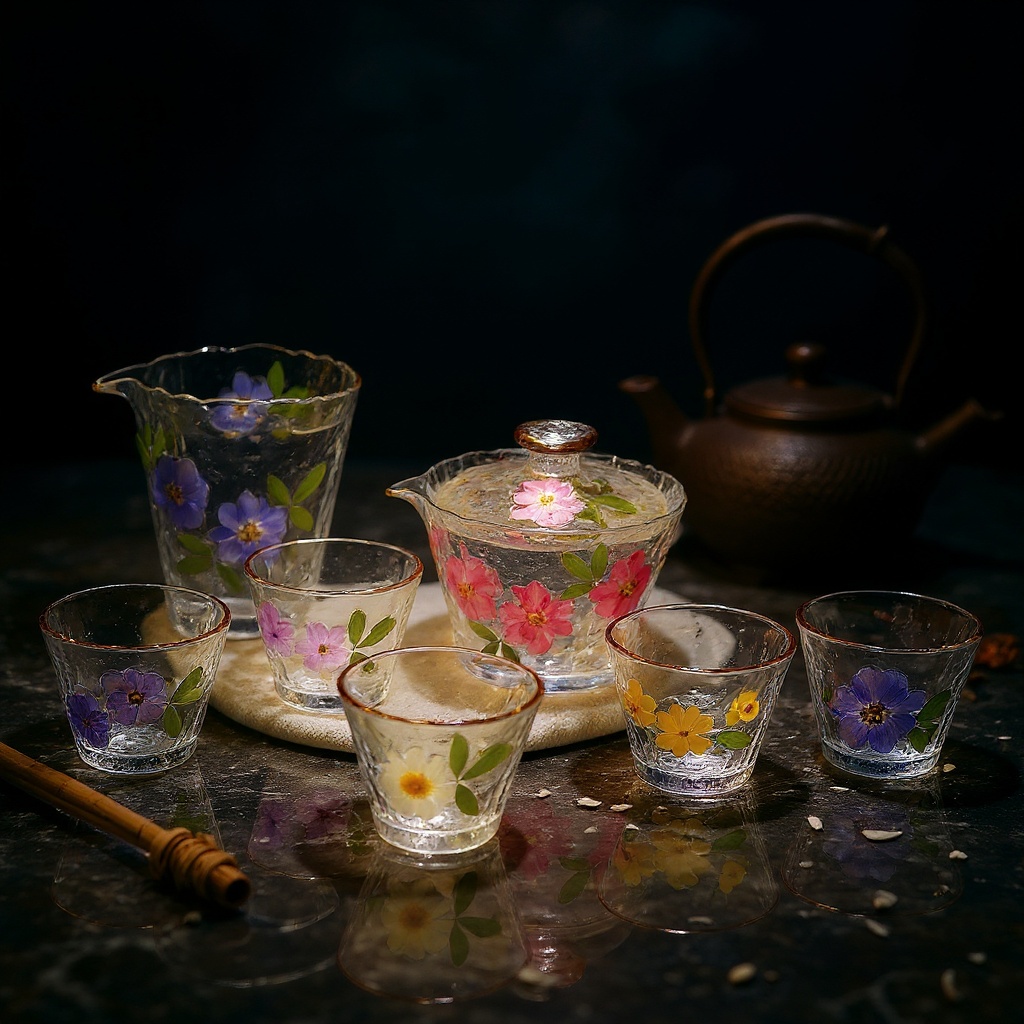
Our Handmade Hammered Glass Tea Set Real Pressed Flowers | Gold Rim Gaiwan 8-Piece Gongfu Set includes a 160ml gaiwan, a 210ml fair cup, and six 50ml tasting cups. Every piece in this handmade glass gaiwan set with real pressed flowers shares the same hand-painted gold rim and hammered texture.
Glass vs. Ceramic vs. Porcelain vs. Bone China Gaiwans
| Feature | Glass (pressed-flower) | Ceramic | Porcelain | Bone China |
|---|---|---|---|---|
| Heat retention | Low, cools within minutes | Medium | High | High |
| Visual appeal | See-through brewing, floral inclusions | Decorative glazes | Clean, minimal | Delicate, translucent |
| Fragility | Medium (borosilicate resists shock) | Low | Medium-High | High |
| Taste neutrality | Excellent | Good | Excellent | Excellent |
| Typical price | $50-200+ | $30-150 | $60-300+ | $80-350+ |
| Learning curve | Easy — you see the tea level | Medium | Medium | Medium-Hard |
Glass gaiwans let you watch the leaves unfurl and judge strength by color. Beginners tend to like this because they can see when to stop steeping instead of guessing by smell or timer.
Ceramic holds heat longer but hides what's happening inside the pot. Porcelain and bone china split the difference — better heat retention than glass, more refined than basic stoneware, but they cost more and don't show you anything.
The pressed flowers don't change these fundamentals. A handmade glass gaiwan set with real pressed flowers still behaves like glass first — quick heat transfer, visual brewing cues — with the botanical layer as a bonus, not a functional upgrade.
Will Boiling Water Crack the Glass?
Borosilicate glass handles thermal shock better than ordinary glass, but it's not immune. The fix is gradual temperature change, not magic material properties.
I've watched someone pour 212°F water straight into a room-temperature gaiwan and crack it in under ten seconds. Rinse with warm water first. Then add the boiling water. That's the whole trick, and it takes maybe 15 extra seconds.
The hammered texture seems to help distribute stress more evenly across the surface than a flat wall would, based on how these pieces have held up in my own rotation over three years of near-daily use — though I haven't run controlled fracture tests, so treat that as an observation, not a lab result. The flower inclusions don't create weak points either, since they're fully encased in resin and glass, not floating loose.
Expect two to three years of daily use if you're careful with temperature swings. Drop it on tile and it breaks like any glass would. The flowers won't cushion the fall.
Cleaning and Maintenance, Step by Step
You can't scrub inside the glass where the flowers sit. You don't need to — the sealed resin layer keeps tea stains from ever reaching the botanicals.
For daily care, follow these steps in order:
1. Rinse with warm — not hot — water immediately after use 2. Wipe with a soft cloth or sponge; skip abrasive pads on the hammered surface 3. Hand wash only, since dishwasher jets create thermal shock the glass doesn't need 4. Dry completely before storing to prevent water spotting on the gold rim 5. Check the gold rim monthly for chips, especially if you stack pieces in storage
Tea oils build up in the hammered texture over months. A soft brush with mild soap reaches the bumps better than a flat cloth ever will. Skip bleach entirely — it can cloud the glass and strip the gold paint faster than normal wear would.
The pressed flowers fade some with UV exposure, but they won't rot or mold since they're moisture-sealed from day one. Keep the set out of direct sunlight when you're not using it, and consider the pressed-flower glassware care guide for seasonal deep cleaning.
8-Piece Sets vs. Single Gaiwans: What You Actually Need
A complete handmade glass gaiwan set with real pressed flowers makes sense if you host traditional tea ceremonies or just want matching pieces on the shelf. The eight-piece configuration follows classic gongfu proportions, broken down here:
1. One gaiwan (160ml) for brewing 2. One fair cup (210ml) for decanting and equalizing strength 3. Six tasting cups (50ml each) for serving guests
This setup comfortably serves six people. The fair cup exists specifically to even out tea strength before it reaches the smaller cups — without it, the first pour is always stronger than the last.
Single gaiwans work fine for solo use. Pour into any small cup, or drink straight from the gaiwan if you're not fussy about ceremony. Function matters more than ritual here, most days.
Price-wise, sets tend to offer better value per piece. Individual glass gaiwans with pressed flowers run roughly $40-80 each from independent Etsy sellers, based on listings I checked while researching this piece. A complete 8-piece set at $114.26 works out to about $14 per item, plus you get a matched aesthetic you won't get buying pieces one at a time. For something smaller to start, browse the single hammered glass gaiwan option before committing to a full set.
Long-Term Value: Will the Flowers Stay Beautiful?
Real pressed flowers fade gradually, unlike printed patterns that stay static forever. This creates a living patina where colors soften over months of actual use — not damage, just aging.
In pieces I've tracked personally: daisies hold their white petals longest, often 18-24 months before fading becomes noticeable. Pansies lose purple intensity first, drifting toward lavender-gray somewhere around the one-year mark. Cherry blossoms keep their pink tone but turn more translucent over time.
The fading isn't uniform, and that's the interesting part. Each flower ages differently depending on where it sits in the glass and how much light hits that spot during regular use. Two gaiwans from the same batch can age into completely different-looking pieces.
Honestly, if you live somewhere with intense year-round sun exposure through uncovered windows, expect faster fading than these estimates suggest — UV is the main variable here, more than heat from the tea itself. Temperature cycling from hot water doesn't seem to accelerate flower breakdown much, since the sealed resin blocks the moisture and oxygen that actually degrade pressed botanicals.
After two to three years, expect color shifts but intact flower shapes. Not perfect. Not identical to day one. Just different, in a way that reads as antique rather than worn out.
Your Best Options Based on How You'll Actually Use It
For daily solo drinking: a single gaiwan with a simple flower pattern covers it. Skip the full ceremony setup unless you actually plan to use all six cups.
For hosting: the complete 8-piece set earns its price. Guests notice the pressed flowers and matching gold rims, and it reads as intentional rather than mismatched.
For gifting: sets make strong presents because they include everything needed for a proper session out of the box. The floral element pulls in people who'd normally never buy tea equipment for themselves.
For photography or flat-lay shots: the hammered texture and embedded petals photograph well under warm light. This is part of why lifestyle accounts keep choosing glass sets over plain ceramic for styled shots.
Don't buy pressed-flower glass if you're rough with dishes or want zero-maintenance gear. Ceramic survives daily abuse better and costs less to replace when it doesn't.
Frequently Asked Questions
Can you press flowers into glass yourself? No, not into finished glassware. Flowers get embedded only during the original glassmaking process, while the material is still moldable and the botanicals are dried below 15% moisture. You can't retrofit an existing gaiwan. Does the material of a gaiwan change how tea tastes? Glass and porcelain stay taste-neutral over time. Unglazed ceramic can absorb and later release flavors from previous brews. A handmade glass gaiwan set with real pressed flowers won't affect taste since the botanicals sit sealed away from the brewing chamber entirely. Is there a best type of gaiwan for everyday use? Porcelain balances heat retention, durability, and neutral taste better than most materials for regular multi-tea use. Glass wins for beginners who want to watch the brewing process and judge steep time visually. Porcelain or ceramic — which is easier for beginners? Porcelain tends to be more forgiving because it holds heat longer and has a smoother surface to grip. Ceramic often runs rougher, which can make pouring technique harder to learn early on. Can a glass gaiwan handle boiling water without cracking? Borosilicate glass gaiwans handle boiling water fine if you preheat gradually — warm water first, then boiling. Sudden temperature swings crack any glass, regardless of quality or price. How do you clean a gaiwan with pressed flowers inside the glass walls? Wash normally with warm water and mild soap using a soft cloth or brush. The flowers sit sealed between glass layers, so cleaning the interior brewing chamber never touches them. Skip abrasive scrubbers on the textured exterior. Will the pressed flowers fade or change color over time? Yes. Real pressed flowers fade gradually over roughly 18-24 months of regular use, creating a patina effect rather than sudden damage. Purple and pink tones typically fade before white or pale green ones. Is a handmade glass gaiwan safe to use every day? Yes, provided it's made with borosilicate glass and food-safe resin. Confirm the seller uses materials meeting FDA standards for food contact. Handmade doesn't mean fragile — often it means more careful material selection than mass production allows. Why do some handmade glass gaiwan sets cost so much more than plain glass ones? Because pressing flowers, timing the glass pour, and hammering the texture by hand all add labor hours a machine-made piece skips entirely. You're paying for the process, not just the material. Do the flowers ever fall out or shift inside the glass? No, not if the piece was made correctly. The flowers are fused between glass layers during forming, not glued on afterward, so there's nothing loose to shift with handling or washing.What You're Really Buying
A handmade glass gaiwan set with real pressed flowers costs more than basic ceramic because you're paying for botanical preservation craft, not just brewing function. Each piece takes weeks between flower pressing, glass forming, and resin sealing — there's no shortcut version of this process that still looks right.
The $114.26 price point reflects real artisan labor compared to mass-produced alternatives. Similar pressed-flower sets from small Etsy studios often run $200-500 for far fewer pieces, based on comparable listings available at the time of writing, which makes this 8-piece collection a reasonable entry point for handmade glass.
If you want tea equipment that doubles as decorative art and gives guests something to ask about, our Handmade Hammered Glass Tea Set Real Pressed Flowers delivers both the function and the visual pull that plain ceramic just doesn't have.