
Zen Tea Table Decor Teapot Set: How to Style a Celadon Set for Calm
By pampasroom, founder of Pampasroom · Spent three seasons studying celadon glaze firing alongside kiln masters in Longquan, China · Featured in Cottagecore Weekly and The Artisan HomeBuilding a zen tea table decor teapot set isn't about spending the most money. It's about choosing pieces that quiet the room down. Start with a celadon teapot in jade green, pair it with small gongfu-style cups around 45ml each, and set everything on a natural wood tray. Restraint does the heavy lifting here — fewer pieces, placed with intention, beat a crowded display every time. Neutral colors like soft greens, warm browns, and cream ground the aesthetic, while porcelain and wood keep things tactile and real. The teapot stays the focal point. Cups get arranged with breathing room. That's it. That's the whole system.
Choosing the Perfect Teapot for a Zen Tea Table Decor Teapot Set
The teapot sets the tone for the entire zen tea table decor teapot set, so material and color choices matter more than most people expect. Celadon porcelain has stayed the gold standard for zen tea settings because of its soft jade-green glaze and centuries of meditative association — documented back over a thousand years to Song Dynasty kilns. The subtle variation in celadon's luminous finish creates depth without ever feeling busy. Exactly what you want during a quiet tea moment.
When I visited a Longquan workshop for the first time, I watched a kiln master run his thumb along an unfired glaze line for a full minute before deciding it was ready. He wasn't checking for flaws. He was checking for feeling. That's the difference between a mass-produced piece and one built for a zen tea table.
Size matters too. A 200ml teapot serves 2-4 people well for gongfu brewing, where you steep short infusions again and again rather than one long soak. This capacity forces you to slow down, whether you planned to or not. Look for clean lines with minimal decoration — ornate carving reads as noise when you're trying to settle your mind. The spout should pour without dripping. The handle should sit right in your hand, not fight it.
Handmade pieces add a layer most factory sets can't fake. Slight glaze pooling near the base, a barely-off-center lid,
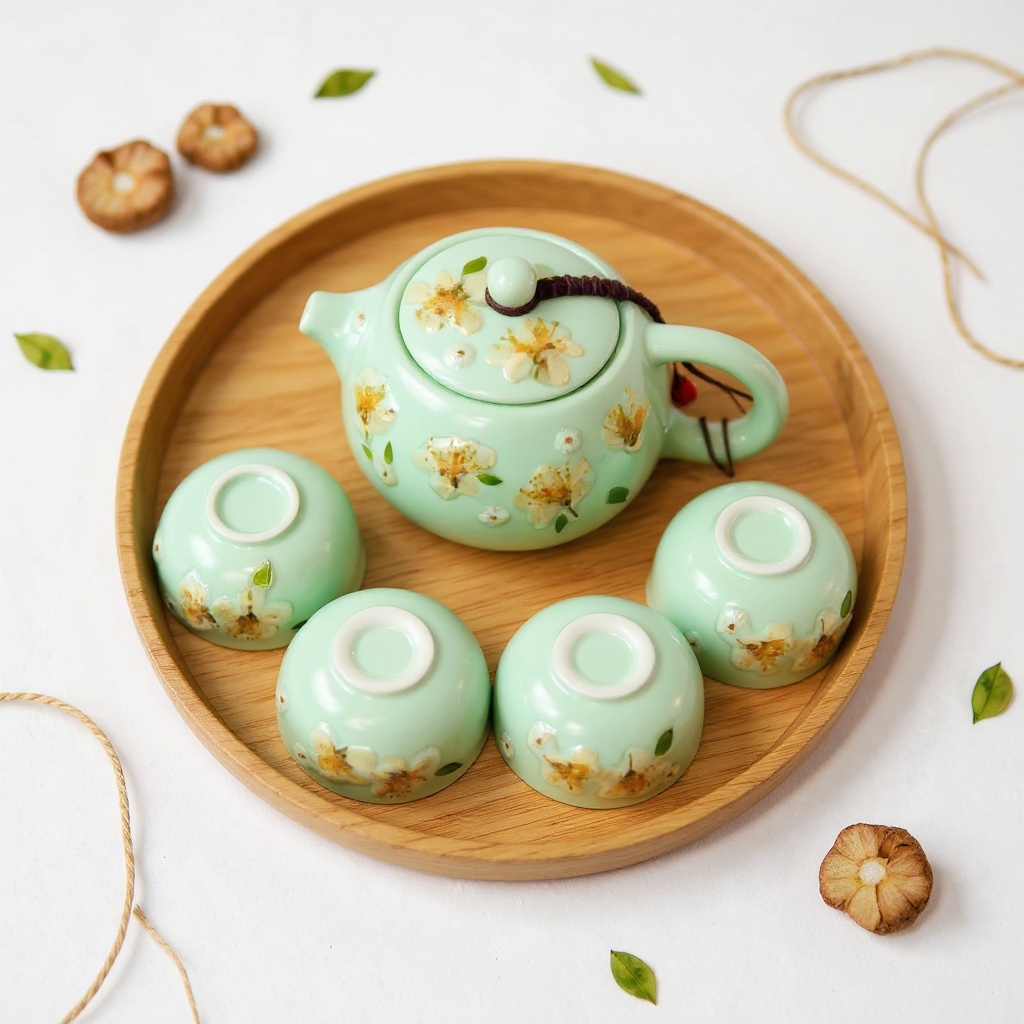
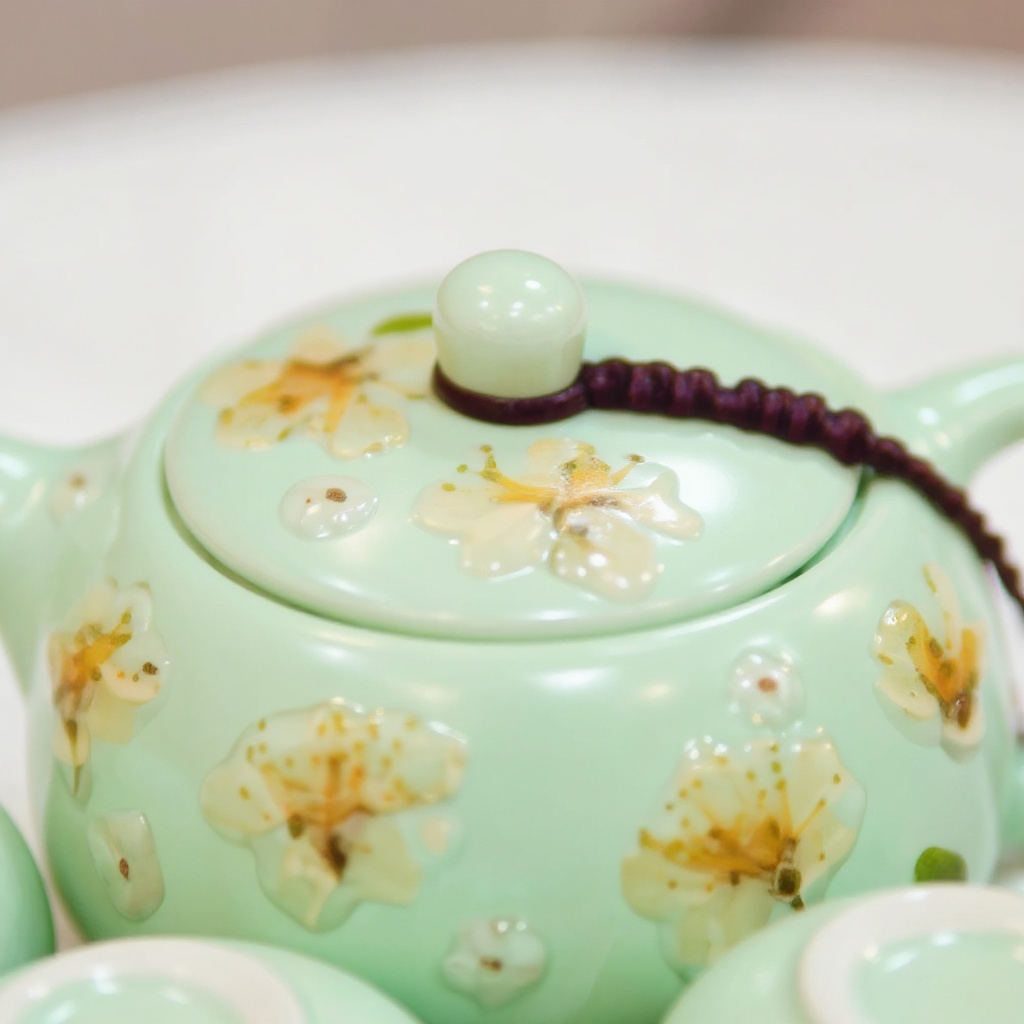
a faint fingerprint ghost under the glaze — these become part of the ritual, not flaws to hide. Mass-produced ceramic tea sets run $30-$150. Quality handmade celadon starts around $114 and climbs toward $600 for exceptional craftsmanship, the kind where a jasmine petal sits raised and visible under a green gradient glaze rather than buried and lost.
Selecting Teacups and Serving Pieces
Your teacups should support the teapot, not compete with it. Traditional gongfu tea ceremony uses cups around 45ml — roughly two sips. Tiny, if you're coming from a Western mug. But the proportions are deliberate: they keep tea hot, concentrate aroma, and make gulping basically impossible.
Four cups work for most households. They fit small gatherings and still look balanced on a tray built for a zen tea table decor teapot set. Match cups to your teapot's family — if you've gone celadon, stay in the jade-green range. Mixing materials can work, like a celadon pot beside bamboo cups, but keep tones close enough that nothing jumps out.
Texture belongs in this conversation too. A smooth, luminous glaze feels soothing under a fingertip, almost cool even after hot water. Some artisan pieces go further, pressing real flowers directly into the porcelain before the final firing. The Handmade Celadon Tea Set Real Pressed Jasmine embeds real yellow winter jasmine petals that stay visibly raised on the surface — no two sets are identical, because no two petals fire the same way twice.
Teapot Set Comparison by Price Tier
| Tier | Price Range | Material | Capacity | Botanical Detail | Typical Lifespan |
|---|---|---|---|---|---|
| Budget mass-produced | $30-$60 | Glazed stoneware | 150-250ml | None, printed pattern | 1-2 years daily use |
| Mid-range factory celadon | $60-$114 | Machine-cast porcelain | 180-220ml | Occasional decal | 3-5 years |
| Handmade entry celadon | $114-$200 | Hand-thrown porcelain | 200ml | Real pressed jasmine, hand-set | 10+ years |
| Premium artisan celadon | $250-$450 | Hand-thrown, multi-fired | 200-250ml | Multiple embedded flowers | Decades, family heirloom |
| Museum-grade collector piece | $500-$600+ | Master-kiln porcelain | Varies | Signature floral placement | Generational |
The jump between mid-range factory and handmade entry celadon is where the real quality shows up. Not in the price tag alone.
Creating Balance with Natural Wood Tea Trays
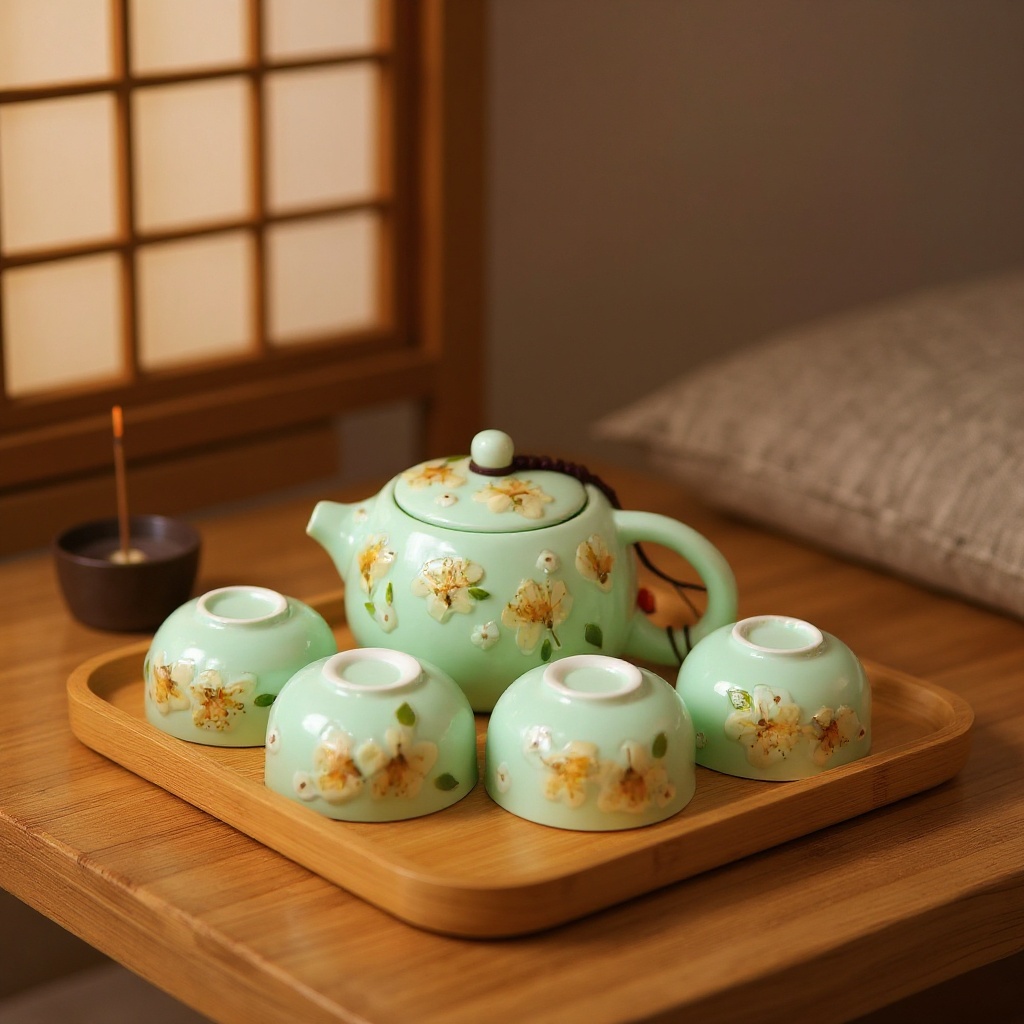
A tea tray defines the physical edges of your zen tea table decor teapot set and pulls everything into one visual family. Natural wood works best — warm to the touch, forgiving of hot water, and quietly complementary to porcelain. The tray needs room for a teapot, four cups, and a small water catch, without crowding and without swallowing the display in empty space.
Bamboo trays run light and sustainable, usually 12-16 inches for a standard set. Hardwoods like walnut or cherry age into something better over years of use. Skip lacquered or painted surfaces entirely — synthetic finishes can't fake real grain.
Honestly, if you live somewhere humid, a raw unsealed hardwood tray is a bad idea. It will cup or crack within a season no matter how carefully you towel it dry after each session. Go bamboo or a properly sealed hardwood instead, and save yourself the regret.
Color Palettes That Promote Calm
Zen aesthetics lean on color psychology more than people realize. Keep your table to three main colors max, with one dominant hue carrying the mood.
| Color Family | Psychological Effect | Best Teaware Materials |
|---|---|---|
| Jade Green | Growth, balance, harmony | Celadon porcelain, green bamboo |
| Warm Browns | Grounding, stability | Natural wood, clay pottery |
| Soft Creams | Purity, clarity | White porcelain, light bamboo |
| Muted Grays | Neutral calm | Stone accessories, metal accents |
| Dusty Blues | Tranquility, reflection | Blue-green ceramics, denim textiles |
Green stays the most popular choice for a zen tea table decor teapot set because it connects to nature without amping anyone up. Celadon's jade tones shift with light — calm in daylight, almost mysterious under lamp glow in the evening. Skip pure white. Too sterile. Skip bright primary colors too, unless they're the size of a single accent stone.
Essential Elements for Mindful Tea Table Styling
1. Position the teapot slightly off-center — perfect symmetry can feel rigid; subtle asymmetry keeps the eye moving 2. Leave breathing room between pieces — crowding creates tension, even unconsciously 3. Create height variation — stack a cup or two if needed, but keep most items at tray level 4. Add one natural element — a stone, a small branch, a single pressed flower 5. Include negative space — empty areas matter as much as filled ones 6. Keep water vessels nearby but discreet — functional, never dominant 7. Consider lighting direction — soft, diffused light flatters a green glaze far more than direct sun
Seasonal Touches for Your Zen Tea Table
Your setup doesn't need to freeze in place year-round. A few seasonal moves keep the ritual connected to time passing, without breaking the calm.
1. Spring — add a single stem with new leaves, or one small flower in a tiny vase 2. Summer — switch to lighter linen under the tray, or a small bowl of smooth river stones 3. Autumn — bring in warm-toned wood accessories, or press a few leaves under glass 4. Winter — use evergreen sprigs or a single pinecone; a set with embedded winter jasmine already carries its own seasonal echo
Keep changes small and temporary. One swap a month is plenty. Sometimes even that feels like too much.
Maintaining Your Zen Tea Table Decor Teapot Set
1. Rinse gently after each use — no scrubbing, no abrasive pads on the glaze 2. Air-dry naturally — Chinese ceramics like celadon develop a soft patina over years; don't rush it away with a towel 3. Store where it's visible but protected — dust is the real enemy, not use 4. Cover between sessions — a clean cloth over the arranged set keeps it ready and shields it 5. Repair or replace damaged pieces fast — a chipped cup breaks the visual harmony you built
Quality handmade pieces reward this kind of care with decades of daily use. Cheap ones don't — and that's fine, as long as you know that going in.
If you want an authentic celadon set that carries these principles into daily use, browse our Handmade Celadon Tea Set Real Pressed Jasmine. Each piece pairs traditional celadon technique with real yellow winter jasmine petals embedded and slightly raised on the
surface, sealed under a smooth, luminous glaze with a subtle green gradient. For more on sizing your set correctly, see our gongfu cup sizing guide, and for collectors hunting rarer pieces, our guide to one-of-a-kind celadon sets goes deeper.
FAQ
What is the best teapot for a zen tea room? Celadon porcelain in jade green works best. The luminous glaze creates visual calm, and a 200ml capacity suits gongfu brewing. Clean lines beat ornate decoration every time. How do you style a tea table for meditation? Start with a natural wood tray, place the teapot slightly off-center, and give each cup breathing room. Stick to 2-3 colors, add one natural element, and leave negative space. Simplicity, not decoration, is the goal. What color teapot works best for a minimalist tea setup? Jade green, warm cream, or soft gray. Jade green — celadon especially — connects to nature while staying neutral. Avoid pure white or bright colors in a meditation setting. Do you need a tea tray for gongfu tea? Yes. Gongfu brewing involves multiple short steeps and deliberate pouring, so the tray catches spills and defines the space. Natural wood, sized to fit without crowding. What makes celadon pottery special? Celadon's jade-green glaze has been prized for over a thousand years, valued for subtle color shifts and a luminous finish that changes with light. High-temperature firing and real skill are required — no two pieces come out identical. How many cups should a basic tea set have for daily use? Four works for most households. Two is fine if you mostly drink alone, since gongfu brewing benefits from a spare cup anyway. Past six, the tray starts feeling cluttered. Are pressed flowers in ceramic glaze actually food safe? Yes, when embedded with food-safe sealants and fired at proper high temperatures. The flower gets sealed permanently inside the glaze layer during firing. Still, ask the maker directly about their process before buying — not every workshop firing schedule is equal. What is the difference between a tea ceremony table and a regular dining table? Tea ceremony tables sit lower, closer to knee height for floor seating, and stay small and uncluttered by design. Dining tables are too tall and too large for the intimacy gongfu brewing needs. Will the embedded jasmine petals fade or wash out over time? No, not if the piece was fired correctly — the petal sits sealed beneath the glaze, not painted on top. That said, avoid harsh detergents and abrasive scrubbing near the raised petal area, since repeated abrasion can dull the surrounding glaze sheen over years. Can I put a celadon teapot with pressed flowers in the dishwasher? Don't. Hand-wash only. Dishwasher heat and detergent can degrade the glaze finish and, over time, the sealed botanical detail too.Conclusion
A good zen tea table decor teapot set comes down to a short list of honest choices: material, color, capacity, arrangement. A celadon teapot, properly sized gongfu cups, a natural wood tray — that's the foundation. The rest is restraint. Fewer pieces. More space around each one. Less decoration, more presence.
For a centerpiece that actually lives up to this, the Handmade Celadon Tea Set Real Pressed Jasmine at $114.28 pairs genuine celadon craftsmanship with real winter jasmine petals embedded and slightly raised under a smooth, green-gradient glaze. It turns a daily habit into something closer to a ritual, while still looking like décor between brewing sessions. Handmade sets like this prove their worth slowly — over years, not unboxing photos.
